Shooting Glasses and Eye Protection Standards (ANSI Z87.1)
Shooting glasses protect your eyes from impact hazards such as flying particles, fragments, clay target chips, and rare firearm malfunctions. For a first range visit, choose well-fitting eye protection with appropriate impact markings, and confirm any range, workplace, or Canadian jurisdiction requirements with the official authority.
By RaiS. Reviewed by RaiS. Published . 5 min read.
Research and drafting were assisted by AI. RaiS checked the facts against the sources below and approved this page.
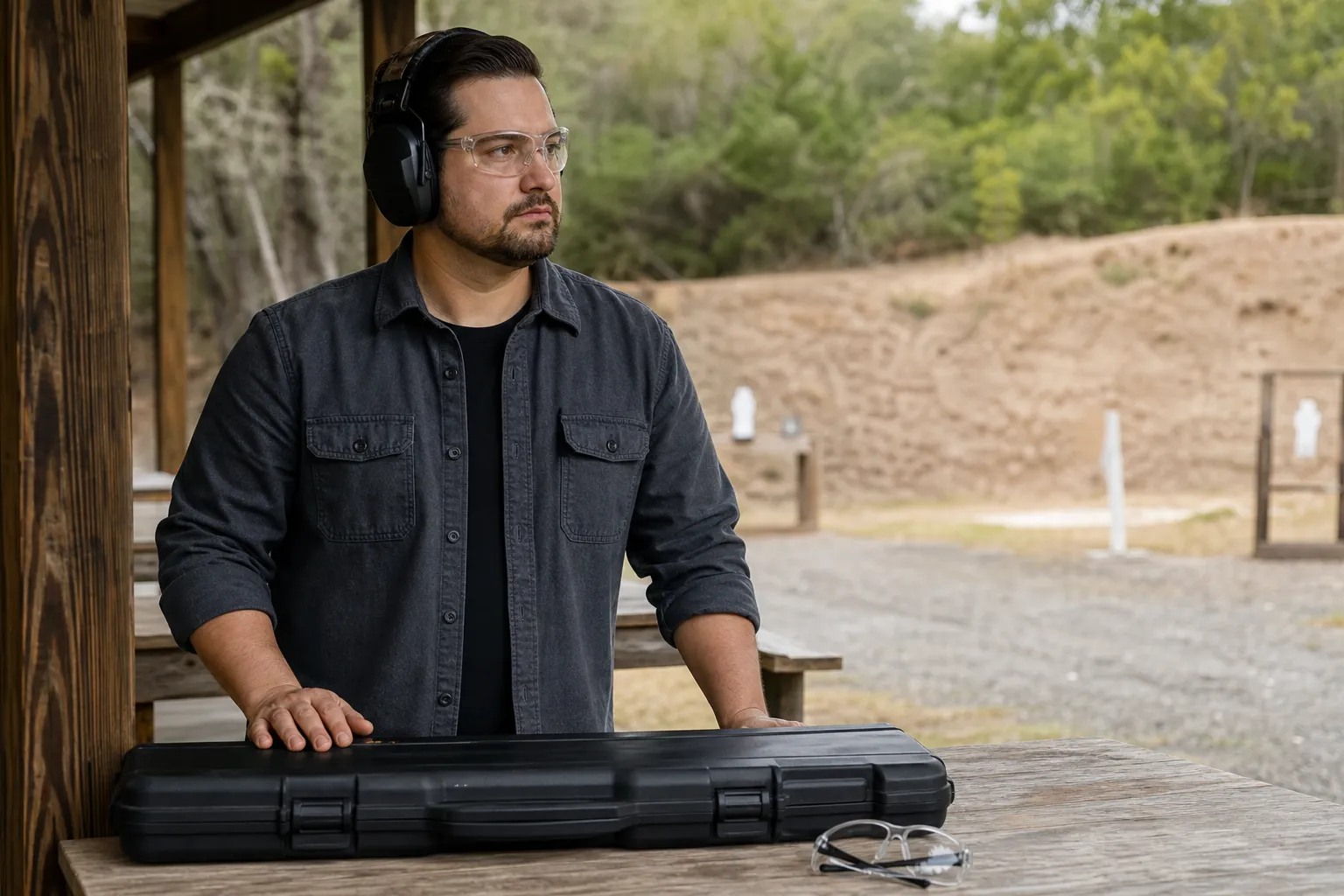
Shooting glasses matter because eye hazards at a range can come from flying particles, fragments, clay target chips, and rare ruptured cases or firearm malfunctions. For a first range visit, the simple rule is to wear impact-rated shooting glasses that fit close to your face, provide side coverage, and carry markings that match a recognized eye protection standard.
Why eye protection matters at the range
The International Safety Equipment Association selection guide lists impact hazards such as flying fragments, objects, large chips, particles, sand, and dirt. The National Shooting Sports Foundation tells shooters to wear protective shooting glasses and says they help guard against range and field hazards including twigs, falling shot, clay target chips, and rare ruptured cases or firearm malfunctions.
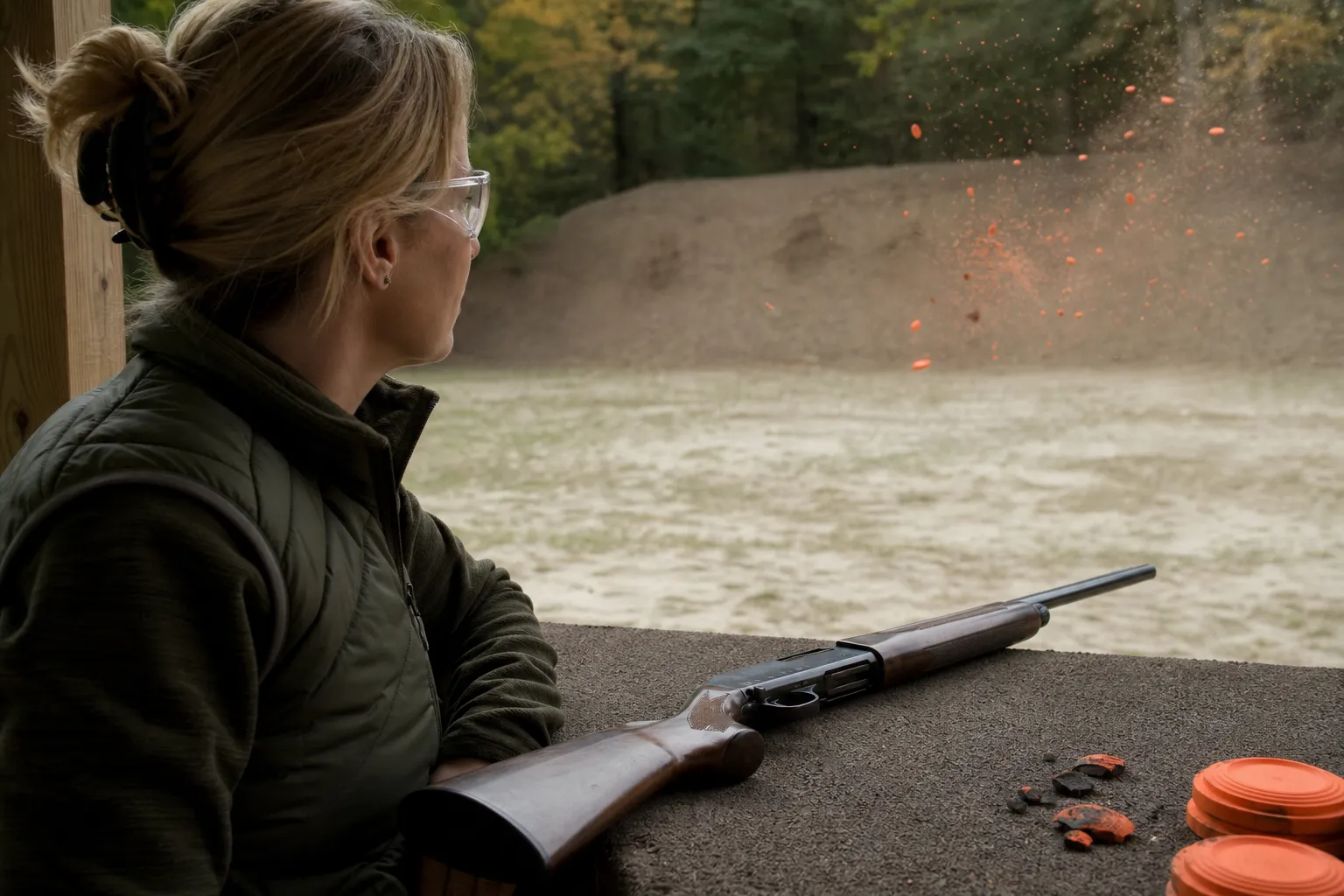
Those examples explain why range eye protection is not just for the person firing. Particles and objects do not always travel straight forward, so side gaps in glasses can matter.
NSSF also recommends eye protection when disassembling or cleaning firearms because springs, spring-tension parts, solvents, or other agents can contact the eyes. That is a separate setting from live fire, but it reinforces the same point: your eyes need protection when small parts, particles, or chemicals can move unexpectedly.
What ANSI/ISEA Z87.1 means
ISEA describes ANSI/ISEA Z87.1-2025 as an updated national standard defining performance, testing, and marking requirements for eye and face protective devices used in workplace and educational settings. In plain English, Z87.1 is a performance and marking standard. It is not a brand, and it is not a product review label.
For a range visitor, the marking is the part you can check on the eyewear.
What the Z87+ impact marking means
The ISEA selection tool, excerpted from ANSI/ISEA Z87.1-2020 Annex J, lists these impact-rated markings:
| Part of eyewear | Impact-rated marking listed by ISEA |
|---|---|
| Spectacle lens | + |
| All other lens | Z87+ |
| Plano frame | Z87+ |
| Prescription frame | Z87-2+ |
The plus sign is important because the ISEA selection tool uses it in the impact-rated markings. When you are choosing shooting glasses, do not rely on style, lens color, or marketing language alone. Look for the standard marking on the appropriate parts of the eyewear and make sure the glasses fit correctly.
Military ballistic eyewear is a different category
Military ballistic eyewear is not the same thing as ordinary Z87-rated safety glasses.
DLA describes MCEP as protection from dust, flying debris, and ballistic hazards in training and on the battlefield, covering both prescription and non-prescription wearers.
For civilian range visitors, the takeaway is simple: military ballistic eyewear is a specific tested category, and a general “ballistic style” claim is not the same as military approval.
Canada and CSA Z94.3
The Canadian Centre for Occupational Health and Safety says many Canadian jurisdictions require eye and face protection to meet CSA Standard Z94.3, Eye and Face Protectors, and advises checking the legislation in your jurisdiction. CCOHS also says CSA-certified eye and face protectors must meet the impact resistance criteria in the standard, and that products tested and approved by CSA will bear the CSA certification mark.
CCOHS says the manufacturer or supplier certification mark must be present on all approved safety lenses, frames, removable side shields, and other parts of the glasses, goggles, or helmets. Canadian range visitors should check the range’s policy and the applicable provincial, territorial, or workplace requirements before assuming a marking is enough.
Fit, side coverage, and prescription eyewear
Fit is part of protection. The ISEA selection tool warns that protectors that fit poorly will not provide the protection for which they were designed.
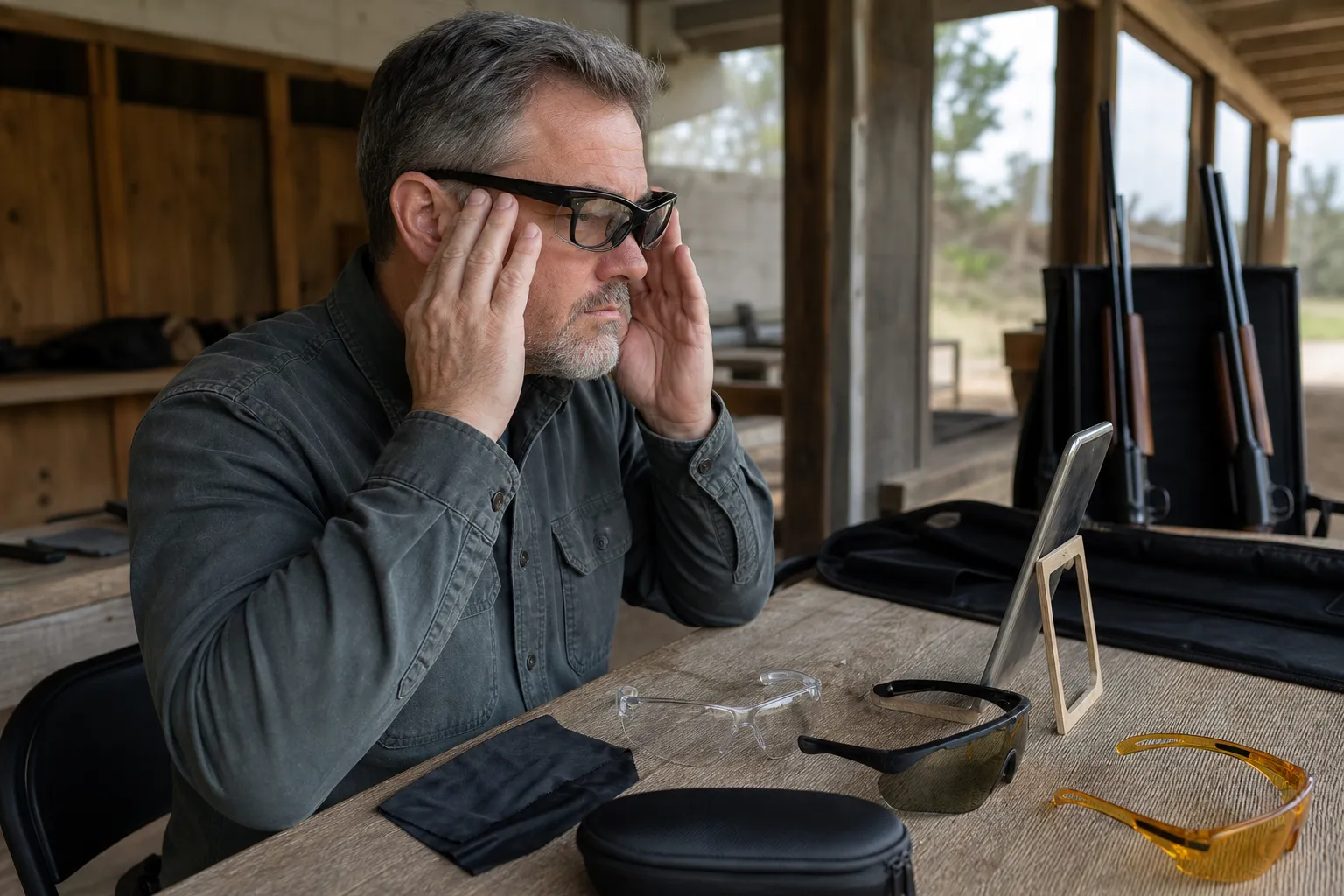
CCOHS gives a useful fit check: eyewear should cover from the eyebrow to the cheekbone and across from the nose to the bony area on the outside of the face and eyes. CCOHS also says eye size, bridge size, and temple length vary, and eyewear should be fitted so gaps between the device and the face are kept to a minimum.
For first-time range visitors, that means oversized fashion glasses, loose sunglasses, or prescription glasses with open sides should not be treated as a substitute for protective eyewear unless they are part of a rated protective design. If you wear prescription lenses, ask the range what it requires and consider rated prescription safety eyewear or protective over-glasses that do not disturb the position of your prescription lenses.
Care and replacement
Protective eyewear needs to stay in good condition. CCOHS says scratched, pitted, broken, bent, or ill-fitting devices should be replaced immediately because damaged devices interfere with vision and do not provide protection.
CCOHS also says damaged parts should be replaced only with identical parts from the original manufacturer to ensure the same safety rating, and protective devices should not be changed or modified. For a range visitor, that means do not drill, cut, bend, or alter safety glasses to make them more comfortable. Choose a pair that fits correctly in the first place.
Lens tints for different light
Lens tint is for visibility and comfort. It is not proof of impact protection, and it is not proof of ultraviolet protection. CCOHS warns that lenses can be clear, tinted, photochromic, or polarized, and that each type can offer various levels of ultraviolet protection, including no protection even when colored.
Browning’s lens color guidance gives practical shooting examples:
| Lens tint | Browning’s listed use case |
|---|---|
| Clear | Poor lighting, indoor ranges, and eye protection, with no contrast enhancement |
| Smoke | Bright days for rifle or pistol shooters, reducing light while transmitting all colors at the same level |
| Yellow | Overcast or foggy days, late afternoon, rifle or pistol shooting with black and white targets, and indoor ranges |
| Orange | Orange clay targets in dull, cloudy, dusk, or dawn conditions |
| Vermillion | Green backgrounds, highlighting orange and dampening green |
Tint choice can help you see targets better in a given light, but it does not replace checking the safety marking and fit. If a lens is comfortable but lacks the required impact marking, choose different eyewear.
What to check before your first range visit
Before you go, check the range’s eye protection rule, because ranges may set their own requirements. Look for recognized impact markings, confirm that the eyewear fits close to your face, and make sure side coverage is adequate.
If you are in a workplace setting, check OSHA requirements and your employer’s safety rules. If you are in Canada, CCOHS advises checking your jurisdiction’s legislation, and many Canadian jurisdictions require eye and face protection to meet CSA Z94.3. If you use prescription eyewear, confirm whether the range accepts rated prescription safety glasses or requires over-glasses protection.
Frequently asked questions
Do I need shooting glasses if I already wear prescription glasses?
Do not assume ordinary prescription glasses are enough. For a range visit, ask the range what it requires, and consider rated prescription safety eyewear or protective over-glasses.
What does Z87+ mean on shooting glasses?
The ISEA selection tool lists impact-rated markings that include + for a spectacle lens, Z87+ for all other lenses, Z87+ for a plano frame, and Z87-2+ for a prescription frame. The plus sign is part of the impact-rated marking system.
Are military ballistic glasses the same as ANSI Z87 glasses?
No. Military ballistic eyewear is a different category from ordinary Z87-rated safety glasses. A general “ballistic style” claim is not the same as military approval.
What eye protection standard should Canadian shooters know?
CSA Z94.3 is the Canadian eye and face protector standard. CCOHS says many Canadian jurisdictions require eye and face protection to meet CSA Z94.3 and advises checking the legislation in your jurisdiction.
Which lens tint is best for an indoor range?
Browning lists clear lenses for poor lighting, indoor ranges, and eye protection. Browning also says yellow lenses can be used in indoor ranges.
Does a dark lens mean it protects against UV?
No. CCOHS warns that lens color by itself does not prove ultraviolet protection, and colored lenses can offer no UV protection.
Sources
- 1926.102, Eye and face protection, Occupational Safety and Health AdministrationOfficial source. Accessed October 22, 2026.
- ANSI/ISEA Z87.1-2025, American National Standard for Occupational and Educational Personal Eye and Face Protection Devices, ANSI WebstoreOfficial source. Accessed October 22, 2026.
- ISEA Releases Updated ANSI/ISEA Z87.1 Standard for Eye and Face Protection, International Safety Equipment AssociationOfficial source. Accessed October 22, 2026.
- ANSI/ISEA Z87.1-2020 Eye and Face Protector Selection Guide, International Safety Equipment AssociationOfficial source. Accessed October 22, 2026.
- Always Wear Eye and Ear Protection When Shooting, National Shooting Sports Foundation. Accessed October 22, 2026.
- CSA Z94.3-2026, Eye and face protectors, ANSI Webstore and CSA GroupOfficial source. Accessed October 22, 2026.
- Eye and Face Protectors, Canadian Centre for Occupational Health and SafetyOfficial source. Accessed October 22, 2026.
- What conditions are the different colors of shooting lenses for?, BrowningOfficial source. Accessed October 22, 2026.
- ASSIST-QuickSearch Document Details, MIL-PRF-32432, Defense Logistics AgencyOfficial source. Accessed October 22, 2026.
- Protecting warfighters' vision: Eye protection, The United States ArmyOfficial source. Accessed October 22, 2026.