What Is a Ferro Rod?
A ferrocerium rod, commonly called a ferro rod, is a human made fire starter that throws hot sparks when scraped. It is different from natural flint, traditional flint and steel, and magnesium blocks, and it works best with very fine, dry tinder and careful fire safety.
By RaiS. Reviewed by RaiS. Published . 5 min read.
Research and drafting were assisted by AI. RaiS checked the facts against the sources below and approved this page.
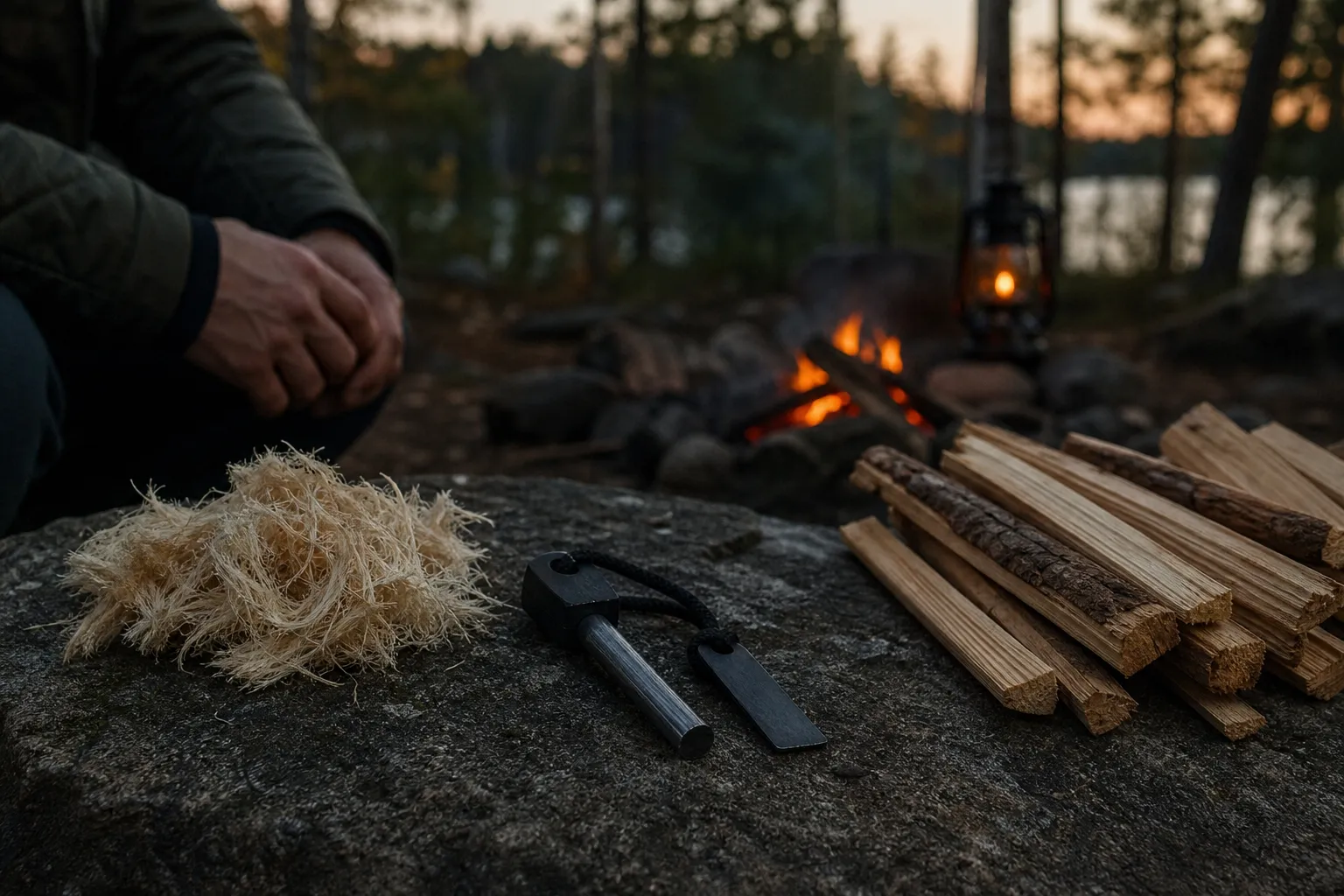
A ferrocerium rod, commonly called a ferro rod, is a human made spark producing alloy used to start fires. When you scrape it with a hard edge, tiny particles come off the rod, heat up, react with oxygen in the air, and make a shower of sparks that can ignite good tinder.
For hunters, campers, and survival minded outdoors people, the ferro rod is best understood as a spark source, not a complete fire by itself. It still needs dry tinder, small kindling, larger fuel, legal fire conditions, and a safe way to put the fire completely out.
What a ferrocerium rod is
NOAA’s CAMEO Chemicals database identifies ferrocerium as a pyrophorous spark metal, and outdoor education material from Scout Adventures describes a fire steel as a striker used with a ferrocerium rod made from a metal alloy. In plain English, that means a ferrocerium rod is a manufactured metal alloy fire starter designed to produce sparks.
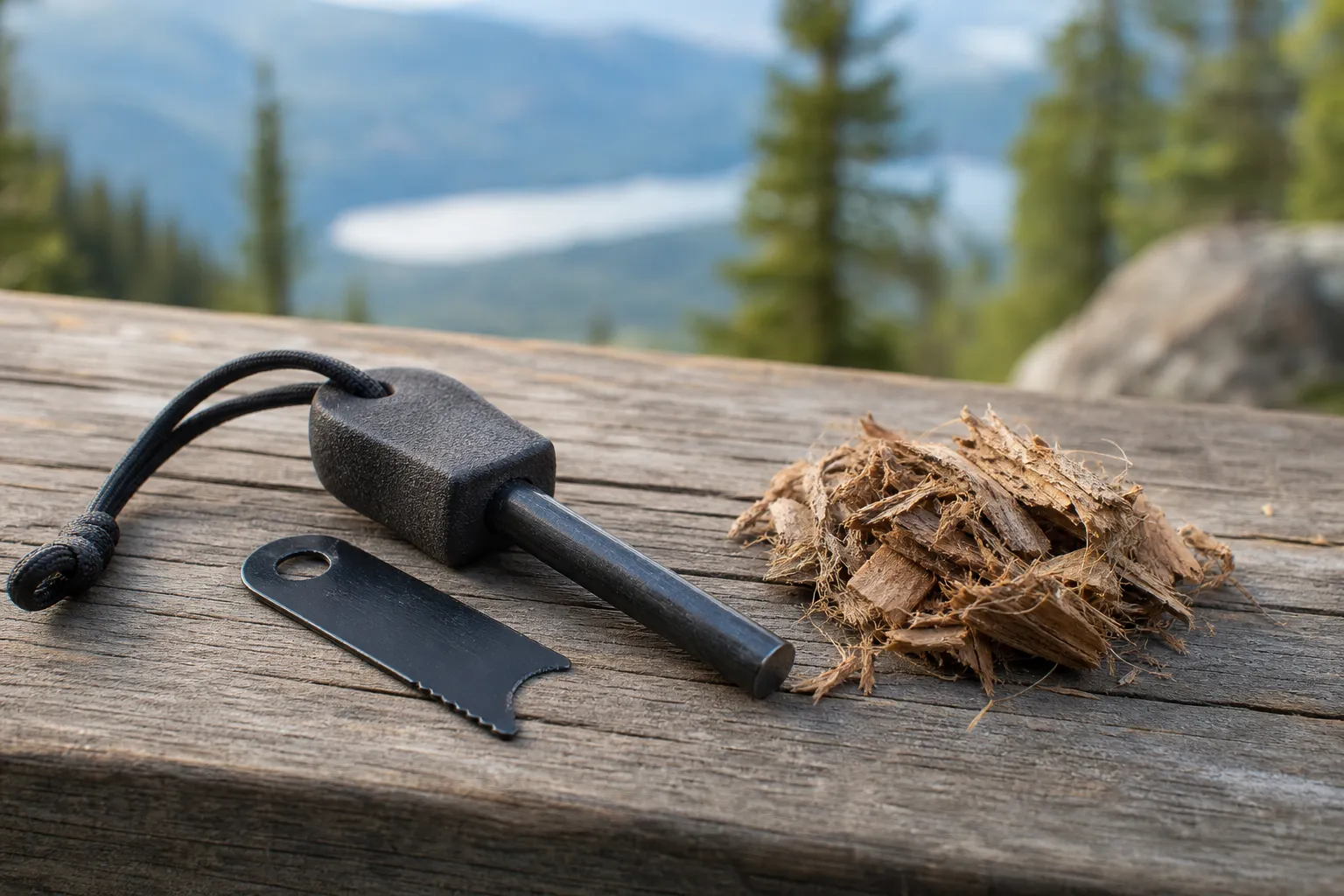
That does not mean every ferro rod has one universal recipe. For a field user, the important point is simpler: a ferrocerium rod is not natural flint. It is a manufactured alloy that produces hot sparks when scraped.
How a ferro rod makes sparks
Scouts Bushcraft explains that a modern fire steel, or ferrocerium rod, works when a hard striker scrapes the rod. That scraping produces tiny, very hot particles of ferrocerium that ignite when they contact oxygen.
The science word for this behavior is pyrophoric. A pyrophoric material can ignite easily when exposed to air. In ferro rod use, the scraped off particles are tiny, hot, and exposed to oxygen immediately. That is why a firm scrape can produce a bright shower of sparks.
Scout Adventures describes the same field process in simpler outdoor terms: shavings from the rod produce sparks, and those sparks can light a bundle of fluffy tinder. The spark is only the first step. The tinder must be fine and dry enough to catch that spark and turn it into an ember or flame.
Ferro rod vs. flint and steel
A ferro rod is often casually called a fire steel. That language can be confusing, because a ferrocerium rod is not the same thing as a piece of natural flint used with traditional steel.
Traditional flint and steel works by using a hard stone to shave hot iron particles from steel. A ferro rod works in the opposite direction: the striker scrapes particles from the ferrocerium rod itself. Those particles ignite in air and become sparks.
This is also why the word “flint” can confuse new users. It is used in more than one fire starting context.
Ferro rod vs. magnesium block
A magnesium block is a different kind of fire starter.
A plain ferro rod does not require a magnesium block. It does, however, require tinder that can catch sparks. Canadian Cadets training also warns that burning magnesium is hard to extinguish because it can burn in nitrogen and carbon dioxide. Treat magnesium use as different from an ordinary wood campfire and follow the training and safety rules for that device.
Tinder, kindling, and fuel
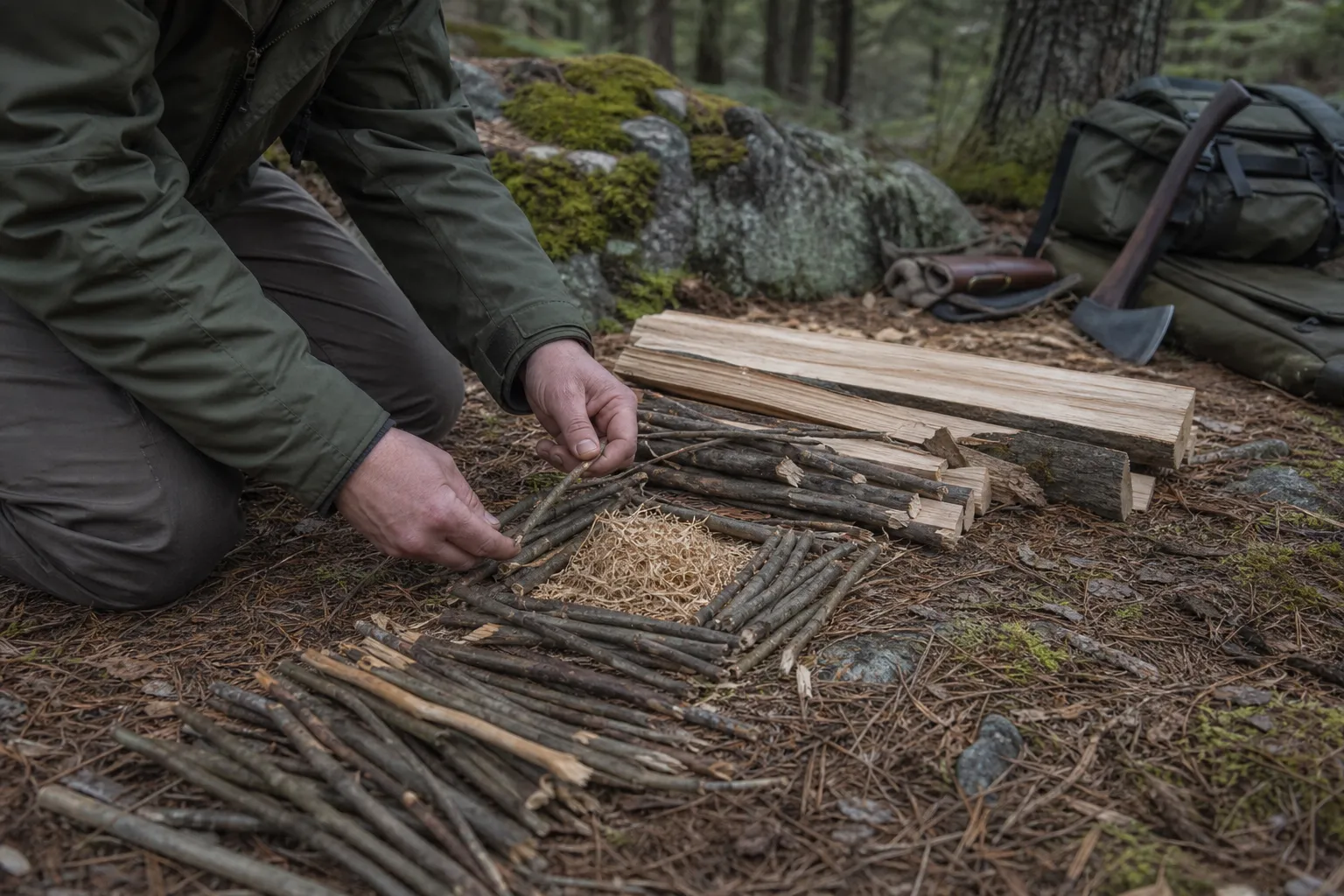
Texas A&M Forest Service describes tinder for campfires as small twigs, dry leaves or grass, and dry pine needles. Recreation.gov similarly describes tinder as the small material that starts a fire initially.
Kindling is the next size up. Texas A&M Forest Service defines kindling as dry sticks smaller than one inch around, and Recreation.gov says kindling helps light larger pieces of wood. Texas A&M Forest Service says larger dry firewood is added last.
With ferro rods, tinder quality matters a lot. Scouts Bushcraft says very fine, easily ignited materials are especially useful because a ferro rod produces a shower of hot sparks. It also advises placing tinder close to the sparks with enough airflow for the first ember or flame to develop.
If a ferro rod throws sparks but no flame appears, poor tinder is often the problem. The sparks need something fine, dry, and airy enough to catch quickly.
How to use a ferrocerium rod
Before making any flame, check whether a fire is allowed. Texas A&M Forest Service tells readers to check local outdoor burning restrictions or ordinances before lighting a campfire and to avoid fires in hot, dry, or windy conditions. The Bureau of Land Management also advises checking regional fire restrictions before heading onto public lands.
Once you have confirmed that a fire is allowed, follow a simple sequence.
Prepare the site first. Use a legal fire site. Leave No Trace says to use established fire rings, pans, or mound fires where fires are permitted.
Have tools for control and extinguishing ready. Texas A&M Forest Service says to keep a water source and shovel nearby when having a campfire.
Gather the materials before striking sparks. Collect tinder, kindling, and larger fuel before lighting. Texas A&M Forest Service lists tinder first, kindling second, and larger dry firewood last.
Put the tinder where sparks can reach it. Scouts Bushcraft says tinder should be close to the sparks and have enough airflow for the first ember or flame.
Scrape so the sparks land in one spot. A hard striker scraping the rod produces the hot particles. Keeping the striker steady and drawing the rod back can help direct the sparks into the same place in the tinder.
Feed the new flame gradually. Once the tinder catches, add small kindling. Add larger dry firewood only after the kindling is burning well. Texas A&M Forest Service says larger firewood is added last.
The key is preparation. A ferro rod may throw plenty of sparks, but the fire grows only if the tinder catches, the kindling takes over, and the small flame has enough space to grow.
Fire safety and low-impact campfires
A ferro rod is small, but the fire it starts is not automatically small or safe. Smokey Bear says not to build a campfire where campground rules, area rules, event rules, or local laws prohibit it, and not in hazardous dry or windy conditions.
Leave No Trace recommends using established fire rings, pans, or mound fires where fires are permitted. It also says to keep fires small and use only sticks from the ground that can be broken by hand.
Never leave a fire unattended. U.S. Forest Service guidance states that directly, and it also says ashes should be cool to the touch before leaving. The same guidance summarizes the standard clearly: if it is too hot to touch, it is too hot to leave.
For ordinary campfires where water extinguishing is appropriate, Smokey Bear teaches the drown, stir, drown, and feel method. Drown the fire, stir the ashes, drown it again, and feel for remaining heat. Smokey Bear says to hover the back of your hand over the ashes to check that the embers are cool and not to leave until the fire is entirely out.
Before using any fire starter, confirm current rules with the land manager or local agency for the exact place and date of your trip. Check fire bans, campground rules, public land restrictions, weather, and whether water extinguishing is appropriate for the type of fire or material involved.
Frequently asked questions
Is a ferro rod the same as flint?
No. A ferrocerium rod is a manufactured spark producing alloy. It is not the same as natural flint stone used in traditional flint and steel.
How does a ferro rod make sparks?
Scouts Bushcraft explains that a hard striker scrapes the rod and produces tiny hot particles of ferrocerium. Those particles ignite when they contact oxygen, creating sparks.
Do I need a magnesium block to use a ferro rod?
No. A plain ferro rod can ignite suitable tinder without a magnesium block. It still needs tinder that can catch sparks.
What tinder works best with a ferro rod?
Scouts Bushcraft says very fine, easily ignited materials are especially useful with a ferro rod. Texas A&M Forest Service lists tinder examples such as small twigs, dry leaves or grass, and dry pine needles.
What should I check before starting a campfire with a ferro rod?
Check local restrictions, campground rules, public land fire restrictions, weather, and site conditions. Texas A&M Forest Service and the Bureau of Land Management both advise checking restrictions before lighting or heading out.
How do I know a campfire is out?
Smokey Bear teaches the drown, stir, drown, and feel method for fully extinguishing a campfire. U.S. Forest Service guidance says that if it is too hot to touch, it is too hot to leave.
Sources
- Campfire Safety Tips, Recreation.govOfficial source. Accessed October 23, 2026.
- FERROCERIUM, NOAA CAMEO ChemicalsOfficial source. Accessed October 23, 2026.
- Customizing the Appearance of Sparks with Binary Metal Alloys, National Library of Medicine, PMC. Accessed October 23, 2026.
- Economic Geology Series 11, Cerium and Thorium section, Government of Yukon EMR Library, Geological Survey of Canada documentOfficial source. Accessed October 23, 2026.
- Principle 5: Minimize Campfire Impacts, Leave No Trace Center for Outdoor EthicsOfficial source. Accessed October 23, 2026.
- How to Put Out a Campfire, Smokey Bear, USDA Forest Service, National Association of State Foresters and Ad Council campaignOfficial source. Accessed October 23, 2026.
- Know Before You Go, Dispersed Camping, U.S. Forest ServiceOfficial source. Accessed October 23, 2026.
- Engineering and Mining Journal-Press, Vol. 118, Issue 8, Engineering and Mining Journal-Press archive. Accessed October 23, 2026.
- Light a Fire Activity Notes, Scout Adventures. Accessed October 23, 2026.
- How to Use a Fire Steel, Scout Bushcraft. Accessed October 23, 2026.
- Natural Tinder Identification, Scout Bushcraft. Accessed October 23, 2026.
- Try using a flint and steel, Scouts. Accessed October 23, 2026.
- EO M490.05, Light Fires Using Improvised Ignition, Canadian Cadet OrganizationsOfficial source. Accessed October 23, 2026.
- A-CR-CCP-804/PF-001, EO M490.05, Canadian Cadet Organizations training material copyOfficial source. Accessed October 23, 2026.
- Wildland Fire: What Is Fire?, U.S. National Park ServiceOfficial source. Accessed October 23, 2026.
- Campfire Safety, Texas A&M Forest ServiceOfficial source. Accessed October 23, 2026.
- BLM Fire Restrictions, Bureau of Land ManagementOfficial source. Accessed October 23, 2026.
- Ferrocerium. Accessed October 23, 2026.
- Ferrocerium. Accessed October 23, 2026.
- Ferrocerium. Accessed October 23, 2026.