Hunting Camo Patterns Explained
Hunting camouflage works by blending color and texture into the background, breaking up the human outline, or doing both. New hunters should match color, contrast, pattern scale, season, terrain, game animal, clothing performance and local safety rules instead of shopping by pattern name alone.
By RaiS. Reviewed by RaiS. Published . 8 min read.
Research and drafting were assisted by AI. RaiS checked the facts against the sources below and approved this page.
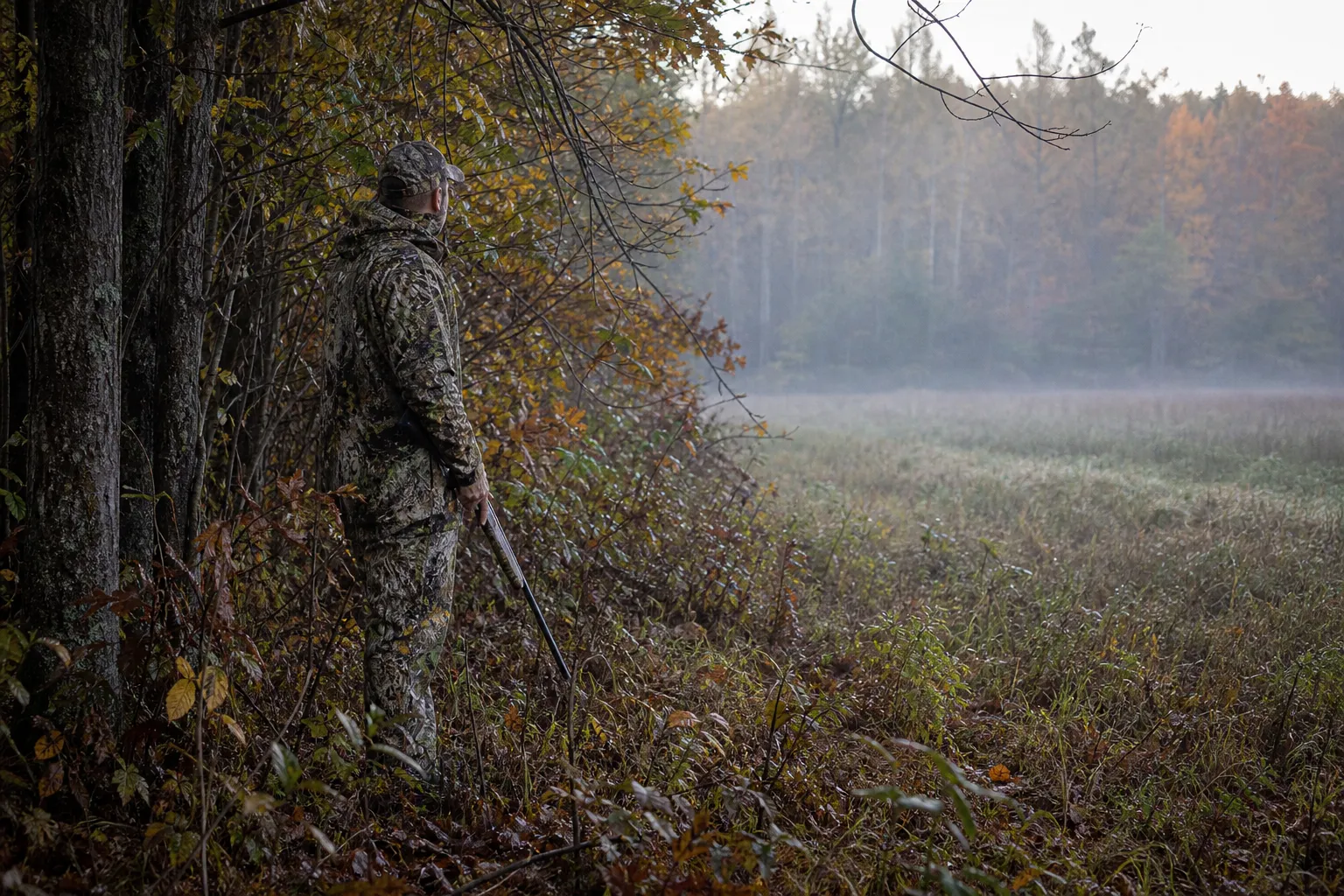
Hunting camo is trying to do two simple things: help your clothing resemble the background, and interrupt the easy outline of a standing or sitting person. For a new hunter, the useful question is not “What is the best camo?” It is “Do the color, contrast and pattern scale fit the place and season I will hunt?”
What camouflage is trying to do
Camouflage can work by matching the colors and textures around you, by breaking up your shape, or by combining both ideas. The Bureau of Land Management describes effective camouflage as multiple colors in an organic pattern that repeats surrounding colors, including shadows, and breaks up the form of an object.
That is why two patterns that look very different on a rack can both make sense in the field. One may look like bark, leaves, grass or brush. Another may use larger dark and light shapes that make a human outline less obvious. The Bureau of Land Management also describes a two scale idea in some camouflage: a larger pattern disrupts the subject, while a smaller pattern blends with background textures and colors.
For hunting clothing, think beyond the pattern name. Look at the dominant background where you will sit or move. Is it dark timber, leaf litter, grass, cattails, sage, rock, snow or open ground? Then look at shadows, vertical trunks, horizontal grass, and how much open space is behind you.
Movement still matters. UGA Deer Lab says the deer visual system senses movement better than humans. Iowa DNR also says movement is what really tips deer off, not orange.
Three useful camo families
For new hunters, it is often clearer to think in three practical families: mimicry, breakup and digital.
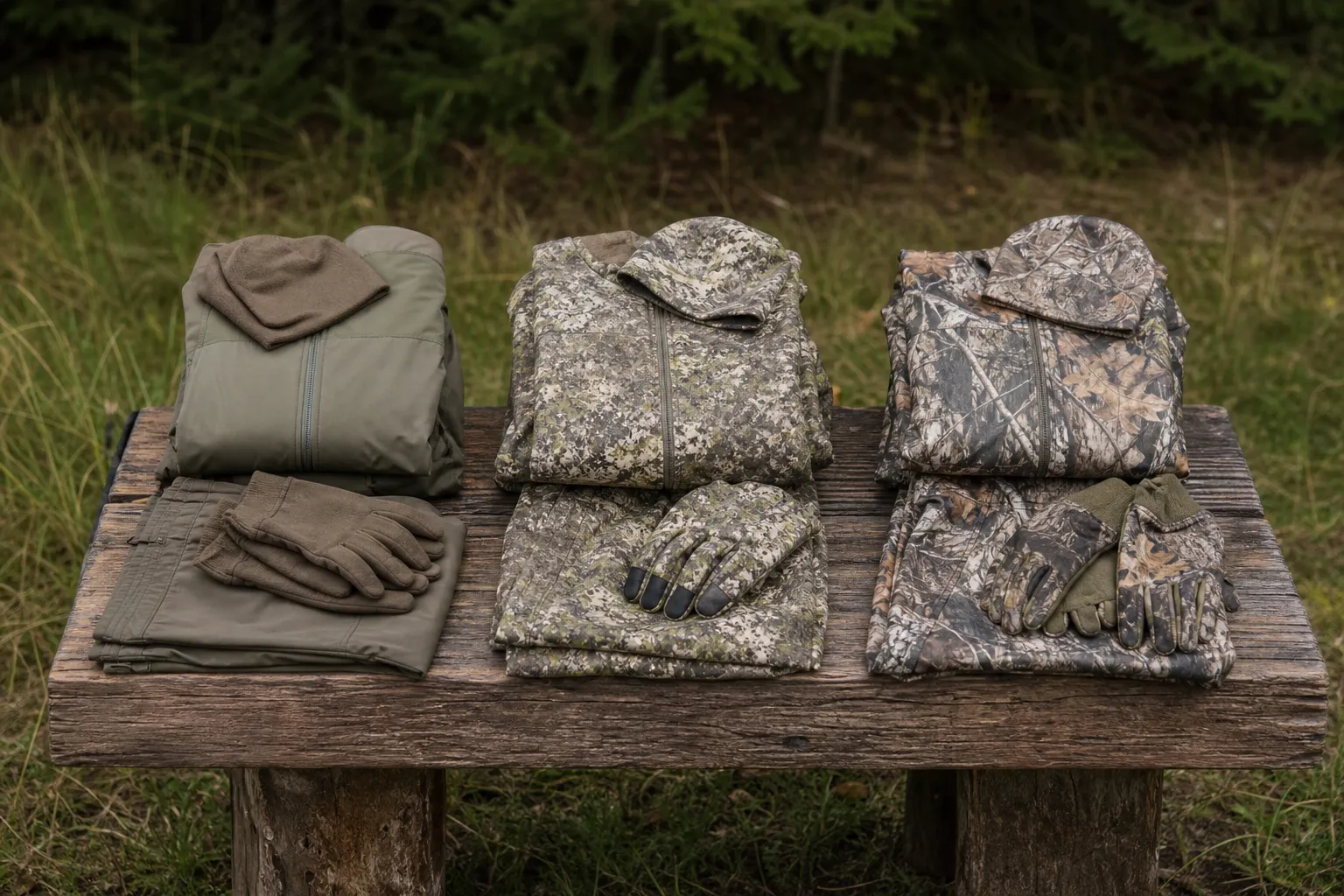
Mimicry, also called stick and leaf
Mimicry patterns try to look like the actual setting.
These patterns may show bark, branches, leaves, grass, rocks, brush or other natural elements. Realtree says its 1988 Brown Leaf and Grey Leaf patterns added realistic leaves and branches over a bark like pattern. Realtree also says its 1991 All Purpose Grey and Brown pattern included a lifelike tree trunk, leaves, warm gray tones and branches.
Mossy Oak says later design advances included photorealistic 3D elements in its patterns, and describes its current pattern line as using photorealistic 3D imagery and designs for different species and seasons.
Breakup or disruptive camo
Breakup patterns are meant to interrupt the human form. They may still use natural elements, but the important feature is the way light, dark and shape keep a person from looking like a clear vertical figure.
Realtree describes EDGE as a pattern intended to disrupt the human form at distance while also concealing the hunter close up. Realtree also says EDGE uses open pockets of light and shadow, leaves and crisscrossing branches to disrupt the human shape.
This is the family to think about when the background is mixed, shadowy, or visually busy. A pattern that has enough contrast to break the outline can be useful when a flat color or very small detail would look like one solid block from a distance.
Digital or pixelated camo
Digital camouflage uses blocky or pixelated shapes.
A clear military example is CADPAT. Canada’s Department of National Defence describes CADPAT as Canada’s take on disruptive camouflage. It says CADPAT’s pixelated blocks blend at distance and produce a disruptive effect.
Canada’s Department of National Defence also describes different CADPAT versions for different settings: Temperate Woodland for forest and grassland environments, Arid Regions for desert, near desert and savannah, and Winter Operations for snowy or mixed woodland terrain. That same idea applies to hunting clothing in a general way: the color set and contrast need to fit the background.
Matching camo to terrain and season
Start with the place, not the brand. Then choose clothing that matches the terrain, season and conditions you actually expect.
Hardwoods, treestands and flooded timber
Mossy Oak describes Bottomland as its original pattern and says it is used for hardwoods, treestands and flooded timber environments. That tells a new hunter what to look for in this kind of setting: bark tones, trunk shapes, leaf litter colors and darker shadow elements.
In hardwoods, backgrounds often include vertical trunks, rough bark, dark gaps, fallen leaves and shaded ground. A pattern with trunk, branch and leaf elements can make visual sense if those elements match the place you are hunting.
Open country and arid terrain
Realtree describes MAX 1 as a broad terrain pattern built from neutral earth tones, prairie grasses, brush, rock, sage and open zones. Realtree recommends it for sage covered hillsides, mesquite flats, croplands, wide open prairies, deserts and rocky terrain.
The lesson is the same even if you choose another pattern. In open or dry country, very dark woodland camo can stand out. Lighter earth tones, grass shapes, rock colors, sage tones and more open visual space are often the features to compare.
Wetlands and waterfowl settings
Wetland backgrounds are different from oak woods or rocky country. Realtree says Advantage Wetlands, introduced in 1998, was its first camouflage pattern designed specifically for waterfowl environments.
Mossy Oak says Shadow Grass Blades was developed around waterfowl settings with grass and field edge duck holes. Mossy Oak also says Shadow Grass Blades uses individual grass blades and thatch to create depth and break up a hunter’s outline.
For a new hunter, that points to grasses, reeds, cattails, thatch, mud colors and water edge vegetation. A leafy woodland pattern may not match a blind surrounded by pale grass or cattails.
Spring and early fall turkey woods
Mossy Oak says Obsession uses mottled bark, limbs, pine and oak foliage, and color tones for spring and early fall turkey woods.
That gives a practical clue for seasonal matching. Early green foliage, pine, oak, limbs and mottled bark can look different from the same woods after leaves drop. A camo pattern that looked right in late fall may not match a greener spring background.
Late fall, winter and snow
Canada’s Department of National Defence describes a CADPAT Winter Operations version for snowy or mixed woodland terrain. That military example shows the basic issue: snow or mixed snow and timber changes the background enough that the same clothing can look much darker than it did earlier in the year.
Season matters because vegetation, leaf cover and ground color change. Before a hunt, compare your clothing to the background at the time you will hunt, not just to a product photo.
A short history of camouflage and hunting patterns
Organized camouflage grew strongly from military needs. The National WWI Museum says World War I camouflage was used to hide soldiers, artillery and military emplacements.
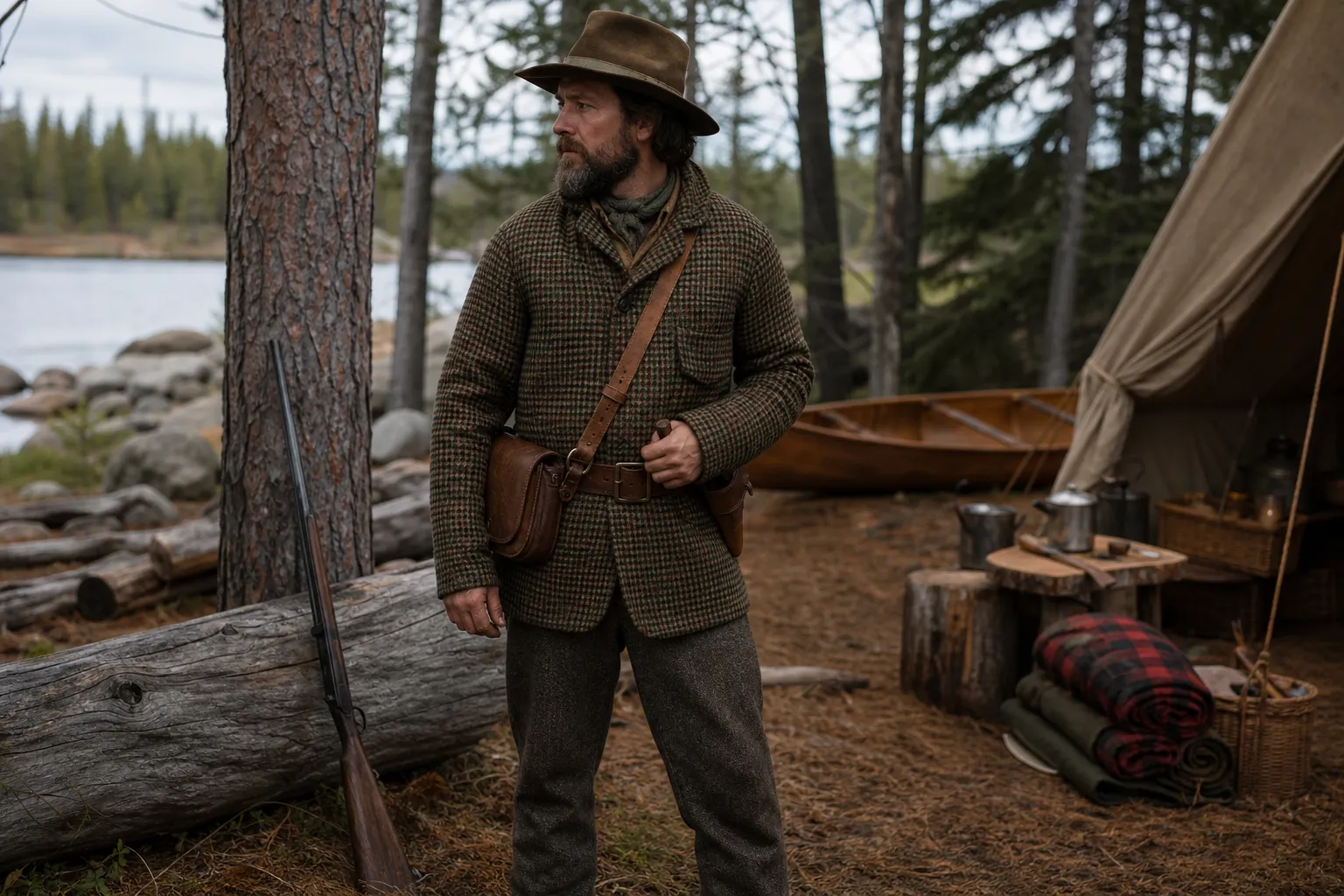
Artists were part of the early work. The National Army Museum says artists helped devise early British Army camouflage patterns during the First World War. The same museum says camouflaged combat dress became widely available only in the 1970s.
Not all camouflage is meant simply to disappear. The National WWI Museum says dazzle camouflage on ships did not hide the ships. Instead, it made submarine commanders misjudge where a ship’s front was located and what direction it was moving.
Modern hunting camo has its own commercial history. Realtree’s company history says Bill Jordan began by sketching oak bark in Columbus, Georgia, in 1984 for a pattern that looked like real woods rather than military style hunting apparel camo. Realtree says the first Realtree pattern was printed on February 11, 1985, and says Bill Jordan introduced a bark like camouflage in 1986, the pattern now known as Realtree.
Mossy Oak also traces its start to 1986. Mossy Oak says founder and CEO Toxey Haas started the company with a concept based on Mississippi dirt, sticks and leaves. Mossy Oak says its first pattern was Mossy Oak Bottomland.
Those two 1986 stories are important because they show a shift in hunting clothing toward realistic outdoor elements: bark, dirt, sticks, leaves and later more specialized patterns for specific environments.
Deer vision and blaze orange
Deer do not see the world exactly as humans do. UGA Deer Lab says white tailed deer have strong short wavelength perception, including blues and ultraviolet light, but less sensitivity to oranges and reds than humans. A 2003 USDA affiliated Wildlife Society Bulletin review says white tailed deer possess the anatomical requirements for color vision, and that trained cervids confirm deer see color.
Iowa DNR says blaze orange appears more like white or gray to deer, and that movement is a more important warning cue than orange. That is why safety color and careful movement are separate issues. Camo may help you match the background, but it does not replace safe, legal visibility where blaze orange or other safety colors are required.
For more on safety color basics, see our blaze orange guide. Before hunting, confirm the current blaze orange or other visibility rules with the state or provincial wildlife agency for the exact season, method and place you plan to hunt.
How to choose without chasing “the best” pattern
Use a simple field checklist:
- Match the main background color. Compare your clothing to the woods, grass, brush, rock, mud, snow or crop field you will actually use.
- Match the amount of contrast. Dark timber, bright grass and pale open country do not call for the same light and dark balance.
- Match the scale. Fine detail can blend close up, while larger disruptive shapes may help break the outline at distance.
- Match the season. Green foliage, brown leaf litter, dry grass and snow can change the look of the same location.
- Match the hunt. Hardwoods, treestands, flooded timber, wetlands, open country and turkey woods all present different backgrounds.
- Follow safety rules. Camo choice does not override blaze orange or other visibility requirements.
A good camo choice is not a magic pattern. It is clothing that fits the background, breaks up your shape, lets you hunt comfortably, and complies with the current rules where you hunt.
Frequently asked questions
What are the main types of hunting camo?
A practical way to group them is mimicry or stick and leaf patterns, breakup or disruptive patterns, and digital or pixelated patterns.
Did Realtree and Mossy Oak both start in 1986?
Realtree says Bill Jordan introduced a bark like camouflage in 1986, the pattern now known as Realtree. Mossy Oak says founder and CEO Toxey Haas started Mossy Oak in 1986 with a concept based on Mississippi dirt, sticks and leaves.
What camo should I use in open country?
Look for lighter earth tones, grasses, brush, rock, sage and more open visual space. Realtree describes MAX 1 as using neutral earth tones, prairie grasses, brush, rock, sage and open zones, and recommends it for places such as sage covered hillsides, wide open prairies, deserts and rocky terrain.
Can deer see blaze orange?
UGA Deer Lab says white tailed deer have less sensitivity to oranges and reds than humans, while Iowa DNR says blaze orange appears more like white or gray to deer. Iowa DNR also says movement is what really tips deer off, not orange.
Is digital camo only for the military?
No. A military example can still help hunters understand the idea: pixelated blocks can blend at distance and create a disruptive effect. Canada’s Department of National Defence describes CADPAT as Canada’s take on disruptive camouflage.
Should I buy camo by brand or by terrain?
Start with terrain and season. Compare the pattern’s color, contrast and scale to the background you will hunt, such as hardwoods, open country, wetlands, turkey woods or snowy mixed timber.
Sources
- Company History, RealtreeOfficial source. Accessed October 22, 2026.
- License Realtree EDGE Camo, Realtree B2BOfficial source. Accessed October 22, 2026.
- Realtree Introduces New EDGE Pattern, Realtree B2BOfficial source. Accessed October 22, 2026.
- Realtree MAX 1 Camo, RealtreeOfficial source. Accessed October 22, 2026.
- Our Story, Mossy OakOfficial source. Accessed October 22, 2026.
- Camouflage Patterns, Mossy OakOfficial source. Accessed October 22, 2026.
- Obsession, Mossy OakOfficial source. Accessed October 22, 2026.
- Introducing the Latest Pattern from Mossy Oak, Shadow Grass Blades, Mossy OakOfficial source. Accessed October 22, 2026.
- Types of Camouflage: Pick the Right Pattern for Your Hunting Trip, Columbia Sportswear. Accessed October 22, 2026.
- The Use of Color for Camouflage Concealment of Facilities, Technical Note 446, Bureau of Land ManagementOfficial source. Accessed October 22, 2026.
- CADPAT: A uniquely Canadian development, Department of National Defence, CanadaOfficial source. Accessed October 22, 2026.
- The evolution of military camouflage, National Army Museum. Accessed October 22, 2026.
- To Fool the Eye! Camouflage Violin Case, National WWI Museum and Memorial. Accessed October 22, 2026.
- Camouflage: The Art of Deception, RISD Museum. Accessed October 22, 2026.
- Deer Vision, UGA Deer Lab. Accessed October 22, 2026.
- A review of color vision in white-tailed deer, USDA APHIS Wildlife Services, via University of Nebraska Digital Commons. Accessed October 22, 2026.
- Why doesn’t blaze orange give me away?, Iowa Department of Natural ResourcesOfficial source. Accessed October 22, 2026.