Hunting Knife Types: Blade Shapes, Steels and Field Tasks
Choose a hunting knife by the field task first: field dressing, skinning, caping and general camp work favor different blade shapes. Drop point, clip point, skinning, gut hook, caping and replaceable blade designs each trade control, belly, point shape and maintenance in different ways.
By RaiS. Reviewed by RaiS. Published . 7 min read.
Research and drafting were assisted by AI. RaiS checked the facts against the sources below and approved this page.
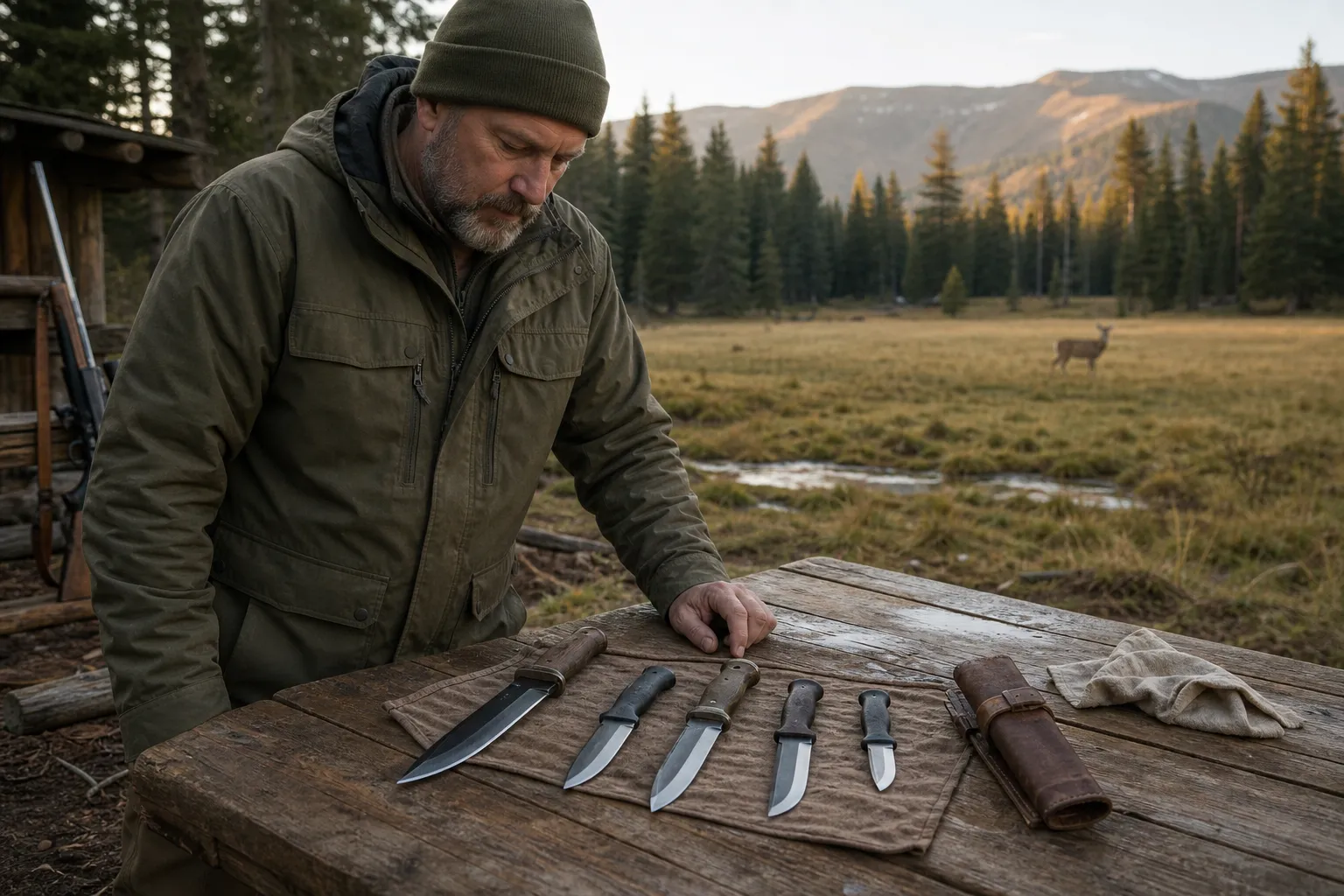
A good hunting knife is the one that fits the job: field dressing, skinning, caping, boning, fine meat cuts or general work. Texas Parks and Wildlife says field dressing should be done soon after harvest because removing the internal organs starts cooling the meat, so the knife you carry should be sharp, practical and ready for that task. For the step by step care of game after the shot, see our field dressing guide.
Choose by task, not by looks
A broad, curved blade can help with skinning. A finer point can help with detail work. A sturdy fixed blade can be a dependable choice for heavy duty hunting use. A compact folder can be easier to carry safely. A replaceable blade system can let a hunter switch blade profiles or swap a dull blade for a fresh one, as Outdoor Edge describes for its system.
The 4-H Hunting and Outdoor Skills manual also notes that many hunting tasks do not require a blade longer than about three to four inches. In other words, useful shape and control often matter more than blade length.
Fixed blade vs folding knife
Buck describes fixed blades as heavy duty hunting knives and also describes a fixed blade as sturdy, dependable and always ready. That makes a fixed blade a common fit for hunters who want a simple knife for field dressing, skinning and general cutting tasks.
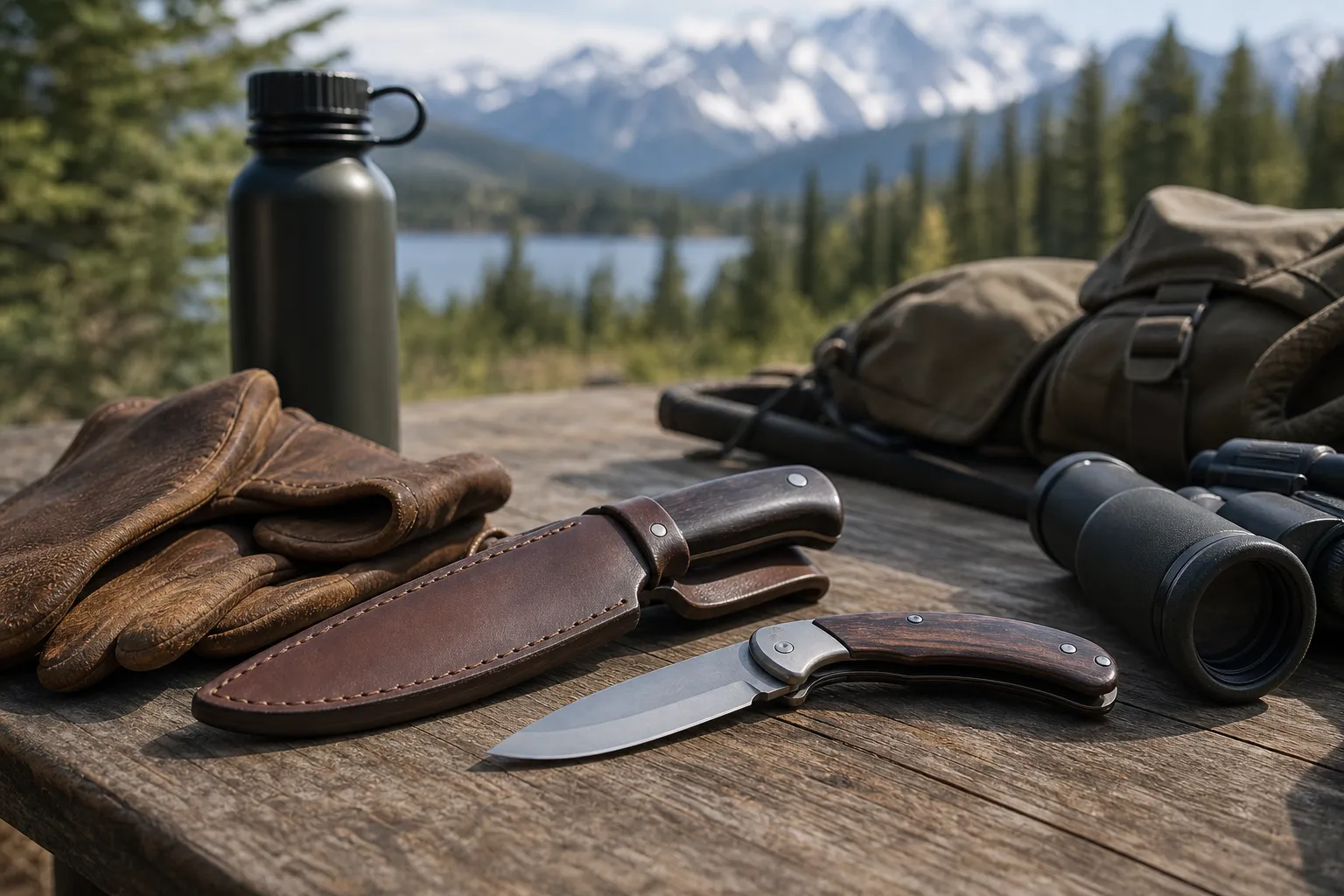
Buck describes folding knives as compact and safe to carry. A folder can be a practical choice when pack space, pocket carry or covered edge storage matters. After game processing, include the pivot and lock area in your cleaning routine, because those areas are part of the folding knife system.
Here is the basic tradeoff:
| Knife type | What manufacturers say | Field use fit |
|---|---|---|
| Fixed blade | Buck describes it as heavy duty, sturdy, dependable and ready for use. | Field dressing, skinning and general work when a simple, sturdy knife is preferred. |
| Folding knife | Buck describes it as compact and safe to carry. | Carry convenience, backup use and hunters who want a folding format. |
| Replaceable blade system | Outdoor Edge says its system can mix and match blade profiles and swap dull blades for fresh ones. | Hunters who want different blade profiles for field dressing, skinning, gutting or caping. |
Drop point vs clip point
Drop point and clip point are two of the most common hunting blade shapes, and they solve different problems.
Benchmade describes drop point blades as offering strength, control and a large belly for slicing. Buck describes a drop point hunting blade as usable as a general work knife. For many hunters, that makes the drop point the plain, practical choice when one knife needs to cover field dressing, skinning and camp tasks.
Benchmade describes clip point blades as having a sharper, finer point that is ideal for piercing. Buck describes a clip point as useful where control and detail work matter. That makes the clip point a better match for careful cuts, tight control and detail work than for jobs where a broad sweeping belly is the priority.
| Blade shape | Main traits from manufacturers | Tasks it suits |
|---|---|---|
| Drop point | Benchmade says strength, control and a large belly. Buck calls it a general work knife shape. | Field dressing, general skinning, camp chores and all around hunting use. |
| Clip point | Benchmade says a finer point for piercing. Buck emphasizes control for detail work. | Detail work, controlled piercing cuts and precise work where the point matters. |
Skinning knife
A skinning knife is built around hide removal. The 4-H Hunting and Outdoor Skills manual says specialized skinning knives usually have a broad sweep of curved blade. Buck describes skinner blade shapes as primarily suited to skinning game.
Benchmade describes trailing point blades as having a long, sweeping belly useful for skinning. That long belly gives the blade more curved edge to work with, which is why skinning and trailing point styles are often discussed together.
A skinning knife may not be the most versatile shape for every camp task. Its main job is skinning game, and the broad curved profile is the feature that defines it.
Gut hook knife
Buck says a gut hook helps keep the blade away from entrails while gutting. Buck also lists a gut hook as a feature for field dressing and skinning game.
Outdoor Edge lists gutting replaceable blades for opening game without piercing organs. That describes the same general goal: opening the hide during field care while reducing the chance of cutting where the hunter does not intend to cut.
A gut hook is a feature, not a whole knife category by itself. It can appear on a fixed blade, a folder or a replaceable blade system. Choose it because you want that field dressing feature, not because it replaces a sharp main edge.
Caping knife and detail blades
Caping is detail work around the head and neck. Outdoor Edge lists caping replaceable blades for detailed work around the head and neck. Buck also describes clip points as useful when control and detail work matter.
For a hunter preparing a mount, the important traits are control and a blade profile suited to fine work. A large general purpose knife may be useful for other field tasks, but caping rewards a smaller, more controllable blade shape.
Replaceable blade hunting knives
Outdoor Edge says its replaceable blade system can use different blade profiles for different tasks. It lists drop point replaceable blades for general purpose skinning and field dressing, gutting blades for opening game without piercing organs and caping blades for detailed head and neck work.
Outdoor Edge also says its system lets users swap dull blades for fresh ones. That is the main appeal of this category: instead of resharpening in the field, the user can change the blade in that system.
The tradeoff is that the knife is part of a blade system. If you choose this style, pay attention to the profiles offered for the tasks you actually do: general field dressing, skinning, gutting or caping.
Common hunting knife steels in plain English
Buck says a good blade combines edge retention, rust resistance and ease of resharpening. Those are useful categories for hunters to compare.
No steel is best at everything. Benchmade says higher hardness can mean longer edge holding, while lower hardness can make a blade easier to sharpen. Benchmade also cautions that stainless steel does not mean rustproof.
Here are common steel terms in broad, practical language:
| Steel or steel family | What manufacturers say | What it means for a hunter |
|---|---|---|
| Stainless steel | Benchmade says stainless does not mean rustproof. | Better corrosion resistance is useful around moisture, blood and weather, but cleaning and drying still matter. |
| Tool steel | Benchmade says tool steels prioritize toughness more than corrosion resistance. | A toughness focused steel may appeal where durability matters, but corrosion care remains important. |
| 420HC | Kershaw describes 420HC as tough, corrosion resistant and easy to sharpen. | A practical steel for hunters who value simple sharpening and corrosion resistance. |
| D2 | Kershaw describes D2 as a semi stainless tool steel known for excellent edge retention. | A choice for hunters who value edge retention and understand it is described as semi stainless. |
| CPM S30V | Kershaw describes CPM S30V as a premium steel that can take and hold an edge extremely well. | A steel for hunters who place a high value on edge holding. |
Handles, grip and control
Buck says rubber, Micarta and textured handles help with grip in wet conditions. That matters because field dressing and skinning are not clean, dry bench tasks.
A good hunting knife should let the user control the edge. The blade shape, handle texture and sharpness all work together. Texas Parks and Wildlife says a sharp knife makes game cleaning safer and easier, and North Carolina Wildlife Resources Commission describes a sharp knife as able to glide along without the need to saw during field dressing.
Safety and care
Start with a sharp knife. Texas Parks and Wildlife says a sharp knife makes game cleaning safer and easier.
Use the right blade for the job. A skinning blade is shaped for skinning. A gut hook is meant to help during gutting. A caping blade is for detailed head and neck work. A drop point is a strong general purpose shape, while a clip point offers a finer point for piercing and detail work.
Keep the knife clean and dry after use. Benchmade cautions that stainless steel can still rust, so corrosion care matters even with stainless blades. For folders, clean the pivot and lock area after processing game. For replaceable blade systems, follow the maker’s directions for blade changes and safe storage.
Before hunting, review current field care guidance from your state or provincial wildlife agency and your hunter education program. Their instructions can affect how you prepare, cool, transport and document harvested game.
Frequently asked questions
What is the best hunting knife type for field dressing?
There is no single universal best knife. Buck describes fixed blades as heavy duty, sturdy and ready for use, while Outdoor Edge lists drop point replaceable blades for general purpose skinning and field dressing. Choose by the field task and the knife format you can use safely.
Is a drop point or clip point better for hunting?
They suit different jobs. Benchmade says a drop point offers strength, control and a large belly for slicing, and Buck describes it as a general work knife. Benchmade says a clip point has a finer point for piercing, and Buck notes its control for detail work.
What is a skinning knife used for?
A skinning knife is mainly for skinning game. The 4-H Hunting and Outdoor Skills manual says specialized skinning knives usually have a broad curved blade sweep, and Buck describes skinner blade shapes as best suited to skinning game.
What does a gut hook do?
Buck says a gut hook helps keep the blade away from entrails while gutting and lists it as a feature for field dressing and skinning game. Outdoor Edge lists gutting replaceable blades for opening game without piercing organs.
Can stainless hunting knives rust?
Yes. Benchmade cautions that stainless knife steel does not mean rustproof. Clean and dry the knife after use, even if the blade is stainless.
Do hunting knives need long blades?
Not always. The 4-H Hunting and Outdoor Skills manual says many hunting tasks do not require a blade longer than about three to four inches.
Sources
- Field Care of Game, Texas Parks and Wildlife DepartmentOfficial source. Accessed October 23, 2026.
- Field Dressing and Transporting Wild Game, North Carolina Wildlife Resources CommissionOfficial source. Accessed October 23, 2026.
- Big Game Field Dressing, Idaho Fish and GameOfficial source. Accessed October 23, 2026.
- Hunting and Outdoor Skills Member Manual, 4-H Shooting Sports. Accessed October 23, 2026.
- How to Choose a Hunting Knife, Buck KnivesOfficial source. Accessed October 23, 2026.
- How to Choose The Right Knife, Buck KnivesOfficial source. Accessed October 23, 2026.
- Blade Shapes, Benchmade Knife CompanyOfficial source. Accessed October 23, 2026.
- Blade Steels, Benchmade Knife CompanyOfficial source. Accessed October 23, 2026.
- What Is RazorSafe? Outdoor Edge's Replaceable Blade System, Explained, Outdoor EdgeOfficial source. Accessed October 23, 2026.
- Which Blade Steels Does Kershaw Use for its Pocketknives?, Kershaw KnivesOfficial source. Accessed October 23, 2026.
- Blade Shapes, Benchmade Knife Company. Accessed October 23, 2026.
- Blade Shapes, Benchmade Knife Company. Accessed October 23, 2026.
- Blade Shapes, Benchmade Knife Company. Accessed October 23, 2026.
- Blade Steels, Benchmade Knife Company. Accessed October 23, 2026.
- Blade Steels, Benchmade Knife Company. Accessed October 23, 2026.
- Blade Steels, Benchmade Knife Company. Accessed October 23, 2026.
- Blade Steels, Benchmade Knife Company. Accessed October 23, 2026.