Hunting Ground Blinds: Types, Setup and Concealment
Ground blinds help deer and turkey hunters hide movement at ground level, but they do not replace quiet movement, wind aware setup or safe shooting habits. The best blind type depends on how portable you need it to be, how much cover is already available and how visible the blind may be to other hunters.
By RaiS. Reviewed by RaiS. Published . 7 min read.
Research and drafting were assisted by AI. RaiS checked the facts against the sources below and approved this page.
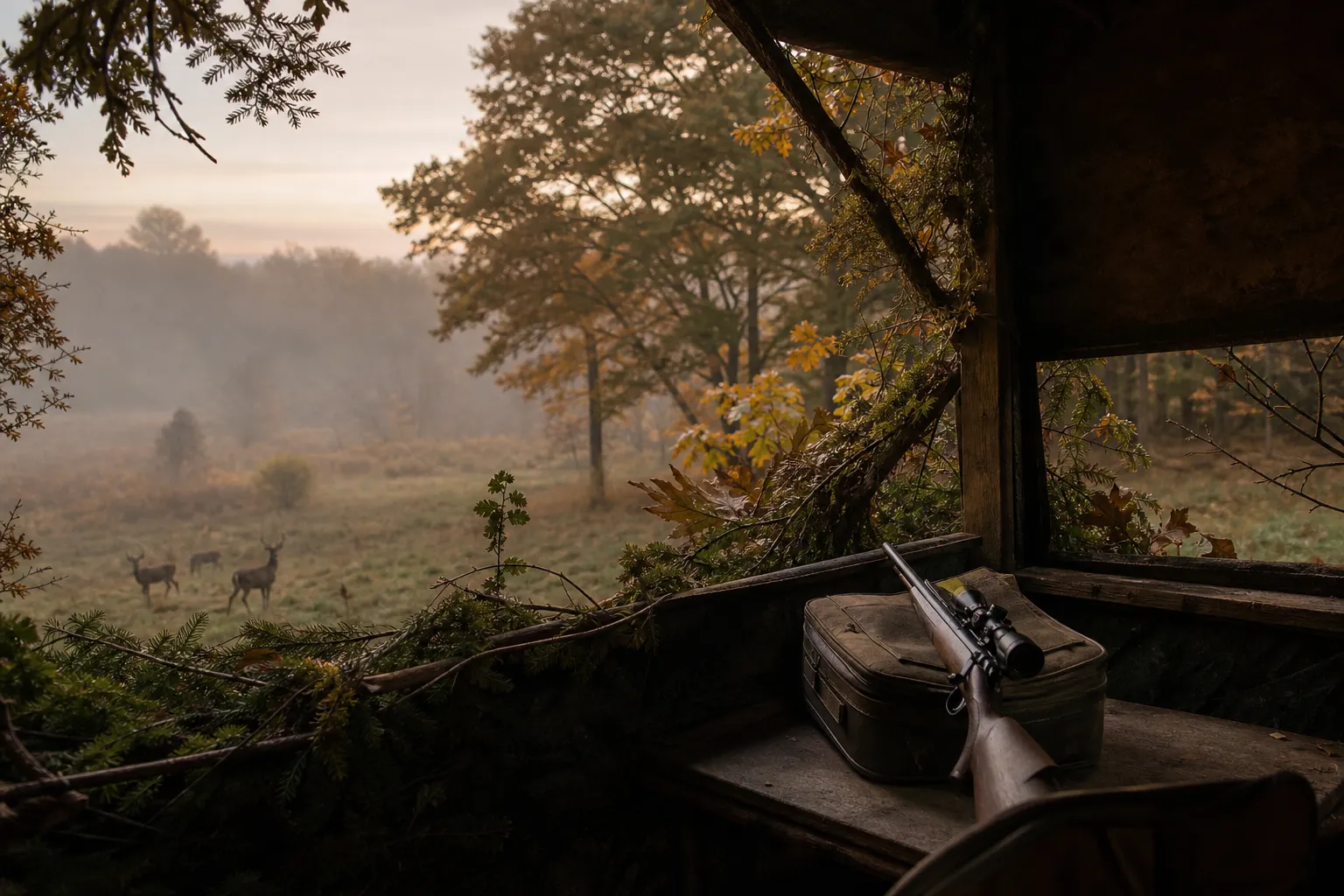
Ground blinds are ground-level cover that helps conceal a hunter from game. Hunter education material describes them as temporary or makeshift structures on the ground, ranging from natural cover behind a tree, bush, log or rock to portable enclosed camouflage-cloth blinds. A good blind can hide movement, break up your outline and make a sit more comfortable, but it does not replace stillness, quiet movement, safe muzzle control, or knowing what is in front of and behind your target.
What a ground blind does
A ground blind gives you cover at ground level. Texas Parks and Wildlife Department explains that blinds visually hide the hunter, and that some blinds can muffle sound and reduce scent to game. The same agency also cautions that hunters still need to be quiet in blinds and limit unnecessary movement.
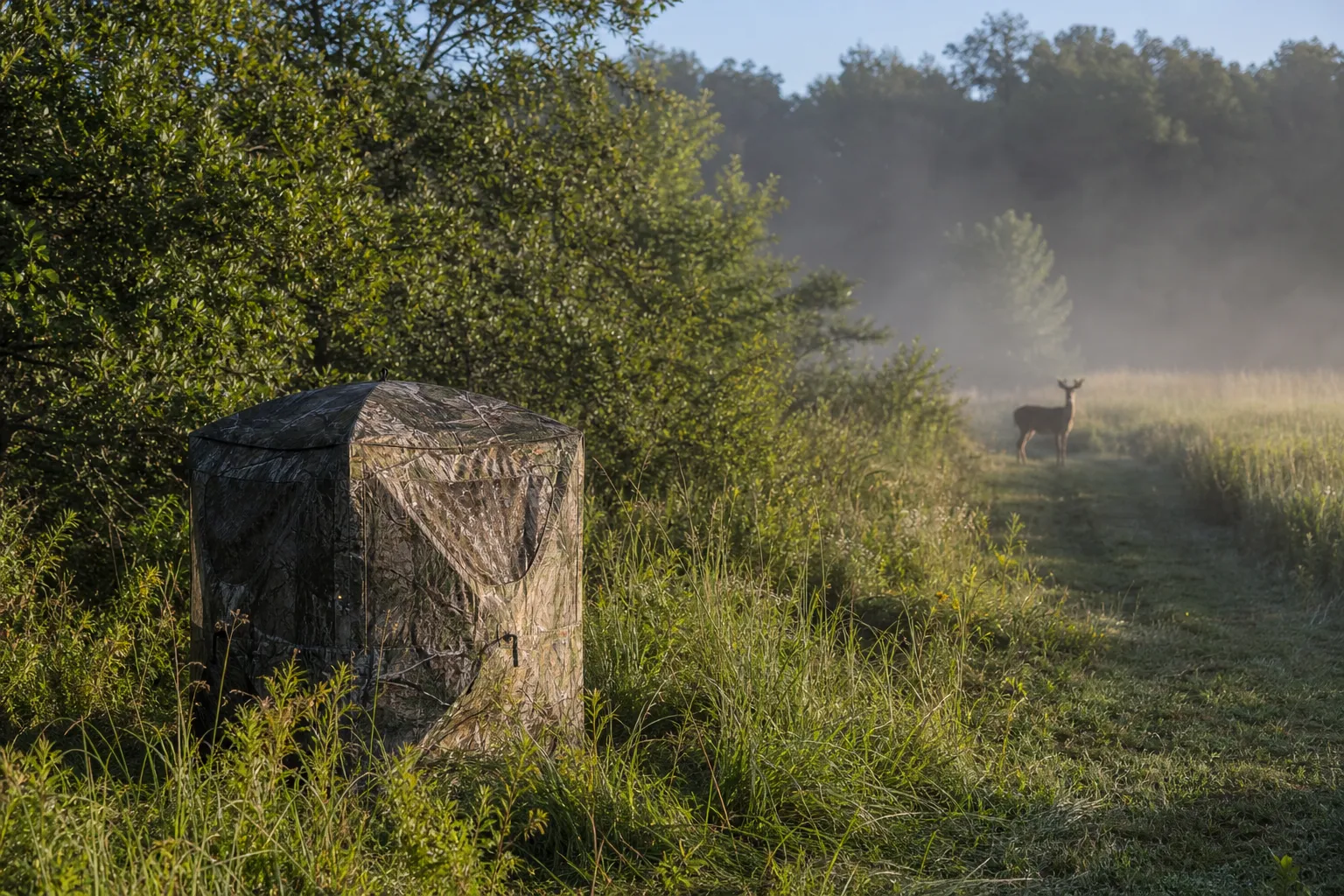
For deer hunters, concealment is mostly about controlling movement, outline and light. The University of Georgia Deer Lab says deer can sense changes in light, including movement, better than humans. That makes slow, limited movement important even inside a blind.
For turkey hunters, a blind can be especially useful because wild turkeys have sharp eyesight. Florida Fish and Wildlife Conservation Commission says a ground blind can help turkey hunters break up their outline or conceal them.
A blind also changes what other hunters can see. Ohio hunter education material warns that hunters in blinds may not be visible to others and suggests adding hunter orange to the blind. Missouri hunter education material makes the same safety point: if a blind or elevated stand hides you from game, it also hides you from other hunters.
Main types of hunting ground blinds
Ground blinds can be simple or elaborate. Texas Parks and Wildlife Department says ground blinds may be prefabricated, homemade or made from nearby brush and wood.
Hub-style pop-up blinds
A hub-style pop-up blind is the portable fabric style many hunters picture first. Texas Parks and Wildlife Department describes pop-up blinds as portable fabric blinds with collapsible poles that provide support. It also notes that they do not provide a shooting rest.
These blinds are useful when you want an enclosed blind that can be moved and brushed in.
The main concealment advantage is that the fabric shell hides larger body movement. The main setup challenge is that a new fabric shape can stand out if it is placed in the open without background cover or native brush.
Box blinds
Box blinds are more rigid enclosed blinds. Texas Parks and Wildlife Department describes box blinds as above-ground blinds that usually have built-in seats for hunters who can stand or sit to take a shot. Depending on the design, a box blind may feel more permanent than a fabric pop-up blind.
The concealment advantage is structure. Seats, windows and walls can help a hunter stay organized and reduce visible movement. The tradeoff is that placement matters, because a rigid blind can be more noticeable if it is not set where it fits the surroundings.
If a box blind is elevated, compare it with other elevated options before choosing it. Our Tree Stand Types guide explains how elevated stands differ from ground-level setups, including fall and harness concerns.
Natural brush blinds
A natural brush blind uses what is already around you. Ohio hunter education material says ground blinds can be as simple as a natural blind built behind a tree, bush, log or rock. Florida Fish and Wildlife Conservation Commission says natural turkey blinds can be built with available vegetation and fallen debris.
Natural blinds are often best when the existing cover is already in the right place. Florida Fish and Wildlife Conservation Commission says a natural turkey blind setup can start with a large tree and that a shady spot can make a sharp-eyed wild turkey less able to spot the hunter.
The concealment advantage is that the blind can look like the setting because it is made from the setting. The risk is blocking your own view.
Choosing a location
Start with the wind. Ohio hunter education material says ground blinds should be situated downwind based on the normal wind pattern for the time of day, such as the morning. That means the blind location should be chosen for the wind you expect during the hunt, not only for the best-looking shooting lane.
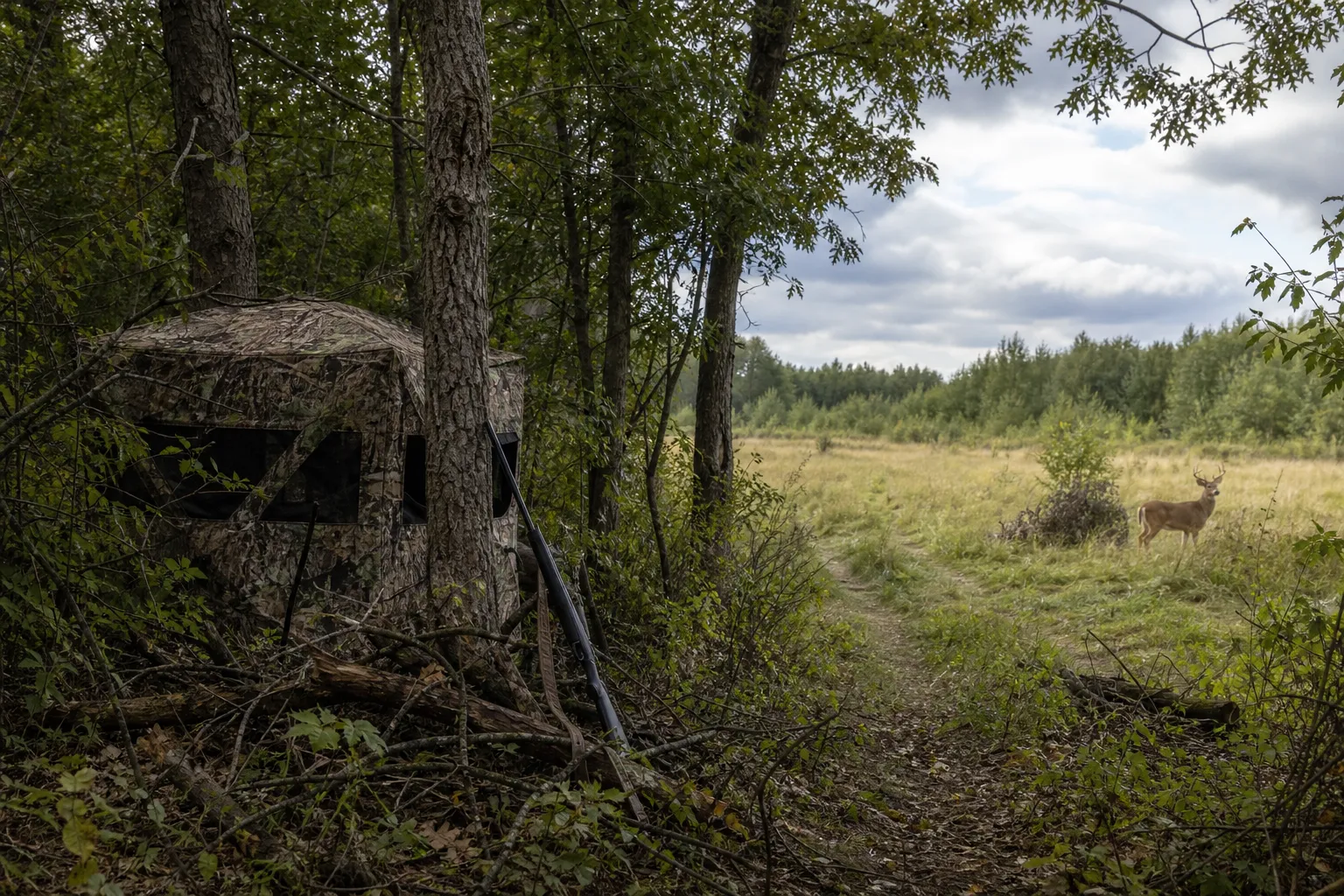
Also think about sun and background. Ohio hunter education material says blind placement should consider being away from the sun. Florida Fish and Wildlife Conservation Commission also points to shade as useful for turkey setups because it helps keep a sharp-eyed turkey from spotting the hunter.
For turkey hunting, Florida Fish and Wildlife Conservation Commission suggests considering a ground blind along the edge of a field or at an intersection of two or more forest roads where turkeys are using the area. That advice is specific to turkey hunting and does not replace scouting, current regulations or local access rules.
On private land, get permission before placing anything. Texas Parks and Wildlife Department tells hunters to get the landowner’s permission before building or setting up a blind or stand, and to get approval of the blind’s location.
Brushing in without blocking the hunt
Brushing in means using surrounding vegetation to break up the blind’s outline.
Use the nearby setting as the guide. A brush blind or pop-up tucked into background cover usually creates less contrast than the same blind standing alone. But do not cover every opening just because more brush is available.
For a turkey setup, Florida Fish and Wildlife Conservation Commission says the blind should be low enough that the hunter can see approaching turkeys and should not block the line of sight when shouldering a gun or drawing a bow. That same idea helps deer hunters too: keep the blind concealed, but keep your view and shooting lanes clear.
If you use a foldable fabric blind, follow the maker’s instructions when packing it.
Window management and a dark interior
Windows are part of the blind, not just openings to shoot through. In practice, window management is about limiting light, reducing silhouettes and keeping only the openings you need.
A bright open back window can make a hunter’s outline easier to see from the front. A darker interior helps the blind hide small movements. Keep unnecessary windows closed or narrowed, and open only the windows needed for the expected direction of approach and a safe shot.
Plan seating before animals are close. Set the chair, pack and gear where they can be reached with little motion. Florida Fish and Wildlife Conservation Commission says turkey distances are best measured after the blind is set up and before turkeys are in the area. Range markers or known distances can reduce movement later.
Remember that Texas Parks and Wildlife Department says pop-up blinds do not provide a shooting rest. If a hunter needs support, that must be considered before the hunt in a safe and lawful way, not improvised while game is close.
Staying visible to other hunters
A successful blind hides you, which can create a safety concern. Ohio hunter education material says hunters in blinds may not be visible to other hunters and that adding hunter orange to the blind can increase visibility. Missouri hunter education material recommends hunter orange on all outside surfaces of a ground blind, including the top, or above the hunter on a tree.
Hunter orange is a visibility aid for people. New York DEC says hunter orange helps make hunters more visible and helps prevent other hunters from mistaking them for game or shooting in their direction. New York DEC also says deer do not have red-sensitive cone cells and cannot tell orange from green and brown. The University of Georgia Deer Lab similarly says deer have less sensitivity to oranges and reds than humans because deer lack long-wavelength cones.
For more background on why orange helps people see hunters and why deer see orange differently, read our Blaze Orange and Deer Vision guide.
Turkey hunting has a special color concern. Florida Fish and Wildlife Conservation Commission warns turkey hunters not to wear red, white, blue or black because those colors are associated with a male turkey and could be mistaken for a gobbler by another hunter.
Safety inside and around the blind
A blind can make the hunt feel controlled, but basic firearm and field safety still apply. Ohio hunter education material tells hunters entering or exiting a ground blind to keep the muzzle pointed safely and to unload the firearm with the safety on.
Know your foreground and background before a shot. Ohio hunter education material includes safe foreground and background among placement concerns for ground blinds. A blind window can narrow your view, so confirm what is in the line of sight before aiming.
Quick setup checklist
Before the hunt:
- Choose a location downwind for the expected time of day, following Ohio hunter education guidance.
- Use shade and background cover when possible, especially for sharp-eyed turkeys.
- Get landowner permission and location approval before building or setting up a blind on private land, as Texas Parks and Wildlife Department advises.
- Brush in with native vegetation, but keep the view and shooting lanes clear.
- Manage windows so the interior stays dark and unnecessary openings stay closed.
- Set seating, gear and known distances before game is in the area.
- Add hunter orange on or near the blind where appropriate for visibility to other hunters.
Before relying on any setup, check the current hunting regulations for the state, province or property you plan to hunt. Confirm blaze orange requirements, blind placement rules, public-land rules, access permission and season-specific safety requirements with the wildlife agency or land manager.
Frequently asked questions
What is the main purpose of a ground blind?
A ground blind is ground level cover that conceals a hunter. Hunter education material describes ground blinds as anything from natural cover behind a tree, bush, log or rock to portable enclosed camouflage cloth blinds.
Are pop up blinds good for deer and turkey hunting?
They can be useful when you need a portable enclosed blind. Texas Parks and Wildlife Department describes pop up blinds as portable fabric blinds with collapsible poles, but notes that they do not provide a shooting rest.
Should I brush in a ground blind?
Brushing in can help break up the outline when it matches nearby cover. Keep your view and shooting lanes clear.
Why should I put blaze orange on or near a blind?
Hunter education material warns that a blind can hide you from other hunters as well as from game. Ohio hunter education material says adding hunter orange to the blind can increase visibility, and Missouri hunter education material recommends orange on all outside blind surfaces, including the top, or above the hunter on a tree.
Where should I place a ground blind?
Ohio hunter education material says blinds should be placed downwind based on the normal wind pattern for the time of day and away from the sun. Florida Fish and Wildlife Conservation Commission suggests turkey hunters consider field edges or forest road intersections where turkeys are using the area.
Sources
- Using Ground Blinds, Ohio Hunter Ed / Kalkomey EnterprisesOfficial source. Accessed October 25, 2026.
- Using Hunter Orange Material, Missouri Hunter Ed / Kalkomey EnterprisesOfficial source. Accessed October 25, 2026.
- Hunting from Blinds and Stands, Texas Parks and Wildlife DepartmentOfficial source. Accessed October 25, 2026.
- Ground Blind and Apparel, Florida Fish and Wildlife Conservation CommissionOfficial source. Accessed October 25, 2026.
- Regulations/Taking the Shot, Florida Fish and Wildlife Conservation CommissionOfficial source. Accessed October 25, 2026.
- Dress For Success This Turkey Season, Wisconsin Department of Natural ResourcesOfficial source. Accessed October 25, 2026.
- Hide-N-Sneak Blind Set Up Instructions, Primos Hunting. Accessed October 25, 2026.
- Ameristep FAQs, Ameristep. Accessed October 25, 2026.
- Deer Vision, UGA Deer Lab. Accessed October 25, 2026.
- Hunter Education Program, New York State Department of Environmental ConservationOfficial source. Accessed October 25, 2026.