Blaze Orange and Deer Vision: Why Hunters Wear Orange
Blaze orange helps other hunters see you, while deer do not see orange the way most people do. Deer are dichromatic, are less sensitive to long wavelengths like orange and red, and rely heavily on low light vision and movement detection.
By RaiS. Reviewed by RaiS. Published . 6 min read.
Research and drafting were assisted by AI. RaiS checked the facts against the sources below and approved this page.
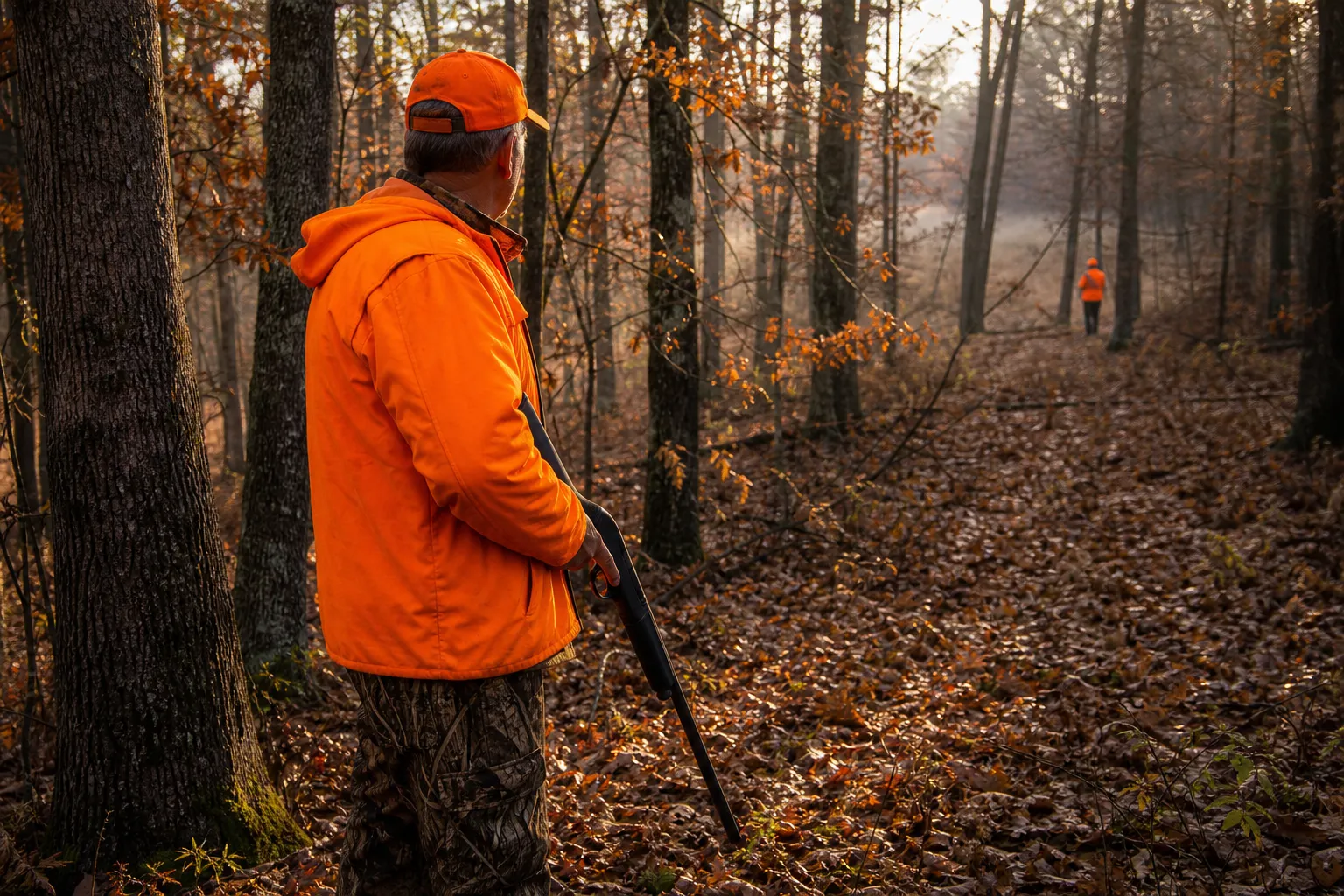
Blaze orange is worn because it makes hunters much easier for other people to see, while deer do not see orange as the same bright warning color that most humans see. University of Georgia Deer Lab explains that deer lack long wavelength cones, so they are less sensitive to oranges and reds than humans. Hunter education organizations and wildlife agencies emphasize blaze orange because it reduces visibility related risk in the field.
Do deer see blaze orange?
Deer are not completely color blind, but their color vision is not like typical human color vision. The key word is dichromatic. That means deer have two types of cone photoreceptors, while typical human color vision uses three cone types.
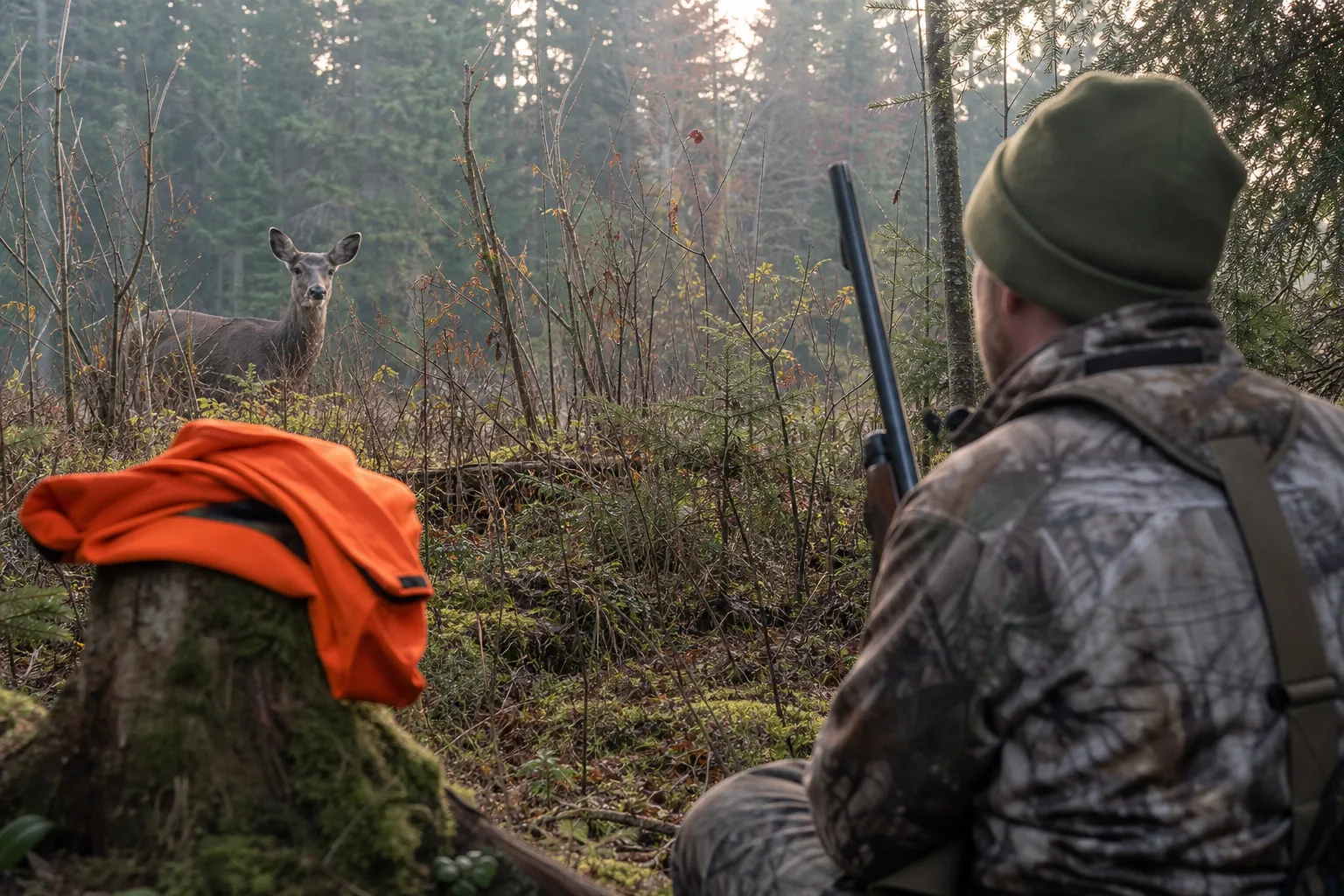
A University of Georgia related project report describes deer as dichromats, with one short wavelength cone type and one middle wavelength cone type. The report states that one deer cone photoreceptor peaks at 450 to 460 nm and another at 537 nm. Under ample light, those cone signals support perception of blue and yellow green colors.
The UGA Deer Lab states the practical result plainly: deer have excellent short wavelength color perception, including blues and ultraviolet light, but they have less sensitivity to oranges and reds than humans because they lack long wavelength cones.
So blaze orange is not invisible to deer. It is better to think of it this way: blaze orange does not stand out to deer as the same vivid, human warning color that it does to people.
How deer vision is built for the woods
Deer vision is adapted for a different job than human vision. The UGA Deer Lab says white tailed deer eye placement, pupil shape, and cone arrangement help them monitor a broad area. A 2007 Southeast Deer Study Group abstract by University of Georgia affiliated researchers also reported that deer have a visual streak that improves their ability to scan the horizon with a wide field of view.
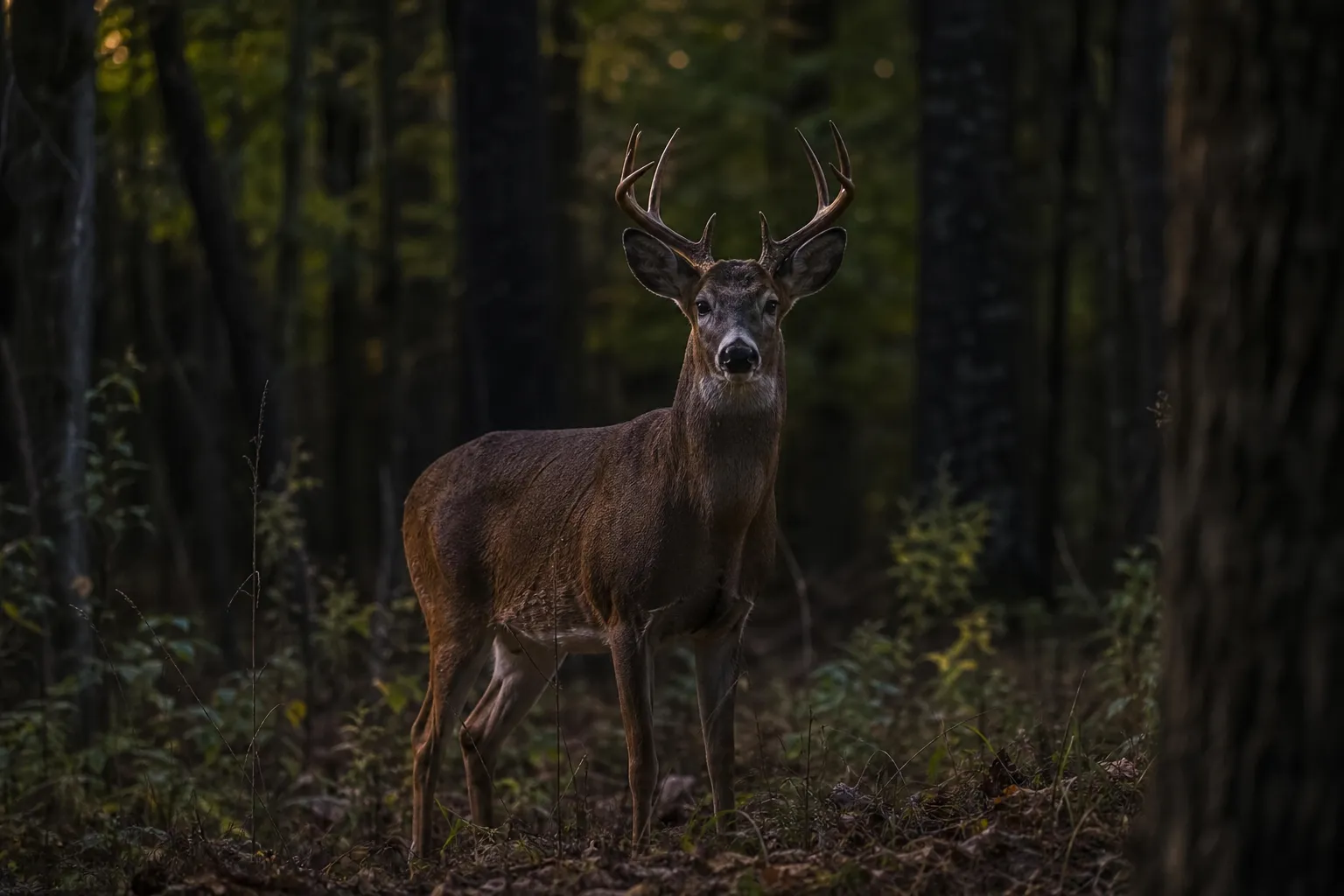
The same 2007 abstract reported that the deer retina is dominated by rod photoreceptors. Rods support vision in low light and limited color vision. A University of Georgia related report states that white tailed deer rod pigments peak at 497 nm, which corresponds to blue green light.
The UGA Deer Lab also points to the tapetum lucidum, the reflective structure at the back of the retina. The lab says it improves deer visual sensitivity in low light and improves daylight contrast. That matters because deer are often active around dim light conditions, and their visual system is built to gather light efficiently.
Movement is also important. The UGA Deer Lab states that the deer visual system senses changes in light, meaning movement, even better than humans. A 2007 Southeast Deer Study Group abstract estimated deer visual acuity at 80 percent less than humans with 20/20 vision, so deer vision is not simply “better” or “worse.” It is specialized differently.
Why orange stands out to hunters but not to deer
For people with normal color vision, fluorescent orange is a strong signal color. It contrasts sharply with many natural backgrounds and helps a person be recognized as human. The CDC describes hunter orange, also called fluorescent or international orange, as clothing worn to increase hunter visibility and reduce the chance of being mistaken for game.
Deer do not process that same orange signal the way humans do. The New York Department of Environmental Conservation states that deer do not have red sensitive cone cells and cannot tell orange from green and brown. New York DEC also states that deer see short wavelength colors such as blue, and even ultraviolet, brighter than humans do, while being less sensitive to longer wavelengths such as orange and pink.
That is why blaze orange can do two things at once. It can be obvious to another hunter, yet not be a distinctive red orange cue to a deer.
This does not mean any orange garment is automatically the same in every context. A 2012 Southeast Deer Study Group abstract by Bradley S. Cohen and University of Georgia coauthors reported that deer are dichromats with much greater sensitivity to shorter wavelengths and much lower sensitivity to longer wavelengths than humans. The same abstract reported that deer are about eight times more sensitive than humans to light around 430 to 440 nm, which is near the peak emission of many UV brighteners.
The takeaway for a new hunter is simple: the orange color itself is chosen for human visibility, not because deer see it as a bright human signal. But deer are sensitive to short wavelengths, including ultraviolet, and they are very good at detecting movement.
Why hunter orange is a safety tool
Hunter orange is not just a tradition. It is an important safety tool in the field.
IHEA USA states that wearing hunter orange helps a person be more easily seen and identified as human.
The CDC analyzed hunting associated firearm injuries in New York from 1989 to 1995. In that analysis, there were 508 reported hunting associated firearm injuries, including 39 fatal injuries. The CDC reported that 356 injuries, or 70 percent, were two party incidents. The CDC found that most injured hunters in two party incidents were not wearing hunter orange.
The mistaken for game numbers are especially direct. In the CDC analysis, 125 incidents involved an injured hunter being mistaken for game. Of those, 117 injured hunters, or 94 percent, were not wearing hunter orange. The CDC concluded that routine wearing of hunter orange can increase hunter visibility, especially when orange is displayed in all directions.
State agencies also connect fluorescent orange and hunter education with safer hunting. New York DEC states that hunter orange should be worn to make a hunter more visible and to prevent other hunters from mistaking the person for an animal or shooting in that direction. New York DEC also states that hunters who wear hunter orange are seven times less likely to be shot.
The Pennsylvania Game Commission says Pennsylvania hunting related shooting incidents have declined nearly 80 percent since hunter education training began in 1959, and it attributes the marked decline to hunter education and fluorescent orange clothing. The same agency identifies failure to positively identify the target and failure to maintain a safe zone of fire as the two main hunting related shooting incident categories in Pennsylvania.
That last point is important. Orange improves visibility, but it does not replace safe behavior. Hunter orange is one layer of protection. Positive target identification and safe zone of fire rules still matter every time.
Do orange requirements vary?
Yes. Hunter orange requirements vary by jurisdiction and by the details of the hunt. IHEA USA states that most states require hunter orange clothing for certain hunting activities, and IHEA USA tells students to use official state publications and wildlife agency websites for regulations, including hunter orange requirements.
Agency examples show why you should not rely on a general rule. Minnesota DNR states that all hunters and trappers in the field during open firearms or muzzleloader deer seasons must display blaze orange or blaze pink on the visible portion of the cap and outer clothing above the waist, with listed exceptions.
Ontario’s current hunting regulations summary says all licensed hunters, including bow hunters, during a gun season for deer, elk, or moose are required to wear hunter orange, with listed exceptions. Ontario also requires a hunter orange garment and head cover. The garment must cover at least 400 square inches above the waist and be visible from all sides.
These examples are not a legal checklist for your hunt. They show that requirements can depend on the place, species, season, hunting method, and whether a firearm season is open.
Bottom line for new deer hunters
Blaze orange is for people. It helps other hunters recognize you as human. Deer have dichromatic vision, strong short wavelength sensitivity, and lower sensitivity to long wavelengths such as orange and red, so orange is not the same vivid warning color to deer that it is to most people.
Before you hunt, check the current rules from the wildlife agency for the state, province, or territory where you will be hunting. Confirm the required color, garment type, coverage, season, species, method of take, and any listed exceptions.
Frequently asked questions
Will blaze orange spook deer?
UGA Deer Lab states that deer lack long wavelength cones and have less sensitivity to oranges and reds than humans. Orange is not the same bright warning color to deer that it is to most people, but deer are very good at sensing movement.
Are deer color blind?
Not completely. University of Georgia related research describes deer as dichromats with two cone types. They perceive some color, especially short wavelengths such as blue, but they do not have human like red orange color vision.
Can deer see ultraviolet light?
Yes. UGA Deer Lab states that deer have excellent short wavelength color perception, including blues and ultraviolet light. A 2012 Southeast Deer Study Group abstract reported that deer are about eight times more sensitive than humans to light around 430 to 440 nm, near the peak emission of many UV brighteners.
Why do hunter education courses emphasize orange?
The CDC says hunter orange is worn to increase visibility and reduce the chance of being mistaken for game. IHEA USA states that wearing hunter orange helps a person be more easily seen and identified as human.
Do I have to wear blaze orange everywhere?
Requirements vary by jurisdiction and hunt details. IHEA USA tells students to use official state publications and wildlife agency websites for regulations, including hunter orange requirements.
Sources
- Deer Vision, UGA Deer LabOfficial source. Accessed October 22, 2026.
- 30th Annual Southeast Deer Study Group Proceedings, Southeast Deer Study Group. Accessed October 22, 2026.
- 35th Annual Southeast Deer Study Group Proceedings, Southeast Deer Study Group. Accessed October 22, 2026.
- Final project report: development and evaluation of devices designed to minimize deer-vehicle collisions, phase II, Digital Library of Georgia. Accessed October 22, 2026.
- A glow up in deer communication, University of Georgia TodayOfficial source. Accessed October 22, 2026.
- Hunting-Associated Injuries and Wearing Hunter Orange Clothing, New York, 1989-1995, Centers for Disease Control and PreventionOfficial source. Accessed October 22, 2026.
- IHEA-USA Hunter Education Standards, Safe Field Practices, International Hunter Education Association-USAOfficial source. Accessed October 22, 2026.
- IHEA-USA Hunter Education Standards, Hunting Laws, Regulations and Wildlife Identification, International Hunter Education Association-USAOfficial source. Accessed October 22, 2026.
- Hunter Education Program, New York State Department of Environmental ConservationOfficial source. Accessed October 22, 2026.
- Hunting Related Shooting Incidents, Pennsylvania Game CommissionOfficial source. Accessed October 22, 2026.
- Blaze clothing requirements, Minnesota Department of Natural ResourcesOfficial source. Accessed October 22, 2026.
- General regulations, Ontario Hunting Regulations Summary, Government of OntarioOfficial source. Accessed October 22, 2026.
- O. Reg. 665/98: Hunting, Government of OntarioOfficial source. Accessed October 22, 2026.