Scent Control for Deer Hunting: How Deer Smell and What Helps
For deer hunting, scent control starts with wind, changing air movement and access routes. Clean gear can help reduce odor, but scent products should be treated as odor reduction tools with limits.
By RaiS. Reviewed by RaiS. Published . 5 min read.
Research and drafting were assisted by AI. RaiS checked the facts against the sources below and approved this page.
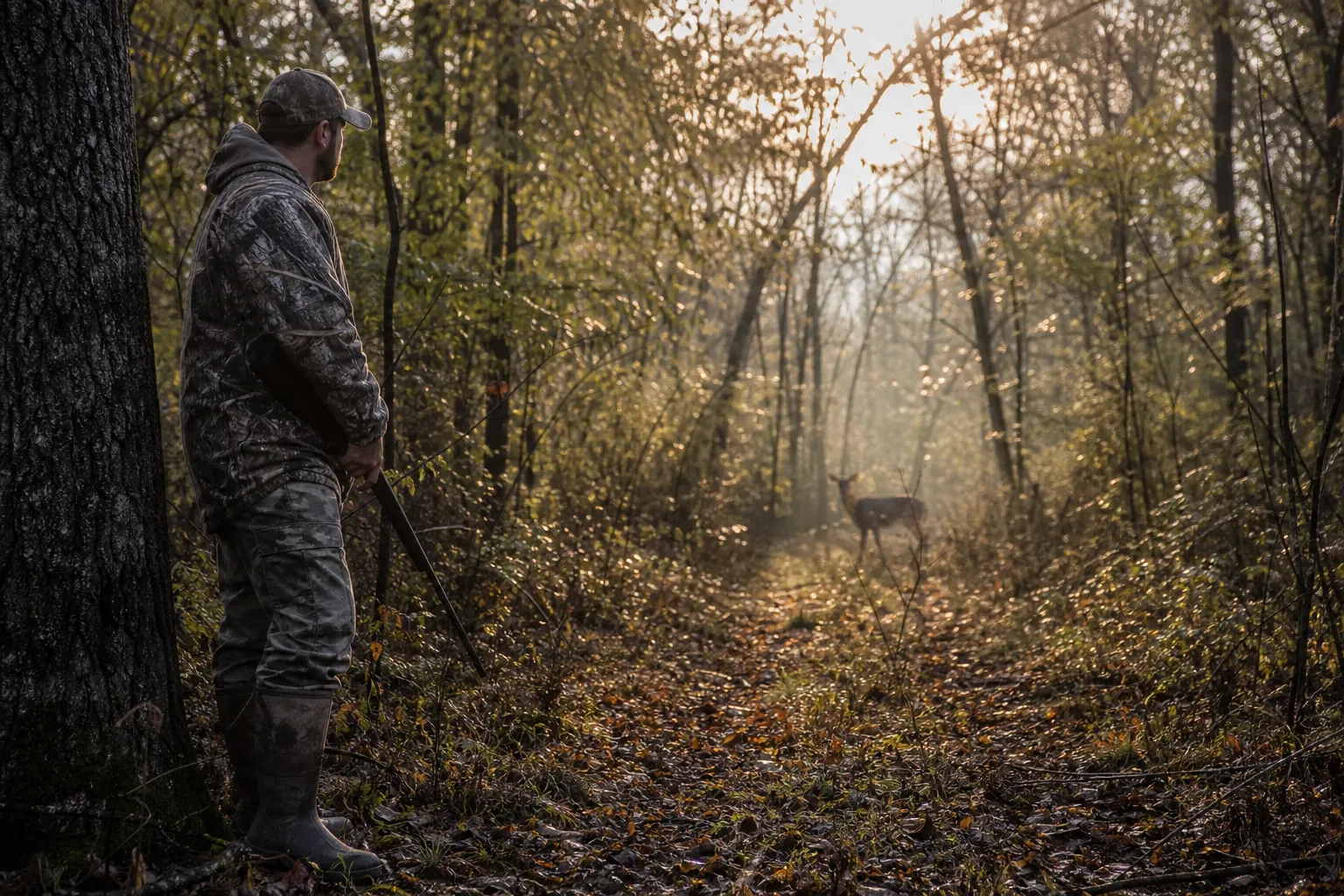
Scent control for deer hunting starts with wind awareness. Clean clothing, careful gear handling and careful routes are sensible habits, but scent products should be treated as odor reduction tools with limits rather than a way to make a hunter invisible to a deer’s nose.
How a deer smells
White-tailed deer use smell for much more than avoiding hunters. University of Missouri Extension says deer rely on smell to detect danger, identify other animals and locate food. Penn State’s Deer-Forest Study states that deer have 297 million olfactory receptors, compared with 5 million in humans.
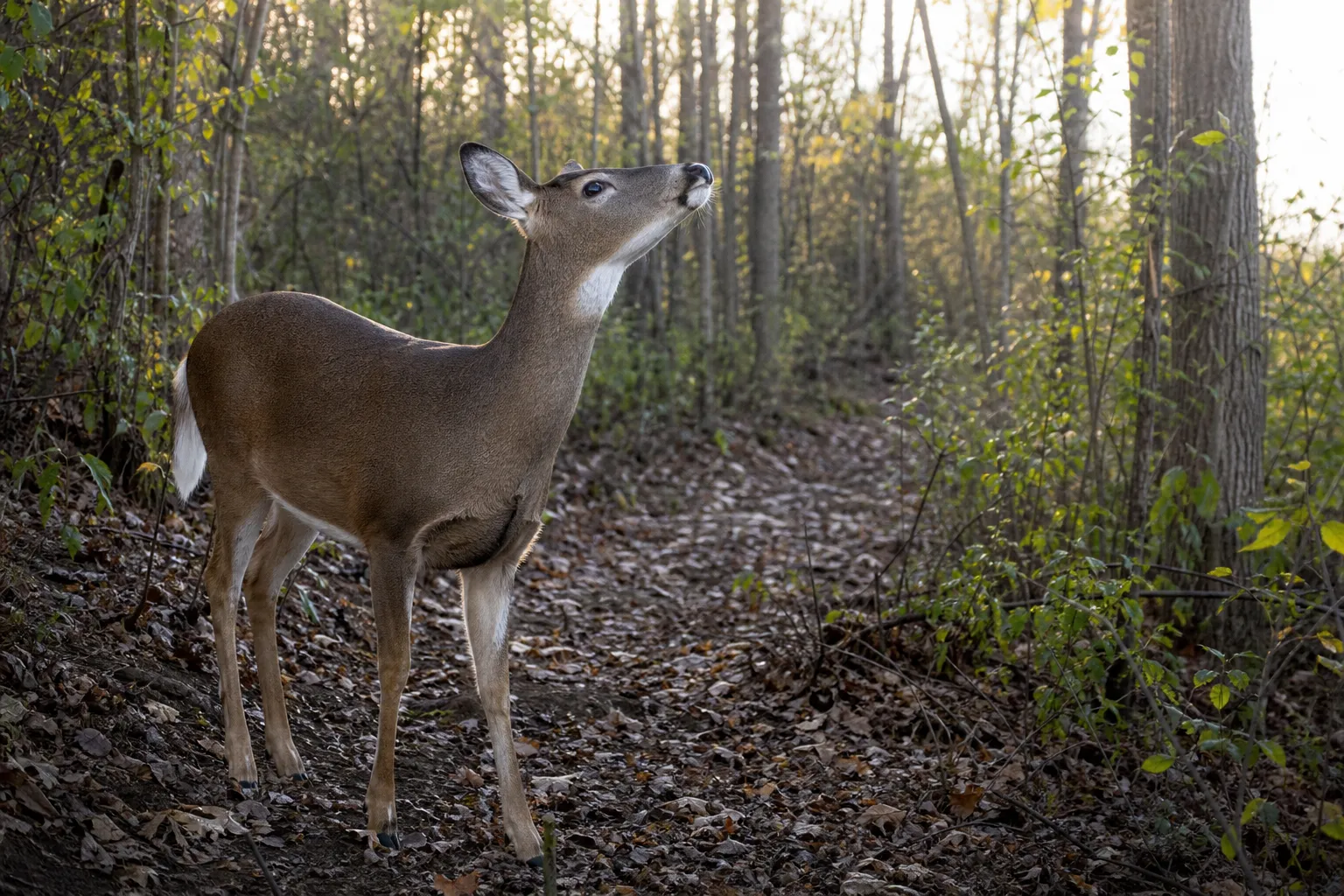
Scent is also part of deer communication. The National Deer Association’s 2009 Whitetail Report says scent is a primary communication method for whitetails. University of Missouri Extension says white-tailed deer have four sets of external glands used primarily for communication, and that gland secretions can communicate social status, breeding condition and health.
Urine is part of that scent system. Penn State’s Deer-Forest Study describes deer urine as carrying information about territory boundaries, social status and reproductive state. Penn State also describes rub-urination as a mixture of urine, glandular secretions and bacteria.
Scrapes are another scent-related sign. USDA APHIS describes scrapes as communication signposts marked and visited by bucks and does. That does not mean every deer will react the same way to every scent, but it does show why odor is central to how deer read their surroundings.
How human scent moves
The first scent-control question is simple: where is the wind taking your odor? A setup is stronger when the main odor stream stays away from likely deer travel, feeding or bedding areas.
Human odor does not move as a neat, straight line. Wind can shift and mix around cover, uneven ground and changes in temperature.
That matters in deer cover. Trees, hills, valleys and uneven ground can make the air change during a hunt, so hunters should pay attention to what the air is doing at the stand instead of relying only on a forecast.
Thermals
Thermals are daily air movements caused by warming and cooling.
For a hunter, that means a good wind on a flat map may still behave differently in hilly country, drainages and bottoms. A morning stand and an evening stand in the same place may send odor in different directions if the thermal pattern changes.
Wind speed, wind direction and humidity
Wind direction and wind speed matter.
The useful takeaway is modest: air movement is central to how odor is found.
The basic scent-control plan
A practical plan starts with stand choice and access.
A “dead area” means an area where deer are not expected to be. The point is not to erase scent. The point is to keep the main odor stream out of the places where deer are expected to travel, feed or approach.
Useful habits include:
- Pick the stand for the wind. If the wind carries scent toward where deer are expected, choose a different stand or save that spot for a better wind.
- Plan the walk in. A quiet route that avoids likely deer areas can protect the setup before the hunt begins.
- Use crosswinds when possible. A side wind can help keep odor away from the expected line of deer movement.
- Think about thermals. Warming and cooling can change how air moves through a place.
- Avoid difficult air when you can. If the wind is shifting or swirling, the setup is harder to control.
Clothing, storage and rubber boots
Clean gear can reduce odor, but it does not replace wind.
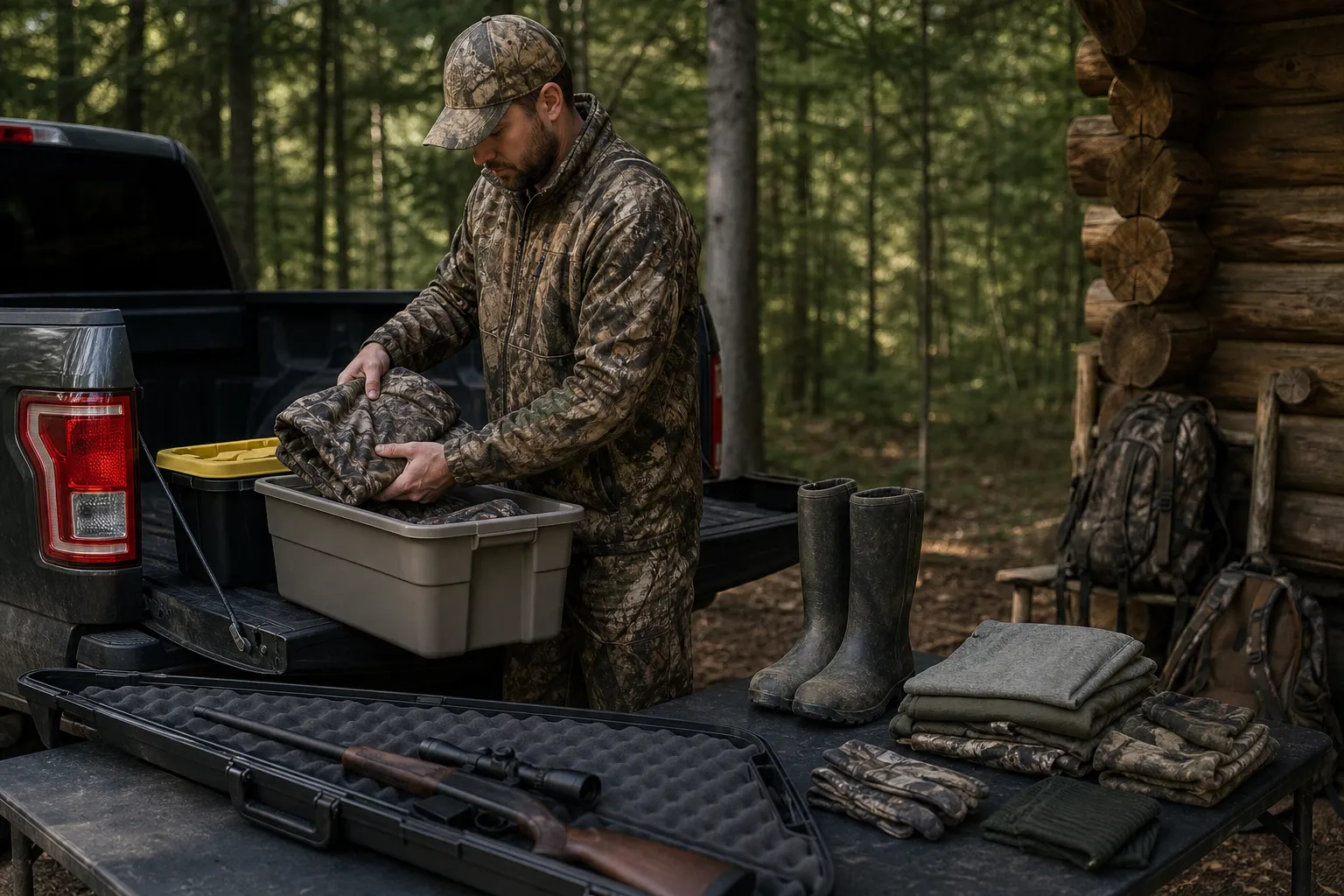
Keep hunting clothes separate from everyday odors, and let wet clothing dry before storage.
Strong odors matter because they can get on hunting clothing.
Some hunters include rubber boots in scent routines. They still need to be kept clean, and they do not prove that tracks are scent-free.
Cover scents and attractants
Cover scents and attractants are scent products with different goals.
Those are different goals. One type of product is generally used to reduce the importance of human odor. Another is used to add an odor deer may investigate.
That caution is important for new hunters. A scent product is not automatically neutral just because it is sold for deer hunting. Some deer may not react the way the hunter hopes.
What research says about scent-reduction products
Product expectations should remain modest. Several studies looked at related questions, including scent-adsorbing clothing, scent masking and whether human scent can be concealed from animals.
The practical lesson is that scent products should not be treated as a way to become undetectable.
Penn State’s Deer-Forest Study summarized the scent-adsorbing clothing literature and advised hunters not to expect products to cover their scent from deer.
Activated carbon deserves careful wording. Another federal court document says all parties’ experts agreed carbon-embedded clothing cannot eliminate odor, even when new. In plain language: carbon clothing should not be treated as odor elimination.
A realistic routine for deer hunters
A realistic routine puts the biggest effort into air movement and access, then uses cleaning habits to reduce extra odor.
Before choosing a stand, check the expected wind against where deer are expected to come from. If the stand only works on a different wind, save it for that wind.
Next, think about the route. A route that keeps scent, noise and movement away from deer areas is part of scent control because the approach can ruin the setup before the hunt begins.
Then manage clothing and boots. Keep clothing clean, dry and separate from strong everyday odors. If using rubber boots, keep them clean and treat them as one small part of the routine.
Finally, keep product expectations low. Sprays, washes, deodorants and specialized clothing may help reduce odor, but they should not be the main defense against a deer’s nose.
Regulations, natural scents and CWD caution
Natural deer urine and glandular scent rules vary by jurisdiction, so hunters should confirm current rules with the wildlife agency where they hunt before using those products.
There is also a disease concern. USDA APHIS says chronic wasting disease prions are shed through bodily fluids such as feces, urine, blood and saliva, and that these prions may remain infectious in the environment for years. Because deer scents can involve urine or glandular material, check current agency rules and advisories before buying, carrying or using natural cervid scents.
Bottom line
The best scent-control system is not a product. It is a plan: hunt the wind, understand thermals, choose routes carefully, keep clothing clean and separate from everyday odors, and treat sprays, washes, cover scents and carbon clothing as odor-reduction tools with limits. Before using natural deer urine or glandular scents, confirm the current rule and CWD guidance with the wildlife agency for the exact place you plan to hunt.
Frequently asked questions
Can scent-control products make me undetectable to deer?
No. Treat scent products as odor reduction tools with limits, not as a way to become undetectable.
What matters most for avoiding being winded?
Wind direction is the main factor. Choose setups where your odor is carried away from where you expect deer to travel, feed or approach.
Do thermals matter for deer hunting scent control?
Yes. Thermals are daily air movements caused by warming and cooling, and they can change how odor moves through a hunting area.
Is natural deer urine a concern?
Check current wildlife agency rules before using it. USDA APHIS says CWD prions can be shed in urine and other bodily fluids, and may remain infectious in the environment for years.
Sources
- Ecology and Management of White-Tailed Deer in Missouri, University of Missouri ExtensionOfficial source. Accessed October 29, 2026.
- Peeing your pants, Penn State Deer-Forest StudyOfficial source. Accessed October 29, 2026.
- Dollars and Scents, Penn State Deer-Forest StudyOfficial source. Accessed October 29, 2026.
- QDMA’s Whitetail Report 2009, National Deer Association, formerly QDMAOfficial source. Accessed October 29, 2026.
- Scents and Scent Control, Missouri Department of ConservationOfficial source. Accessed October 29, 2026.
- Hunting White-Tailed Deer in Missouri, Missouri Department of ConservationOfficial source. Accessed October 29, 2026.
- The Basics of Deer Hunting in Rhode Island, Rhode Island Department of Environmental ManagementOfficial source. Accessed October 29, 2026.
- Movement of Odors Off-Farm, Oklahoma State University ExtensionOfficial source. Accessed October 29, 2026.
- Influence of Wind and Humidity on Foraging Behavior of Olfactory Mesopredators, The Canadian Field-Naturalist. Accessed October 29, 2026.
- Odor-adsorptive clothing, environmental factors, and search-dog ability, USDA National Wildlife Research Center publication archive. Accessed October 29, 2026.
- Can Researchers Conceal Their Scent from Predators in Artificial Nest Studies?, Wildlife Society Bulletin, via ResearchGate abstract page. Accessed October 29, 2026.
- Do available products to mask human scent influence camera trap survey results?, Wildlife Biology. Accessed October 29, 2026.
- Buetow et al. v. A.L.S. Enterprises Inc. et al., Document 234, United States District Court, District of Minnesota, via Justia. Accessed October 29, 2026.
- Buetow et al. v. A.L.S. Enterprises Inc. et al., Document 335, United States District Court, District of Minnesota, via Justia. Accessed October 29, 2026.
- NWRC Spotlight: Deer Scrapes and Chronic Wasting Disease Transmission, USDA Animal and Plant Health Inspection ServiceOfficial source. Accessed October 29, 2026.
- Ecology and Management of White-Tailed Deer in Missouri | MU Extension. Accessed October 29, 2026.
- Ecology and Management of White-Tailed Deer in Missouri | MU Extension. Accessed October 29, 2026.
- Ecology and Management of White-Tailed Deer in Missouri | MU Extension. Accessed October 29, 2026.