Deer Hunting Calibers: How to Choose One
There is no single best deer hunting caliber for every hunter. Choose a legal cartridge and load with a proper hunting bullet, published ballistics that fit your range, accuracy in your firearm, and recoil you can manage.
By RaiS. Reviewed by RaiS. Published . 6 min read.
Research and drafting were assisted by AI. RaiS checked the facts against the sources below and approved this page.
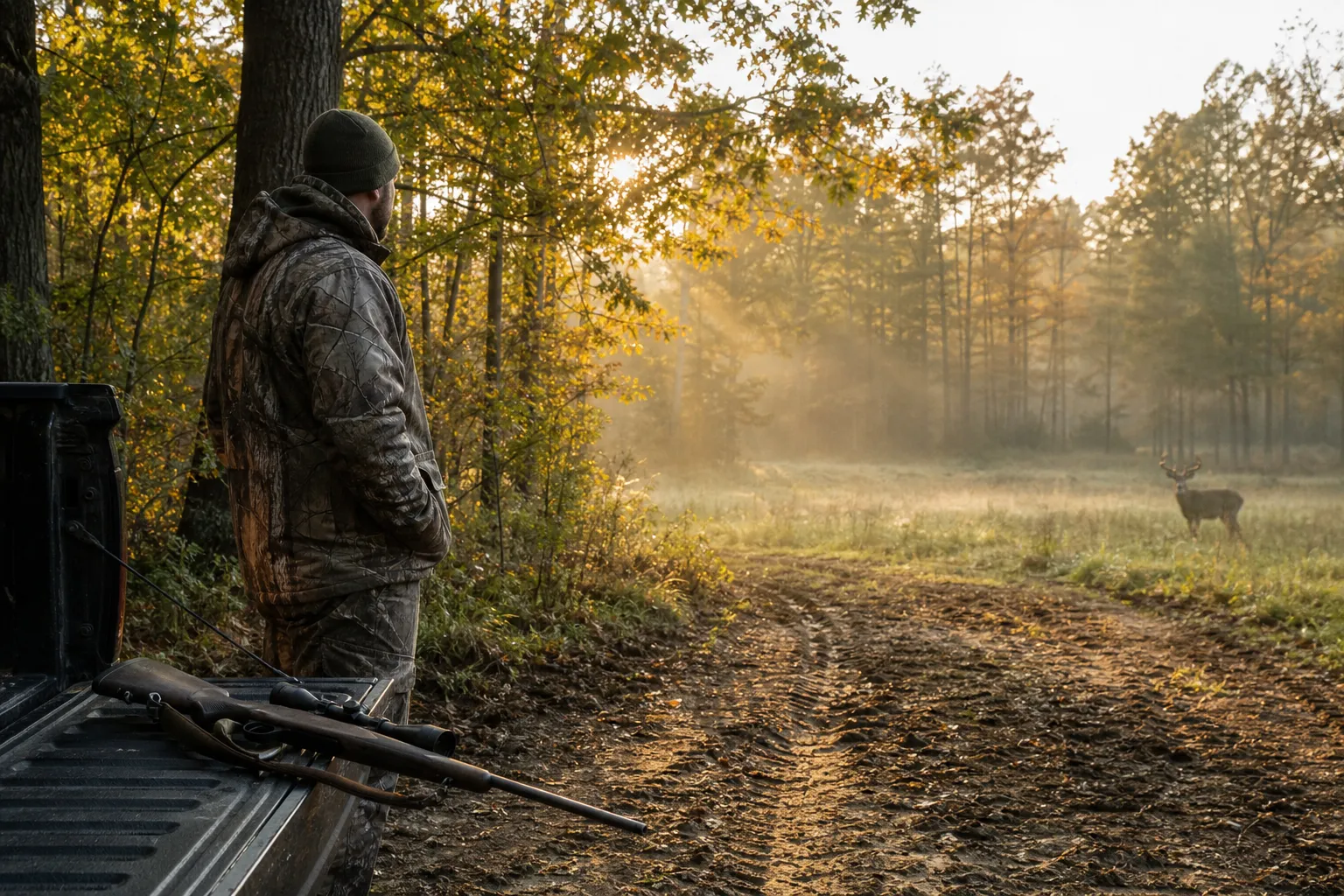
The best deer hunting caliber is not one universal answer. A good deer cartridge is the one that is legal where you hunt, uses a suitable expanding hunting bullet, has manufacturer published ballistics that fit your actual range, shoots accurately in your rifle, and has recoil you can practice with confidently.
Start with cartridge, load, and law, not just “caliber”
“Caliber” is often used casually, but it is not the whole story. A hunter education source defines rifle or handgun caliber as bore diameter, giving the example that a .270 caliber rifle bore measures 270/1000ths of an inch between the lands. A cartridge name includes more than bore diameter, so .270 Win..308 Win..30-06 Sprg., and 6.5 Creedmoor should be compared as complete cartridges and loads, not just as numbers.
Published specifications matter because two loads in the same cartridge can use different bullet weights, bullet designs, and velocities. SAAMI says its standards provide “safety, reliability, and interchangeability standards” for commercial firearm and ammunition manufacturers. For choosing a deer load, use the manufacturer’s data for the exact factory load you plan to hunt with.
Before buying ammunition or hunting, check the current rule book for your state, province, season, and wildlife management unit. The examples below show how much rules can vary, even when people are hunting the same species.
What matters in a deer hunting cartridge
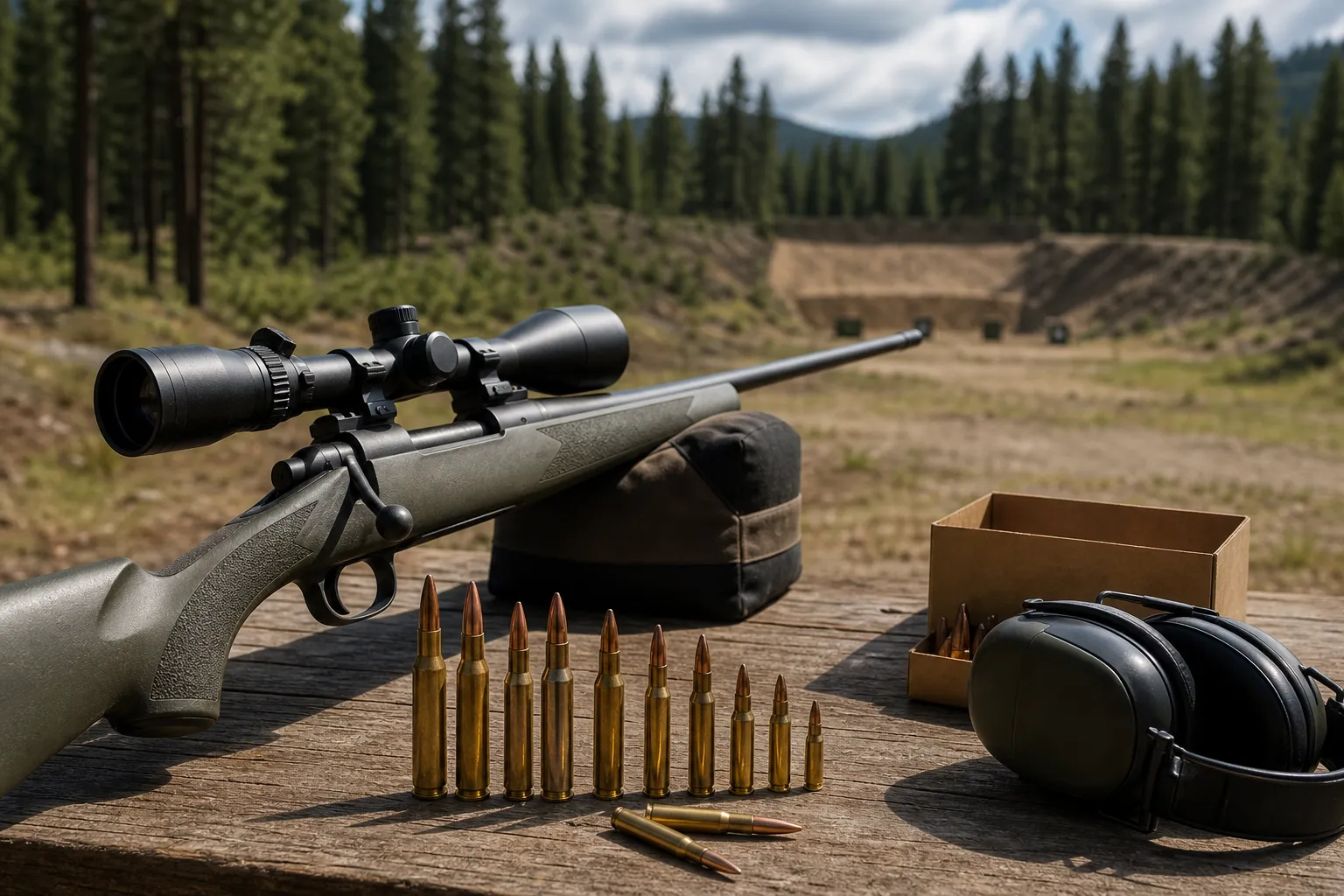
1. Legal minimums and firearm restrictions
Some jurisdictions set minimum caliber, bullet, energy, firearm type, or shotgun rules. Others separate rules by season or hunting area.
Examples from official sources:
- Nova Scotia’s official Firearm and Bow Regulations list, under the described licence conditions, a rifle and ammunition of .23 calibre or greater as one permitted option for big game. The same regulations list shotguns of .410, 28, 20, 16, 12, or 10 gauge using a single projectile or specified large shot.
- Illinois Department of Natural Resources states that qualifying handgun and single shot rifle cartridges must be available as a factory load with manufacturer published ballistics showing at least 500 foot pounds at the muzzle.
These examples do not make any cartridge legal everywhere. They show why the first step is always the current agency regulation for your exact hunt.
2. A real hunting bullet
For deer, bullet construction matters as much as cartridge name. The fact that a cartridge can fire a bullet of a certain diameter does not tell you how that bullet is built.
Examples of manufacturer described hunting bullet designs include:
- Hornady InterLock: Hornady describes it as using “a raised ring inside the jacket” that is embedded in the core and keeps the core and jacket locked together during expansion.
- Nosler Partition: Nosler describes the Partition as a dual core, partitioned jacket design intended for controlled expansion and deep penetration.
- Federal Fusion: Federal describes its Fusion 350 Legend bullet construction as an electrochemically applied copper jacket on a pressure formed lead core, with a skived nose for expansion.
If your state or province requires expanding bullets, use the official wording and the ammunition manufacturer’s description for the specific load.
3. Enough performance at your real distance
Do not choose by reputation alone. Look up the manufacturer’s velocity and energy table for the exact load, then compare it to your expected distance and to any legal minimum.
Always confirm with the agency.
4. Practical accuracy from hunting positions
A cartridge is only useful if you can place shots well with it.
Think conservatively. If your shots are not staying in the target area from realistic positions at a given distance, shorten the distance, keep practicing, or change equipment.
5. Recoil you can manage
Recoil is not only a cartridge number. SAAMI says firearm fit and how the gun is held influence felt recoil, and that stock length, drop, and pitch can also influence felt recoil. SAAMI also notes that felt recoil may be lessened by increasing firearm weight or by the use of compensating devices.
For a beginner, this means the whole setup matters: cartridge, rifle weight, stock fit, shooting position, and practice habits. If recoil keeps you from practicing well or makes you flinch, a more powerful cartridge may not help you hunt better.
Comparison of common deer choices
The table below uses one published factory example per cartridge where the ledger provides data. Another load in the same cartridge can change velocity, energy, trajectory, recoil, and terminal performance, so do not treat these as limits for the cartridge.
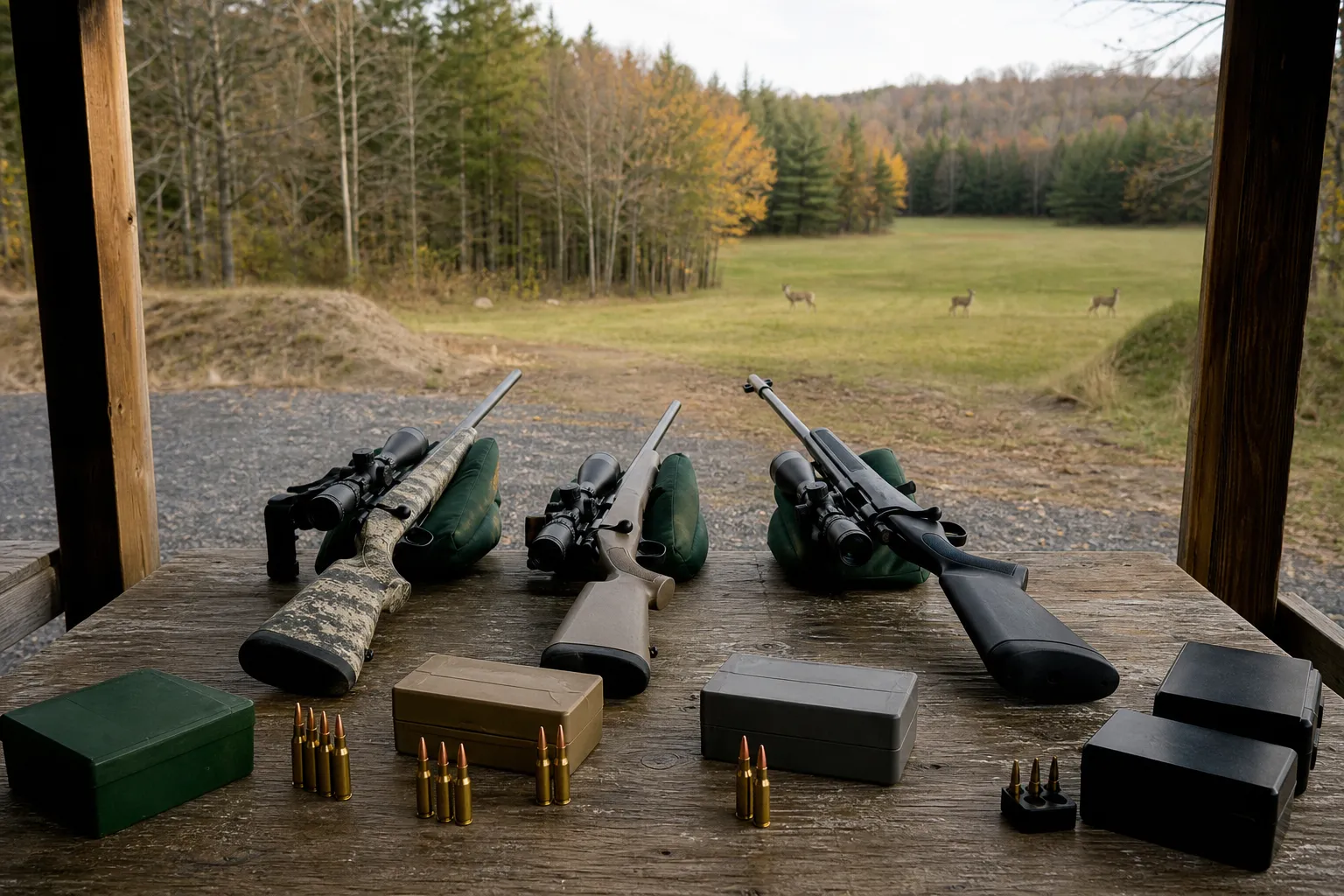
| Cartridge or load type | Example published load | Muzzle velocity | Muzzle energy | 200 yard data in source | What it shows | |, -|, -:|, -:|, -:|, -:|, -| | .243 Win. | Federal Fusion, 95 grain | 2,980 fps | 1,873 ft-lb | 1,311 ft-lb | A .24 caliber class centerfire example with a 95 grain hunting load. | | 6.5 Creedmoor | Federal Fusion, 140 grain | 2,725 fps | 2,308 ft-lb | 1,683 ft-lb | A 140 grain centerfire hunting load with published 200 yard energy. | | .270 Win. | Federal Fusion, 130 grain | 3,050 fps | 2,685 ft-lb | 1,927 ft-lb | A long established .270 caliber class option, shown here with a 130 grain Fusion load. | | 7mm-08 Rem. | Federal Fusion, 140 grain | 2,850 fps | 2,525 ft-lb | 1,779 ft-lb | A 7 mm hunting cartridge example with a 140 grain Fusion load. | | .308 Win. | Federal Fusion, 150 grain | 2,820 fps | 2,648 ft-lb | 1,903 ft-lb | A .30 caliber centerfire example with a 150 grain Fusion load. | | .30-06 Sprg. | Federal Fusion, 150 grain | 2,900 fps | 2,801 ft-lb | 2,014 ft-lb | A .30 caliber centerfire example with slightly higher listed numbers than the .308 Win. load shown here. |
Sources for the table are Federal’s 2019 ballistics PDF for the Fusion rifle loads from .243 Win. through .30-06 Sprg.
How to choose among them
Use a step by step filter instead of looking for one “best deer hunting caliber.”
- Check legality first. Read the current state or provincial hunting regulation for your species, season, location, and firearm type.
- Pick the firearm type allowed for that hunt. Some hunts may involve centerfire rifles, straight wall rifle cartridges, shotguns, handguns, or other restrictions, depending on the jurisdiction.
- Choose an expanding hunting bullet. Use the manufacturer’s description and your agency’s rule language.
- Check manufacturer ballistics for the exact load. Compare velocity and energy at your expected distance, and compare to any legal minimum that applies.
- Consider practical accuracy. Be honest about your distance limit.
- Choose recoil you can practice with. Felt recoil depends on fit, firearm weight, and how the firearm is held, not only the cartridge.
For many hunters, several cartridges can pass these filters. The better choice is usually the one that is legal, available in a suitable hunting load, accurate in that rifle, and comfortable enough for regular practice.
Notes on .350 Legend and shotgun slugs
.350 Legend and shotgun slugs deserve special attention because many hunters consider them for places with straight wall rifle or shotgun requirements.
Legality does not depend on cartridge or slug type alone. Nova Scotia’s regulations list several shotgun gauges using a single projectile for big game under the described conditions. Illinois has its own official legal cartridges page for deer. Check the exact rule before assuming a straight wall cartridge or slug is allowed.
Bottom line
There is no single best deer hunting caliber for the United States and Canada. A responsible choice starts with the current regulation, then narrows to a specific factory load with an appropriate expanding bullet, enough published performance for your range, accuracy in your firearm, and recoil you can handle.
Before hunting, confirm the current rules with the wildlife agency for your state or province, including species, season, unit, legal firearm type, minimum caliber, bullet rules, and any energy or cartridge requirements.
Frequently asked questions
What is the best deer hunting caliber?
There is no single best answer. The right choice depends on local legality, the exact cartridge and load, bullet construction, manufacturer published ballistics at your distance, accuracy in your firearm, and recoil you can manage.
Is caliber the same as cartridge?
No. A hunter education source defines caliber as bore diameter, while a cartridge name includes more than caliber alone. Compare complete cartridges and loads, not just bore size.
Why does bullet construction matter for deer?
Manufacturers describe hunting bullets by how they are built to expand or penetrate. Examples in the ledger include Hornady InterLock, Nosler Partition, and Federal Fusion designs.
Are .350 Legend and shotgun slugs legal for deer?
They may be relevant in places with straight wall rifle or shotgun rules, but legality depends on the current regulation for the exact location and season. Check your state or provincial wildlife agency before hunting.
Do I need to check energy numbers?
Use the manufacturer’s ballistics for the exact load. Some jurisdictions use energy requirements, so compare any rule to the exact load.
Sources
- Technical Information, SAAMIOfficial source. Accessed October 20, 2026.
- FAQs, SAAMIOfficial source. Accessed October 20, 2026.
- A Rifle's or Handgun's Caliber, Hunter Ed, Wisconsin Hunter Safety Course. Accessed October 20, 2026.
- Sighting in your rifle, Texas Parks and Wildlife DepartmentOfficial source. Accessed October 20, 2026.
- Video: Sighting-In a Rifle, Hunter Ed, Washington Hunter Safety Course. Accessed October 20, 2026.
- Basic Firearms Hunting Equipment, Missouri Department of ConservationOfficial source. Accessed October 20, 2026.
- InterLock, Hornady ManufacturingOfficial source. Accessed October 20, 2026.
- FAQ, NoslerOfficial source. Accessed October 20, 2026.
- Federal Ammunition Now Offers 350 Legend in Its Fusion Line, Federal Premium AmmunitionOfficial source. Accessed October 20, 2026.
- Federal 2019 Ballistics, Fusion Rifle, Federal Premium AmmunitionOfficial source. Accessed October 20, 2026.
- 2026 Federal Catalog, Rifle Ballistics, Federal Premium AmmunitionOfficial source. Accessed October 20, 2026.
- 2025 Federal Catalog, Shotgun Slug Ballistics, Federal Premium AmmunitionOfficial source. Accessed October 20, 2026.
- 2026 Colorado Big Game Hunting Brochure, Colorado Parks and WildlifeOfficial source. Accessed October 20, 2026.
- Single-shot legal cartridges, Illinois Department of Natural ResourcesOfficial source. Accessed October 20, 2026.
- 17 Ill. Adm. Code, Ch. I, Sec. 650, September 2, 2025, Illinois Department of Natural ResourcesOfficial source. Accessed October 20, 2026.
- Washington Big Game Hunting Regulations 2026, Washington Department of Fish and WildlifeOfficial source. Accessed October 20, 2026.
- 2026 Ontario Hunting Regulations Summary, Ontario Ministry of Natural ResourcesOfficial source. Accessed October 20, 2026.
- Firearm and Bow Regulations, Wildlife Act, Nova Scotia Office of the Registrar of RegulationsOfficial source. Accessed October 20, 2026.