Deer Calls Explained: Grunts, Bleats and Rattling
Deer calls imitate deer sounds and antler contact. For beginners, the key is to match the sound to the season and the message it sends.
By RaiS. Reviewed by RaiS. Published . 4 min read.
Research and drafting were assisted by AI. RaiS checked the facts against the sources below and approved this page.
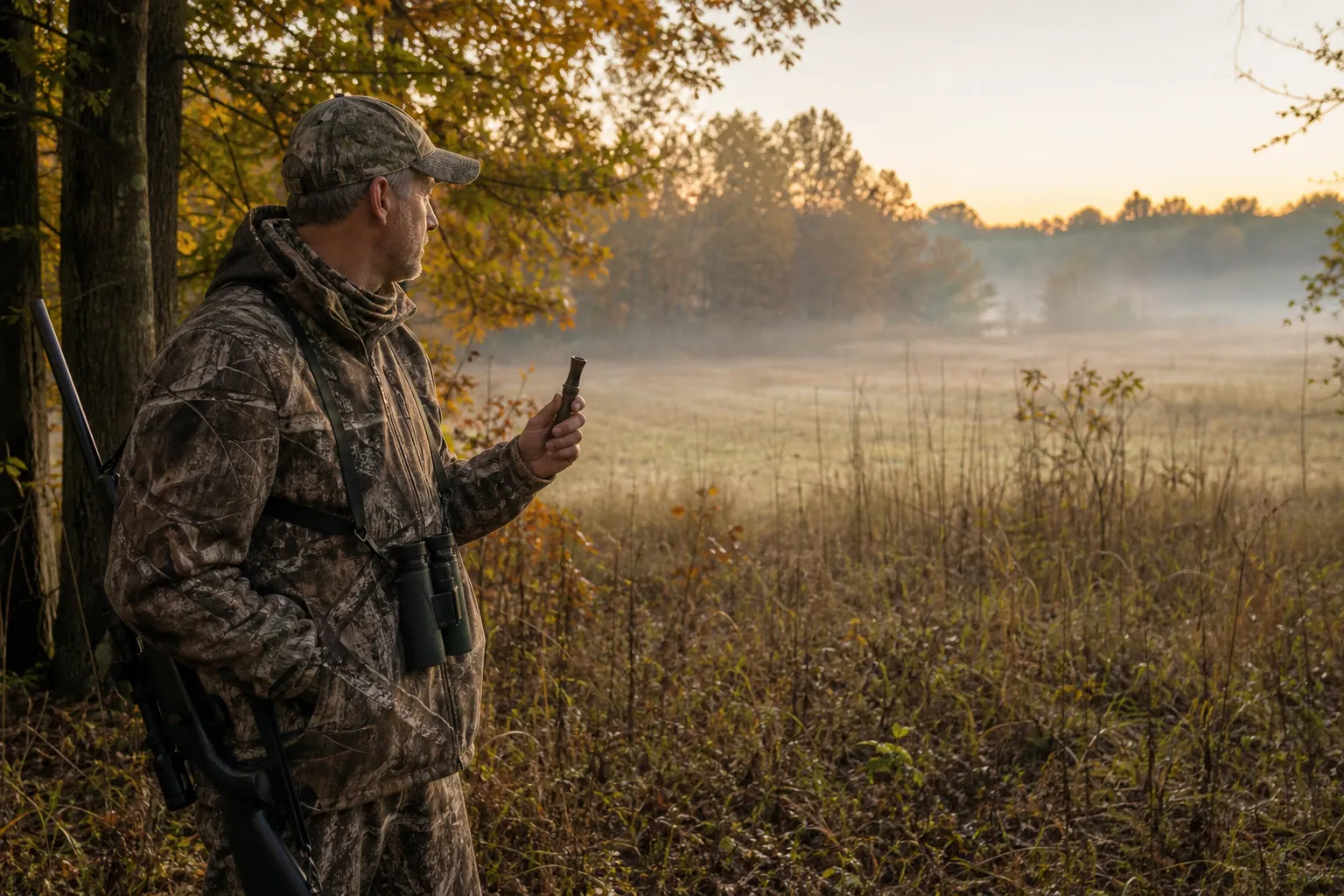
Deer calls try to imitate real deer sounds, especially grunts, bleats, snort-wheezes and the sound of bucks sparring or fighting with antlers. They are not magic. A beginner’s goal is simple: think about the message before using a call.
What deer calls are trying to imitate
Deer do make a variety of sounds.

The important beginner point is that a call is a message.
So, think of deer calls in three broad groups:
- Social sounds, such as grunts and bleats.
- Seasonal breeding sounds, such as tending grunts.
- Aggressive or alarm sounds, such as snort-wheezes, snorts and blows.
Call types are just tools used to produce those sounds or imitate antler contact.
Grunts: contact, tending and aggressive meanings
A grunt is not just one sound with one meaning.
Lighter grunts can simply let deer know of another deer’s presence. That makes lighter grunt sounds among the more passive sounds a beginner will hear discussed.
Contact grunt
A contact grunt is generally treated as a social or locator sound.
Because it is a passive sound, beginners often hear it discussed before more aggressive calls.
Tending grunt
A tending grunt is more closely tied to breeding season behavior.
Beginners will usually see it discussed as a deer calling sound for situations involving buck interest in does.
Low grunt and other aggressive buck grunts
Some grunt sounds are tied to buck aggression.
A heavier grunt, especially with a snort-wheeze, can signal a direct challenge. That is different from a light contact-style grunt, which may only communicate that another deer is present.
Bleats: doe and fawn social sounds
Bleats are commonly discussed as doe and fawn sounds.
The bleat can function as a more insistent care solicitation call from fawns when they are disturbed or separated.
Doe bleats also have a social role. A doe may bleat to communicate her presence to other does or a family group. Does may also bleat to let bucks know they are nearby and receptive to breeding.
For call tools, can shaped calls are commonly used to make bleat sounds. These are the common can shaped calls hunters tip or operate to make a bleat sound.
Snort, blow and snort-wheeze
These sounds are more serious than a simple social grunt or bleat. They can mean alarm or aggression, depending on the sound.
Snort or blow
A snort or blow can signal alarm or suspicion.
White tailed deer may blow or snort when alarmed or suspicious by forcefully blowing air through their nostrils. Repeated blows are often distinguished from single, very short snorts.
For a beginner, this is mainly a sound to recognize. It is not the same as a social contact call or a seasonal challenge call.
Snort-wheeze and grunt-snort-wheeze
The snort-wheeze is more aggressive than a simple social grunt or bleat.
A heavier grunt with a snort-wheeze can signal a direct challenge.
The snort-wheeze is not a general social sound. It fits challenge and dominance behavior best.
Rattling: imitating antler contact
Rattling imitates the sound of bucks fighting or sparring with antlers.
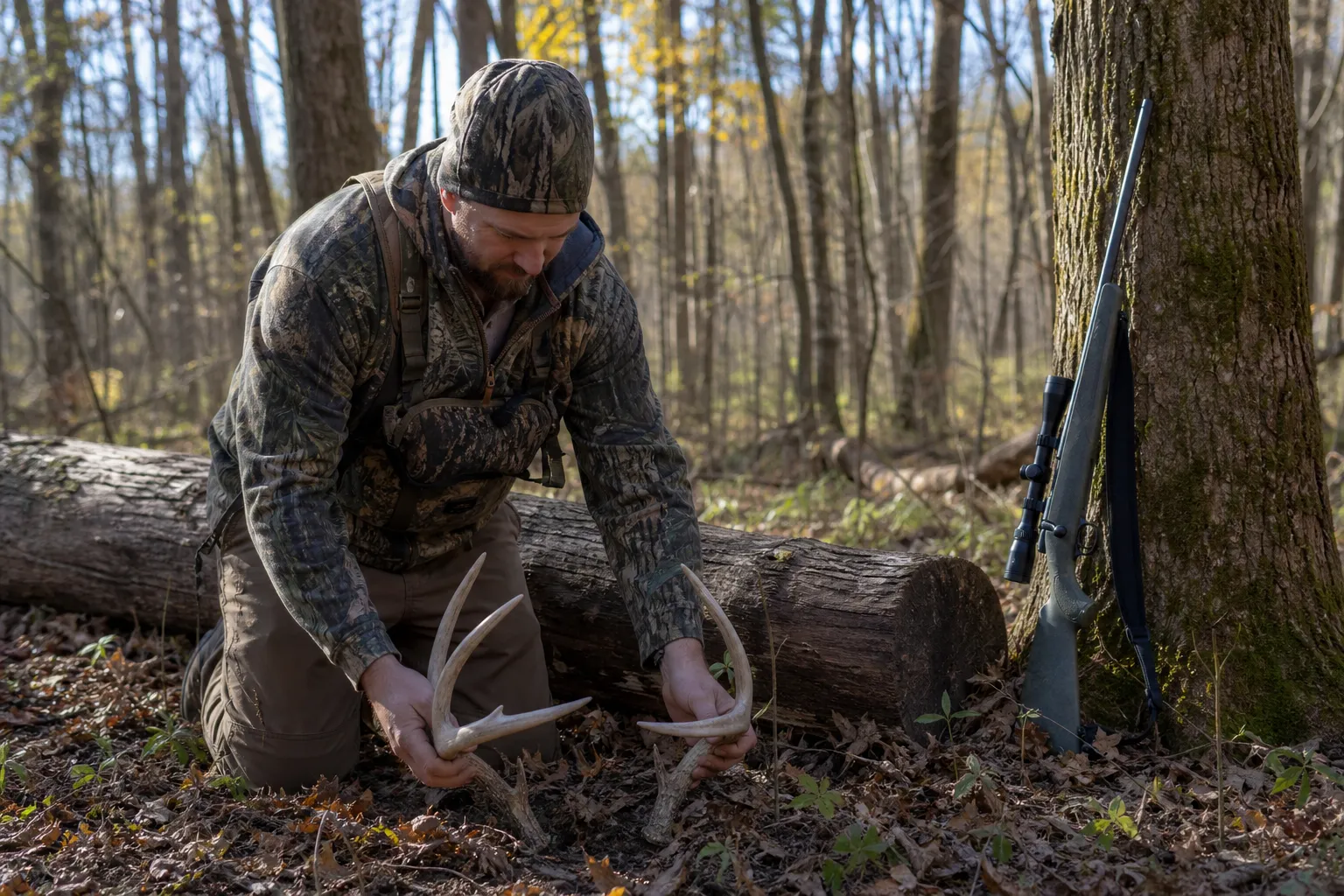
Rattling tools are used to copy antler contact. The sound may include crashing, grinding, cracking and rustling.
As fall day length decreases, bucks may become more aggressive, rub their antlers on trees and spar with other bucks nearby.
For beginners, the tools are straightforward:
- Antlers, used to imitate antler contact.
- Rattle bags, used to imitate antler contact.
For beginners, the sound should match the behavior deer are likely to be showing at that time.
Common deer call types beginners will see
Most beginner calling discussions center on three tools: grunt tubes, can bleats and rattling tools.
| Call type | What it imitates | Main message |
|---|---|---|
| Tube grunt call | Grunts and, in some models, several deer sounds | Social presence, buck challenge or seasonal buck sounds, depending on how it is used |
| Can style bleat call | Doe or fawn bleats | Social contact or doe presence |
| Rattle bag | Antler contact | Bucks sparring or fighting |
| Antlers | Antler contact | Bucks sparring or fighting |
Some grunt calls can be adjusted to change tone or intensity. A grunt tube can be used to mimic a buck looking to challenge nearby bucks.
Can style calls are used for bleats. Rattling tools are used for antler contact.
When these sounds fit the season
Season is an important consideration for many deer calls.
Local timing and hunting regulations should be checked for the place you hunt.
A beginner-friendly way to think about timing is:
- Early or less aggressive situations: Softer, more passive calls are often a better starting point than intense aggressive sounds.
- Breeding season behavior: Tending grunts fit calling discussions about bucks and does.
- Buck dominance behavior: Snort-wheezes, grunt-snort-wheezes and hard rattling fit aggressive buck interactions.
- Alarm sounds: Snorts and blows can mean alarm or suspicion.
A simple beginner calling mindset
Start by identifying the message before thinking about the tool. If you use a bleat, you are imitating a doe or fawn social sound. If you use a contact grunt, you are imitating a light social or locator sound. If you use a tending grunt, you are imitating breeding season behavior around a doe. If you rattle, you are imitating buck antler contact.
Begin with soft passive calls, then become more aggressive only when the setting makes sense. Use aggressive buck sounds and hard rattling with breeding season context in mind.
Before hunting, check current deer season dates, local rules and any restrictions that apply where you hunt. Also check local breeding season timing, because timing can vary by region.
Frequently asked questions
What does a deer bleat mean?
A bleat is commonly treated as a doe or fawn sound. It may communicate social contact, doe presence or fawn distress.
What does a snort-wheeze mean?
A snort-wheeze is generally treated as an aggressive sound rather than a simple social sound.
What does rattling imitate?
Rattling imitates the sound of bucks sparring or fighting with antlers.
What deer call should a beginner start with?
A beginner should usually start with softer, more passive sounds before trying aggressive calling.
Sources
- Ecology and Management of White-Tailed Deer in Missouri, University of Missouri Extension and Missouri Department of ConservationOfficial source. Accessed October 22, 2026.
- Research Bibliography, University of Georgia Deer Research LaboratoryOfficial source. Accessed October 22, 2026.
- Vol. 120, No. 1, Jul., 1988 of The American Midland Naturalist, JSTOR. Accessed October 22, 2026.
- Vocalizations of White-tailed Deer, The American Midland Naturalist, digitized article copy. Accessed October 22, 2026.
- Missouri Conservationist, November 2014, Missouri Department of ConservationOfficial source. Accessed October 22, 2026.
- Deer Dialogue, Missouri Department of ConservationOfficial source. Accessed October 22, 2026.
- Clearwater Wildlife Blog #4, Hunting season strategies, Idaho Fish and GameOfficial source. Accessed October 22, 2026.
- Tune Into Nature’s Sounds When Deer Hunting, Nebraskaland Magazine, Nebraska Game and Parks CommissionOfficial source. Accessed October 22, 2026.
- 2021 White-tailed Deer Basics Lesson Plan Notes, Pennsylvania Game CommissionOfficial source. Accessed October 22, 2026.
- How to Call Deer, Including Grunt, Bleat, Snort-Wheeze and More, National Deer AssociationOfficial source. Accessed October 22, 2026.
- Ecology and Management of White-Tailed Deer in Missouri | MU Extension. Accessed October 22, 2026.