Wild Turkey Sounds and the Calls That Imitate Them
Wild turkeys use yelps, clucks, purrs, cackles, gobbles and kee kee calls in different social situations. Turkey calls imitate some of these sounds, while locator calls use other animal sounds to prompt a gobble.
By RaiS. Reviewed by RaiS. Published . 7 min read.
Research and drafting were assisted by AI. RaiS checked the facts against the sources below and approved this page.
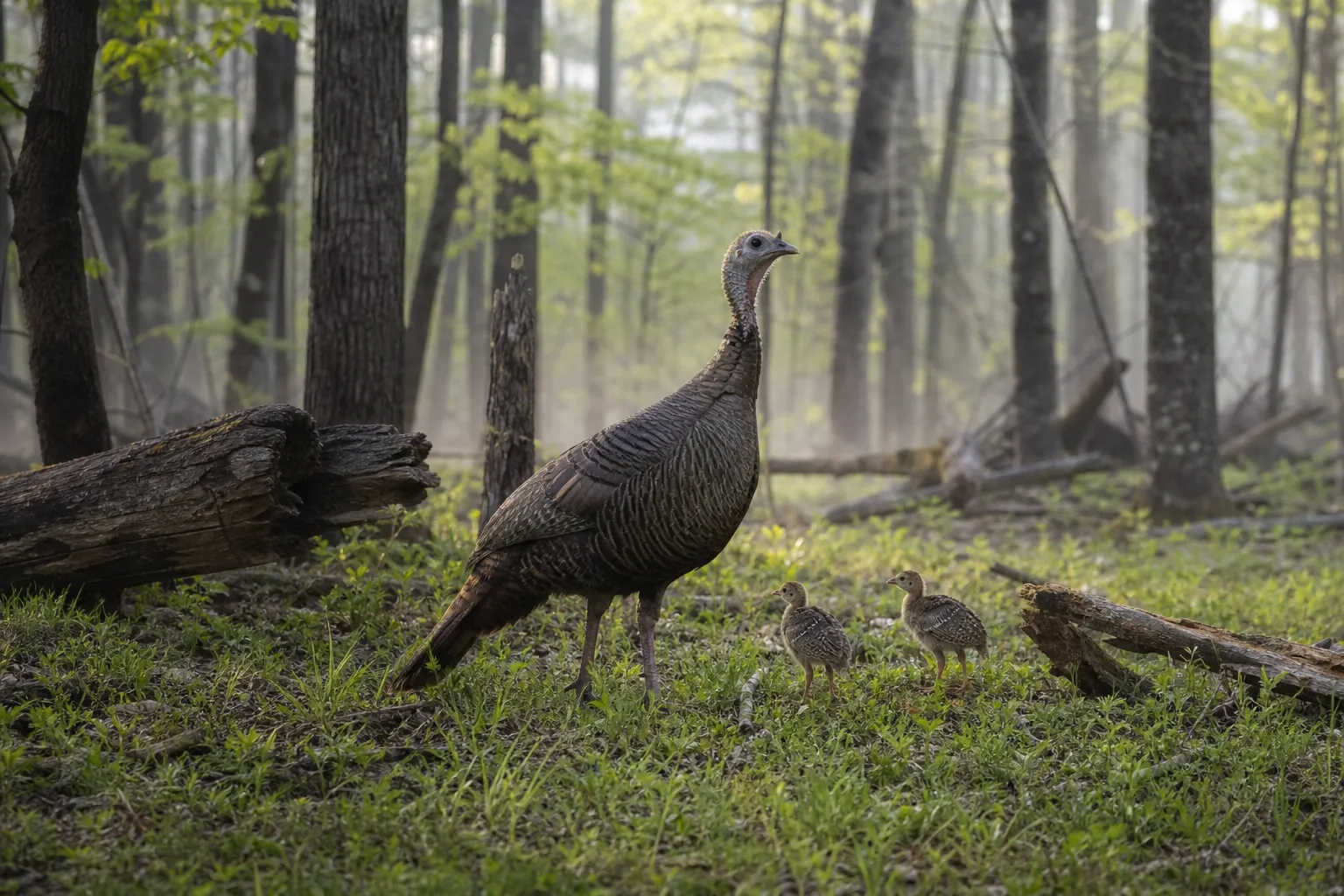
Wild turkeys make a wide range of sounds, but beginners can start with six core vocalizations: the yelp, cluck, purr, cackle, gobble and kee kee. Wildlife agencies and bird references describe these sounds as communication, not random noise. Turkey calls are tools that imitate parts of that vocabulary, while locator calls imitate other animals to make a male turkey reveal himself by gobbling.
Main wild turkey sounds
The Oklahoma Department of Wildlife Conservation describes wild turkeys as having a vast array of sounds. For a new hunter or birder, the goal is not to memorize every variation at once. It is to recognize the main sound families and the situations agencies and bird references associate with them.
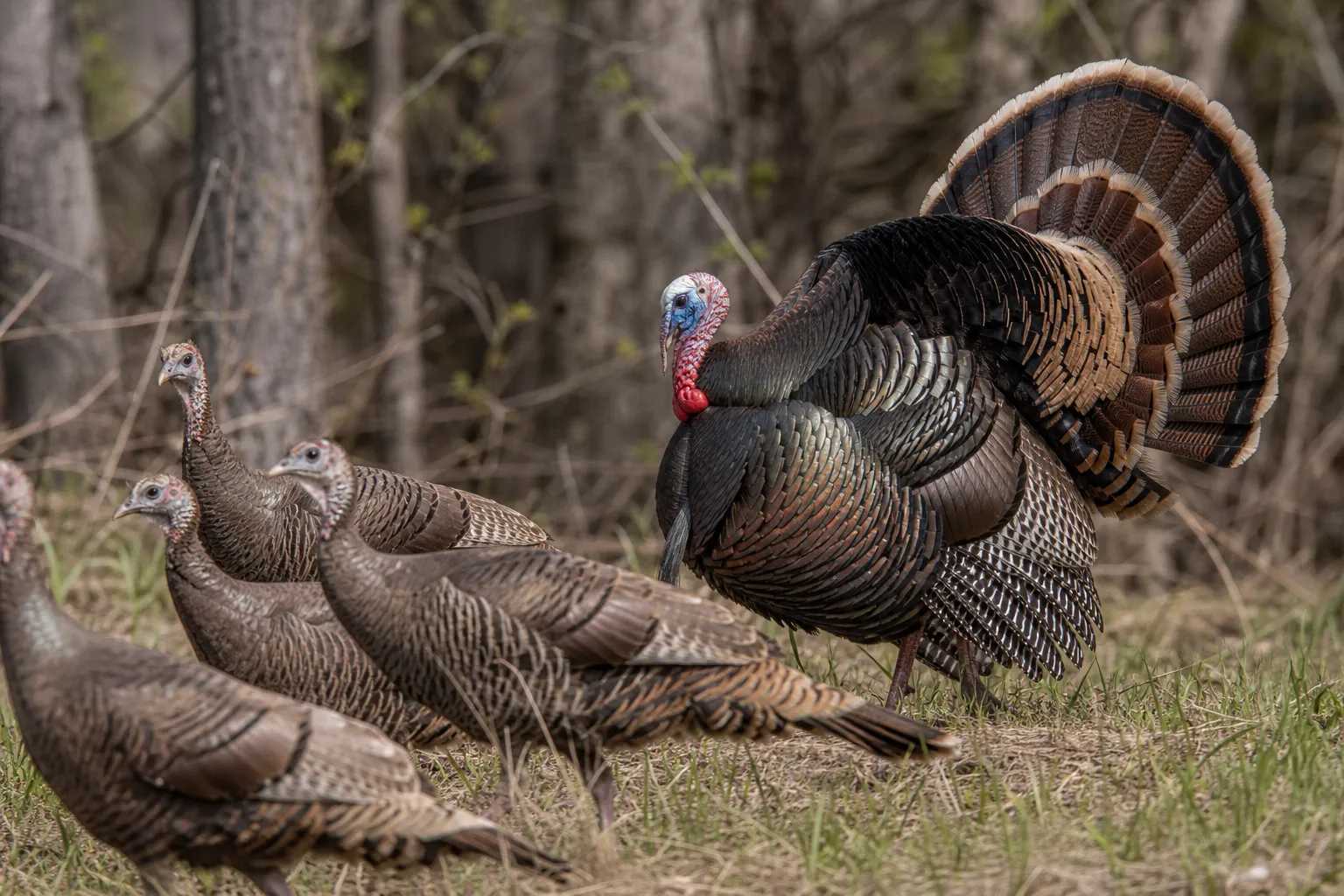
Yelp
The yelp is one of the foundation sounds in turkey talk. The Oklahoma Department of Wildlife Conservation calls it a basic turkey sound and says it can have different meanings depending on how the hen uses it.
For beginners, the key point is that a yelp is a basic turkey sound that can have different meanings.
Cluck
A cluck is short and direct. The Oklahoma Department of Wildlife Conservation describes clucks as short, staccato notes and says they are generally used by one bird to get another bird’s attention.
For beginners, the key point is that a cluck is not a long series like a yelp. It is a brief attention getting sound. Birders may notice it as part of close range flock communication, while hunters often study it because many manufactured calls can imitate it.
Purr
A purr is a quieter rolling sound. The Oklahoma Department of Wildlife Conservation describes purring as a soft, rolling call and ties it to content turkeys and feeding birds. The National Wild Turkey Federation says purring helps keep turkeys in touch with one another.
That makes the purr one of the more subtle sounds in the turkey vocabulary. It is associated with contact and calm flock behavior, rather than the loud, far carrying sound most people imagine when they think of spring turkeys.
Cackle
The National Wild Turkey Federation describes a cackle as irregularly spaced notes, commonly associated with leaving or returning to a roost.
A cackle is therefore tied to movement to or from the roost in that description. It is not described as a smooth, even series. The irregular spacing is part of what separates it from a simple string of yelps.
Gobble
The gobble is the famous male turkey sound. The Oklahoma Department of Wildlife Conservation calls the gobble a principal male wild turkey vocalization used mainly in spring.
Kee kee
The kee kee is the high pitched lost call of young turkeys. The National Wild Turkey Federation identifies it as the call of lost young turkeys.
Beginners can think of the kee kee as a young bird lost call.
Quick sound guide
| Sound | How agencies and bird references describe it | Main signal |
|---|---|---|
| Yelp | Oklahoma calls it a basic turkey sound that can have different meanings. | Basic turkey communication with different meanings. |
| Cluck | Oklahoma describes short, staccato notes used by one bird to get another bird’s attention. | Attention getting contact. |
| Purr | Oklahoma describes a soft, rolling call tied to content and feeding turkeys. NWTF says it helps keep turkeys in touch. | Contentment, feeding and flock contact. |
| Cackle | NWTF describes irregularly spaced notes tied to leaving or returning to a roost. | Roost movement. |
| Gobble | Oklahoma says it is a principal male wild turkey vocalization used mainly in spring. | Male spring vocalization. |
| Kee kee | NWTF identifies it as the call of lost young turkeys. | Lost young turkey contact. |
Calls that imitate turkey sounds
Manufactured turkey calls are made in several forms. The Florida Fish and Wildlife Conservation Commission lists box calls, pot or slate calls, friction calls, mouth calls and tube calls among manufactured turkey calls. Each style makes sound differently, and each has its own learning curve.
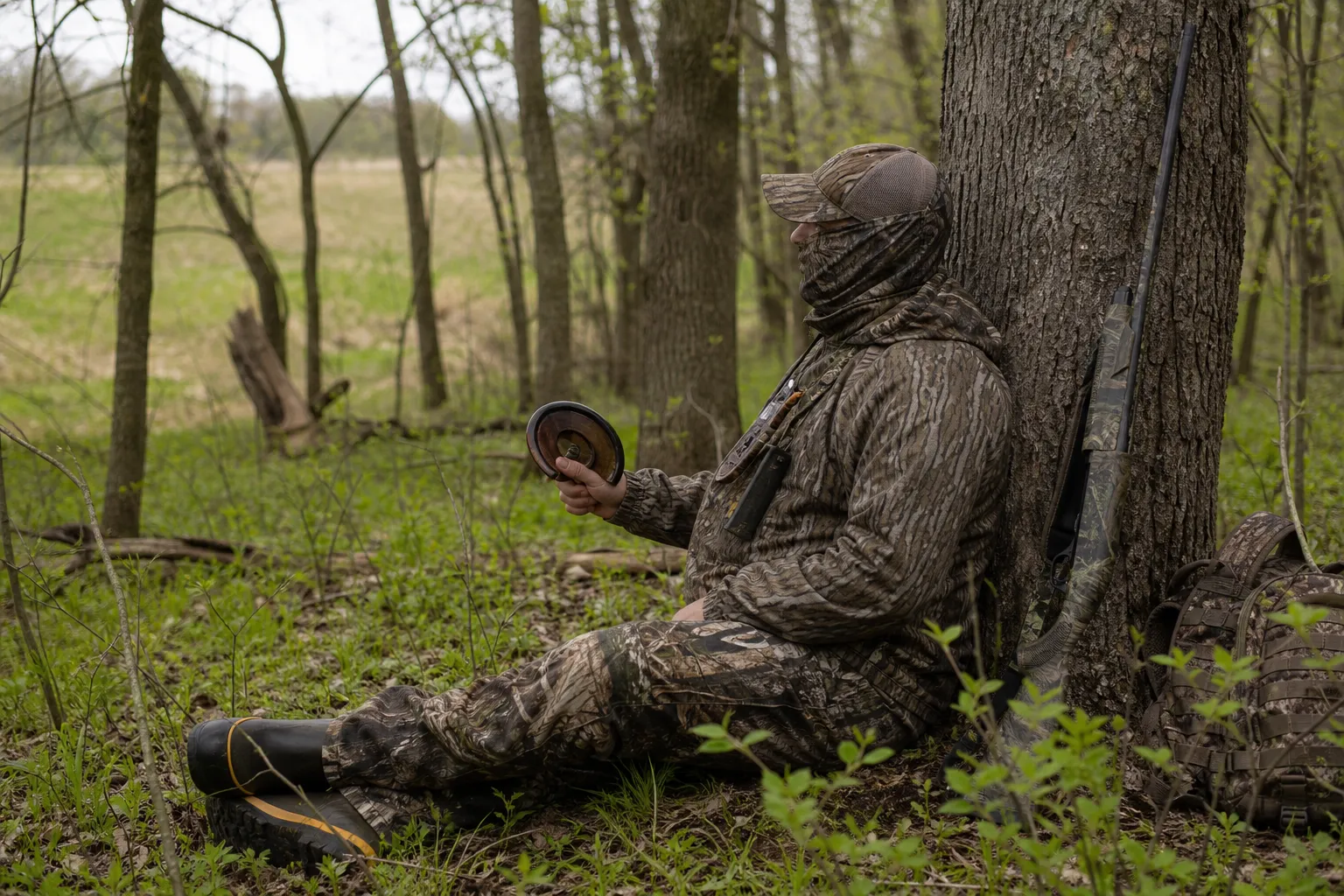
This section explains the call types, not a hunting tactic. The goal is to help beginners recognize what the gear is and what sounds agencies say it can make.
Box calls
The Oregon Department of Fish and Wildlife calls the box call a popular option and a good choice for new turkey hunters. Oregon says a box call can produce yelps, clucks, purrs, fighting purrs, cackles and gobbles.
That broad range is why box calls are often discussed early in turkey calling. They are a friction style tool in common use, and Oregon specifically connects them to several of the core turkey sounds a beginner is trying to learn.
Pot or slate calls
The Oregon Department of Fish and Wildlife describes pot calls, often called slate calls, as friction style calls. Oregon says a pot call has three parts: a pot, a calling surface and a striker.
The basic idea is simple enough for beginners to understand without getting into technique. The striker and surface create the sound, while the pot holds the calling surface. Florida also lists pot or slate calls among manufactured turkey calls.
Mouth or diaphragm calls
The Oklahoma Department of Wildlife Conservation says diaphragm or mouth calls fit in the hunter’s mouth and are operated with breath, tongue and lips. Texas Parks and Wildlife Department says a mouth call or diaphragm does not require the use of hands.
That hands free feature is the major design difference beginners should notice. A mouth call is not held and moved like a box call or a pot call. It works inside the mouth, using air and mouth position to make sound.
Tube calls
The Oklahoma Department of Wildlife Conservation says a tube call is a tube with latex stretched over the calling end. Oklahoma also says a tube call can make many turkey sounds, from yelps to purrs to gobbles.
For a beginner, the important point is that tube calls are another broad vocabulary tool. They are not limited to one turkey sound in Oklahoma’s description.
Locator calls
Locator calls are different from hen calls. They imitate other sounds rather than trying to sound like a hen turkey. The Florida Fish and Wildlife Conservation Commission says owl, crow and woodpecker sounds can cause a male turkey to shock gobble. Texas Parks and Wildlife Department lists locator call examples that include owl hoots, crow calls, coyote howls, peacock calls and turkey gobbles.
So a locator call is best understood as a way to prompt a response, especially a gobble, rather than as a copy of a yelp, cluck or purr.
Audio examples and responsible use
Audio can be useful for learning, but it should only be embedded when the permission is clear. Macaulay Library says its media can be embedded from the media page using the Embed option, but it also says embedding and sharing are for noncommercial purposes only, and revenue generating use should go through its ticketing system.
That means a page should not assume every turkey sound file online is free to reuse. Listening to reputable examples is helpful, but embedding or republishing recordings requires attention to the license or permission terms.
For birders, there is also a practical difference between studying a recording and playing sounds around wild birds. Before using playback in the field, check current guidance from the land manager or wildlife agency responsible for that place.
What beginners should learn first
Start by separating turkey sounds into loud and soft, then into purpose. The gobble and cackle are easy to notice because they are more dramatic. The yelp, cluck and purr are more everyday flock sounds in the agency descriptions. The kee kee stands apart as the lost call of young turkeys.
For gear, a beginner can understand the main categories this way:
- Box calls are beginner friendly and can make a wide range of turkey sounds, according to Oregon.
- Pot or slate calls are friction calls with a pot, calling surface and striker, according to Oregon.
- Mouth or diaphragm calls fit in the mouth and use breath, tongue and lips, according to Oklahoma.
- Tube calls use latex over a tube and can imitate many turkey sounds, according to Oklahoma.
- Locator calls imitate sounds such as owls, crows and coyotes to prompt a response, according to Florida and Texas.
Before hunting, confirm the current rules for the place and date you plan to hunt with the responsible wildlife agency. If you plan to use recordings, playback or embedded audio, also confirm the current permission or license terms from the audio provider.
Frequently asked questions
What does a cluck mean in turkey sounds?
The Oklahoma Department of Wildlife Conservation describes a cluck as short, staccato notes generally used by one bird to get another bird’s attention.
What does a gobble signal?
Oklahoma Department of Wildlife Conservation says the gobble is a principal male wild turkey vocalization used mainly in spring.
Are box calls good for beginners?
Oregon Department of Fish and Wildlife calls the box call a popular option and a good choice for new turkey hunters. Oregon says it can produce yelps, clucks, purrs, fighting purrs, cackles and gobbles.
What is a locator call?
A locator call imitates another sound, such as an owl, crow, coyote or similar call, to prompt a male turkey to gobble. Florida Fish and Wildlife Conservation Commission says owl, crow and woodpecker sounds can cause a male turkey to shock gobble.
Can wild turkey audio be embedded on a page?
Macaulay Library says its media can be embedded using the media page Embed option, but it also says embedding and sharing are for noncommercial purposes only, and revenue generating use should go through its ticketing system.
Sources
- The Sounds of the Wild Turkey, National Wild Turkey FederationOfficial source. Accessed October 22, 2026.
- Wild Turkey Sounds, Cornell Lab of Ornithology, All About BirdsOfficial source. Accessed October 22, 2026.
- Using and requesting media, eBird Support, Cornell Lab of OrnithologyOfficial source. Accessed October 22, 2026.
- Wild Turkey Sounds, Oklahoma Department of Wildlife ConservationOfficial source. Accessed October 22, 2026.
- Turkey Calls, Oklahoma Department of Wildlife ConservationOfficial source. Accessed October 22, 2026.
- Taming Turkey Talk, Missouri Department of ConservationOfficial source. Accessed October 22, 2026.
- Calling Turkeys, Florida Fish and Wildlife Conservation CommissionOfficial source. Accessed October 22, 2026.
- Turkey Hunter's Technique, Oregon Department of Fish and WildlifeOfficial source. Accessed October 22, 2026.
- Calling Game, Texas Parks and Wildlife DepartmentOfficial source. Accessed October 22, 2026.
- Talking Turkey, Texas Parks and Wildlife DepartmentOfficial source. Accessed October 22, 2026.