Wild Turkey Subspecies: Eastern, Osceola, Rio Grande, Merriam’s, Gould’s and Ocellated
The American wild turkey has five commonly recognized North American subspecies: Eastern, Osceola, Rio Grande, Merriam’s and Gould’s. The ocellated turkey is a separate turkey species with a limited range in Mexico, Belize and Guatemala.
By RaiS. Reviewed by RaiS. Published . 8 min read.
Research and drafting were assisted by AI. RaiS checked the facts against the sources below and approved this page.
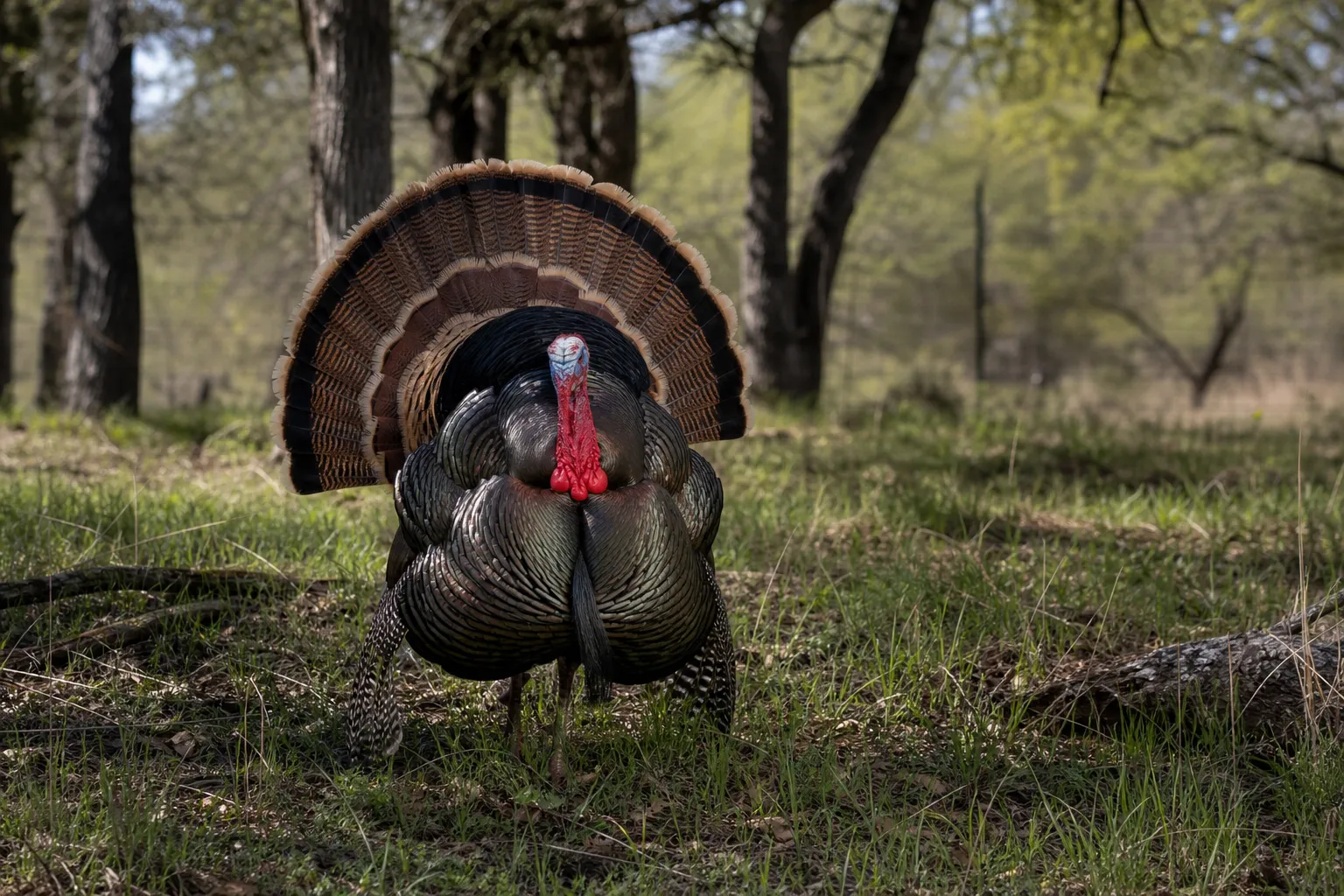
The American wild turkey has five commonly recognized North American subspecies: Eastern, Osceola, Rio Grande, Merriam’s and Gould’s. The ocellated turkey is different. The National Wild Turkey Federation treats it as a separate wild turkey species, not as one of the five American wild turkey subspecies.
For hunters and wildlife watchers, the most useful field marks are the pale or dark tips on the tail fan, the rump and tail coverts, and the wing barring. USDA APHIS says wild turkey subspecies are mainly distinguished by tail feather tips, rump patches or wing feather barring, although overlap can make identification uncertain in some places.
Quick comparison: the five wild turkey subspecies
| Turkey | Range notes | Tail and rump ID clues | Wing pattern clues | Habitat and behavior notes |
|---|---|---|---|---|
| Eastern | National Wild Turkey Federation says Easterns occur in 38 states and four Canadian provinces. | Chestnut-brown tail feather tips. | Black and white wing bars. | Broadly distributed compared with the other subspecies. |
| Osceola, also called Florida | National Wild Turkey Federation says Florida is the only place with Osceolas. Florida Fish and Wildlife Conservation Commission says they are found only in peninsular Florida. | Dark-brown tail feather tips. | Black primary wing feathers with narrow white wing bars. Florida Fish and Wildlife Conservation Commission says wing-feather barring is the best way to distinguish Osceolas from Easterns. | Florida Fish and Wildlife Conservation Commission says Osceolas interbreed with Easterns north of peninsular Florida and in the panhandle. |
| Rio Grande | National Wild Turkey Federation says Rio Grandes occur in northern Mexico and 15 U.S. states. | Tan-colored tail feather tips. | Black-and-white wing barring. | Closely associated with riparian corridors, adjacent shrublands and grasslands in much of the native range. |
| Merriam’s | National Wild Turkey Federation says Merriam’s are native to ponderosa pine forests of Arizona, New Mexico and Colorado, and now have an expanded range. | Snow-white tail fan tips. The white margin is not as white or as wide as Gould’s. | More white than black on the wings. | Arizona Game and Fish Department also places Merriam’s primarily in ponderosa pine forests of Colorado, New Mexico and northern Arizona. |
| Gould’s | National Wild Turkey Federation places Gould’s in far southwestern New Mexico, adjacent southeastern Arizona and northern Mexico. | Distinctive white-tipped tail fan feathers and coverts. | Not the main field mark used here. | National Wild Turkey Federation says Gould’s use isolated habitat islands and roost in trees including cottonwoods and ponderosa pine. |
How to identify a wild turkey subspecies in the field
Start with location, then check the tail fan. Location narrows the choices, but feathers often provide the better clue. USDA APHIS says tail feather tips, rump patches and wing feather barring are the main subspecies characters.
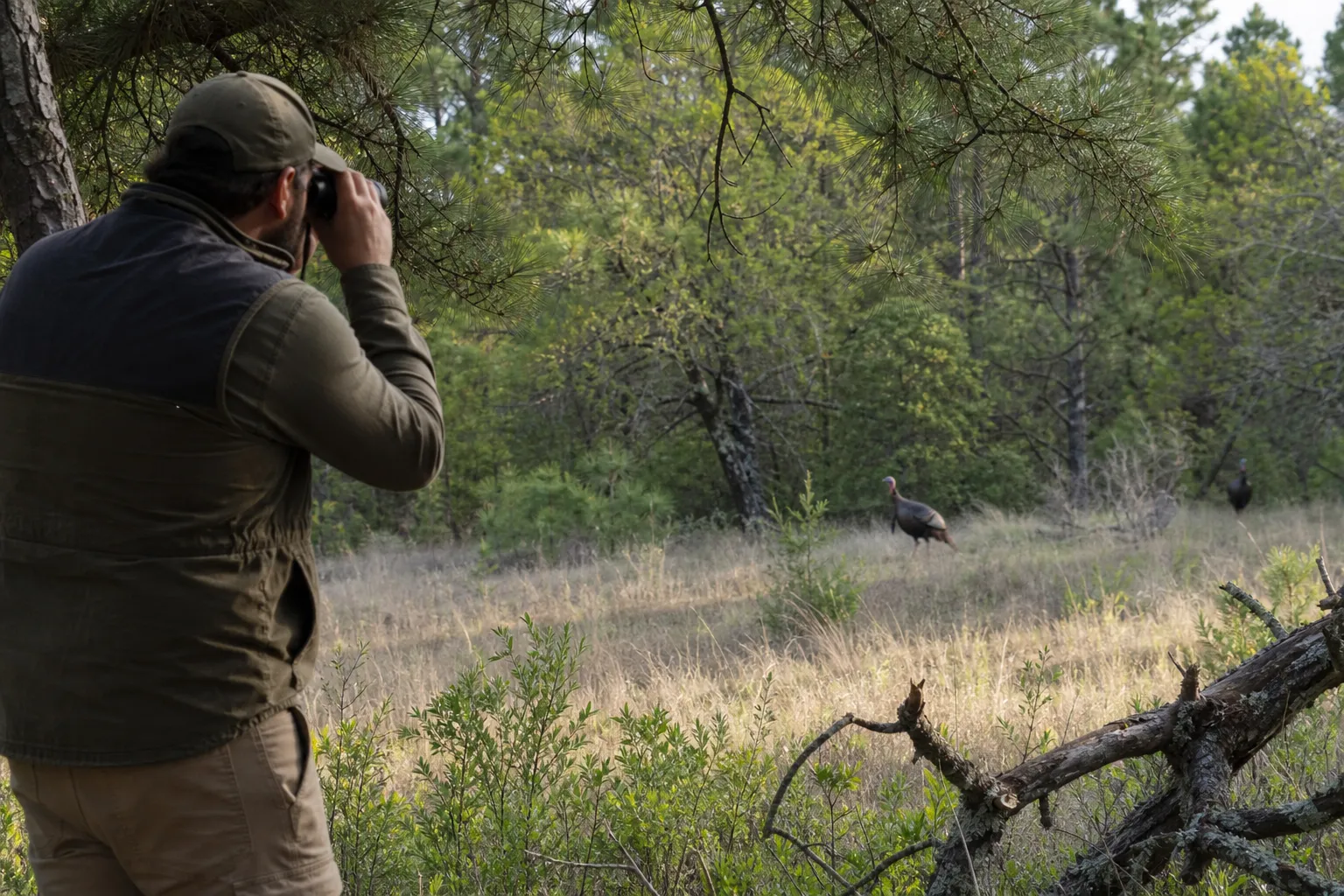
A full tail fan is easiest to read. Easterns show chestnut-brown tips. Osceolas show dark-brown tips. Rio Grandes show tan tips. Merriam’s show snow-white tips, while Gould’s show strong white tips on the tail fan and coverts.
Wing barring can be especially helpful where Florida turkeys are involved. Florida Fish and Wildlife Conservation Commission says Osceolas are best distinguished from Easterns by the barring on the wing feathers. The National Wild Turkey Federation describes Osceolas as having black primary wing feathers and narrow white wing bars.
Field identification is not always clean. Florida Fish and Wildlife Conservation Commission says Osceolas interbreed with Easterns north of peninsular Florida and in the panhandle. USDA APHIS also notes that overlap can complicate subspecies identification.
For more field context before a hunt, see our Turkey Hunting Tips guide. For call examples and sound identification, see Wild Turkey Sounds.
Eastern wild turkey
The Eastern wild turkey is the most broadly distributed of the five subspecies covered here. The National Wild Turkey Federation says Easterns occur in 38 states and four Canadian provinces.
The main tail clue is a chestnut-brown tip on the tail feathers. National Wild Turkey Federation also describes Easterns as having black and white wing bars.
For a quick field check, look for a generally darker tail margin than the pale-tipped western subspecies. If the bird is in an area where Easterns overlap with another subspecies, use range, wing pattern and tail feather tips together rather than relying on one clue.
Osceola wild turkey
The Osceola, or Florida wild turkey, is the Florida subspecies. The National Wild Turkey Federation says Florida is the only place with Osceola turkeys, and Florida Fish and Wildlife Conservation Commission says Osceolas are found only in peninsular Florida.
Osceolas have dark-brown tail feather tips. The National Wild Turkey Federation also describes them as having black primary wing feathers and narrow white wing bars.
Florida Fish and Wildlife Conservation Commission says Florida has both Eastern and Osceola wild turkeys. The agency also says Osceolas interbreed with Easterns north of peninsular Florida and in the panhandle, so birds in those areas may not show a simple, textbook appearance.
Rio Grande wild turkey
The Rio Grande wild turkey is a pale-tipped subspecies associated with more open country near water in much of its native range. National Wild Turkey Federation says Rio Grandes occur in northern Mexico and 15 U.S. states.
The key tail clue is a tan-colored tip on the tail feathers. The National Wild Turkey Federation also describes Rio Grandes as having black-and-white wing barring.
Habitat helps with identification. National Wild Turkey Federation says Rio Grande wild turkeys are closely associated with riparian corridors, adjacent shrublands and grasslands in much of their native range. New Mexico Department of Wildlife says Rio Grandes in New Mexico inhabit river valleys and brush near streams and rivers with large trees for roosting.
Merriam’s wild turkey
Merriam’s wild turkeys are best known for pale tail fans. The National Wild Turkey Federation describes Merriam’s as having snow-white tail-fan tips and more white than black on their wings.
Merriam’s can look similar to Gould’s. National Wild Turkey Federation notes that Merriam’s tail margins are not as white or as wide as Gould’s.
Range and habitat help separate them. National Wild Turkey Federation says Merriam’s are native to the ponderosa pine forests of Arizona, New Mexico and Colorado, and now have an expanded range. Arizona Game and Fish Department also states that Merriam’s are found primarily in ponderosa pine forests of Colorado, New Mexico and northern Arizona.
Gould’s wild turkey
Gould’s is the largest-looking subspecies in this guide’s comparison. National Wild Turkey Federation says Gould’s have the largest feet, longest legs and longest central tail feathers among the subspecies. New Mexico Department of Wildlife also describes Gould’s as the largest wild turkey subspecies, with longer legs, larger feet and larger center tail feathers than New Mexico’s other subspecies.
The feather clue is a broad white look. National Wild Turkey Federation describes Gould’s as having distinctive white-tipped tail fan feathers and coverts. Compared with Merriam’s, the white tail margin is wider and whiter according to the National Wild Turkey Federation’s Merriam’s comparison.
The range is limited in the United States. National Wild Turkey Federation places Gould’s in far southwestern New Mexico, adjacent southeastern Arizona and northern Mexico. The same organization says Gould’s use isolated habitat islands and roost in trees including cottonwoods, ponderosa pine, Emory oak, Arizona walnut and Arizona sycamore.
Ocellated turkey: a separate species
The ocellated turkey is not one of the five American wild turkey subspecies. The National Wild Turkey Federation describes two wild turkey species and five American wild turkey subspecies, placing the ocellated turkey apart from Eastern, Osceola, Rio Grande, Merriam’s and Gould’s.
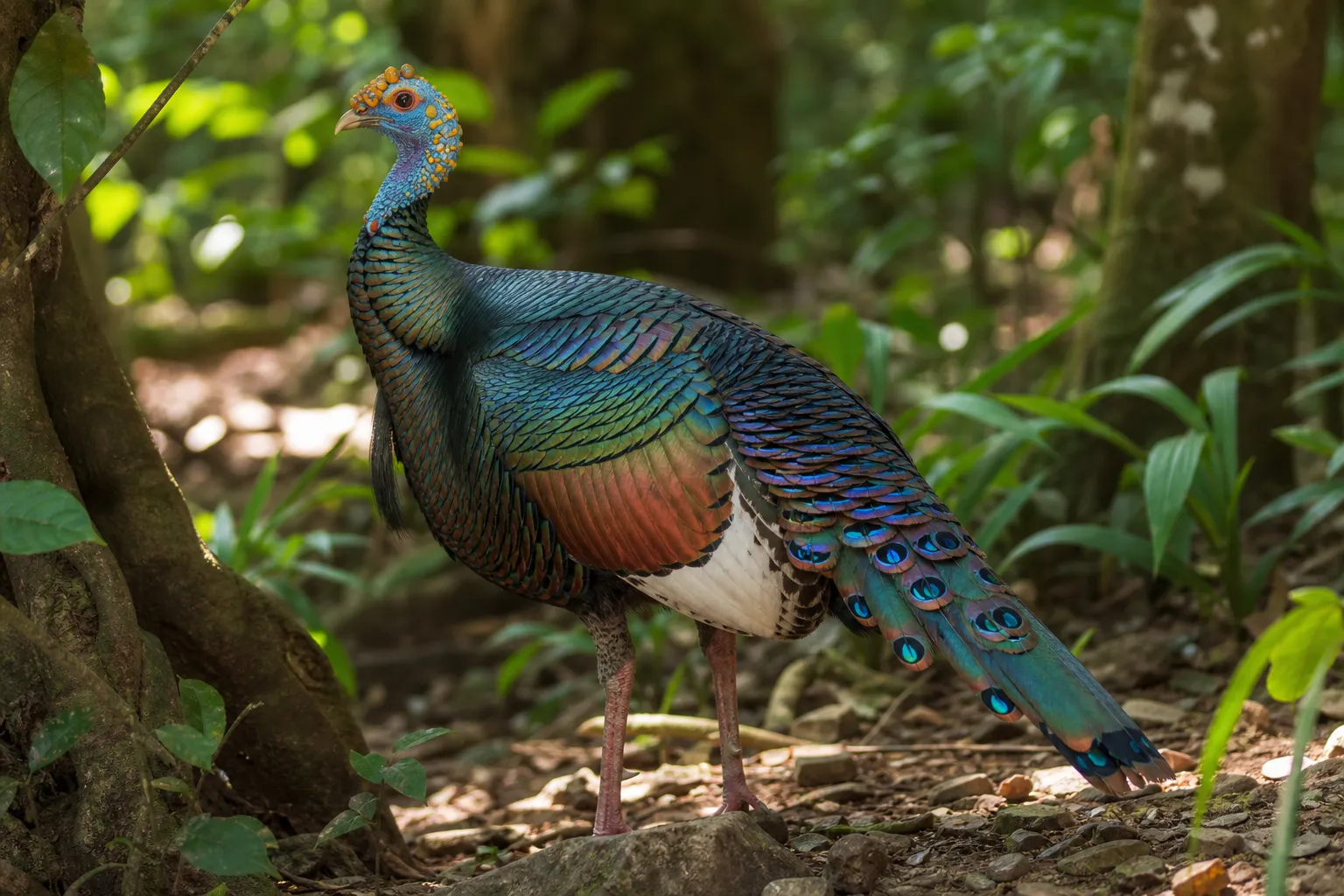
Its range is also separate. The University of Nebraska-Lincoln places the ocellated turkey in a limited range in the Yucatan Peninsula of Mexico and northern parts of Belize and Guatemala.
Its markings are very different from the North American subspecies. University of Nebraska-Lincoln describes the tail and upper tail covert markings as large iridescent bluish eyespots tipped with gold. National Wild Turkey Federation says ocellated turkeys have rainbow-like iridescent feathering, gray tail feathers with blue and gold tips, no beard, and a high-pitched gobble preceded by drumming.
Habitat and behavior shared by wild turkeys
Across the subspecies, wild turkeys use a mix of wooded cover and open feeding areas. USDA APHIS lists wild turkey habitat as including riparian zones, oak forests, pine savannas, forest clearings, grasslands, meadows and pastures.
USDA APHIS says forested areas are used for foraging, daytime resting, escape cover and nighttime roosting. The same agency says grasslands and openings are used mainly for foraging.
Wild turkeys are social birds. USDA APHIS describes them as highly social animals that may form large flocks. They are also ground feeders, so watching where birds feed, move and roost can be just as useful as studying one feather mark.
What wild turkeys eat through the year
USDA APHIS describes wild turkeys as omnivorous ground feeders that eat plants and animals, including nuts, seeds, fruits, insects and small reptiles. New Mexico Department of Wildlife says a turkey’s diet varies by year and forage availability.
Seasonal foods shift as plants and insects change:
- Spring: Pennsylvania Game Commission lists tender greens, shoots, tubers, leftover nuts and early insects.
- Fall: Pennsylvania Game Commission lists mast, fruits and seeds, including beechnuts, acorns, dogwood, grape, cherry, grasses, sedges, corn and oats.
- Variable years and places: New Mexico Department of Wildlife lists grass leaves and seeds, forbs, pine nuts, juniper berries, acorns, invertebrates and cultivated crops, depending on forage availability.
For identification, food can explain where you find birds. A turkey feeding in mast, grain, green growth or insects is still identified by range and feather marks, but the food source can explain why birds are using a particular opening, forest edge or riparian area.
Practical ID checklist
Use this order when you are trying to identify a turkey:
- Start with the map: Easterns are the broadest in distribution, Osceolas are in Florida, Rio Grandes include northern Mexico and 15 U.S. states, Merriam’s are tied to ponderosa pine regions and an expanded range, and Gould’s are limited in the United States to far southwestern New Mexico and adjacent southeastern Arizona.
- Read the tail fan: chestnut-brown for Eastern, dark-brown for Osceola, tan for Rio Grande, snow-white for Merriam’s, and broader white tail fan and covert tips for Gould’s.
- Check wing barring: this is especially useful for Osceola versus Eastern in Florida.
- Consider habitat: riparian corridors, oak forests, pine savannas, ponderosa pine forests, grasslands and openings can all matter depending on region.
- Be cautious in overlap areas: interbreeding and range overlap can make a bird difficult to assign confidently.
Before hunting, check the current rules with the state, provincial or tribal wildlife agency for the exact place you plan to hunt. Confirm species or subspecies rules, open areas, licensing, season dates, legal methods and any reporting requirements directly with the agency.
Frequently asked questions
How many wild turkey subspecies are in North America?
USDA APHIS says the term wild turkey refers to five North American subspecies: Eastern, Florida or Osceola, Rio Grande, Merriam’s and Gould’s.
What is the easiest way to tell wild turkey subspecies apart?
USDA APHIS says subspecies are mainly distinguished by tail feather tips, rump patches and wing feather barring. Range is also important, but overlap can complicate identification.
How do I tell an Osceola from an Eastern wild turkey?
National Wild Turkey Federation says Osceolas have dark-brown tail feather tips, black primary wing feathers and narrow white wing bars. Florida Fish and Wildlife Conservation Commission says Osceolas are best distinguished from Easterns by wing-feather barring.
Are Merriam’s and Gould’s easy to confuse?
Yes. National Wild Turkey Federation notes that Merriam’s and Gould’s can look similar, but Merriam’s tail margins are not as white or as wide as Gould’s.
Is the ocellated turkey a wild turkey subspecies?
No. National Wild Turkey Federation treats the ocellated turkey as a separate wild turkey species, not one of the five American wild turkey subspecies.
Sources
- Wild Turkey Appearances, National Wild Turkey Federation. Accessed October 26, 2026.
- Know Your Wild Turkey Subspecies, National Wild Turkey Federation. Accessed October 26, 2026.
- Eastern Subspecies Hunt Guide, National Wild Turkey Federation. Accessed October 26, 2026.
- Osceola Hunt Guide, National Wild Turkey Federation. Accessed October 26, 2026.
- Rio Grande Subspecies Hunt Guide, National Wild Turkey Federation. Accessed October 26, 2026.
- Merriam’s Subspecies Hunt Guide, National Wild Turkey Federation. Accessed October 26, 2026.
- Gould’s Subspecies Hunt Guide, National Wild Turkey Federation. Accessed October 26, 2026.
- Wild Turkeys, Wildlife Damage Management Technical Series, USDA APHIS Wildlife ServicesOfficial source. Accessed October 26, 2026.
- Meleagris gallopavo, wild turkey, USDA Forest Service Fire Effects Information SystemOfficial source. Accessed October 26, 2026.
- Wild Turkeys, Florida Fish and Wildlife Conservation CommissionOfficial source. Accessed October 26, 2026.
- Turkey, New Mexico Department of WildlifeOfficial source. Accessed October 26, 2026.
- Turkey, Arizona Game and Fish DepartmentOfficial source. Accessed October 26, 2026.
- Game Birds of the World: Ocellated Turkey, University of Nebraska-Lincoln School of Natural Resources. Accessed October 26, 2026.
- Turkey, Pennsylvania Game CommissionOfficial source. Accessed October 26, 2026.
- Wild Turkey, Missouri Department of ConservationOfficial source. Accessed October 26, 2026.