Turkey Hunting for Beginners
Wild turkey hunting starts with learning the bird, scouting before the season, setting up safely, practicing with your equipment and checking the current regulations for the exact state, province, zone and season you plan to hunt.
By RaiS. Reviewed by RaiS. Published . 7 min read.
Research and drafting were assisted by AI. RaiS checked the facts against the sources below and approved this page.
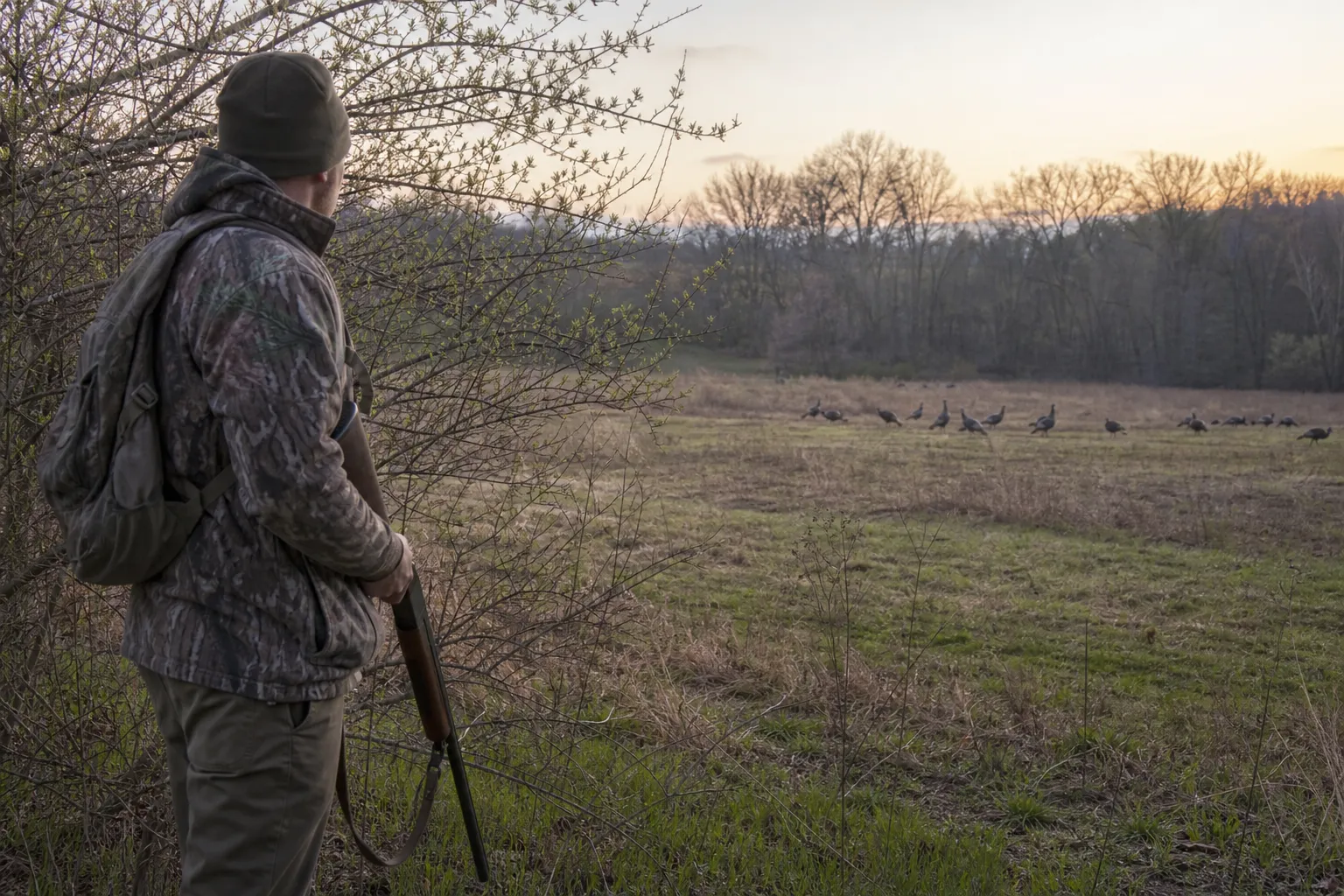
Wild turkey hunting for beginners is about finding birds before the season, calling only enough to bring a legal bird into view, setting up so other hunters can see neither you nor your decoys as a target, and following the current rules for your state or province. USDA APHIS says most states have spring and fall turkey seasons, but season schedules, bag limits and restrictions vary by state, so your wildlife agency is the source of truth before you hunt.
Know the bird before you hunt
USDA APHIS recognizes five commonly recognized North American wild turkey subspecies: Eastern, Florida, Rio Grande, Merriam’s and Gould’s. USDA APHIS also says restoration has established sustained wild turkey populations in 49 of the 50 U.S. states, including Hawaii, and in six Canadian provinces.
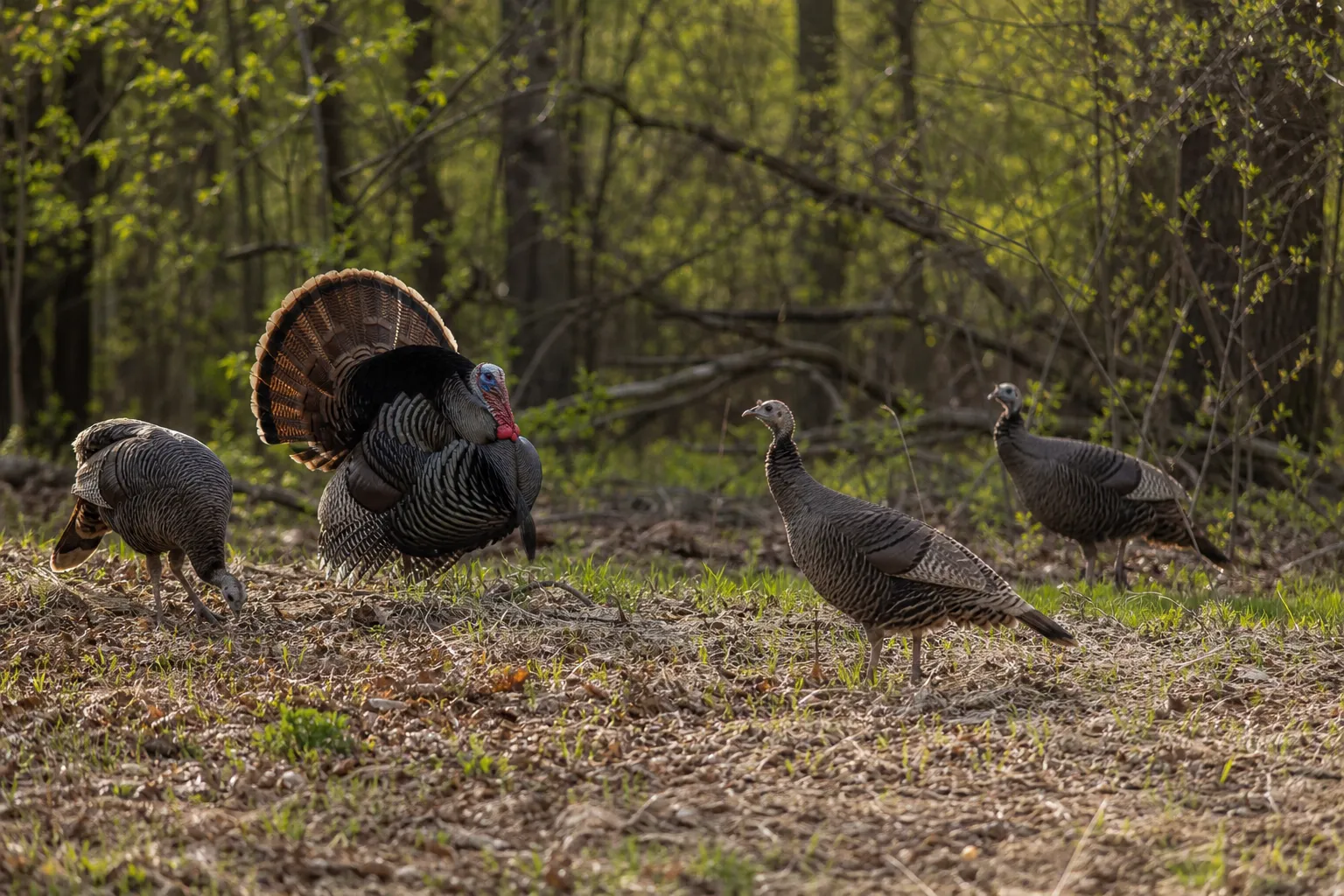
| Subspecies | Range notes from official or conservation sources | |, -|, -| | Eastern wild turkey | The National Wild Turkey Federation says Eastern wild turkeys are the most widely distributed subspecies east of the Mississippi River and are the most abundant. | | Florida wild turkey, also called Osceola | NWTF says this subspecies is found only in Florida. | | Rio Grande wild turkey | NWTF places Rio Grande wild turkeys in western desert regions of Texas, Oklahoma, Kansas, other western states and Mexico. | | Merriam’s wild turkey | NWTF says Merriam’s wild turkeys are most abundant in the mountainous regions of the West. | | Gould’s wild turkey | NWTF says Gould’s wild turkey occurs only in Arizona, New Mexico and northern Mexico. |
USDA APHIS describes adult male wild turkeys as toms or gobblers and says males are larger than hens. For hunting, do not rely on a general idea of sex or size. Read the rule for your season, because some seasons specify bearded birds, male birds, either sex or other limits.
Spring and fall turkey seasons are not the same everywhere
USDA APHIS says most states have spring and fall turkey seasons, but the schedules, bag limits and restrictions may vary by state. That is the key point for beginners: do not copy another hunter’s calendar, method or tag routine unless it matches the official rules for the place and year you are hunting.
Spring examples in the ledger include seasons that focus on male or bearded birds. Ontario’s 2026 wild turkey page says a hunter may buy spring wild turkey tags that are only valid for bearded turkey. New Brunswick’s 2026 resident wild turkey draw fact sheet says only wild turkeys with a visible beard may be harvested.
Fall rules can differ. Ontario’s 2026 wild turkey page says fall tags are valid for either sex, subject to the published bag limits and Wildlife Management Units. Texas Parks and Wildlife’s 2026 to 2027 wild turkey regulations list fall and spring seasons by zone and county.
Scouting and roosting basics
Start scouting before the season. Kentucky Department of Fish and Wildlife says turkeys are creatures of habit: flocks may roost in the same trees, gobblers may use the same fields to attract hens and birds generally feed in the same areas if they are not disturbed.
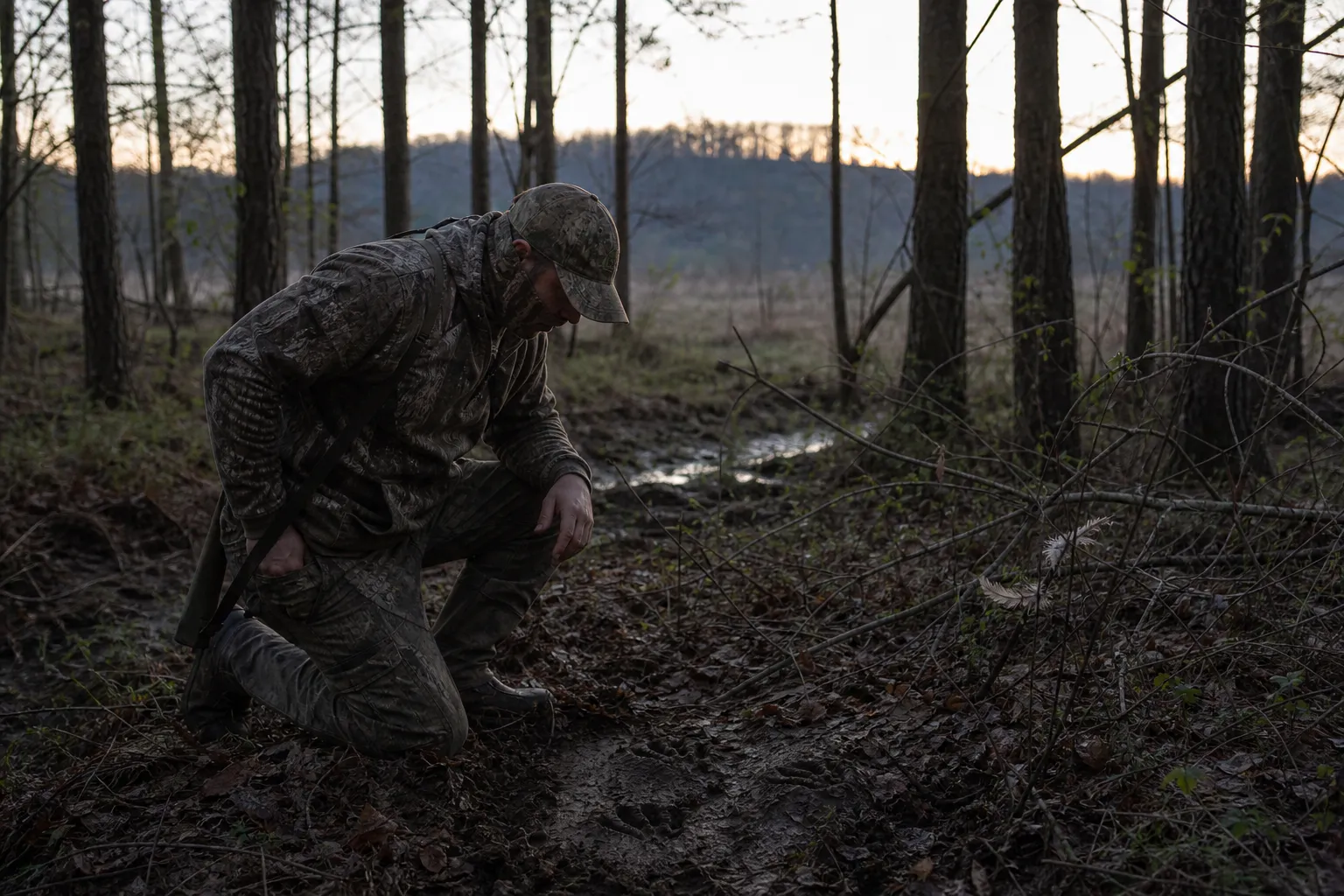
USDA APHIS says forested areas are often used by wild turkeys for foraging, daytime resting, escape cover and nighttime roosting. It also says turkeys typically feed soon after leaving their roosts early in the morning, then feed again in the mid to late afternoon before heading back to roosts.
For a beginner, useful scouting goals are simple:
- Identify roosting areas without disturbing the birds.
- Note fields or feeding areas birds use repeatedly.
- Watch travel patterns between roosts and feeding areas.
- Scout before the season so the pattern can help your plan.
Calling tips for beginners
Calling is useful, but beginners should think of it as communication, not noise.
Use calls with restraint while hunting. The ledger does not provide one universal calling sequence for every season or subspecies, and rules can also affect what calls are allowed. Ontario’s 2026 wild turkey page says electronic calls are illegal for wild turkey hunting in Ontario.
Decoys: helpful, limited and safety sensitive
NWTF says decoys can increase your chances of harvesting a gobbler, but they also increase danger because another hunter might shoot at a realistic decoy.
Before using a decoy, check the current regulation for your state or province. NWTF’s decoy safety guidance says to check state turkey hunting regulations regarding the use of decoys. Ontario’s 2026 wild turkey page says live decoys are illegal for wild turkey hunting in Ontario.
Decoy safety points from NWTF include:
- Never transport decoys uncovered. NWTF says decoys should be in transportation bags or in your vest while moving through turkey woods.
- Place decoys where you can see clearly.
- Do not place decoys directly in front of you. NWTF warns that this could put the hunter in the line of fire.
- Remember that realistic decoys can create danger if another hunter shoots at them.
Safe turkey setups
Safety is the most important turkey hunting tip.
Wear colors that do not imitate a gobbler. New Brunswick’s wild turkey safety page says never to wear or use equipment that is red, white or blue because those are the same colors as a male turkey’s head.
Set up with protection behind you. New Brunswick’s wild turkey safety page is more specific: your backstop should be at least as wide as your shoulders and taller than the top of your head.
Do not stalk turkey sounds. New Brunswick’s safety page says stalking wild turkeys or turkey sounds, especially a gobbling male, is not recommended because the hunter may be sneaking up on another hunter. If another hunter approaches, do not wave to get attention. The safe lesson from the official material is to avoid actions that could be mistaken for a turkey and to make sure the other hunter understands your location without creating movement that looks like game.
Shot placement and practice
Know your effective range before hunting. Beginners should pattern their shotgun, understand where it hits and keep shots within the range where they can place the pattern reliably.
This guide does not cover firearm modification or ammunition loading. Use only legal equipment for the jurisdiction and season, and follow the manufacturer’s safety instructions for your firearm or bow.
Legal methods, tags and reporting vary by place
The examples below show why turkey hunters must read the current official rules. They are not a substitute for the regulation booklet or agency website for your hunt.
| Jurisdiction and source | Examples from the cited official source | |, -|, -| | Texas Parks and Wildlife, 2026 to 2027 wild turkey regulations | Seasons are listed by zone and county. Texas says it is unlawful to hunt roosting turkeys by any means at any time. Texas also says all turkeys must be tagged immediately after harvest and harvest reporting is required within 24 hours. | | Ontario, 2026 hunting regulations summary | Wild turkey hunting requires an Outdoors Card, small game licence, wild turkey tag and proof of firearm accreditation if hunting with a gun. Spring tags are valid only for bearded turkey. Fall tags are valid for either sex, subject to published bag limits and WMUs. Live decoys and electronic calls are illegal for wild turkey hunting in Ontario. Turkey tag holders must complete a hunter report even if they did not hunt or harvest an animal. | | New Brunswick, 2026 resident wild turkey draw fact sheet | Only wild turkeys with a visible beard may be harvested. Harvested wild turkeys must be tagged immediately after harvest with the harvest tag on the leg. |
Beginner checklist before opening day
Use this checklist as a planning tool, then verify every legal item with the wildlife agency for the exact place and year.
- Read the current turkey regulation for your state, province, county, zone or WMU.
- Confirm season dates, legal birds, bag limits, legal methods, tagging and reporting.
- Confirm whether decoys, live decoys, electronic calls, dogs, bait or recorded calls are allowed or prohibited.
- Scout before the season without disturbing birds.
- Locate roosting and feeding areas.
- Practice any legal calls you plan to use.
- Pattern your shotgun and know your effective range.
- Wear no turkey head colors, especially red, white and blue, and follow any additional agency safety guidance.
- Use a backstop wider than your shoulders and taller than your head.
Before hunting, check the current official source for your state or province. Confirm season dates, legal birds, licensing, tags, methods, decoy and call rules, harvest tagging and reporting deadlines. If the agency language differs from a guide, follow the agency.
Frequently asked questions
What are the best turkey hunting tips for a beginner?
Scout before the season, learn where birds roost and feed, use basic calls sparingly, set up with a safe backstop and verify all regulations with your state or provincial agency.
What colors should I avoid wearing while turkey hunting?
New Brunswick’s safety page says not to wear or use red, white or blue because those colors match a male turkey’s head.
Are turkey decoys always a good idea?
No. NWTF says decoys can increase your chance of harvesting a gobbler, but can also increase danger because another hunter might shoot at them.
Do turkey tagging and reporting rules vary?
Yes. Texas 2026 to 2027 rules require immediate tagging and harvest reporting within 24 hours. Ontario requires turkey tag holders to complete a hunter report even if they did not hunt or harvest.
Sources
- Wild Turkeys, Wildlife Damage Management Technical Series, USDA APHIS Wildlife Services, National Wildlife Research CenterOfficial source. Accessed October 20, 2026.
- Know Your Wild Turkey Subspecies, National Wild Turkey Federation. Accessed October 20, 2026.
- Safety First in the Turkey Woods, National Wild Turkey Federation. Accessed October 20, 2026.
- Decoy Safety, National Wild Turkey Federation. Accessed October 20, 2026.
- Turkey Hunting: Getting Started, Missouri Department of ConservationOfficial source. Accessed October 20, 2026.
- Turkey Hunting Equipment, Missouri Department of ConservationOfficial source. Accessed October 20, 2026.
- Turkey Hunting School, Missouri Department of ConservationOfficial source. Accessed October 20, 2026.
- Decoying Spring Turkeys, Missouri Department of ConservationOfficial source. Accessed October 20, 2026.
- 2026 Spring Turkey Hunting Regulations and Information, Missouri Department of ConservationOfficial source. Accessed October 20, 2026.
- Wild Turkey 2026 to 2027 Seasons and Regulations, Texas Parks and Wildlife DepartmentOfficial source. Accessed October 20, 2026.
- Learn to Hunt Turkey, Kentucky Department of Fish and Wildlife ResourcesOfficial source. Accessed October 20, 2026.
- Wild Turkey Hunting Safety Tips, Government of New BrunswickOfficial source. Accessed October 20, 2026.
- 2026 Resident Wild Turkey Draw, Important Facts, Government of New BrunswickOfficial source. Accessed October 20, 2026.
- Wild Turkey, Ontario Hunting Regulations Summary, Government of OntarioOfficial source. Accessed October 20, 2026.
- Mandatory Hunter Reporting, Ontario Hunting Regulations Summary, Government of OntarioOfficial source. Accessed October 20, 2026.