How to Layer Clothing for Cold-Weather Hunting
Cold weather hunting layers should move sweat away from your skin, trap warm air, and block wind, rain, and snow. The key is to adjust before you sweat on the walk in, then add insulation before you sit still.
By RaiS. Reviewed by RaiS. Published . 7 min read.
Research and drafting were assisted by AI. RaiS checked the facts against the sources below and approved this page.
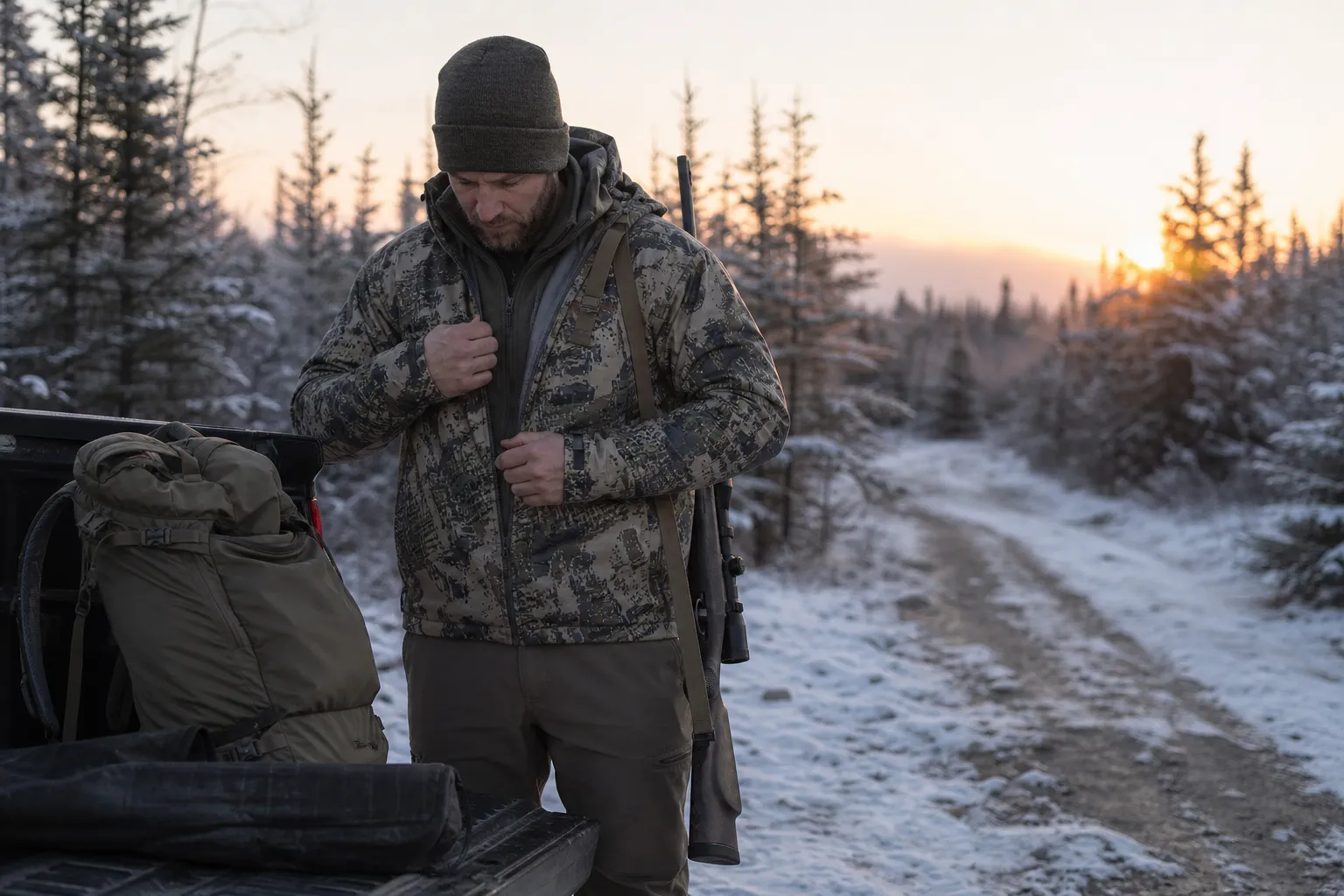
Cold weather hunting layers work best as a system: a moisture wicking base layer next to your skin, an insulating mid layer, and an outer shell that blocks wind, rain, and snow. The goal is not just to feel warm at the truck. It is to stay dry while walking, then add enough insulation before you sit, glass, or wait in a stand or blind.
Hunters have a special cold weather problem. You may heat up fast while walking in, then cool down quickly when you stop moving. Texas Parks and Wildlife notes that layering is important for hunters who sit still for long periods because they are not generating much body heat. NIOSH also warns that sweat from heavy activity can evaporate after you stop, causing further cooling and contributing to cold stress.
The three-layer system
The National Park Service describes winter layering as a way to keep moisture away from the skin, create insulation, and protect against wind, snow, and rain. For hunting, that same three part system helps you adjust as your activity level changes.
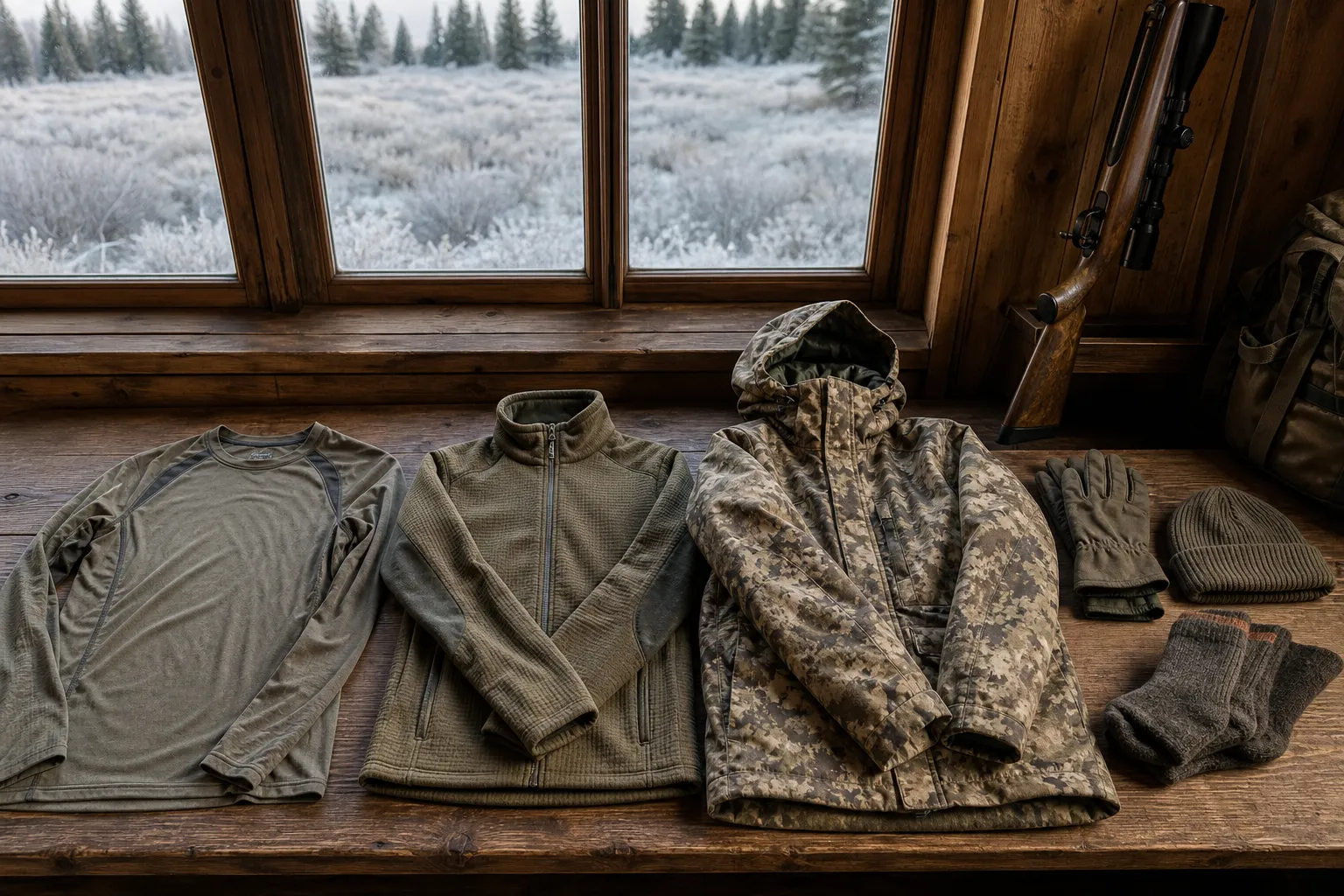
1. Base layer: move sweat away
The base layer is the layer worn next to your skin. Its job is to wick moisture away from your body. The National Park Service says inner layers should be made of materials that wick moisture away from the skin.
Good base layer choices are non cotton fabrics designed to manage moisture. Fit matters because the base layer has to stay close enough to manage moisture. Available guidance does not specify a single fit, weight, or garment style for every hunt, so treat base layer weight as something to match to the weather and how hard you will be moving.
2. Mid layer: trap body heat
The mid layer is insulation. Texas Parks and Wildlife describes the next layer above the base layer as a thicker insulating layer that lets your body heat the air held there. The National Park Service also identifies middle layers as the insulating part of the clothing system.
Common mid layer choices include fleece, wool, down, and synthetic insulation. Choose the amount of insulation based on temperature, moisture, and how long you expect to sit still.
3. Outer shell: block weather and control heat
The outer layer protects the system from wind and water. Texas Parks and Wildlife says the outer layer should provide a barrier to inner layers from wind and water.
Ventilation matters. The National Park Service says outer layers should repel water, stop wind, and allow ventilation to reduce evaporative heat loss. In plain terms, a shell should protect you from weather without trapping so much heat that you sweat through your inner layers.
Why cotton fails in cold weather
Cotton is a poor cold weather choice because it absorbs water and stays wet. The National Park Service specifically says cotton is not a great winter clothing choice because it absorbs water into its fibers and stays wet for a long time.
That matters during a hunt because sweat, rain, and snow can all add moisture to clothing. CDC cold weather guidance says hypothermia can occur even above 40 degrees Fahrenheit if a person becomes chilled from rain, sweat, or cold water. A cotton base layer that stays wet works against the main purpose of layering: staying warm and dry.
For cold hunts, choose non cotton clothing that can help move moisture away from the skin.
How to dress for the walk in
Start the walk a little cooler than you want to feel while sitting. NIOSH recommends several loose layers because layering gives better insulation and lets the wearer remove layers before becoming too hot.
The practical rule is to adjust early. Vent or remove a layer before you sweat heavily. If your shell is on and you are climbing, walking through snow, or carrying a pack, consider whether that shell is trapping too much heat.
Multiple thin layers help here. USGS says multiple thin layers let a person fine tune insulation for different temperatures and activity levels, and calls layering the most practical winter clothing method for cold weather field work. For hunting, that means you can walk in with less insulation active, then add warmth at the stand, blind, glassing point, or still hunting pause.
How to layer when you stop moving
When you stop walking, add insulation before you get cold. Texas Parks and Wildlife emphasizes layering for hunters who sit still for long periods because they are not producing much body heat.
A common cold weather sequence is:
- Walk in with a wicking base layer and only as much insulation as you need to avoid chilling.
- Vent or remove your shell if it is causing overheating.
- Before sitting, glassing, or waiting, add insulation over your base layer or mid layer.
- Put on the shell when wind, rain, or snow protection is needed.
- Shed or vent layers again if the day warms up or you start moving.
Texas Parks and Wildlife says hunters can shed layers as the day warms up or when they start moving and their body warms up. The same idea works in reverse: when you stop producing heat, add warmth before cold stress starts.
Hands, feet, head, and face
Layering your torso is not enough in severe cold. NIOSH recommends protecting the ears, face, hands, and feet in extremely cold weather. CDC frostbite warning signs can appear on exposed or poorly protected skin, so pay attention to fingers, toes, ears, nose, and facial skin.
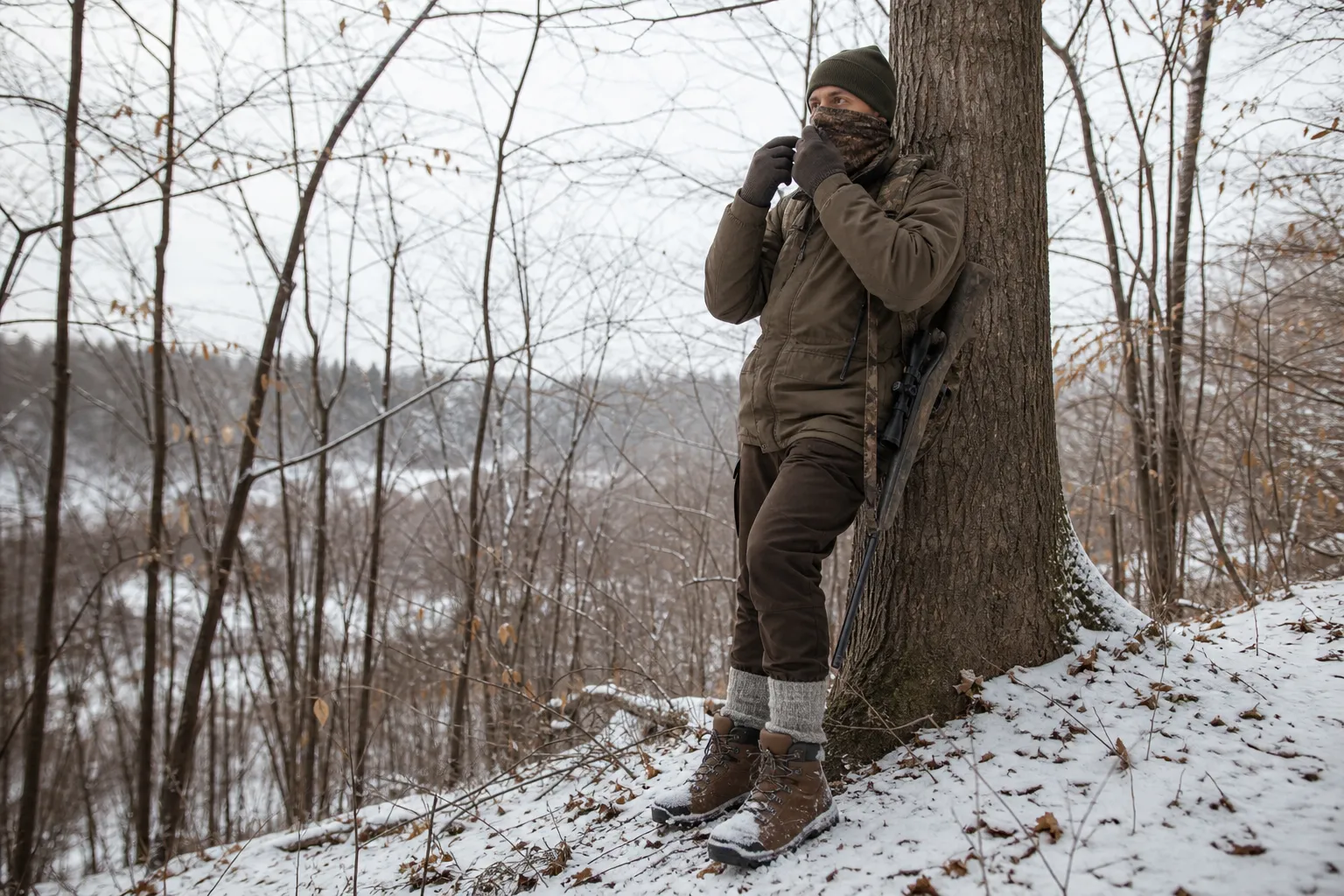
For feet, use socks that manage moisture. The National Park Service says wool socks or polypropylene socks can keep feet warm even if they get wet.
For hands, gloves and mittens both have a place, but the National Weather Service says mittens snug at the wrist are better than gloves for cold weather protection. Hunters often need finger dexterity at times, but the cold weather protection advantage of mittens is clear in NWS guidance.
For the head and face, choose coverage that matches the conditions. NIOSH specifically calls out the ears and face in extremely cold weather. Hats, face coverings, and neck coverage can help reduce exposed skin, especially when wind is part of the weather.
Hand warmers are an accessory, not a replacement for proper layers. For a plain language explanation of the main types, see ProjectGuns’ related guide: How Hand Warmers Work.
Carry spares in case clothing gets wet
Wet clothing changes the risk picture. NIOSH recommends carrying cold weather gear such as extra socks, gloves, hats, a jacket, blankets, and a change of clothes in case what you are wearing becomes wet.
For hunters, spare socks and gloves are especially useful because feet and hands are hard to rewarm once they become wet and cold. A dry hat or insulating layer can also matter if snow, rain, sweat, or brush soaks what you are wearing.
Early warning signs of hypothermia and frostbite
Cold injuries are easier to address early than late. The CDC says hypothermia can occur even at cool temperatures above 40 degrees Fahrenheit if a person becomes chilled from rain, sweat, or cold water. Do not wait for extreme cold before taking symptoms seriously.
CDC lists adult warning signs of hypothermia as:
- Shivering
- Exhaustion
- Confusion
- Fumbling hands
- Memory loss
- Slurred speech
- Drowsiness
Frostbite can start subtly. CDC says redness or pain in any skin area may be the first sign. Other signs include white or grayish yellow skin, skin that feels unusually firm or waxy, and numbness.
The National Weather Service says the best way to avoid hypothermia and frostbite is to stay warm and dry, wear loose layers, and remove layers to avoid sweat and chill. If hypothermia or frostbite is suspected, follow current CDC or National Weather Service emergency guidance and seek medical help.
A simple cold-hunt layering checklist
Use this as a planning guide before you leave:
- Base layer: a moisture managing non cotton option.
- Mid layer: insulating clothing matched to the temperature and moisture risk.
- Outer shell: wind and water protection with enough ventilation to reduce overheating.
- Feet: wool or polypropylene socks, plus boots suited to the conditions.
- Hands: gloves or mittens, with mittens favored by the National Weather Service for cold weather protection.
- Head and face: a winter hat and coverage for ears, face, and nose in severe cold.
- Spares: extra socks, gloves, hat, jacket, blanket, or change of clothes if wet conditions are possible.
Before each hunt, check the latest forecast and current cold weather safety guidance from the National Weather Service and CDC. Then dress so you can adjust while moving, sitting, and dealing with changing weather.
Frequently asked questions
What are the three layers for cold weather hunting?
Use a moisture wicking base layer next to your skin, an insulating mid layer, and an outer shell that blocks wind, rain, and snow. The National Park Service and Texas Parks and Wildlife describe these same basic functions for cold weather layering.
Why should hunters avoid cotton in cold weather?
The National Park Service says cotton absorbs water into its fibers and stays wet for a long time. In cold weather, wet clothing can chill the body, and CDC notes that hypothermia can occur above 40 degrees Fahrenheit if someone becomes chilled from rain, sweat, or cold water.
Should I dress warm for the walk in or for the sit?
Dress so you can adjust. Start the walk a little cooler than you want to feel while sitting, vent or remove layers before sweating, then add insulation when you stop moving.
What are early signs of hypothermia and frostbite?
CDC lists adult hypothermia warning signs as shivering, exhaustion, confusion, fumbling hands, memory loss, slurred speech, and drowsiness. CDC says frostbite may begin with redness or pain, followed by signs such as white or grayish yellow skin, firm or waxy skin, and numbness.
Sources
- Preventing Hypothermia, Centers for Disease Control and PreventionOfficial source. Accessed October 27, 2026.
- Cold and Work: Types, Causes, Preparation, CDC, National Institute for Occupational Safety and HealthOfficial source. Accessed October 27, 2026.
- The Physiological Response of Working in Cold Environments and how your PPE can Help, CDC, National Institute for Occupational Safety and HealthOfficial source. Accessed October 27, 2026.
- Winter Weather Resources and Frequently Asked Questions, National Weather ServiceOfficial source. Accessed October 27, 2026.
- During Extremely Cold Weather, National Weather ServiceOfficial source. Accessed October 27, 2026.
- Dressing for Winter, U.S. National Park ServiceOfficial source. Accessed October 27, 2026.
- A primer on clothing systems for cold-weather field work, U.S. Geological SurveyOfficial source. Accessed October 27, 2026.
- How to prevent frostbite and hypothermia, MedlinePlus Medical EncyclopediaOfficial source. Accessed October 27, 2026.
- Chapter 8, Preparation and Survival, Texas Parks and Wildlife DepartmentOfficial source. Accessed October 27, 2026.
- Deer hunting gear checklist, Michigan Department of Natural ResourcesOfficial source. Accessed October 27, 2026.
- Dress for the weather and you'll be more comfortable during your hunt, Idaho Fish and GameOfficial source. Accessed October 27, 2026.
- Layering Basics, REI Co-op Expert Advice. Accessed October 27, 2026.
- How Hand Warmers Work, ProjectGuns. Accessed October 27, 2026.