Saddle Hunting Explained: How Tree Saddles Work
Saddle hunting is a mobile style of elevated hunting that uses a tree saddle, bridge, tether, lineman belt, platform, climbing method and haul line. The system can be compact and flexible, but it has an elevated fall risk and a learning curve, so manufacturer instructions and careful setup matter.
By RaiS. Reviewed by RaiS. Published . 7 min read.
Research and drafting were assisted by AI. RaiS checked the facts against the sources below and approved this page.
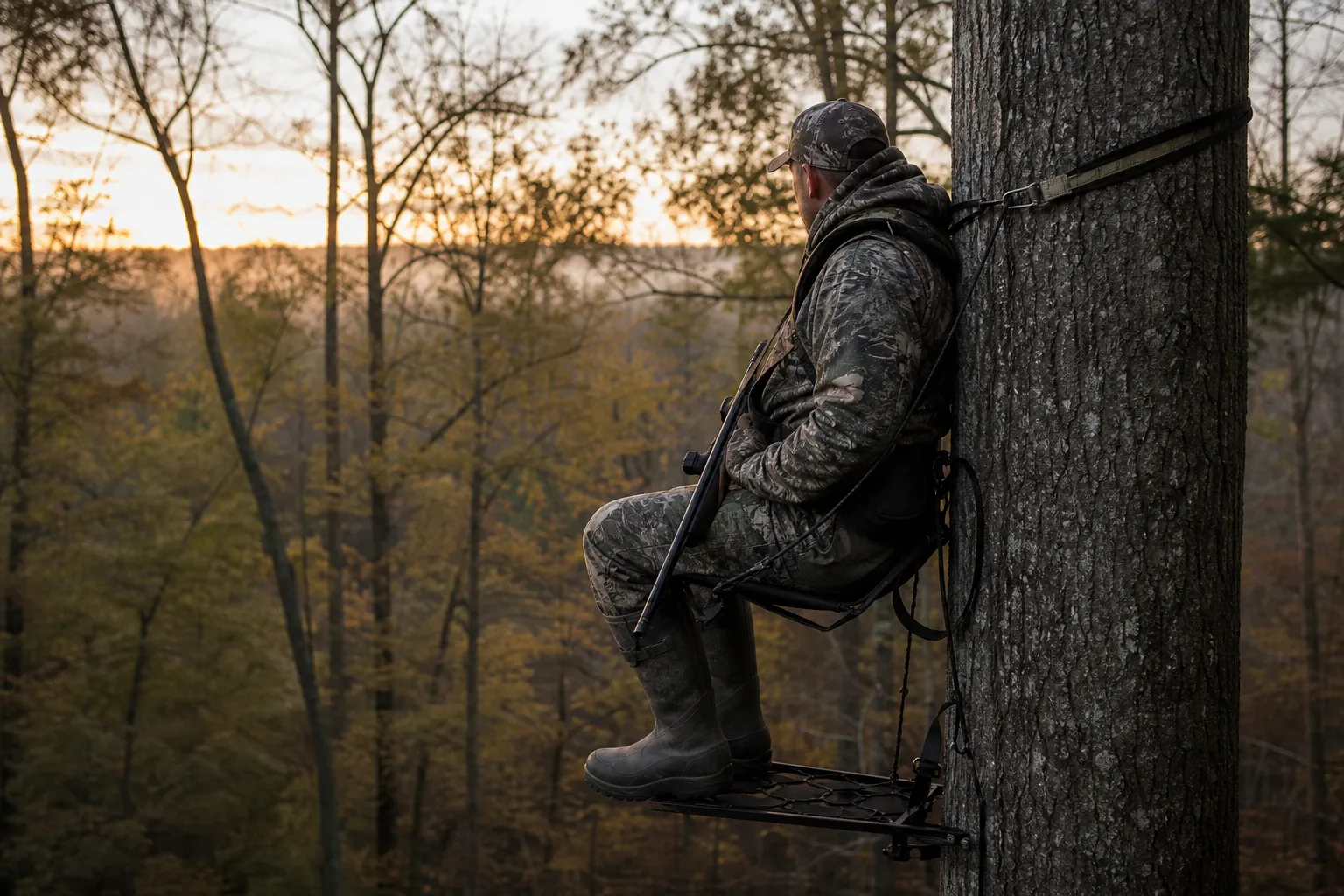
Saddle hunting is a lightweight, mobile form of elevated hunting. Instead of standing or sitting on a larger tree stand, the hunter wears a tree saddle, climbs with approved climbing equipment, connects to the tree with ropes, and uses a small platform at hunting height for foot position. Hunter-ed describes the core setup as a tree saddle, tree tether, lineman belt, platform and climbing sticks, with a haul line used to bring up the sporting arm after the climb.
What a saddle-hunting system includes
A saddle-hunting setup is best understood as a connected system, not as one single piece of gear. The saddle supports the hunter’s body. The bridge is the part of the saddle used to attach the tether to the saddle, according to Hunter-ed. The tether secures the saddle to the tree once the hunter reaches hunting height.
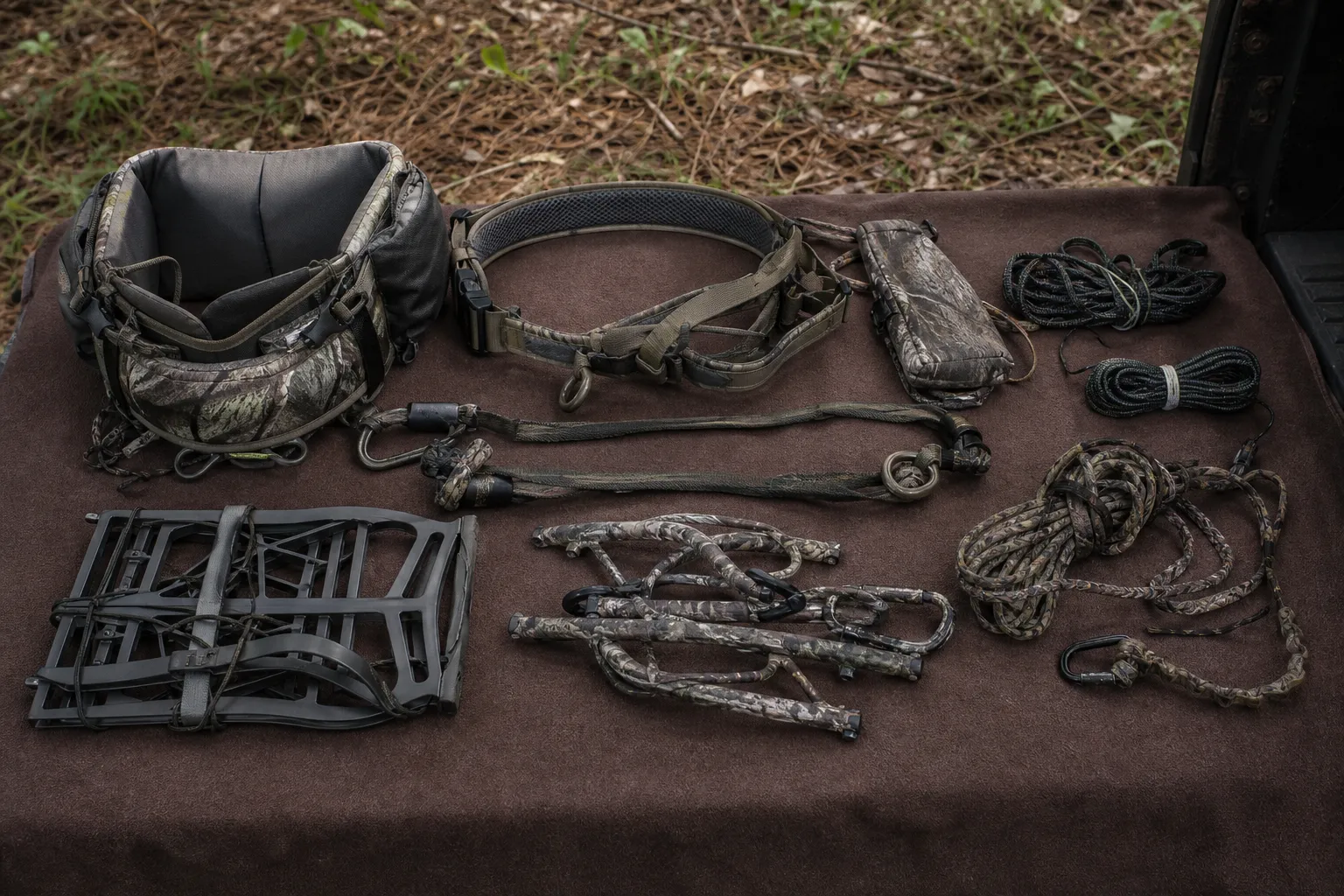
The lineman belt is used during the climb, descent and gear setup. Hunter-ed says it secures the saddle to the tree during ascent and descent and during hunting-equipment assembly while suspended. Hunter-ed also says the lineman belt must be used at all times while climbing a tree.
A platform gives the hunter a place for foot position at hunting height. Latitude Outdoors describes a saddle platform as the foot support used with climbing sticks, and says it is what the hunter stands on at hunting height. A haul line is also part of the basic kit, because Hunter-ed lists it as required equipment for retrieving a sporting arm after climbing.
In plain terms, the saddle is worn by the hunter, the bridge connects the saddle to the tether, the tether connects the hunter to the tree at hunting height, the lineman belt helps keep the hunter connected while climbing and working, and the platform gives the feet a controlled place to stand or pivot.
How the saddle, bridge, tether and lineman belt work together
The bridge and tether are central to how a saddle hunter is supported at hunting height. Hunter-ed states that the bridge is used to attach the tether to the saddle, and its tether instructions connect the tether’s carabiner to the saddle bridge. Once the tether is properly set and the saddle and tether are holding the hunter’s body weight, Hunter-ed says the lineman belt can be unhooked carefully.
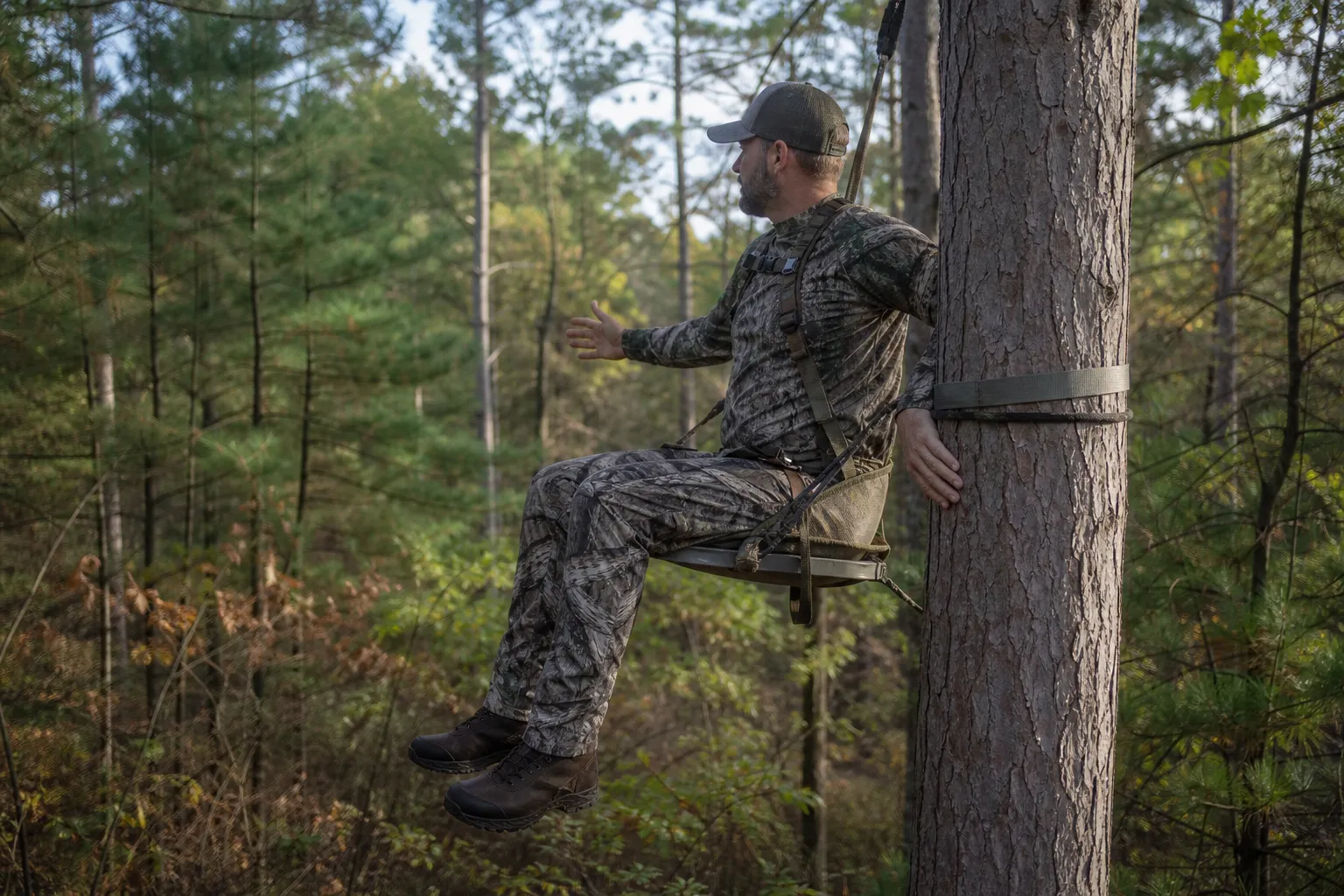
The lineman belt is not the same as the tether. It is the connection used while climbing, descending and assembling equipment while suspended. Hunter-ed places the saddle’s lineman loops above the bridge, and says the lineman belt should remain taut, support the hunter’s weight, and stay above waist level on the tree while climbing.
At hunting height, Hunter-ed says the tether is used to secure the saddle to the tree once the desired hunting height and position are reached. Hunter-ed also says the tether must be secured after climbing and before stepping onto the platform. Before setting a platform, Hunter-ed says the hunter should be attached to the tree with both the lineman belt and tether.
That sequence matters because slack is a fall hazard. Hunter-ed warns not to climb above the tether loop and girth hitch to hunt, because doing so creates slack in the tether and increases the risk of fall or injury.
How hunters position themselves in a saddle
A saddle hunter typically uses body weight in the saddle and foot position on the platform to lean, sit, rotate and face different directions around the tree. Hunter-ed says saddles used with a lineman belt and a properly set tether provide more mobility in a tree than tree stands.
Hunter-ed describes the 360-degree shooting advantage this way: hunters in a saddle can move horizontally around the tree with the platform below their feet and turn their body to aim at game in any direction from a tree. Latitude Outdoors also says saddle hunters can shoot 360 degrees and can keep the tree between themselves and deer for cover.
That does not mean every shot angle will feel natural right away. Many saddle hunters talk about easier and harder directions around the tree, often called strong-side and weak-side positions. For a beginner, the important point is simple: practice those movements at ground level before hunting height, with the same saddle, tether, bridge and platform arrangement described in the manufacturer’s instructions.
Latitude Outdoors says leaning into the saddle with a knee on the tree can give added support for shooting stability. The tree itself can also help break up the hunter’s outline because, as Latitude Outdoors notes, the hunter may be able to keep the tree between the hunter and approaching deer.
Platforms and climbing methods
The platform is the foot base at hunting height. It is not the same as the saddle, and it is not the same as the tether. Hunter-ed says the tether must be attached before the hunter climbs onto the platform or places weight on it.
Climbing sticks are a common climbing method named by Hunter-ed as part of the basic saddle-hunting setup. Latitude Outdoors lists climbing sticks and one-sticking as examples of saddle-hunting climbing methods.
This is one area where exact setup details should come from the manufacturer. Climbing aids, platforms, saddles, ropes and carabiners can have specific instructions, limits and inspection requirements.
A saddle setup should be treated as a system with matched, inspected components. Latitude Outdoors says to inspect the saddle, carabiners, lineman’s rope, tether and all other climbing aids for wear and tear before climbing, and not to use equipment that shows signs of damage or age.
Advantages compared with tree stands
Hunter-ed lists compact size as a major saddle advantage over tree stands, saying saddles can be stowed in a pack or worn into the woods without excess bulk. That compact carry is one reason saddle hunting appeals to mobile deer hunters who want to change locations.
Hunter-ed also says saddles, when used with a lineman belt and properly set tether, provide more mobility in a tree than tree stands. The ability to move horizontally around the tree and turn the body toward different directions can help a hunter work around the tree rather than being fixed in one seat position.
The tree can also become part of the setup. Latitude Outdoors says saddle hunters can keep the tree between themselves and deer for cover, and Hunter-ed describes the hunter moving around the tree with the platform below the feet.
For the stand side of the comparison, see our Tree Stand Types guide rather than trying to cover every stand category here.
Drawbacks and limits
Saddle hunting is still elevated hunting, and Hunter-ed lists increased risk of injury from falling as a disadvantage of elevated hunting. It also lists exposure to weather, limited room and inability to move toward game as disadvantages of elevated hunting.
Those drawbacks apply in a practical way to saddles. A saddle does not give the room of some larger stand or blind setups. It does not provide weather protection by itself. It also has a learning curve because the hunter must manage the saddle, bridge, tether, lineman belt, platform, climbing method and haul line while staying connected to the tree.
A saddle’s mobility is not a substitute for safety. The same movement that lets a hunter rotate around the tree also requires controlled foot placement, a properly set tether and careful attention to slack.
Fall-protection basics
Fall protection is the most important part of any elevated setup. Texas Parks and Wildlife Department describes a fall-arrest system as having three components: a full-body harness worn by the hunter, a tether and a tree belt.
Hunter-ed’s saddle course says never to use a hunting saddle as a fall-arrest system or full-body harness. In other words, do not treat the saddle itself as a replacement for required fall-arrest equipment in elevated hunting systems where a full-body fall-arrest system is required.
Continuous connection matters. Latitude Outdoors says never to disconnect from the tree for any reason, including when moving the lineman’s rope around a tree limb while climbing or descending.
Slack should be minimized. Hunter-ed warns against climbing above the tether loop and girth hitch because that creates slack and increases fall risk.
Gear condition matters. Hunter-ed also says damaged bridge gear should not be climbed on, and Latitude Outdoors says saddle gear and climbing aids should be inspected before climbing.
A rescue plan is part of the system. Texas Parks and Wildlife Department warns that even short periods of suspension can restrict blood flow and may lead to life-threatening suspension trauma.
Finally, a haul line is part of the system. Hunter-ed also lists a haul line as the rope used to retrieve the sporting arm from the ground after climbing.
What to check before trying saddle hunting
Before using any saddle system, read the saddle, tether, platform, climbing-aid and carabiner instructions from the manufacturer. Confirm the tree size limits, weight limits, inspection steps and approved use for every part of the system.
Also review current TMA safety guidance and your state or provincial hunter-education material for elevated hunting. If you hunt from public land or managed property, check the current rules for tree attachment methods, climbing aids and equipment use before the trip.
Frequently asked questions
What is saddle hunting?
Hunter-ed describes saddle hunting as a lightweight, mobile and dynamic form of elevated hunting. The basic setup includes a tree saddle, tether, lineman belt, platform and climbing sticks.
What does the tether do in a tree saddle setup?
Hunter-ed says the tether secures the saddle to the tree once the hunter reaches the desired hunting height and position. Its instructions connect the tether’s carabiner to the saddle bridge.
What is the lineman belt for?
Hunter-ed says the lineman belt secures the saddle to the tree during ascent, descent and equipment assembly while suspended. It says the lineman belt must be used at all times while climbing a tree.
Do saddle hunters stand on anything?
Yes. Latitude Outdoors describes a saddle platform as the foot support used with climbing sticks, and says it is what the hunter stands on at hunting height.
Is a hunting saddle a full-body fall-arrest harness?
No. Hunter-ed says never to use a hunting saddle as a fall-arrest system or full-body harness.
Why do saddle hunters talk about 360-degree shooting?
Hunter-ed says saddle hunters can move horizontally around the tree with the platform below their feet and turn their body to aim in any direction. Latitude Outdoors also says the tree can be used as cover between the hunter and deer.
Sources
- Treestand Safety Guidelines, Treestand Manufacturers AssociationOfficial source. Accessed October 24, 2026.
- Elevated Stands, Texas Parks and Wildlife DepartmentOfficial source. Accessed October 24, 2026.
- Tree Stand Safety, Wisconsin Department of Natural ResourcesOfficial source. Accessed October 24, 2026.
- What Is Saddle Hunting?, Hunter-ed.com, Tethrd Hunter Safety Course. Accessed October 24, 2026.
- Equipment Overview, Hunter-ed.com, Tethrd Hunter Safety Course. Accessed October 24, 2026.
- Adjusting Your Bridge, Hunter-ed.com, Tethrd Hunter Safety Course. Accessed October 24, 2026.
- Attaching Your Lineman Belt, Hunter-ed.com, Tethrd Hunter Safety Course. Accessed October 24, 2026.
- Attaching Your Tether, Hunter-ed.com, Tethrd Hunter Safety Course. Accessed October 24, 2026.
- Attaching Your Platform, Hunter-ed.com, Tethrd Hunter Safety Course. Accessed October 24, 2026.
- Benefits of Saddle Hunting vs. Tree Stand Hunting, Hunter-ed.com, Tethrd Hunter Safety Course. Accessed October 24, 2026.
- Advantages and Disadvantages of Elevated Hunting, Hunter-ed.com, Tethrd Hunter Safety Course. Accessed October 24, 2026.
- Saddle Hunting General Guidelines, Hunter-ed.com, Tethrd Hunter Safety Course. Accessed October 24, 2026.
- Saddle Hunting 101, Latitude Outdoors. Accessed October 24, 2026.
- Saddle Hunting Systems Safety Warnings and Instructions, Revision 7/1/2024, Latitude Outdoors. Accessed October 24, 2026.
- Profile and XL Profile Platforms Safety Warnings and Instructions, Revision 1/1/2025, Latitude Outdoors. Accessed October 24, 2026.
- Climbing Stick Warnings and Instructions, Revision 1/1/2025, Latitude Outdoors. Accessed October 24, 2026.