Hunting Dog Breeds: Retrievers, Pointers, Flushers and Hounds
Hunting dog breeds make the most sense when grouped by field job, not by a best breed ranking. This guide explains the major hunting dog types, the game they are traditionally associated with, and high level temperament and training considerations.
By RaiS. Reviewed by RaiS. Published . 6 min read.
Research and drafting were assisted by AI. RaiS checked the facts against the sources below and approved this page.
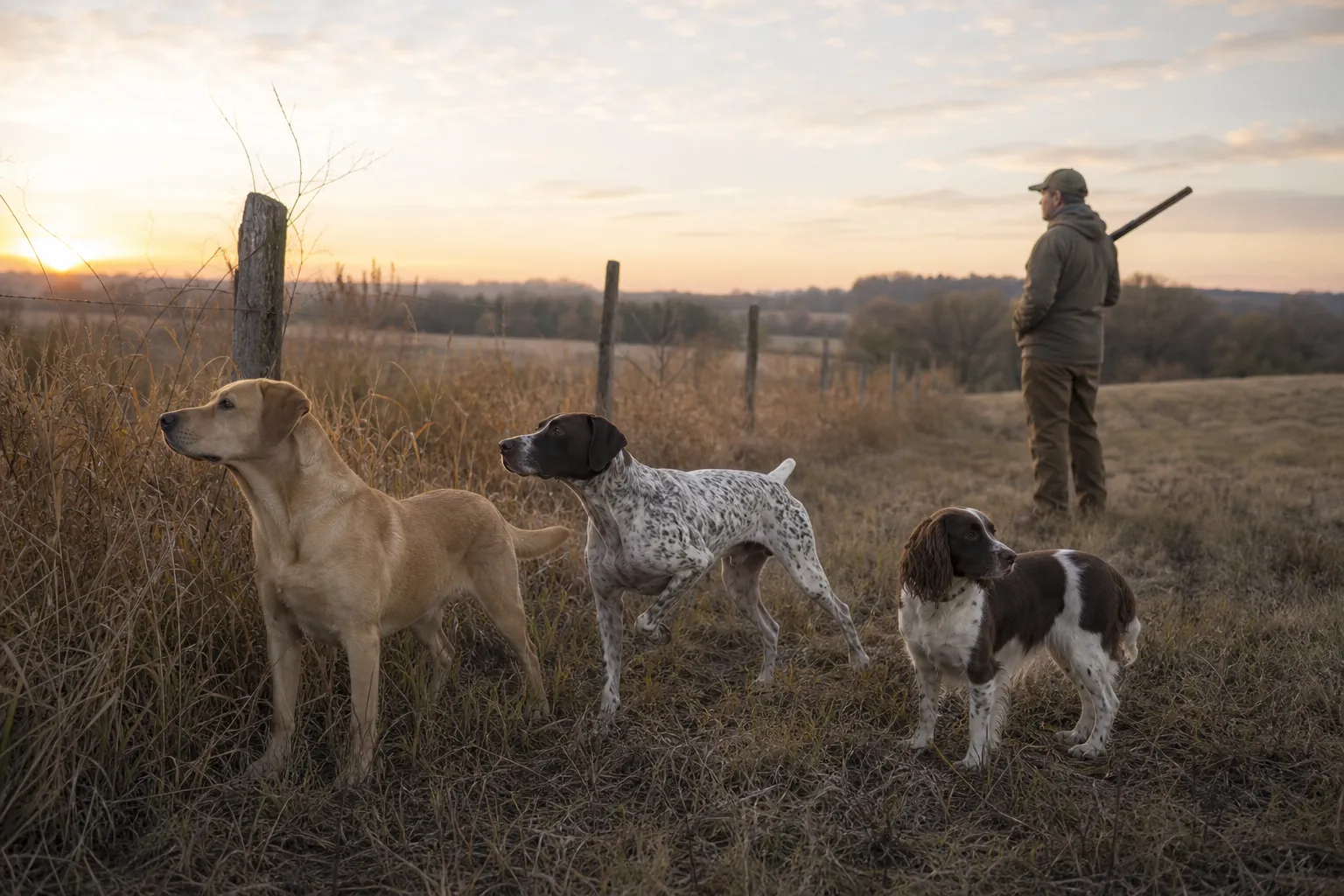
Hunting dogs are easiest to understand by job: retrievers bring birds back, pointers and setters work with upland birds, flushing spaniels push birds into the air within gun range, versatile breeds can combine several field tasks, hounds work within hound traditions, and curs and feists are known for treeing game. Breed groups overlap, so the practical question is not “What is the best breed?” It is “What work do I need this dog to do, and does that fit my hunting, home life and local rules?”
Several hound, cur and feist traditions are also part of the hunting dog picture. Use the breed names below as representative examples, not rankings.
Quick guide by field job
| Dog type | Core field job | Representative breeds | Traditional game or use |
|---|---|---|---|
| Retrievers | Mark and retrieve birds, especially around water | Labrador Retriever, Golden Retriever, Chesapeake Bay Retriever, Flat-Coated Retriever, Curly-Coated Retriever, Nova Scotia Duck Tolling Retriever | Waterfowl and other bird retrieving work |
| Pointers and setters | Upland bird work over points | Pointer, English Setter, Gordon Setter, Irish Setter, Irish Red and White Setter, Brittany, Vizsla | Upland game birds |
| Flushing spaniels | Seek, find, flush, mark and retrieve birds | English Springer Spaniel, Cocker Spaniel, English Cocker Spaniel, Boykin Spaniel, Field Spaniel, American Water Spaniel | Upland game and close cover bird work |
| Versatile breeds | Multiple field and water tasks | German Shorthaired Pointer, German Wirehaired Pointer, Wirehaired Pointing Griffon, Pudelpointer, Vizsla, Weimaraner, Spinone Italiano, Small Munsterlander | Mixed field and water work |
| Scent hounds | Scent trail work | Beagle, Black and Tan Coonhound, Treeing Walker Coonhound, English Coonhound, Bloodhound, Basset Hound | Scent trailing quarry, including coonhound and beagle traditions |
| Sight hounds | Sight oriented pursuit traditions | Greyhound, Whippet, Borzoi, Saluki, Scottish Deerhound, Irish Wolfhound | Sight driven pursuit traditions |
| Curs and feists | Tree game | Mountain Cur, Treeing Cur, Stephens Cur, Treeing Feist, Mountain Feist | Squirrel, raccoon and, for some curs, larger game traditions |
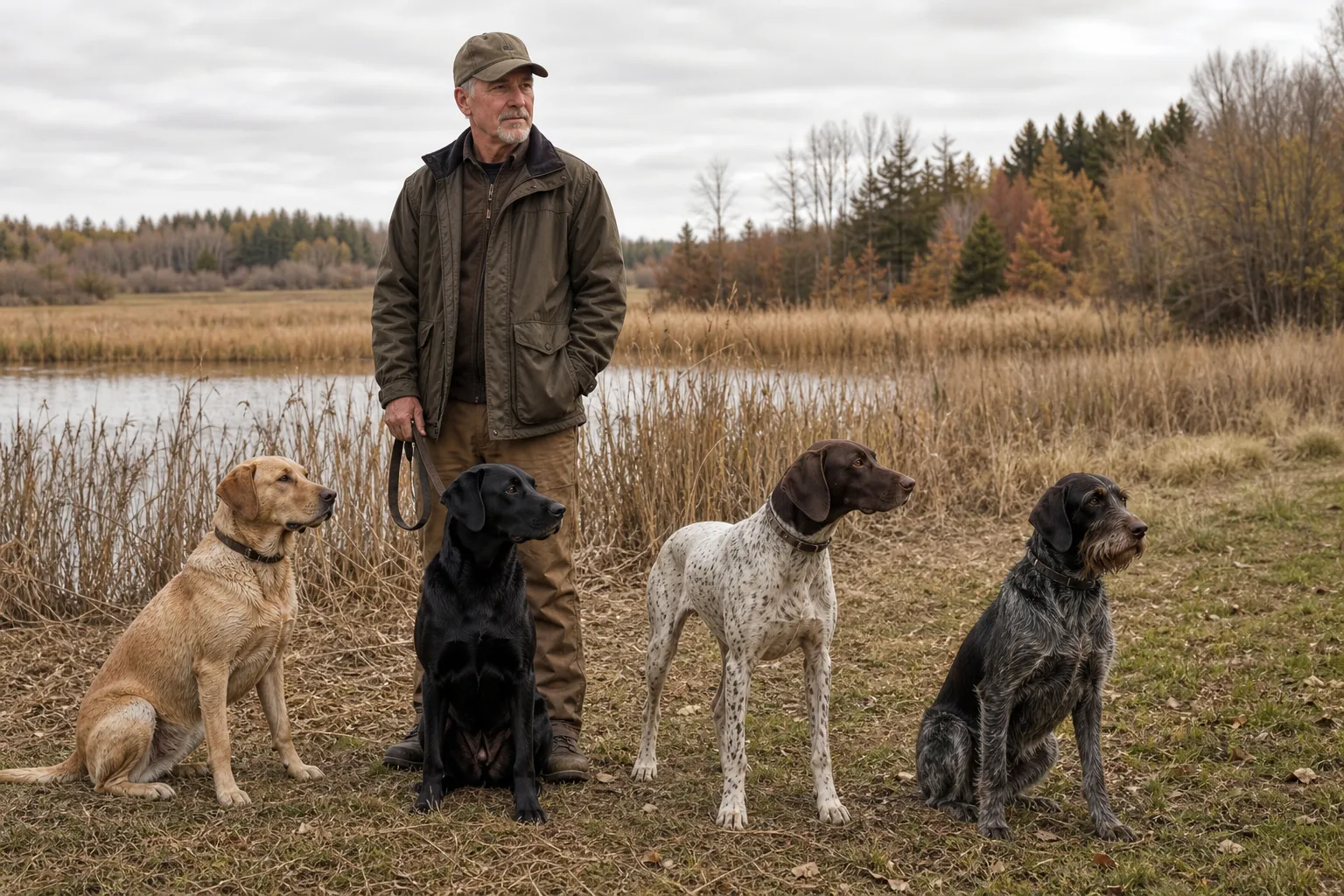
Retrievers
Retrievers are bird dogs built around the retrieve. Retriever field trials evaluate natural ability along with trained skills such as steadiness, control, response to direction and delivery of the bird.
Representative retriever breeds include the Labrador Retriever, Golden Retriever, Chesapeake Bay Retriever, Flat-Coated Retriever, Curly-Coated Retriever and Nova Scotia Duck Tolling Retriever.
The Chesapeake Bay Retriever was developed along the Chesapeake Bay to hunt waterfowl in adverse conditions. The Nova Scotia Duck Tolling Retriever was developed to toll, lure and retrieve waterfowl.
Some retrievers also work upland birds, but the core retriever job is still about finding downed birds, marking falls, working with the handler and delivering game back to hand.
Pointers and setters
Pointers and setters are upland bird dogs. They are commonly associated with searching for birds and working over a point.
Representative breeds include the Pointer, English Setter, Gordon Setter, Irish Setter, Irish Red and White Setter, Brittany and Vizsla.
In practical terms, these dogs may range out while searching, but the field job still depends on teamwork. The dog locates birds and establishes point. The handler then moves in to handle the flush and shot according to the hunting method and local rules.
Flushing spaniels
Flushing spaniels are close working bird dogs. Spaniel field trial rules describe the hunting spaniel’s function as seeking, finding, flushing, marking and retrieving.
Representative flushing spaniel breeds include the English Springer Spaniel, Cocker Spaniel, English Cocker Spaniel, Boykin Spaniel, Field Spaniel and American Water Spaniel.
For hunters, the key distinction is range and timing. A pointing dog finds birds and holds point. A flushing spaniel is expected to push game up for the hunter, then mark and retrieve shot birds. This makes spaniels closely associated with upland hunting in cover where a dog works near the handler.
Versatile hunting breeds
Representative versatile breeds include the German Shorthaired Pointer, German Wirehaired Pointer, Wirehaired Pointing Griffon, Pudelpointer, Vizsla, Weimaraner, Spinone Italiano and Small Munsterlander.
The German Shorthaired Pointer standard also states that the breed can perform in field and water.
Versatile breeds appeal to hunters who want one dog to cover several jobs. The important point is not that every dog will do every task equally. It is that versatile breeds are commonly chosen for more than one field role, especially when a hunter wants one dog for both field and water work.
Scent hounds and sight hounds
Hounds are hunting dogs, but they do not all hunt the same way.
Scent hound examples include the Beagle, Black and Tan Coonhound, Treeing Walker Coonhound, English Coonhound, Bloodhound and Basset Hound. The American Black and Tan Coonhound is a scent hound that trails quarry by scent. The Treeing Walker Coonhound is known for running and treeing a variety of game across terrain.
Sight hound examples include the Greyhound, Whippet, Borzoi, Saluki, Scottish Deerhound and Irish Wolfhound.
For owners, the important consideration is independence. Hounds and sighthounds can have strong hunting drives. Containment, leash use, recall expectations and lawful use all deserve careful thought before choosing one for hunting or as a household dog.
Curs and feists
Curs and feists are strongly associated with treeing game. Cur and Feist performance events are based on treeing game. Cur hunts include coon and squirrel, while feist hunts are limited to squirrel.
Representative cur and feist breeds include the Mountain Cur, Treeing Cur, Stephens Cur, Treeing Feist and Mountain Feist.
Mountain Curs are now used on squirrel, raccoon and all types of big game. Treeing Feists are primarily used to hunt squirrel, with use also noted on raccoon, rabbits and flushing game birds.
These dogs fit a different hunting pattern than a waterfowl retriever or upland pointing dog. The central job is locating game and treeing it, then holding attention on that treeed game for the handler.
Temperament and training considerations
Choose a hunting dog by matching the dog’s field job to the game, terrain, season and home life you actually have. A retriever, spaniel, pointing dog, versatile breed, hound, cur or feist may all be hunting dogs, but they are not interchangeable in the field.
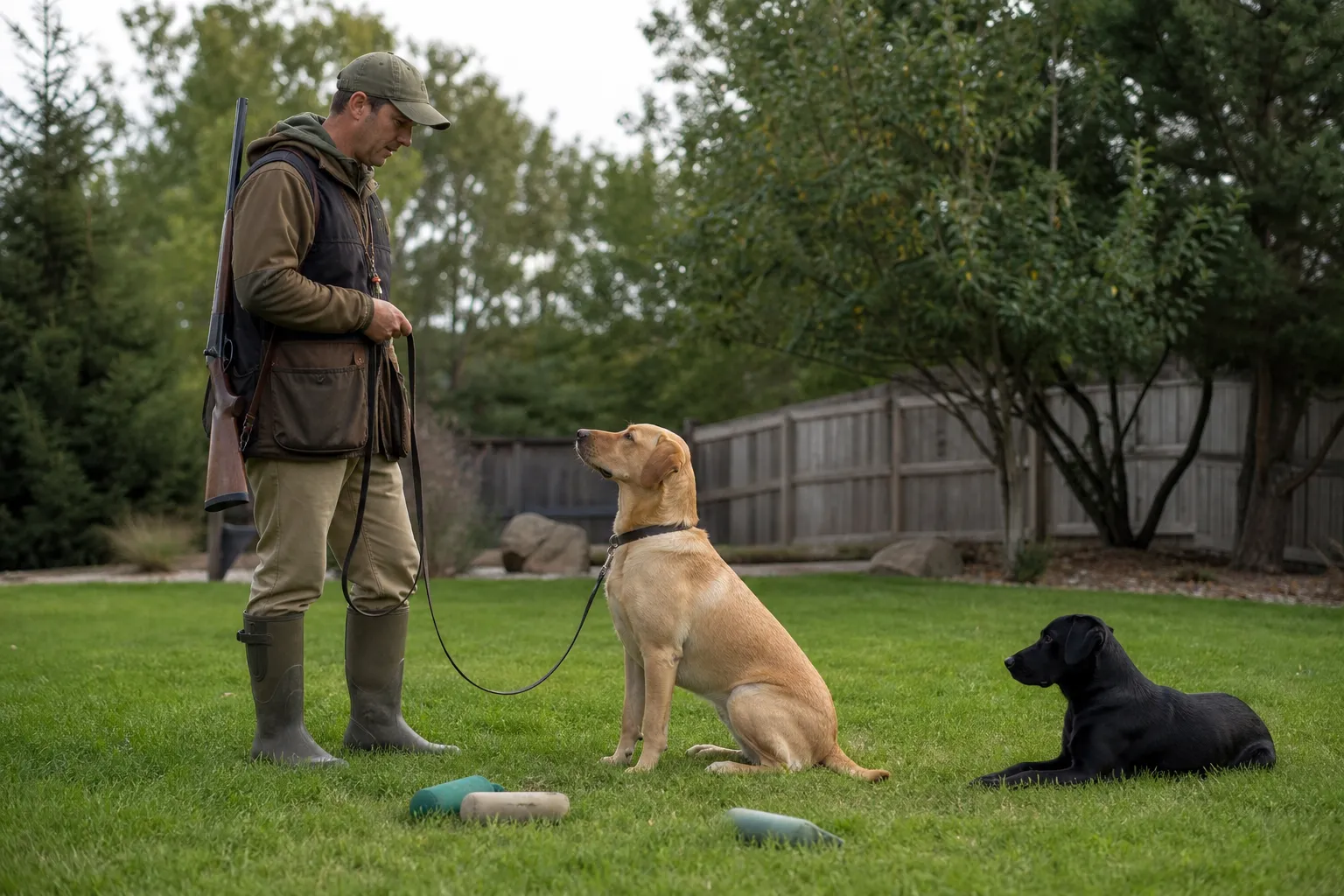
Planning matters because many hunting breeds were developed to work. A dog selected for bird work, scent trailing, sight pursuit or treeing may need outlets that fit its instincts. If the dog’s daily life does not match its drive, the owner may face avoidable frustration.
How to narrow your choice
Start with the hunting job, then the living situation.
Ask these questions:
- Do I mainly hunt waterfowl and need a dog focused on retrieving birds?
- Do I hunt upland birds over points?
- Do I want a close working dog that flushes birds and retrieves them?
- Do I need one dog for field and water tasks?
- Am I interested in scent trailing hound work, sight hound traditions or treeing game with curs and feists?
- Can I provide the exercise, socialization, training and containment that the dog type requires?
There is no single best hunting dog breed for everyone. The best fit is the breed type whose traditional work matches your hunting and whose temperament fits your household.
Check rules before hunting or training with dogs
Hunting dog use, dog training seasons and public land rules are regulated by jurisdiction. Before hunting or training with dogs, confirm current requirements with your state, provincial or territorial wildlife agency. Check the species, season, location, public land rules and any dog specific restrictions before you go afield.
Frequently asked questions
What is the difference between a retriever and a pointer?
A retriever’s core job is to retrieve birds and work with the handler on steadiness, control, direction and delivery. A pointer is commonly associated with upland bird work over points.
What do flushing spaniels do in the field?
Flushing spaniels are commonly associated with close working upland bird work that includes seeking, finding, flushing, marking and retrieving game.
What are curs and feists used for?
Cur and Feist performance events are based on treeing game. Mountain Curs are used on squirrel, raccoon and big game, while Treeing Feists are primarily used to hunt squirrel.
Should I choose a hunting dog by breed ranking?
No. A more practical approach is to match the dog’s field job to your game, terrain, season, household and local hunting rules. The breeds in this guide are representative examples, not rankings.
Sources
- Golden Retriever Dog Breed Information, American Kennel ClubOfficial source. Accessed October 23, 2026.
- English Cocker Spaniel Dog Breed Information, American Kennel ClubOfficial source. Accessed October 23, 2026.
- Retrievers, American Kennel ClubOfficial source. Accessed October 23, 2026.
- Retriever Field Trials, American Kennel ClubOfficial source. Accessed October 23, 2026.
- Labrador Retriever Dog Breed Information, American Kennel ClubOfficial source. Accessed October 23, 2026.
- Chesapeake Bay Retriever Judges Education Material, American Kennel ClubOfficial source. Accessed October 23, 2026.
- Sporting Group Breed Standards, American Kennel ClubOfficial source. Accessed October 23, 2026.
- Pointing Breeds, American Kennel ClubOfficial source. Accessed October 23, 2026.
- Pointer Dog Breed Information, American Kennel ClubOfficial source. Accessed October 23, 2026.
- Get to Know the Pointer Breeds, American Kennel ClubOfficial source. Accessed October 23, 2026.
- Get to Know the Setter Breeds of the Sporting Group, American Kennel ClubOfficial source. Accessed October 23, 2026.
- Gordon Setter Dog Breed Information, American Kennel ClubOfficial source. Accessed October 23, 2026.
- Spaniels, American Kennel ClubOfficial source. Accessed October 23, 2026.
- Field Trial Rules and Standard Procedure for Spaniels, American Kennel ClubOfficial source. Accessed October 23, 2026.
- Dog Breeds Known for Their Bird Hunting Skills, American Kennel ClubOfficial source. Accessed October 23, 2026.
- Cocker Spaniel Dog Breed Information, American Kennel ClubOfficial source. Accessed October 23, 2026.
- Recognized Versatile Hunting Dog Breeds, North American Versatile Hunting Dog AssociationOfficial source. Accessed October 23, 2026.
- German Shorthaired Pointer Dog Breed Information, American Kennel ClubOfficial source. Accessed October 23, 2026.
- Official Standard for the German Shorthaired Pointer, American Kennel ClubOfficial source. Accessed October 23, 2026.
- Hound Group, American Kennel ClubOfficial source. Accessed October 23, 2026.
- Beagle Dog Breed Information, American Kennel ClubOfficial source. Accessed October 23, 2026.
- American Black and Tan Coonhound Breed Standard, United Kennel ClubOfficial source. Accessed October 23, 2026.
- Treeing Walker Coonhound Breed Standard, United Kennel ClubOfficial source. Accessed October 23, 2026.
- Get to Know the Sighthound Breeds, American Kennel ClubOfficial source. Accessed October 23, 2026.
- Mountain Cur Breed Standard, United Kennel ClubOfficial source. Accessed October 23, 2026.
- Treeing Feist Breed Standard, United Kennel ClubOfficial source. Accessed October 23, 2026.
- About UKC Cur and Feist, United Kennel ClubOfficial source. Accessed October 23, 2026.
- 4-H Dog Project Manual, American Kennel ClubOfficial source. Accessed October 23, 2026.
- Retriever Hunting Test Regulations. Accessed October 23, 2026.