Elk: Subspecies, Antlers, Rut and Range
Elk, also called wapiti, are large North American deer known for herds, bugling bulls, annual antlers, and seasonal movements. This guide explains the main living North American subspecies, rut behavior, diet, migration, decline, and restoration without covering season dates or tag rules.
By RaiS. Reviewed by RaiS. Published . 6 min read.
Research and drafting were assisted by AI. RaiS checked the facts against the sources below and approved this page.
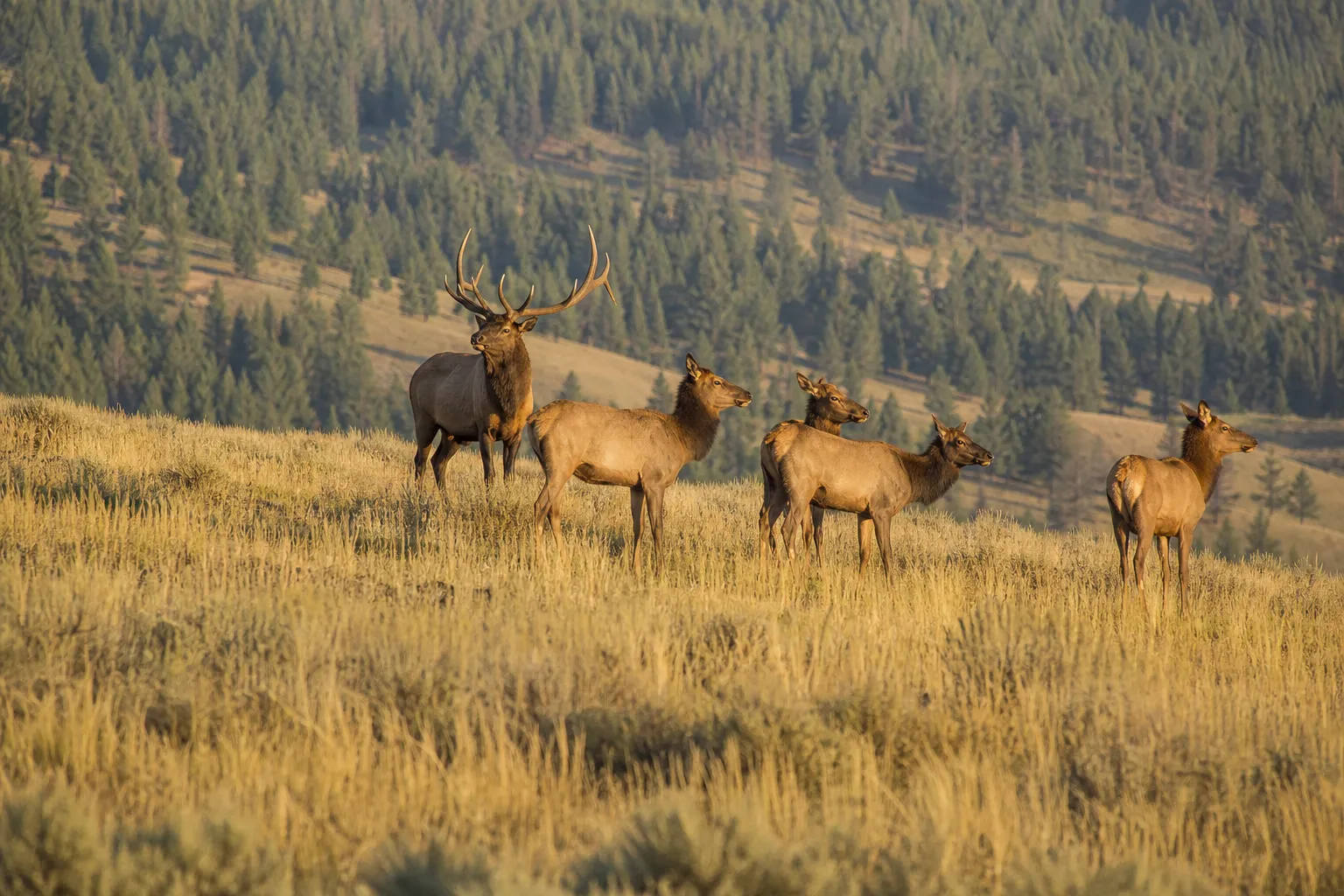
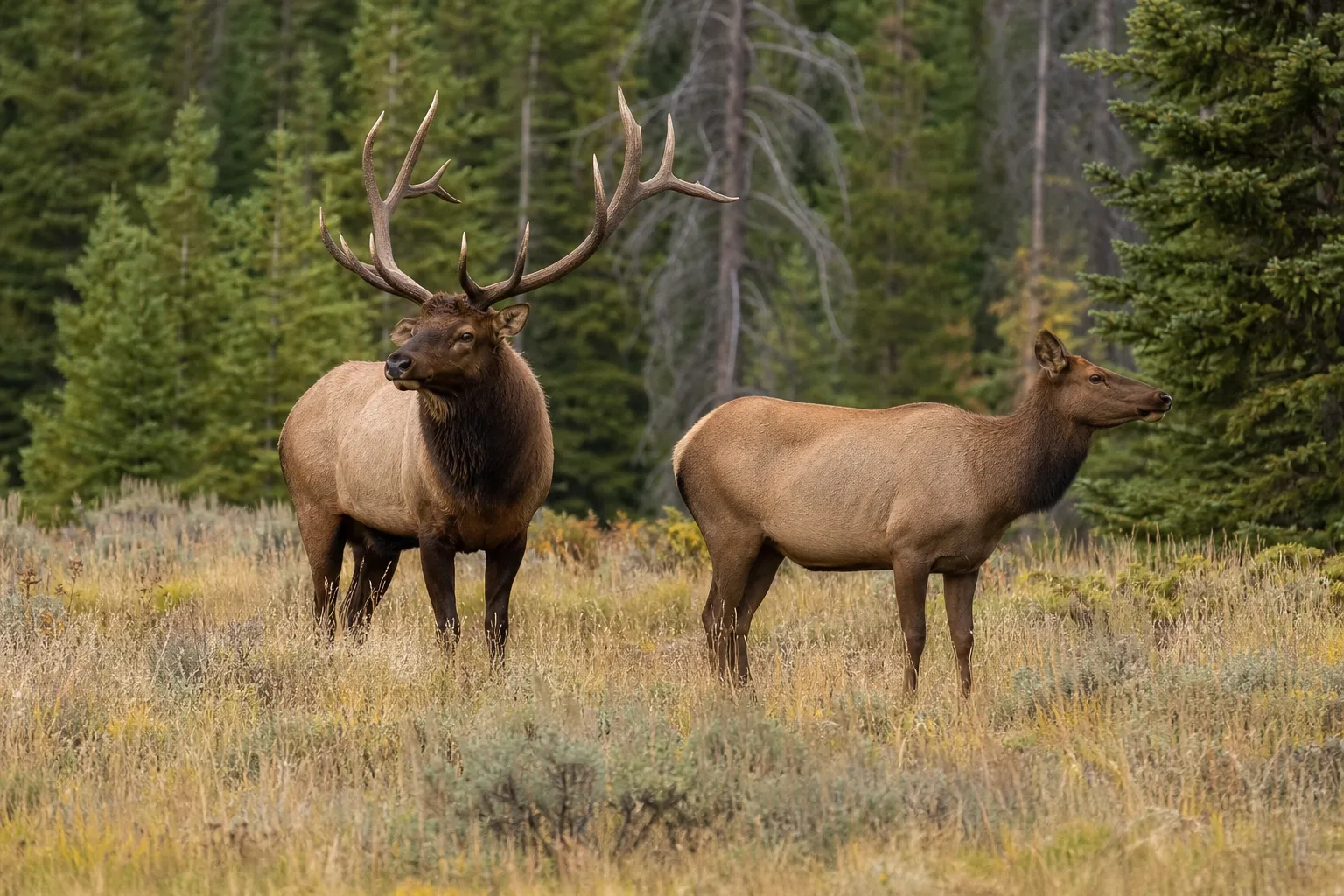
Elk, also called wapiti, are large North American deer. The National Park Service notes that most scientists currently refer to North American elk as Cervus canadensis, while also noting debate about their relationship to red deer. For field identification, British Columbia’s government describes elk as brownish animals with a dark mane, a white rump patch, large forked antlers on bulls, and large rounded upper canine teeth in both sexes.
Elk, wapiti, and the subspecies question
Most practical North American guides focus on four living elk subspecies: Rocky Mountain, Roosevelt, Tule, and Manitoban. The U.S. Fish and Wildlife Service lists those four subspecies, and the USDA Forest Service’s Fire Effects Information System also lists Manitoban, tule, Rocky Mountain, and Roosevelt elk for North America.
Taxonomy is worth treating carefully. The National Park Service notes that most scientists currently use Cervus canadensis for North American elk, while also recognizing a taxonomic debate with red deer. The USDA Forest Service says subspecies distinctions have been based on body size, coat color, skull and teeth, antler size and shape, behavior, and distribution, but also says genetic work has questioned some distinctions.
For hunters and wildlife watchers, that means subspecies labels are useful, but not always as tidy as a field mark on a single animal. Range, body size, coat, antlers, and local agency descriptions all matter.
The four living North American elk subspecies
| Subspecies | Practical range and field notes |
|---|---|
| Rocky Mountain elk | The U.S. Fish and Wildlife Service describes Rocky Mountain elk as occurring east of I 5 and into mountain states. |
| Roosevelt elk | The National Park Service says Roosevelt elk live in coastal forests and mountains of the Pacific Northwest, west of the Cascades, from northern California to southern British Columbia and Alaska. NPS describes them as darker than Rocky Mountain elk, with a dark mane and an off white rump patch. |
| Tule elk | California Department of Fish and Wildlife says Tule elk are the smallest North American elk and are endemic to California. CDFW gives adult bull average weight as 450 to 700 pounds, with some over 800 pounds, and adult cow average weight as 375 to 425 pounds. |
| Manitoban elk | The U.S. Fish and Wildlife Service says Manitoban elk are native to the upper Midwest and Canadian prairie provinces. |
Body size and field marks
Roosevelt elk stand out for body size. The National Park Service gives Roosevelt elk a weight range of 377 to 1,096 pounds and describes them as darker than Rocky Mountain elk, with a dark mane and an off white rump patch.
Tule elk stand out in the other direction. California Department of Fish and Wildlife says Tule elk are the smallest North American elk and are found only in California. CDFW lists adult bull average weight as 450 to 700 pounds, with some over 800 pounds, and adult cow average weight as 375 to 425 pounds.
For a quick comparison with another large cervid, see our Moose vs Elk guide. This page focuses on elk rather than repeating that comparison.
Antlers: annual growth on bulls
The National Park Service explains the timing in more detail for Yellowstone elk. NPS says antler growth is triggered in spring by reduced testosterone and lengthening daylight. NPS also says most bulls drop antlers in March or April, with new growth starting soon after.
A mature bull’s antlers can be a major visual feature. The National Park Service says a typical healthy bull’s antlers are 55 to 60 inches long, just under six feet wide, and weigh about 30 pounds per pair.
Because antlers are tied to annual growth, rut timing, and bull condition, they are useful to observe, but they should not be the only thing used to understand an elk. Subspecies, age, nutrition, and local conditions all affect what a viewer sees.
The September rut, bugling, and harems
The National Park Service says the elk rut generally occurs from early September to mid October. During that period, NPS says elk gather in mixed herds, and bulls bugle to announce availability and fitness and to warn or challenge other bulls.
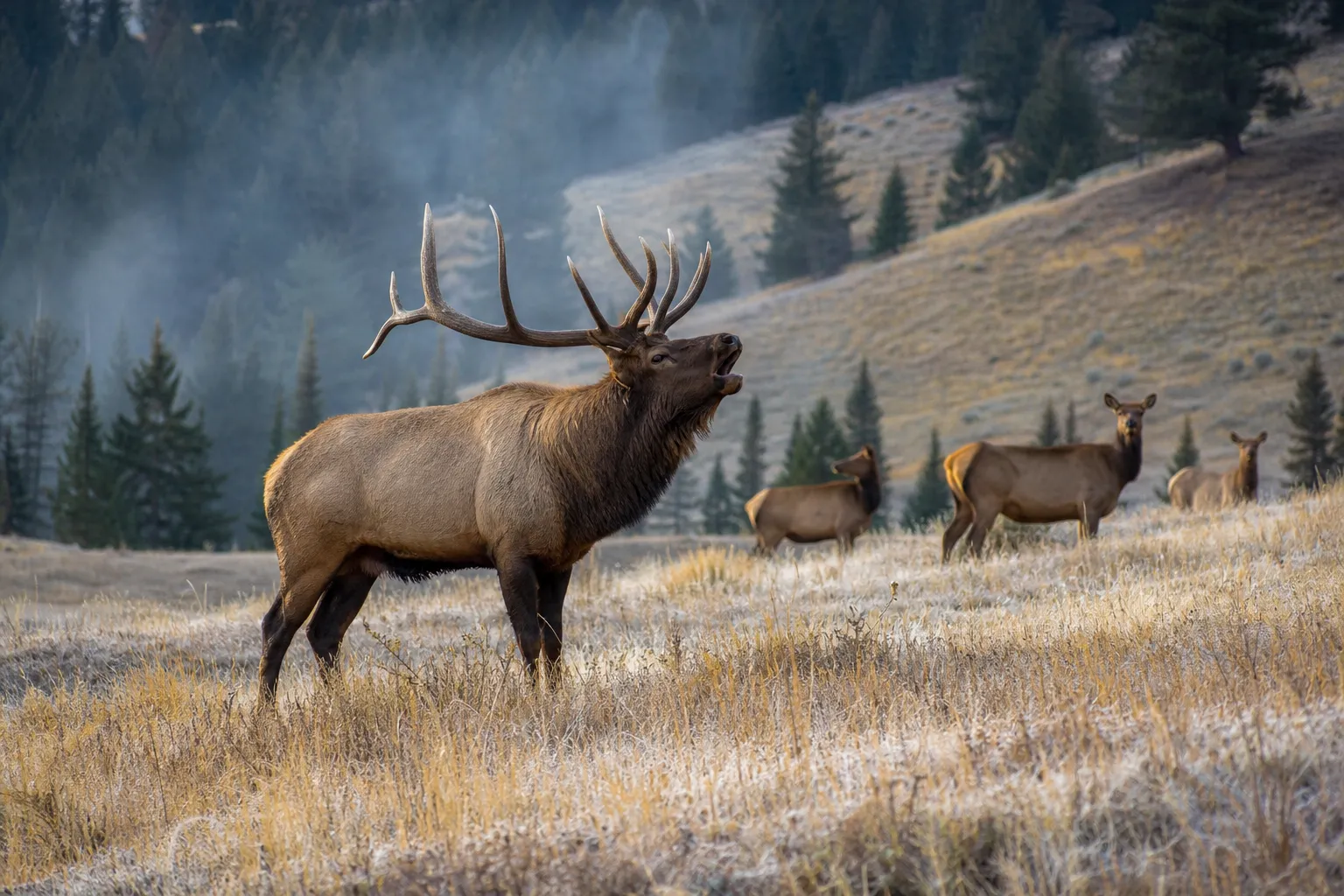
Bulls can clash during the rut. The National Park Service says bull elk fights are loud and extremely strenuous, but serious injury is rare and weaker bulls typically leave.
For hunters and wildlife watchers, bugling is one of the most recognizable elk behaviors, but this guide is not a calling manual. For sound types, calling context, and etiquette, see our Elk Calls guide.
Wildlife watchers should give rutting elk space. In parks and managed areas, check the managing agency’s current visitor rules before approaching elk, using calls, or changing an animal’s behavior.
Calves and herd behavior
Great Smoky Mountains National Park says most cow elk give birth to calves by early June. Rocky Mountain Elk Foundation also places typical calving in late May through early June.
That group structure helps explain why elk sightings vary through the year. A person may see cow and calf groups in one setting, bull groups in another, and mixed rutting groups in early fall.
Diet and habitat
The USDA Forest Service classifies elk as intermediate or mixed feeders. It says elk can shift from a diet made mostly of grasses to one of browse.
That dietary flexibility helps elk use many kinds of habitat.
The USDA Forest Service describes elk as habitat generalists found in grasslands, wetlands, shrublands, and forests across many stages of plant succession. That does not mean elk use every place equally. It means the species can use a broad mix of open, brushy, wet, and forested environments where other needs are met.
Seasonal migration and range use
Many elk populations move seasonally. The National Park Service says Yellowstone provides high elevation summer range for elk from six to seven herds, and that most winter at lower elevations outside the park.
The USDA Forest Service says elk often return to the same annual ranges and have a strong tendency to follow the same migration routes each year. For hunters and wildlife watchers, that pattern explains why elk can seem tied to certain broad travel corridors and seasonal areas.
The important point is not that every elk migrates the same way. It is that many elk populations have seasonal patterns, and agencies often manage them at herd and range levels rather than as isolated animals.
Historic decline and restoration
The National Park Service says North American elk declined from an estimated 10 million before major settlement impacts to fewer than 100,000 by 1907. NPS attributes eastern declines in Great Smoky Mountains National Park material to over hunting and habitat loss.
Colorado is one western example of restoration. Colorado Parks and Wildlife says Colorado imported 50 elk from Wyoming in 1916 to help reestablish dwindling herds. CPW says the state’s elk population in the mid 2020s is over 280,000 animals.
Eastern reintroductions are also important. Great Smoky Mountains National Park says elk were once abundant in the southern Appalachians and eastern United States, declined because of over hunting and habitat loss, and were reintroduced to the park beginning in 2001 with 25 elk, followed by 27 more in 2002.
Kentucky is another major example. Kentucky Department of Fish and Wildlife Resources says the state’s current free ranging wild herd was established from 1,550 wild elk released in southeast Kentucky between December 1997 and March 2002. The U.S. Fish and Wildlife Service says Pittman Robertson Wildlife Restoration dollars supported Kentucky’s elk translocation, habitat work, disease monitoring, and research, and says Kentucky has the largest elk herd east of the Mississippi.
What to check before hunting or watching elk
This guide is a species grounding article, not a season or tag guide. Before hunting elk, check the current regulations from the official state, provincial, tribal, or federal agency for the exact place and date you plan to hunt.
If you are watching elk in a park, refuge, or other managed area, check that agency’s current visitor rules. Rutting bulls and cows with calves deserve extra room, and agency rules may restrict approaching wildlife, feeding wildlife, or using calls.
Frequently asked questions
What is a wapiti?
Wapiti is a common name for North American elk. The National Park Service notes that most scientists currently refer to North American elk as *Cervus canadensis*, while also noting debate about their relationship to red deer.
What are the main North American elk subspecies?
The U.S. Fish and Wildlife Service and the USDA Forest Service list four living North American elk subspecies: Rocky Mountain, Roosevelt, Tule, and Manitoban elk.
Which elk subspecies is the largest?
Roosevelt elk are the largest bodied elk covered here. The National Park Service gives Roosevelt elk a weight range of 377 to 1,096 pounds.
Which elk subspecies is the smallest?
California Department of Fish and Wildlife says Tule elk are the smallest North American elk and are endemic to California.
When do bull elk grow and shed antlers?
The National Park Service says most bulls drop antlers in March or April, and that new growth starts soon after.
When is the elk rut?
The National Park Service says the elk rut generally occurs from early September to mid October. During the rut, NPS says bulls bugle to announce availability and fitness and to warn or challenge other bulls.
Sources
- Elk Facts, Rocky Mountain Elk Foundation. Accessed October 24, 2026.
- Elk, National Park Service, Yellowstone National ParkOfficial source. Accessed October 24, 2026.
- Roosevelt Elk, National Park ServiceOfficial source. Accessed October 24, 2026.
- Elk, National Park Service, Great Smoky Mountains National ParkOfficial source. Accessed October 24, 2026.
- Antlers!, U.S. Fish and Wildlife ServiceOfficial source. Accessed October 24, 2026.
- At the Forefront of Conservation, FY 2027 Greenbook, U.S. Fish and Wildlife ServiceOfficial source. Accessed October 24, 2026.
- Cervus elaphus, elk, USDA Forest Service, Fire Effects Information SystemOfficial source. Accessed October 24, 2026.
- Tule Elk, California Department of Fish and WildlifeOfficial source. Accessed October 24, 2026.
- Elk in British Columbia, British Columbia Ministry of Environment, Lands and ParksOfficial source. Accessed October 24, 2026.
- Kentucky Elk Report 2024, Kentucky Department of Fish and Wildlife ResourcesOfficial source. Accessed October 24, 2026.
- Elk, Colorado Parks and WildlifeOfficial source. Accessed October 24, 2026.