Pronghorn Guide: Identification, Range and Behavior
Pronghorn, often called pronghorn antelope, are not true antelope. They are a uniquely North American prairie species known for shed horn sheaths, a white rump signal, exceptional speed and sharp eyesight.
By RaiS. Reviewed by RaiS. Published . 6 min read.
Research and drafting were assisted by AI. RaiS checked the facts against the sources below and approved this page.
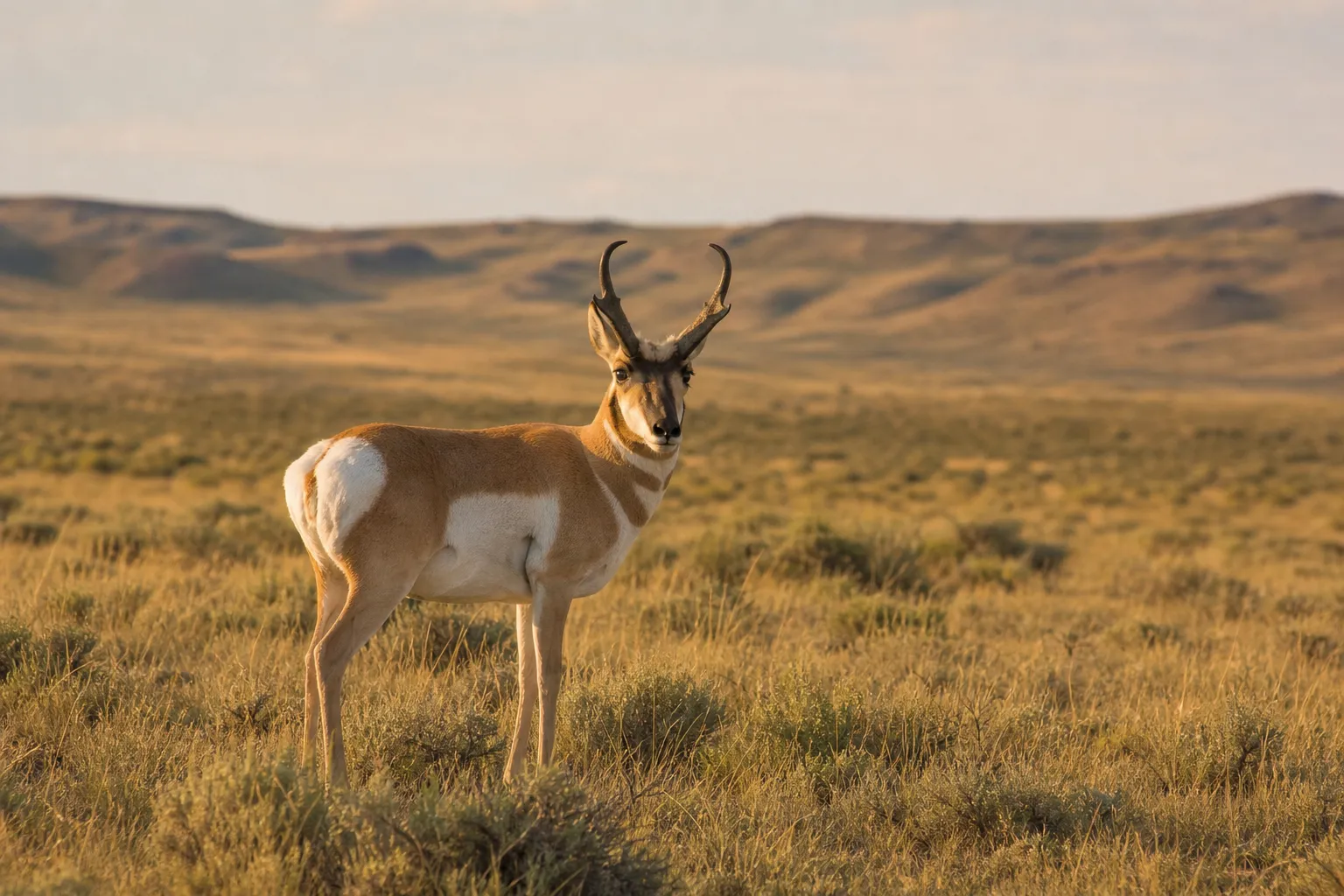
Pronghorn are often called pronghorn antelope, but the National Park Service says they are not true antelope. The pronghorn, Antilocapra americana, is the only living member of the family Antilocapridae, a North American group with a deep evolutionary history. For hunters and wildlife watchers, the key field marks are the reddish tan body, white underside, large white rump patch, pronged horns on bucks and the open prairie country they favor.
Names and taxonomy
The best primary name is simply pronghorn. The phrase pronghorn antelope is common and useful because many readers know the animal by that name, but the National Park Service states that pronghorn are not true antelope.
The National Park Service lists the pronghorn as class Mammalia, order Artiodactyla, family Antilocapridae, genus Antilocapra and species americana. NPS also describes the pronghorn as the only living member of Antilocapridae.
That separate family is part of what makes the animal unusual. NPS says the similarity between pronghorn and true antelope is an example of convergent evolution, where unrelated species develop similar traits in similar environments. Yellowstone National Park describes the pronghorn as the surviving member of a North American group that evolved over roughly the past 20 million years.
Identification at a glance
A pronghorn is a light, open country ungulate with a reddish tan to brown upper body, white underside and a large white rump patch. Yellowstone National Park describes pronghorn as reddish tan on the back and white underneath, with a large white rump patch. Wind Cave National Park says they can range from light tan to rich brown, with white patches on the stomach, neck and rump.
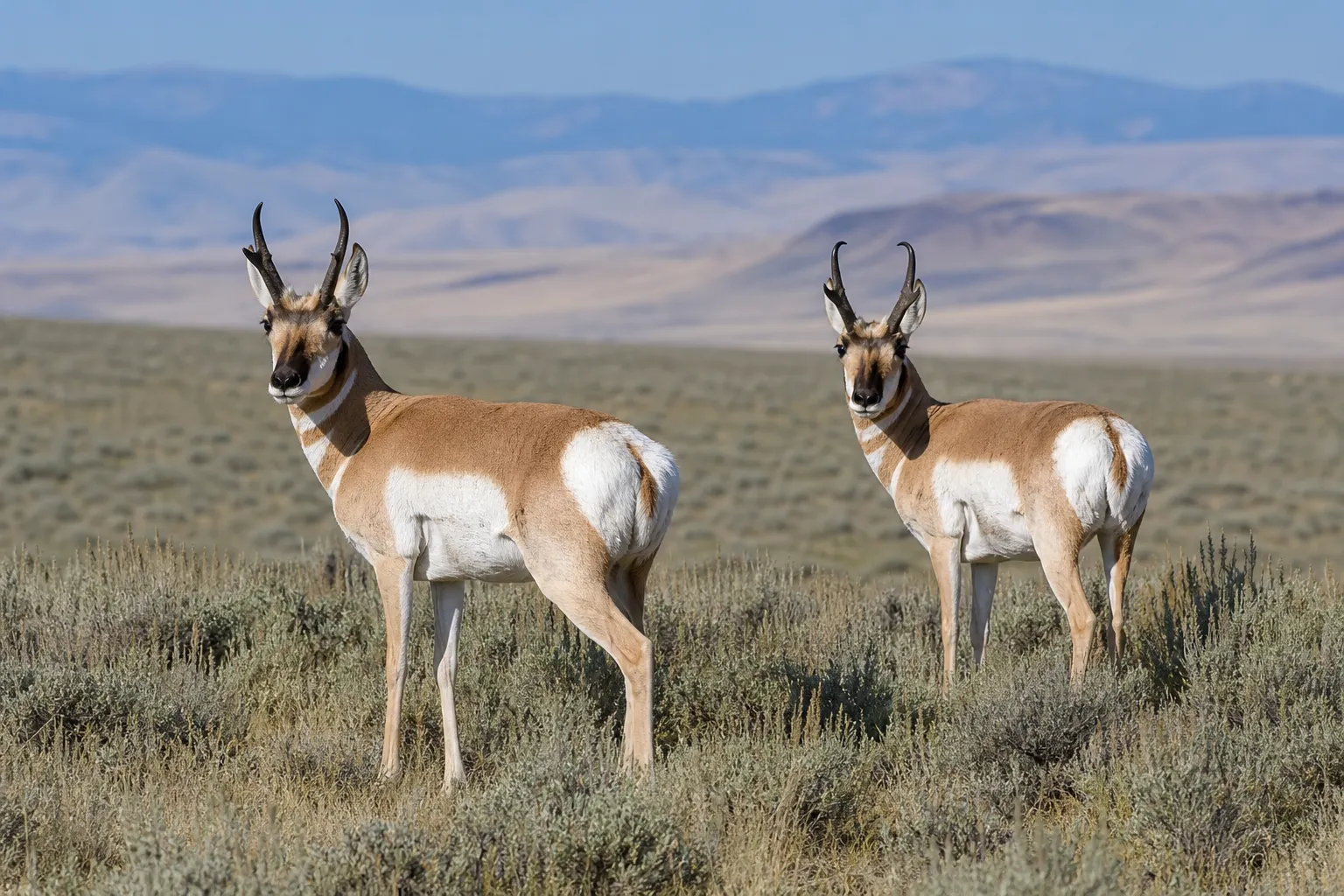
Useful field marks include:
| Feature | What to look for |
|---|---|
| Body color | Reddish tan, light tan or rich brown above, with white below |
| Rump | Large white rump patch |
| Neck and stomach | White patches, according to Wind Cave National Park |
| Bucks | Larger horns and black facial markings |
| Does | Horns may be absent or less prominent when present |
The white rump patch is more than a color mark. Wind Cave National Park says that when a pronghorn is threatened, the hairs of the rump bristle, signaling to would be predators that they have been spotted. In open country, that bright rump can be one of the first things a viewer notices.
Horns, sheaths and buck versus doe identification
Pronghorn horns are one of the animal’s most distinctive traits. Yellowstone National Park describes them as true horns made of modified, fused hair growing over permanent bony cores. Unlike most horned mammals, NPS says pronghorn shed and regrow the horn sheaths every year. That makes them different from deer antlers, which are not the same structure as pronghorn horns.
Bucks usually show the classic pronged horn shape. Wind Cave National Park also notes that bucks have black patches on the lower jaw below the eye and a black mask extending back from the nose.
Does can have horns too.
Quick buck and doe comparison
| Trait | Buck | Doe |
|---|---|---|
| Horns | Typically longer and pronged | May be absent or less prominent when present |
| Face | Black lower jaw patches and a black mask from the nose, according to Wind Cave National Park | Lacks the buck’s pronounced black facial markings |
| Best overall clue | Horn size plus black facial markings | Less prominent or absent horns and less bold facial pattern |
Range across western North America
The National Park Service places pronghorn in the open prairies of western North America, including Canada and Mexico. San Diego Zoo Wildlife Alliance describes their habitat as open prairie and desert habitats in western North America.
In Canada, provincial sources help define the northern part of the range. The Government of Alberta lists pronghorn as found mainly in the southeastern portion of Alberta, and an Alberta wildlife calendar says they are especially common on native prairie between Brooks and Medicine Hat. Saskatchewan’s wildlife management report says pronghorn primarily inhabit the southwestern portion of the province and identifies Saskatchewan as the northern extent of pronghorn range.
Across that range, the common theme is open country. Saskatchewan describes preferred habitat as semi arid prairie with a mixture of grasses, forbs and shrubs. Saskatchewan also notes that low growing vegetation is optimal because pronghorn rely on excellent eyesight to avoid predators.
Habitat: why open country matters
Pronghorn are animals of visibility and space. National Park Service and provincial descriptions consistently place them in open prairies, grasslands, shrublands, semi arid prairie and desert habitats. Those habitats let pronghorn use their eyes, speed and group signaling.
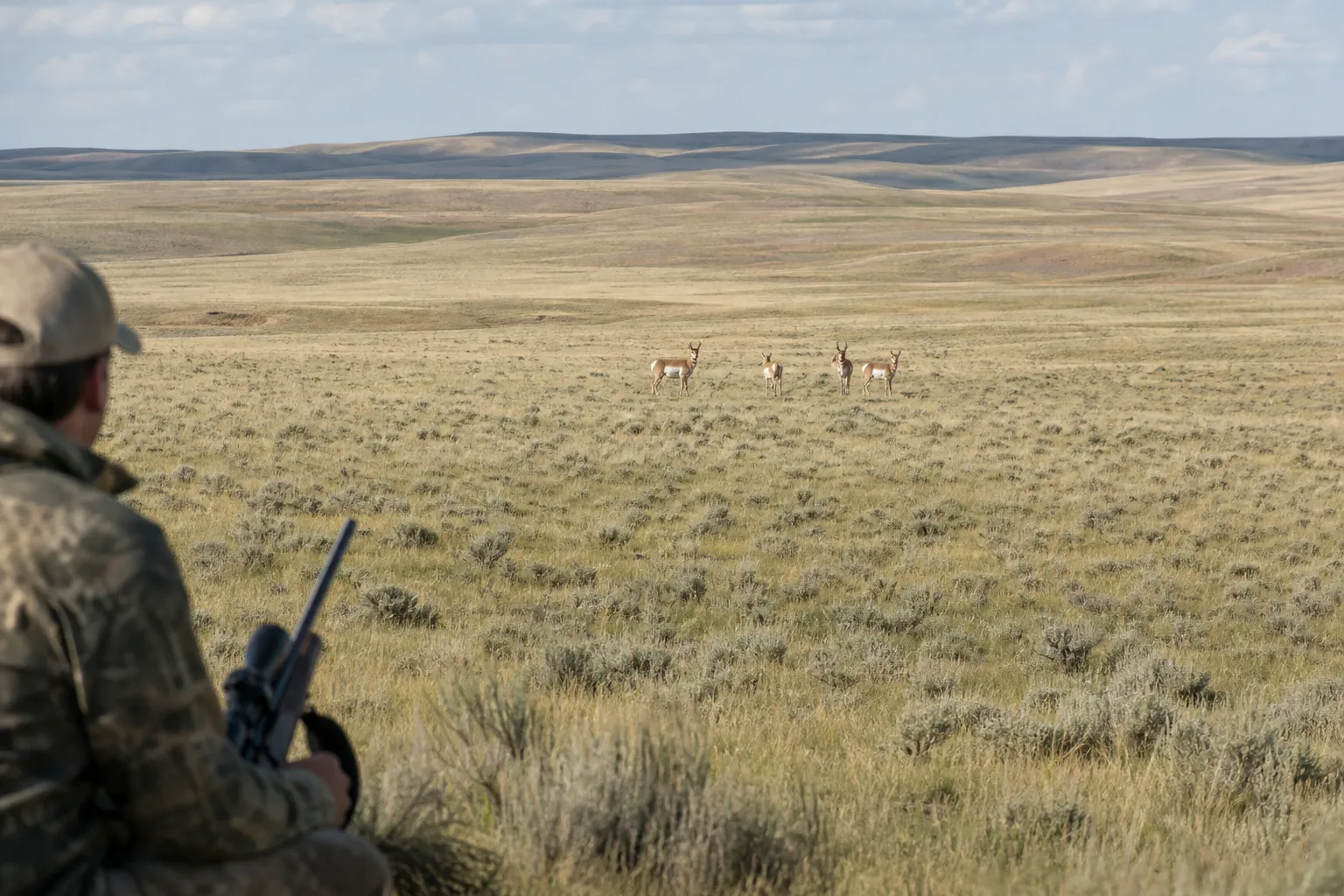
For hunters and wildlife readers, that means pronghorn country is often broad and exposed. Low vegetation matters because Saskatchewan says pronghorn rely on excellent eyesight to avoid predators. Wind Cave National Park’s description of the bristling white rump patch also fits this open country life, where a visible alarm signal can be seen at distance.
Speed, endurance and eyesight
Pronghorn are famous for speed, but their endurance is just as notable. The National Park Service says pronghorn can sustain 55 mph for half a mile and speeds approaching 45 mph for much longer distances. Wind Cave National Park says they can reach up to 60 mph for about half a mile and can run longer distances at 30 to 40 mph.
NPS says pronghorn may have developed this exceptional speed to escape the extinct American cheetah. Whether seen running or standing, the animal’s build and behavior reflect life in open country where detection and distance matter.
Their eyesight is another defining adaptation. Theodore Roosevelt National Park says pronghorn eye placement provides an estimated 320 degrees of visibility and helps them spot moving objects 3 miles away. Saskatchewan’s wildlife management report also emphasizes that pronghorn rely on excellent eyesight to avoid predators.
Diet by season
Yellowstone National Park describes pronghorn diet as strongly seasonal. Important winter foods include shrubs such as sagebrush and rabbitbrush. In spring and summer, they eat succulent forbs.
Grasses are part of the picture, but Yellowstone National Park says grasses appear to be the least used food item. NPS adds that grasses may be eaten in early spring when young shoots are nutritious.
That diet fits the habitat descriptions from Saskatchewan, which says pronghorn prefer semi arid prairie ecosystems with a mixture of grasses, forbs and shrubs.
Rut and fawning timeline
The pronghorn rut takes place in fall. Yellowstone National Park says the breeding season begins in mid September and extends through early October. Wind Cave National Park says pronghorn breed in the fall and bucks fight each other to defend their territories.
Fawning follows in late spring. Wind Cave National Park says fawns are born in late May or early June, and that twins are common.
This basic annual rhythm is useful context for wildlife watchers and hunters studying pronghorn behavior: fall is the breeding period, while late May and early June are the fawning period described by Wind Cave National Park.
Practical field notes for hunters and wildlife watchers
Use several traits together instead of relying on one clue. A distant pronghorn may first appear as a tan animal in open country with a bright white rump. Closer study can show horn length, the pronged shape on bucks and the black facial markings described by Wind Cave National Park.
Remember that does may have horns. Use facial markings and overall horn shape rather than treating horns alone as a buck identification.
Expect pronghorn to depend on vision. Theodore Roosevelt National Park describes an estimated 320 degrees of visibility, and Saskatchewan says low growing vegetation is optimal because pronghorn rely on excellent eyesight. The large white rump patch can also signal alarm when the hairs bristle.
Look for them in the right landscapes. Official descriptions consistently point to open prairie, semi arid prairie, grassland, shrubland and desert habitats across western North America, with Canadian range concentrated in southeastern Alberta and southwestern Saskatchewan.
What to check with official agencies
This guide covers biology, identification, range and behavior, not seasons or licensing. Before planning any hunt, check the current regulations and notices from the state, provincial, tribal or federal wildlife authority responsible for the exact area you plan to hunt. Also confirm any access rules, public land requirements and current local closures with the relevant agency.
Frequently asked questions
Is a pronghorn the same as an antelope?
No. The National Park Service says pronghorn are also called pronghorn antelope, but they are not true antelope. NPS lists them in the family Antilocapridae and describes the pronghorn as the only living member of that family.
What is the scientific name of the pronghorn?
The National Park Service lists the pronghorn’s scientific classification as genus Antilocapra and species americana, commonly written as Antilocapra americana.
Do pronghorn shed their horns?
Yellowstone National Park says pronghorn have true horns made of modified, fused hair over permanent bony cores. Unlike most horned mammals, they shed and regrow the horn sheaths every year.
How can you tell a buck pronghorn from a doe?
Bucks typically have longer, pronged horns and black facial markings. Wind Cave National Park says bucks have black lower jaw patches and a black mask extending back from the nose. Does may have horns, so use several traits together rather than relying on horns alone.
Where do pronghorn live?
The National Park Service places pronghorn in open prairies of western North America, including Canada and Mexico. Provincial sources list them mainly in southeastern Alberta and southwestern Saskatchewan, with Saskatchewan identified as the northern extent of the range.
When is the pronghorn rut and when are fawns born?
Yellowstone National Park says the breeding season begins in mid September and extends through early October. Wind Cave National Park says fawns are born in late May or early June, and twins are common.
Sources
- Saskatchewan Wildlife Management Report 2016, Government of SaskatchewanOfficial source. Accessed October 22, 2026.
- Pronghorn: Racers on the Great Plains, National Park Service, Badlands National ParkOfficial source. Accessed October 22, 2026.
- Pronghorn, National Park Service, Yellowstone National ParkOfficial source. Accessed October 22, 2026.
- Pronghorn, National Park Service, Wind Cave National ParkOfficial source. Accessed October 22, 2026.
- Pronghorn, National Park Service, Theodore Roosevelt National ParkOfficial source. Accessed October 22, 2026.
- Pronghorn, San Diego Zoo Wildlife Alliance. Accessed October 22, 2026.
- Wild Species Status Search, Government of AlbertaOfficial source. Accessed October 22, 2026.
- Watchable Wildlife Calendar 2015, Government of AlbertaOfficial source. Accessed October 22, 2026.