White-tailed Deer: Biology, Behavior and Range
White-tailed deer, Odocoileus virginianus, are widespread North American cervids found through much of the United States and southern Canada. This guide covers whitetail deer facts for hunters, including range, size, antlers, diet, rut timing, behavior, population management and chronic wasting disease.
By RaiS. Reviewed by RaiS. Published . 7 min read.
Research and drafting were assisted by AI. RaiS checked the facts against the sources below and approved this page.
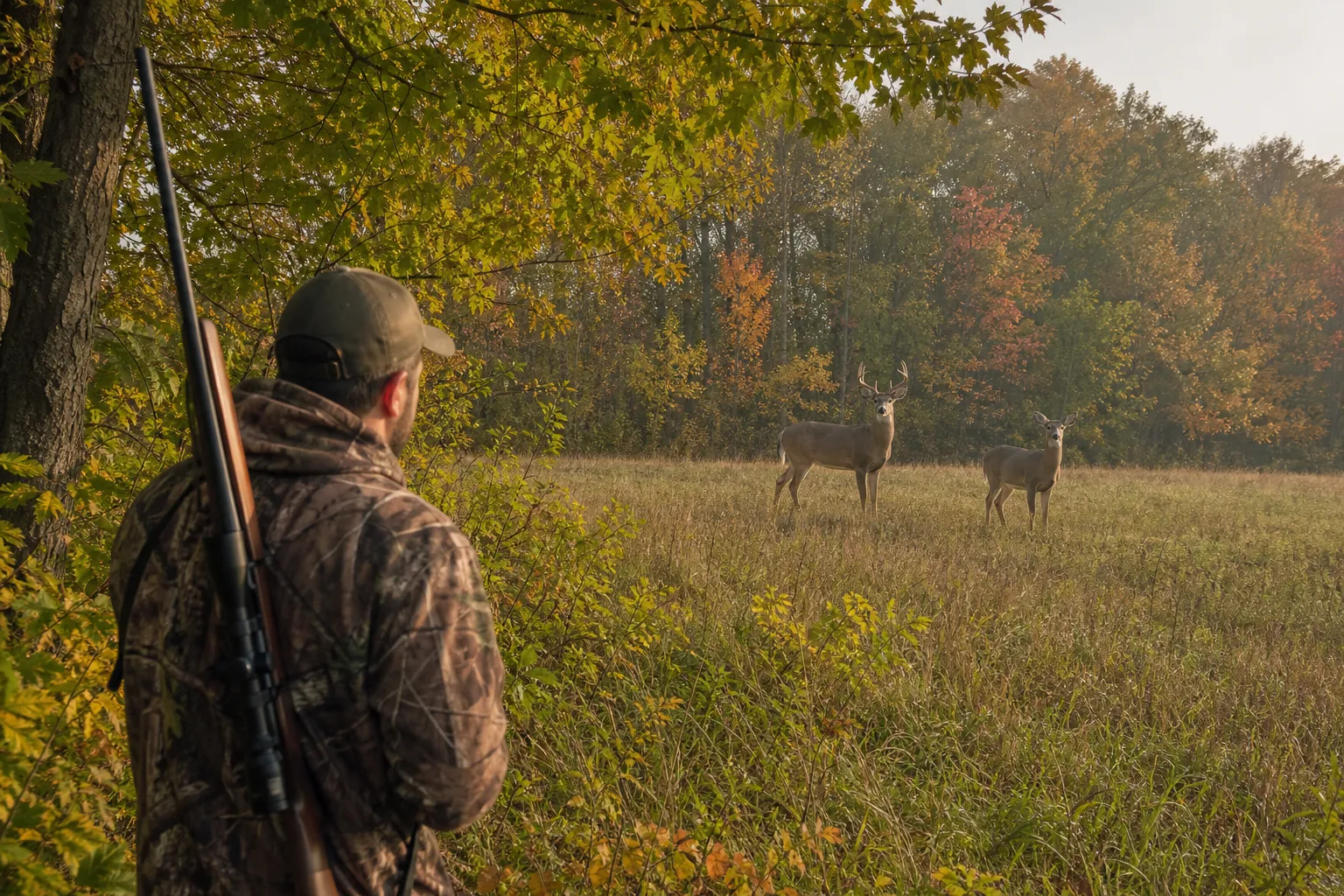
White-tailed deer, Odocoileus virginianus, are widespread North American cervids, ruminants with a four-chambered stomach, and one of the most familiar big game animals in the United States and Canada. For hunters, the key whitetail deer facts are that the species is broadly distributed, highly adaptable, strongly seasonal in antler growth and breeding behavior, and managed by wildlife agencies through regulated harvest, permits and disease rules that change by place and year. Pennsylvania Game Commission, U.S. Forest Service FEIS
Identification and basic biology
The white-tailed deer’s scientific name is Odocoileus virginianus. The Pennsylvania Game Commission lists whitetails in the family Cervidae, the deer family group that also includes elk, moose, caribou and mule deer in North America. Pennsylvania Game Commission
White-tailed deer are ruminants. Pennsylvania’s wildlife agency describes them as having a four-chambered stomach, a trait that helps explain why deer can use a plant-based diet across many habitats. Pennsylvania Game Commission
The white underside of the tail is one of the species’ best known field marks. Maine Department of Inland Fisheries and Wildlife says the raised tail flashes a danger signal to other deer. Maine IFW
Range in the United States and Canada
The U.S. Forest Service Fire Effects Information System describes the white-tailed deer as occurring in the southern provinces of Canada and most of the conterminous United States. The same review says the species is rare or absent in Alaska, California, Nevada and Utah. U.S. Forest Service FEIS
That broad range does not mean deer occur evenly everywhere. Regional climate, habitat, land use, local population history and management all matter, so hunters should treat range maps as general references, not as proof that a specific property holds deer.
Canadian examples show how broad and changeable the range can be. Manitoba’s government says white-tailed deer are found in many parts of Manitoba and can live near people. Parks Canada says white-tailed deer are expanding their range in North America, including in Waterton Lakes National Park. Manitoba government, Parks Canada
Habitat and adaptability
The U.S. Forest Service review describes white-tailed deer as using a wide range of habitats, including temperate, subtropical and arid environments. That flexibility is one reason the species is important to hunters across many regions. U.S. Forest Service FEIS
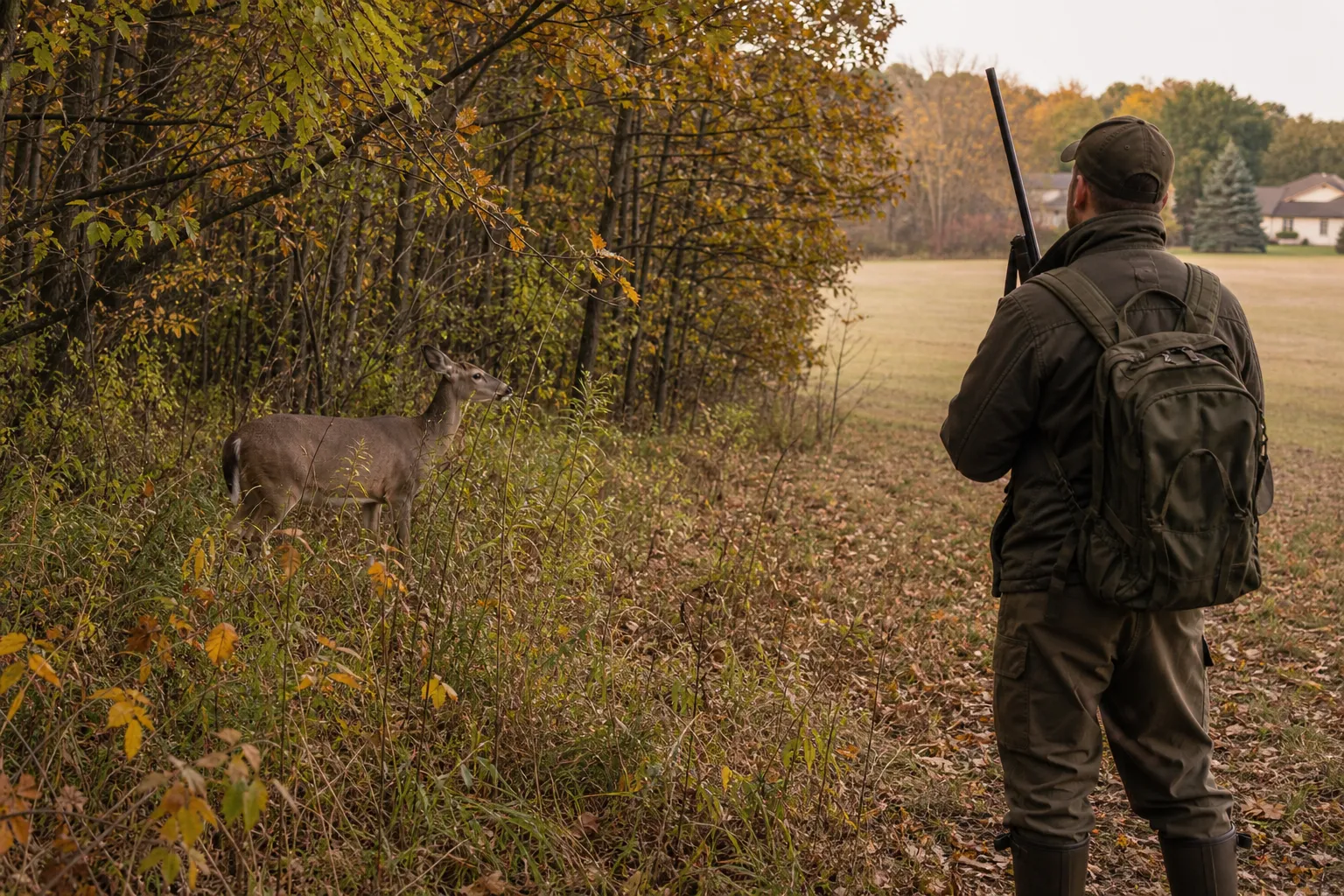
For practical scouting, the official sources in this ledger support one broad conclusion: whitetails are adaptable, but local habitat and local rules matter. A deer herd in Maine, Indiana, Pennsylvania, Manitoba or Waterton Lakes National Park may be responding to different weather, food availability, hunting pressure and agency management goals.
Subspecies and regional variation
The U.S. Fish and Wildlife Service describes the Columbian white-tailed deer as one of 38 recognized subspecies of Odocoileus virginianus. The agency also identifies the Key deer as a white-tailed deer subspecies found nowhere else in the world except the Florida Keys. USFWS, Columbian white-tailed deer, USFWS, Key deer
The Key deer is also described by the U.S. Fish and Wildlife Service as the smallest North American white-tailed deer subspecies. That example is a useful reminder that “white-tailed deer” covers strong regional variation, not one uniform body size. USFWS, Key deer
State agency weight examples show the same point. Indiana DNR gives average adult weights of 175 pounds for males and 120 pounds for females, while noting that weights vary considerably. Maine IFW gives adult buck and doe averages of 195 pounds and 140 pounds, respectively. Indiana DNR, Maine IFW
| Source area | Adult male average | Adult female average | Note | |, -|, -:|, -:|, -| | Indiana | 175 lb | 120 lb | Indiana DNR says weights vary considerably. | | Maine | 195 lb | 140 lb | Maine IFW figures show regional size variation. |
Body size can vary by region, sex, age, diet and season. The sources above support that broad takeaway, but hunters should use local agency material for local body size expectations.
Antlers and the annual cycle
Male white-tailed deer grow and shed antlers each year, and females rarely grow antlers, according to Indiana DNR. In Indiana, antler development begins in mid-March or April and continues into August or September. Indiana DNR
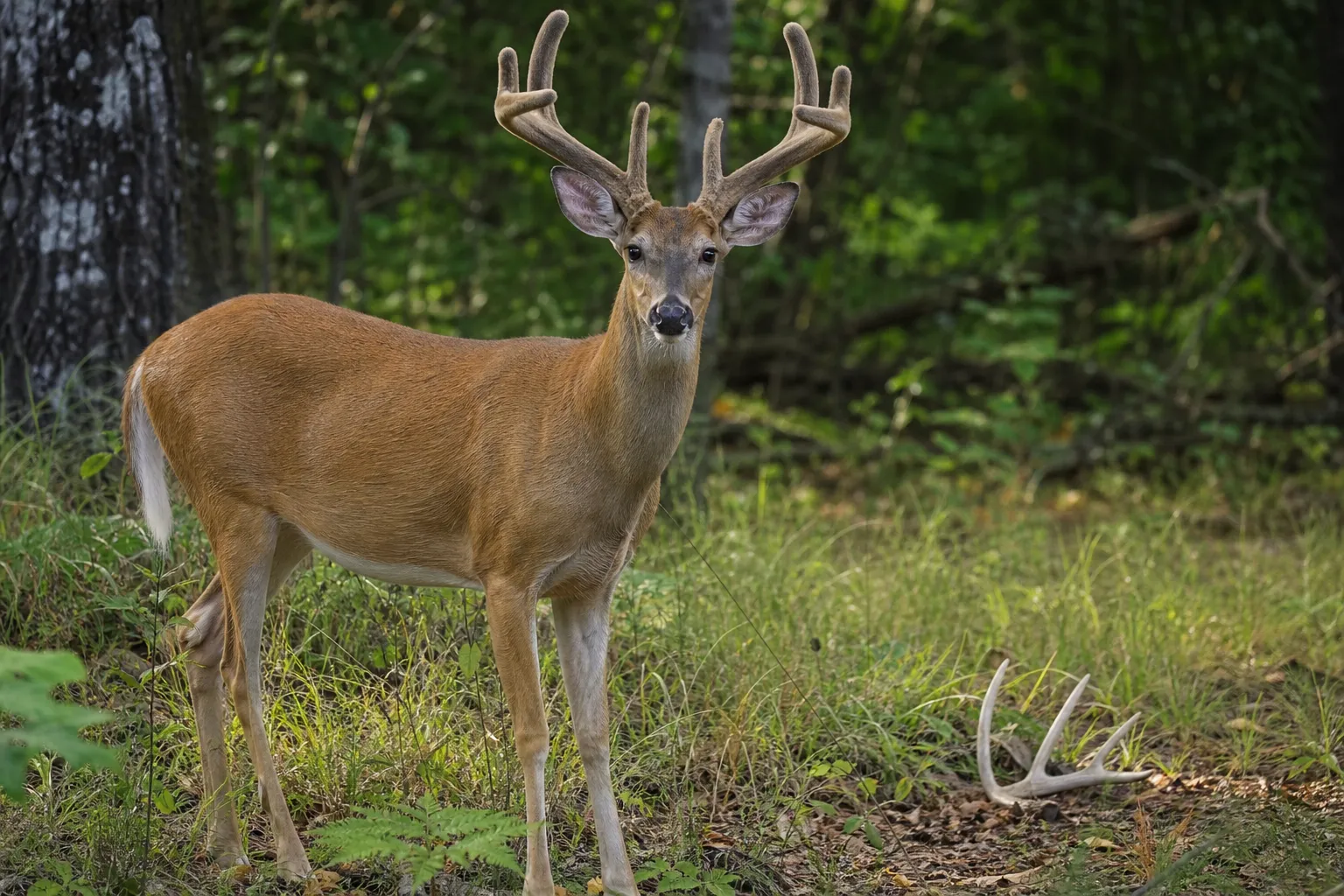
For hunters, this means antlers are not a fixed trait from birth. A buck’s antlers reflect the annual cycle. Antler size alone should not be used as a complete measure of herd health without local biological data from a wildlife agency.
Rut, breeding and fawning
The rut is the breeding season, and its timing varies by place. Pennsylvania Game Commission says breeding activity in Pennsylvania reaches its peak in mid-November, although it may begin earlier and extend later. Pennsylvania Game Commission
Indiana DNR says white-tailed deer fawns are born in late May or early June after about a 200-day gestation period. Indiana DNR
Rut timing is especially important for hunters because deer behavior changes seasonally. The exact timing should be checked through local agency information, since the Pennsylvania and Indiana examples are not a rule for every state or province.
Diet and seasonal foods
White-tailed deer are selective herbivores. Maine IFW describes them as highly selective herbivores that focus on the most nutritious available plants or plant parts. Maine IFW
A U.S. Forest Service review summarizes white-tailed deer diets across the species’ range as 46% browse, 24% forbs and 11% mast. Maine IFW lists hard mast such as acorns and beech nuts as common deer foods. U.S. Forest Service FEIS, Maine IFW
Those facts explain why deer feeding patterns can change through the year. When the most nutritious available foods change, deer use changes too. A practical hunter should connect deer sign with current food availability and confirm local baiting, feeding and attractant rules with the state or provincial wildlife agency.
Senses, activity and behavior
Pennsylvania Game Commission says white-tailed deer rely on strong vision, smell and hearing to detect danger. Maine IFW describes white-tailed deer as crepuscular, meaning they are most active around dawn and dusk. Pennsylvania Game Commission, Maine IFW
The tail is part of that alarm behavior. Maine IFW says the white underside of the raised tail flashes a danger signal to other deer. Maine IFW
Pennsylvania Game Commission describes whitetail social organization as largely matriarchal. That matters for hunters and wildlife watchers because family groups and local deer use may be influenced by adult females, not only by bucks. Pennsylvania Game Commission
Population management
White-tailed deer populations are managed because deer density affects deer, habitats and people. Maine IFW says overabundant deer can damage habitat and lead to poor deer condition, starvation, disease and conflicts with people. Maine IFW
Pennsylvania Game Commission states that it uses hunting and antlerless deer permits to adjust deer populations toward management goals. Clemson Extension states that harvesting does during hunting season can reduce deer population size when there are too many deer. Pennsylvania Game Commission, Clemson Extension
For hunters, the practical point is simple: antlerless permits, season structure and harvest goals are management tools, not just opportunity rules. They are set by agencies for specific places and years, so always check the current regulation booklet and agency updates before hunting.
Chronic wasting disease
Chronic wasting disease, usually shortened to CWD, is a major management issue for deer hunters. CDC describes CWD as a prion disease affecting deer, elk, moose and similar animals. The Canadian Food Inspection Agency describes CWD as a progressive, fatal disease of the central nervous system in cervids. CDC, CFIA
CDC says CWD infections in people have never been reported, but scientists continue studying whether exposure could affect people. CDC advises hunters not to eat meat from an animal that tests positive for CWD. CDC
In Canada, CFIA says CWD is reportable under the Health of Animals Act. In both the United States and Canada, hunters should check current state, provincial or federal instructions for testing, carcass movement, disposal and transport rules before taking deer from a CWD area. CFIA
What to check before hunting
This page is a biology and behavior reference, not a regulation page. Before hunting white-tailed deer, check the official wildlife agency for the exact state, province, territory or unit you plan to hunt.
Confirm these items from official sources:
- Current season dates and legal hunting methods.
- License, tag and permit requirements.
- Antlerless permit rules and harvest reporting requirements.
- CWD testing, carcass movement and disposal rules.
- Any local restrictions that apply to the hunting area.
Open questions needing additional official sources
The editor’s brief asked for seasonal coat color, fawn spots and scent glands. Those topics are not supported by a cited fact in the supplied ledger, so they are not described here. They should be added only after confirming them with a state, provincial, federal or university source.
Frequently asked questions
What is the scientific name of the white-tailed deer?
The scientific name is Odocoileus virginianus, according to the Pennsylvania Game Commission.
Where do white-tailed deer live in the United States and Canada?
The U.S. Forest Service describes the species as occurring in the southern provinces of Canada and most of the conterminous United States. It is rare or absent in Alaska, California, Nevada and Utah.
How much does a white-tailed deer weigh?
Weights vary by region and sex. Indiana DNR gives adult averages of 175 pounds for males and 120 pounds for females, while Maine IFW gives averages of 195 pounds for adult bucks and 140 pounds for adult does.
When do whitetail deer grow antlers?
Indiana DNR says antler development in Indiana begins in mid-March or April and continues into August or September.
What do white-tailed deer eat?
Maine IFW describes deer as highly selective herbivores. A U.S. Forest Service review summarizes diets across the species’ range as 46% browse, 24% forbs and 11% mast, and Maine IFW lists hard mast such as acorns and beech nuts as common foods.
Should hunters eat meat from a deer that tests positive for CWD?
CDC advises hunters not to eat meat from an animal that tests positive for chronic wasting disease.
Sources
- Odocoileus virginianus, white-tailed deer, U.S. Forest Service, Fire Effects Information SystemOfficial source. Accessed October 20, 2026.
- White-tailed deer, Pennsylvania Game CommissionOfficial source. Accessed October 20, 2026.
- White-tailed Deer Biology, Indiana Department of Natural ResourcesOfficial source. Accessed October 20, 2026.
- White-tailed Deer, Maine Department of Inland Fisheries and WildlifeOfficial source. Accessed October 20, 2026.
- Ungulates, Waterton Lakes National Park, Parks CanadaOfficial source. Accessed October 20, 2026.
- Coexisting with White-tailed Deer, Province of ManitobaOfficial source. Accessed October 20, 2026.
- Wild Animals of Manitoba, Province of ManitobaOfficial source. Accessed October 20, 2026.
- Columbian White-tailed Deer (Odocoileus virginianus leucurus), U.S. Fish and Wildlife ServiceOfficial source. Accessed October 20, 2026.
- Key Deer (Odocoileus virginianus clavium), U.S. Fish and Wildlife ServiceOfficial source. Accessed October 20, 2026.
- Antler Development in White-tailed Deer: Implications for Management, University of Missouri Extension. Accessed October 20, 2026.
- White Tailed Deer Management, Clemson Cooperative Extension. Accessed October 20, 2026.
- About Chronic Wasting Disease (CWD), Centers for Disease Control and PreventionOfficial source. Accessed October 20, 2026.
- Chronic wasting disease of deer and elk, Canadian Food Inspection AgencyOfficial source. Accessed October 20, 2026.
- Odocoileus virginianus, white-tailed deer, Animal Diversity Web, University of Michigan Museum of Zoology. Accessed October 20, 2026.