The American Black Bear: Range, Color Phases and Identification
The American black bear, Ursus americanus, is North America’s most common and widely distributed bear species. Color is not a dependable field mark, so identification should focus on body shape, face profile, ears, and claws.
By RaiS. Reviewed by RaiS. Published . 8 min read.
Research and drafting were assisted by AI. RaiS checked the facts against the sources below and approved this page.
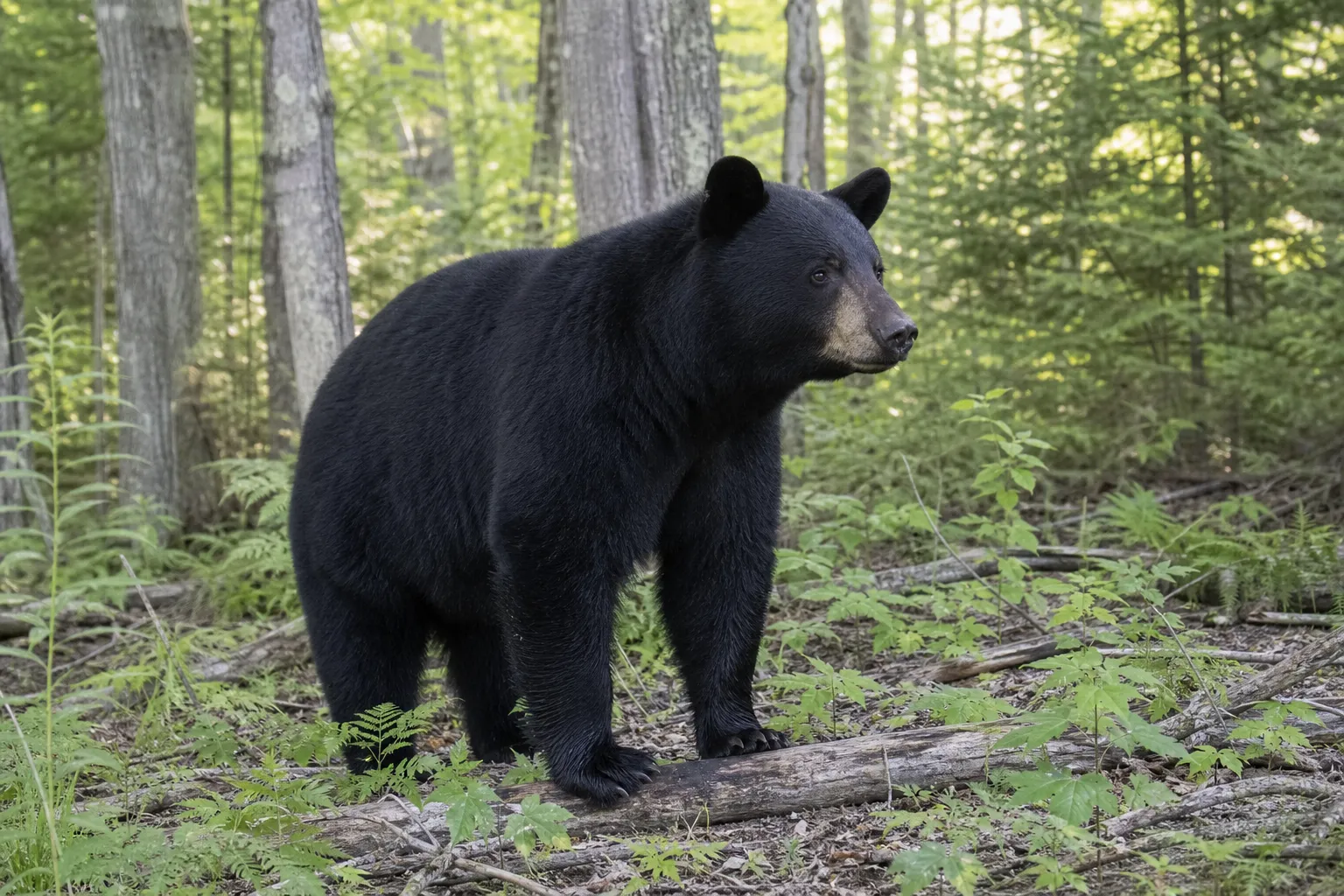
The American black bear, Ursus americanus, is the most common and widely distributed bear species in North America, according to the National Park Service. For hunters and hikers, the most important lesson is simple: do not identify a bear by color alone. Black bears can be black, brown, cinnamon, blonde, blue-gray, or white, so field identification should rely on body shape, shoulder profile, face profile, ears, and claws.
Species profile
The National Park Service describes the American black bear as a highly variable bear whose size, color, diet, and sleeping patterns depend on the bear and its location. That variation is why a black bear in coastal Alaska, a black bear in the southern Appalachians, and a black bear in British Columbia may look and live differently while still being the same species.
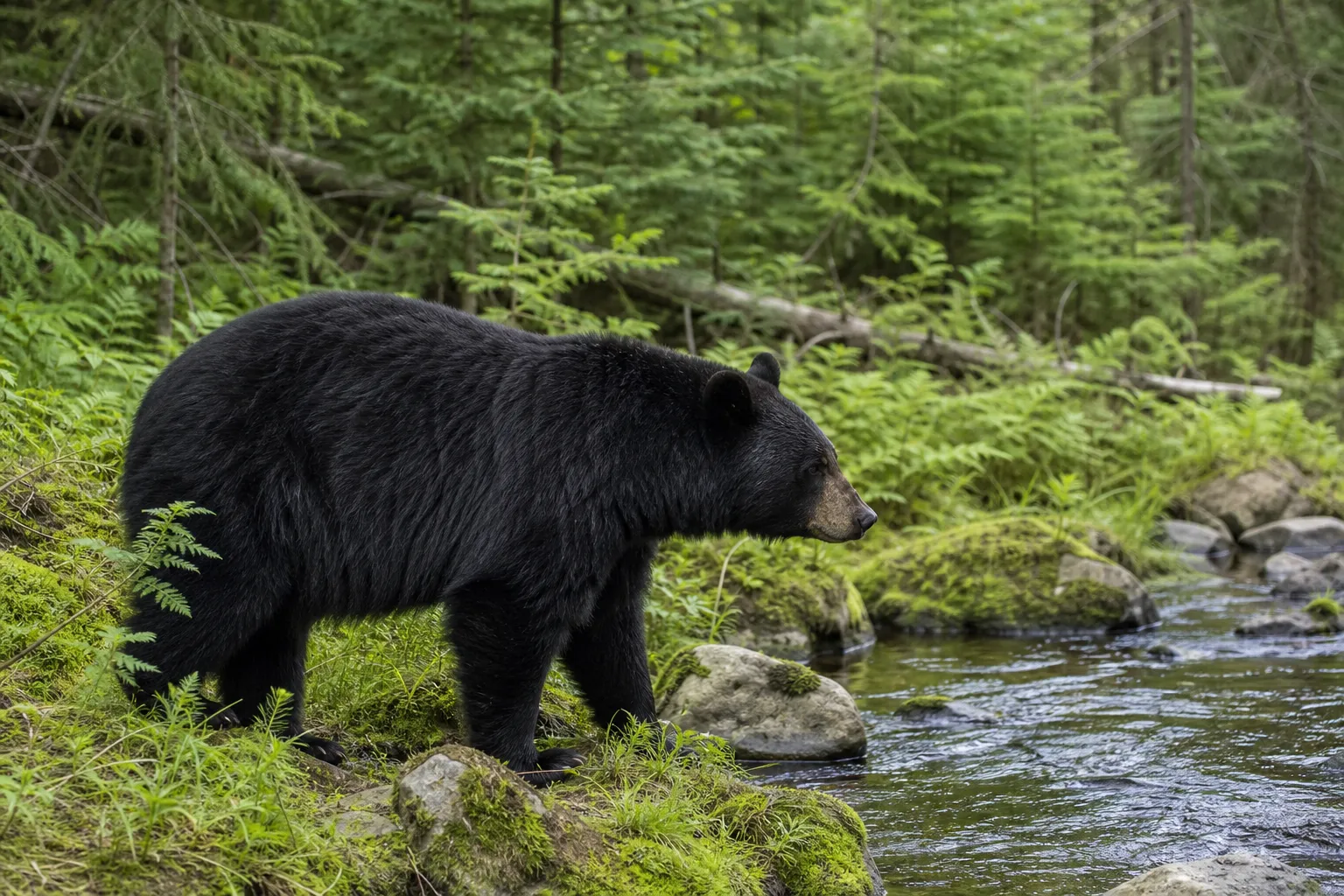
Kenai Fjords National Park states that American black bears can be found from Alaska to Mexico and from the Atlantic to the Pacific, including 41 U.S. states. The National Park Service also says they may use habitats ranging from forested areas to beaches and alpine zones.
In Alaska, Kenai Fjords National Park reports that black bears occur over most forested areas, but not on the Seward Peninsula, the Yukon-Kuskokwim Delta, or north of the Brooks Range. That example is a good reminder that the range is broad, but not continuous everywhere.
The National Park Service lists black bear height at about 3 feet at the shoulder and 5 to 7 feet when standing upright. It lists weight at 100 to 600 pounds. The same agency lists the average life span as 15 to 25 years.
Range and habitat in plain language
Across North America, think of the black bear as a bear strongly associated with wooded country, but not limited to deep forest. The National Park Service notes that black bears can occur from forests to beaches and alpine zones. That wide habitat use matters in the field because a bear may be encountered in timber, along shorelines, or in higher country depending on place and season.
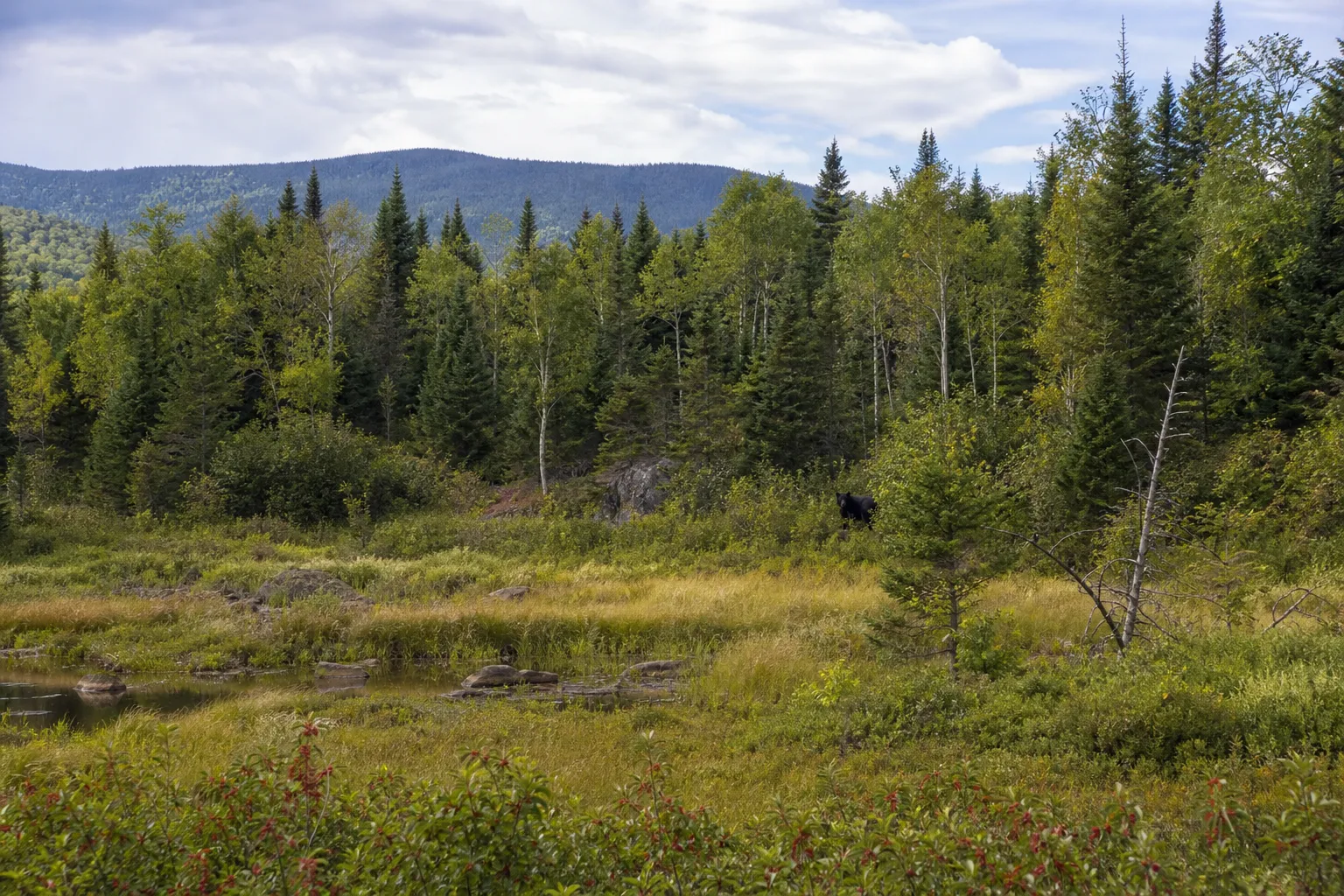
For a hunter, that means black bear country is not just one cover type. For a hiker, it means bear awareness belongs anywhere black bears are known to live, including trails that pass through berry patches, coastal edges, forest openings, or alpine approaches.
Color phases
Color is one of the easiest things to notice and one of the least reliable ways to identify a bear species. The National Park Service warns not to depend on coloration when identifying an American black bear, and Parks Canada also says color alone is not a good species indicator.
The National Park Service lists black, cinnamon, blonde, blue-gray, and white as possible black bear colors. Parks Canada says black bears may range from blond, and even white in some circumstances, to brown, cinnamon, and black. Alaska Department of Fish and Game says black bears can vary from jet black to white, with black encountered most frequently across Alaska.
Black, brown, cinnamon, and blonde bears
Many black bears are black, but brown and cinnamon black bears are also well documented. Alaska Department of Fish and Game reports that brown or cinnamon-colored black bears are sometimes seen in Southcentral Alaska and on the southeastern mainland. British Columbia also lists cinnamon, brown, and blonde as black bear color phases.
This is why a brown bear is not automatically a grizzly. A cinnamon or brown black bear may have black bear body proportions, a straight face profile, prominent ears, and shorter curved claws.
Glacier or blue bears
The glacier bear is a blue or bluish color phase of the black bear. Alaska Department of Fish and Game identifies glacier bears as bluish-colored black bears found in the Yakutat area and other parts of Southeast Alaska.
British Columbia describes the blue phase, or glacier bear, as sometimes seen in the extreme northwest corner of the province. British Columbia also describes Ursus americanus emmonsii as including the rare glacier or blue bear and occurring in the extreme northwest of the province and adjacent Alaska.
Kermode or Spirit bears
British Columbia reports a white-colored morph called the Kermode or Spirit Bear most frequently on the north-central coast. British Columbia describes Ursus americanus kermodei as restricted to the coastal mainland from Burke Channel to the Nass River and most adjacent islands.
British Columbia also says the white color phase is most common on Princess Royal and Gribbel Islands, at about 10 percent of bears. A white bear in that region is not identified by color alone. It should still be understood within the official British Columbia description of Kermode or Spirit bears and their restricted coastal range.
Diet and seasonal food use
The National Park Service describes black bears as omnivores, meaning they eat both plant and animal foods, and says black bears will eat almost anything. British Columbia describes black bears as omnivorous and says vegetable matter forms the bulk of their diet, especially in spring and summer.
Diet changes by region and season. In Great Smoky Mountains National Park, the National Park Service says 85 percent of a black bear’s diet comes from berries and nuts. In Glacier Bay, the National Park Service lists shoreline grasses, sedges, dandelions, wild celery, cow parsnip, berries, salmon, and occasional animal foods.
North Cascades National Park gives a simple seasonal summary: grasses in spring, leafy green plants and fruits in summer, and berries and nuts in fall. That pattern is useful for hunters and hikers because bear sign often reflects what bears are feeding on in that place and season.
For details on identifying droppings in the field, see our live guide to Bear Scat rather than relying on diet alone.
Denning and winter behavior
The National Park Service says black bears spend the winter months in dens to avoid cold weather and scarce food. It lists den sites such as hollow trees or logs, root masses, and rock crevices. The agency also notes that in warmer climates black bears may den high in large tree structures.
Denning length varies strongly with climate and location. The National Park Service says black bears may spend up to six months in hibernation without eating, drinking, or expelling waste. It also says Alaska black bear hibernation can vary from about seven months in colder parts of Alaska to two to five months, or none, along warmer coasts.
British Columbia gives a similar climate pattern, reporting that black bears typically hibernate three to five months on the south coast and five to seven months in the interior and north.
Breeding cycle and cubs
The National Park Service says adult black bears are mostly solitary except during mating season. It says black bear mating season occurs during summer, but embryos do not begin developing until the mother enters her den.
Cubs are born during the middle of the winter denning period. The National Park Service says this is usually between mid-January and early February. A mother black bear typically gives birth to one to three cubs at a time.
The National Park Service says cubs remain with their mother for about 18 months or until she is ready to mate again. For anyone in bear country, that matters because a bear family group is different from the mostly solitary adult pattern.
Black bear versus grizzly identification
The practical rule is to use several field marks together. The National Park Service and Parks Canada both caution against relying on color alone. Size can also mislead because black bears vary by individual and location.
| Field mark | American black bear | Grizzly bear |
|---|---|---|
| Shoulder profile | National Park Service says the shoulder line is level or flat and lacks a shoulder hump. | National Park Service lists a distinctive shoulder hump. |
| Rump and shoulders | National Park Service says the rump is higher than the front shoulders. | National Park Service says the rump is lower than the shoulder hump. |
| Face profile | National Park Service says the face is straight from between the eyes to the muzzle tip. Parks Canada says the head and snout form a straight line from the side. | National Park Service lists a dished face profile. |
| Ears | National Park Service says black bear ears are taller, more oval, and can appear prominent. Parks Canada says they are longer and pointier. | National Park Service lists short, round ears. Parks Canada says grizzly ears are short, round, and set well apart. |
| Front claws | National Park Service says front claws are curved and less than 2 inches long. Parks Canada gives black bear claw length as 3 to 4 cm. | National Park Service lists front claws at 2 to 4 inches. Parks Canada gives grizzly claw length as 5 to 10 cm. |
A simple field sequence
Start with the shoulder line. A prominent shoulder hump points toward grizzly, while a flatter shoulder line with the rump higher than the shoulders points toward black bear.
Next, check the head from the side. A straight face profile from the eyes to the muzzle supports black bear. A dished or concave profile supports grizzly.
Then look at the ears. Taller, more prominent, oval or pointier ears support black bear. Short, round ears set well apart support grizzly.
Finally, if claws are visible, compare length and shape. Black bears have shorter, curved front claws. Grizzlies have longer front claws.
For bear deterrent questions, see our live page Does Bear Spray Work? rather than treating spray selection or use as part of species identification.
What hunters and hikers should take away
The American black bear is widespread, adaptable, and highly variable. Its color phases can include black, cinnamon, brown, blonde, blue-gray glacier bears, and white Kermode or Spirit bears. Because both black bears and grizzlies can appear in varied shades, color is a poor shortcut.
Use the whole animal: shoulder hump, rump height, face profile, ear shape, and claw length. If you are hunting, traveling, or planning a trip in bear country, confirm current identification guidance, access rules, and hunting regulations with the appropriate state, provincial, federal, or park agency before you go.
Frequently asked questions
Are all black bears actually black?
No. The National Park Service says black bears can be black, cinnamon, blonde, blue-gray, or white, and Parks Canada says they can range from blond or white in some circumstances to brown, cinnamon, and black.
Where do American black bears live?
Kenai Fjords National Park states that American black bears can be found from Alaska to Mexico and from the Atlantic to the Pacific, including 41 U.S. states. The National Park Service says they can use habitats from forests to beaches and alpine zones.
How can I tell a black bear from a grizzly?
Do not use color alone. National Park Service field marks for black bears include no prominent shoulder hump, rump higher than the shoulders, a straighter face profile, taller more oval ears, and shorter curved front claws.
What is a Kermode or Spirit bear?
British Columbia describes the Kermode or Spirit Bear as a white-colored morph reported most frequently on the north-central coast, with the white color phase most common on Princess Royal and Gribbel Islands.
What do black bears eat?
The National Park Service describes black bears as omnivores that eat both plant and animal foods. Depending on place and season, agency examples include berries, nuts, grasses, sedges, leafy plants, fruits, salmon, and occasional animal foods.
Do black bears hibernate all winter?
Denning length varies by climate and location. The National Park Service says black bears may spend up to six months in hibernation, while Alaska examples range from about seven months in colder areas to shorter or no denning along warmer coasts.
Sources
- Black Bears, Bears, U.S. National Park ServiceOfficial source. Accessed October 24, 2026.
- Bear Identification, U.S. National Park ServiceOfficial source. Accessed October 24, 2026.
- Bear basics, Bears in the mountain national parks, Parks CanadaOfficial source. Accessed October 24, 2026.
- Black Bear Species Profile, Alaska Department of Fish and GameOfficial source. Accessed October 24, 2026.
- Black Bears in British Columbia, British Columbia Ministry of Environment, Lands and ParksOfficial source. Accessed October 24, 2026.
- Black Bear, Kenai Fjords National Park, U.S. National Park ServiceOfficial source. Accessed October 24, 2026.
- Black Bears, North Cascades National Park, U.S. National Park ServiceOfficial source. Accessed October 24, 2026.