Black Bear vs Grizzly Bear: How to Tell Them Apart
Color and size are unreliable for bear identification. Use several clues together: shoulder shape, rump height, face profile, ears, claws, tracks and local range.
By RaiS. Reviewed by RaiS. Published . 7 min read.
Research and drafting were assisted by AI. RaiS checked the facts against the sources below and approved this page.
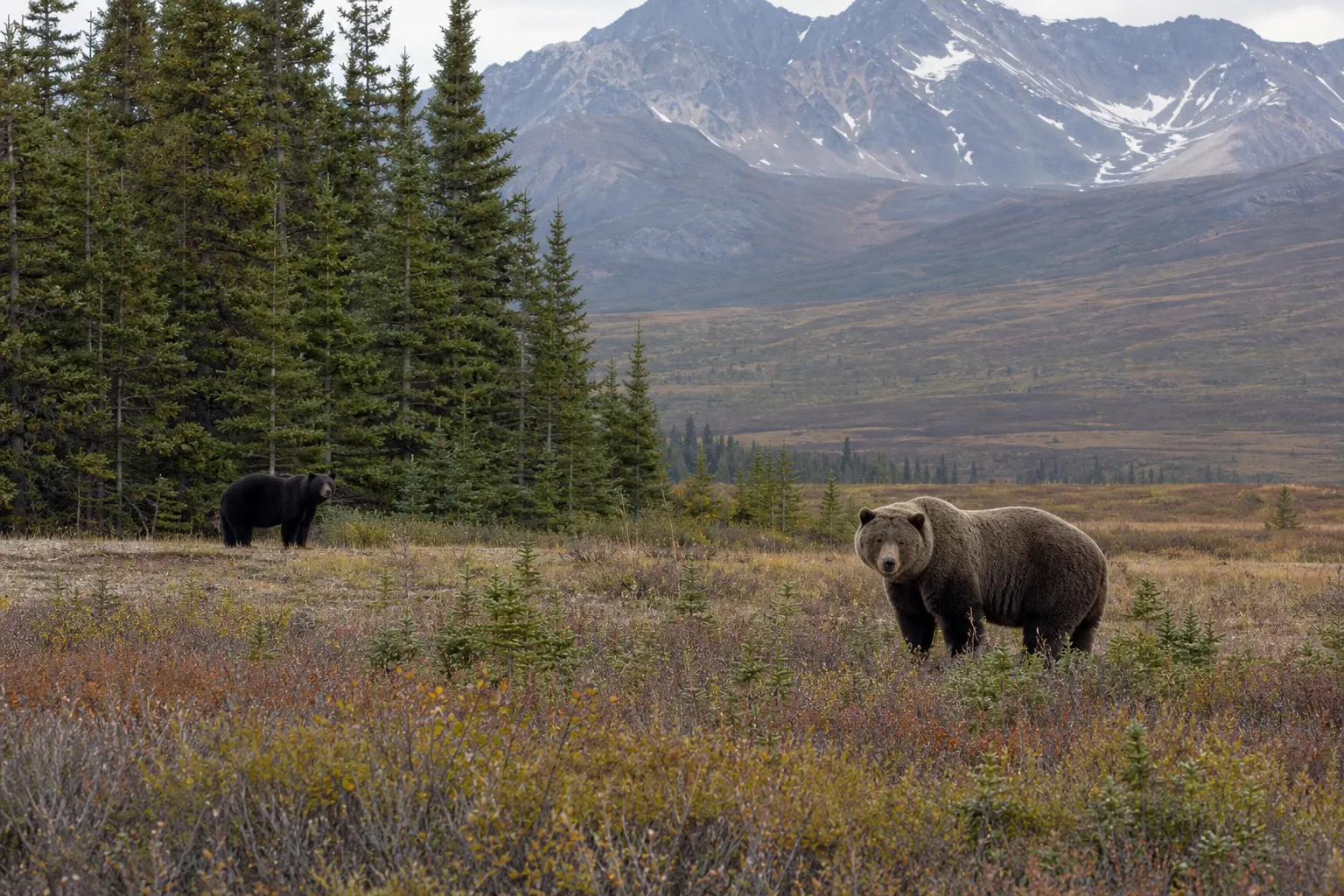
Black bears and grizzly bears are best told apart by shape, not color. The National Park Service advises against using color and size alone, because both species vary widely. Look for several marks together: the grizzly or brown bear’s shoulder hump, lower rump, dished face, short round ears and longer front claws, compared with the black bear’s higher rump, straighter face, taller ears and shorter curved claws.
First, grizzly bear and brown bear mean the same species
The National Park Service explains that brown bear and grizzly bear are common names for the same species, Ursus arctos. In North America, the name often depends on geography and ecology. Coastal Alaska animals are commonly called brown bears, while inland animals with limited access to marine foods are often called grizzlies.
For field identification, this article uses “grizzly” for the grizzly or brown bear side of the comparison. The important point is that you are comparing American black bears with Ursus arctos, not two separate grizzly and brown bear species.
Quick comparison: shape beats color
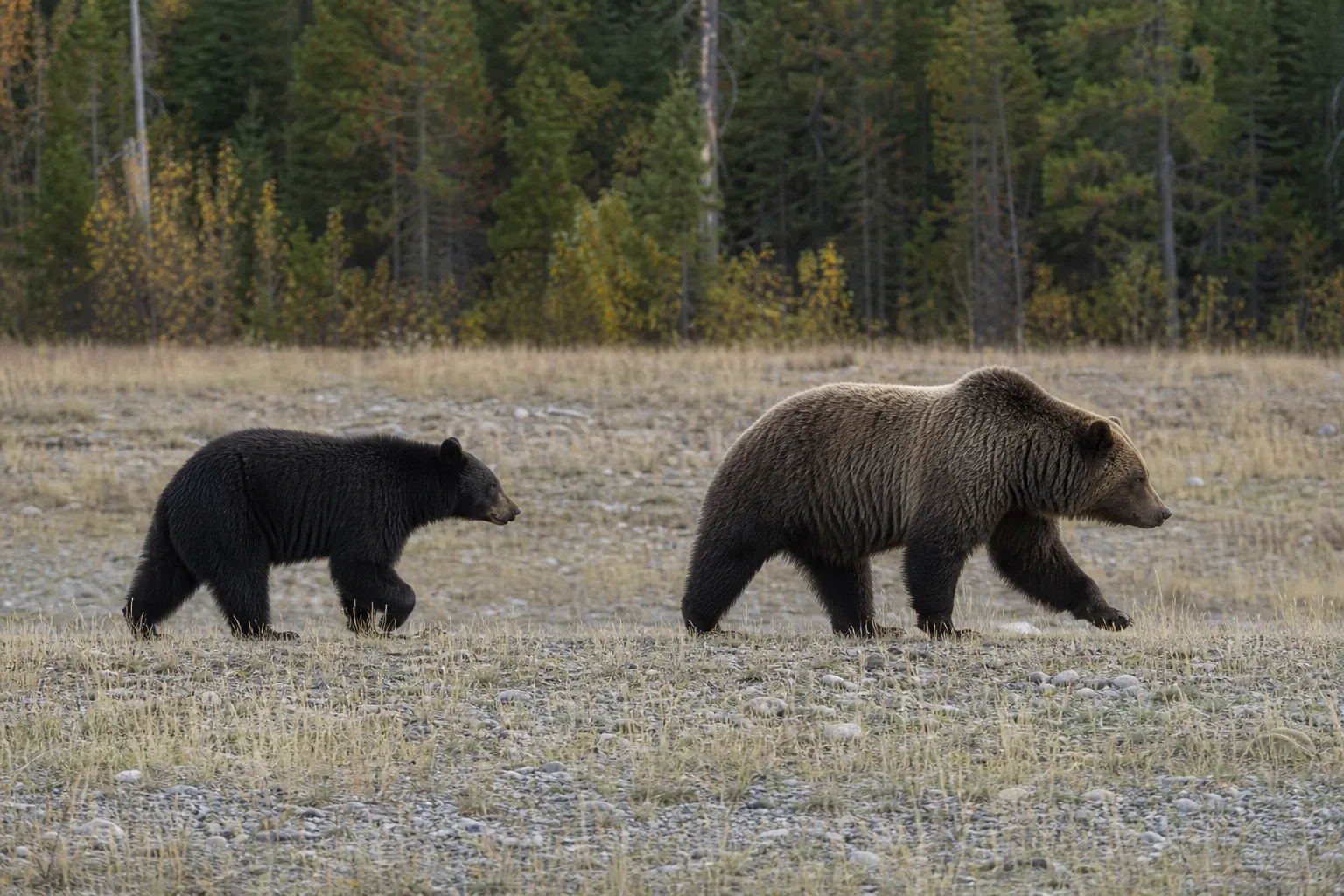
Use this table as a field checklist, not as a single clue test.
| Field mark | Black bear | Grizzly or brown bear |
|---|---|---|
| Shoulder and back | National Park Service says black bears usually lack the grizzly style shoulder hump. | National Park Service and Parks Canada describe a distinctive, noticeable shoulder hump. |
| Rump height | National Park Service says the rump is higher than the front shoulders. | National Park Service says the rump is lower than the shoulder hump. |
| Face profile | National Park Service describes a generally straight profile from between the eyes to the muzzle tip. | National Park Service and Parks Canada describe a dished or concave face. |
| Ears | National Park Service says the ears are taller and more oval. Parks Canada describes them as longer and pointier than grizzly ears. | National Park Service describes the ears as short and round. |
| Front claws | National Park Service says front claws are less than 2 inches long and curved. | National Park Service says front claws are slightly curved and typically 2 to 4 inches long, depending on digging wear. |
| Track clues | National Park Service says toes are separated and fairly arced, and claw marks do not always show. | Alberta describes grizzly tracks as having a comparatively straight line made by the toes. Parks Canada says claw marks are evident at least 5 cm in front of the toes. |
Body shape: the most useful first clue
The shoulder hump is the classic grizzly feature. Parks Canada describes it as a prominent shoulder muscle mass that creates a noticeable hump, and the National Park Service also lists the distinctive shoulder hump as a grizzly or brown bear mark.
Black bears usually lack that hump. The National Park Service describes a black bear’s rump as higher than its front shoulders. By contrast, a grizzly’s rump is lower than the shoulder hump.
This body shape clue works best when the bear is standing or walking broadside and you can see the full outline. It can be much harder when the bear is feeding with its head down, walking uphill, partly hidden by brush or seen only briefly.
Face and ears: useful when you have a clear view
The National Park Service describes a black bear’s face profile as generally straight from between the eyes to the muzzle tip. Alaska Department of Fish and Game also says black bears are most easily distinguished from brown bears by a straight facial profile and claw length.
For grizzlies, the National Park Service says the face appears dished between the eyes and the snout. Parks Canada describes the grizzly head as large and round with a dished or concave face.
Ears help too. Black bear ears are taller and more oval according to the National Park Service, and Parks Canada describes them as longer and pointier than grizzly ears. Grizzly ears are short and round according to the National Park Service.
Color variation: why coat color misleads people
Color alone is not a safe way to separate black bears from grizzlies. Parks Canada says both grizzly bears and black bears come in many shades, so color alone is not a good species indicator. The National Park Service says the same basic thing for bear identification: do not rely on color and size alone.
Parks Canada notes that grizzly bears can range from jet black to light blond. It also notes that black bears can be blond, white in some circumstances, brown, cinnamon or black. The National Park Service says the name “black bear” is misleading because the species can range from black to gray, cinnamon or white.
Parks Canada also notes that black bears often have a white chest patch called a chest blaze. That can be helpful to notice, but it should not replace the larger checklist of shape, face, ears, claws and tracks.
For a closer look at color phases and range in one species, see our guide to the American black bear.
Claws and tracks: helpful, but only when conditions are good
Claws are one of the stronger differences when you can see them. The National Park Service says black bear front claws are less than 2 inches long and curved. It lists grizzly or brown bear front claws as slightly curved and typically 2 to 4 inches long, depending on digging wear.
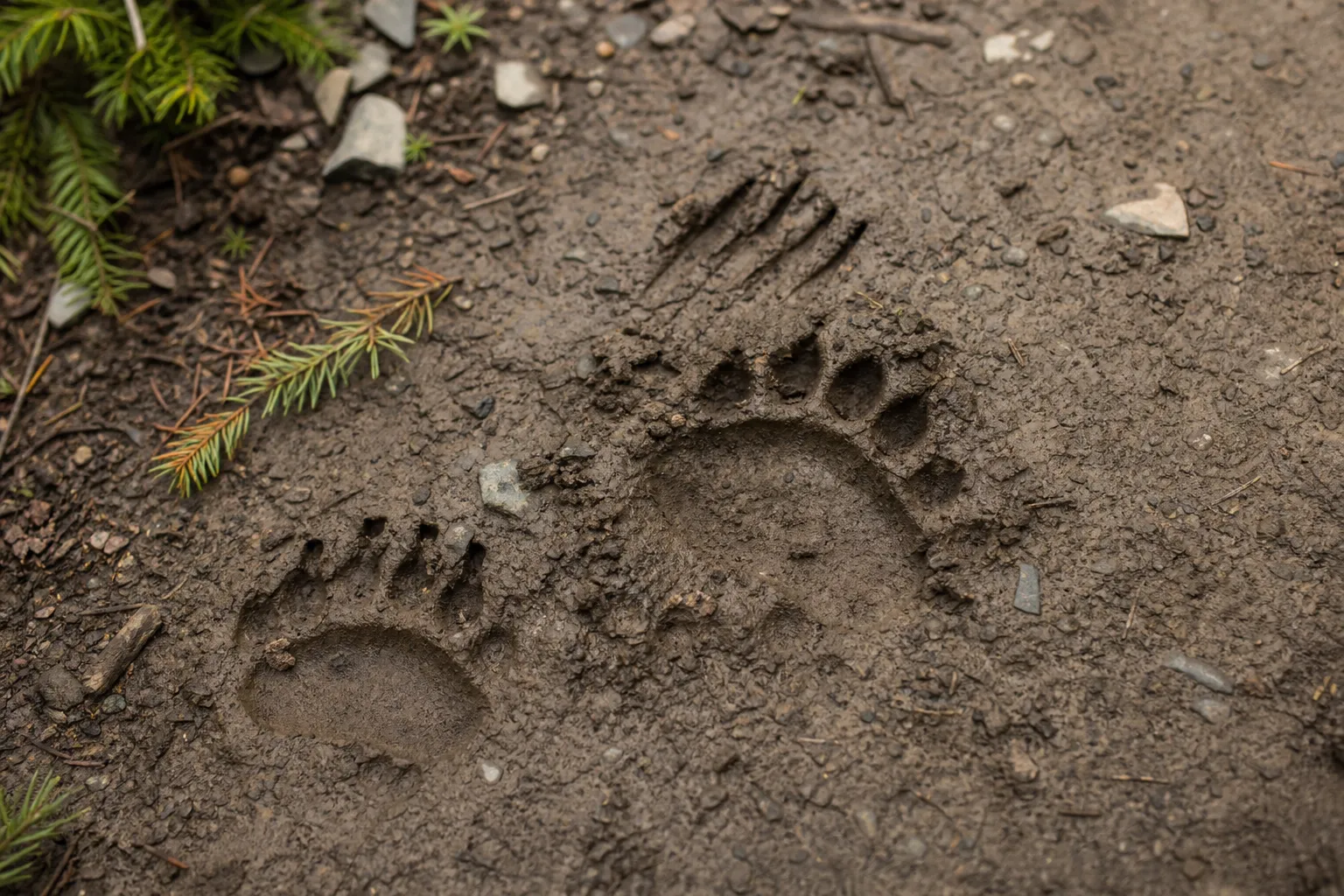
Tracks add useful evidence, especially in mud, sand or snow. National Park Service says black bear toes are separated and fairly arced, and that claw marks do not always appear in tracks. Parks Canada says black bear claw marks are not always visible, and when they are visible, they are close to the toes.
For grizzlies, Alberta describes the toe line as comparatively straight. Alaska Department of Fish and Game says brown bear tracks show toes squeezed together with little or no spacing and no arc. Parks Canada says grizzly claw marks in tracks are evident at least 5 cm in front of the toes.
Track size alone can mislead. Alberta says adult black bear front tracks are 10 to 13 cm long and back tracks are 15 to 23 cm long. It lists grizzly front tracks at 13 to 18 cm and back tracks at 25 to 30 cm. But Alberta also cautions that grizzly and black bears of similar size can leave similar sized tracks.
If you are also reading sign along a trail, our guide to bear scat identification explains another clue people often notice in bear country.
Range: use location as context, not proof
Range helps, but it should not be the only thing you use. The National Park Service says American black bears are the most common and widely distributed bear species in North America, and that black bears have a much larger range across the United States than grizzly bears.
Alaska Department of Fish and Game says brown bears, also called grizzly bears, are found nearly everywhere in Alaska, while black bears inhabit most of Alaska’s forests. It also says both bear species occur on the southeastern Alaska mainland.
In overlap areas, location is only context.
Habitat and behavior clues are secondary
Habitat can support an identification, but it does not replace body features. National Park Service Yellowstone says grizzly bears use large, non-forested meadows and valleys more than black bears do. It also says grizzly claws and shoulder musculature are better suited for digging.
Alaska Department of Fish and Game similarly describes brown bear long claws and the shoulder hump as feeding adaptations related to digging. Those points help explain why the hump and claws matter, but they are still field marks to combine with other clues.
Safety cautions for hunters, hikers and wildlife watchers
Bear identification is a safety task, not a speed test.
Alaska Department of Fish and Game advises never approaching bears and giving them space. It also advises making noise, singing or talking loudly to avoid surprising bears.
National Park Service Yellowstone says backcountry bear safety includes hiking in groups of three or more, staying alert, making noise in poor visibility, carrying bear spray and not running during encounters. For more on that tool, see our guide: Does bear spray work?.
For hunters, the identification standard should be especially cautious. Montana Fish, Wildlife and Parks says its Bear Identification Program aims to prevent grizzly bears from being killed due to mistaken identity by hunters. If the view is short, the light is poor or the marks do not line up, treat the identification as uncertain.
When you cannot identify the bear with confidence
If you cannot see multiple reliable marks, do not force the call. Color, size and track size can all mislead in the wrong situation. The safer approach is to wait for a better view, increase distance when appropriate and follow the current bear safety guidance for the area you are in.
For a practical checklist, look for these together:
- Shoulder hump or no shoulder hump.
- Rump lower than shoulders or higher than shoulders.
- Dished face or straight face.
- Short round ears or taller oval ears.
- Long front claws or shorter curved claws.
- Straight toe line with long claw marks or arced toes with claw marks close to the toes or absent.
- Local range, used only as supporting context.
Before any hunt, confirm current rules with the responsible state, provincial, territorial, federal or park agency. Bear seasons, species restrictions, identification requirements and protected status can change, and the official agency rules for the exact place and date are the ones that matter.
Frequently asked questions
Is a brown bear the same as a grizzly bear?
Yes. The National Park Service says brown bear and grizzly bear are common names for the same species, Ursus arctos. In North America, coastal Alaska animals are commonly called brown bears, while inland animals are often called grizzlies.
Can you tell a black bear from a grizzly by color?
No. National Park Service and Parks Canada both warn that color alone is unreliable. Parks Canada says grizzlies can range from jet black to light blond, and black bears can be blond, white in some circumstances, brown, cinnamon or black.
What is the best single field mark for a grizzly?
The shoulder hump is one of the strongest clues. National Park Service lists a distinctive shoulder hump for grizzly or brown bears, while black bears usually lack that grizzly style hump.
How do black bear and grizzly tracks differ?
National Park Service says black bear toes are separated and fairly arced, and claw marks may not show. Alberta describes grizzly tracks as having a comparatively straight toe line, and Parks Canada says grizzly claw marks are evident at least 5 cm in front of the toes.
Are black bears or grizzlies more widespread in the United States?
National Park Service says black bears have a much larger range across the United States than grizzly bears.
What should I do if I am not sure which bear I am seeing?
Do not rely on a quick guess. If the marks do not line up, treat the identification as uncertain. For hunters, confirm current agency rules and do not treat an uncertain view as a positive identification.
Sources
- Bear Identification, U.S. National Park ServiceOfficial source. Accessed October 31, 2026.
- Bear basics: Bears in the mountain national parks, Parks CanadaOfficial source. Accessed October 31, 2026.
- Know your bears, Government of AlbertaOfficial source. Accessed October 31, 2026.
- Species Status Assessment for the Grizzly Bear in the Lower-48 States, October 2024, U.S. Fish and Wildlife ServiceOfficial source. Accessed October 31, 2026.
- Characteristics of Bears in Yellowstone, U.S. National Park ServiceOfficial source. Accessed October 31, 2026.
- Bear Ecology, Yellowstone National Park, U.S. National Park ServiceOfficial source. Accessed October 31, 2026.
- Know Your Bear Facts: The Essentials for Traveling in Alaska’s Bear Country, Alaska Department of Fish and GameOfficial source. Accessed October 31, 2026.
- Black Bear Species Profile, Alaska Department of Fish and GameOfficial source. Accessed October 31, 2026.
- Brown/Grizzly Bear Hunting in Alaska, Alaska Department of Fish and GameOfficial source. Accessed October 31, 2026.
- Washington’s Grizzly and Black Bears, Washington Department of Fish and WildlifeOfficial source. Accessed October 31, 2026.
- Hunter Education Bear Identification Program, Montana Fish, Wildlife and ParksOfficial source. Accessed October 31, 2026.