Coyote vs Fox: How to Tell Them Apart
Coyotes are generally larger, leggier and more dog-like than foxes, while red and gray foxes are smaller with proportionally longer, bushier tails. Tail tip color, body build, tracks, scat and voice can help you separate them in the field.
By RaiS. Reviewed by RaiS. Published . 9 min read.
Research and drafting were assisted by AI. RaiS checked the facts against the sources below and approved this page.
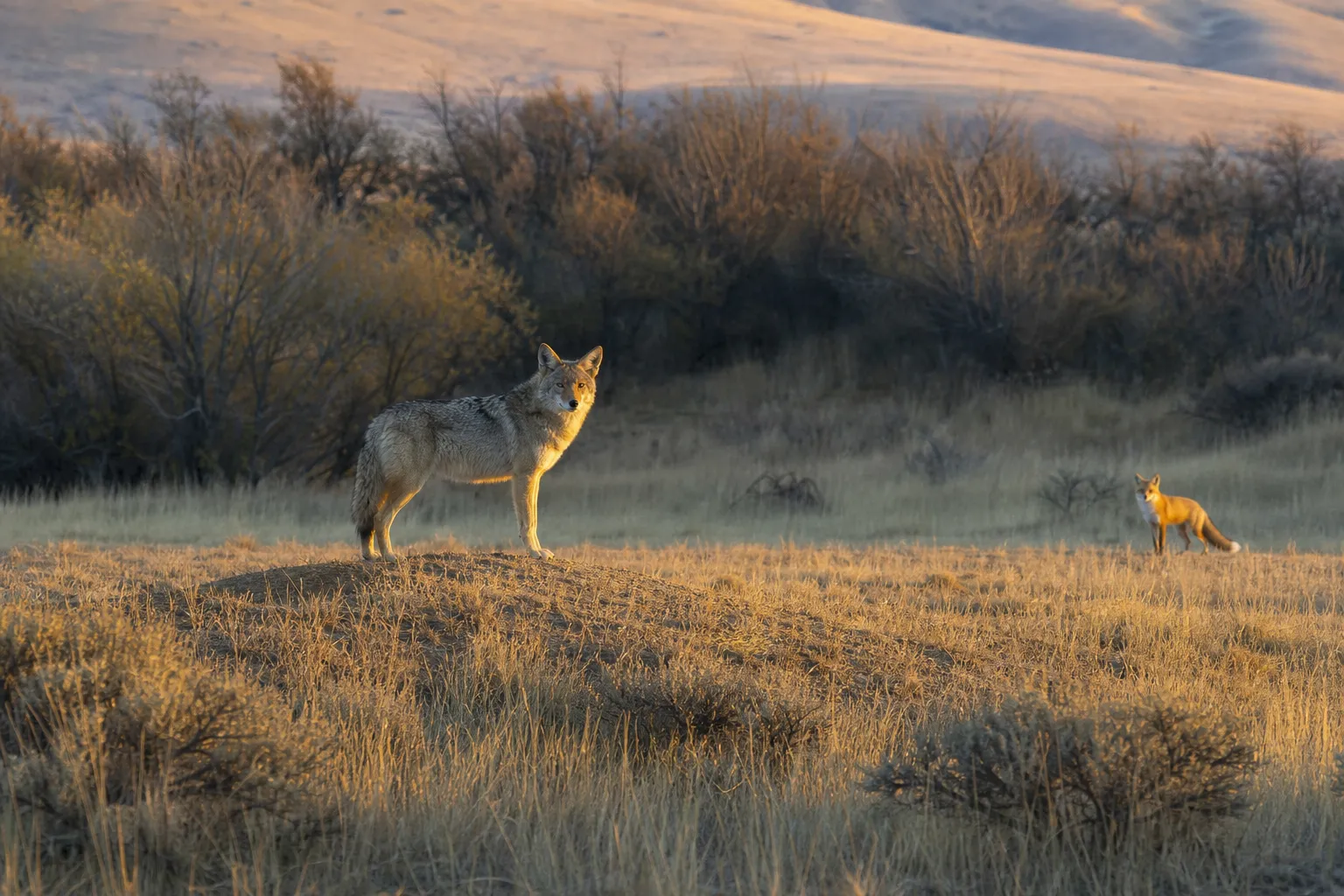
Coyotes are generally larger, leggier and more dog-like than foxes, while foxes are smaller and usually show proportionally longer, bushier tails. In a quick fox vs coyote comparison, look first at body size, then tail tip color: the California Department of Fish and Wildlife says red foxes have a white tail tip, while coyotes have a black tail tip and a tail much shorter than the body. Gray foxes also have a black tail tip, so use their gray, salt-and-pepper coat and dark back stripe as added clues.
Start with size and build
The California Department of Fish and Wildlife describes coyotes as larger than foxes but smaller than gray wolves. For typical coyote measurements, CDFW gives a weight of 10 to 35 pounds and a shoulder height of 18 to 23 inches. The North Carolina Wildlife Resources Commission lists adult coyotes as about medium-dog size, weighing 20 to 45 pounds.
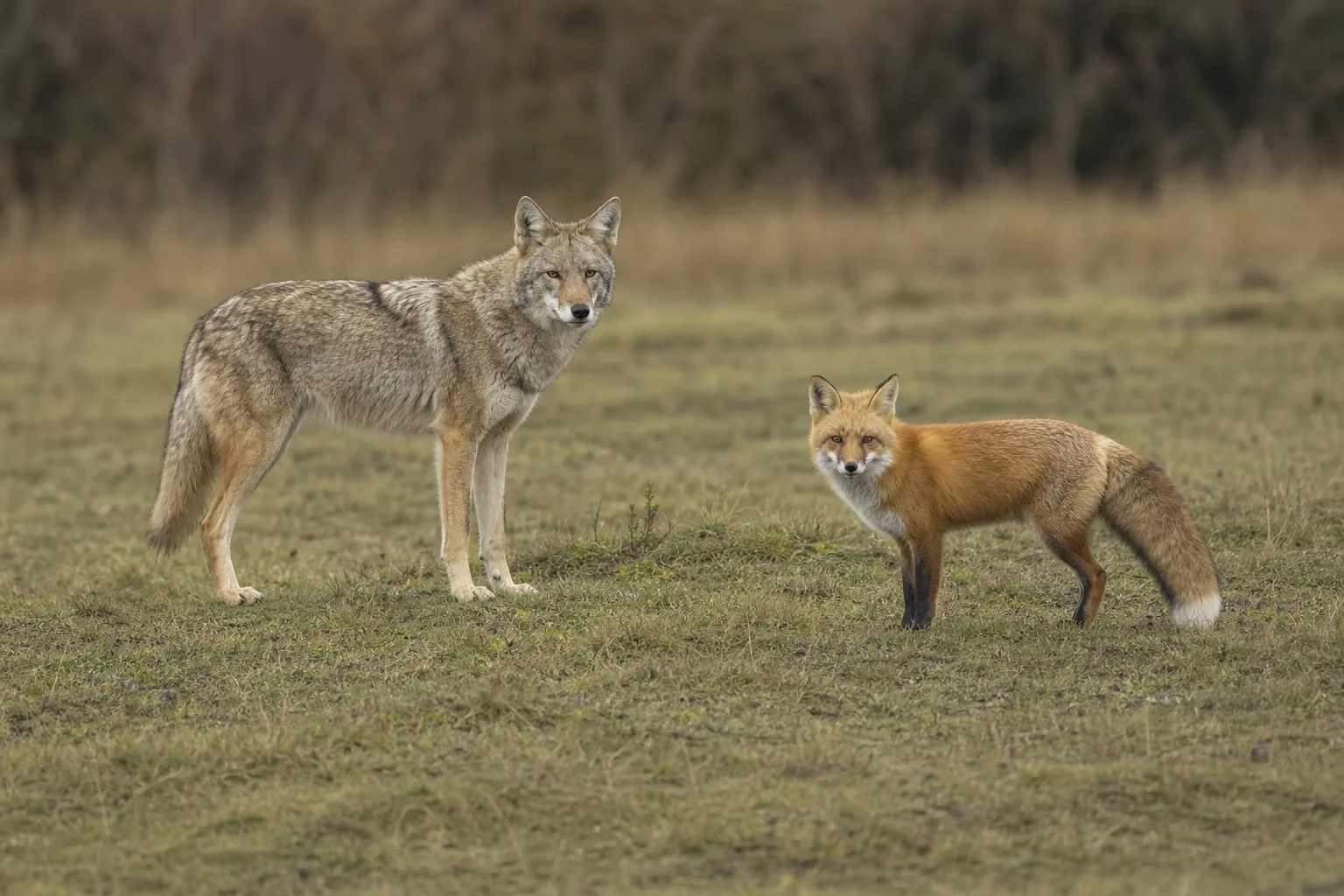
Red foxes are smaller. Connecticut DEEP says red foxes weigh 7 to 15 pounds and measure 39 to 43 inches long including the tail. The Minnesota DNR lists an adult red fox at 15 to 16 inches tall at the shoulder, about 3 feet long, with a 13-inch tail. The Pennsylvania Game Commission lists red fox body length at 22 to 25 inches plus a 14- to 16-inch tail, and weight at 8 to 12 pounds.
Gray foxes are in the same general size class as red foxes. The Pennsylvania Game Commission lists gray fox length at 21 to 29 inches plus an 11- to 16-inch tail, and weight at 7 to 13 pounds. The Florida Fish and Wildlife Conservation Commission also lists gray foxes at 7 to 13 pounds and up to 40 inches long including a 12-inch tail.
Build helps when the animal is moving. The North Carolina Wildlife Resources Commission describes coyotes as having pointed, erect ears and a long, slender snout. Connecticut DEEP says gray foxes are somewhat stout and have shorter legs than red foxes, with a shorter, more cat-like snout than a red fox.
For wolf comparisons, see our queued guide: Coyote vs Wolf.
Color and tail clues
A coyote is often grayish-brown. The Florida Fish and Wildlife Conservation Commission says coyotes usually have grayish-brown pelts, though black individuals occur, and they may have a patch of white chest hair. North Carolina Wildlife Resources Commission describes the coyote tail as long, bushy, black-tipped and usually carried pointing down.
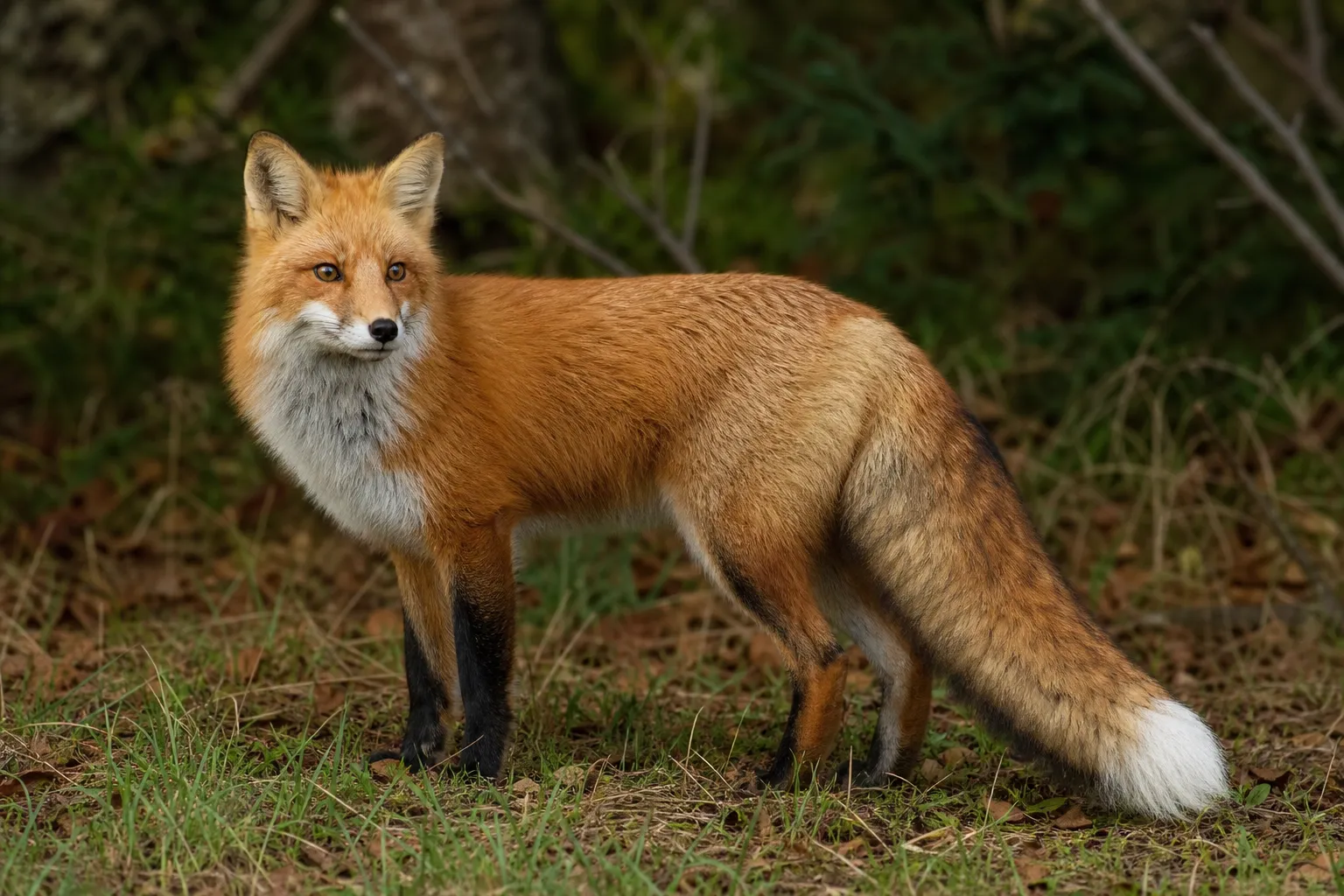
A red fox is usually easier to separate from a coyote when the tail is visible. Connecticut DEEP says red foxes are identified by a reddish coat, black legs and ears, and a long, white-tipped, bushy tail. CDFW’s Sierra Nevada red fox identification page also contrasts red foxes and coyotes by tail tip and tail length: red fox tail tip white and tail long, nearly body length, coyote tail tip black and tail much shorter than the body.
Tail carriage can help too. Connecticut DEEP says a red fox holds its proportionally longer tail horizontally behind the animal when running. By contrast, North Carolina Wildlife Resources Commission says the coyote tail is usually carried pointing down.
A gray fox is not just a dull red fox. North Carolina Wildlife Resources Commission describes gray fox coloration as salt-and-pepper gray with a dark streak down the back and along the top of the tail, ending in a black tail tip. That black-tipped tail can resemble a coyote clue, so check the animal’s smaller size, stouter body and shorter legs.
Ears, muzzle and posture
Coyotes have a more dog-like outline. North Carolina Wildlife Resources Commission describes them as having pointed and erect ears with a long, slender snout. In open country, that combination of taller shoulder height, longer legs and a down-carried black-tipped tail is often the fastest coyote clue.
Red foxes show a smaller frame, black legs and ears, and a long, white-tipped tail, according to Connecticut DEEP. The long tail can make a red fox look larger than it is, especially when it is stretched behind the animal while running.
Gray foxes look more compact. Connecticut DEEP describes the gray fox as somewhat stout with shorter legs than the red fox and a shorter, more cat-like snout. North Carolina Wildlife Resources Commission adds the gray fox’s dark back stripe and black tail tip, which are useful when the animal is seen from the rear or side.
Tracks: useful, but not enough by themselves
Tracks can support an identification, but they should not be the only clue. Connecticut DEEP’s snow-tracking guide says dog-like tracks are oval with claw marks and may belong to coyote, red fox, gray fox or dog. That overlap is the reason tracks work best when combined with body size, gait, tail clues and location.
For coyote tracks, the Florida Fish and Wildlife Conservation Commission says they are narrower and more elongated than dog tracks.
For gray foxes, North Carolina Wildlife Resources Commission says their tracks are similar to domestic cat tracks, except gray fox tracks have claw marks. That can be a helpful clue in good substrate, but the animal’s coat pattern and tail are still stronger field marks when visible.
Scat clues
Scat can also help, especially along trails, field edges and travel routes, but it is not a stand-alone answer.
The U.S. Fish and Wildlife Service’s DeSoto National Wildlife Refuge activity booklet lists coyote scat at 3/4 inch across by 3 inches long, and red fox scat at 2/3 inch across by 2 inches long. These are useful comparison sizes, but diet and condition can change appearance, so use scat as supporting evidence rather than final proof.
Sounds: yips, howls, barks and screams
Coyotes are vocal animals. The Minnesota DNR says coyotes howl or bark alone or in groups, and their yipping can carry for miles. Hinterland Who’s Who describes the coyote’s best-known sound as a yelping and howling cry, and says coyotes can also bark, growl, wail and squeal.
Red foxes sound different from many people expect. The Minnesota DNR says red foxes bark much like dogs and sometimes scream when alarmed. Connecticut DEEP says common red fox reports involve a raspy, single-syllable scream or bark repeated every 3 to 10 seconds.
The fact that a sound is loud does not automatically make it a coyote. Red fox screams and barks can be startling, while coyote yipping and howling may sound like more animals than are visible.
Habitat, range and diet
Coyotes use a broad menu of foods. North Carolina Wildlife Resources Commission describes coyotes as opportunistic feeders and lists fruit, berries, rodents, rabbits, birds, snakes, frogs and insects among their primary foods. Hinterland Who’s Who says coyotes in Canada have spread north, west and east beyond their traditional prairie habitats, including into the boreal forest, mountains, Ontario, Quebec and the Atlantic provinces.
Red foxes often use edges. Connecticut DEEP says red foxes prefer a mix of forest and open fields and use the transition zone between those habitats as hunting areas. Hinterland Who’s Who describes red foxes as one of Canada’s most widespread mammals and says they occur in all provinces and territories. Connecticut DEEP describes the red fox as an omnivore that eats small mammals, birds, eggs, amphibians, reptiles, plant foods, insects, carrion and garbage.
Gray foxes are more associated with cover. Connecticut DEEP says preferred gray fox habitats are deciduous woodlands, thickets and swampy areas. Canada’s COSEWIC gray fox status report says gray fox distribution is closely associated with deciduous forest, and says gray foxes are found from south-central Canada to northern South America, with Canadian breeding populations likely limited to two parts of Ontario. Connecticut DEEP lists gray fox foods including rabbits, mice, voles, chipmunks, squirrels, fruits, insects, birds and eggs, carrion, corn, amphibians and reptiles.
For a deeper look at fox diet, see What Do Foxes Eat?.
Coyote and fox competition
Coyotes and foxes can overlap, but wildlife agencies describe important differences in how the species respond to one another. North Carolina Wildlife Resources Commission says red foxes are sometimes displaced as coyotes expand, while gray fox populations do not seem to be affected.
Connecticut DEEP says coyotes likely do not tolerate foxes within their territories, and that several studies found red foxes only occur in gaps between larger coyote territories. Gray foxes have another natural-history advantage in thick cover: the Florida Fish and Wildlife Conservation Commission says gray foxes are sometimes called tree foxes and are among the few members of the dog family capable of climbing trees. The Minnesota DNR says the gray fox climbs trees to catch prey and escape predators.
Quick identification table
| Clue | Coyote | Red fox | Gray fox |
|---|---|---|---|
| Overall size | Larger than foxes, CDFW lists 10 to 35 pounds and 18 to 23 inches at the shoulder | Connecticut DEEP lists 7 to 15 pounds | Pennsylvania Game Commission lists 7 to 13 pounds |
| Build | Medium-dog size, pointed erect ears, long slender snout, according to North Carolina Wildlife Resources Commission | Smaller canid with black legs and ears, according to Connecticut DEEP | Somewhat stout, shorter-legged than red fox, with a shorter cat-like snout, according to Connecticut DEEP |
| Common color | Florida FWC says usually grayish-brown, sometimes black, often with white chest hair | Connecticut DEEP says reddish coat with black legs and ears | North Carolina Wildlife Resources Commission says salt-and-pepper gray with a dark streak down the back and tail |
| Tail tip | Black-tipped, usually carried down, according to North Carolina Wildlife Resources Commission | White-tipped, long and bushy, according to Connecticut DEEP | Black-tipped, with dark stripe along top of tail, according to North Carolina Wildlife Resources Commission |
| Running tail clue | Usually carried pointing down, according to North Carolina Wildlife Resources Commission | Held horizontally behind the animal when running, according to Connecticut DEEP | Use size, gray coat and dark tail stripe as added clues |
| Track clue | Florida FWC says narrower and more elongated than dog tracks | Connecticut DEEP says dog-like tracks are oval with claw marks and may belong to red fox, gray fox, coyote or dog | North Carolina Wildlife Resources Commission says similar to domestic cat tracks, but with claw marks |
| Scat clue | U.S. Fish and Wildlife Service lists 3/4 inch across by 3 inches long | U.S. Fish and Wildlife Service lists 2/3 inch across by 2 inches long | Use scat as supporting evidence rather than final proof |
| Voice | Minnesota DNR says howls, barks and yips that can carry for miles | Minnesota DNR says dog-like barks and sometimes screams when alarmed | No vocal clue is needed if size, coat and tail pattern are clear |
| Habitat context | Opportunistic feeder, with broad foods listed by North Carolina Wildlife Resources Commission | Connecticut DEEP says mix of forest and open fields, especially edge habitat | Connecticut DEEP says deciduous woodlands, thickets and swampy areas |
Bottom line
If you get only a quick look, sort by size and tail first. A taller, leggier animal with a black-tipped tail carried down is more consistent with a coyote. A smaller reddish animal with black legs and a long white-tipped tail is more consistent with a red fox. A small, stout, gray animal with a dark back stripe and black-tipped tail is more consistent with a gray fox.
For hunting decisions, nuisance questions or species reporting, confirm identification guidance and current rules with the state, provincial or territorial wildlife agency where you are located.
Frequently asked questions
What is the easiest way to tell a coyote from a fox?
Start with size and tail. The California Department of Fish and Wildlife says coyotes are larger than foxes. Red foxes have a long white-tipped tail, while coyotes have a black-tipped tail that is much shorter than the body.
How do I tell a red fox from a gray fox?
Connecticut DEEP says red foxes have a reddish coat, black legs and ears, and a long white-tipped bushy tail. North Carolina Wildlife Resources Commission describes gray foxes as salt-and-pepper gray with a dark streak down the back and tail ending in a black tail tip.
What does coyote scat look like compared with fox scat?
A U.S. Fish and Wildlife Service activity booklet lists coyote scat at 3/4 inch across by 3 inches long and red fox scat at 2/3 inch across by 2 inches long. Diet and condition can change appearance, so use scat as supporting evidence rather than final proof.
Do coyotes affect foxes?
North Carolina Wildlife Resources Commission says red foxes are sometimes displaced as coyotes expand, while gray fox populations do not seem to be affected. Connecticut DEEP says red foxes may occur in gaps between larger coyote territories.
Can gray foxes climb trees?
Yes. The Florida Fish and Wildlife Conservation Commission says gray foxes are sometimes called tree foxes and are among the few dog-family members capable of climbing trees. The Minnesota DNR says they climb to catch prey and escape predators.
Sources
- California Outdoors Q&A: How can I tell the difference between a coyote, fox and a wolf?, California Department of Fish and WildlifeOfficial source. Accessed October 23, 2026.
- Sierra Nevada Red Fox Identification, California Department of Fish and WildlifeOfficial source. Accessed October 23, 2026.
- Coyote, North Carolina Wildlife Resources CommissionOfficial source. Accessed October 23, 2026.
- Gray Fox, North Carolina Wildlife Resources CommissionOfficial source. Accessed October 23, 2026.
- Land Mammals: Coyote, Florida Fish and Wildlife Conservation CommissionOfficial source. Accessed October 23, 2026.
- Land Mammals: Gray Fox, Florida Fish and Wildlife Conservation CommissionOfficial source. Accessed October 23, 2026.
- Coyote, Minnesota Department of Natural ResourcesOfficial source. Accessed October 23, 2026.
- Red Fox, Minnesota Department of Natural ResourcesOfficial source. Accessed October 23, 2026.
- Gray Fox, Minnesota Department of Natural ResourcesOfficial source. Accessed October 23, 2026.
- Red Fox, Connecticut Department of Energy and Environmental ProtectionOfficial source. Accessed October 23, 2026.
- Gray Fox Fact Sheet, Connecticut Department of Energy and Environmental ProtectionOfficial source. Accessed October 23, 2026.
- Snow Tracking, Connecticut Department of Energy and Environmental ProtectionOfficial source. Accessed October 23, 2026.
- Pocket Guide to Maine Animal Tracks, Maine Department of Inland Fisheries and WildlifeOfficial source. Accessed October 23, 2026.
- Foxes, Pennsylvania Game CommissionOfficial source. Accessed October 23, 2026.
- Middle Creek Wildlife Management Area: Scatology, Pennsylvania Game CommissionOfficial source. Accessed October 23, 2026.
- DeSoto NWR Junior Refuge Manager Activity Booklet, U.S. Fish and Wildlife ServiceOfficial source. Accessed October 23, 2026.
- Coyote, Hinterland Who’s WhoOfficial source. Accessed October 23, 2026.
- Red Fox Fact Sheet, Hinterland Who’s WhoOfficial source. Accessed October 23, 2026.
- COSEWIC Assessment and Status Report on the Gray Fox Urocyon cinereoargenteus in Canada, 2015, Government of CanadaOfficial source. Accessed October 23, 2026.