Fixed-Blade vs Folding Hunting Knives: Strength, Safety and Field Use
Fixed blade hunting knives use a non folding structure and avoid a folder’s pivot and lock. Folding hunting knives close with the grip enclosing the blade, while their pivots, locks, and handle slots call for careful cleaning and safety checks.
By RaiS. Reviewed by RaiS. Published . 7 min read.
Research and drafting were assisted by AI. RaiS checked the facts against the sources below and approved this page.
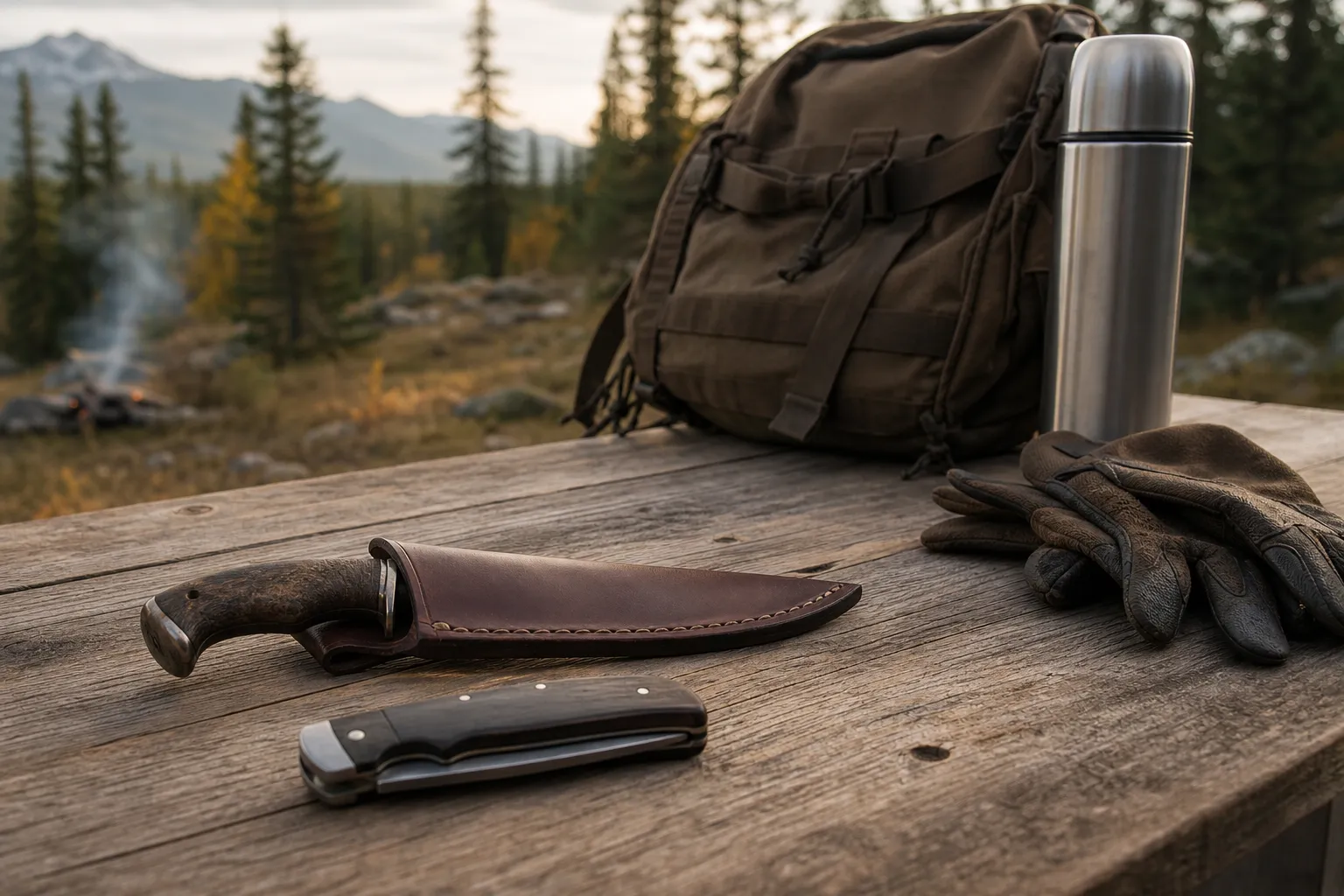
Fixed-blade and folding hunting knives differ mainly in structure. A fixed blade is a non folding knife, often carried in a sheath. A folding knife rotates around a pivot and closes with the blade enclosed by the grip. For field use, fixed blades are usually simpler to clean and more direct to carry in a sheath, while folders keep the blade enclosed when closed.
Quick comparison
| Feature | Fixed-blade hunting knife | Folding hunting knife |
|---|---|---|
| Basic structure | A fixed, non folding blade | A blade that closes into the grip |
| Moving parts | No folding pivot | 4-H states that folding knives have a pivot pin for opening and closing |
| Strength focus | Buck describes full-tang knives as stronger, but somewhat heavier | Strength depends on pivot, handle structure, lock design, and condition |
| Carry | 4-H describes belt knives as sheath-carried hunter workhorse knives | Closed carry with the blade enclosed by the grip |
| Safety when carried | 4-H says the sheath protects the carrier from injury and protects the blade | 4-H says the grip encloses the blade when a folder is closed |
| Cleaning | Simple exterior access to the blade | Pivot, lock areas, and handle interiors can require careful cleaning |
| Field tasks | Field dressing, skinning, caping, quartering, camp cutting, and light utility work | Similar light and controlled cutting tasks, depending on blade size and lock condition |
For more detail on blade shapes and general field tasks, see our guide to hunting knife types. For blade material terminology, see knife steel types.
Structural difference: fixed blade vs folder
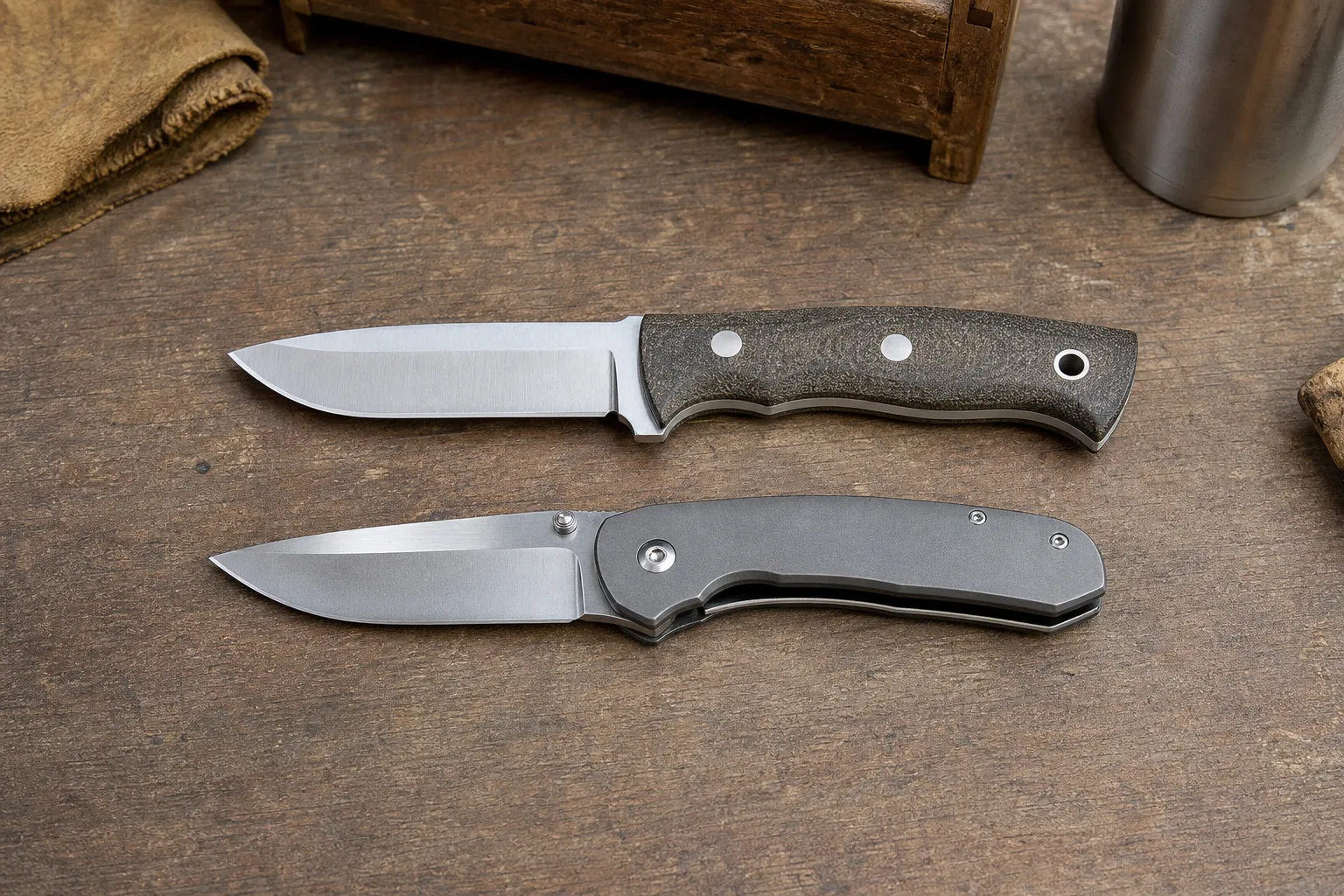
A fixed-blade hunting knife does not fold. Buck Knives describes fixed blades as one solid piece of metal that can have tang or full-tang construction at the handle end.
A folding knife closes into its handle. The 4-H Hunting and Outdoor Skills manual states that all folding knives have a pivot pin that allows the knife to open and close while keeping the parts together, and that the grip encloses the blade when closed.
Tang construction on fixed blades
Tang construction is one of the biggest structural differences between fixed blades and folders. Buck Knives describes tang construction as a taper that disappears into the handle, while full-tang construction has a solid metal frame with handle slabs attached on each side.
Buck also states that full-tang knives are stronger, but a little heavier, than other tang construction. The 4-H Hunting and Outdoor Skills manual describes fixed-blade handles as often being attached to the tang with one or more rivets, or secured by a cap or pommel.
That does not mean every fixed blade is identical. A hunter comparing fixed blades should look at how the handle is attached, whether the tang is full or tapered, and how the knife maker describes the construction.
Folding knife pivots, liners, spacers, and locks
A folder adds a pivot and handle structure around the blade. Benchmade’s folder anatomy material identifies parts such as barrel spacers, and says barrel spacers support the rear end of the handle and allow open-back construction, which helps cleaning and maintenance.
Locks vary by design. Buck Knives describes a lockback folder as using a rocker bar that locks against the blade when opened and releases when the rocker on the handle is pressed. Buck defines a liner lock as a folding knife that locks open by means of a tensioned metal liner inside the handle. Buck also explains that a frame lock works like a liner lock, but the locking mechanism is a section of the handle frame.
Not all folders lock. Buck says folding knives have different opening and closing methods, and that not all folding knives lock.
Strength and heavy field use
For a hunting reader, the practical comparison is simple: a fixed blade avoids the pivot and lock mechanism entirely, while a folder depends on those parts working correctly. Buck warns not to use a locking blade if the lock will not lock open, and to make sure the lock is working before using it. Spyderco also warns that dirt buildup in a folding knife’s locking notch can prevent the lock lug from seating completely and compromise proper lock function.
Carry and sheath safety
The 4-H Hunting and Outdoor Skills manual describes belt knives as workhorse knives of the hunter, usually heavier than pocket knives and carried in sheaths. It says a sheath keeps the knife securely in place, protects the blade from damage, and protects the person carrying the knife from injury.
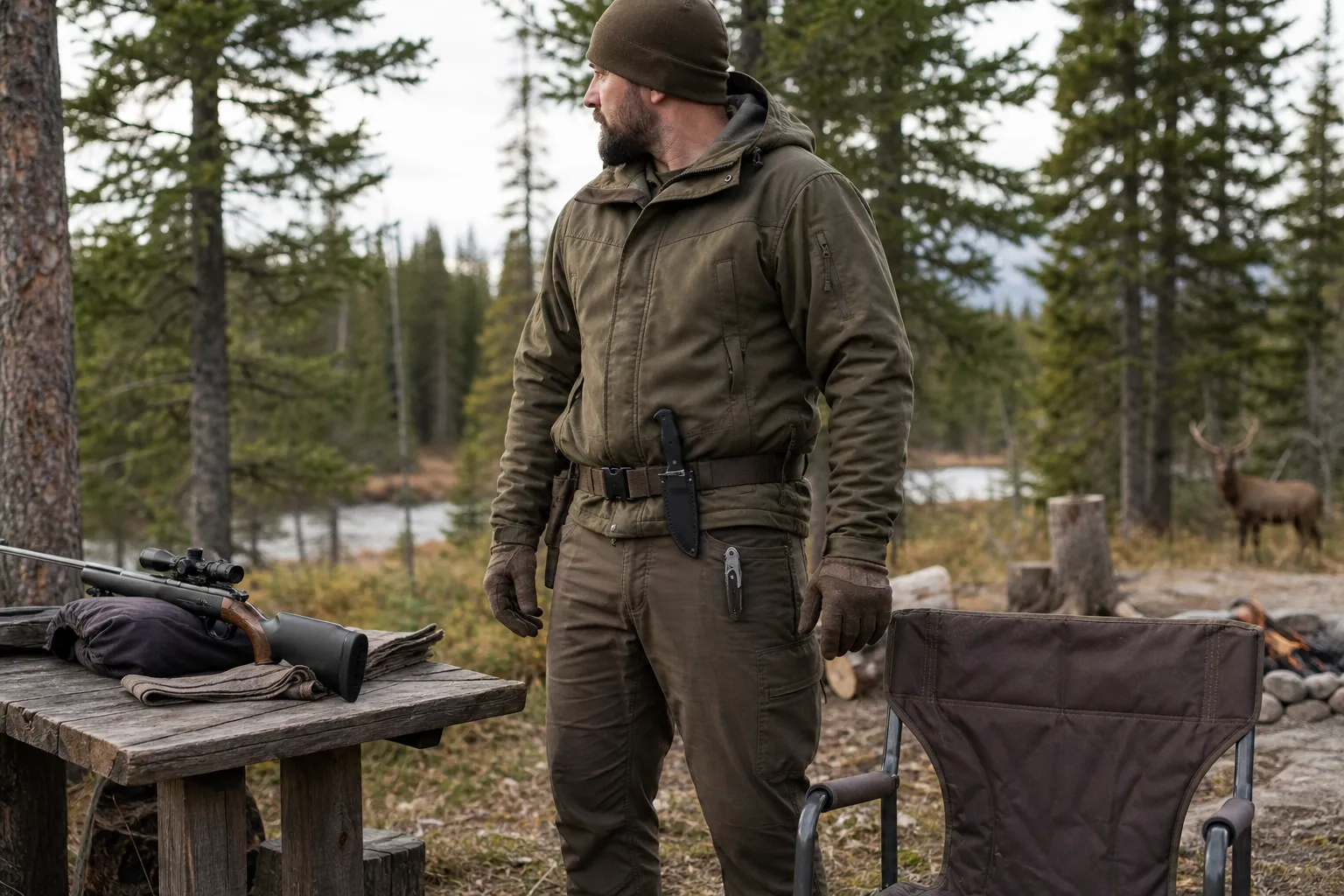
4-H also recommends that a sheath be heavy enough to resist cutting and puncture, and to prevent the blade from penetrating the sheath. That matters because a fixed blade is always exposed unless it is in a sheath or dedicated storage.
Folders take a different approach. The blade folds into the handle, and 4-H states that the grip encloses the blade when the knife is closed. That makes folders convenient for closed carry, but the user still has to open, use, clean, and close the knife with attention to the pivot and lock.
Blade length and control in the field
Hunter education material favors short, controllable blades for hunting tasks. The 4-H Hunting and Outdoor Skills manual states that there is little need for a hunter’s blade longer than about three to four inches, and that shorter blades are easier to handle and more convenient to carry.
This point applies to both fixed blades and folders. The comparison is not simply “larger equals better.” Published hunter education guidance emphasizes control, carry convenience, and practical cutting tasks.
Cleaning access and maintenance
Fixed blades are usually simpler to wipe down because they do not have a pivot, lock notch, or handle slot.
Spyderco adds an important sheath warning: putting a soiled fixed blade back into its sheath can transfer dirt, blood, or other material into the sheath and increase corrosion risk. So a fixed blade may be simple to clean, but the sheath can become part of the maintenance problem if a dirty blade is repeatedly returned to it.
Folders can require more attention around internal areas. Water, dust, grime, or game residue can collect around the pivot, lock, and handle interior.
Open-back folder construction can help. Benchmade identifies barrel spacers as allowing open-back construction for easier cleaning and maintenance. By contrast, any folder with limited access inside the handle may take more care to clean thoroughly.
Common hunting and camp tasks
For hunting, both designs may be used for field dressing, skinning, caping, quartering, camp cutting, and light utility work. The right comparison is not a brand ranking. It is whether the knife’s structure, blade length, carry method, and cleaning access fit the job.
The 4-H Hunting and Outdoor Skills manual notes that field dressing has hazards, including sharp knives, shears, saws, bone splinters, broadheads, and broken arrow-shaft material. For step-by-step context on that task, see how to field dress a deer and how to process a deer.
Safety points that apply to both designs
Buck Knives lists basic knife safety practices that apply to fixed blades and folders: cut away from your body, do not try to catch a dropped knife, never run with a knife, and keep knives folded or sheathed when carried or stored.
Buck also warns users not to use a locking blade if the lock will not lock open. For folders, that means checking the lock before work and keeping the locking mechanism clean. For fixed blades, it means using a sound sheath and storing the knife so the edge is protected and not exposed.
A final practical point from the same safety guidance: a hunting knife should be treated as a cutting tool, not a pry bar. The comparison between fixed and folding designs should not lead to abusing either design outside its intended use.
Which design fits which use?
Choose a fixed blade when you want the simplest structure, no pivot, fast sheath access, and easier cleaning of the knife itself.
Choose a folder when an enclosed blade in the handle is a priority. 4-H notes that the handle encloses the blade when closed. The tradeoff is that pivots, lock areas, and handle interiors need attention after dirty or wet work, or wild game processing.
Before a trip, check the knife maker’s care instructions for the specific model, review current hunter education guidance for safe knife handling, and confirm any current hunting equipment or knife carry rules with the responsible state, provincial, or territorial agency.
Frequently asked questions
Do all folding hunting knives lock open?
No. Buck Knives states that not all folding knives lock.
Why are folders harder to clean?
Folders have pivots, handle slots, and lock areas that can hold water, dust, grime, or game residue. Spyderco warns that dirt in a lock notch can compromise proper lock function.
What blade length do hunter education manuals recommend?
The 4-H Hunting and Outdoor Skills manual says there is little need for a hunter’s blade longer than about three to four inches.
Is a sheath only for carrying a fixed blade?
A sheath is a safety and protection item. The 4-H Hunting and Outdoor Skills manual says a sheath keeps a belt knife secure, protects the blade from damage, and protects the person carrying the knife from injury.
Sources
- Certain Knives, U.S. International Trade CommissionOfficial source. Accessed November 15, 2026.
- How to Choose The Right Knife, Buck KnivesOfficial source. Accessed November 15, 2026.
- Kershaw 2022 Canada Catalog, Kershaw Knives, Kai USAOfficial source. Accessed November 15, 2026.
- Knife Mechanisms, Benchmade Knife CompanyOfficial source. Accessed November 15, 2026.
- Use and Care, Benchmade Knife CompanyOfficial source. Accessed November 15, 2026.
- Manual Folder Anatomy, Benchmade Knife CompanyOfficial source. Accessed November 15, 2026.
- Knife Maintenance: Simple Tips for Better Performance, SpydercoOfficial source. Accessed November 15, 2026.
- 4-H Hunting and Outdoor Skills Member Manual, Revised 2025, 4-H Shooting SportsOfficial source. Accessed November 15, 2026.
- Ontario’s Hunter Education Manual, Ontario Hunter Education ProgramOfficial source. Accessed November 15, 2026.
- Proper Field Dressing, Penn State ExtensionOfficial source. Accessed November 15, 2026.