Monocular vs Binoculars: Field of View, Depth Perception and Pack Size
Monoculars are usually the compact, one eye choice when pack size matters. Binoculars use both eyes, which can improve comfort during longer wildlife viewing sessions.
By RaiS. Reviewed by RaiS. Published . 9 min read.
Research and drafting were assisted by AI. RaiS checked the facts against the sources below and approved this page.
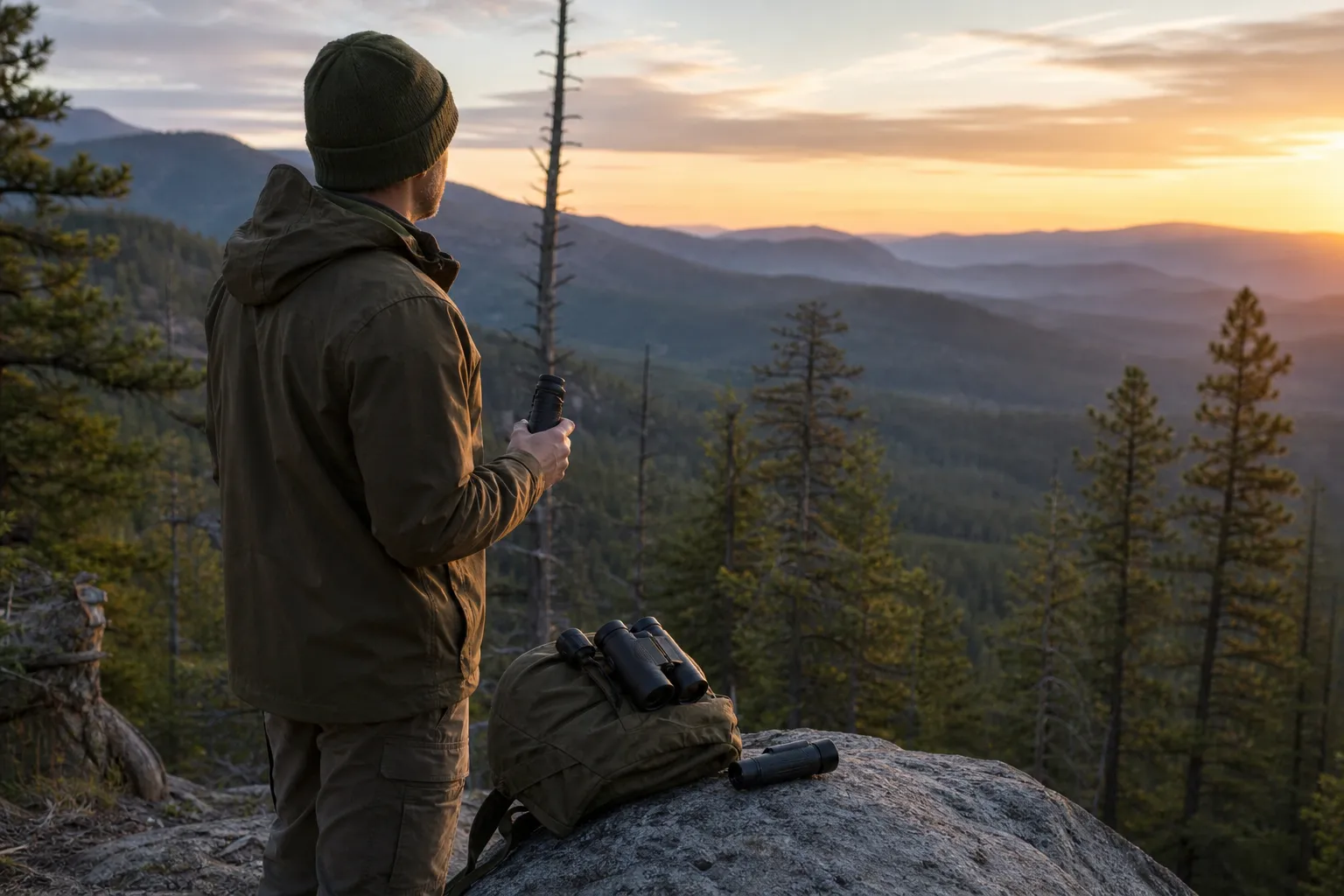
A monocular is usually the better choice when you need the smallest, lightest handheld optic for quick looks. Binoculars are usually the better choice when you plan to glass for longer periods, follow moving birds or wildlife, or make the most of two eye viewing. The main differences are simple: a monocular uses one eye, while binoculars use both eyes, and that changes comfort, steadiness, fit and pack size.
Quick comparison
| Factor | Monocular | Binoculars |
|---|---|---|
| Eyes used | One eye, according to Vision Australia | Both eyes, according to Vision Australia |
| Pack size | Vision Australia says monoculars are lighter and smaller than binoculars | Vision Australia says binoculars are heavier |
| Depth judgment | Does not provide two eye stereoscopic viewing | Binocular instruments have the potential for stereoscopic viewing |
| Extended viewing comfort | A Cambridge University Press chapter says monocular viewing usually requires one eye to be closed, which may lead to fatigue or discomfort during extended viewing | The same chapter says binocular viewing uses both eyes and is probably far less fatiguing |
| Field of view | Model specific | Model specific |
| Common fit issue | Single barrel | Binoculars may list interpupillary distance |
| Best fit in the field | Quick scouting and packing light | Birding, wildlife observation and longer glassing sessions |
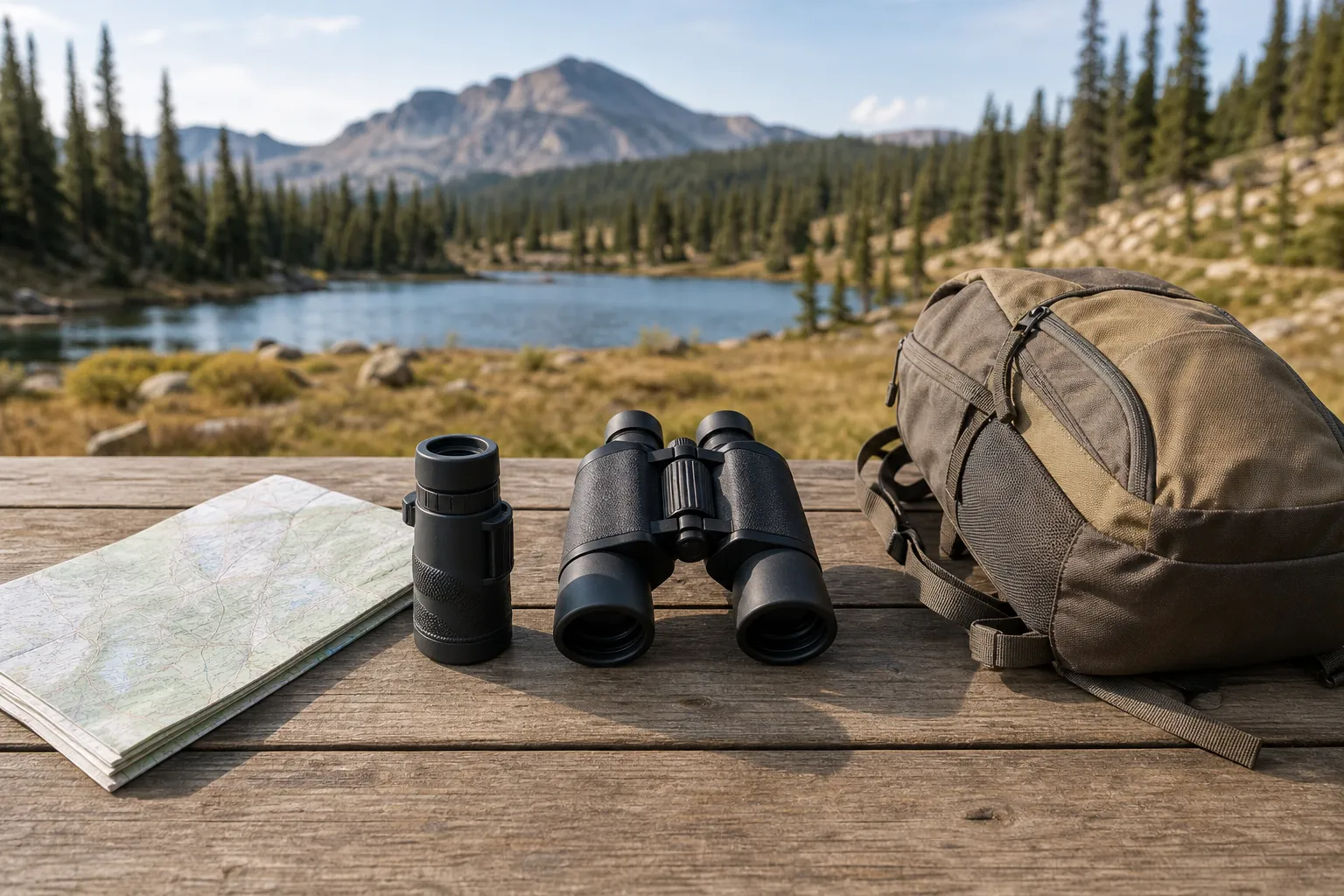
One eye versus two eyes
Vision Australia describes monoculars as optics for use with one eye. It describes binoculars as optics for use with both eyes, and notes that binoculars may be preferable if both eyes have useful vision.
That difference matters because binocular instruments can have the potential for stereoscopic viewing. A Cambridge University Press chapter notes that binocular instruments have the potential for stereoscopic viewing.
For a hiker or hunter, this does not mean every binocular is automatically better than every monocular. It means the two eye viewing experience can feel more natural during longer sessions when both eyes are being used effectively.
Depth perception and comfort
Stereoscopic viewing is one reason to choose binoculars for extended wildlife observation. A Cambridge University Press chapter notes that binocular instruments have the potential for stereoscopic viewing.
Comfort is the other major difference. The Cambridge chapter says monocular viewing usually requires one eye to be closed, which may lead to fatigue or discomfort, especially during extended viewing periods. It says binocular viewing uses both eyes and is probably far less fatiguing.
That makes binoculars a natural fit for birders and wildlife watchers who may spend long stretches scanning, waiting and following movement. A monocular can still work well for short checks, but the one eye viewing style is less suited to long, steady observation.
Field of view is not automatically better in one category
Field of view is model specific. Nikon defines real field of view as the angle of the visible field seen without moving the binoculars. For field use, a wider field can make it easier to find and follow a moving animal or bird.
Nikon says binoculars with a wider field of view are advantageous for locating fast moving wild birds within the viewfield. Audubon similarly says birding binoculars need enough field of view to locate birds rapidly and follow them in flight.
The important comparison is not simply “monocular versus binoculars.” It is the field of view listed for the exact model. Vortex lists the Solo 8x36 monocular with a 7.5 degree angular field of view and 393 feet at 1,000 yards. Vortex lists the Crossfire HD 8x42 binocular with the same 7.5 degree angular field of view and 393 feet at 1,000 yards.
Those two Vortex examples show why category alone does not answer the field of view question. A binocular can be wide, a monocular can be wide, and a higher magnification version of the same family can be narrower.
Magnification, shake and finding the subject
Magnification affects how easy an optic is to use by hand. Vision Australia states that as magnification increases, field of view decreases. Nikon USA gives the same birding and wildlife watching tradeoff, saying higher magnification generally narrows field of view.
Vortex specifications show that tradeoff within one binocular family. The Crossfire HD 8x42 is listed with a 7.5 degree angular field of view and 393 feet at 1,000 yards. The Crossfire HD 10x42 is listed with a narrower 6.2 degree angular field of view and 325 feet at 1,000 yards.
Audubon adds another practical point: magnification also magnifies hand movement. Audubon says binoculars that magnify an image eight times also magnify small hand movements eight times, while 10 power binoculars magnify those movements ten times.
For birding, Audubon says most birders prefer 7x or 8x binoculars because they are bright and have a wide field of view, making it easier to find birds and follow them in flight. Nikon USA also says lower magnification gives a wider field of view and makes objects easier to locate.
If you are new to handheld optics, this is one reason many general wildlife watchers start by looking at moderate magnification instead of the highest number on the box. For more on how markings such as 8x42 are read, see What the Numbers on Binoculars Mean.
Objective lens, brightness and exit pupil
The objective lens is the front lens. Nikon says that, at the same magnification, a larger objective diameter gives greater light collecting power, which can produce a brighter image, but large objective lenses also make binoculars heavier and larger.
That is the central tradeoff for hikers and backcountry hunters. A larger optic may be easier to look through in dimmer conditions, but it takes more space and weight in the pack. A smaller optic is easier to carry, but the specifications may give up some low light performance.
Nikon defines exit pupil as objective diameter divided by magnification. Nikon also says a larger exit pupil makes the viewfield brighter, especially in dark situations and astronomical observation. If two optics have the same magnification but different objective diameters, the larger objective produces the larger exit pupil by Nikon’s formula.
For a fuller explanation of that bright circle you see behind an eyepiece, see Exit Pupil Explained.
Eye relief and eyeglasses
Eye relief matters for both monoculars and binoculars, especially if you wear glasses. Nikon defines eye relief as the distance from the eyepiece lens surface to the eyepoint. Nikon says that when you look through binoculars from the eyepoint, you can obtain the whole field of view without vignetting.
Nikon also says binoculars with eye relief of 15 mm or longer can let eyeglass wearers see the field of view without removing their glasses. This is a specification worth checking before choosing any handheld optic.
Vortex lists the Crossfire HD 8x42 binocular with 17.0 mm of eye relief. Vortex lists the Crossfire HD 10x42 binocular with 15.0 mm of eye relief. Nikon lists the 7x15 HG Monocular with 12.0 mm of eye relief. Nikon USA lists the Mikron 7x15M CF compact binocular with 10 mm of eye relief.
Those examples are not rankings. They simply show that eye relief varies by model, so it should be checked alongside magnification, objective diameter, field of view and weight. For background, see Eye Relief Explained.
Pack size and weight examples
Monoculars often win on pack size because they use one optical barrel instead of two. Vision Australia says monoculars are more portable than binoculars because they are lighter and smaller. It also says binoculars are heavier and can be more difficult to use and keep steady in the hands.
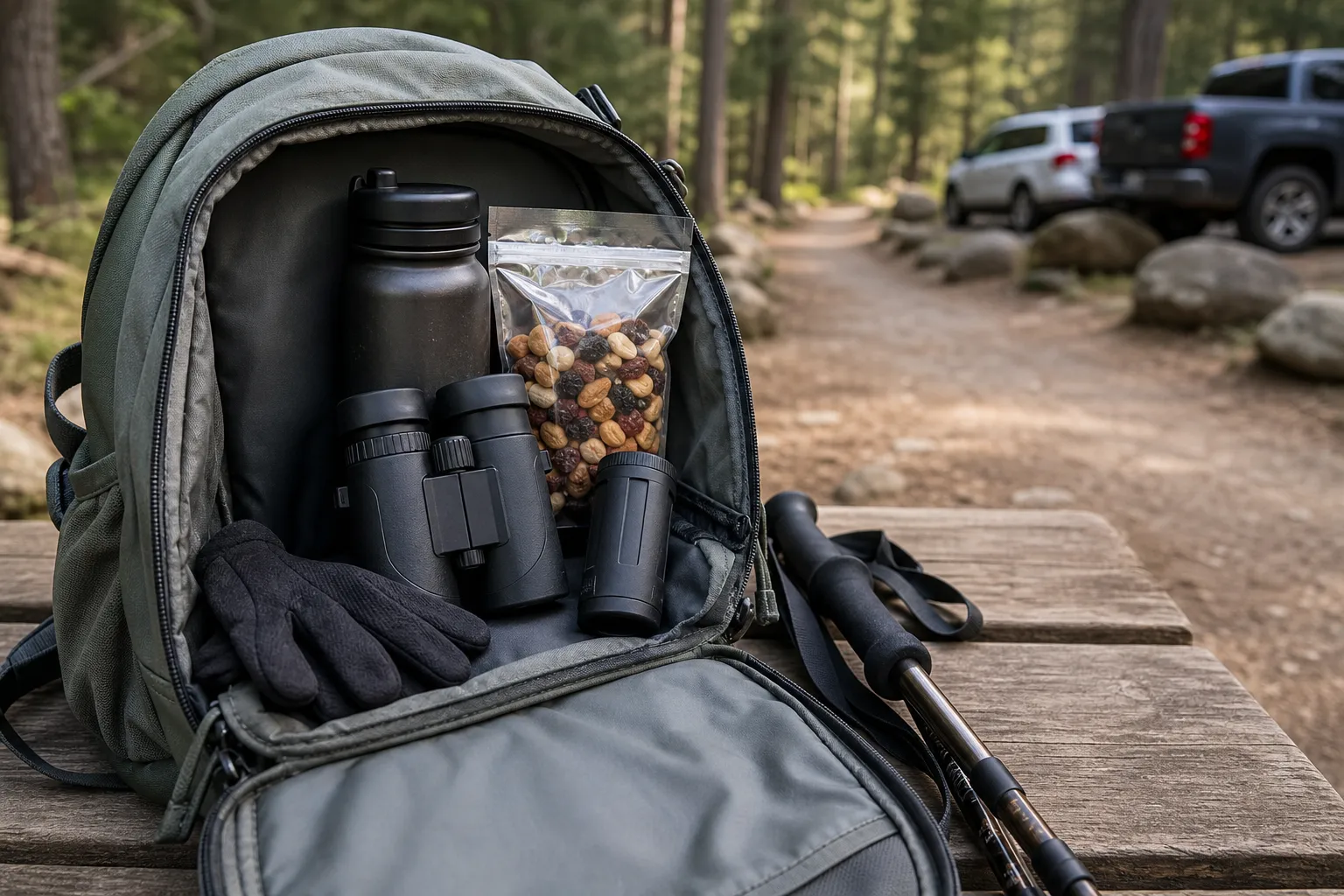
Published specifications show the size difference clearly:
| Model example | Type | Key specs from manufacturer |
|---|---|---|
| Vortex Solo 8x36 | Monocular | Vortex lists 8x36, 9.7 ounces, 4.9 inches long, 7.5 degree field of view and 393 feet at 1,000 yards |
| Vortex Crossfire HD 8x42 | Binocular | Vortex lists 23.8 ounces, 6.2 inches high, 5.2 inches wide, 7.5 degree field of view and 393 feet at 1,000 yards |
| Nikon 7x15 HG Monocular | Monocular | Nikon lists 75 g, 115 m field of view at 1,000 m and dimensions of 71 mm by 30 mm by 30 mm |
| Nikon Mikron 7x15M CF | Binocular | Nikon USA lists 135 g, 122 m field of view at 1,000 m and 56 mm to 72 mm interpupillary distance |
The Vortex pair is especially useful because the Solo 8x36 monocular and Crossfire HD 8x42 binocular list the same angular and linear field of view, while the binocular is much heavier. The Nikon compact examples show the same general direction: the listed 7x15 monocular weighs less than the listed 7x15 compact binocular.
Fit and setup differences
A monocular has one optical path. A binocular has two, so fit between the eyes matters. Nikon USA lists the Mikron 7x15M CF compact binocular with an interpupillary distance of 56 mm to 72 mm.
That interpupillary distance specification is a fit factor for binoculars.
This does not make one design universally better. It means binocular buyers should check that the listed interpupillary distance range fits them. Monocular buyers can focus more on one eye comfort, eye relief, field of view, magnification, objective diameter and weight.
Which is better for hiking?
For hiking, the choice often turns on pack weight and how often you expect to look through the optic. Vision Australia says monoculars are lighter and smaller than binoculars, and Vortex describes the Solo 8x36 monocular as an ultra compact design for people who need to pack light, including backpackers.
A monocular makes sense for quick checks from a trail, identifying a distant landmark, or carrying an optic when you might only use it briefly. Binoculars make more sense when wildlife watching is one of the main goals of the hike and you expect to scan for longer periods.
Which is better for birding and wildlife watching?
For birding and general wildlife viewing, binoculars usually have the stronger case because of comfort, two eye viewing and tracking. Audubon says most birders prefer 7x or 8x binoculars because they are bright and have a wide field of view for finding birds and following them in flight.
The U.S. Fish and Wildlife Service recommends binoculars, spotting scopes or zoom lenses to view wildlife up close without disturbing it. The National Park Service calls binoculars or a spotting scope a wildlife watching necessity and says they let viewers stay at a safe distance while wildlife acts naturally.
A monocular can still be useful for a quick look, especially when small size is the priority. But if the task is watching behavior, scanning tree lines or following birds in motion, binoculars match the guidance from birding and wildlife organizations more closely. If you need higher magnification from a fixed position, see What Is a Spotting Scope?.
Bottom line
Choose a monocular when portability is the deciding factor and your use will be quick, occasional or one eyed by preference. Choose binoculars when you want the comfort of two eye viewing, easier extended observation and a better setup for birding or wildlife watching.
Before a trip, compare the exact specifications, not just the category. Check magnification, field of view, objective diameter, exit pupil, eye relief, weight and binocular interpupillary distance. For wildlife viewing, confirm current safe distance guidance with the park, refuge or wildlife agency responsible for the area you will visit.
Frequently asked questions
Are binoculars always wider than monoculars?
No. Field of view is model specific. Vortex lists the Solo 8x36 monocular and the Crossfire HD 8x42 binocular with the same 7.5 degree angular field of view and 393 feet at 1,000 yards.
Are monoculars easier to carry?
Usually, yes. Vision Australia says monoculars are more portable than binoculars because they are lighter and smaller. Published examples from Vortex and Nikon also show monoculars with lower listed weights than comparable compact binocular examples.
Why do many birders use 7x or 8x binoculars?
Audubon says most birders prefer 7x or 8x binoculars because they are bright and have a wide field of view, which makes it easier to find birds and follow them in flight.
Does higher magnification make a handheld optic better?
Not automatically. Vision Australia and Nikon USA both state that higher magnification generally reduces field of view, and Audubon notes that higher magnification also magnifies hand movement.
What should eyeglass wearers check?
Check eye relief. Nikon says binoculars with eye relief of 15 mm or longer can let eyeglass wearers see the field of view without removing their glasses.
Sources
- Monocular and binoculars, Vision Australia. Accessed November 11, 2026.
- Visual Impairments: Determining Eligibility for Social Security Benefits, National Academies Press, via NCBI BookshelfOfficial source. Accessed November 11, 2026.
- Visual ergonomics of binocular and biocular systems, Cambridge University Press. Accessed November 11, 2026.
- Choose by specifications, How to Choose Binoculars, Nikon Consumer. Accessed November 11, 2026.
- Exit pupil, Basic Information about Binoculars, Nikon Consumer. Accessed November 11, 2026.
- Binoculars for Bird or Wildlife Watching, Nikon USA. Accessed November 11, 2026.
- Solo 8x36 Monocular, Vortex Optics. Accessed November 11, 2026.
- Crossfire HD 8x42 Binocular, Vortex Optics. Accessed November 11, 2026.
- Crossfire HD 10x42 Binocular, Vortex Optics. Accessed November 11, 2026.
- 5x15 HG Monocular/7x15 HG Monocular, Nikon Consumer. Accessed November 11, 2026.
- Mikron 7x15M CF, Nikon USA. Accessed November 11, 2026.
- The Audubon Guide to Binoculars, Audubon. Accessed November 11, 2026.
- How To Choose Your Binoculars, Audubon. Accessed November 11, 2026.
- Wildlife Viewing, U.S. Fish and Wildlife ServiceOfficial source. Accessed November 11, 2026.
- Bring This, Not That, Watching Wildlife, National Park ServiceOfficial source. Accessed November 11, 2026.