.38 Special: History, Dimensions and Common Uses
.38 Special is a rimmed revolver cartridge introduced publicly in 1902 as the .38 Smith & Wesson Special. +P ammunition is loaded to higher pressure and should be used only in firearms designed and recommended for it.
By RaiS. Reviewed by RaiS. Published . 4 min read.
Research and drafting were assisted by AI. RaiS checked the facts against the sources below and approved this page.
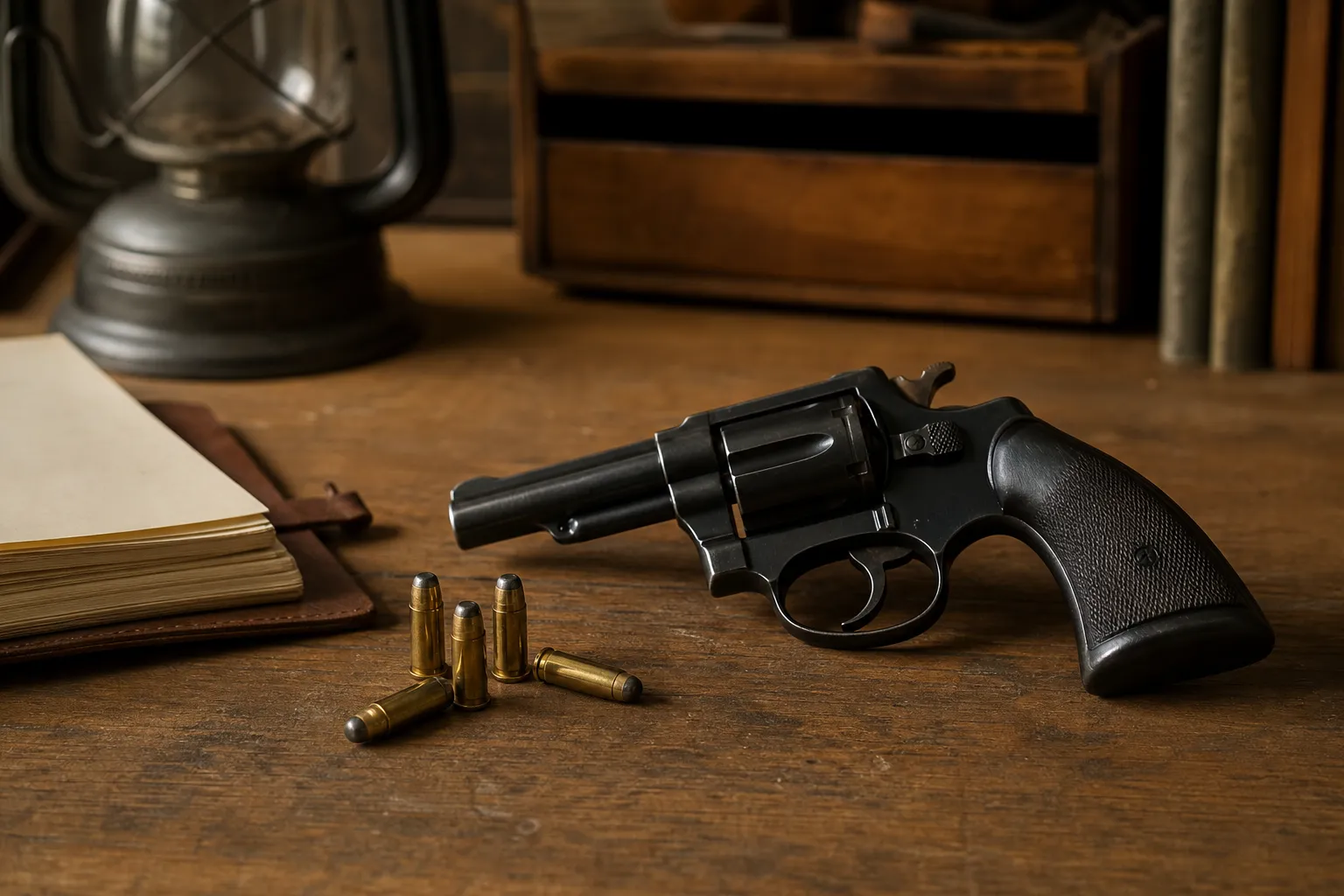
.38 Special is the modern short name for .38 Smith & Wesson Special, a rimmed revolver cartridge that grew out of Daniel B. Wesson’s work to improve the .38 Long Colt. Today, the cartridge is commonly associated with revolvers, target wadcutter loads, general range loads, and defensive category factory hollow point loads.
Origin and name
The Office of Justice Programs historical ammunition appendix says Daniel B. Wesson worked on improving the .38 Long Colt, and that this work resulted in the .38 Smith & Wesson Special cartridge. That appendix also says the cartridge initially used black powder, increased the powder charge by three grains, and increased bullet weight to what became the 158 grain bullet.
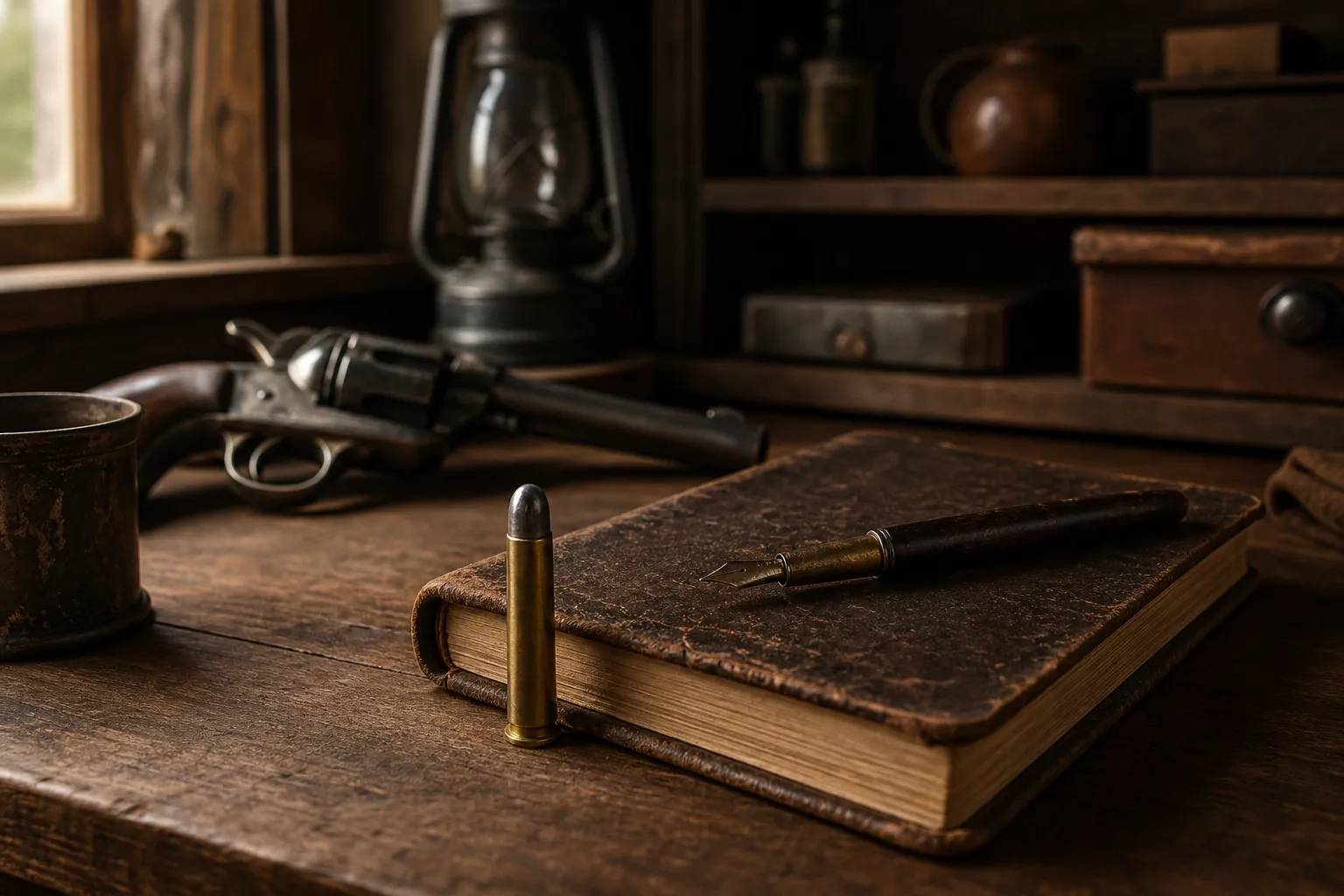
The Office of Justice Programs appendix gives 1902 as the public introduction date, stating that the Smith & Wesson Military and Police Revolver, Model 1902, and the .38 Smith & Wesson Special were introduced to the public that year.
The shortened name.38 Special, is the common modern form of .38 Smith & Wesson Special. Federal names .38 Special as a common revolver caliber, along with .357 Magnum and .44 Magnum.
American Rifleman also notes that Colt began chambering revolvers for .38 Special in 1907 with the Police Positive. The same article notes that .38 Special was not limited only to ordinary revolvers, citing the Smith & Wesson Model 52 semi-automatic target pistol made for wadcutter bullets.
Cartridge type and SAAMI dimensions
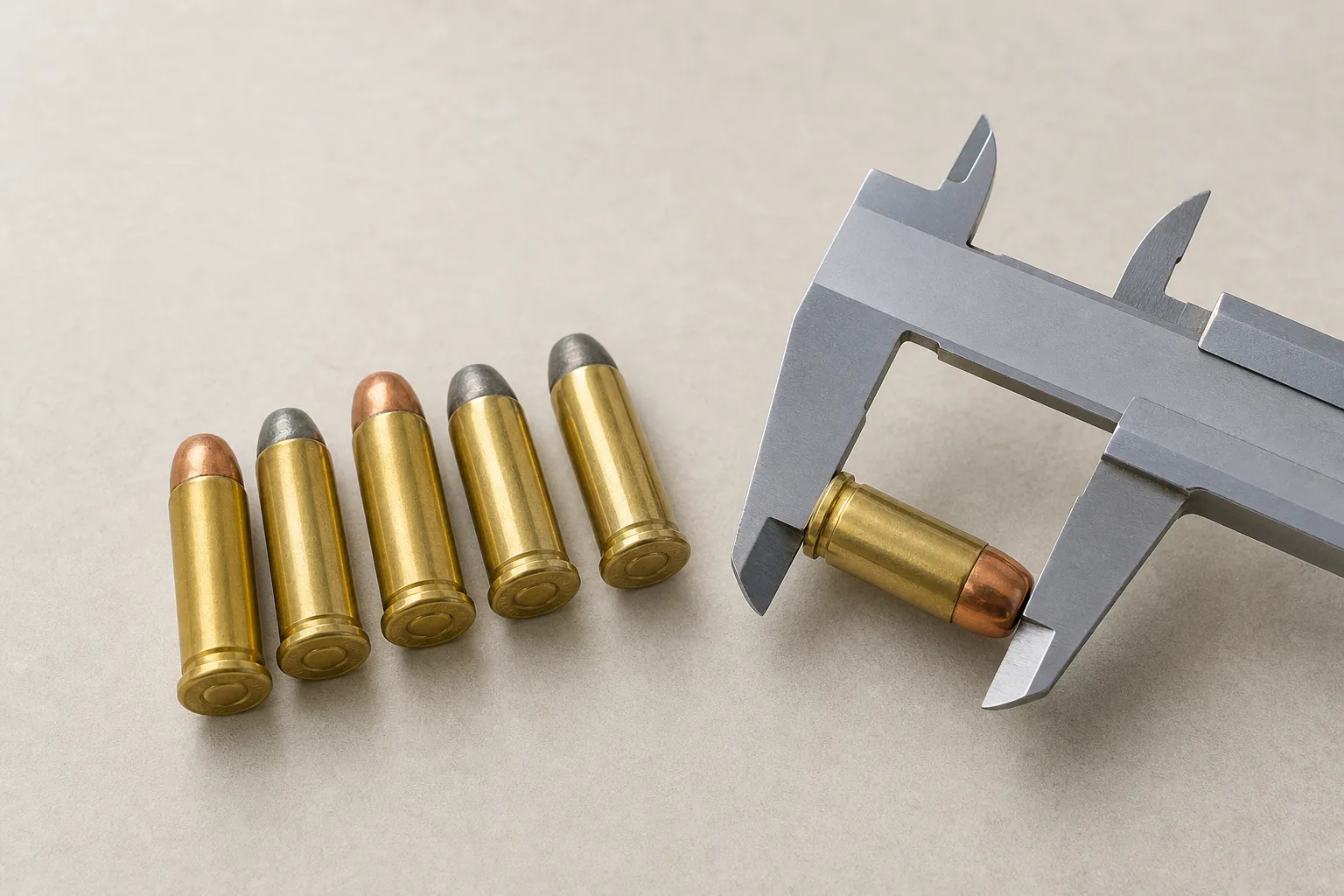
Federal describes revolver cartridges as generally rimmed.
Pressure standards and what +P means
SAAMI’s +P footnote says the ammunition is “loaded to a higher pressure,” is identified by the “+P” marking on the case headstamp, and should be used only in firearms designed and recommended for it. In plain language, +P is not just a marketing label. It describes ammunition loaded to a higher pressure.
For that reason, do not assume a .38 Special firearm can use +P ammunition unless the firearm manufacturer says that specific firearm is designed and recommended for it. For more background on the term, see our glossary entry on +P ammunition.
Relationship to .357 Magnum chambers
.38 Special and .357 Magnum are not the same cartridge.
Compatibility questions must be answered by the firearm maker, not by the cartridge name alone.
Colt’s 2020 Python operator manual provides one concrete manufacturer example. It lists .357 Magnum as ammunition for that revolver and states that .38 Special and .38 Special +P can be fired from that revolver. The same manual warns: “NEVER USE AMMUNITION NOT SPECIFICALLY DESIGNATED FOR USE IN YOUR REVOLVER.”
That Colt statement applies to that revolver manual. It should not be treated as a blanket rule for every firearm. Always use the ammunition designation in the current manual or other official manufacturer information for the exact firearm.
Common load types at a high level
.38 Special is published in several broad factory load styles. The categories below describe common examples from manufacturer data and ammunition references, not recommendations for any specific purpose.
Target wadcutter loads
Federal describes wadcutters and semi-wadcutters as target bullet styles designed to cut clean holes in paper targets. This is one of the classic .38 Special roles.
American Rifleman also notes the Smith & Wesson Model 52 semi-automatic target pistol was made for wadcutter bullets, which shows how strongly wadcutters became associated with precision target use.
General range and training loads
Manufacturer data include conventional non-expanding bullet examples. A Winchester product information sheet lists a .38 Special 130 grain FMJ flat nose load. Federal’s general handgun ammunition information identifies .38 Special as a common revolver caliber.
The Office of Justice Programs historical appendix describes the 158 grain bullet as the standard bullet weight that came out of the original .38 Smith & Wesson Special development.
For a plain-English explanation of FMJ and hollow point bullet construction, see FMJ vs hollow point bullets.
Defensive-category factory loads
Several manufacturers publish .38 Special and .38 Special +P loads in defensive category product lines. This guide is not recommending any load, only describing examples that appear in manufacturer data.
When a load is marked +P, the same +P caution applies: SAAMI says +P is loaded to higher pressure, marked +P on the case headstamp, and should be used only in firearms designed and recommended for it.
What to check before using .38 Special ammunition
Check three things in official information before choosing any .38 Special ammunition.
First, check the exact cartridge designation, including whether the ammunition is marked +P.
Second, check the firearm maker’s manual for the exact firearm. Colt’s Python manual is an example of a manual that specifically names .357 Magnum.38 Special, and .38 Special +P for that revolver, while also warning not to use ammunition not specifically designated for the revolver.
Third, check current ammunition packaging and manufacturer data. SAAMI standards, factory catalogs, and firearm manuals are the right places to confirm pressure category, bullet weight, and intended firearm compatibility.
Frequently asked questions
What is the full name of .38 Special?
.38 Special is the shortened modern name for .38 Smith & Wesson Special.
When was .38 Special introduced?
The Office of Justice Programs historical appendix says the Smith & Wesson Military and Police Revolver, Model 1902, and the .38 Smith & Wesson Special were introduced to the public in 1902.
What does .38 Special +P mean?
SAAMI says +P ammunition is loaded to a higher pressure, is marked +P on the case headstamp, and should be used only in firearms designed and recommended for it.
Can .38 Special be fired in a .357 Magnum revolver?
Only if the firearm manufacturer designates it for that revolver. Colt’s 2020 Python manual, for example, lists .357 Magnum and states that .38 Special and .38 Special +P can be fired from that revolver, while warning not to use ammunition not specifically designated for the revolver.
What are common .38 Special load types?
Manufacturer data and ammunition references include wadcutter match loads, FMJ flat nose loads, 158 grain historical examples, and defensive category hollow point examples, including some +P loads.
Sources
- SAAMI Z299.3-2022, Centerfire Pistol and Revolver, Sporting Arms and Ammunition Manufacturers’ InstituteOfficial source. Accessed November 10, 2026.
- Colt Python Revolver Operator’s Manual, ColtOfficial source. Accessed November 10, 2026.
- Ammo Basics: Handgun, Federal AmmunitionOfficial source. Accessed November 10, 2026.
- 2026 Federal Catalog, Handgun Ballistics, Federal AmmunitionOfficial source. Accessed November 10, 2026.
- Hornady Ammunition and Test Report Application Guide, HornadyOfficial source. Accessed November 10, 2026.
- Winchester 38 Special (130) FMJ Paramilitary Product Information Sheet, Olin Corporation, Winchester DivisionOfficial source. Accessed November 10, 2026.
- .38 Caliber Weapon History and Ammunition Characteristics, Office of Justice Programs, National Criminal Justice Reference Service archive. Accessed November 10, 2026.
- The .38 Special: History and Performance, American Rifleman. Accessed November 10, 2026.
- SAAMI Z299.3-2033, CFP&R Ammunition. Accessed November 10, 2026.