The .300 PRC: Hornady’s Long-Range Magnum Explained
The .300 PRC is Hornady’s beltless 30 caliber magnum cartridge built around long, heavy, high BC bullets for long range precision shooting. SAAMI accepted it in 2018, and Hornady later announced its selection for a Department of Defense extended long range sniper program.
By RaiS. Reviewed by RaiS. Published . 5 min read.
Research and drafting were assisted by AI. RaiS checked the facts against the sources below and approved this page.
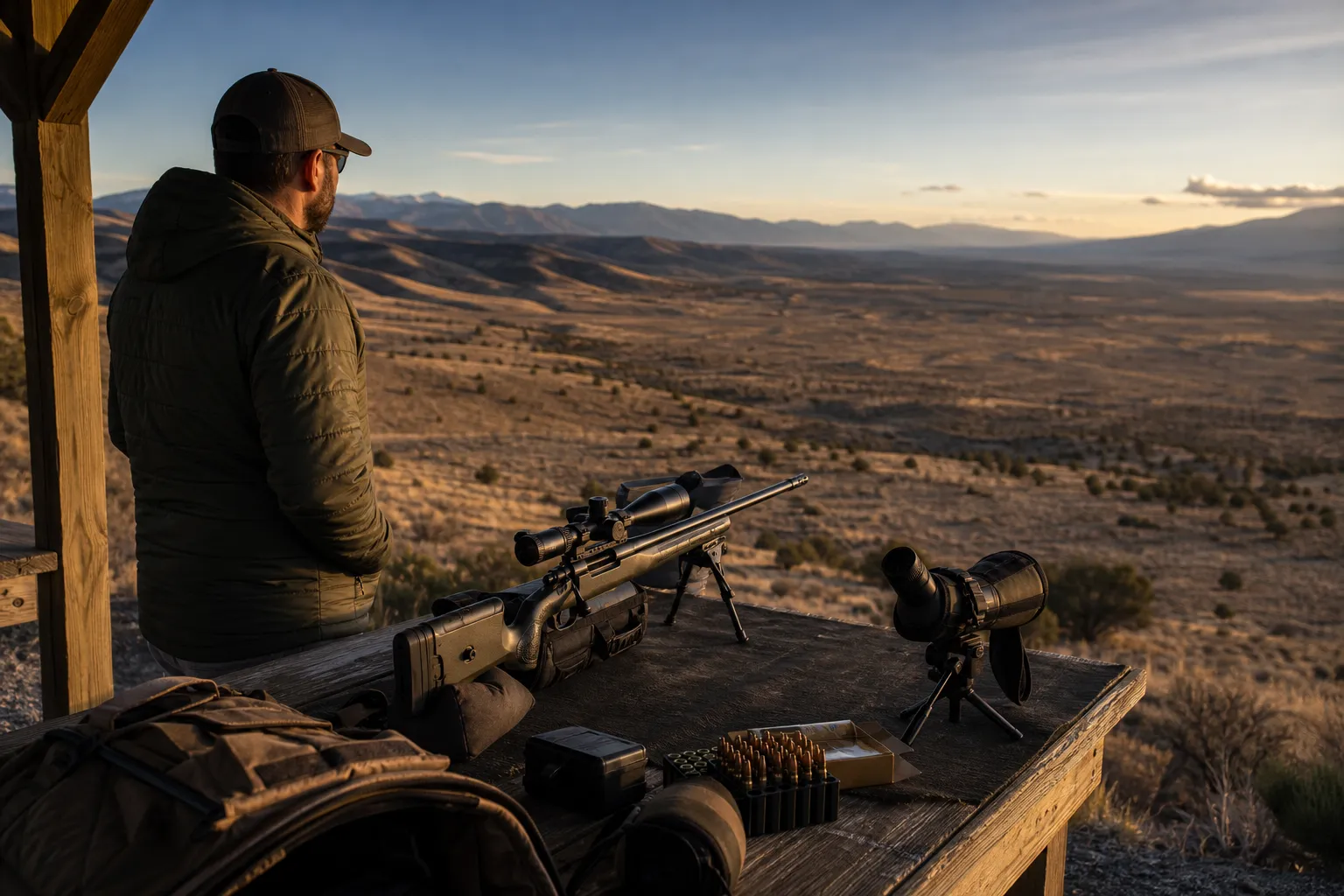
The .300 PRC, short for .300 Precision Rifle Cartridge, is Hornady’s 30 caliber magnum cartridge designed for long-range precision shooting with long, heavy, high ballistic coefficient bullets. SAAMI accepted the cartridge in 2018, and Hornady describes it as a purpose-built design rather than an older belted magnum case adapted to modern bullet shapes.
What the .300 PRC is
SAAMI announced acceptance of the .300 PRC on August 10, 2018, along with the 6.5 PRC. SAAMI also stated that both PRC cartridges were developed by Hornady Manufacturing Company.
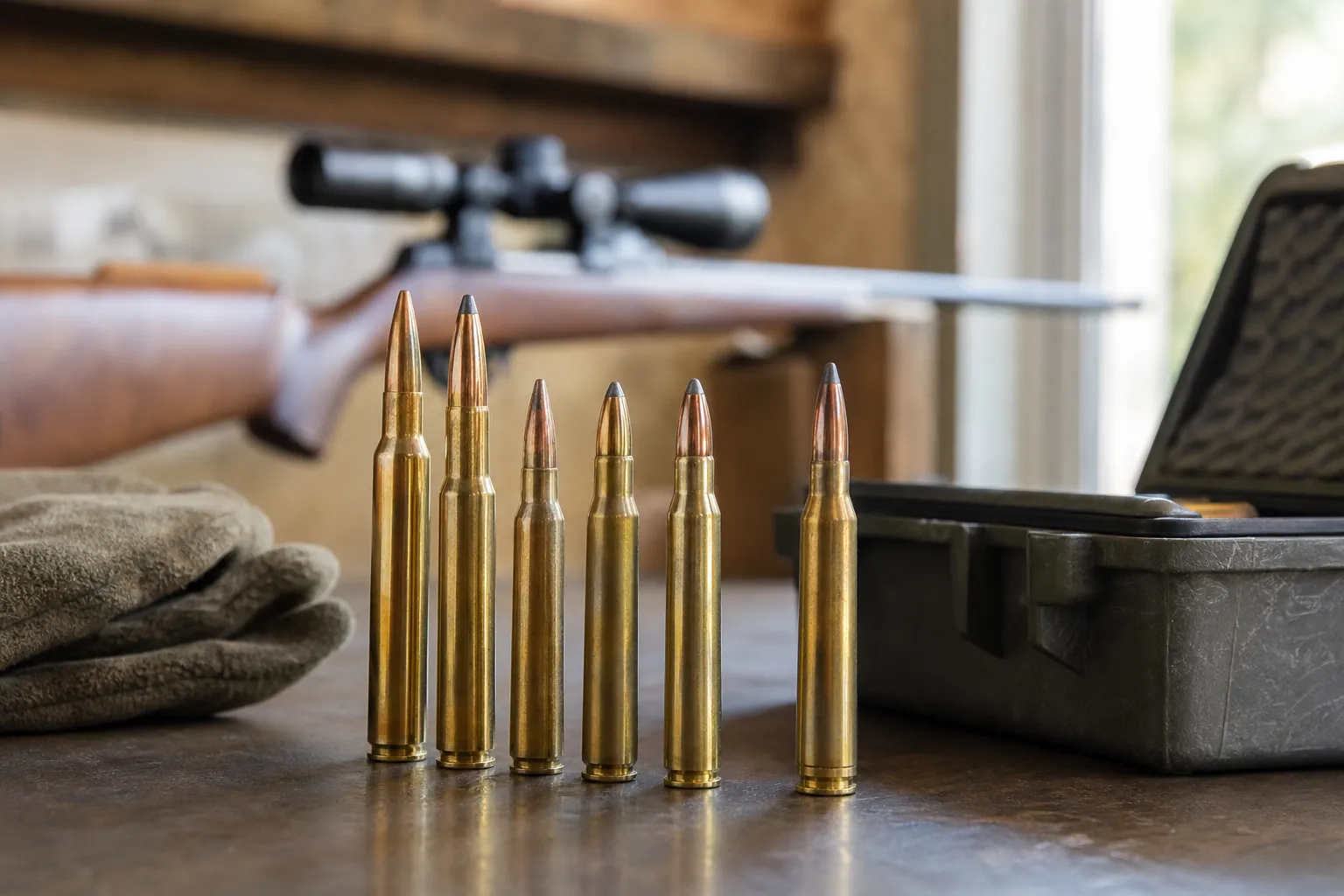
Hornady’s stated design focus for the .300 PRC is clear: heavy-for-caliber, high-performance bullets used efficiently in a long-range cartridge. SAAMI quoted Hornady as saying the primary design focus was long-range precision shooting, with chamber designs engineered around low-drag projectiles and modern propellants.
That makes the .300 PRC different in concept from many earlier magnum cartridges. Its defining idea is not just raw case capacity. It is the pairing of a beltless magnum case, a long cartridge overall length, and chamber geometry intended for long, sleek 30 caliber bullets.
For readers new to the term, ballistic coefficient is a way to describe how well a bullet resists drag in flight. Higher-BC bullets are often long for their caliber, which is why cartridge length and chamber design matter. For more background, see our guide to ballistic coefficient.
Design features
Hornady says the .300 PRC is based on the .375 Ruger cartridge case. Hornady also describes it as non-belted and using a standard .532 inch magnum bolt face.
Those points explain much of the cartridge’s layout. The .300 PRC uses a magnum-size case head and a non-belted case.
Hornady also says the .300 PRC cartridge and chamber were designed concurrently. In practical terms, Hornady presents the cartridge as a system designed around bullet alignment and long-bullet performance, not simply as a necked version of an older belted magnum.
The case design is part of that approach, but cartridge overall length is just as important. Adequate length gives the cartridge room to use long bullets without forcing the same constraints found in shorter overall-length designs.
SAAMI specifications
SAAMI’s .300 PRC drawing contains cartridge pressure and dimensional data. These are reference specifications, not handloading recipes.
Pressure specifications are reference limits. They are not suggested load levels for individual ammunition assembly, and they should not be treated as a recipe. This guide does not include powder charges, primer choices, seating-depth instructions, or other handloading data.
Factory ammunition and typical performance
Hornady currently lists .300 PRC ammunition in V-Match, Match, Outfitter, and Precision Hunter product lines. Factory loads include a 225 grain ELD Match load and a 212 grain ELD-X Precision Hunter load.
| Hornady load | Item | Box count | Test barrel | Muzzle velocity | Muzzle energy | 500-yard velocity and energy |
|---|---|---|---|---|---|---|
| .300 PRC 212 gr ELD-X Precision Hunter | 82166 | 20 | 24 inches | 2,860 fps | 3,850 ft-lb |
Hornady publishes the 212 grain ELD-X Precision Hunter load at 2,860 fps muzzle velocity and 3,850 ft-lb muzzle energy from a 24 inch test barrel.
The bullet data also shows why the .300 PRC is associated with long-range shooting. Hornady lists the 30 caliber 225 grain ELD Match bullet, at 1 in 10 inch twist, with a Mach 2.25 ballistic coefficient of 0.777 G1 and 0.391 G7. Hornady lists the 30 caliber 212 grain ELD-X bullet, also at 1 in 10 inch twist, with a Mach 2.25 ballistic coefficient of 0.663 G1 and 0.334 G7.
Hornady notes that BC values change with velocity, so bullets should be compared at a given Mach number. That is why the Mach 2.25 values are useful when comparing these Hornady-published BC numbers.
Why long, high-BC bullets matter
The .300 PRC was built around low-drag projectiles, according to SAAMI’s quotation of Hornady’s design explanation. Hornady also says the cartridge was designed from the start to launch heavy-for-caliber, high-performance bullets efficiently.
In this context, “long” and “heavy” are connected. A long 30 caliber bullet often needs adequate cartridge overall length so it can be used without giving up the cartridge’s intended geometry. Adequate cartridge length can help preserve a design centered on long, high BC bullets.
Cartridge length is a major part of that design space.
Military adoption
Hornady announced on December 11, 2018, that it received a Department of Defense contract to provide .300 PRC ammunition. In that announcement, Hornady said the .300 PRC had been tested and selected for the Department of Defense extended long range sniper program.
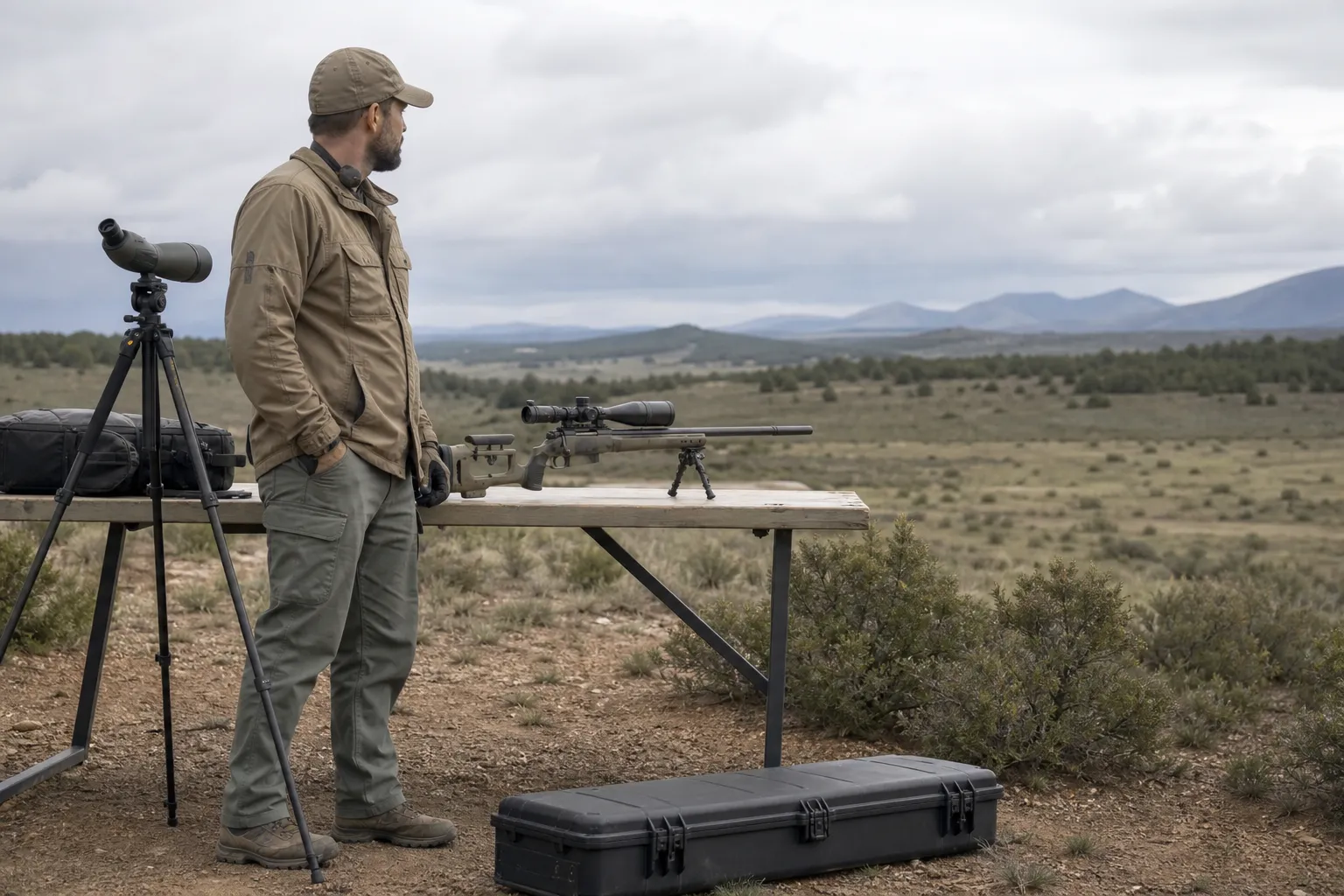
Hornady’s 2018 announcement also stated that Barrett Firearms Manufacturing received a contract for MRAD rifle systems chambered in .300 PRC. That announcement is one reason the cartridge drew attention beyond the commercial hunting and precision-rifle market.
This should be read narrowly. Hornady’s announcement says the cartridge was selected for that Department of Defense program and that Barrett MRAD systems were contracted in .300 PRC. It does not turn the cartridge into a universal replacement for other 30 caliber magnums, and it does not by itself say anything about suitability for a particular civilian rifle or hunting use.
300 PRC vs 300 Win Mag
The 300 PRC vs 300 Win Mag comparison starts with design era and cartridge geometry. The .300 Winchester Magnum is an older belted magnum design, while Hornady describes the .300 PRC as non-belted.
For background on the older cartridge, see our .300 Winchester Magnum guide.
A major design difference is geometry, especially in the way the .300 PRC is presented around long, sleek bullets.
| Comparison point | .300 PRC | .300 Win Mag |
|---|---|---|
| Case design detail | Non-belted case design | Belted case design |
That does not make this a rifle-buying recommendation. It is a cartridge-design comparison based on published specifications and Hornady’s stated design intent.
What to check before relying on .300 PRC data
Use the latest Hornady product pages for current factory ammunition, bullet BC data, and published velocities, because product lines and load details can change. Use the current SAAMI centerfire rifle standards for pressure and dimensional specifications.
For hunting, check the current regulations from the state, province, or territory where you plan to hunt. Rules can depend on species, season, method of take, and local restrictions, and they should be confirmed with the responsible wildlife agency before a trip.
Frequently asked questions
Who developed the .300 PRC?
SAAMI says the .300 PRC was developed by Hornady Manufacturing Company. SAAMI accepted the cartridge on August 10, 2018.
What was the .300 PRC designed for?
SAAMI quoted Hornady as saying the .300 PRC’s primary design focus was long-range precision shooting. Hornady describes it as built from the start for heavy-for-caliber, high-performance bullets.
How fast are Hornady’s factory .300 PRC loads?
Hornady has listed a .300 PRC 212 grain ELD-X Precision Hunter load at 2,860 fps from a 24 inch test barrel.
How is .300 PRC different from .300 Win Mag?
Hornady describes the .300 PRC as non-belted, while the .300 Win Mag is an older belted magnum design.
Was the .300 PRC adopted for a military program?
Hornady announced on December 11, 2018, that it received a Department of Defense contract to provide .300 PRC ammunition, and said the cartridge was tested and selected for the Department of Defense extended long range sniper program.
Sources
- 300 PRC, Hornady ManufacturingOfficial source. Accessed October 22, 2026.
- 300 PRC 225 gr ELD Match, Hornady ManufacturingOfficial source. Accessed October 22, 2026.
- 300 PRC 212 gr ELD-X Precision Hunter, Hornady ManufacturingOfficial source. Accessed October 22, 2026.
- 300 Win Mag 200 gr ELD-X Precision Hunter, Hornady ManufacturingOfficial source. Accessed October 22, 2026.
- Ballistic Coefficient, Hornady ManufacturingOfficial source. Accessed October 22, 2026.
- Hornady to supply 300 PRC Ammunition to U.S. Department of Defense, Hornady ManufacturingOfficial source. Accessed October 22, 2026.
- SAAMI Accepts Two New Cartridges, Sporting Arms and Ammunition Manufacturers’ InstituteOfficial source. Accessed October 22, 2026.
- 300 Precision Rifle Cartridge SAAMI New Cartridge and Chamber Drawing, Sporting Arms and Ammunition Manufacturers’ InstituteOfficial source. Accessed October 22, 2026.
- SAAMI Z299.4 2025 Centerfire Rifle Standards, Sporting Arms and Ammunition Manufacturers’ InstituteOfficial source. Accessed October 22, 2026.
- 2024 Hornady Law Enforcement and Military Catalog, Hornady ManufacturingOfficial source. Accessed October 22, 2026.
- SAAMI Rifle Cartridge Catalog, The Ballistic Assistant. Accessed October 22, 2026.