The Maxim Gun: Hiram Maxim's First True Machine Gun
The Maxim gun mattered because it used recoil energy to keep firing automatically while ammunition was supplied. Its belt feed, water cooling and recoil operation set it apart from earlier rapid fire weapons and made it the ancestor of the Vickers, MG 08 and Russian PM 1910.
By RaiS. Reviewed by RaiS. Published . 6 min read.
Research and drafting were assisted by AI. RaiS checked the facts against the sources below and approved this page.
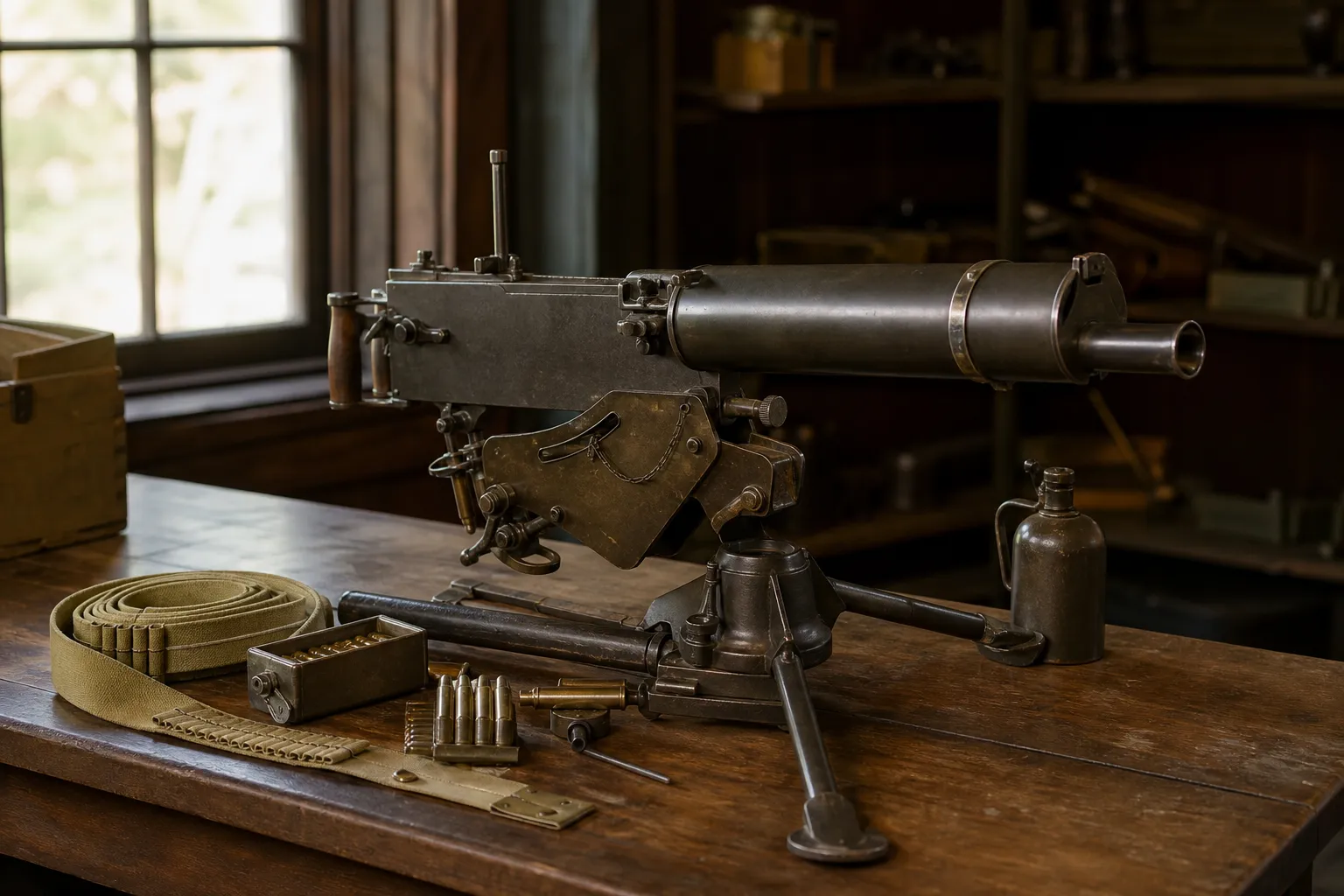
The Maxim gun was the key step from rapid fire guns to the modern machine gun. Hiram Maxim’s 1880s design was described in his patent as “entirely automatic,” using recoil energy to keep the gun cycling as long as cartridges were supplied. That made it fundamentally different from earlier rapid fire guns, and its water cooled, belt fed layout shaped several major military machine guns that followed.
Before Maxim, rapid fire was not yet automatic
Rapid fire guns existed before the Maxim. The National Army Museum lists Gatling, Gardner and Nordenfelt guns as earlier types used by British forces before the Maxim replaced them.
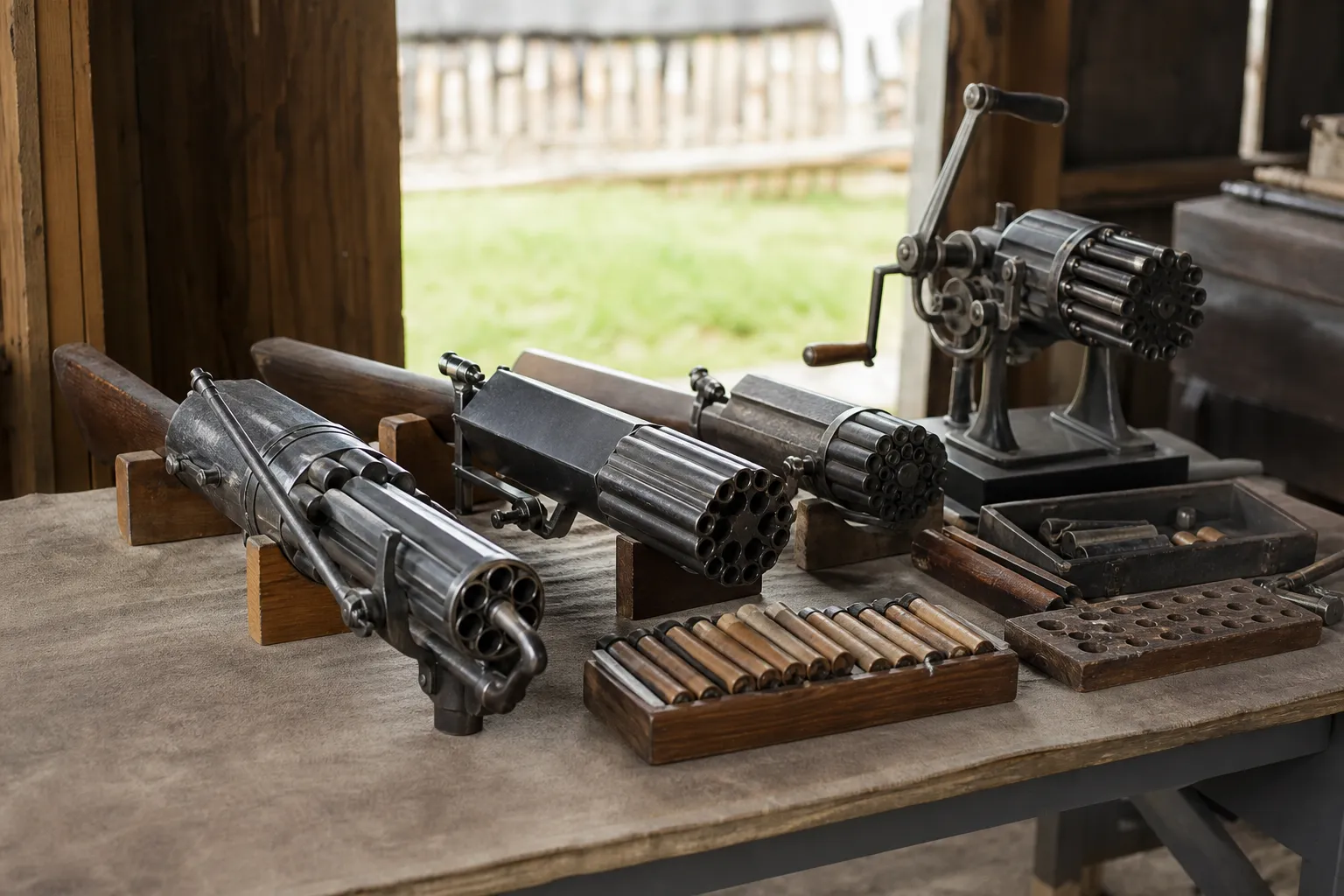
The important difference was automation. Earlier rapid fire weapons existed, but the Maxim used recoil energy to keep its own firing cycle going.
The Maxim changed that idea. Maxim’s design used energy from firing to run the next part of the cycle. That is why the Maxim is treated as a true automatic machine gun rather than only a rapid fire gun.
Hiram Maxim and the 1880s invention
Maxim’s U.S. machine gun patent was filed on May 2, 1884 and issued on July 7, 1885 as Letters Patent No. 321,513. In the patent, Maxim described the purpose plainly: to produce a gun “entirely automatic in its action” that would continue to discharge at set intervals as long as it had a supply of cartridges.
The patent also gives the core technical idea. Maxim wrote that the automatic operation depended on recoil, using that force as the motive power. At a conceptual level, the gun used the rearward movement created by firing to operate the parts that loaded, reloaded, extracted and ejected.
That explanation is enough to understand the breakthrough. The Maxim did not need a hand crank to reload itself between shots. Once set in operation and supplied with ammunition, the mechanism used recoil energy to continue the firing cycle.
What made the Maxim gun a true machine gun
Three features define the classic Maxim pattern: recoil operation, belt feed and water cooling. The National Army Museum describes the Maxim as a recoil operated machine gun invented by Hiram Maxim, while the Library of Congress describes it as belt fed and fitted with a water filled cooling jacket around the barrel.
Recoil operation
The Maxim patent says its automatic operation depended on recoil. The Deutsches Panzermuseum explains the same idea in simpler terms: Maxim’s “recoil loader” used recoil energy generated when a cartridge was fired to eject the empty case and reload a new cartridge.
This was the defining break from earlier rapid fire systems. The Maxim used the energy of firing to power the cycle.
Belt feed
The Maxim also used ammunition belts. The National Army Museum says the British Maxim was belt fed from 250 round ammunition belts. That gave the gun an ammunition supply suited to sustained automatic fire.
The Library of Congress also describes the Maxim as belt fed. In British service, the National Army Museum says the Maxim fired .45 inch rounds, later replaced by .303 inch rounds.
Water cooling
Sustained fire creates heat, and the Maxim’s layout addressed that with a water jacket around the barrel. The Library of Congress describes the gun as having a barrel surrounded by a water filled cooling jacket.
That feature carried into later Maxim type guns. The Deutsches Panzermuseum says the German MG 08 had a jacket holding three to four liters of water for barrel cooling.
British adoption and early service
Royal Armouries says Britain was an early adopter of the Maxim gun. It states that the first examples entered British service in 1887 on artillery style wheeled carriages, with larger numbers arriving in the 1890s.
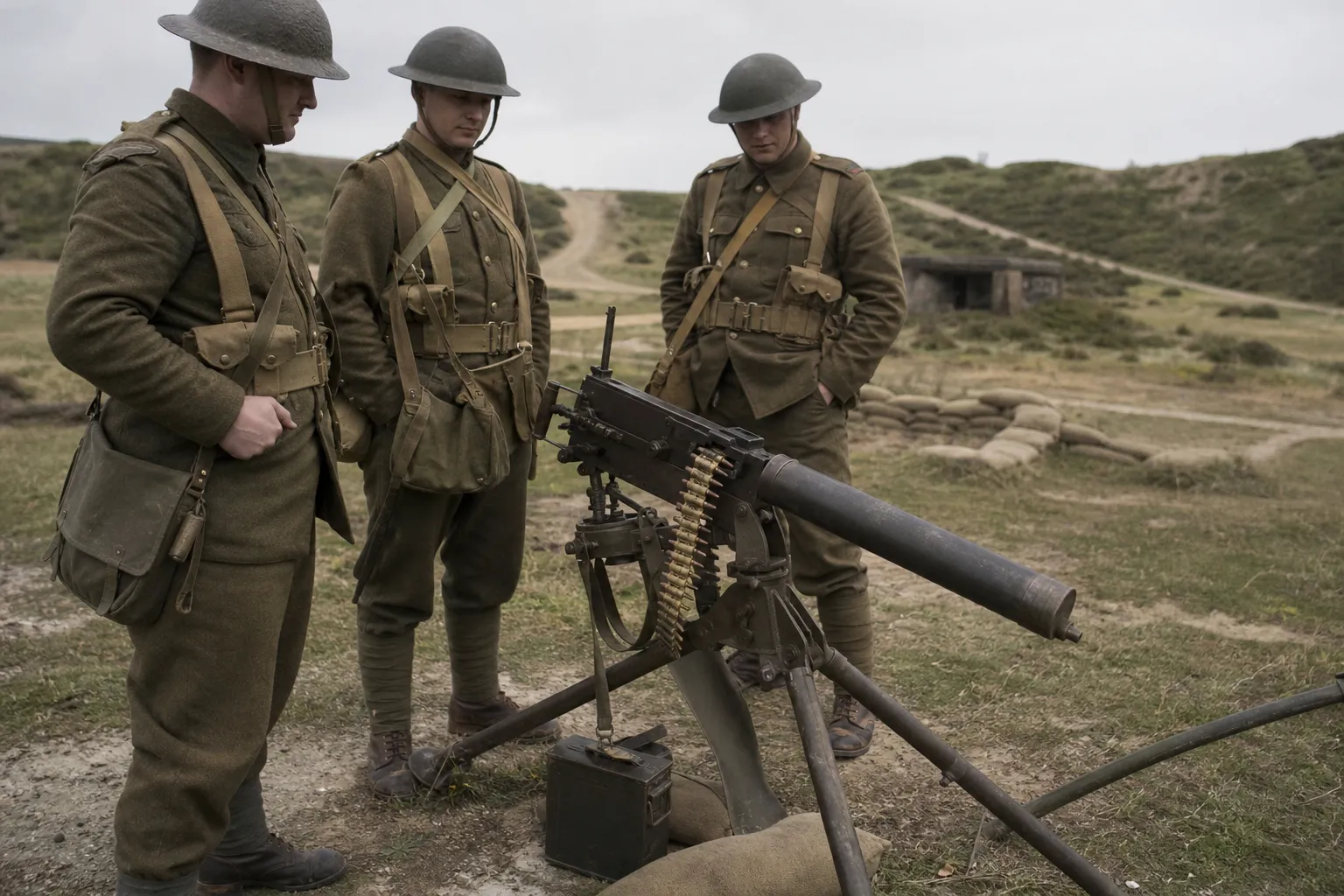
The National Army Museum says the Maxim saw action with British forces on the North West Frontier of India, in Matabeleland and in the Sudan. Those campaigns placed the weapon in colonial warfare before the First World War.
Royal Armouries also says Maxim came to Britain to build and sell his new gun and was knighted in 1901 for his services to the Empire. The National Army Museum says the Maxim Gun Company was eventually absorbed into Vickers in 1897.
Adoption, licensing and national variants
By the First World War, the Maxim system had spread widely. Royal Armouries says most nations participating in the First World War adopted a version of the Maxim gun of the 1880s.
Royal Armouries also gives the broad pattern of licensing and adaptation. It says Germany and Russia licensed the design, while France avoided Maxim’s patents. That is why several famous national machine guns share the Maxim family tree while still differing in details, mounts and national service history.
The best known descendants include the British Vickers gun, the German MG 08 and the Russian PM 1910. Each retained the Maxim idea of an automatic, recoil operated, belt fed gun, but each appeared in a national form.
The Vickers gun
Royal Armouries says the British Vickers gun was developed from Maxim’s original automatic machine gun design of 1884. After the Maxim Gun Company was absorbed into Vickers in 1897, Vickers redesigned the Maxim system.
Royal Armouries explains that Vickers made the gun smaller and lighter by flipping the mechanism upside down. In 1912, Vickers produced what Royal Armouries calls “perhaps the definitive Maxim type machine gun.”
Royal Armouries lists the Vickers operating system as recoil and its feed as belt. In other words, it was not a separate idea replacing the Maxim so much as a refined Maxim type design.
The German MG 08
The MG 08 was Germany’s Maxim pattern heavy machine gun. The Australian War Memorial identifies it as the standard German heavy machine gun of the First World War.
The Australian War Memorial says the German Army officially adopted the gun in 1901 after field trials that began in 1897 with a demonstration by Sir Hiram Maxim, and that the design was standardized in 1908. The Deutsches Panzermuseum says the MG 08 was based on Maxim’s machine gun and was named after its 1908 year of introduction.
The MG 08 also kept the water cooled character of the Maxim family. The Deutsches Panzermuseum says it used a water jacket holding three to four liters of water for barrel cooling.
For readers comparing later German machine gun development, the MG 08 belongs to an earlier, water cooled heavy machine gun tradition than the later MG 42.
The Russian PM 1910
Russia also developed Maxim pattern guns. Royal Armouries says Russia was satisfied with commercially purchased British and German Maxim guns and commissioned the state arsenal at Tula to produce the PM 1905.
Royal Armouries says the definitive Russian Maxim, the PM 1910, followed in 1910. It identifies the PM 1910 as a recoil operated, belt fed Russian machine gun with 250 round capacity and 7.62x54mmR chambering.
Its most recognizable feature was its mounting system. Royal Armouries says the PM 1910 had a distinctive Sokolov wheeled sledge mount with a large shield.
Why the Maxim mattered
The Maxim mattered because it solved the central problem that separated automatic fire from earlier rapid fire. The gun did not merely fire quickly. It used recoil energy to perform the mechanical work of continuing the cycle.
That helped move British service away from earlier Gatling, Gardner and Nordenfelt types. It also created a family of water cooled, belt fed, recoil operated weapons that appeared across major armies.
The Maxim gun’s direct descendants show its importance clearly. Royal Armouries connects it to the Vickers gun. The Australian War Memorial and Deutsches Panzermuseum connect Maxim’s system to the German MG 08. Royal Armouries connects the Russian PM 1910 to Russian Maxim development.
For firearms history, the Maxim is not just famous because it was early. It is famous because its automatic operating principle became the model that other nations adopted, licensed, redesigned and carried into the First World War.
Frequently asked questions
Who invented the Maxim gun?
The Maxim gun was invented by Hiram Maxim. The National Army Museum describes the Maxim as a recoil operated machine gun invented by Hiram Maxim.
When was the Maxim gun patented?
Maxim’s U.S. machine gun patent was filed on May 2, 1884 and issued on July 7, 1885 as Letters Patent No. 321,513. The National Army Museum also describes the Maxim as patented in 1884.
Why is the Maxim considered a true machine gun?
Maxim’s patent described an “entirely automatic” gun that would continue firing while supplied with cartridges. It used recoil energy to operate the loading, reloading, extraction and ejection functions.
Was the Maxim gun water cooled and belt fed?
Yes. The Library of Congress describes the Maxim as belt fed and fitted with a water filled cooling jacket around the barrel. The National Army Museum says the British Maxim used 250 round ammunition belts.
What guns descended from the Maxim?
Major Maxim type descendants include the British Vickers gun, the German MG 08 and the Russian PM 1910. Royal Armouries connects the Vickers and PM 1910 to Maxim development, and the Deutsches Panzermuseum says the MG 08 was based on Maxim’s machine gun.
Sources
- Sir Hiram S. Maxim Collection, NASM.1989.0031, Smithsonian Institution, National Air and Space Museum ArchivesOfficial source. Accessed November 9, 2026.
- US321513A, Machine Gun, Hiram Stevens Maxim, Google Patents, United States patent record. Accessed November 9, 2026.
- The Machine Gun: Its History, Development and Use, Introduction, Library of CongressOfficial source. Accessed November 9, 2026.
- Maxim .303 inch extra light machine gun, 1895, National Army Museum, LondonOfficial source. Accessed November 9, 2026.
- Arms of the First World War, Royal ArmouriesOfficial source. Accessed November 9, 2026.
- Maxim MG08 Heavy Machine Gun, Australian War MemorialOfficial source. Accessed November 9, 2026.
- Machine gun 08, 1916, Deutsches Panzermuseum MunsterOfficial source. Accessed November 9, 2026.