The Browning M1919 Machine Gun: History and Variants
The Browning M1919 family included ground, aircraft, and naval versions. Its A4 and A6 patterns remained important U.S. ground guns until the M60 replaced them in 1957.
By RaiS. Reviewed by RaiS. Published . 4 min read.
Research and drafting were assisted by AI. RaiS checked the facts against the sources below and approved this page.
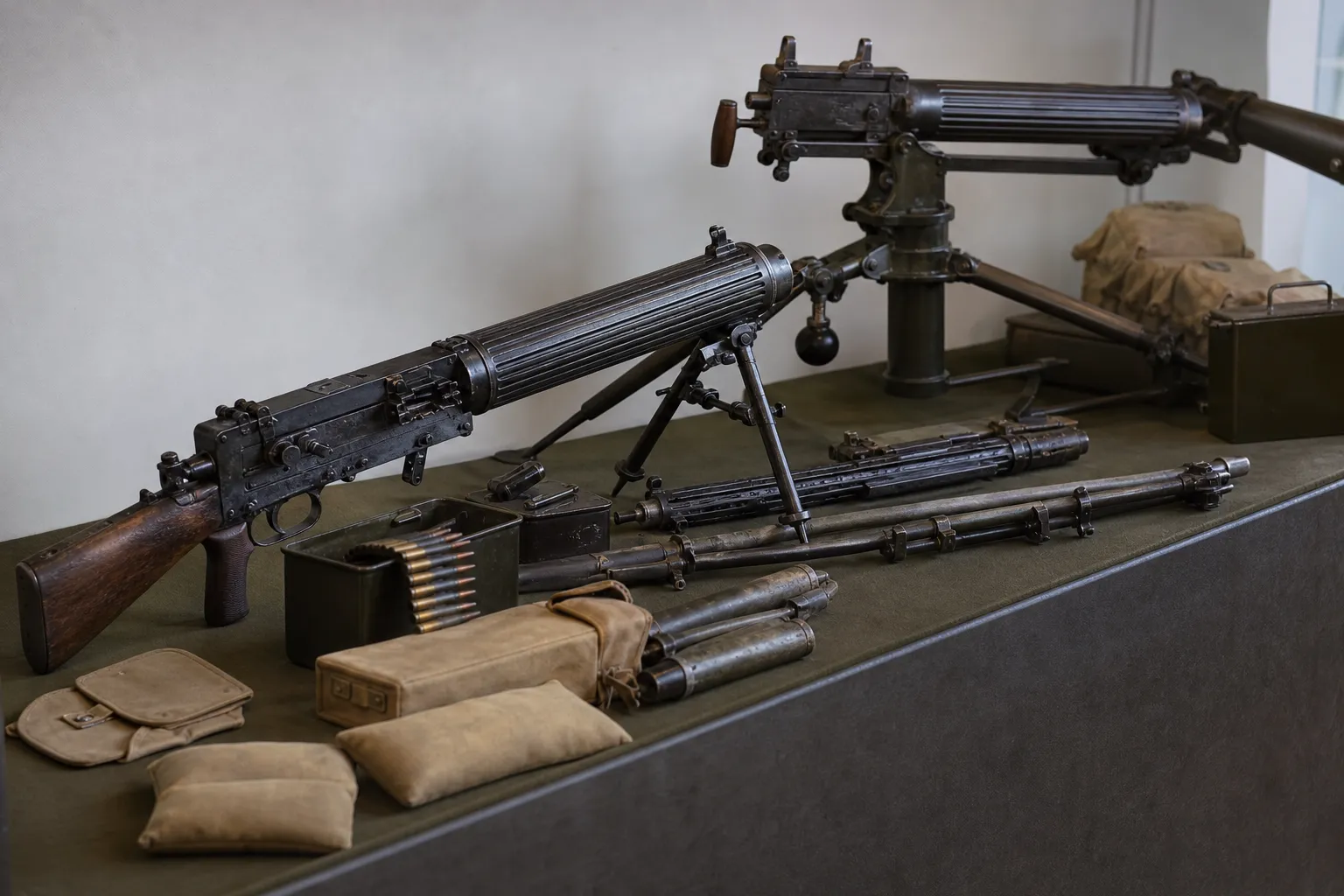
The Browning M1919 was an air cooled .30 caliber machine gun associated with John M. Browning’s broader machine gun family. The best known ground version, the M1919A4, became a prominent U.S. .30 caliber belt fed machine gun of World War II, while the A6 and other versions show how far the basic Browning system was adapted before the M60 replaced the A4 and A6 in U.S. ground service in 1957.
Origins in Browning’s M1917
The story begins with John M. Browning’s World War I machine gun work.
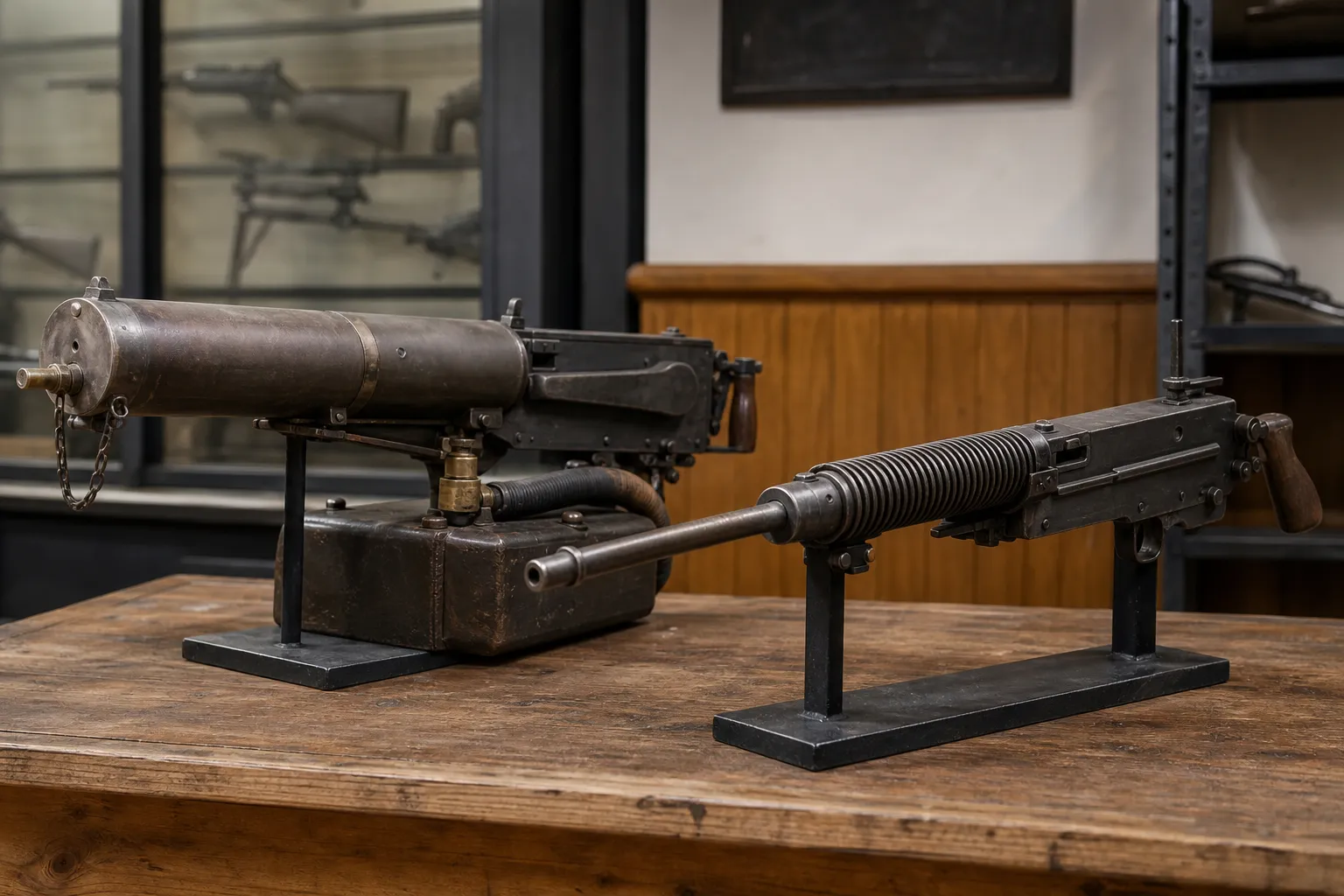
The Model 1917 and Model 1919 belonged to Browning’s wider line of military machine gun designs. The Model 1919 family appeared in multiple service roles.
What changed with the M1919
The M1919A4 used an air cooled barrel arrangement. The M1919A4 was recoil operated, belt fed, and air cooled.
At a high level, recoil operation means the gun uses recoil energy to cycle its moving parts. This movement is controlled by springs, cams, and levers, which perform the necessary mechanical operations: unlocking the breech, extracting and ejecting the empty case, feeding a new round, cocking, locking, and firing the mechanism.
That is the concept, not a maintenance guide. In simple terms, Browning’s mechanism used the energy of firing to run the cycle, while the gun’s internal parts controlled the timing of each step.
The M1919A4 receiver mechanism was, for practical purposes, the receiver of the Browning M1917. That continuity is why the M1919 feels less like a completely new invention and more like a practical evolution of Browning’s earlier heavy machine gun.
The M1919A4 ground gun
The M1919A4 was the standard ground light machine gun form of the family. The ground light machine gun normally used the M2 light machine gun tripod, and vehicle mounts were also used in motorized or mechanized units.
The A4 used a heavy barrel exposed to air for cooling under normal operating conditions.
One way to see the A4’s wartime role is to look at vehicle installations. The M24 Chaffee light tank carried an M1919A4 .30 caliber machine gun in the turret alongside the main gun, plus another M1919A4 in the bow. That example shows how the A4 served not only from tripods, but also as part of armored vehicle armament.
The M1919A6: a more portable Browning
The M1919A6 was a more portable member of the family.
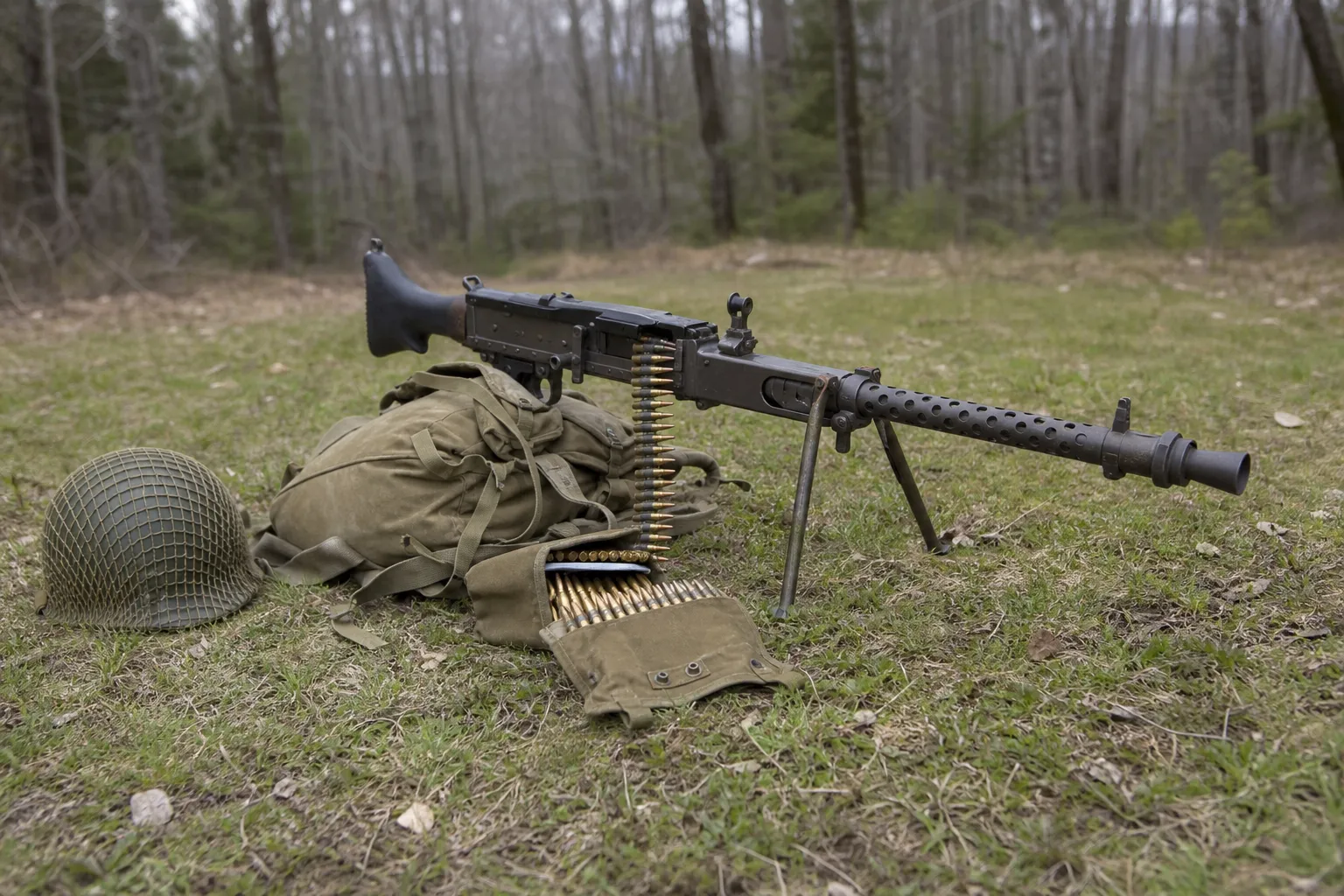
The A6 did not erase concerns about portability. In 1957, the M60 replaced the tripod mounted M1919A4 and the bipod mounted M1919A6. That pairing captures the wartime distinction: the A4 was the tripod gun, while the A6 was the more portable bipod version of the same basic Browning family.
Aircraft versions: the .30 caliber Browning M2
The M1919 family also had aircraft branches. The .30 caliber Browning M2 was one aircraft branch of the wider Browning machine gun family.
These aircraft versions show that the Browning pattern was adapted beyond ground use.
Naval versions and the Mk 21 Mod 0
The Model 1919 family also had Navy variations. One later naval branch is usually discussed under the Mk 21 designation.
The Mk 21 Mod 0 is part of the broader Browning machine gun story, while this overview focuses mainly on the A4 and A6 ground forms.
Service from World War II through Korea
After World War II, the Army began experimenting with replacing the 30 pound Browning 1919 machine gun with one that would be more portable. The M60 was adopted in 1957 to fill that role.
In 1957, the M60 replaced the tripod mounted M1919A4 and the bipod mounted M1919A6. That does not make the M1919 family disappear from history overnight, but it marks the official U.S. ground service transition away from the Browning A4 and A6 patterns.
Why the M1919 family lasted
The M1919 lasted because it was an adaptable Browning system. It appeared in ground, vehicle, aircraft, and naval contexts, and the A4 and A6 show how the family could be configured for different infantry roles.
Across those forms, repeated traits include recoil operation, belt feed, and air cooling. The A4 gave U.S. forces a tripod and vehicle gun. The A6 put the same basic family into a bipod mounted form.
That combination of continuity and adaptation is the reason the M1919 family belongs in the same conversation as John Browning’s other long lived military designs.
U.S. legal note
For modern U.S. readers, the key point is that machine guns are regulated under the National Firearms Act.
This article is historical and technical background only. For current legal questions, readers should consult qualified legal guidance and applicable federal, state, and local authorities.
Frequently asked questions
What was the Browning M1919 based on?
It was closely related to Browning’s M1917. The M1919A4 receiver mechanism was, for practical purposes, the M1917 receiver.
Was the M1919 water-cooled like the M1917?
No. The M1919A4 was recoil operated, belt fed, and air cooled.
What was the difference between the M1919A4 and M1919A6?
The A4 was the tripod mounted ground gun, while the A6 was the more portable bipod mounted form of the same Browning family.
What replaced the M1919A4 and M1919A6?
The M60 replaced the tripod mounted M1919A4 and the bipod mounted M1919A6 in 1957.
Sources
- Arming the Army, John M. Browning, U.S. ArmyOfficial source. Accessed November 8, 2026.
- Mr. John M. Browning, Ordnance Corps Hall of Fame Inductee 1974, U.S. Army Ordnance CorpsOfficial source. Accessed November 8, 2026.
- FM 23-45 Basic Field Manual: Browning Machine Gun, Caliber .30, HB M1919A4 Ground, War Department, hosted by HyperWar and ibiblio. Accessed November 8, 2026.
- TM 9-2200: Small Arms, Light Field Mortars, and 20-MM Aircraft Guns, War Department, hosted by HyperWar and ibiblio. Accessed November 8, 2026.
- Standard Ordnance Items Catalog, 1944, Volume 3, Office Chief of Ordnance, hosted by 90th Infantry Division Preservation Group. Accessed November 8, 2026.
- Model 1919A6, Smithsonian National Museum of American HistoryOfficial source. Accessed November 8, 2026.
- The M24 Chaffee Light Tank, The Army Historical Foundation. Accessed November 8, 2026.
- Elegant Simplicity: The Weapon Designs of John Moses Browning, National Museum of the U.S. Air ForceOfficial source. Accessed November 8, 2026.
- M60 Development, U.S. Army Ordnance Corps and SchoolOfficial source. Accessed November 8, 2026.
- The M240B General Purpose Machine Gun, The Army Historical Foundation. Accessed November 8, 2026.
- Machine Gun, U.S. Military Designations, GlobalSecurity.org. Accessed November 8, 2026.
- M1919 .30 Caliber Machine Gun, GlobalSecurity.org. Accessed November 8, 2026.
- DON FOIA Logs FY 2016 Redacted, Department of the NavyOfficial source. Accessed November 8, 2026.
- ATF National Firearms Act Handbook, Bureau of Alcohol, Tobacco, Firearms and ExplosivesOfficial source. Accessed November 8, 2026.