The RPD Machine Gun: History and Design
The RPD was Vasily Degtyaryov’s Soviet light machine gun associated with the transition from earlier full power Soviet light machine guns to later Kalashnikov pattern squad automatic weapons. Its influence spread through foreign copies and Cold War service.
By RaiS. Reviewed by RaiS. Published . 5 min read.
Research and drafting were assisted by AI. RaiS checked the facts against the sources below and approved this page.
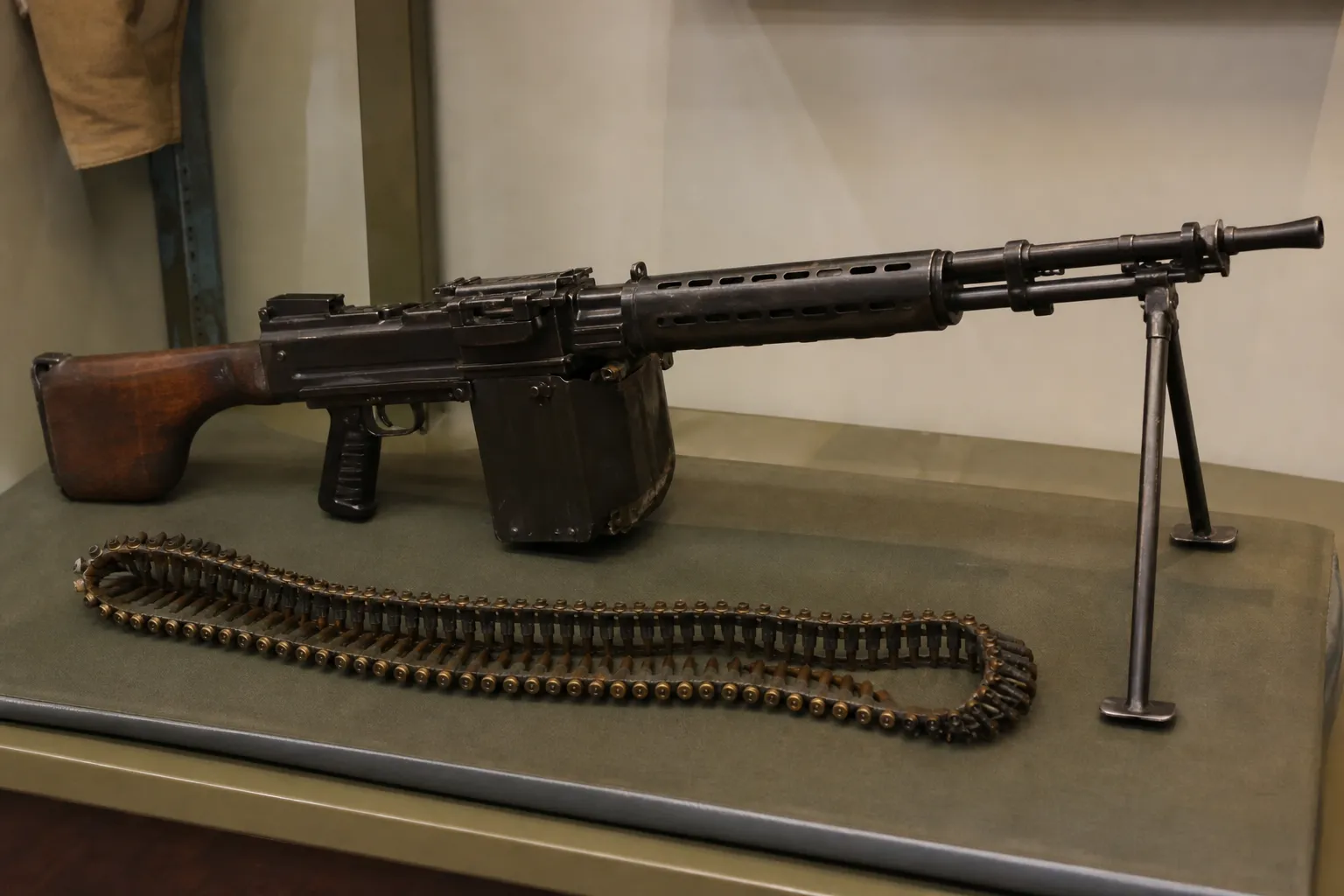
The RPD was a Soviet light machine gun associated with designer Vasily Degtyaryov. It appeared during a period when Soviet infantry weapons were moving away from older full power rifle ammunition and toward intermediate cartridge systems.
What the name RPD means
The name RPD is commonly expanded as Ruchnoy Pulemyot Degtyaryova, often rendered in English as Degtyaryov’s hand-held machine gun. In plain terms, it was Degtyaryov’s light machine gun.
That name also points to where the gun fits historically. The RPD followed Degtyaryov’s earlier work on Soviet light machine guns, but it was not simply another full power DP family gun. It was part of the same broader postwar move that produced Soviet infantry weapons around intermediate cartridge concepts.
Development in the 1940s
Development is commonly placed in the wartime period, when Soviet designers were exploring weapons for shorter intermediate ammunition. That timing matters because it places the RPD in the same broader modernization context as other Soviet infantry weapons of the period.
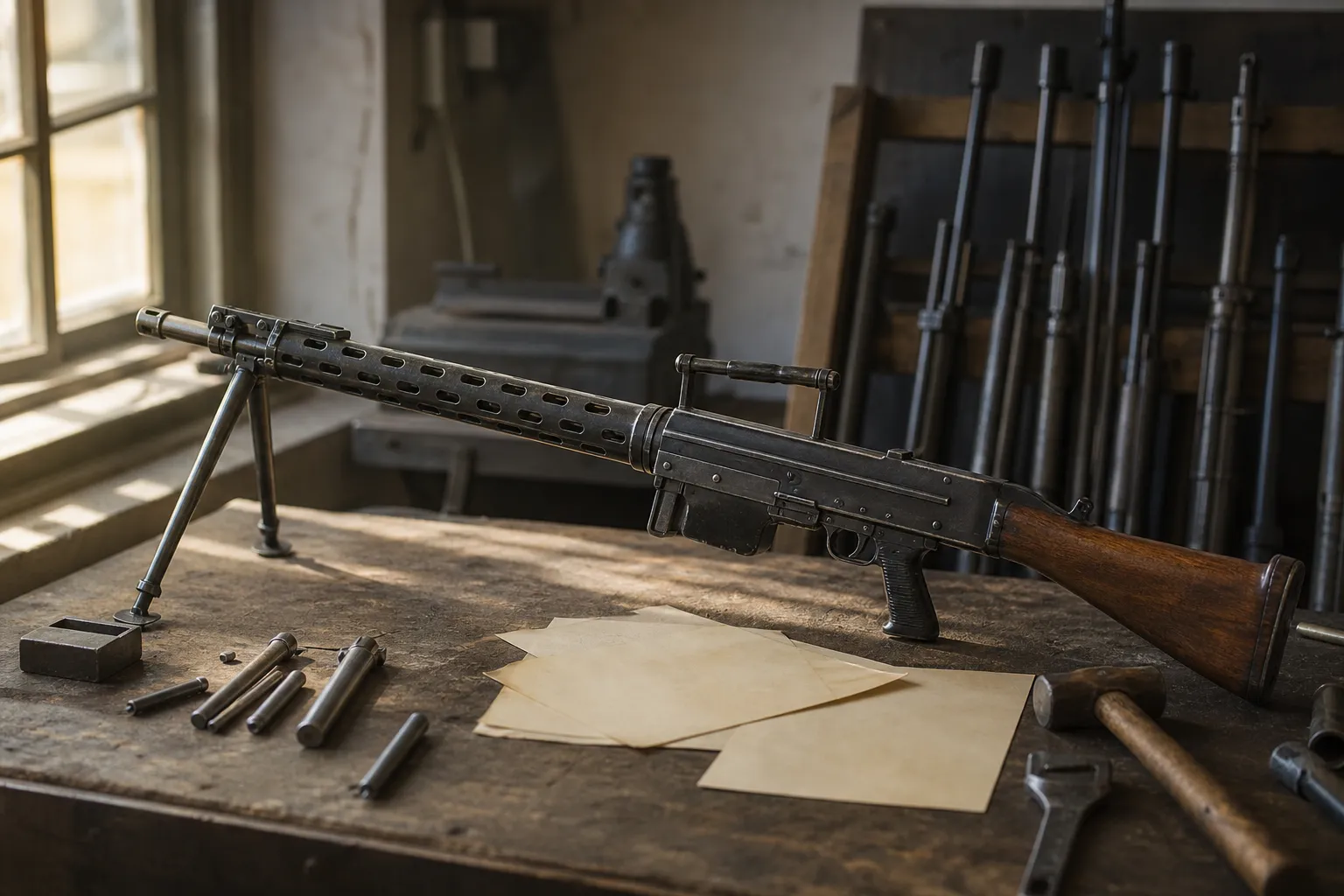
Intermediate ammunition allowed more compact weapons and lighter ammunition loads than the older full power rifle cartridge context. That was central to the RPD’s role. A light machine gun associated with that concept could be lighter and handier than a gun built around an older full power rifle round.
The adoption timeline needs careful wording because development, formal acceptance, and widespread fielding may not all refer to the same moment. For a general overview, it is enough to place the RPD in the transition from wartime design work to postwar service.
Cartridge and squad role
In the squad role, the important point is the shift from earlier full power rifle ammunition toward more compact infantry weapons and ammunition. That shift shaped Soviet small arms development during the period in which the RPD appeared.
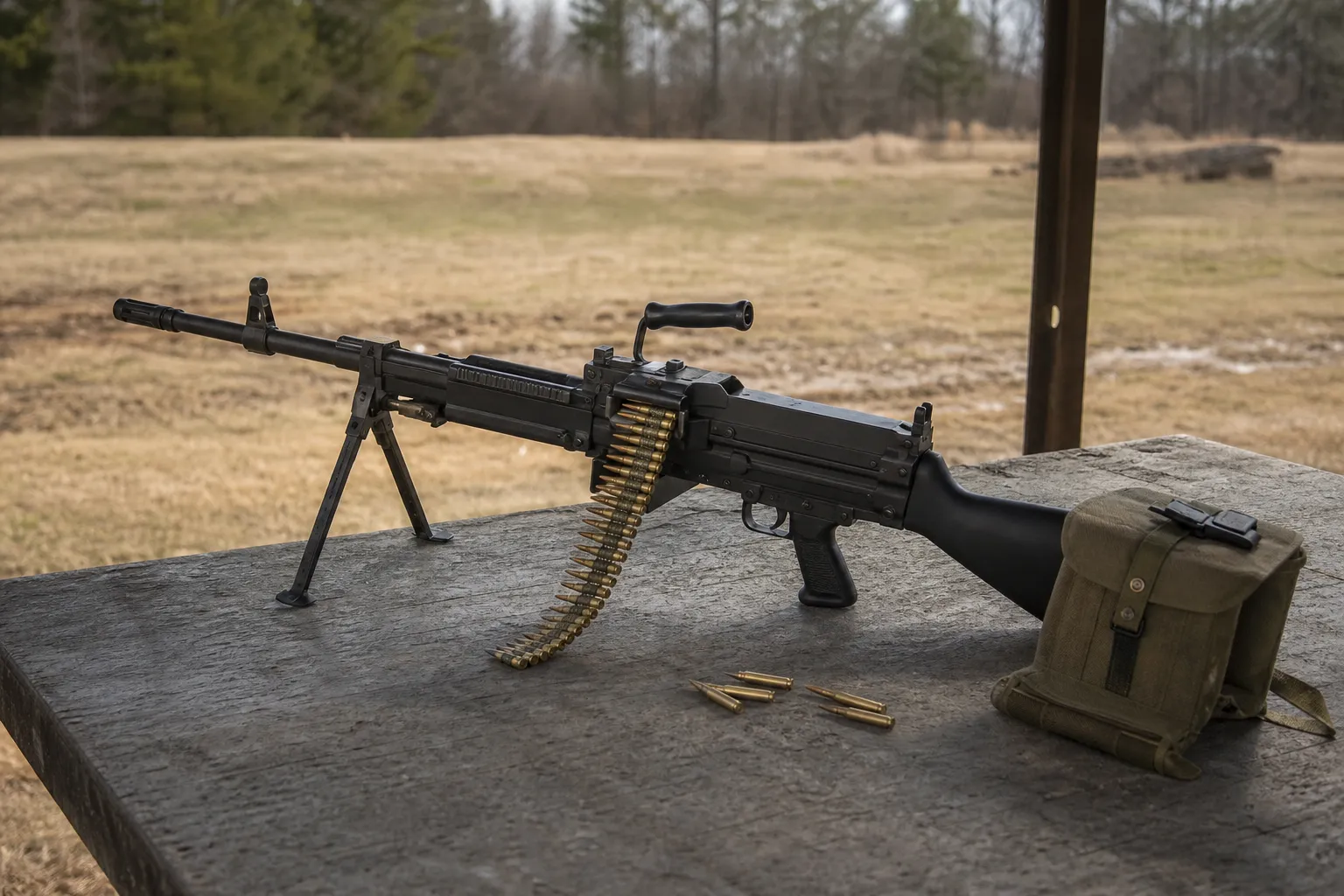
In Soviet service context, the RPD sat between two better known eras of infantry arms. Before it were earlier Soviet light machine guns tied to full power rifle ammunition. After it came the Kalashnikov pattern squad automatic weapon approach, represented by the RPK. The RPD’s place in that chain is why it interests students of Soviet small arms: it was a light machine gun associated with the intermediate cartridge age.
Its job is best understood at the infantry squad level. It was meant to provide automatic fire for troops who needed more support than an ordinary rifle could provide.
Design overview
As a light machine gun, the RPD belongs in discussions of automatic infantry support weapons rather than manually cycled designs.
The RPD’s most recognizable feature is its belt feed. Descriptions of its ammunition feed commonly focus on 50 round connectible belt sections, with joined belts carried in a drum container. The belt is also described as a non disintegrating metal belt.
That combination gave the RPD a distinctive appearance: a light machine gun with a round container carried under the receiver, rather than a box magazine protruding below the gun. The container held the belt, but the gun was still belt fed.
The weapon was portable enough to be treated as a light machine gun rather than a heavy crew served gun. That basic category explains much of its historical role.
Key reference specifications
| Feature | RPD detail |
|---|---|
| Designer association | Vasily Degtyaryov |
| Role | Light machine gun |
| Belt description | 50 round connectible sections, with joined belts carried in the drum |
The fixed-barrel tradeoff
Barrel heat is an important comparison point among machine guns. Many sustained fire machine guns use some method of replacing a hot barrel during extended firing.
For a historical profile, the safe takeaway is simple: the RPD is discussed here as a light machine gun in the context of infantry fire support.
This article does not cover maintenance, modification, conversion, or parts kit assembly. The RPD is discussed here only as a historical military design.
Replacement by the RPK
The RPD did not remain the main Soviet pattern squad automatic weapon forever. Later Soviet pattern forces also used the RPK, a Kalashnikov pattern squad automatic weapon.
That shift was about standardization as much as design preference. In a force already using the AK-47 and AKM family, a magazine fed squad automatic weapon from the same general family offered a different approach to squad firepower.
The comparison also shows why the RPD remains interesting. It was a belt fed squad gun, while the RPK represented a closer relationship to the standard rifle family. The RPD and RPK therefore mark two different answers to the same infantry question: how to give the squad automatic fire while keeping the weapon and ammunition within a compact infantry system.
Reliability reputation and later assessments
The RPD’s reputation is mixed: reliability under adverse conditions is often discussed alongside durability and wide distribution.
The RPD spread widely enough to appear in collections outside the Soviet Union. Its replacement in several armies did not make it disappear. Like many Cold War Soviet pattern weapons, it continued to be encountered in foreign production, foreign service, and battlefield collections.
Foreign production and copies
Chinese Type 56 light machine guns are identified in museum collections as copies of the Soviet RPD.
North Korea also produced or fielded a closely related light machine gun. The North Korean Type 62 machine gun is described as a light machine gun with a 100 round belt fitted in a metal drum, and as an equivalent of the Soviet RPD.
These foreign examples matter because they show that the RPD was not just a Soviet domestic model. It became part of the wider Cold War small arms ecosystem, with copies and equivalents appearing in other states’ inventories.
Vietnam War evidence in museum collections
The RPD and its copies also appear in Vietnam War context. A March 1968 photograph from South Vietnam shows a captured Russian RPD light machine gun.
Chinese Type 56 examples add another angle because the Type 56 is identified as a Chinese copy of the Soviet RPD. Together, those examples support the RPD family’s presence in Southeast Asian conflict history without needing to rely on informal accounts.
Why the RPD lasted in small-arms history
The RPD lasted in the historical record because it arrived at an important transition point. It used belt feed rather than a simple box magazine, and it served the squad automatic role before the RPK approach became dominant in Soviet pattern forces.
Its design also makes it easy to identify in photographs and museum collections. The under receiver drum container and light machine gun layout set it apart from both earlier full power Soviet guns and later Kalashnikov pattern squad automatic weapons.
Most importantly, the RPD shows that Soviet squad firepower during the intermediate cartridge era was not only about rifles and carbines. It also included light machine guns intended to give infantry squads automatic fire.
U.S. legal note
This article is a historical and technical overview only, and it does not give legal, ownership, transfer, conversion, or assembly advice.
Readers researching laws or regulations should confirm current information directly with ATF and any relevant state or local authority.
Frequently asked questions
What does RPD stand for?
RPD is commonly expanded as Ruchnoy Pulemyot Degtyaryova, often translated as Degtyaryov’s hand held machine gun.
Who designed the RPD?
The RPD is associated with Soviet designer Vasily Degtyaryov.
How was the RPD fed?
It is described as belt fed, with 50 round connectible belt sections and joined belts carried in a drum container.
Were RPD copies made outside the Soviet Union?
Yes. Chinese Type 56 examples are identified as copies of the Soviet RPD, and the North Korean Type 62 is described as a closely related equivalent.
Sources
- TBT: The inside story of the Soviet Red Army’s RPD machine gun, Military Times. Accessed November 8, 2026.
- WEG 2011 Volume 1 Ground Systems, U.S. Army Command and General Staff College digital collection, Worldwide Equipment GuideOfficial source. Accessed November 8, 2026.
- RPD: The Last Degtyarev, Small Arms Review. Accessed November 8, 2026.
- SAAMI Z299.4-2025 Centerfire Rifle Voluntary Industry Performance Standards, Sporting Arms and Ammunition Manufacturers’ InstituteOfficial source. Accessed November 8, 2026.
- RPD 7.62x54mm light machine gun, Historical Breechloading Smallarms Association. Accessed November 8, 2026.
- CIA Reading Room PDF, Soviet small arms translation, Central Intelligence Agency Reading RoomOfficial source. Accessed November 8, 2026.
- Type 56 (RPD) Light Machine Gun: Viet Cong, Australian War MemorialOfficial source. Accessed November 8, 2026.
- North Korean Small Arms and Light Weapons: Recognition Guide, Small Arms Survey. Accessed November 8, 2026.
- South Vietnam. 1968-03. A captured Russian (RPD) light machine gun is held by Private James Ward, Australian War MemorialOfficial source. Accessed November 8, 2026.
- Questions and Answers, National Firearms Act, Bureau of Alcohol, Tobacco, Firearms and ExplosivesOfficial source. Accessed November 8, 2026.