The Bren Gun: History, Design and Service
The Bren was a British and Commonwealth light machine gun developed from the Czech ZB vz. 26, adapted for .303 inch British ammunition and produced from 1937 at Enfield. It served through the Second World War and later in Commonwealth use.
By RaiS. Reviewed by RaiS. Published . 5 min read.
Research and drafting were assisted by AI. RaiS checked the facts against the sources below and approved this page.
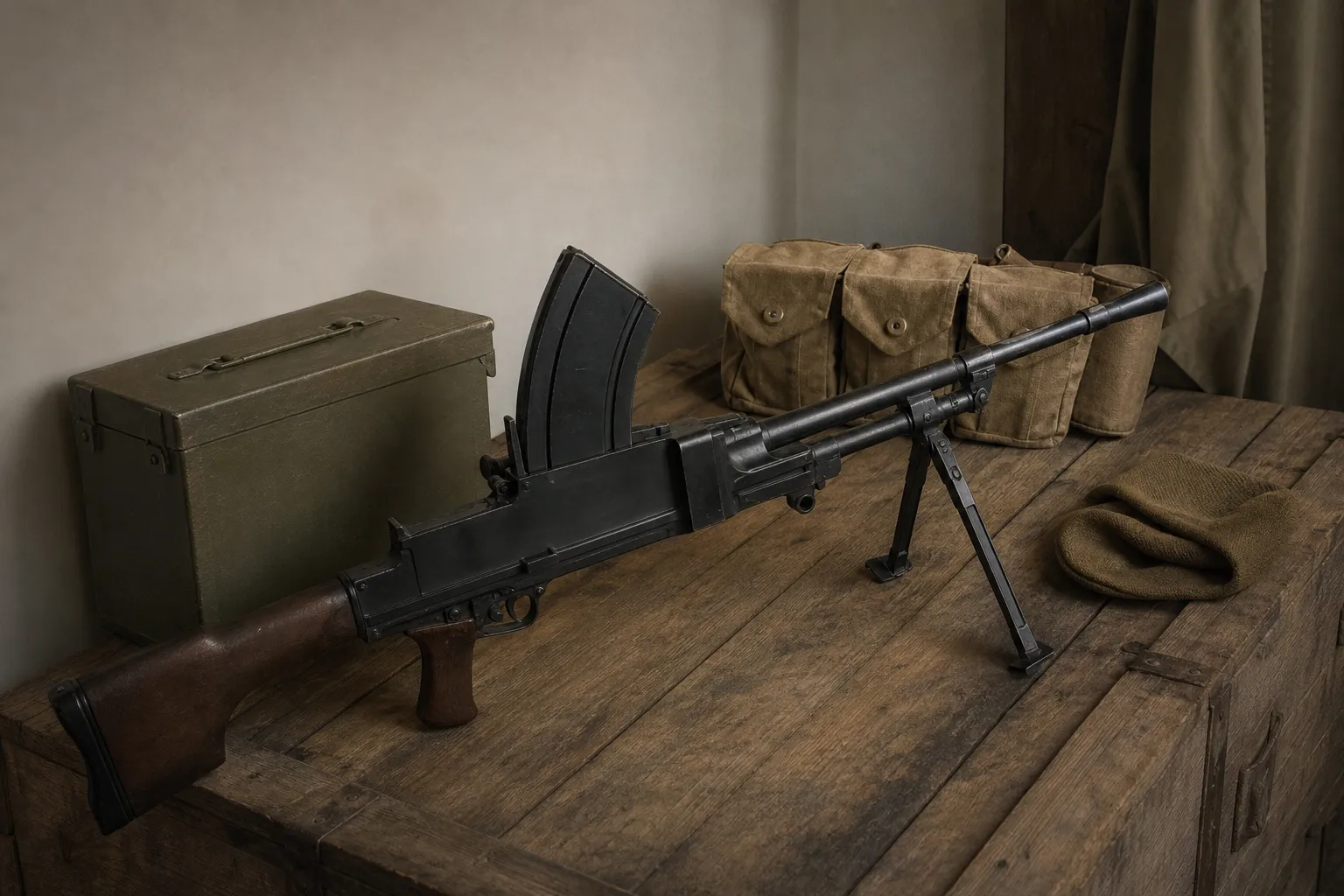
The Bren gun was a British and Commonwealth light machine gun developed from the Czech ZB vz. 26 and adapted for .303 inch British ammunition. The National Army Museum traces its name to Brno, where the weapon was developed, and Enfield, where the British variant was manufactured from 1937.
Origin: from ZB vz. 26 to Bren
The National Army Museum states that in the early 1930s the British Army held trials for an infantry support weapon to replace older Vickers medium and Lewis light machine guns. A modified version of the Czech designed ZB vz. 26 was selected.
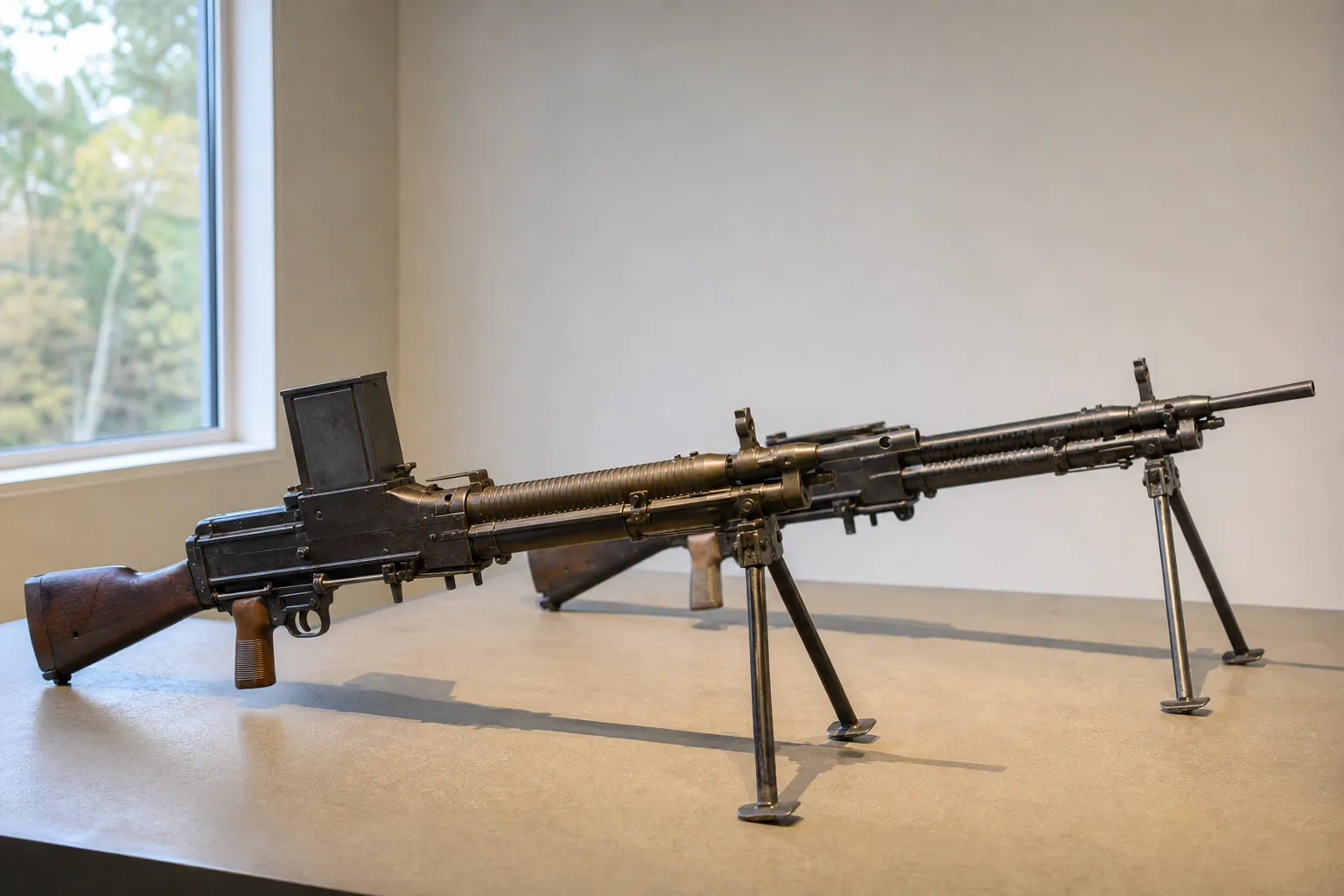
That selection did not mean Britain simply copied the Czech gun unchanged. The National Army Museum says the design was further adapted to take .303 inch ammunition rather than 7.92 mm Mauser ammunition. In British service, that adaptation became the Bren.
The name itself is a useful summary of the gun’s origins. According to the National Army Museum, Bren blends Brno, the Czech town associated with the weapon’s development, with Enfield, home of the Royal Small Arms Factory where the British variant was manufactured.
The Royal Armouries identifies the first Bren gun as having been produced at RSAF Enfield in September 1937. The Australian War Memorial also states that the first Bren was completed in September 1937.
Production at Enfield and in Canada
The National Army Museum states that manufacture of the British variant took place at the Royal Small Arms Factory, Enfield, from 1937. The Australian War Memorial adds that by July 1938, 300 Bren guns per week were being manufactured, and that by June 1940 more than 30,000 had been produced and issued.
Canadian production became an important wartime part of the Bren story.
Canada’s official Second World War history says the John Inglis plant began producing Bren guns in early spring 1940 and made over 200,000 before the end of the war. Parks Canada gives another way to understand the scale, stating that about 60 percent of Brens manufactured in the 1940s were made by John Inglis and Company in Canada.
The Australian War Memorial also states that Bren guns were manufactured in Australia and Canada during the Second World War. Taken together, these records show the Bren as more than a British factory product. It became a Commonwealth production and service weapon, with Enfield and John Inglis both central to its history.
| Date or period | Event |
|---|---|
| Early 1930s | British Army trials sought a replacement for older Vickers and Lewis machine guns, according to the National Army Museum. |
| September 1937 | The first Bren was completed at RSAF Enfield, according to the Royal Armouries and the Australian War Memorial. |
| July 1938 | The Australian War Memorial states that production had reached 300 per week. |
| Early spring 1940 | Canada’s official Second World War history says John Inglis began producing Bren guns. |
Design and operation, in plain English
The Australian War Memorial describes the Bren Mk 1 as a gas operated, air cooled, select fire machine gun. It also states that the gun fired from an open bolt, used a long stroke gas piston under the barrel, and had a quick detachable barrel.
For readers comparing operating systems, the Bren belongs in the broad family of gas operated firearms. Its open bolt firing system is also part of why it is often discussed with other military automatic weapons of the period.
The Bren’s most recognizable feature is its top mounted magazine. The Australian War Memorial states that this top mounted magazine required the line of sight to be offset to the left. In other words, the magazine sat above the receiver, and the sights were moved to the side so the shooter could still aim.
The Airborne Assault Museum states that each Bren magazine could hold 30 rounds, but was generally loaded with 27 or 28 rounds to reduce the risk of stoppages. That detail is a good reminder that service use was shaped by reliability practices as well as by the mechanical design.
The Australian War Memorial states that the Bren had an integral folding bipod attached to the gas cylinder. The Airborne Assault Museum describes the gun as normally operated by a two man team: one man carrying the weapon and acting as gunner, and the other carrying additional ammunition and a spare barrel and acting as loader.
That team arrangement helps explain the Bren’s role. It was portable, but it was still a crew served support weapon in normal use. One person could carry and fire it, while the second person helped keep ammunition and barrel support with the gun.
Second World War and Commonwealth service
The Australian War Memorial states that the Bren was used during the Second World War. The Bren was adopted in the late 1930s.
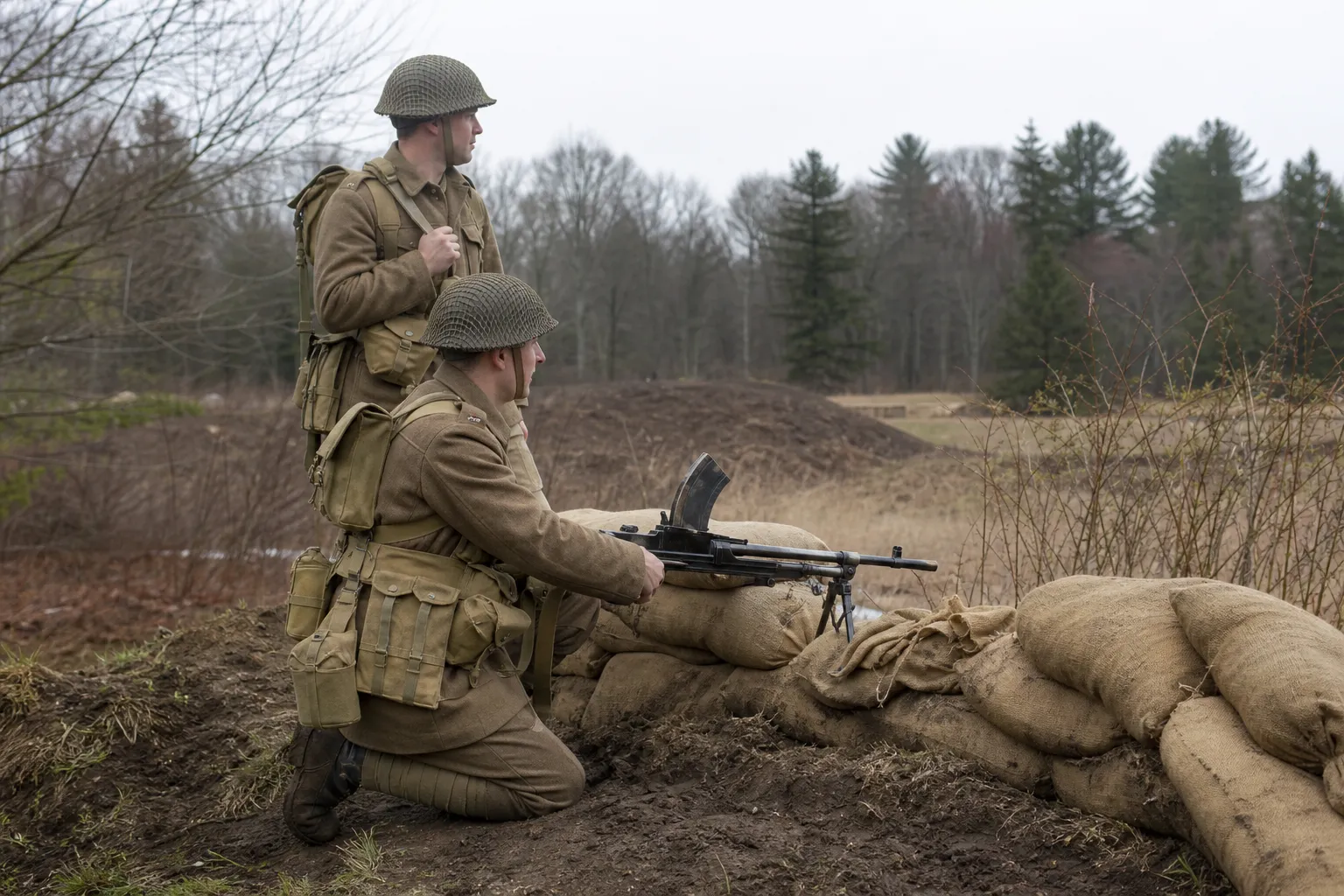
That long service life is one reason the Bren has such a strong place in British and Commonwealth military history. It was not just a 1937 design that appeared briefly and disappeared. It was produced in large numbers, used by Commonwealth forces, and kept in service after the Second World War.
The Canadian connection is especially important. John Inglis production in Toronto tied the weapon to Canada’s wartime industrial effort, and Canada’s official Second World War history records production of more than 200,000 Bren guns before the end of the war. Parks Canada’s statement that about 60 percent of 1940s Bren production came from John Inglis further underlines that Canadian role.
The Australian War Memorial’s Korean War exhibit gives a postwar Commonwealth example. It describes the Bren light machine gun as the main portable firepower of Australian infantry in Korea, and calls it highly accurate and reliable.
The postwar L4 in 7.62 mm NATO
This article does not cover conversion methods, parts compatibility, assembly, or modification steps.
Why the Bren lasted
The Bren lasted because it combined a proven origin, large scale production, and a practical infantry role. The National Army Museum links it to the Czech ZB vz. 26 and to British adaptation at Enfield. The Australian War Memorial describes its core mechanical features: gas operation, air cooling, select fire, open bolt firing, a bipod, and a quick detachable barrel.
Its service record also mattered. It was in use during the Second World War and remained important in Commonwealth service after the war.
U.S. legal note
This article is not acquisition, transfer, import, parts kit, or compliance advice.
Readers should confirm any legal or museum research question with the relevant official agency, archive, or museum collection record.
Frequently asked questions
What was the Bren gun based on?
The National Army Museum states that the Bren was selected from a modified version of the Czech designed ZB vz. 26 and then adapted for .303 inch ammunition.
Why is it called the Bren?
According to the National Army Museum, Bren combines Brno, where the weapon was developed, and Enfield, where the British variant was manufactured.
Where was the Bren made?
The National Army Museum identifies Royal Small Arms Factory, Enfield, as the British production site from 1937. Canada’s official Second World War history says the John Inglis plant began producing Bren guns in early spring 1940 and made over 200,000 before the end of the war.
How many rounds did a Bren magazine hold?
The Airborne Assault Museum states that each magazine could hold 30 rounds, but was generally loaded with 27 or 28 rounds to reduce the risk of stoppages.
Sources
- Bren .303 inch Mk I light machine gun, 1942, National Army MuseumOfficial source. Accessed November 9, 2026.
- Elliot Brown x Royal Armouries, Royal ArmouriesOfficial source. Accessed November 9, 2026.
- BREN Mk 1 Light Machine Gun, Australian War MemorialOfficial source. Accessed November 9, 2026.
- Maker's presentation model of a prototype BREN gun in 1/6 scale : Zbrojovka Brno, Australian War MemorialOfficial source. Accessed November 9, 2026.
- BREN GUNS (CONTRACT, CANADA), UK Parliament, Hansard. Accessed November 9, 2026.
- Report of the Royal Commission on the Bren Machine Gun Contract, Library and Archives Canada, archived commission report. Accessed November 9, 2026.
- Arms, Men and Governments: The War Policies of Canada, 1939-1945, Official History of the Canadian Army in the Second World War. Accessed November 9, 2026.
- The Evolution of Threats and Technology, Parks Canada, Fort Rodd Hill and Fisgard Lighthouse National Historic SitesOfficial source. Accessed November 9, 2026.
- Bren Light Machine Gun, Airborne Assault Museum, ParaDataOfficial source. Accessed November 9, 2026.
- Out in the Cold: Bren light machine-gun, Australian War MemorialOfficial source. Accessed November 9, 2026.
- Update to NFA Transfer Guidance, Bureau of Alcohol, Tobacco, Firearms and ExplosivesOfficial source. Accessed November 9, 2026.
- National Firearms Act, Bureau of Alcohol, Tobacco, Firearms and ExplosivesOfficial source. Accessed November 9, 2026.