The Vickers Machine Gun: History and Service
The Vickers machine gun was a British development of the Maxim system, adopted in 1912 and kept in service until 1968. Its water cooling, belted ammunition and trained crews made it one of the defining sustained fire machine guns of British and Commonwealth service.
By RaiS. Reviewed by RaiS. Published . 5 min read.
Research and drafting were assisted by AI. RaiS checked the facts against the sources below and approved this page.
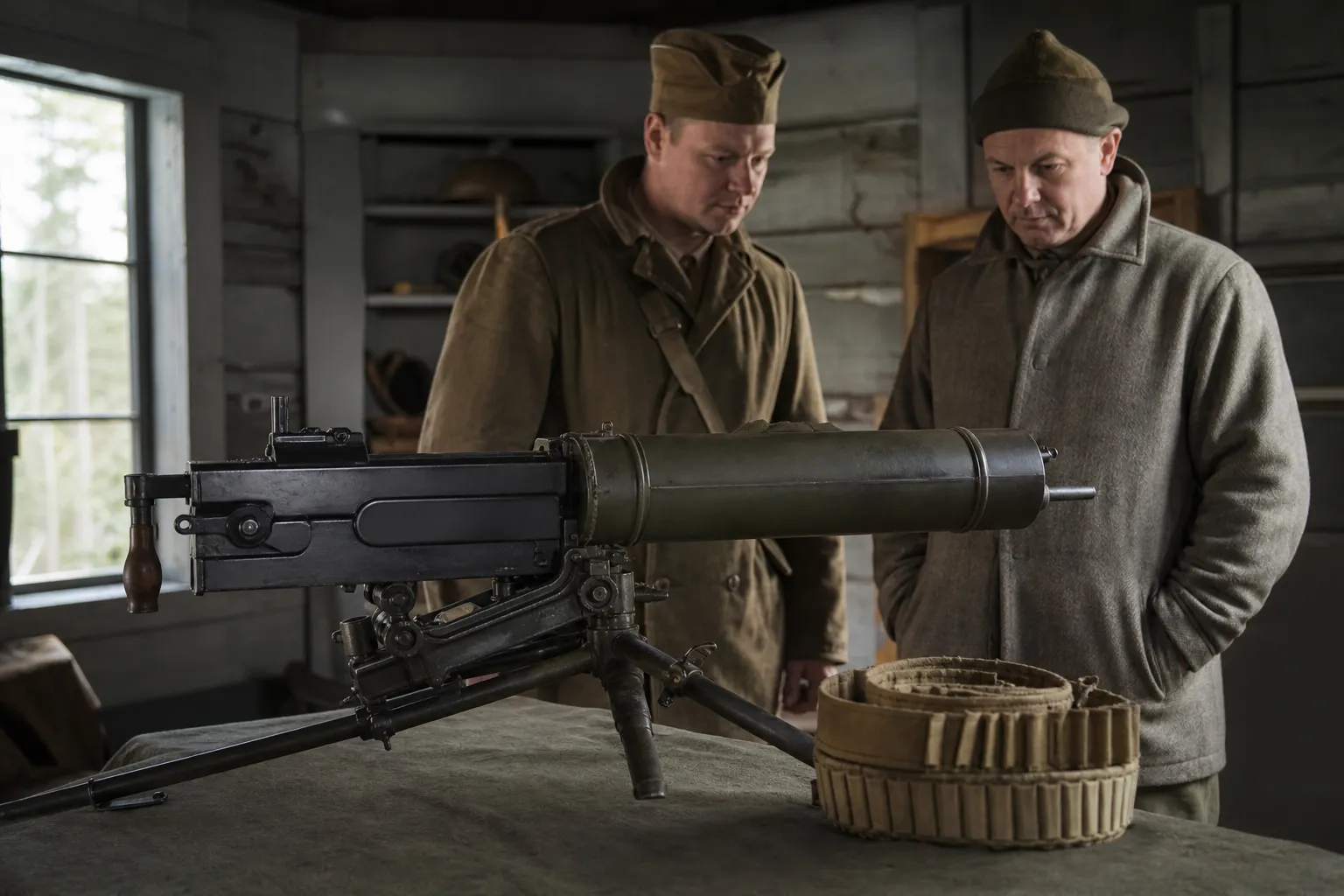
The Vickers machine gun was Britain’s long serving water cooled medium machine gun, developed from Hiram Maxim’s automatic design and adopted by the British Army as the Vickers Mark I on 26 November 1912. It served through the First World War, the Second World War and later Commonwealth conflicts, earning its reputation through sustained fire, reliability and the specialist training needed to use it well.
Origins from the Maxim gun
The British Vickers gun was developed from the automatic machine gun designed by Sir Hiram Stevens Maxim in 1884. That makes the Vickers part of the Maxim family, but not simply an unchanged Maxim.
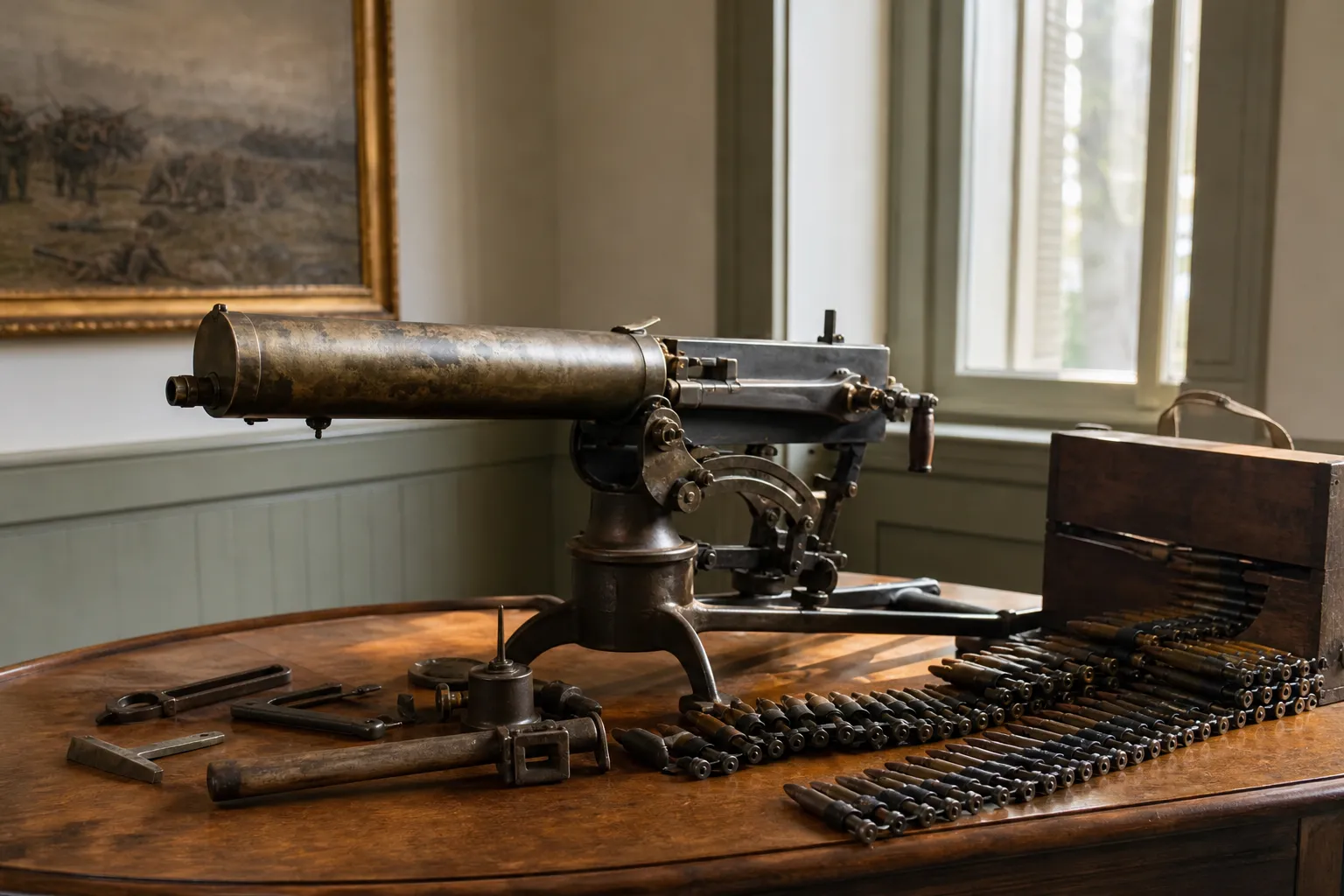
Vickers was asked to redesign the Maxim type gun. The firm made the gun smaller and lighter by flipping the mechanism upside down. The 1908 Light Pattern Vickers was a key step because it inverted the toggle mechanism of the lock, reducing the depth of the breech casing.
Earlier lightening work also mattered. An important 1906 light pattern design used high quality steel and aluminium in some parts instead of gunmetal, producing a 33 percent weight reduction compared with the prior service gun.
For readers tracing the broader family tree, the Vickers story begins with the Maxim gun, but its long service life came from Vickers’ refinements and from the way British and Commonwealth armies built doctrine around it.
Adoption by the British Army in 1912
The Class C Vickers was trialled by the British Army from 1910. After changes, it was adopted as the Vickers Mark I on 26 November 1912.
The .303 inch Mk I was listed under List of Changes 16217 on that same date, 26 November 1912. The gun became the standard machine gun of British and Commonwealth forces.
This timing placed the Vickers just before the First World War. By the time Britain entered the war, the army had a modernized Maxim type gun in service, although the way it was used would change dramatically during the conflict.
How the Vickers worked in service terms
In service terms, the Vickers depended on a supply system as much as the gun itself. Crews needed belted ammunition, cooling water, mountings and supporting equipment.
The water jacket was central to the Vickers’ role. The water would boil after about 600 rounds of continuous fire and evaporate at about 1.5 pints per 1,000 rounds. With proper handling, the Vickers could sustain fire for hours if enough belted ammunition, spare barrels and cooling water were available.
That endurance came with a burden. A Vickers typically required a six to eight man team to transport and operate the gun, accessories and ammunition. In other words, the Vickers was not just a gun. It was a crew served weapon system with ammunition, water, mountings and trained personnel behind it.
First World War service
The Vickers Mark I was used in all theatres of the First World War and was famed for reliability. At the start of the war, the British Army provided two heavy Maxim or Vickers machine guns for each cavalry regiment and infantry battalion.
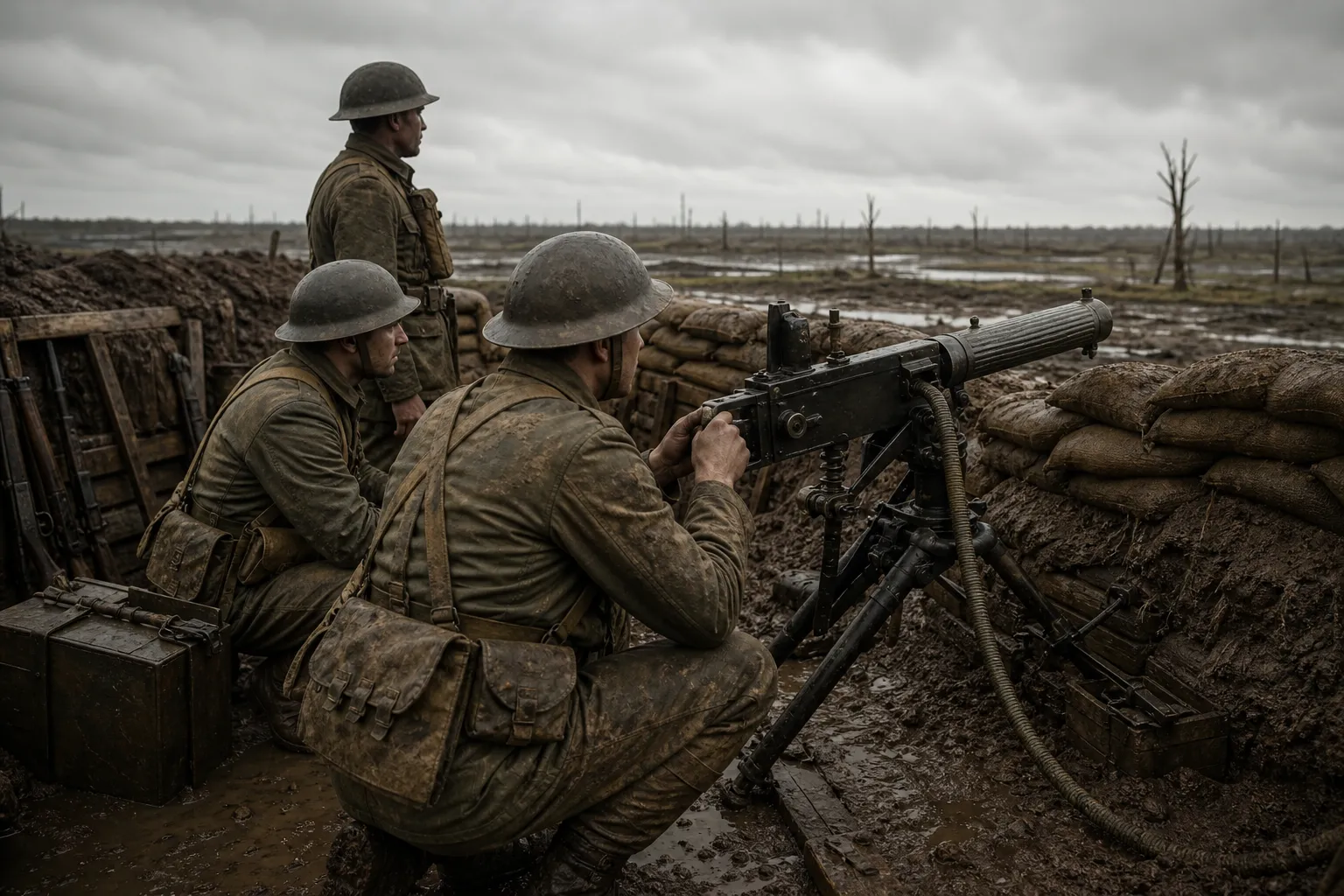
That arrangement did not last. The Machine Gun Corps was established in October 1915 by absorbing the battalion Maxim and Vickers machine gun sections from infantry regiments. From late 1915 all Vickers guns came under the new Machine Gun Corps.
The tactical use of the gun also changed. Vickers guns were then used like artillery, to attack and not only to defend. From 1917, British soldiers became used to machine gun barrages carefully plotted to arc over their heads and hit German positions.
This First World War indirect fire involved scientific fire at targets the gunner could not see. Thousands of bullets created a beaten zone. By 1916 Canadians had begun experimenting with indirect machine gun barrages in which guns fired on unseen targets using map references.
The Vickers Mk I was the primary heavy machine gun of the Canadian Corps after July 1916. That reflects the wider shift from machine guns as battalion weapons used mainly in direct fire to a more centralized system capable of planned, long range fire.
One famous story often attached to the Vickers says that guns fired one million rounds during the fighting around High Wood. The Great War saw machine gunnery develop from direct fire to mass indirect fire barrages, but the 100th Machine Gun Company war diary recorded 99,500 rounds fired by six guns between 5:45 p.m. on 24 August and 6:10 a.m. on 25 August 1916.
That recorded figure is still a striking example of sustained fire, but it is not the same as the one million round story.
Aircraft, tanks and armoured vehicles
The Vickers also moved beyond infantry use. The Royal Naval Air Service used Vickers guns in aircraft and armoured cars during the Great War, with aircraft equipped with Mk I* guns.
Aircraft use included synchronised guns. The Constantinesco gear enabled Vickers machine guns to fire through aircraft propeller blades by synchronising with the engine.
The gun entered the tank world early as well. The Vickers Mk I was first used in a tank with the Mk I Heavy Tank from 1916. The Mk I Female Heavy Tank carried four .303 inch Vickers machine guns in sponsons, two on each side.
Armoured fighting vehicle use continued beyond the First World War. British mechanised cavalry and Royal Tank Regiment units continued using .303 inch Vickers AFV variants in tanks and armoured cars until they were later replaced by Besa and Browning machine guns.
Commonwealth and Second World War service
The Vickers remained in British and Commonwealth service after the First World War.
Australia used it in later service. The Vickers Mk I with non fluted jacket was the standard medium machine gun employed by the Australian Army during the Second World War and the Korean War. In Korea, the Vickers was an important infantry support weapon, with each Australian infantry battalion equipped with six guns.
Cold weather could add another logistical demand. In Korea, anti freeze had to be added to the Vickers cooling water to prevent it from freezing and splitting the jacket open.
These Australian examples show the gun’s continued Commonwealth service beyond Britain.
British organization also changed before the Second World War. In 1936 the British Army reorganized and mechanized, once again centralizing machine gun assets by converting infantry regiments into divisional machine gun or support battalions.
Retirement and legacy
The Vickers remained in British Army service for an unusually long time. The .303 inch Mk I was listed as obsolete on 7 March 1968. The Vickers .303 continued in British Army use into the 1960s and was withdrawn in 1968.
By then it had been replaced in front line service by the Belgian designed L7 General Purpose Machine Gun, a gas operated and air cooled weapon.
The Vickers lasted because it filled a specific role very well. It was heavy, it needed a crew, and it depended on ammunition, water and supporting equipment. But when those needs were met, it was reliable and capable of sustained fire over long periods.
For anyone studying a specific Vickers gun, variant or service photograph, the key details are the exact mark, date, unit, theatre and role.
Frequently asked questions
When did the British Army adopt the Vickers machine gun?
The British Army adopted the Vickers Mark I on 26 November 1912, after trials of the Class C Vickers from 1910.
Was the Vickers machine gun just a Maxim gun?
No. It was developed from Hiram Maxim’s 1884 automatic machine gun design, but Vickers redesigned the Maxim type gun, including flipping the mechanism to make it smaller and lighter.
Why was the Vickers known for sustained fire?
The Vickers used water cooling and belted ammunition. With proper handling, it could sustain fire for hours when supplied with belted ammunition, spare barrels and cooling water.
How was the Vickers used in the First World War?
It began the war allocated to cavalry regiments and infantry battalions, then came under the Machine Gun Corps from late 1915. Vickers guns were used like artillery, including plotted barrages that arced over British troops toward German positions.
Did the Vickers serve in the Second World War?
Yes. It remained in service during the Second World War, including British Army organization around machine gun and support battalions and Australian Army use as a standard medium machine gun.
When was the Vickers retired from British service?
The Vickers was withdrawn from British service in 1968. By then it had been replaced in front line service by the L7 General Purpose Machine Gun.
Sources
- Arms of the First World War, Royal ArmouriesOfficial source. Accessed November 10, 2026.
- Vickers .303 inch Class C medium machine gun, 1910 (c), National Army MuseumOfficial source. Accessed November 10, 2026.
- Machine Gun Corps, National Army MuseumOfficial source. Accessed November 10, 2026.
- First World War Galleries large print guide, Imperial War MuseumsOfficial source. Accessed November 10, 2026.
- Development, Vickers MG Collection and Research Association. Accessed November 10, 2026.
- .303-inch Mk I, Vickers MG Collection and Research Association. Accessed November 10, 2026.
- One million rounds fired in 12 Hours? An analysis of the account of six guns of the 100th Brigade Machine Gun Company at High Wood in August 1916, Richard Fisher and Richard Willis, postprint hosted by Vickers MG Collection and Research Association. Accessed November 10, 2026.
- Vickers Machine-Gun, Canadian War MuseumOfficial source. Accessed November 10, 2026.
- Tanks, Vickers MG Collection and Research Association. Accessed November 10, 2026.
- Royal Navy, Vickers MG Collection and Research Association. Accessed November 10, 2026.
- Handbooks, Vickers MG Collection and Research Association. Accessed November 10, 2026.
- The British Army, Vickers MG Collection and Research Association. Accessed November 10, 2026.
- Official History of the Canadian Army in the Second World War, Vol I, Six Years of War, Government of Canada. Accessed November 10, 2026.
- Vickers Mk 1 Machine Gun, Australian War MemorialOfficial source. Accessed November 10, 2026.
- Out in the Cold: Australia's involvement in the Korean War, Vickers medium machine-gun, Australian War MemorialOfficial source. Accessed November 10, 2026.