.308 Winchester vs .30-06 Springfield
.308 Winchester is commonly tied to short action rifles, while 30 06 Springfield is tied to longer action rifles. The cited Hornady example shows the 30 06 load faster than the .308 load with a 178 grain bullet. For hunters, both appear in official hunting guidance, but recoil, rifle fit, ammunition choice, and current regulations should drive the final decision.
By RaiS. Reviewed by RaiS. Published . 7 min read.
Research and drafting were assisted by AI. RaiS checked the facts against the sources below and approved this page.
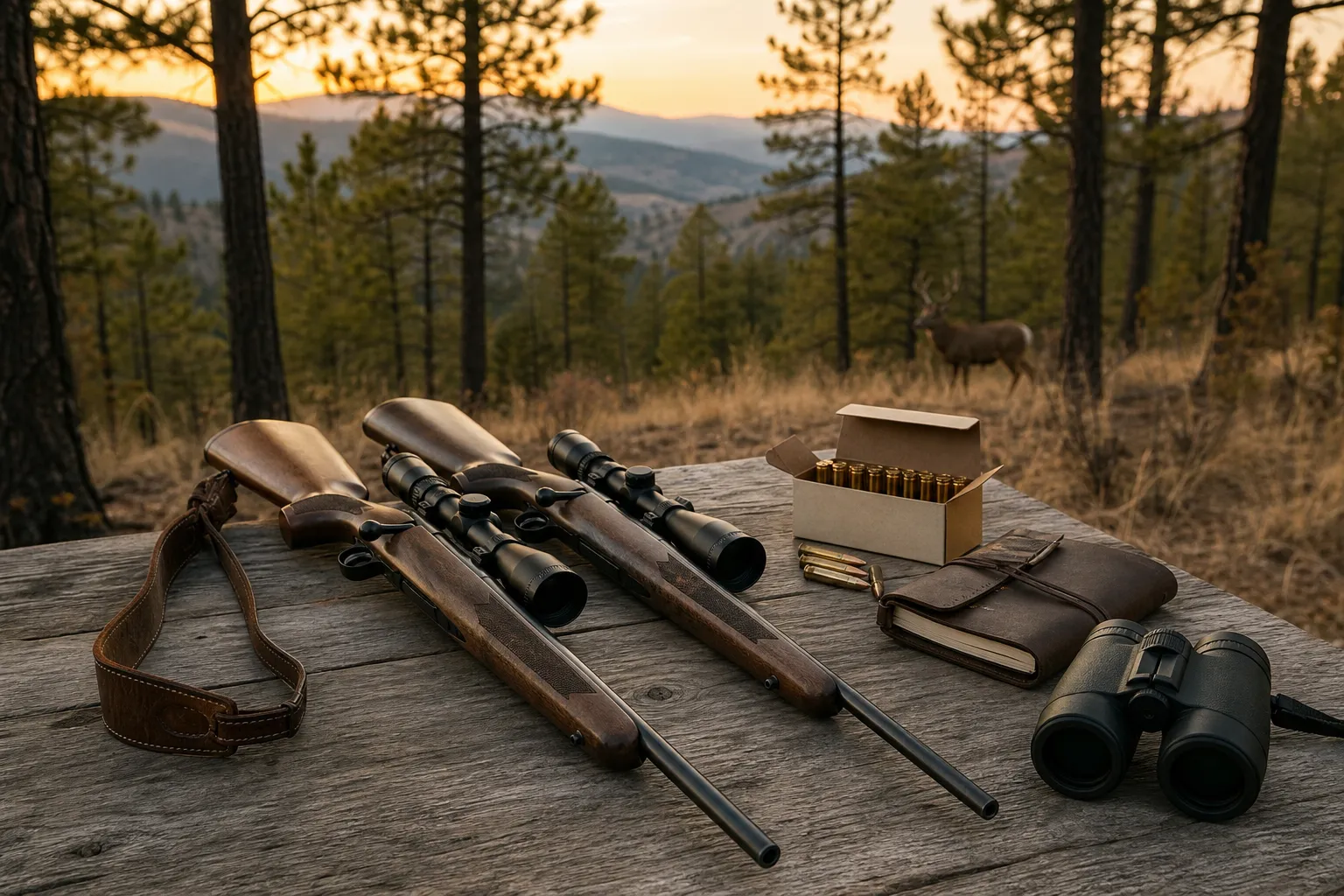
The short answer: in a 308 vs 30 06 comparison .308 Winchester is commonly associated with shorter action rifles, while 30 06 Springfield is commonly associated with longer action rifles. The cited Hornady loads show the 30 06 Springfield load carrying a velocity and energy advantage with the same 178 grain bullet. For many hunters, the practical choice comes down to rifle fit, recoil tolerance, the exact factory load, and the game and jurisdiction involved.
Quick comparison table
| Category | .308 Winchester | 30 06 Springfield |
|---|---|---|
| SAAMI cartridge name | Not quoted here | Not quoted here |
| SAAMI groove diameter | Not quoted here | Not quoted here |
| SAAMI maximum case length | Not quoted here | Not quoted here |
| SAAMI overall cartridge length | Not quoted here | Not quoted here |
| SAAMI service maximum average pressure | Not quoted here | Not quoted here |
| Origin note | Winchester says it introduced the .308 Winchester cartridge in 1952 | Identified as Cartridge, Caliber .30, Model of 1906 by American Rifleman |
| Cited Hornady same bullet example | 178 grain ELD X Precision Hunter, 2600 fps and 2671 foot pounds | 178 grain ELD X, 2750 fps and 2988 foot pounds in the cited Hornady ballistics table |
| Cited Federal copper examples | Not used here | Not used here |
| Action length note | American Rifleman describes the Remington Model 700 short action as suitable for cartridges through .308 Winchester | American Rifleman describes the longer Remington Model 700 action as adapted to cartridges of 30 06 length and slightly longer |
| Hunting context from official agencies | Alaska Department of Fish and Game includes .308 Winchester in guidance for hunters who can place shots in an 8 inch circle to 200 yards | Alaska Department of Fish and Game includes 30 06 in the same guidance and groups 30 06 and .308 with 165 to 180 grain bullets for a 200 yard sight in example |
| Recoil note | Numeric free recoil cannot be compared from the ledger alone because SAAMI’s formula needs propellant charge weight and firearm weight | Same limitation. SAAMI also warns recoil tables are not infallible guides to felt recoil |
Sources: Winchester historical timeline, American Rifleman, Hornady ammunition data and catalogs, Alaska Department of Fish and Game, and SAAMI recoil guidance.
Origins and names
Winchester says it introduced the .308 Winchester cartridge in 1952.
The 30 06 Springfield is older. American Rifleman gives the designation as “Cartridge, Caliber .30, Model of 1906.”
That history explains part of the name difference. “.308 Winchester” is a commercial cartridge name from Winchester. “30 06” points back to a .30 caliber 1906 cartridge designation.
Dimensions: the biggest mechanical difference
The retained sources in this article do not quote numerical SAAMI case length, overall length, groove diameter, or pressure values.
The practical mechanical difference retained here appears in rifle action length. American Rifleman describes the Remington Model 700 short action as suitable for cartridges through .308 Winchester, and it describes the longer Model 700 action as adapted to cartridges of 30 06 length and slightly longer.
Performance should not be read from cartridge names alone. Actual performance depends on the load, bullet, barrel, and test conditions published by the ammunition maker.
Factory load examples: velocity and energy
The cleanest same bullet example retained here is Hornady’s Precision Hunter line with a 178 grain ELD X bullet.
Hornady lists its .308 Winchester 178 grain ELD X Precision Hunter load with 2600 fps muzzle velocity and 2671 foot pounds muzzle energy.
A cited Hornady ballistics table lists the 30 06 Springfield 178 grain ELD X load at 2750 fps and 2988 foot pounds.
On that same bullet comparison, the 30 06 load is listed 150 fps faster and 317 foot pounds higher at the muzzle. That is a useful example, but it is still only one product line and bullet weight.
What this does and does not prove
These examples support a cautious conclusion: in the cited factory data, 30 06 Springfield can push the same 178 grain Hornady bullet faster than .308 Winchester.
They do not prove that every 30 06 load is faster than every .308 load. They also do not show downrange performance for every load, because the ledger only includes selected muzzle figures.
Bullet weights in the cited data
The ledger does not include every factory hunting bullet weight available for either cartridge, so this page should not pretend to be a complete catalog.
The cited examples include:
- .308 Winchester, Hornady 178 grain ELD X Precision Hunter.
- 30 06 Springfield, Hornady 178 grain ELD X.
- Alaska Department of Fish and Game sight in guidance that groups 30 06 and .308 together with 165 to 180 grain bullets for its 200 yard sight in example.
For a beginner, the key point is that bullet weight and bullet construction matter. The cited sources show overlap at 178 grains in Hornady’s ELD X line.
Recoil: why this comparison needs assumptions
It is common to hear that 30 06 kicks more than .308, but this ledger does not support a precise numeric recoil table. SAAMI’s recoil technical sheet gives a free recoil energy formula that uses ejecta weight, velocity, propellant charge weight, propellant gas velocity, and firearm weight.
The ammunition entries cited here do not provide every one of those inputs for a complete, apples to apples recoil calculation. Rifle weight is also a major missing variable. A lighter rifle can produce more free recoil energy than a heavier rifle with the same load.
SAAMI’s recoil FAQ also cautions that recoil tables are “by no means infallible” guides to felt recoil, because firearm type, fit, and shooter variables matter.
So the responsible answer is: the cited 30 06 Hornady load shows higher velocity and energy with the same 178 grain bullet, but felt recoil cannot be ranked from cartridge name alone. A new shooter should pay attention to rifle fit and should not assume two rifles in the same cartridge will feel the same.
Rifle action length
Action length is one of the practical differences between the two cartridges.
American Rifleman describes the Remington Model 700 short action as suitable for cartridges through .308 Winchester. It describes the longer Model 700 action as adapted to cartridges of 30 06 length and slightly longer.
That is not a universal specification for every rifle brand, but it is a clear example from a well known bolt action rifle family. In practical terms .308 Winchester is commonly associated with short action rifles, while 30 06 Springfield is commonly associated with long action rifles.
Deer, elk, and moose hunting context

For broader big game context, the Alaska Department of Fish and Game says a hunter with a .270 Winchester, 7mm 08.308 Winchester, or 30 06 who can place shots in an 8 inch circle out to 200 yards can be a successful Alaska hunter. Alaska’s sight in guidance also groups 30 06 and .308 together with 165 to 180 grain bullets for its 200 yard sight in example.
The ledger does not include a species specific deer, elk, or moose regulation for a particular state or province. It also does not include a universal agency statement saying either cartridge is legal for elk or moose everywhere. Hunting seasons, cartridge rules, bullet rules, and species rules vary by jurisdiction.
A careful way to use the cited information is this: both cartridges appear in official hunting agency guidance, and both are discussed in connection with Alaska hunting. For deer, elk, or moose, check the exact state, province, or territory rules, then choose a load that matches those rules and the ammunition maker’s intended use.
Which one should a beginner choose?
Choose .308 Winchester if short action rifle options matter to you, or if you prefer the rifle that fits you best in .308. The Remington Model 700 example from American Rifleman ties .308 to short action use.
Choose 30 06 Springfield if you want the longer action option and are comparing loads where the 30 06 gives more velocity or energy with the same bullet. In the Hornady 178 grain ELD X example, the cited 30 06 load is faster and higher in muzzle energy than the cited .308 load.
Do not choose from cartridge name alone. The exact rifle, fit, bullet, load, and current hunting rules matter. For beginners, the best answer may be the rifle you can shoot accurately and comfortably with an appropriate factory load.
Open questions and uncertainties
Several useful details are not in the ledger and should not be guessed:
- Complete current factory load catalogs for every ammunition maker.
- Barrel lengths for every cited catalog entry.
- Powder charge weights for recoil calculations.
- Rifle weights for recoil comparisons.
- Species specific deer, elk, and moose legality in each U.S. state, Canadian province, or territory.
- Current ammunition availability in a given store or region.
Before hunting, confirm the current regulations with the state, provincial, or territorial wildlife agency. Also confirm the exact ammunition data on the manufacturer’s current product page or catalog, because loads and published figures can change.
Frequently asked questions
Is .308 Winchester shorter than 30 06 Springfield?
This page does not retain numerical SAAMI case length or overall length values. It does cite American Rifleman examples tying .308 Winchester to short action use and 30 06 Springfield to longer action use.
Which is faster.308 or 30 06?
In the cited Hornady 178 grain ELD X comparison, 30 06 is faster: 2750 fps for 30 06 versus 2600 fps for .308. That is one same bullet factory example, not a rule for every load.
Does 30 06 recoil more than .308?
This page does not give a numeric recoil ranking because SAAMI’s recoil formula needs propellant charge weight and firearm weight, and those inputs are not provided for all cited loads. SAAMI also cautions that recoil tables are not infallible guides to felt recoil.
Which one is better for elk or moose?
The ledger does not include species specific elk or moose rules. Alaska Department of Fish and Game includes both .308 Winchester and 30 06 in general hunting firearms guidance, but hunters should confirm current regulations and load requirements with the appropriate agency.
Sources
- Historical Timeline 1950 to 1999, Winchester Repeating ArmsOfficial source. Accessed October 20, 2026.
- SAAMI Z299.4, Centerfire Rifle, 2025, Sporting Arms and Ammunition Manufacturers' InstituteOfficial source. Accessed October 20, 2026.
- SAAMI Specs for .308 Winchester, Scribd copy of SAAMI drawing. Accessed October 20, 2026.
- SAAMI Z299.4, Centerfire Rifle, 2025, Sporting Arms and Ammunition Manufacturers' InstituteOfficial source. Accessed October 20, 2026.
- Velocity and Pressure Data, Sporting Arms and Ammunition Manufacturers' InstituteOfficial source. Accessed October 20, 2026.
- SAAMI Z299.4, Centerfire Rifle, 2025, Sporting Arms and Ammunition Manufacturers' InstituteOfficial source. Accessed October 20, 2026.
- The Springfield M1903, National Park ServiceOfficial source. Accessed October 20, 2026.
- .30-'06 Springfield: History & Performance, American Rifleman. Accessed October 20, 2026.
- 308 Win 178 gr ELD-X Precision Hunter, Hornady ManufacturingOfficial source. Accessed October 20, 2026.
- 2026 Hornady International Catalog, English version, Hornady ManufacturingOfficial source. Accessed October 20, 2026.
- 2017 Hornady Product Catalog, Hornady catalog copy hosted by dealer. Accessed October 20, 2026.
- 2026 Federal Catalog, Federal Premium AmmunitionOfficial source. Accessed October 20, 2026.
- Federal Premium Rifle Ballistics, 2019, Federal Premium AmmunitionOfficial source. Accessed October 20, 2026.
- Exploded View: Remington Model 700, American Rifleman. Accessed October 20, 2026.
- Firearms and Ammunition for Hunting in Alaska, Alaska Department of Fish and GameOfficial source. Accessed October 20, 2026.
- Sighting-In Your Rifle, Alaska Department of Fish and GameOfficial source. Accessed October 20, 2026.
- Basic Firearms Hunting Equipment, Missouri Department of ConservationOfficial source. Accessed October 20, 2026.
- SAAMI FAQs, Sporting Arms and Ammunition Manufacturers' InstituteOfficial source. Accessed October 20, 2026.
- Gun Recoil Formulae, Rev. 7/9/2018, Sporting Arms and Ammunition Manufacturers' InstituteOfficial source. Accessed October 20, 2026.
- Scout rifle loads from Hornady, Hornady Manufacturing, Inc. Accessed October 20, 2026.