Caribou vs Reindeer: Same Species, Different Lives
Caribou and reindeer are the same species, Rangifer tarandus. The meaningful differences are usually about region, wild versus domestic or semi-domestic life, migration, body form, and herding history.
By RaiS. Reviewed by RaiS. Published . 8 min read.
Research and drafting were assisted by AI. RaiS checked the facts against the sources below and approved this page.
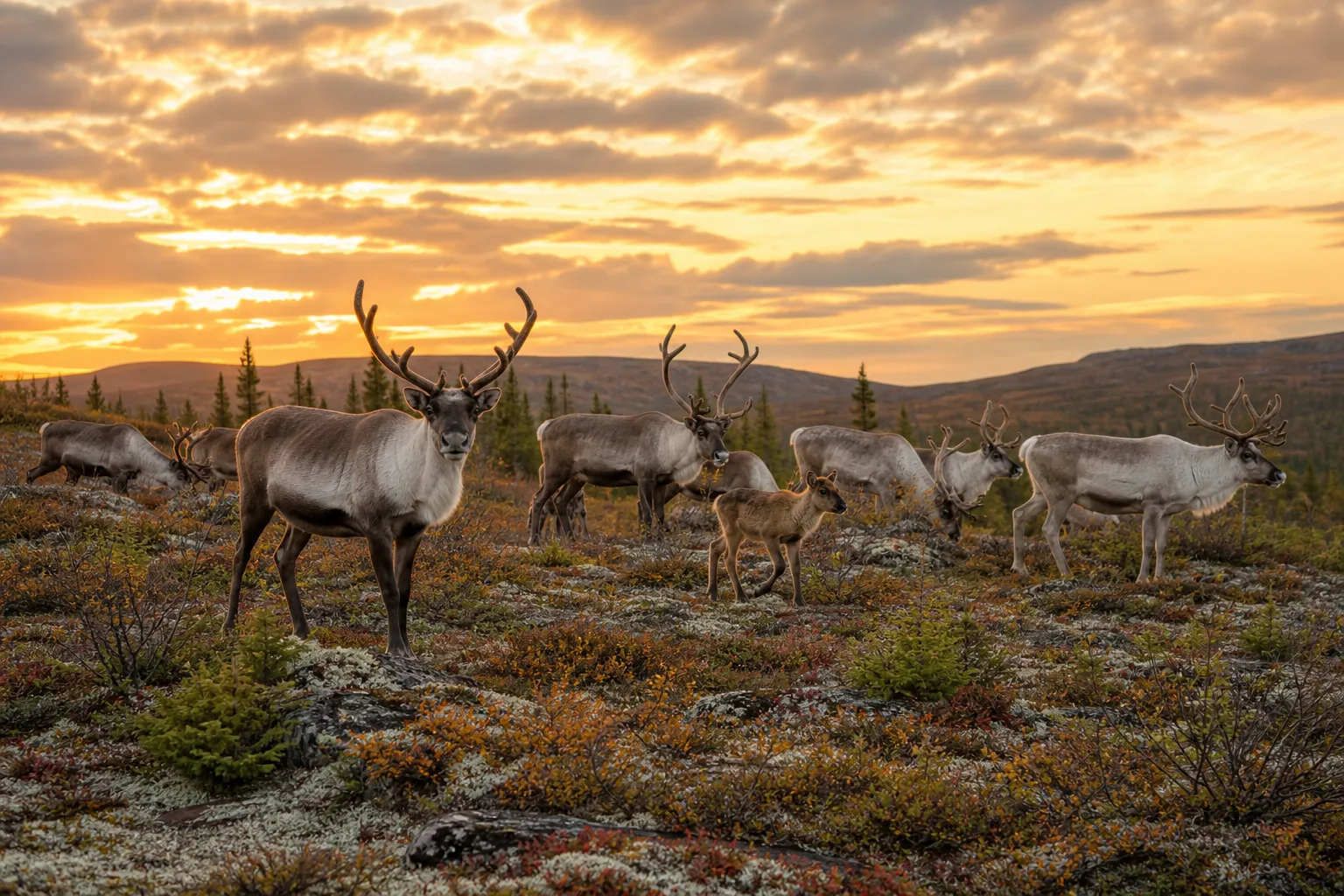
Caribou and reindeer are the same species, Rangifer tarandus. The National Park Service states that they share the same scientific name, and Environment and Climate Change Canada says caribou and reindeer are members of a single species. For most readers, the real comparison is not species versus species. It is wild North American caribou compared with domesticated, semi-domesticated, or wild reindeer in Eurasia, plus regional subspecies, local populations, migration patterns, and herding history.
Quick comparison
| Topic | Caribou | Reindeer |
|---|---|---|
| Species | Rangifer tarandus, according to the National Park Service and Environment and Climate Change Canada | Rangifer tarandus, the same species |
| Common naming | The National Park Service says caribou is the North American name for the species, and all caribou are wild animals | The National Park Service says reindeer is the Eurasian name, and reindeer can be wild, semi-domesticated, or domesticated |
| North American use | Environment and Climate Change Canada says caribou describes the subspecies present in North America | Environment and Climate Change Canada says reindeer refers to domesticated, semi-domesticated, or wild Eurasian subspecies |
| Domestic history | Wild North American caribou were not the origin of domestic reindeer herding | USGS says domestic reindeer in Alaska and Canada descend from domestic Eurasian reindeer brought to Alaska in the late 1800s |
| Body form | Size and build vary by population, sex, and region | University of Alaska Fairbanks describes reindeer as shorter, stouter, and more sedentary than caribou |
| Movement | Alaska Department of Fish and Game says large herds may migrate up to 400 miles between seasonal ranges | The National Park Service says domestic reindeer are bred to be less migratory |
| Antlers | Alaska Department of Fish and Game says both male and female caribou grow antlers | Because reindeer are the same species, this is also a trait of Rangifer, although antler presence varies by sex, age, and individual |
Same species, different names
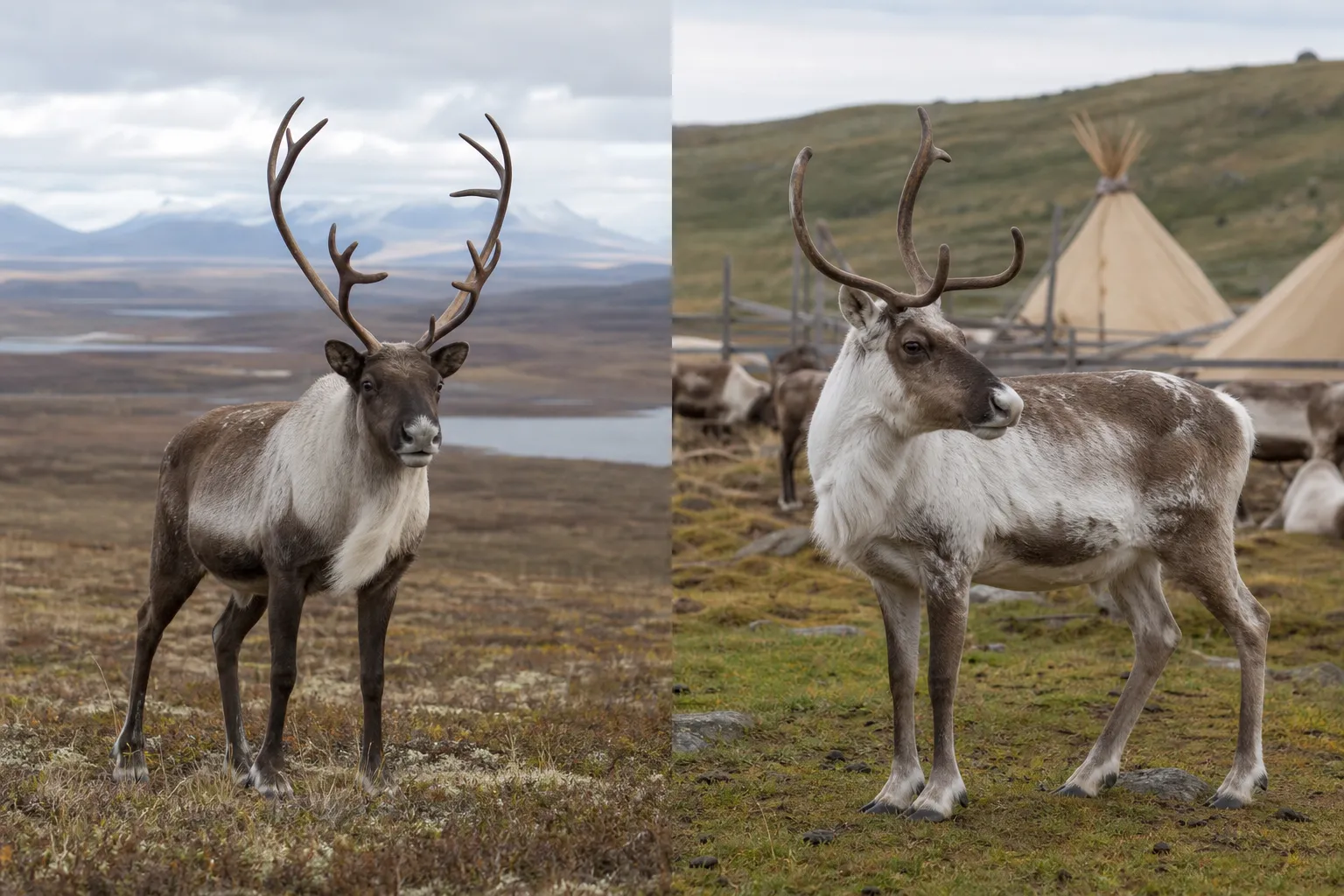
The key point is simple: caribou and reindeer are not two separate species. The National Park Service states that caribou and reindeer are the same species and share the scientific name Rangifer tarandus. Environment and Climate Change Canada also treats them as a single species and states that caribou and reindeer can interbreed and produce fertile, viable offspring.
The names differ by region and by human use. The National Park Service says caribou is what the species is called in North America, while reindeer is what it is called in Eurasia. It also states that all caribou are wild animals, while reindeer can be wild, semi-domesticated, or domesticated.
Environment and Climate Change Canada describes the distinction in similar terms. It says the term caribou is used for the various subspecies present in North America, while reindeer refers to domesticated, semi-domesticated, or wild subspecies found in Eurasia.
That is why the answer can sound confusing. A wild animal in Alaska or Canada is usually called a caribou. A domestic or semi-domesticated animal connected to herding traditions is usually called a reindeer. In Eurasia, wild and domestic Rangifer may be called reindeer.
Size and appearance
Size and build can differ between wild North American caribou and domestic reindeer, and size depends on population, sex, and region. Alaska Department of Fish and Game lists adult Alaska bull caribou at an average of 350 to 400 pounds, with recorded bulls up to 700 pounds. It lists mature females at an average of 175 to 225 pounds.
The U.S. Fish and Wildlife Service gives different figures for southern mountain woodland caribou. It lists females at about 240 to 330 pounds and males at about 350 to 460 pounds.
For reindeer, the University of Alaska Fairbanks describes them as shorter, stouter, and more sedentary than their long-legged caribou relatives. It also says reindeer bulls are smaller than caribou bulls, while reindeer cows are generally similar in weight to caribou cows.
The National Park Service explains that reindeer appearance can be influenced by diet, environment, and selective breeding. It also states that herder management and selective breeding can result in tame animals and, over hundreds of years, anatomical differences.
Antlers, hooves, and cold-country adaptations
Rangifer is unusual among deer because both sexes grow antlers. Alaska Department of Fish and Game says caribou are the only member of the deer family in which both sexes grow antlers. It describes adult bull antlers as large and massive, while adult cow antlers are much shorter and usually more slender and irregular.
The U.S. Fish and Wildlife Service says southern mountain caribou have distinct antlers that both sexes develop annually. It also notes that up to half of females may lack antlers or have one antler.
Hooves are another major adaptation. Alaska Department of Fish and Game says caribou have large, concave hooves that spread widely to support the animal in snow and soft tundra, and that the feet also function as paddles when caribou swim. Environment and Climate Change Canada describes large crescent-shaped hooves as a distinctive characteristic of all caribou, helping with flotation in snow and soft ground and assisting in digging through snow to forage on lichens and other ground vegetation.
Migration and behavior
Migration is one of the biggest practical differences readers notice. Wild caribou can be highly migratory, especially in large herds. Alaska Department of Fish and Game says large herds often migrate long distances, up to 400 miles between summer and winter ranges, while smaller herds may not migrate at all. It also says migrating caribou can travel up to 50 miles a day.
The National Park Service states that caribou conduct some of the longest terrestrial migrations in the world. By contrast, it says domestic reindeer are bred to be less migratory.
This does not mean every caribou herd behaves the same way. Alaska Department of Fish and Game specifically notes that smaller herds may not migrate at all. Environment and Climate Change Canada describes boreal caribou as forest-dwelling, sedentary caribou that occur only in Canada and are distributed broadly across the boreal forest.
The general pattern is still useful: many wild caribou populations are managed around large landscapes and seasonal movement, while domestic and semi-domesticated reindeer are shaped by herding and selection for animals that are less migratory and easier to handle.
Herding and domestication history
USGS says reindeer were domesticated in northern Europe and Asia several thousand years ago and remain the basis of herding cultures in those regions. Peer reviewed archaeology literature also says reindeer herding probably developed from the Late Iron Age onward, but the exact period, place of origin, and spread of domestic reindeer remain debated.
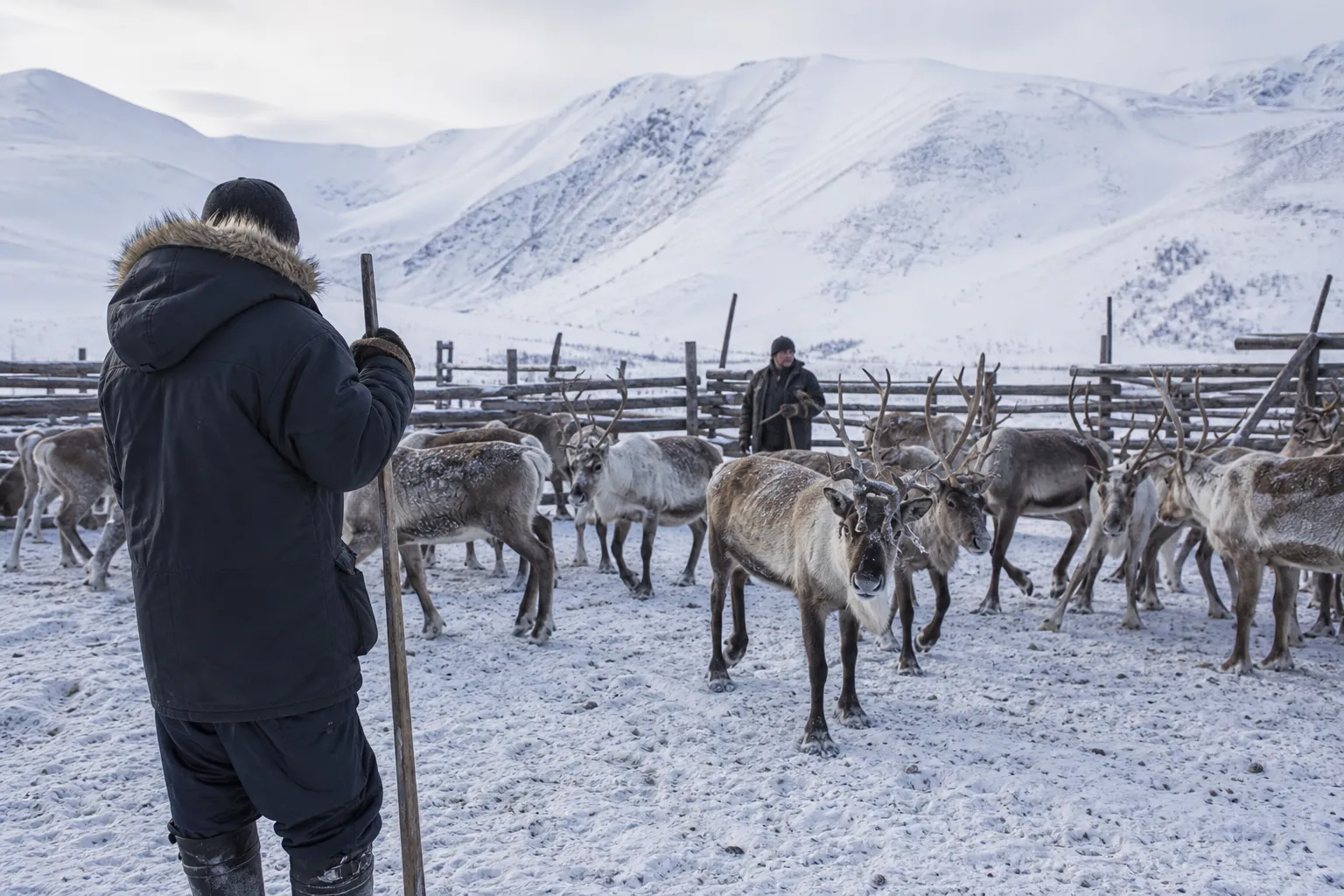
North America has a different history. USGS says domestic reindeer in Alaska and Canada descend from domestic Eurasian reindeer brought to Alaska in the late 1800s. The National Park Service says reindeer were introduced to western Alaska from Siberia in 1892, and that Inupiat communities were trained to herd reindeer through apprenticeships over about 60 years.
Peer reviewed archaeology literature states that, in North America and Greenland, reindeer domestication was introduced from Siberia and Norway in the 19th and 20th centuries rather than originating among Indigenous peoples there.
Genetics also shows separation between wild caribou and domestic reindeer in Alaska. An Animal Genetics paper reports that wild caribou and domestic reindeer in Alaska have significantly different allele frequencies at seven loci, indicating limited gene flow.
Subspecies, populations, and ecotypes
Caribou and reindeer taxonomy can be confusing because agencies may explain it at different scales. Alaska Department of Fish and Game says all caribou and reindeer worldwide are considered the same species, but lists seven subspecies: barren-ground, Svalbard, European, Finnish forest reindeer, Greenland, woodland, and Peary. It says Alaska has predominantly the barren-ground subspecies, plus one small woodland caribou herd, the Chisana herd, which moves into Canada in the Wrangell-St. Elias area.
Environment and Climate Change Canada, citing Banfield’s classification, recognizes four existing subspecies of caribou in Canada: Peary caribou, barren-ground caribou, Grant’s caribou, and woodland caribou. It also notes that Dawson’s caribou, which occurred in Haida Gwaii, is extinct.
Canadian conservation discussions often go beyond subspecies. COSEWIC recognized 12 designatable units for caribou in Canada in 2011. That helps explain why readers may see caribou described by population, designatable unit, or ecotype, not only by subspecies name.
Woodland caribou conservation in Canada
Environment and Climate Change Canada lists boreal woodland caribou as threatened under Canada’s Species at Risk Act. It says that listing is based on an observed, estimated, inferred, or suspected population reduction of more than 30 percent over three caribou generations, approximately 20 years.
Environment and Climate Change Canada describes boreal caribou as forest-dwelling, sedentary caribou that occur only in Canada and are broadly distributed across the boreal forest. It identifies habitat alteration, including habitat loss, degradation, and fragmentation from human and natural sources, along with increased predation resulting from habitat alteration, as causes of local population declines throughout their distribution.
This conservation context matters because “caribou” is not one single management situation across North America. A barren-ground herd, a southern mountain woodland caribou population, and boreal woodland caribou in Canada may all be Rangifer tarandus, but they can differ greatly in habitat, movement, population structure, and conservation status.
Bottom line
Caribou and reindeer are the same species, but they often live very different lives. In North America, caribou usually means wild Rangifer. Reindeer usually points to Eurasian wild, domestic, or semi-domesticated Rangifer, or to domestic Eurasian-descended animals introduced to places such as Alaska and Canada.
For readers and hunters, the safest way to think about the comparison is this: do not look for a species split. Look at whether the animal is wild or domestic, where it lives, which population or subspecies it belongs to, whether it migrates, and how humans have shaped its history through herding and selective breeding.
When conservation status matters, check the current information from the responsible wildlife agency. In Canada, Environment and Climate Change Canada and COSEWIC are especially important for woodland caribou and boreal caribou status. In Alaska, Alaska Department of Fish and Game provides caribou biology and herd information.
Frequently asked questions
Are caribou and reindeer the same animal?
Yes. The National Park Service and Environment and Climate Change Canada state that caribou and reindeer are the same species, Rangifer tarandus.
Why are they called caribou in one place and reindeer in another?
The National Park Service says caribou is the North American name, while reindeer is the Eurasian name. It also says all caribou are wild animals, while reindeer can be wild, semi-domesticated, or domesticated.
Can caribou and reindeer breed with each other?
Yes. Environment and Climate Change Canada states that caribou and reindeer can interbreed and produce fertile, viable offspring.
Do female caribou and reindeer grow antlers?
Alaska Department of Fish and Game says both male and female caribou grow antlers. The U.S. Fish and Wildlife Service notes that up to half of females may lack antlers or have one antler.
Are reindeer smaller than caribou?
Often, especially for males. University of Alaska Fairbanks says reindeer bulls are smaller than caribou bulls, while reindeer cows are generally similar in weight to caribou cows. It also describes reindeer as shorter, stouter, and more sedentary.
Are woodland caribou threatened in Canada?
Environment and Climate Change Canada lists boreal woodland caribou as threatened under Canada’s Species at Risk Act and identifies habitat alteration, fragmentation, and increased predation related to habitat alteration as causes of local declines.
Sources
- Caribou vs. Reindeer, U.S. National Park ServiceOfficial source. Accessed October 25, 2026.
- Caribou (Rangifer tarandus granti) Species Profile, Alaska Department of Fish and GameOfficial source. Accessed October 25, 2026.
- The Other 364 Days of the Year: The Real Lives of Wild Reindeer, U.S. Geological SurveyOfficial source. Accessed October 25, 2026.
- Woodland Caribou (Rangifer tarandus caribou), U.S. Fish and Wildlife ServiceOfficial source. Accessed October 25, 2026.
- Woodland Caribou, Boreal population (Rangifer tarandus caribou): amended recovery strategy 2020, Environment and Climate Change CanadaOfficial source. Accessed October 25, 2026.
- Caribou (Rangifer tarandus) specific populations: COSEWIC assessment and status report 2014, part 1, Environment and Climate Change Canada, COSEWICOfficial source. Accessed October 25, 2026.
- Caribou (Rangifer tarandus) COSEWIC assessment and status report 2014: chapter 1, Environment and Climate Change Canada, COSEWICOfficial source. Accessed October 25, 2026.
- Reindeer … Caribou … What’s the Difference?, University of Alaska Fairbanks. Accessed October 25, 2026.
- Genetic variation in caribou and reindeer (Rangifer tarandus), Animal Genetics, hosted by USDA Agricultural Research Service. Accessed October 25, 2026.
- Identifying early stages of reindeer domestication in the archaeological record: a 3D morphological investigation on forelimb bones of modern populations from Fennoscandia, Archaeological and Anthropological Sciences, via PubMed Central. Accessed October 25, 2026.
- Identifying early stages of reindeer domestication in the archaeological record: a 3D morphological investigation on forelimb bones of modern populations from Fennoscandia, PMC. Accessed October 25, 2026.
- Identifying early stages of reindeer domestication in the archaeological record: a 3D morphological investigation on forelimb bones of modern populations from Fennoscandia, PMC. Accessed October 25, 2026.