How Long Do Deer Live? Lifespan and How Deer Are Aged
White-tailed deer and mule deer can live much longer than most hunters ever see in the wild. Captive deer may reach their late teens or 20s, but hunting pressure, vehicles, disease, winter stress, predation, and fawn mortality keep many wild populations much younger.
By RaiS. Reviewed by RaiS. Published . 7 min read.
Research and drafting were assisted by AI. RaiS checked the facts against the sources below and approved this page.
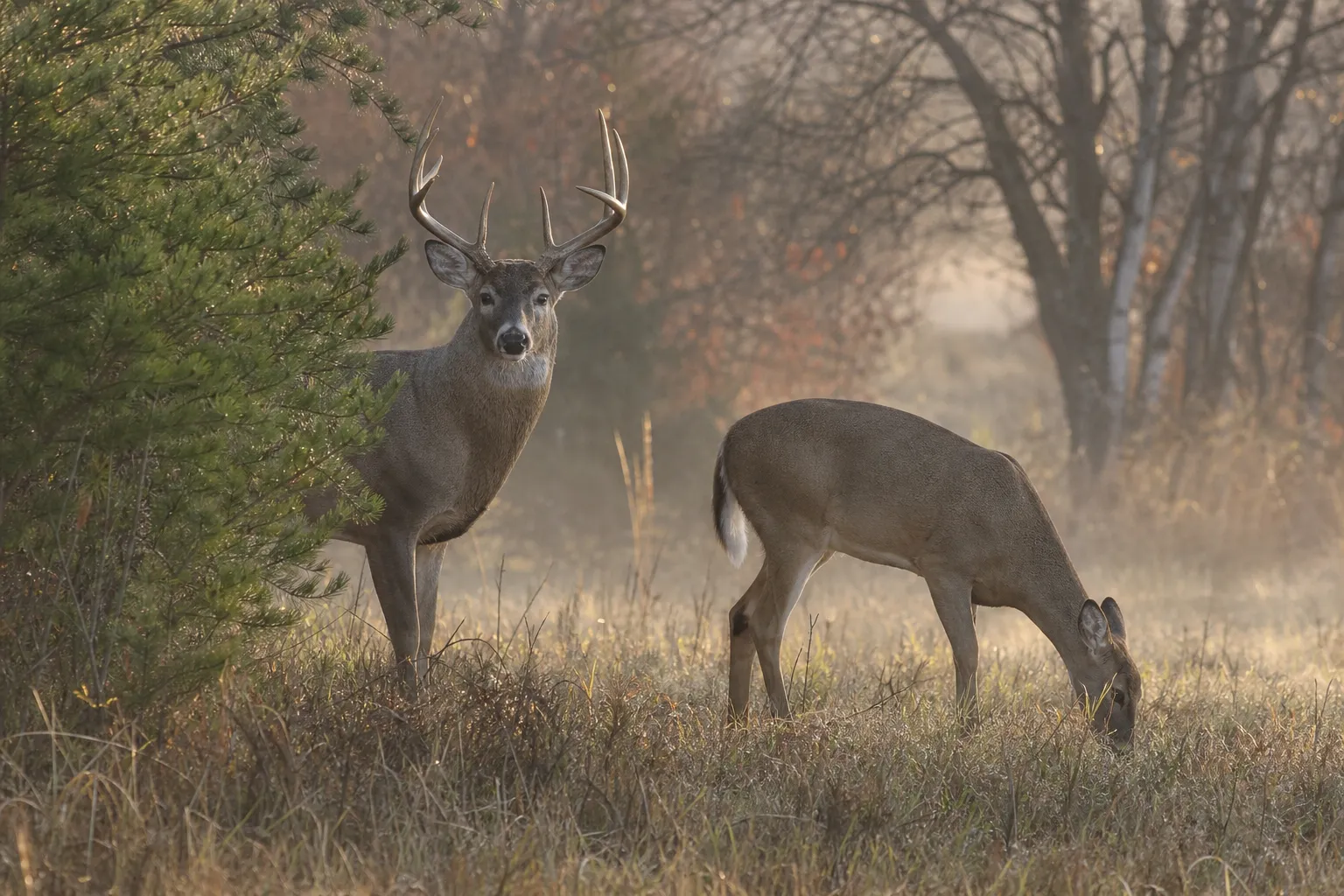
A deer’s possible lifespan is much longer than its typical age in a hunted wild population. Indiana DNR says a white-tailed deer may live 20 years or more in captivity, but a 10-year-old wild whitetail is considered old. Pennsylvania Game Commission says the average wild age is usually 2 to 3 years when hunting pressure and other mortality factors are included, while captive deer have lived up to 25 years. For mule deer, Alaska Department of Fish and Game says they usually live 9 to 11 years in the wild, and Nevada Department of Wildlife lists mule deer lifespan as 10 to 12 years.
Deer lifespan at a glance
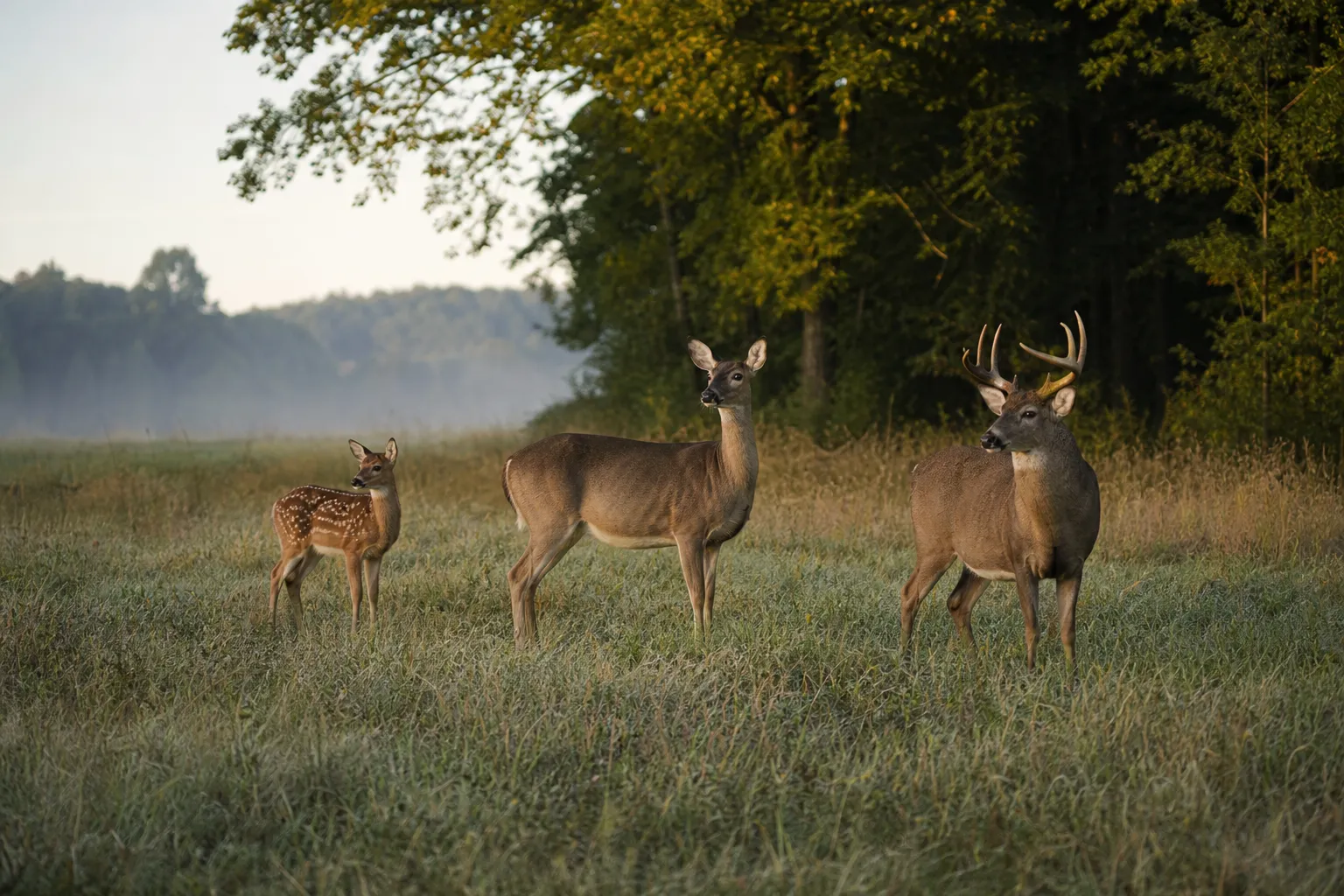
The most important distinction is potential lifespan versus average age. Potential lifespan is how long a deer can live under favorable conditions. Average age in a wild population is shaped by hunting, predation, vehicles, disease, winter severity, nutrition, and habitat quality.
| Deer | Wild lifespan or age notes | Captive lifespan notes |
|---|---|---|
| White-tailed deer | Pennsylvania Game Commission says average age in the wild is usually 2 to 3 years when hunting pressure and other mortality factors are included. Indiana DNR says a 10-year-old wild whitetail is considered old. Maine DIFW says whitetails can live to 20 years, but few wild deer do. | Indiana DNR says 20 years or more. Pennsylvania Game Commission says captive deer have lived up to 25 years. |
| Mule deer | Alaska Department of Fish and Game says mule deer usually live 9 to 11 years in the wild. Nevada Department of Wildlife lists lifespan as 10 to 12 years. Colorado NRCS says wild mule deer lifespans are about half of captive lifespans. | Colorado NRCS says captive mule deer does may live up to 22 years and bucks up to 16 years. |
These figures do not mean every deer in a herd is near old age. In many hunted populations, most deer are much younger than the maximum ages listed above.
Why most wild bucks do not reach old age
Many wild bucks never reach old age because hunting removes bucks from the population, and the breeding season adds extra risk. Maine DIFW says does typically live longer than bucks, likely because rutting behavior exposes bucks to higher losses from hunting, motor vehicle collisions, physical injuries, and depleted fat reserves going into winter.
Maine DIFW also says deer populations with high hunting mortality are made up mostly of young deer, while lightly hunted herds have a greater share of deer surviving into older age classes. That is why the age structure of a deer herd can look very different from one region to another.
Missouri Extension gives a clear example of how harvest can affect buck age structure. It says that in some locations, more than 80 percent of bucks harvested each year are 1.5-year-old yearlings, meaning few bucks survive to maturity. North Dakota Game and Fish says that in most hunted deer populations, less than 2 percent of animals are older than five years.
Recent harvest data also show that not every place is the same. The National Deer Association reported that in 2022, 26 percent of the antlered buck harvest in reporting states was 1.5-year-old bucks, while 42 percent was 3.5 years old or older. Those numbers show why local harvest pressure and regulations matter when hunters talk about “old bucks.”
Missouri Extension describes a 5.5-year-old or older buck as mature, but says most wild bucks do not survive to that maturity level because of hunting pressure.
Mortality by life stage
Different risks matter at different ages. A fawn’s first months are not like an adult deer’s life, and mule deer herds can be strongly affected by nutrition, weather, and fawn survival.
Fawns
Missouri Extension says fawns usually have the highest annual mortality rate of any deer age class. Minnesota DNR says predation is the leading cause of death for deer during their first few months, and fawns younger than one month are especially vulnerable.
Nutrition also matters. Minnesota DNR says malnourished fawns are more likely to be killed by predators or die from abandonment or disease. Utah DWR says drought can reduce plant quantity and nutritional value, and that does may not produce enough milk to adequately nourish fawns, leaving fawns too weak to survive their first year.
Fawn survival is also part of recruitment, which is the process of young deer entering the population. For more on birth timing, see When Do Deer Have Babies?.
Older fawns, yearlings, and adults
Once deer are older than the most vulnerable fawn stage, the leading risks depend heavily on the landscape.
Pennsylvania Game Commission says predators have less effect on older deer than on fawns. In Pennsylvania monitoring of more than 1,500 radio-collared deer aged 6 months and older, less than 1 percent of recorded mortalities of older deer were caused by predators.
Maine DIFW describes a different pattern by development level. In more developed areas, deer are commonly struck by vehicles, harvested by hunters, and killed by predators. In less developed areas, human-related deaths are relatively few, and adult deer are more commonly taken by predators such as coyotes, lynx, and bobcats.
Mule deer survival factors
For mule deer, agencies often emphasize doe survival, fawn survival, fawn production, nutrition, and habitat quality. Utah DWR says the most important factors driving mule deer population size are adult doe survival, fawn production, and fawn survival, not buck harvest alone.
Utah DWR also says adult mule deer with higher body fat and heavier fawns are much more likely to survive winter. Colorado Parks and Wildlife says research found winter fawn survival was significantly higher in a nutritionally supplemented mule deer area than in a control area, supporting nutrition and habitat quality as factors in mule deer declines in that area.
How biologists estimate a deer’s age
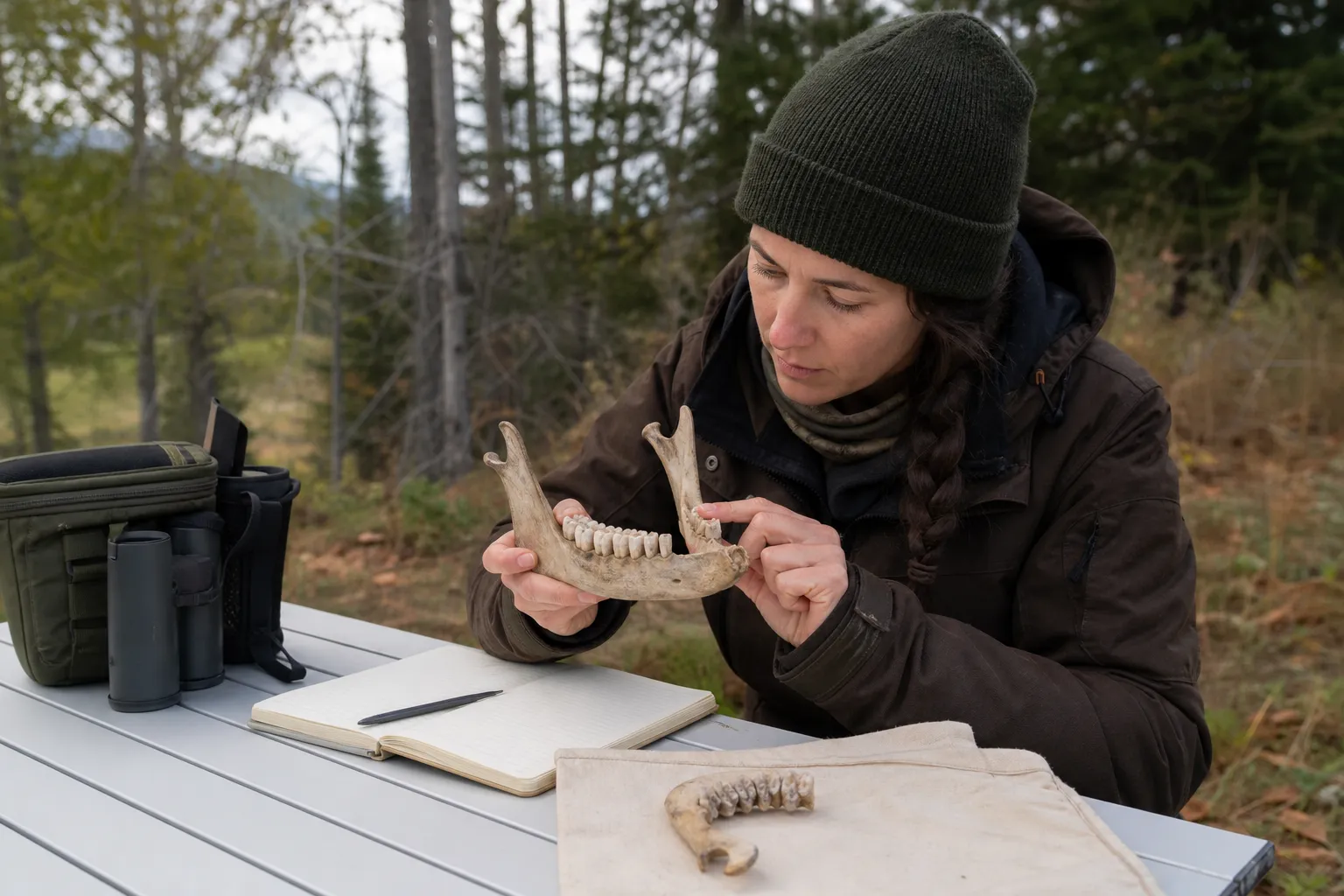
Biologists and deer managers usually estimate age from teeth, especially the lower jaw. Missouri Extension says deer age can be estimated from dental characteristics of the lower jaw using two methods: tooth replacement and wear, or cementum annuli.
Tooth replacement and wear
Tooth replacement and wear is the common field method. Missouri Extension says most harvested deer are aged this way by checking which teeth are present in the jawbone and how worn those teeth are.
This method works best for younger deer because their teeth are still replacing and erupting in a predictable sequence. North Dakota Game and Fish says all permanent deer teeth are in by 2.5 years. After that, age estimates rely largely on tooth wear.
The limitation is that wear is not perfectly consistent. North Dakota Game and Fish says diet and soil types may accelerate tooth wear, and that estimating age by tooth wear becomes less reliable beyond 5.5 years.
Cementum annuli
Cementum annuli is a laboratory tooth-aging method. WAFWA’s mule deer tooth-aging fact sheet says deer acquire annual rings in the cementum of their teeth, and those rings can be stained and counted under a microscope like tree rings.
Pennsylvania Game Commission says the best method to accurately age a white-tailed deer with certainty is to remove a lower incisor with the root attached and send it to a laboratory for cross-sectioning.
Cementum annuli is useful, but it is not a magic answer in every case. WAFWA says cementum annuli is more accurate than tooth eruption and wear for deer older than 3.5 years, while field aging is more accurate for deer 3.5 years old or younger.
Aging live deer in the field
Hunters and wildlife watchers often try to estimate a buck’s age while it is alive. That can help with selective harvest decisions or simple observation, but it is not as precise as jaw or tooth analysis.
The safest way to think about live aging is broad age class, not exact birthday. Use overall body characteristics as general clues, and do not rely on antler points alone. Pennsylvania Game Commission says antler size is not a dependable age indicator because genetics and nutrition create large variation in antler growth.
That matters because a large-antlered deer is not automatically old, and a smaller-antlered deer is not automatically young. Nutrition, genetics, and local conditions can all affect what a hunter sees.
What this means for hunters and wildlife watchers
If you see a 6-year-old or older buck in a hunted area, you are looking at a deer that has survived several major filters. It made it through the high-risk fawn stage, avoided or survived vehicles, disease, winter stress, and predation, and also avoided harvest through multiple seasons.
For does, age structure can be different. Maine DIFW says does typically live longer than bucks, likely because bucks face higher rut-related losses from hunting, vehicles, injuries, and depleted fat reserves before winter.
For mule deer watchers, fawn numbers and doe condition can be just as important as buck numbers. Utah DWR emphasizes adult doe survival, fawn production, and fawn survival as key drivers of mule deer population size.
Regulations and ethical reminder
Before hunting deer, check the current state or provincial wildlife agency regulations for the exact unit, season, tag, sex, age, and antler rules that apply where you hunt. Deer rules are location-specific and can change over time.
Also check any agency guidance on biological reporting, tooth submission, check stations, or voluntary aging programs. Those programs can help wildlife agencies understand local age structure and deer survival.
Frequently asked questions
How long do white-tailed deer live?
Indiana DNR says white-tailed deer may live 20 years or more in captivity, but a 10-year-old wild whitetail is considered old. Pennsylvania Game Commission says the average wild age is usually 2 to 3 years when hunting pressure and other mortality factors are included, and captive deer have lived up to 25 years.
How long do mule deer live?
Alaska Department of Fish and Game says mule deer usually live 9 to 11 years in the wild. Nevada Department of Wildlife lists mule deer lifespan as 10 to 12 years. Colorado NRCS says captive mule deer does may live up to 22 years and bucks up to 16 years.
Why do bucks usually not live as long as does?
Maine DIFW says does typically live longer than bucks, likely because rutting behavior exposes bucks to higher losses from hunting, motor vehicle collisions, physical injuries, and depleted fat reserves going into winter.
What kills most fawns?
Missouri Extension says fawns usually have the highest annual mortality rate of any deer age class. Minnesota DNR says predation is the leading cause of death during the first few months, and malnourished fawns are more likely to be killed by predators or die from abandonment or disease.
How do biologists age deer?
Missouri Extension says deer age can be estimated from the lower jaw using tooth replacement and wear or cementum annuli. Tooth replacement and wear checks which teeth are present and how worn they are, while cementum annuli counts annual rings in tooth cementum under a microscope.
Can you age a buck by antler points?
Antler points alone are not a reliable age indicator. Pennsylvania Game Commission says antler size is not dependable for aging because genetics and nutrition create large variation in antler growth.
Sources
- White-tailed Deer Biology, Indiana Department of Natural ResourcesOfficial source. Accessed October 25, 2026.
- Ask a Deer Question, Pennsylvania Game CommissionOfficial source. Accessed October 25, 2026.
- White-tailed Deer, Maine Department of Inland Fisheries and WildlifeOfficial source. Accessed October 25, 2026.
- White-tailed Deer, Missouri Department of ConservationOfficial source. Accessed October 25, 2026.
- Mule Deer (Odocoileus hemionus) Fact Sheet, Colorado NRCSOfficial source. Accessed October 25, 2026.
- Mule Deer Species Profile, Alaska Department of Fish and GameOfficial source. Accessed October 25, 2026.
- Mule Deer, Nevada Department of WildlifeOfficial source. Accessed October 25, 2026.
- Implementing Quality Deer Management on Your Property, University of Missouri ExtensionOfficial source. Accessed October 25, 2026.
- Aging Deer, North Dakota Game and Fish DepartmentOfficial source. Accessed October 25, 2026.
- National Deer Association DeerReport 2024, National Deer Association. Accessed October 25, 2026.
- White-tailed Deer in Minnesota, Minnesota Department of Natural ResourcesOfficial source. Accessed October 25, 2026.
- Predation and Deer Population, Pennsylvania Game CommissionOfficial source. Accessed October 25, 2026.
- White-tailed Deer, Wildlife Illinois, Illinois Department of Natural Resources and University of Illinois ExtensionOfficial source. Accessed October 25, 2026.
- DWR releases recommendations for 2026 big game hunting permits, Utah Division of Wildlife ResourcesOfficial source. Accessed October 25, 2026.
- Learn about mule deer habitat, Utah Division of Wildlife ResourcesOfficial source. Accessed October 25, 2026.
- Mule Deer, Colorado Parks and WildlifeOfficial source. Accessed October 25, 2026.
- Aging a Deer by Examining Its Jawbone, University of Missouri Extension and Missouri Department of ConservationOfficial source. Accessed October 25, 2026.
- Using Teeth to Age Mule Deer, Fact Sheet #35, Western Association of Fish and Wildlife Agencies Mule Deer Working GroupOfficial source. Accessed October 25, 2026.
- Techniques for Aging Live Deer, University of Missouri ExtensionOfficial source. Accessed October 25, 2026.
- NATURAL RESOURCES Implementing Quality Deer Manag. Accessed October 25, 2026.
- NATURAL RESOURCES Implementing Quality Deer Manag. Accessed October 25, 2026.