Peep Sight (Archery)
A bow peep sight is a small rear aperture mounted in the bowstring, often used on compound bows. The archer looks through it to center the front sight, pin, or scope, which gives the eye a repeatable rear reference.
By RaiS. Reviewed by RaiS. Published . 6 min read.
Research and drafting were assisted by AI. RaiS checked the facts against the sources below and approved this page.
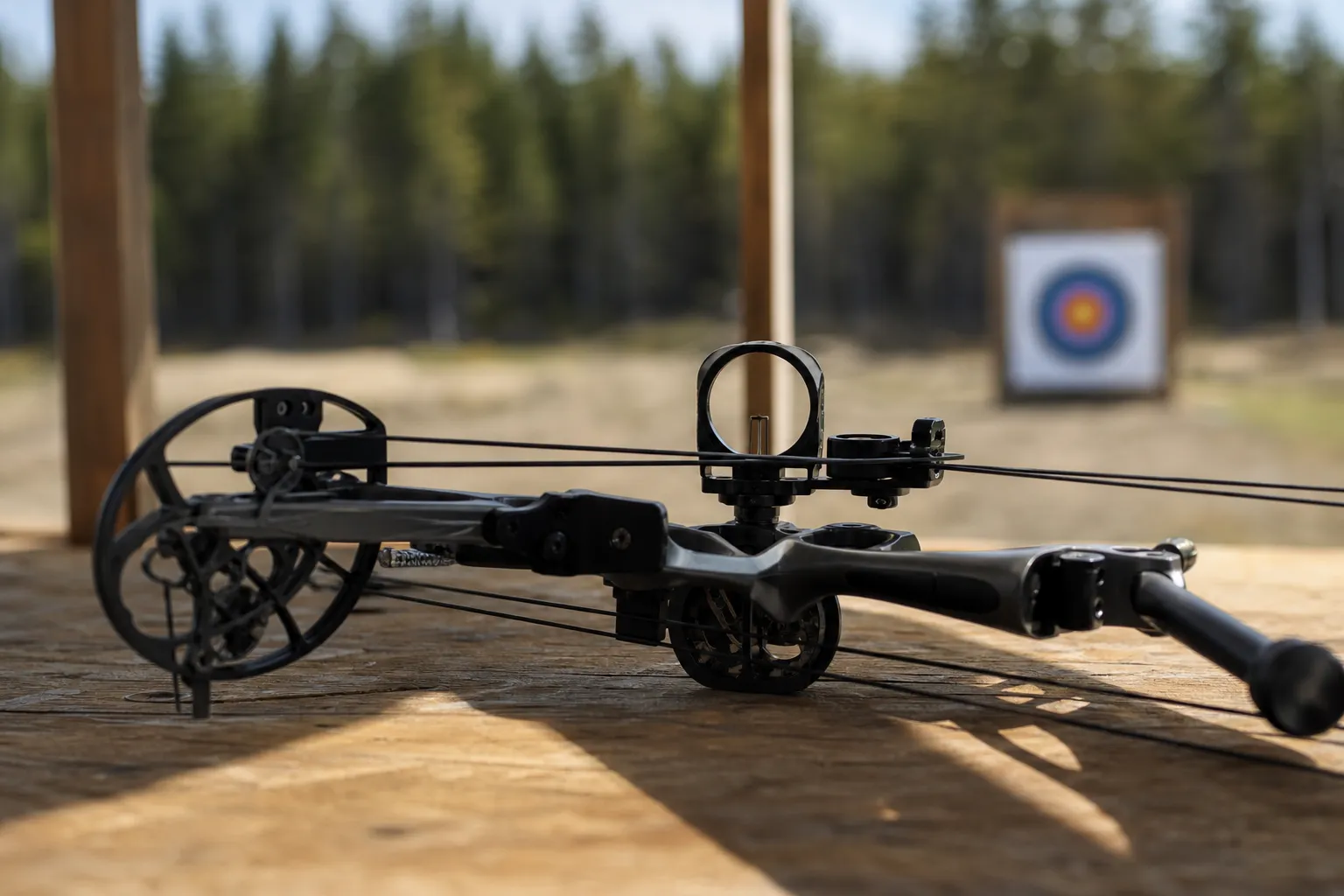
A peep sight in archery is a small aperture mounted in the bowstring at eye height. A shooting sports glossary describes the archer looking through the string peep at the sight pin to help with precise sight alignment.
What a bow peep sight does
A bow peep sight gives the archer a repeatable rear reference. Instead of only looking at the front sight, pin, or scope, the archer also looks through a small hole in the string. Archery New Zealand coaching material explains that compound archers should line up the scope in the center of the peep to help align the bow with the target.
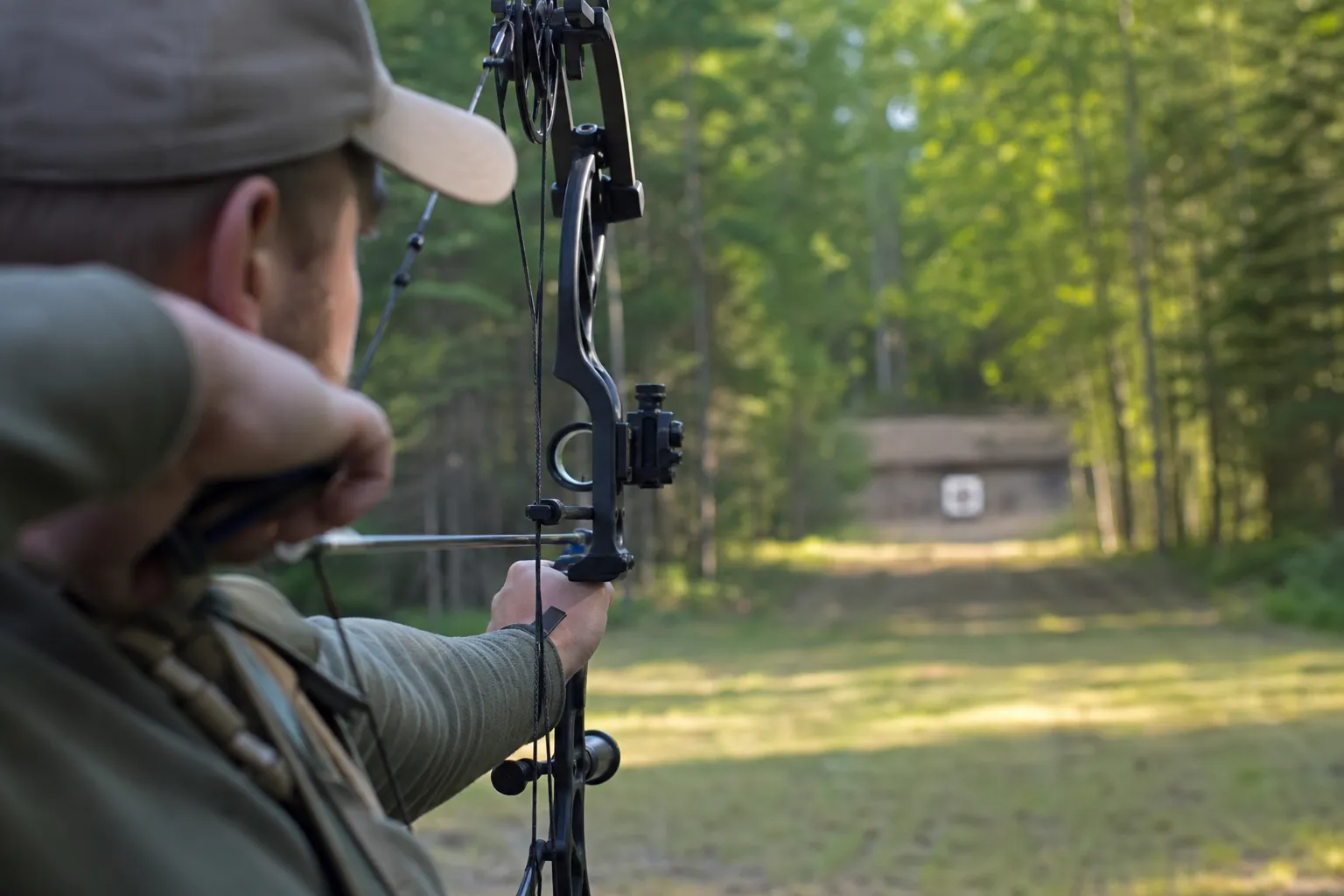
In simple terms, the peep helps put the archer’s eye in the same place from shot to shot. The shooting sports glossary calls it an aperture rear sight, a string peep, or a peep sight, and describes it as a device anchored in the string at eye height.
A peep sight is not the only part of aiming a compound bow. It works with the front sight or scope, the archer’s anchor point, the bowstring, and the way the string comes to the face at full draw.
Peep height and anchor point
Peep height should follow the archer’s natural form, not force the archer into an awkward head position. Archery New Zealand coaching material says to set the correct draw length before setting peep height.
The anchor point matters because it is the stable full draw reference. The shooting sports glossary defines an anchor point as a stable reference point for anchoring the string at full draw. Once draw length and anchor are established, the peep can be positioned so the archer can see the sight through it.
Archery New Zealand describes a check in beginner friendly terms: the archer draws the bow with eyes closed, settles into the natural anchor, then opens the eyes. When the eyes open, the archer should see the sight through the peep. If not, the peep needs to be moved up or down.
The important idea for new archers is that the peep is fitted to the archer. If the archer has to crane the neck, lift the chin, or change the anchor just to find the hole, the peep is not serving its purpose as a repeatable rear sight.
Aperture sizes
Peep sights are made with different aperture sizes. Some are fixed, while other systems accept interchangeable apertures. Specialty Archery says its peeps are threaded to accept different size apertures, clarifiers, or verifiers.
Manufacturer examples show the range. G5 lists Meta Pro peep sight sizes of 3/16 inch, 1/4 inch, and 5/16 inch for certain colors. Hamskea says its FS Raptor Peep Standard System includes interchangeable apertures of 1/4 inch, 7/32 inch, and 3/16 inch. Specialty Archery lists smaller target peep apertures of 1/32 inch, 3/64 inch, 1/16 inch, 3/32 inch, and 1/8 inch for some systems, and lists PXL Hunter Peep apertures of 1/4 inch, 3/16 inch, and 5/32 inch.
Some peep systems also accept optical accessories. Specialty Archery describes a verifier as a lens installed in the peep that helps the archer see sight pins more clearly. It distinguishes verifier use with pins from clarifier use with a scope and lens.
For a beginner, the key point is not that one aperture size is universally correct. The verified information is that peeps come in multiple sizes and some systems accept interchangeable apertures, clarifiers, or verifiers. Selection depends on the sight system and the archer’s setup.
Tubed and tubeless peeps
A tubed peep uses an elastic, rubber, or silicone tube to help pull the peep into line at full draw. Archery New Zealand notes that some entry level compound bows use an elastic cord to pull the peep sight in line.
Specialty Archery describes peep aligners that use rubber alignment tubing and mount over the peep housing. Pine Ridge Archery describes its Nitro Peep kit as including silicone peep tubing, and describes that peep as self aligning and intended to rotate into the correct position when the bow is drawn.
A tubeless peep does not use an external alignment tube. It depends on the string, peep orientation, D loop, and serving setup being correct. Archery New Zealand notes that without a cord, a bow press is required to rotate strands around the peep, and says the peep must have an equal number of string strands on each side to be centered.
Rotation matters. Archery New Zealand warns that if the peep sight does not rotate correctly, the archer will not be able to see through it. In plain terms, the hole can turn away from the eye and block the sight picture.
Setup and safety
Peep sight work is not just cosmetic. The peep is installed in the bowstring, and coaching and manufacturer material treat it as a job that must be done securely.
Archery New Zealand says the peep should always be secured with serving to prevent it coming loose when fired.
Hoyt warns shooters never to draw or shoot a bow unless string accessories, including the peep sight, are properly installed and secured to the string. Hoyt also recommends that only a Genuine Hoyt Retailer install string accessories. The Archery Trade Association compound bow technician practical assessment includes peep sight installation, which reflects that peep installation is treated as a bow technician skill.
For a new archer, the safe takeaway is simple: do not shoot with loose or unsecured string accessories, and have peep work handled by a qualified bow technician or appropriate retailer.
Competition notes
Rules vary by organization and division, so always check the current rulebook before assuming a peep is allowed.
USA Archery rules exclude a peep from the Basic Compound definition, which states that no sight, stabilizer, peep, or kisser button is allowed in that category. USA Archery fixed pins rules state that clarifiers and verifiers are permitted.
World Archery’s 2026 Book 3 differences document lists a peep hole, a peep hole hold in line device, D loop bowstring, string silencers, bowstring weights, and other attachments as permitted for compound rules, provided none of the attachments are electric or electronic.
Those rule examples are category specific. Confirm the event, class, date, and governing organization before setting up a bow for competition.
Not the same as a rifle peep sight
A bow peep sight and a firearm peep sight share the idea of looking through an aperture, but they are different pieces of equipment.
In archery, the peep is a string mounted rear aperture. The archer looks through it toward the bow sight, pin, or scope. In firearm terminology, AFTE defines a peep sight as a popular term for aperture sights, and defines the peep as the hole through which the shooter looks to align a front sight with a target. The shooting sports glossary separately describes the firearm version as a metallic rear sight for a rifle, pistol, or shotgun.
For firearm aperture sights, see ProjectGuns’ Iron Sights Explained guide.
What to check before you shoot
Before shooting a compound bow with a peep sight, confirm that the peep is properly installed and secured, the bow’s draw length and anchor fit the archer, and the peep height lets the archer see the sight naturally at full draw. If the bow is used in competition, check the current rules from USA Archery, World Archery, or the event organizer for the exact division and date.
Frequently asked questions
What is a peep sight on a bow?
It is a small rear aperture mounted in the bowstring at eye height. The archer looks through it at the front sight, pin, or scope to help keep the eye aligned the same way each shot.
How is peep height set?
Archery New Zealand says correct draw length should be set first. Its coaching material describes drawing, anchoring naturally, then checking whether the sight appears through the peep when the eyes open.
What aperture sizes do bow peeps use?
Manufacturers list many sizes. Examples include 3/16 inch, 1/4 inch, 5/16 inch, 7/32 inch, 5/32 inch, 1/8 inch, 3/32 inch, 1/16 inch, 3/64 inch, and 1/32 inch, depending on the peep system.
What is the difference between a tubed and tubeless peep?
A tubed peep uses rubber, silicone, or elastic tubing to pull the peep into line. A tubeless peep depends on correct string, peep, D loop, and serving setup so the aperture rotates into view.
Is an archery peep sight the same as a rifle peep sight?
No. An archery peep is mounted in the bowstring. A firearm peep sight is a metallic rear aperture sight mounted on a firearm.
Sources
- A Glossary for 4-H Shooting Sports Instructors, National 4-H Shooting Sports Committee, hosted by University of Arizona Cooperative ExtensionOfficial source. Accessed October 27, 2026.
- World Archery Coaching Manual Level 2, World ArcheryOfficial source. Accessed October 27, 2026.
- Foundation and Development Coaching Manual, Version 14, 29 March 2020, Archery New ZealandOfficial source. Accessed October 27, 2026.
- Event Rules, USA ArcheryOfficial source. Accessed October 27, 2026.
- Book 3 Target Archery Differences, 2026-01-27 Version, World ArcheryOfficial source. Accessed October 27, 2026.
- Compound Bow Safety and Warnings, Hoyt ArcheryOfficial source. Accessed October 27, 2026.
- Bow Technician Certification, Archery Trade AssociationOfficial source. Accessed October 27, 2026.
- Meta Peep, G5 Outdoors. Accessed October 27, 2026.
- FS Raptor Standard Peep System, Hamskea Archery. Accessed October 27, 2026.
- Frequently Asked Questions, Specialty Archery. Accessed October 27, 2026.
- Nitro Peep 3/16 inch with Color-Matched Silicone Tubing, Pine Ridge Archery. Accessed October 27, 2026.
- AFTE Glossary, 6th Edition, Current PDF, Association of Firearm and Tool Mark ExaminersOfficial source. Accessed October 27, 2026.
- Gun Sights 101: Iron Sights, Pt. 1, NRA Family. Accessed October 27, 2026.