Iron Sights Explained
Iron sights are non optical sights that help align the shooter’s eye, the firearm’s muzzle and the target. This guide explains common sight types, sight alignment, sight picture, basic adjustment terms and backup iron sights for optic equipped rifles.
By RaiS. Reviewed by RaiS. Published . 6 min read.
Research and drafting were assisted by AI. RaiS checked the facts against the sources below and approved this page.
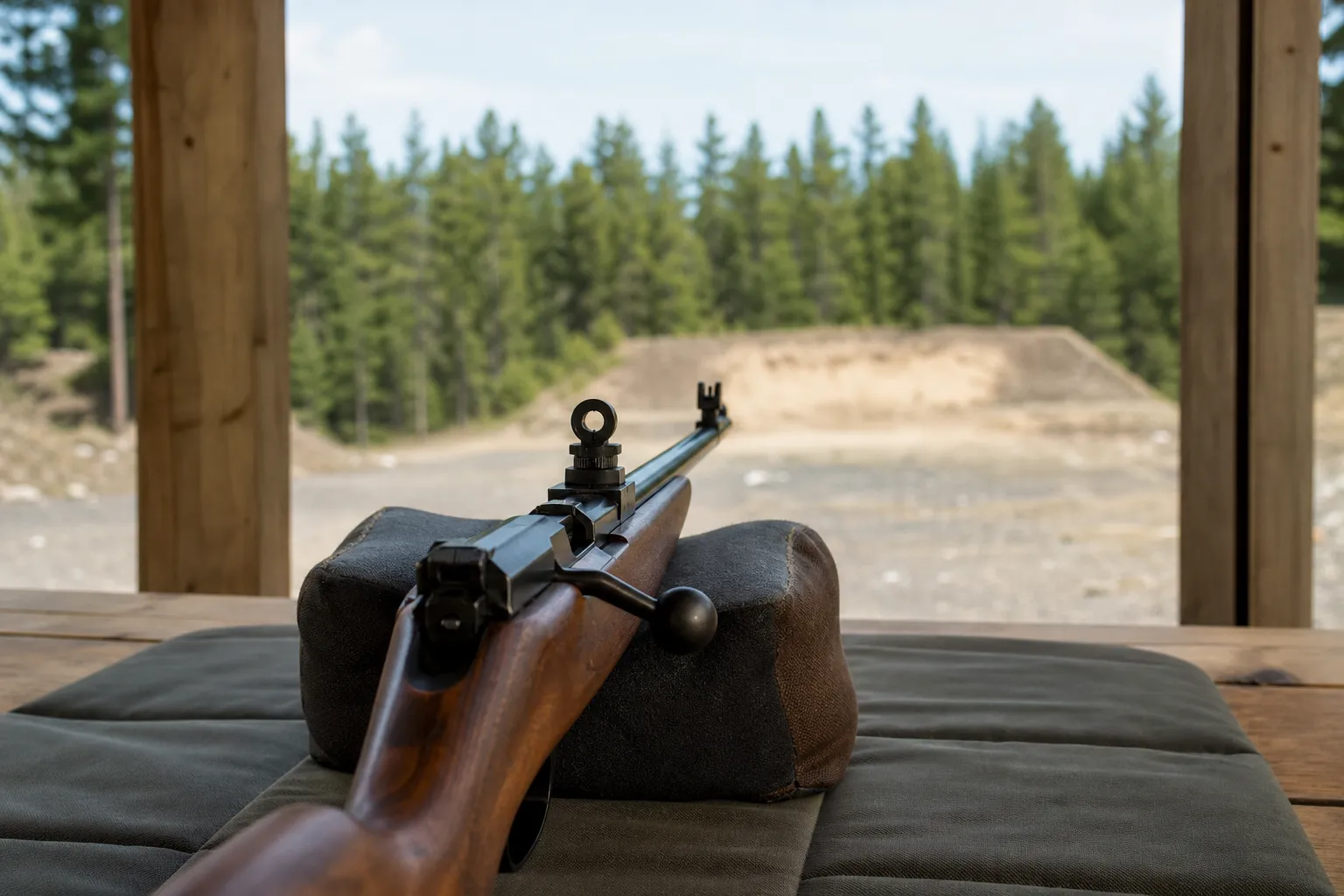
Iron sights are non-optical sighting devices used to line up the shooter’s eye, the firearm’s muzzle and the target. Hunter education material explains that sights are especially important on rifles and handguns because they fire a single projectile, unlike a shotgun pattern. The basic job is simple, but the details change with sight type: open notch-and-post sights, aperture sights, ghost rings, buckhorn sights and tritium night sights all give the eye a different reference.
What iron sights are
Hunter education material defines a sight as a device used to line up the muzzle with the shooter’s eye so the shooter can hit the target. It also lists open sights, aperture or peep sights and telescopic sights as typical rifle sight types, and says most handguns have open sights.
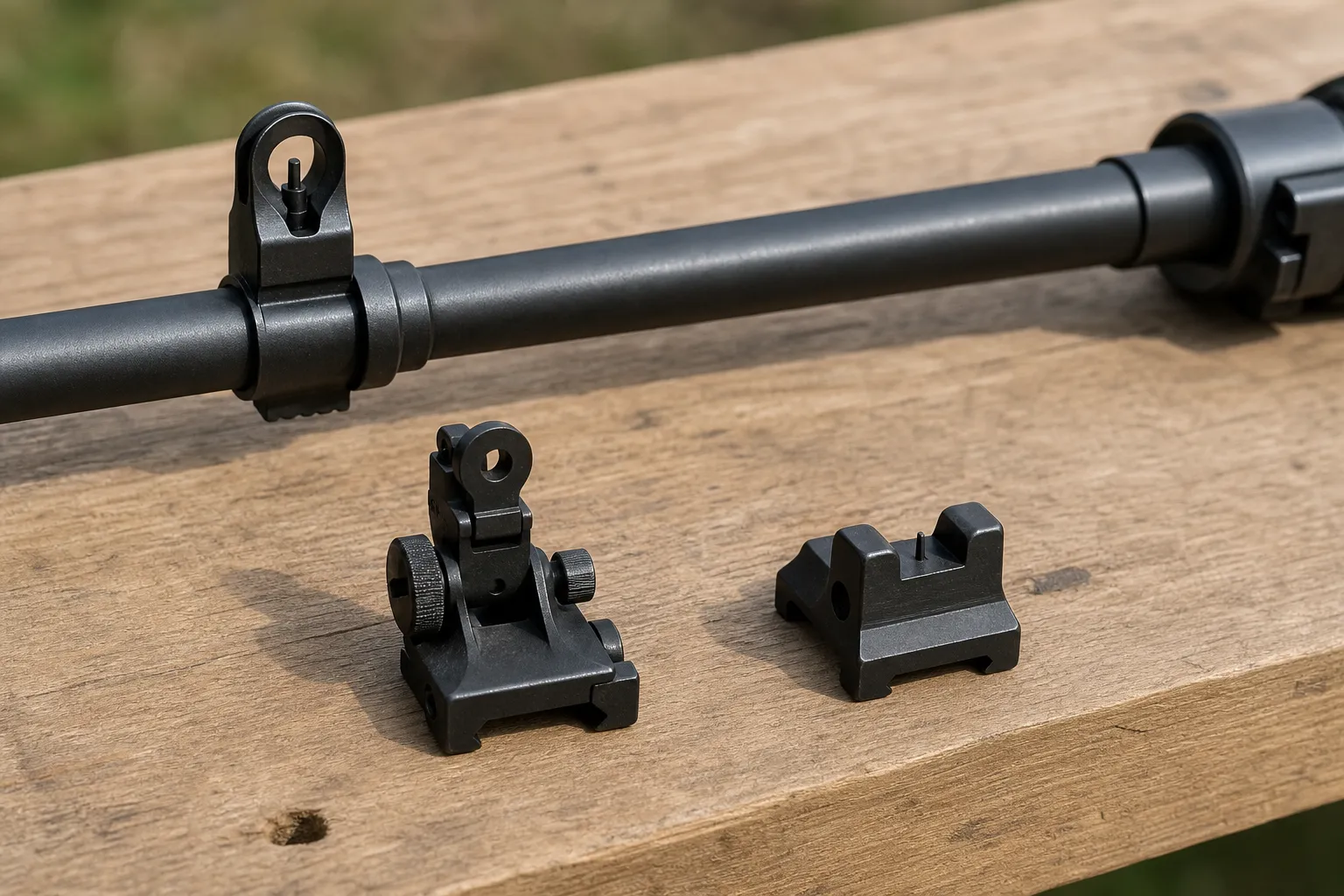
This guide focuses on iron sights, meaning sights that do not use a magnifying optic. Some are plain black metal. Some use beads, dots or tritium lamps to help the eye find the sight. Some fold down as backups on rifles that normally use an optic.
The important beginner idea is this: the sights are a reference system. The rear sight, front sight and eye must line up in a repeatable way before the sights are placed on the target.
Main iron sight types
Different iron sights solve the same alignment problem in different ways. Some favor a fine sight picture. Others favor quick sight acquisition.
| Sight type | Basic layout | What the cited references say |
|---|---|---|
| Open notch-and-post | Front bead, blade or post with a notched rear sight | Iowa hunter education material describes open iron sights as a bead or post front sight combined with a notched rear sight. |
| Aperture or peep | Rear hole or ring with a front sight | Hunter education material says the shooter looks through the rear peephole and centers the front sight in the rear peep sight. |
| Ghost ring | Aperture style sight | Discussed here as a type of aperture or peep sight. |
| Buckhorn | Rear blade with a nearly closed V-shaped notch, often with a small circular or U-shaped cutout | The Association of Firearm and Tool Mark Examiners defines it as a rugged hunting-rifle sight. |
| Tritium night sight | Iron sight with self-luminous tritium lamps | Trijicon describes its Bright & Tough sights as self-luminous, three-dot iron sights. |
Open notch-and-post sights
Open sights use a front bead or post and a notched rear sight. Iowa hunter education material describes them as simple, inexpensive and quick to sight, and says they may be fixed or adjustable.
To aim an open sight, Iowa hunter education material says to center the top of the front bead or post within the rear notch and line up on the target. On many handguns, this is the basic sight picture a new shooter first learns.
For a plain post-and-notch sight, think of the rear notch as the frame and the front post as the main reference. The top of the front sight is centered in the notch before the aligned sights are placed on the target.
Aperture or peep sights
An aperture sight, also called a peep sight, uses a rear hole or ring. Hunter education material says an aperture sight is usually mounted near the rear part of the rifle action and has a base and raised ring. It also says the sight is adjustable vertically and horizontally.
To aim, the shooter looks through the rear peephole and centers the front sight in the circle of the rear peep sight.
Ghost ring sights
A ghost ring is a type of aperture or peep sight.
It is usually discussed as a speed-oriented aperture style rather than a fine target sight.
Buckhorn and semi-buckhorn sights
The Association of Firearm and Tool Mark Examiners defines a buckhorn sight as a simple, rugged sight used on many hunting rifles. Its rear sight blade has a nearly closed V-shaped notch, often with a small circular or U-shaped cutout at the bottom.
AFTE describes buckhorn sight alignment as placing the front post bead squarely in the bottom of the cutout in the notch. NRA Family says many buckhorn sights use a stepped elevator for coarse elevation changes.
Buckhorn sights are still iron sights. The difference is the rear shape: the raised horns and V or U-shaped notch give a different visual frame than a square notch.
Tritium night sights
Tritium night sights are iron sights with self-luminous lamps. Trijicon describes its Bright & Tough night sights as self-luminous, three-dot iron sights and says tritium phosphor-filled glass lamps provide a battery-free glow for a visible sight picture in low light or no light.
Trijicon’s technical glossary identifies tritium as a radioactive isotope of hydrogen and says beta rays from the tritium strike phosphors to create the glow. Trijicon also states that tritium has a 12.5-year half-life.
Tritium does not make an iron sight optical or magnified. It gives the sight a visible reference in lighting conditions where a plain black sight may be harder to see.
Sight alignment and sight picture
Hunter education material defines sight alignment as lining up the rear and front sights. It defines sight picture as the image seen when the sights are aligned correctly with the target.
For open sights, alignment means centering the top of the front bead or post in the rear notch. For aperture sights, alignment means looking through the rear peep and centering the front sight in the opening. For buckhorn sights, AFTE says alignment consists of placing the front post bead squarely in the bottom of the rear-sight cutout.
This distinction matters for both rifles and handguns. New York hunter education material says sight alignment is important in rifle firing, but even more important in pistol shooting because handguns have a shorter distance between the sights.
A simple way to separate the terms is:
- Sight alignment: how the front sight, rear sight and eye line up.
- Sight picture: the aligned sights placed on the target.
Windage and elevation adjustments
Windage means left-right point-of-impact adjustment. Magpul’s MBUS Pro Offset Rear manual describes windage as left-right point-of-impact adjustment, and says that on that sight, clockwise rotation of the windage knob moves point of impact to the right.
Elevation means up-down point-of-impact adjustment. Magpul’s MBUS Pro Offset Front manual describes elevation as up-down point-of-impact adjustment.
A useful general rule for rear open sights comes from hunter education material: move the rear sight in the direction you want the shots to move on the target. For example, if the point of impact needs to move right, the general rear-sight rule is to move the rear sight right.
That rule explains the concept, not every sight’s exact mechanism. Sight designs vary. Some sights adjust with screws, knobs or stepped elevators. Some are fixed. Some have manufacturer-specific directions. Use the firearm or sight manufacturer’s manual for the exact sight you are using.
Backup iron sights on optic-equipped rifles
Backup iron sights are iron sights kept available on rifles that use a primary optic. Magpul describes its MBUS Pro rear sight as a windage-adjustable backup sight that is ready when the primary optic is not.
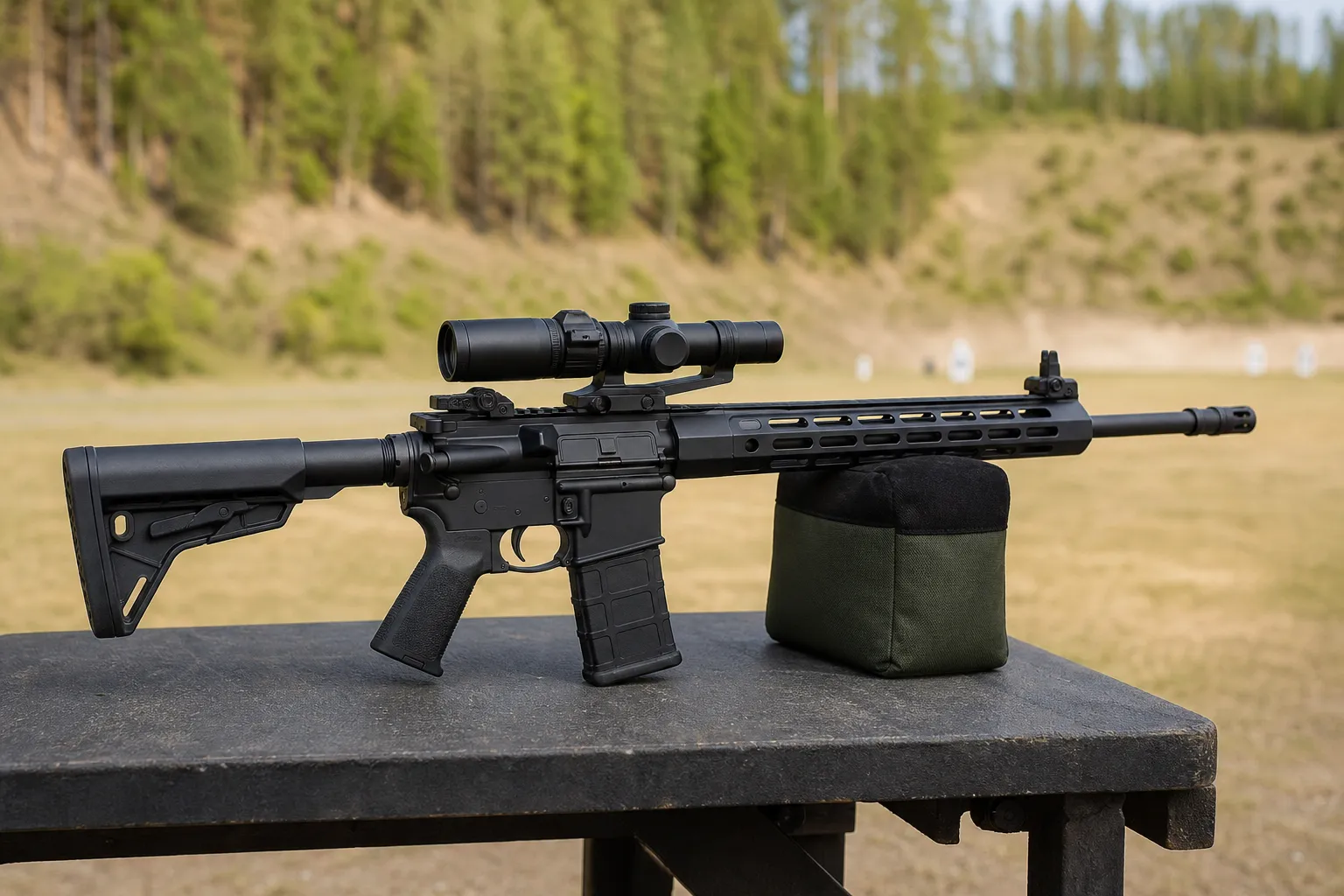
Magpul describes the MBUS rear sight as a folding backup sight with windage adjustment for many 1913 Picatinny-rail-equipped firearms, and says it is specifically tailored to AR-15/M16 platforms. Folding backup sights can stay down when an optic is being used and be raised when needed.
Some backup rear sights use more than one aperture size. Magpul describes a dual-aperture backup rear sight as having a larger aperture for rapid sight acquisition and a smaller aperture for a more refined sight picture. This gives the shooter a choice between faster acquisition and a more refined sight picture.
Offset backup sights are another arrangement. Magpul describes offset backup sights as a way to supplement magnified optics. Its material says that if the primary optic is damaged or nonfunctional, or if the target is close, rotating the rifle 45 degrees provides an iron-sighting solution.
What to check before relying on any iron sight
Iron sights are simple in concept, but not all sights adjust or present the same sight picture. Check the firearm manual and the sight manufacturer’s instructions for the exact model, especially for windage, elevation, aperture selection and folding backup sights. If you use a rifle or handgun for hunting, also confirm current rules and safe-use requirements with the official wildlife agency for the place and season involved.
Frequently asked questions
What is the difference between sight alignment and sight picture?
Hunter education material defines sight alignment as lining up the rear and front sights. Sight picture is the image seen when the sights are aligned correctly with the target.
How do you aim open notch-and-post sights?
Iowa hunter education material says to center the top of the front bead or post within the rear notch and line up on the target.
What do windage and elevation mean?
Windage is left-right point-of-impact adjustment. Elevation is up-down point-of-impact adjustment.
Which way do you move a rear sight?
Hunter education material gives this general rule for open sights: move the rear sight in the direction you want the shots to move on the target. Exact adjustment methods vary by sight, so check the manufacturer’s manual.
What are tritium night sights?
Trijicon describes its Bright & Tough night sights as self-luminous, three-dot iron sights. Its technical glossary says tritium is a radioactive isotope of hydrogen, and that beta rays from tritium hit phosphors to create the glow.
Sources
- Introduction to Sights, Hunter Ed, Montana Hunter Safety Course. Accessed October 23, 2026.
- Sights: Bead and Open, Hunter Ed, Iowa Hunter Ed Course. Accessed October 23, 2026.
- Types of sights, Hunter Ed, New South Wales R-Licence: Hunting With Firearms. Accessed October 23, 2026.
- Sight Alignment, Hunter Ed, Oklahoma Hunter Safety Course. Accessed October 23, 2026.
- Handgun Sight Alignment and Aiming, Hunter Ed, New York Hunter Safety Course. Accessed October 23, 2026.
- Sighting-in a rifle, Hunter Ed, New South Wales Hunter Safety Course. Accessed October 23, 2026.
- TC 3-22.9 Rifle and Carbine, Change 3, U.S. Army Training Support Center, Reimer Digital LibraryOfficial source. Accessed October 23, 2026.
- TC 3-22.9 Rifle and Carbine, with Change 1, U.S. Army Training Support Center, Reimer Digital LibraryOfficial source. Accessed October 23, 2026.
- TC 3-22.240 Medium Machine Gun, U.S. Army Training Support Center, Reimer Digital LibraryOfficial source. Accessed October 23, 2026.
- MAG1167 MBUS Rear Sight Instructions, Magpul IndustriesOfficial source. Accessed October 23, 2026.
- Patrol Rifle Instructor Manual, Municipal Police Training CommitteeOfficial source. Accessed October 23, 2026.
- Buckhorn Sight, Association of Firearm and Tool Mark Examiners. Accessed October 23, 2026.
- Gun Sights 101: Iron Sights, Pt. 2, NRA Family. Accessed October 23, 2026.
- Trijicon Bright & Tough Night Sights, TrijiconOfficial source. Accessed October 23, 2026.
- Technical Glossary, TrijiconOfficial source. Accessed October 23, 2026.
- MBUS Pro Offset Rear Instructions, Magpul IndustriesOfficial source. Accessed October 23, 2026.
- MBUS Pro Offset Front Instructions, Magpul IndustriesOfficial source. Accessed October 23, 2026.
- MBUS Sight, Rear Product Sheet, Magpul IndustriesOfficial source. Accessed October 23, 2026.
- MBUS Pro Sight, Rear, Magpul IndustriesOfficial source. Accessed October 23, 2026.
- MBUS Pro Offset Sight, Front Product Sheet, Magpul IndustriesOfficial source. Accessed October 23, 2026.