Hearing Protection for Shooting: Decibels, NRR, Plugs vs Muffs
Gunfire is impulse noise, so first time shooters should use well fitted hearing protection every time. NRR is useful for comparing protectors, but fit and double protection matter around firearms.
By RaiS. Reviewed by RaiS. Published . 6 min read.
Research and drafting were assisted by AI. RaiS checked the facts against the sources below and approved this page.
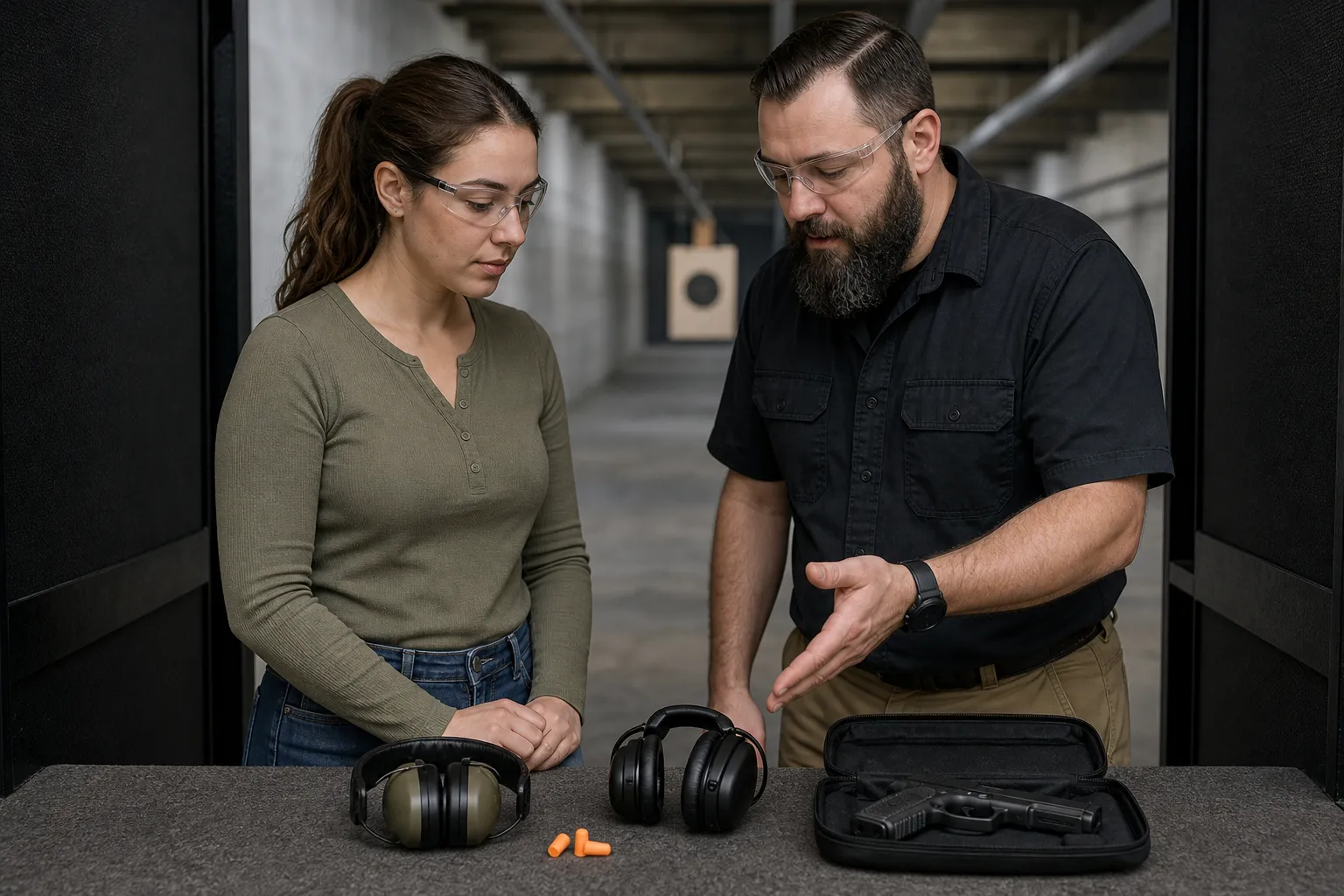
Gunfire is not just “loud.” It is impulse noise, a very short, high level sound that can damage hearing immediately at close range. NIOSH has reported firearm peak sound pressure levels from 144 dB SPL for a .22 rifle to 172 dB SPL for a .357 revolver, and ASHA says higher caliber rifles can produce sounds over 175 dBP. For shooting, the safest beginner rule is simple: wear hearing protection whenever you fire, or stand near someone firing, a firearm.
Why gunfire is different from ordinary loud noise
Most everyday noise guidance is built around exposure over time. Gunfire is different because it is impulsive. NIOSH says impulse noise risk is characterized by more than peak level alone, including duration, reverberation, frequency content, and the number of impulses.
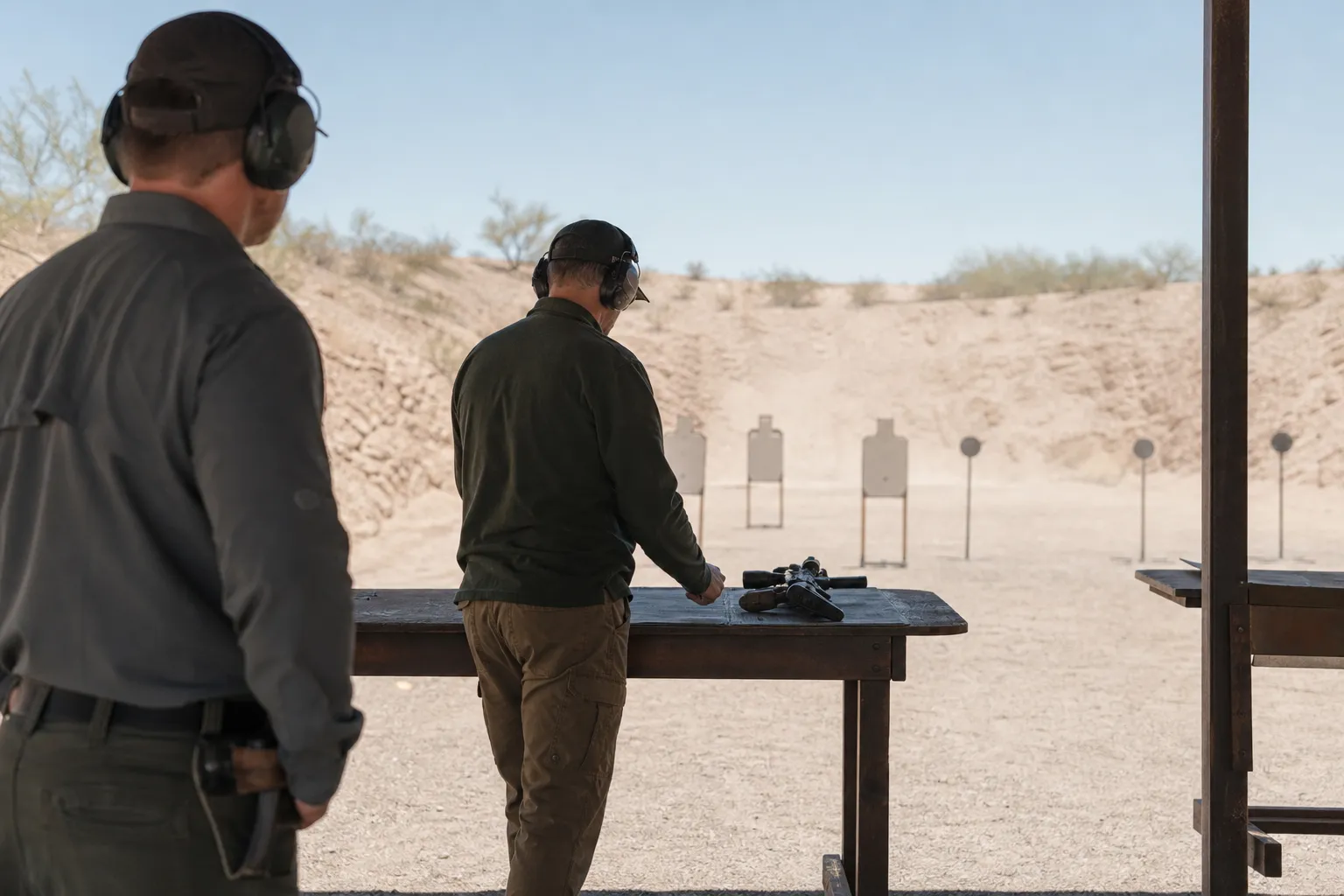
That matters at a range. NIOSH notes that reflected sound, also called reverberation, is an important factor in indoor firing range exposure. A single shot outdoors, repeated shots on a firing line, and shots inside an indoor range are not the same exposure situation.
NIOSH has also reported that firearm and fireworks impulse levels can reach 170 to 180 dB SPL or higher. NIOSH cautions that many ordinary sound measurement instruments cannot accurately capture very high impulse noise from firearms. In other words, a phone app or casual meter reading is not a reliable way to decide whether unprotected shooting is safe.
The National Institute on Deafness and Other Communication Disorders says a close range gunshot can cause immediate and permanent hearing damage. For a new shooter, that is the key point: do not wait until noise feels painful before protecting your ears.
Hearing damage thresholds: 85 dBA and 140 dB peak are not the same thing
Two numbers come up often in hearing protection discussions: 85 dBA and 140 dB peak. They describe different kinds of noise measurement.
NIOSH states that its recommended exposure limit for occupational noise is 85 dBA averaged over an 8 hour workday. NIOSH also says noise hazard depends on loudness, exposure duration, and how often exposure is repeated. Under the NIOSH method, each 3 dBA increase cuts the allowable exposure time in half.
A gunshot is a brief peak impulse. A workplace time weighted average is a measure over time.
Here is how those reference points compare:
| Reference point | What it describes | What the agency or organization says |
|---|---|---|
| 85 dBA over 8 hours | Repeated occupational noise exposure | NIOSH recommended exposure limit |
| 144 to 172 dB SPL | Reported firearm peaks in one NIOSH report | .22 rifle to .357 revolver |
| 170 to 180 dB SPL or higher | High impulse levels from firearms and fireworks | NIOSH bulletin |
| Over 175 dBP | Higher caliber rifle sounds | ASHA |
What NRR means on a hearing protector label
NRR means Noise Reduction Rating. NRR is useful for comparing labeled hearing protectors, but it is not a guarantee that every person will receive that exact reduction in real use.
For shooters, NRR should be treated as a comparison number rather than a precise prediction. Gunfire is a very short impulse sound, and NIOSH says impulse noise risk is characterized by more than peak level alone.
That point is very important for shooters. NRR is still useful, but gunfire is the kind of sound where the label number may not predict real protection precisely.
How NRR is derated in practical use
Derating means using a lower working estimate than the labeled number when thinking about real world protection.
In practical use, a cautious estimate may be lower than the printed rating because protection depends on fit, seal, and how the sound reaches the ear.
These points are not product ratings. They show why the printed NRR is not the same as the amount every shooter should assume they are getting on the firing line.
Plugs, muffs, and electronic hearing protection
Earplugs and earmuffs protect in different ways. NIDCD says earplugs are placed directly into the ear canal. NIDCD says protective earmuffs reduce noise by completely covering both ears.
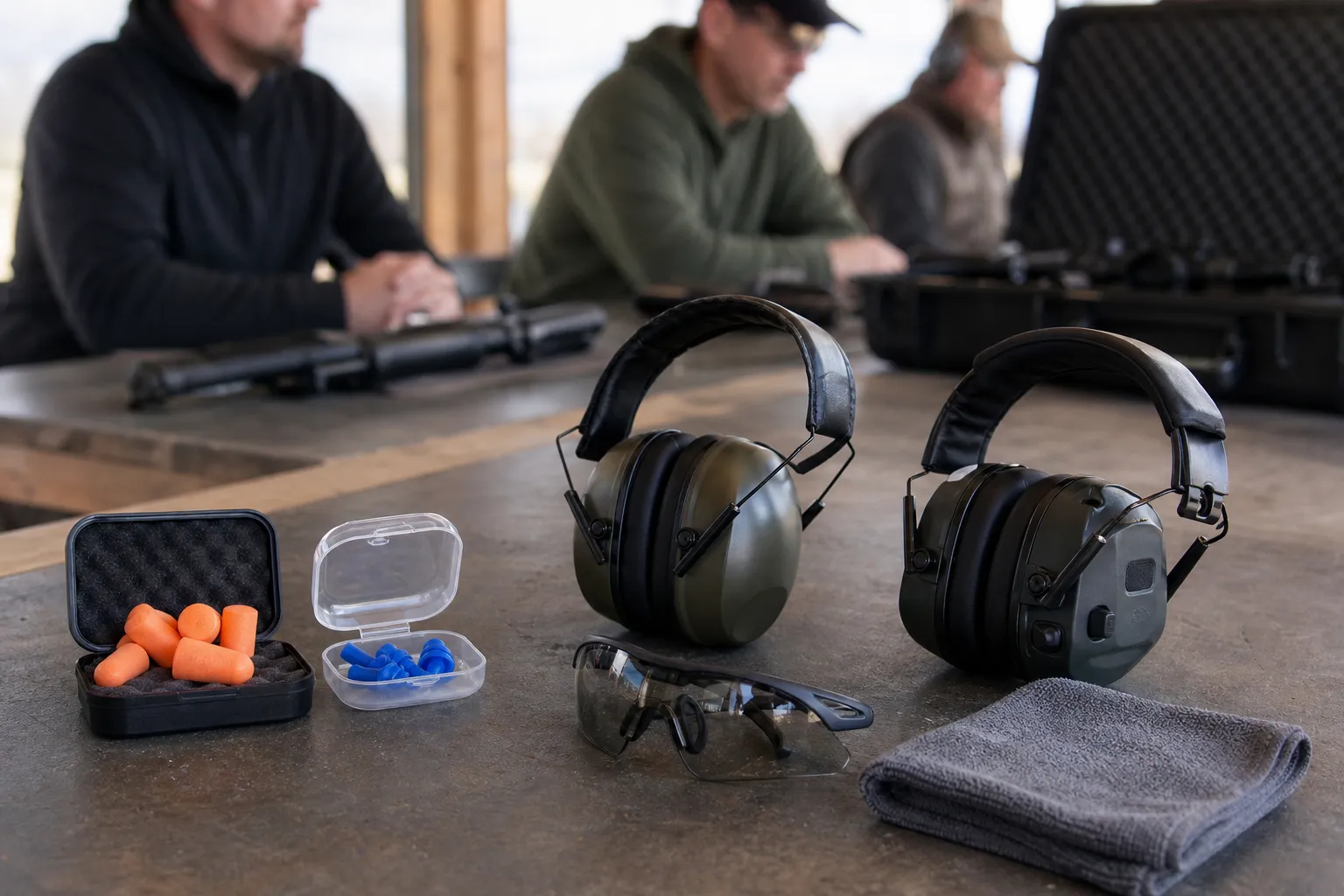
Earplugs can be small and easy to carry. Because they sit in the ear canal, their effectiveness depends on correct insertion and fit.
Earmuffs are often easier for a beginner to understand at a glance because they cover the ears. But the seal matters. NIDCD says glasses can create gaps between earmuff cushions and the skull, reducing muff effectiveness.
That point is especially relevant for shooters, because eye protection is commonly worn at ranges. Hair, hats, and similar items can also interfere with the cushion seal if they keep the muff from completely covering the ear. If a muff does not seal evenly around the ear, its real protection can be lower than its label suggests.
Electronic hearing protection is still hearing protection. ASHA says electronic hearing protection devices can pass soft or average sounds but detect loud noise and then function as hearing protection. This can help a shooter hear speech or ordinary sounds while still reducing loud gunfire sounds.
Electronic muffs or plugs do not remove the need to check fit and NRR. They should still be treated as hearing protectors with a labeled rating, not as a reason to stand near gunfire unprotected.
Double protection: plugs plus muffs
Double protection means wearing both earplugs and earmuffs. NIOSH describes double protection as wearing both earplugs and earmuffs, and NIOSH recommends double hearing protection for hunters and shooters whenever a weapon is fired.
CDC NIOSH recommends double protection, specifically earmuffs over earplugs, for impulse sounds. ASHA also advises double protecting ears by putting earmuffs over earplugs when shooting firearms.
Even with two devices, fit still matters for both devices. Poorly inserted plugs under poorly sealed muffs can leave a shooter with less protection than expected.
Best practice for first time range visitors and hunters
For a first range visit, the practical advice is straightforward: use hearing protection every time there is gunfire nearby. NIOSH recommends double hearing protection for hunters and shooters whenever a weapon is fired, and ASHA advises earmuffs over earplugs when shooting firearms.
Double protection is especially sensible around impulse noise. It is also a common choice for indoor ranges, where NIOSH notes that reflected sound, or reverberation, is an important factor in exposure.
There is one caution. CDC NIOSH says overprotection can reduce awareness of surroundings. That can matter when you need to hear instructions, commands, or activity around you. Electronic hearing protection may help because ASHA says these devices can pass soft or average sounds while responding to loud noise.
For a first time shooter, though, underprotection around gunfire is the bigger concern. NIDCD says a close range gunshot can cause immediate and permanent hearing damage. Choose protection, fit it carefully, and keep it on whenever shooting is happening.
Quick checklist before shooting
Use this checklist before you step onto the firing line:
- Wear hearing protection before shooting starts.
- Consider double protection, earmuffs over earplugs, for gunfire.
- Check that earplugs are properly seated in the ear canal.
- Check that earmuffs completely cover both ears.
- Make sure glasses do not create gaps under the muff cushions.
- Do not rely on the printed NRR as a perfect prediction for gunfire.
- Keep protection on when people nearby are firing.
Before relying on any protector, check its rating and fit instructions. If you need to know whether your hearing protectors are giving the needed reduction, CDC NIOSH says fit testing can verify the noise reduction being provided.
Frequently asked questions
How loud is a gunshot?
NIOSH reported firearm peak sound pressure levels from 144 dB SPL for a .22 rifle to 172 dB SPL for a .357 revolver. NIOSH also reported that firearm and fireworks impulse levels can reach 170 to 180 dB SPL or higher, and ASHA says higher caliber rifles can produce sounds over 175 dBP.
What does NRR mean?
NRR means Noise Reduction Rating. It is useful for comparing hearing protectors, but it should not be treated as a perfect prediction of real protection during gunfire.
Does the NRR number tell me exactly how much protection I get from gunfire?
No. Gunfire is impulse noise, and NIOSH says impulse noise risk depends on more than peak level alone, including duration, reverberation, frequency content, and the number of impulses. Fit and seal also matter.
Should I wear earplugs, earmuffs, or both for shooting?
NIOSH recommends double hearing protection for hunters and shooters whenever a weapon is fired. CDC NIOSH and ASHA both advise earmuffs over earplugs for shooting or impulse sounds.
Are electronic earmuffs hearing protection?
Yes, if they are hearing protection devices. ASHA says electronic hearing protection devices can pass soft or average sounds but detect loud noise and then function as hearing protection.
Sources
- Noise-Induced Hearing Loss, CDC NIOSHOfficial source. Accessed October 22, 2026.
- Provide Hearing Protection, CDC NIOSHOfficial source. Accessed October 22, 2026.
- How Can we Measure Impulse Noise Properly?, CDC NIOSHOfficial source. Accessed October 22, 2026.
- Firearms and Hearing Protection, CDC Stacks, NIOSHOfficial source. Accessed October 22, 2026.
- 29 CFR 1910.95, Occupational noise exposure, Occupational Safety and Health AdministrationOfficial source. Accessed October 22, 2026.
- 1910.95 Appendix B, Methods for Estimating the Adequacy of Hearing Protector Attenuation, Occupational Safety and Health AdministrationOfficial source. Accessed October 22, 2026.
- OSHA Technical Manual, Section III, Chapter 5, Occupational Safety and Health AdministrationOfficial source. Accessed October 22, 2026.
- 40 CFR 211.204-1, Information content of primary label, Electronic Code of Federal RegulationsOfficial source. Accessed October 22, 2026.
- 40 CFR 211.204-4, Supporting information, Electronic Code of Federal RegulationsOfficial source. Accessed October 22, 2026.
- Hearing Protectors, National Institute on Deafness and Other Communication DisordersOfficial source. Accessed October 22, 2026.
- Recreational Firearm Noise Exposure, American Speech-Language-Hearing Association. Accessed October 22, 2026.