The .17 HMR: Ballistics, Uses and Limits
The .17 HMR is a high-speed rimfire rifle cartridge introduced in 2002, based on the .22 WMR case necked down for .172-inch bullets. It is best understood as a varmint and small-game rimfire with light bullets, useful velocity, noticeable wind drift, and clear safety limits.
By RaiS. Reviewed by RaiS. Published . 5 min read.
Research and drafting were assisted by AI. RaiS checked the facts against the sources below and approved this page.
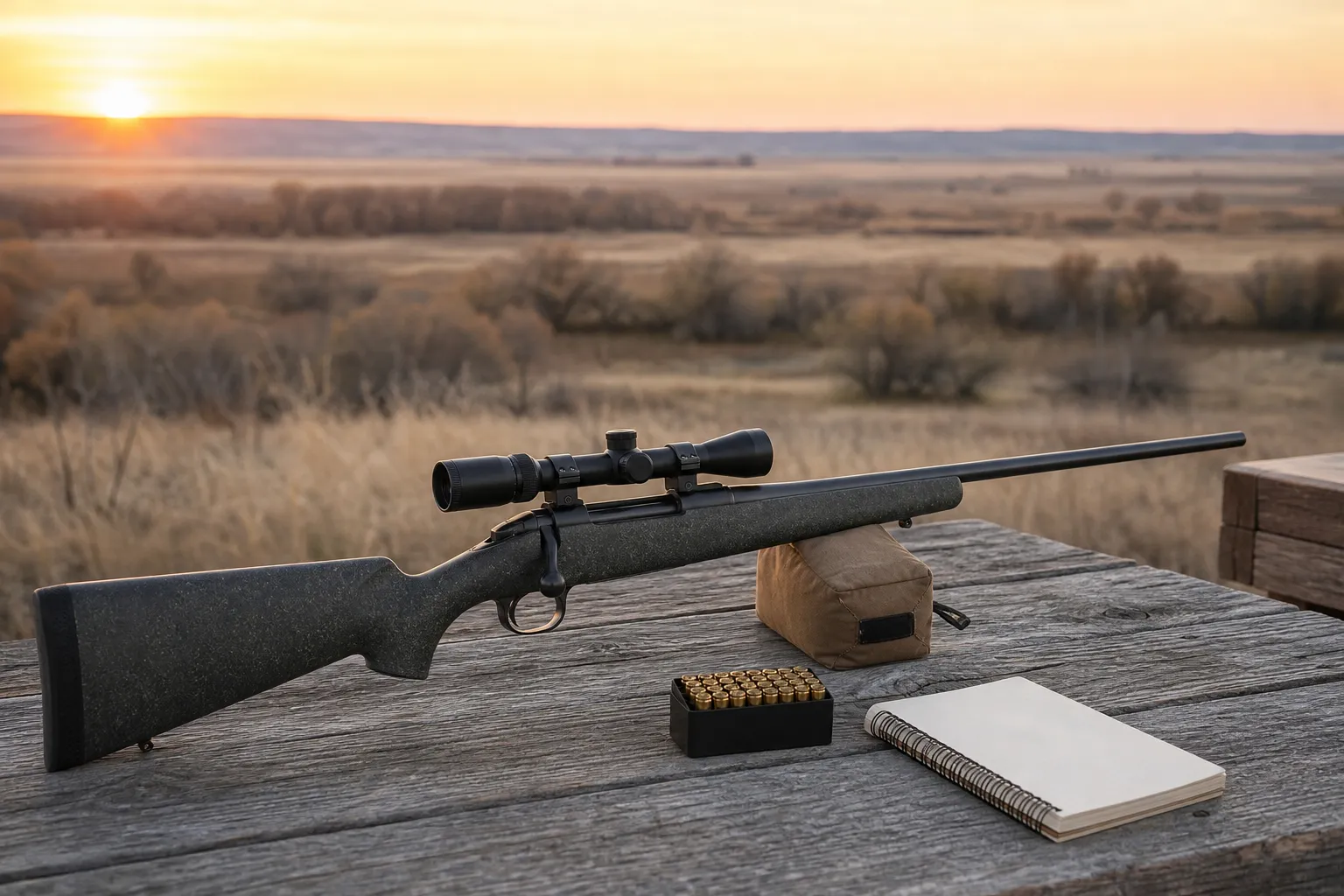
The .17 Hornady Magnum Rimfire, usually written as .17 HMR or 17 HMR, is a high-speed rimfire rifle cartridge for varmints and small game. American Hunter states that it was released in 2002 and is based on the .22 Winchester Magnum Rimfire case necked down for .172-inch bullets, while Ruger described Hornady’s new .17 HMR as being introduced to Ruger rotary-magazine bolt-action rifles in January 2002. Compared with older common rimfires such as the .22 LR, it uses very light bullets at much higher published velocities, but wind, range, target size, and firearm safety warnings still matter.
What the .17 HMR is
SAAMI lists the cartridge’s full name as 17 Hornady Magnum Rimfire and its abbreviated name as 17 HMR. In SAAMI’s rimfire standard, the .17 HMR drawing was issued on June 25, 2002 and revised on February 6, 2025.
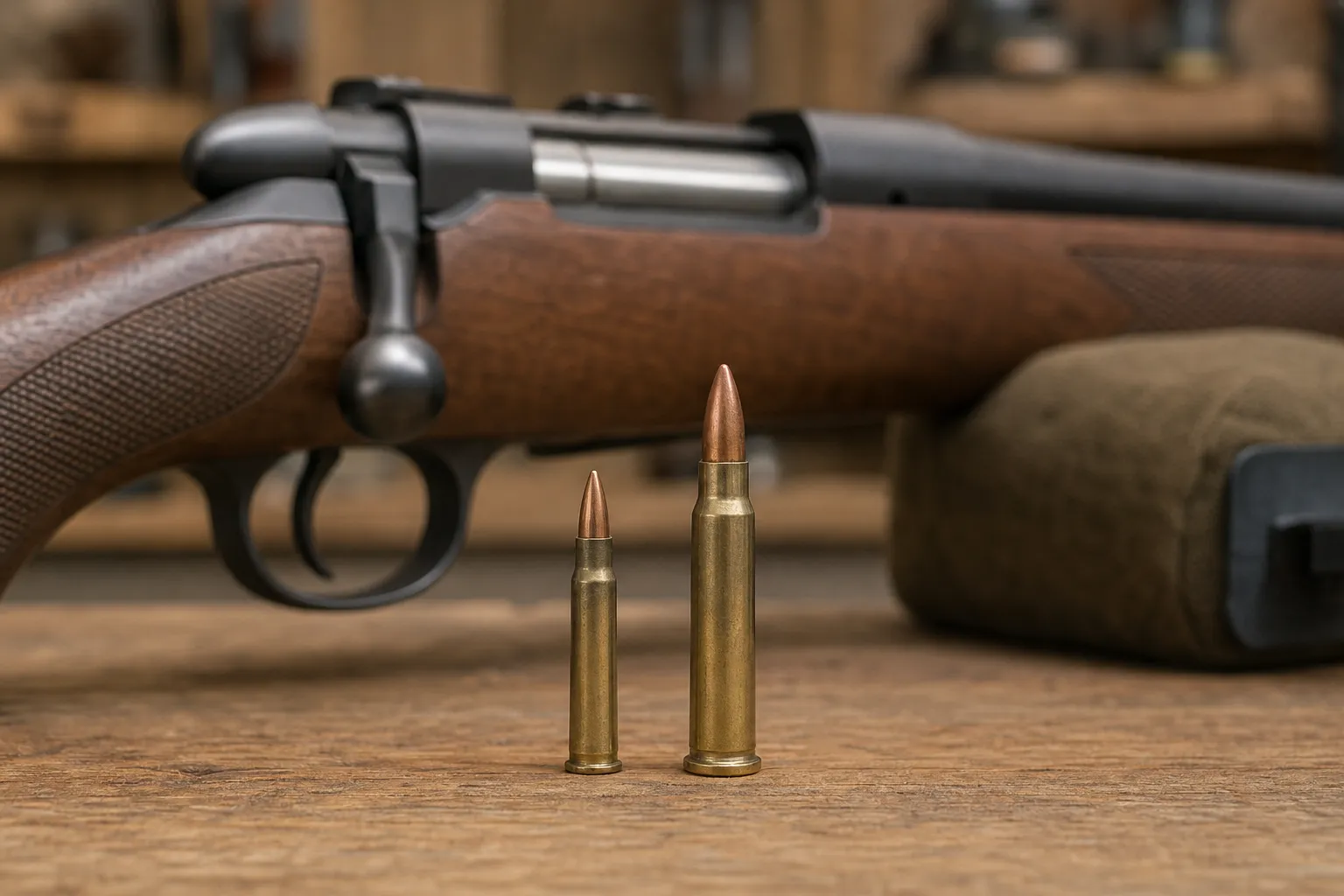
SAAMI also shows a 9.00 inch right-hand twist as optional in the .17 HMR cartridge and chamber drawing. That does not mean every rifle is identical. SAAMI’s own velocity section warns that users should not expect listed velocities to be duplicated from ordinary sporting firearms because firearms and barrel lengths differ from test barrels.
The short version: .17 HMR is a standardized rimfire cartridge with a small .17-caliber bullet, a longer magnum rimfire case, and factory loads centered around light bullets.
Factory loads and bullet types
Hornady says V-MAX is a varmint bullet with a polymer tip, rapid expansion, and dramatic fragmentation across a wide range of distances and velocities. Hornady also says the V-MAX polymer tip increases ballistic coefficient and initiates expansion on impact.
Hornady describes NTX bullets as a non-lead option for areas that restrict the use of lead. Hornady says the NTX uses a non-lead core made from a frangible copper alloy.
Hornady describes XTP bullets as designed to expand across a wide range of velocities, with a reputation for deep penetration. In .17 HMR, that still belongs in the small-game and varmint rimfire category. Do not treat the 20 grain XTP label as a reason to stretch the cartridge beyond the uses supported by the ammunition maker’s rimfire and varmint descriptions.
Published ballistics
SAAMI lists maximum average pressure for .17 HMR as 26,000 psi, shown in its table as 260 psi/100.
SAAMI states that all standard rimfire rifle test barrels are 24 inches long, and that exterior ballistic data for rimfire rifle cartridges is based on that length. Hornady likewise explains that its published ammunition velocities are derived from SAAMI specification test barrels, and that velocities can differ in other firearms.
Published numbers are useful for comparing factory loads, but they are not a guarantee for every rifle. Barrel length, firearm design, and test conditions can change actual velocity.
Trajectory, wind, and practical range

Trajectory is only one part of the practical picture. Wind is a major limit for a light rimfire bullet. American Hunter reported 10 mph crosswind drift for .17 HMR as 3.3 inches at 100 yards, 8.0 inches at 150 yards, and 15.4 inches at 200 yards. In the same comparison.22 WMR drift was higher: 5.7 inches at 100 yards, 13.9 inches at 150 yards, and 25.9 inches at 200 yards.
| Distance | .17 HMR drift in American Hunter comparison | .22 WMR drift in same comparison |
|---|---|---|
| 100 yd | 3.3 in | 5.7 in |
| 150 yd | 8.0 in | 13.9 in |
| 200 yd | 15.4 in | 25.9 in |
For varmint and small-game shooters, the practical takeaway is simple. The .17 HMR offers high rimfire velocity and useful published trajectory, but it is still a light-bullet rimfire. It asks for careful wind reading, precise shot placement, and realistic distance limits.
Whether a specific animal, season, firearm, or rimfire cartridge is allowed is a regulation question, not a cartridge-chart question. Check the current rules from the state, provincial, or territorial wildlife agency before hunting.
.17 HMR vs .22 WMR
The .17 HMR and .22 WMR are related, but they are not the same job in different labels. American Hunter states that the .17 HMR is based on the .22 WMR case necked down for .172-inch bullets. SAAMI’s .22 WMR data includes heavier bullets, including 28, 30, 40, and 50 grain entries.
SAAMI lists .22 WMR nominal velocity data including a 30 grain JHP at 2,200 fps, a 40 grain load at 1,875 fps, and a 50 grain JHP at 1,650 fps.
In the American Hunter wind comparison.17 HMR drifted less than .22 WMR at 100, 150, and 200 yards in a 10 mph crosswind. That does not make one cartridge universally better. It means the .17 HMR example carried less wind drift in that comparison.
If you want a common rimfire for inexpensive practice or traditional small-game use, compare this guide with our .22 LR guide. If you are trying to understand why rimfire ammunition is built differently from centerfire ammunition, see our rimfire vs centerfire guide.
Limits and safety notes
The .17 HMR is best treated as a varmint and small-game rimfire, not as a big-game cartridge. The loads discussed in this guide use light bullets and belong in the small-game and varmint rimfire category.
Federal’s .17 HMR product warning says to use 17 HMR only in quality modern firearms in good condition that are marked for 17 HMR cartridges. Federal also warns: do not use 17 HMR ammunition in semi-automatic firearms without consulting the firearm manufacturer.
SAAMI standards are useful for understanding industry dimensions, pressure, velocity, and test-barrel conventions. They are not handloading instructions. For rimfire ammunition, also review the basic rimfire and centerfire differences before making assumptions based on centerfire cartridge habits.
Before buying ammunition or hunting with it, check three things with official information: the firearm maker’s instructions for your exact firearm, the ammunition maker’s current product warnings, and the current hunting rules from the wildlife agency for the place you plan to hunt.
Frequently asked questions
What does .17 HMR stand for?
SAAMI lists the full name as 17 Hornady Magnum Rimfire and the abbreviated name as 17 HMR.
When was the .17 HMR introduced?
American Hunter states that the .17 HMR was released in 2002. Ruger also described Hornady’s new .17 HMR as a cartridge introduced to Ruger rotary-magazine bolt-action rifles in January 2002.
What bullet weights are common in .17 HMR?
American Hunter describes common .17 HMR bullet weights as 15.5 to 20 grains.
How fast is .17 HMR?
.17 HMR is generally treated as a high-speed rimfire. Actual velocity can vary by load, barrel length, firearm design, and test conditions.
Is .17 HMR better than .22 WMR?
Not universally. In the cited American Hunter comparison.17 HMR drifted less in a 10 mph crosswind at 100, 150, and 200 yards, but that single comparison does not make one cartridge universally better.
Can I use .17 HMR in a semi-automatic rifle?
Federal warns users not to use 17 HMR ammunition in semi-automatic firearms without consulting the firearm manufacturer. Use only firearms in good condition that are marked for 17 HMR cartridges.
Sources
- SAAMI Z299.1, 2019 (R2026), Voluntary Industry Performance Standards for Pressure and Velocity of Rimfire Sporting Ammunition, Sporting Arms and Ammunition Manufacturers' InstituteOfficial source. Accessed October 23, 2026.
- SAAMI Standards, Sporting Arms and Ammunition Manufacturers' InstituteOfficial source. Accessed October 23, 2026.
- 2025 Hornady International Catalog, English version, Hornady ManufacturingOfficial source. Accessed October 23, 2026.
- 2026 Hornady International Catalog, English version, Hornady ManufacturingOfficial source. Accessed October 23, 2026.
- Hornady 2026 Product Catalog, Hornady ManufacturingOfficial source. Accessed October 23, 2026.
- NTX, Hornady ManufacturingOfficial source. Accessed October 23, 2026.
- FAQs, Ballistics, Hornady ManufacturingOfficial source. Accessed October 23, 2026.
- 17 HMR Ammunition Product Warning, Federal PremiumOfficial source. Accessed October 23, 2026.
- Ruger News, June 3, 2002, Sturm, Ruger & Co.Official source. Accessed October 23, 2026.
- Behind the Bullet: .17 HMR, American Hunter. Accessed October 23, 2026.
- 20 Years With The .17 Hornady Magnum Rimfire, American Rifleman. Accessed October 23, 2026.
- Hornady Ammunition Ballistics Chart, Hornady chart republished by The Shooting Academy on Yumpu. Accessed October 23, 2026.
- Hornady Index of Terminal Standards, Hornady chart republished on Yumpu. Accessed October 23, 2026.
- V‑MAX®, Hornady Manufacturing, Inc. Accessed October 23, 2026.
- The Anatomy of a Bullet, Hornady Manufacturing, Inc. Accessed October 23, 2026.
- XTP® (eXtreme Terminal Performance), Hornady Manufacturing, Inc. Accessed October 23, 2026.