The Colt Single Action Army: History and Design
The Colt Single Action Army is the 1873 single-action, six-shot revolver best known as the Peacemaker, Colt .45, and Model P. Its military service, frontier image.45 Colt and .44-40 chamberings, and long production history make it one of the defining revolvers of American firearms history.
By RaiS. Reviewed by RaiS. Published . 4 min read.
Research and drafting were assisted by AI. RaiS checked the facts against the sources below and approved this page.
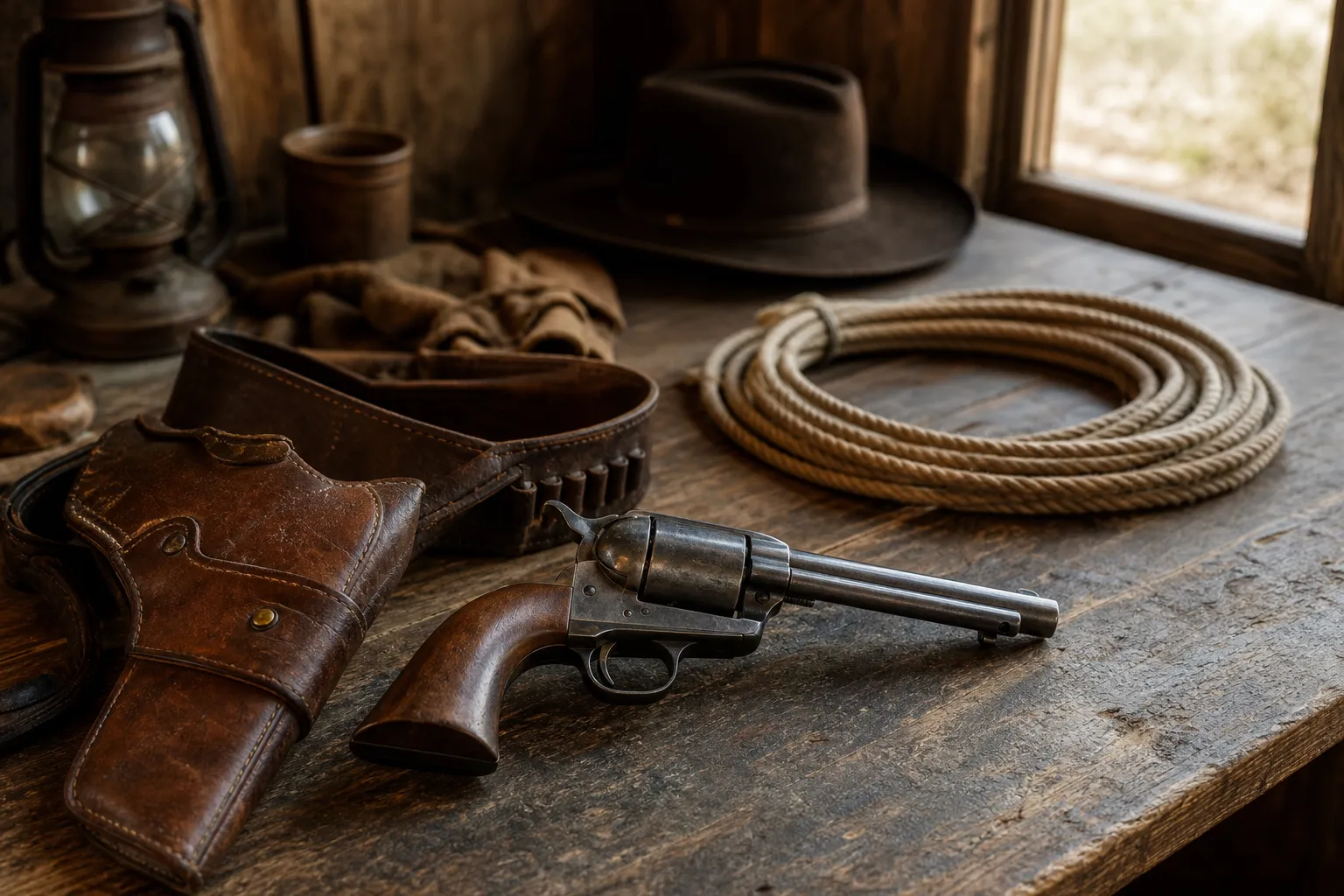
The Colt Single Action Army is the 1873 Colt revolver adopted by the U.S. Army and later tied closely to the history and imagery of the American West. Colt’s own timeline calls it the Single Action Army, Peacemaker, Colt 45, and the “gun that won the West,” while collectors and reference works also use Model P and SAA.
Why the Single Action Army matters
The SAA matters because it sits at a turning point in handgun history. Colt’s timeline says it was introduced in 1873.
The design became more than a military sidearm. It is now one of the best-known revolvers associated with the American West, helped by its Army service, its long production history, and its repeated appearance in Western popular culture.
The National Park Service identifies the 1873 Colt revolver as a single-action, six-shot revolver. For the broader difference, see our single action vs double action comparison.
Development and 1873 U.S. Army adoption
The SAA came out of Colt’s changeover from percussion revolvers to metallic-cartridge revolvers. The Autry Museum identifies Charles B. Richards and William Mason as important Colt designers during this period, stating that both were instrumental as the company converted revolvers from the percussion system to metallic cartridges.
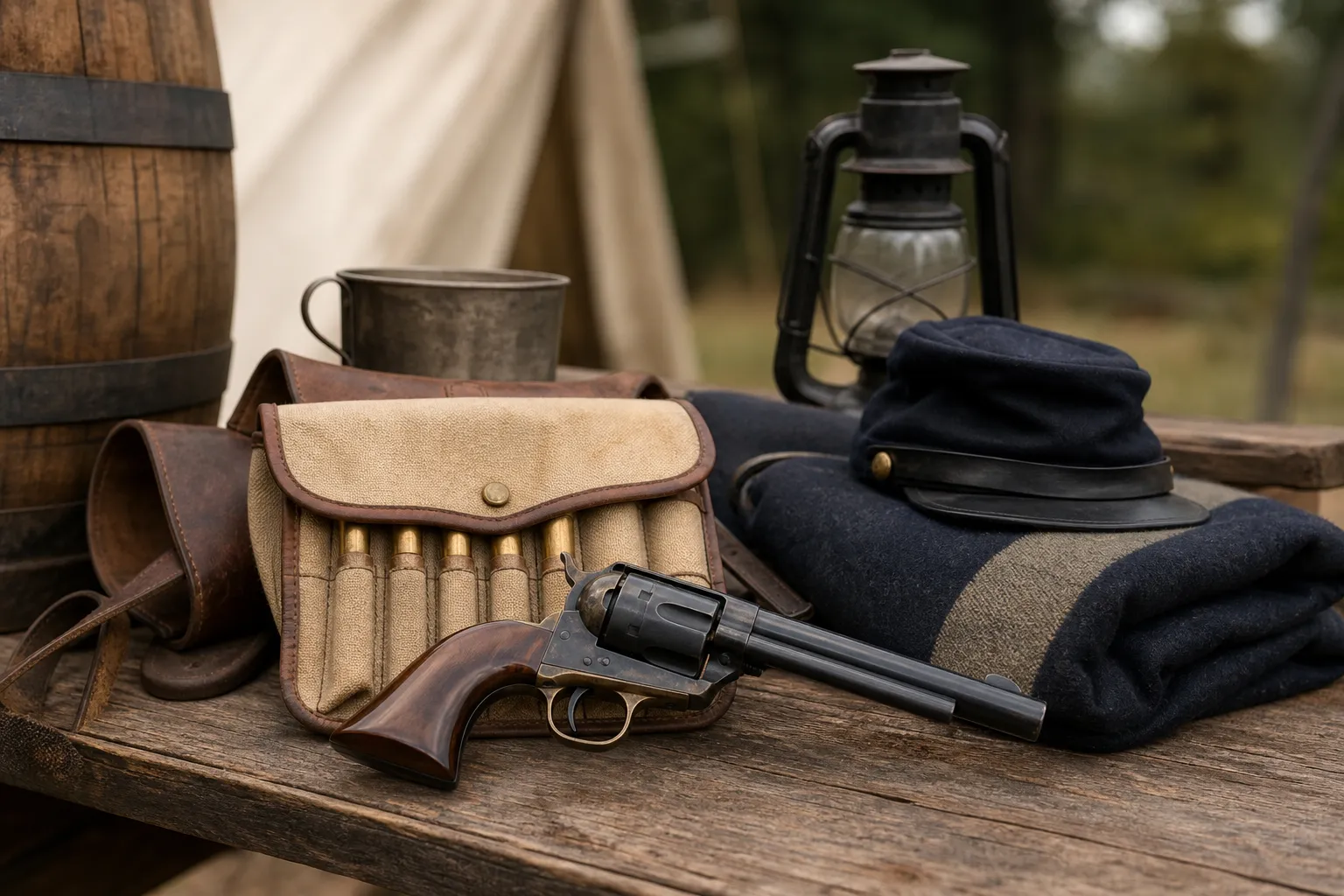
Colt’s official timeline says the revolver received a U.S. government contract as the standard military service revolver and that Colt delivered more than 30,000 from 1873 to 1891.
Chamberings: .45 Colt and .44-40
One well-known chambering is .45 Colt.
The National Park Service’s Fort Smith page lists the 1873 Colt revolver in “.45 Long Colt” and lists common barrel lengths of 7 1/2 inches, 5 1/2 inches, and 4 3/4 inches.
Colt later offered the SAA in .44-40. American Rifleman states that Colt chambered the SAA for .44-40 Winchester in 1878.
The .44-40 connection also became part of the revolver’s frontier identity. American Rifleman says .44-40 SAA revolvers were marked “Frontier Six Shooters,” first by acid etching and later by roll stamping.
Basic design and operation
The Single Action Army is a six-shot revolver with a solid frame, side loading gate, and ejector rod housing. The National Park Service identifies it as single action and six-shot.
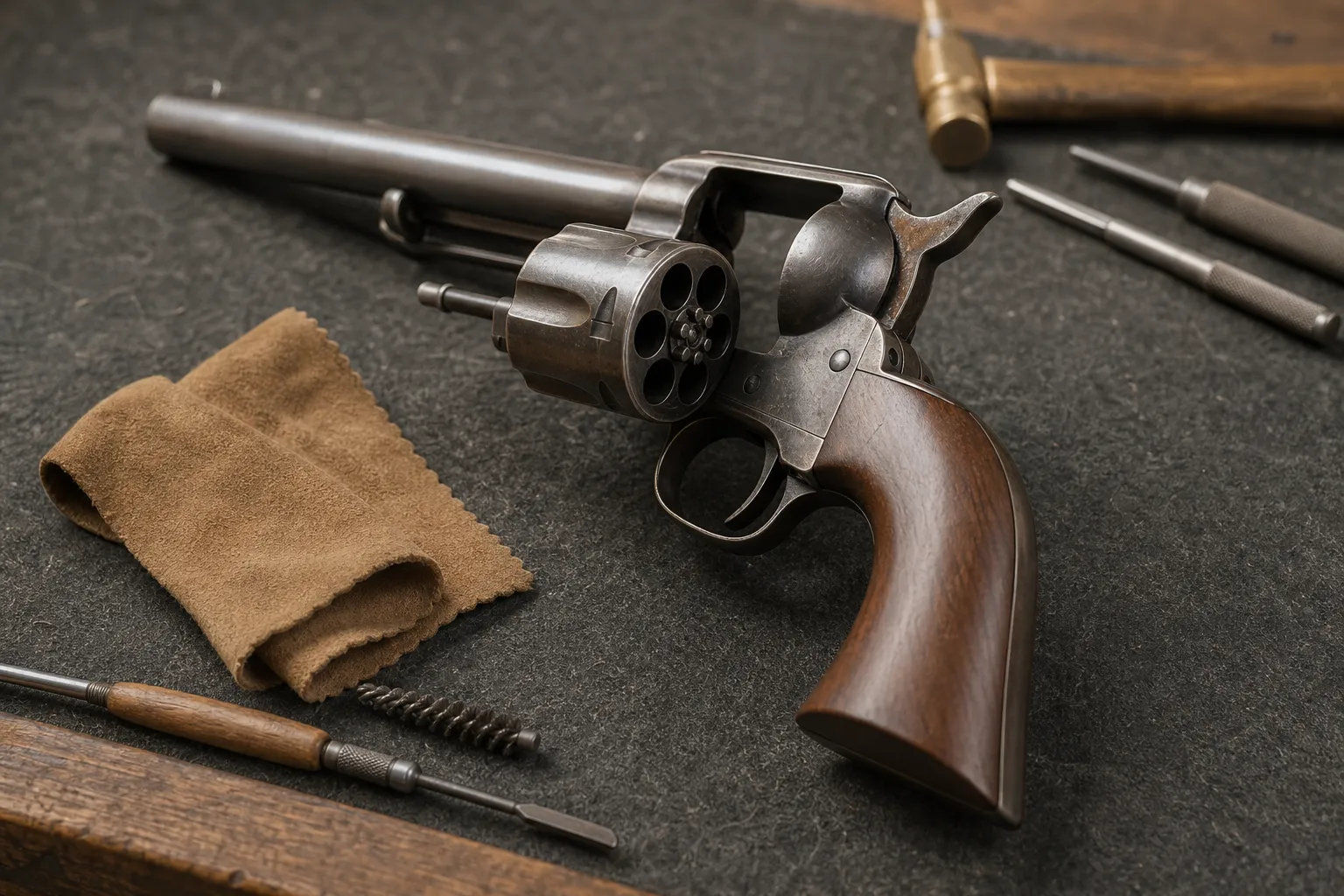
The loading gate is the side opening used with the cylinder when the revolver is being loaded or unloaded. That is enough to understand the layout without treating this guide as a loading or firing manual.
The ejector rod is part of the classic SAA profile under the barrel. On traditional single-action revolvers of this pattern, spent cases are handled one chamber at a time rather than by swinging out the whole cylinder as on many later double-action revolvers. For actual handling, owners should follow the manual for the exact revolver in front of them.
The National Park Service lists 7 1/2 inches, 5 1/2 inches, and 4 3/4 inches as barrel lengths for the 1873 Colt revolver.
Hammer notches and the empty-chamber carry practice
The hammer system is central to understanding the traditional SAA.
For any real revolver, especially an old one, do not rely on a general article. Follow the manual for that specific firearm, and have older revolvers inspected by a competent gunsmith before use.
First, Second, and Third Generations
Collectors and museums commonly discuss the Colt Single Action Army in three production generations. The NRA National Firearms Museum summarizes the initial production as “First Generation” and says the Colt Single Action Army Revolver was manufactured from 1872 through 1940. The same museum summary identifies resumed production in 1956 to 1976 as Second Generation and 1976 to present as Third Generation.
Colt still treats the Third Generation Single Action Army as a distinct service category. Colt’s FAQ says it cannot service legacy models older than 10 years, with the exception of most 1911 models and third generation Single Action Army models.
Names and reference works
The Single Action Army is unusually rich in names. Colt’s timeline uses Single Action Army, Peacemaker, Colt 45, and “gun that won the West.” Firearms references and collectors also commonly use Model P and SAA.
For deeper research, the Library of Congress identifies A Study of the Colt Single Action Army Revolver as a leading reference on the Colt Single Action. The Library of Congress also says R. L. Wilson’s The Book of Colt Firearms provides details on Colt Single Action Army guns and variations that were verified and confirmed using Colt factory records.
What to check next
If you own, handle, inherit, or examine a Single Action Army or SAA-pattern revolver, check the exact manual for that firearm. The safety rules for hammer positions, loading, and carry depend on the actual mechanism, condition, and manufacturer.
For history, confirm details against Colt records, museum collection entries, and established reference works. For lawful ownership, transport, carry, or use, check the current rules from the relevant federal, state, provincial, territorial, or local authority before acting.
Frequently asked questions
Why is the Single Action Army called the Peacemaker?
Peacemaker is one of the common names for the Colt Single Action Army. Colt’s official timeline identifies the revolver as the Single Action Army and says it was also known as the Peacemaker, Colt 45, and the “gun that won the West.”
When did Colt offer the Single Action Army in .44-40?
American Rifleman says Colt chambered the SAA for .44-40 Winchester in 1878.
What are the First, Second, and Third Generations of the Colt SAA?
The NRA National Firearms Museum summarizes the First Generation as the initial production, with resumed production from 1956 to 1976 called Second Generation and 1976 to present called Third Generation.
Sources
- Timeline, Colt’s Manufacturing Company LLCOfficial source. Accessed October 24, 2026.
- Single Action Army Revolver, Sheriff’s & Storekeeper’s Model Revolvers, New Frontier Single Action Army Revolver Safety and Instruction Manual, Colt’s Manufacturing Company LLCOfficial source. Accessed October 24, 2026.
- Frequently Asked Questions, Colt’s Manufacturing Company LLCOfficial source. Accessed October 24, 2026.
- Survey of U.S. Army Uniforms, Weapons and Accoutrements, U.S. Army Center of Military HistoryOfficial source. Accessed October 24, 2026.
- “Peacemaker” Colt Single-Action Army Revolver, serial no. 4519, The Metropolitan Museum of ArtOfficial source. Accessed October 24, 2026.
- Richards-Mason Conversion patent, Autry Museum of the American WestOfficial source. Accessed October 24, 2026.
- 1873 Colt Revolver, Fort Smith National Historic Site, National Park ServiceOfficial source. Accessed October 24, 2026.
- SAAMI Standards, Sporting Arms and Ammunition Manufacturers’ InstituteOfficial source. Accessed October 24, 2026.
- SAAMI Z299.3-2022, Centerfire Pistol and Revolver Ammunition, Sporting Arms and Ammunition Manufacturers’ InstituteOfficial source. Accessed October 24, 2026.
- SAAMI Z299.4-2025, Centerfire Rifle Ammunition, Sporting Arms and Ammunition Manufacturers’ InstituteOfficial source. Accessed October 24, 2026.
- Colt Model 1873 Single Action Army Revolver, NRA National Firearms Museum. Accessed October 24, 2026.
- 150 Years Of The Colt Single Action Army, American Rifleman. Accessed October 24, 2026.
- Colt, American Firearms and Their Makers: A Research Guide, Library of CongressOfficial source. Accessed October 24, 2026.