Single Action vs Double Action
Single action means the hammer is cocked before the trigger releases it. Double action means the trigger can cock and release the hammer in one pull. DA/SA, SAO, DAO, and striker fired systems use different designs and procedures, so the manual for the exact handgun matters.
By RaiS. Reviewed by RaiS. Published . 7 min read.
Research and drafting were assisted by AI. RaiS checked the facts against the sources below and approved this page.
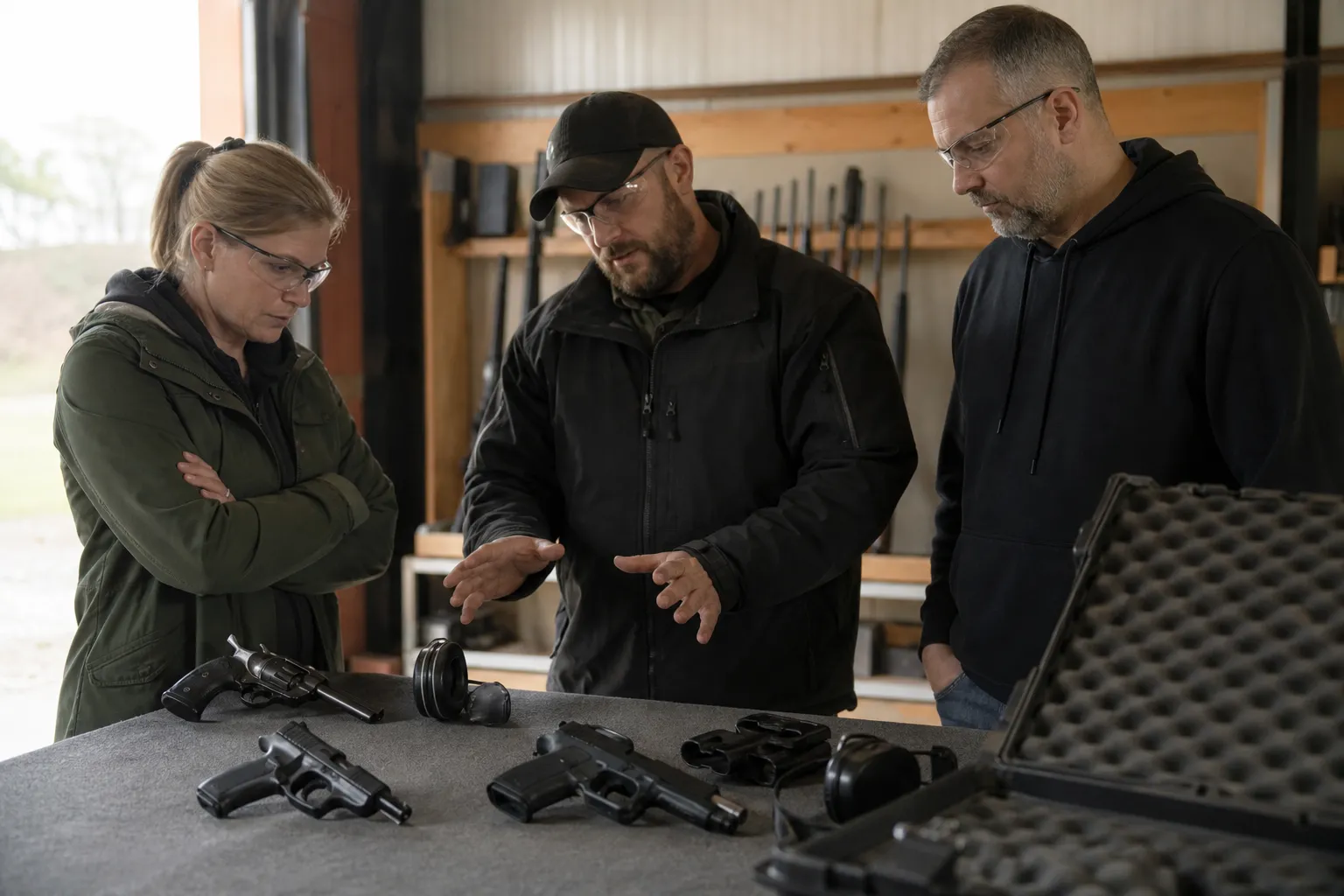
Trigger action is the way a handgun trigger works with the firing mechanism. In simple terms, single action means the hammer is cocked before the trigger releases it, while double action means the trigger can cock and release the hammer in one pull.
The same words can describe revolvers and semi-automatic pistols, but the details are not always the same. A single-action revolver, a double-action revolver, a DA/SA pistol, a DAO pistol, an SAO pistol, and a striker-fired pistol can all feel and operate differently. The owner’s manual for the exact handgun is the controlling reference.
Quick comparison
| System | What cocks the hammer or striker | What the trigger does | What to notice |
|---|---|---|---|
| Single action | The hammer is cocked before firing | Releases the already cocked hammer | Ruger’s New Model Single-Six manual says the hammer must first be manually cocked before firing. |
| Double action | The trigger cocks the hammer | Cocks and releases the hammer in one pull | Ruger’s GP100 manual says the revolver can be fired in double action by pulling the trigger through its complete arc for each shot. |
| DA/SA | First shot can be double action, later shots can be single action | First pull can cock and release the hammer, then later pulls release a cocked hammer | Beretta’s 90 Series manual says the slide cocks the hammer after firing, leaving the pistol in single-action mode. |
| SAO | The hammer is cocked by another action, such as slide cycling on SIG SAO models | Does not cock the hammer | SIG Sauer’s Classic Line manual says pressing the trigger will not cock the hammer on SAO pistols. |
| Striker-fired | A striker assembly is used on examples such as the Smith & Wesson M&P M2.0 | Releases the striker on examples such as the Smith & Wesson M&P M2.0 | Smith & Wesson’s M&P M2.0 manual says the striker assembly is released and strikes the cartridge primer. |
Hammer-fired handguns
SIG Sauer’s Classic Line manual describes a hammer-fired system by saying the hammer impacts the firing pin, which detonates the primer. That is the basic idea behind many revolvers and many semi-automatic pistols that use single-action, double-action, DA/SA, DAO, or SAO operation.
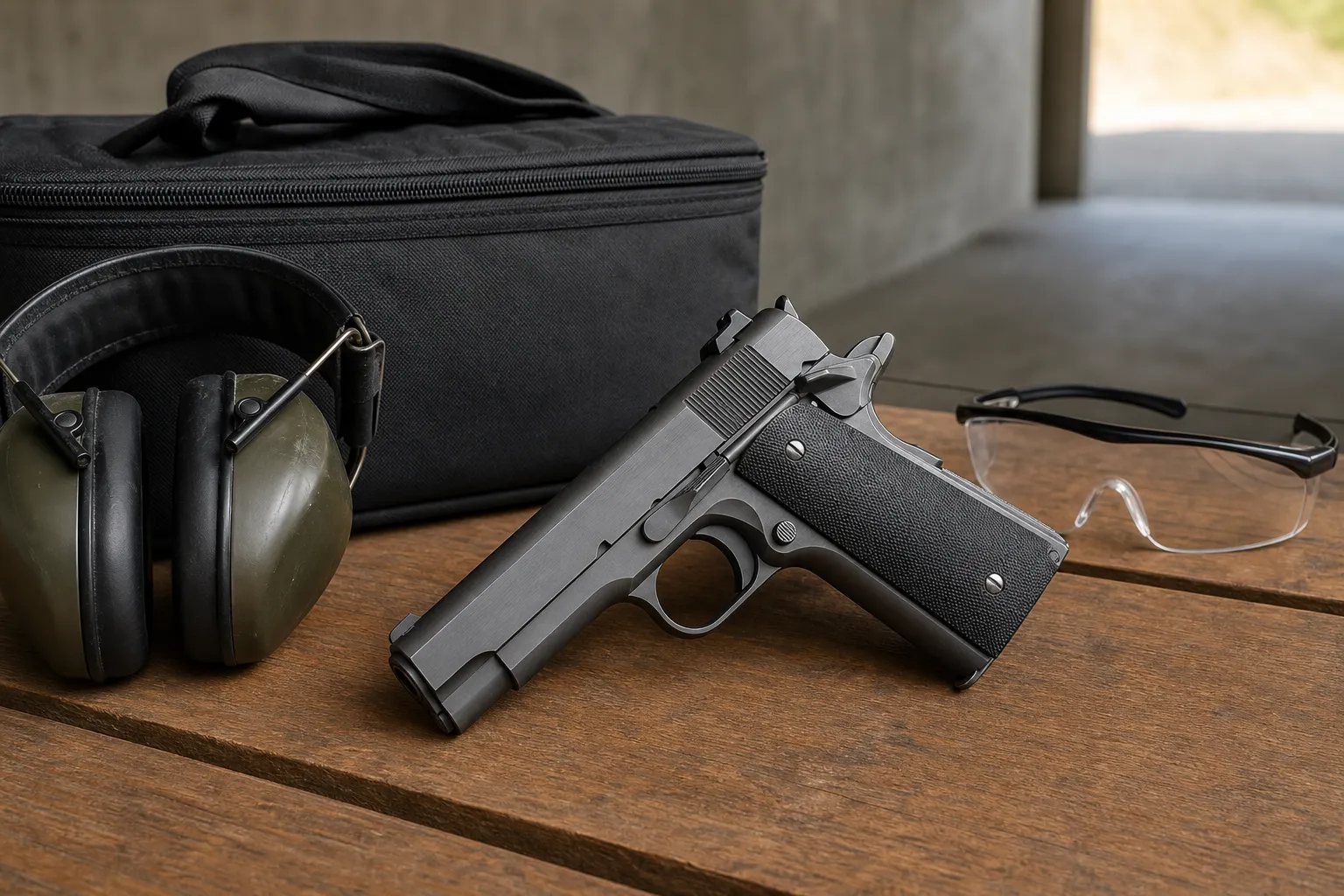
The key question is: what cocks the hammer, and what does the trigger do after that?
Single action
In single action, the trigger is not doing the cocking work. It is releasing a hammer that is already cocked.
Ruger’s New Model Single-Six manual gives a clear revolver example. Ruger states that to fire the revolver, the hammer must first be manually cocked. The same manual says that once the hammer has been cocked, light pressure on the trigger disengages the trigger from the hammer, the hammer falls forward, strikes the transfer bar, and the revolver fires.
That sequence also affects safe handling. Ruger’s manual warns not to touch the trigger while cocking the hammer and to touch the trigger only when ready to fire. Ruger also states that after firing, the hammer remains down, and later shots repeat the cocking and firing steps.
For a new owner, the important point is simple: on a single-action handgun, the cocking step happens before the trigger releases the hammer. Once cocked, the trigger may require less movement or pressure than a double-action pull on some firearms, so trigger discipline matters.
Double action
In double action, the trigger can cock the hammer rearward and release it. That is why it is called double action: the trigger performs two actions in one pull.
Ruger’s GP100 manual describes a double-action revolver that can be fired in double action by pulling the trigger through its complete arc for each shot, or in single action by cocking the hammer and then pulling the trigger. Ruger also states that, on the GP100, the trigger pull is shorter and lighter when the revolver is fired single action.
That does not mean every handgun has the same pull weight or feel. It does show the practical difference Ruger identifies on that revolver: double action uses a longer trigger movement to cock and release the hammer, while single action releases a hammer that is already cocked.
Ruger also notes that, when firing the GP100 in double-action mode, the trigger must be released completely to its fully forward position before pulling it again for a later shot. Its manual describes the transfer-bar safety system as allowing the hammer blow to reach the firing pin only when the trigger is pulled all the way to the rear.
DA/SA pistols
DA/SA stands for double-action/single-action.
Beretta’s 90 Series manual gives the same basic sequence for that pistol. It says that when the hammer is decocked, pulling the trigger first cocks the hammer and then releases it, which Beretta calls double action. After firing, Beretta says the slide cycles, ejects the fired case, cocks the hammer, and feeds the next cartridge from the magazine into the chamber. Beretta then defines single action as a trigger pull that releases an already cocked hammer and states that, after the first shot, the pistol remains in single-action mode.
Many new owners notice that DA/SA has two different trigger modes in one handgun. The first pull from a decocked hammer can be double action. Later pulls can be single action after the slide has cocked the hammer. SIG Sauer’s Classic Line manual also says its decocking lever lets the operator reset a cocked hammer into the safety intercept notch on a DA/SA pistol without pressing the trigger.
Double-action-only, DAO
SIG Sauer’s Classic Line manual says DAO hammers do not need a traditional spur because the hammer does not need to be manually cocked. The same manual says the hammer in DAO pistols always returns to a decocked position, so there is no need for a decocking lever.
DAO operation differs from DA/SA operation on those SIG Sauer pistols because DA/SA models use a decocking lever and DAO models do not need one under that manual’s description.
For safe handling, the practical lesson is not that DAO replaces safety rules. It does not.
Single-action-only, SAO
SAO means single-action-only. SIG Sauer’s Classic Line manual says that on its SAO pistols, pressing the trigger will not cock the hammer. The manual says firing the pistol or manually cycling the slide is the proper method for cocking the hammer on those SAO models.
This is different from DAO operation described in SIG Sauer’s Classic Line manual, where the hammer does not need to be manually cocked and always returns to a decocked position. It is also different from DA/SA, where the first shot can be double action and later shots can be single action. In SAO, the trigger releases a cocked hammer, but does not cock it.
A new owner should learn the exact loading, unloading, cocking, decocking, and safety procedures from the manual for that specific SAO pistol. The action type name is not enough by itself.
Striker-fired vs hammer-fired
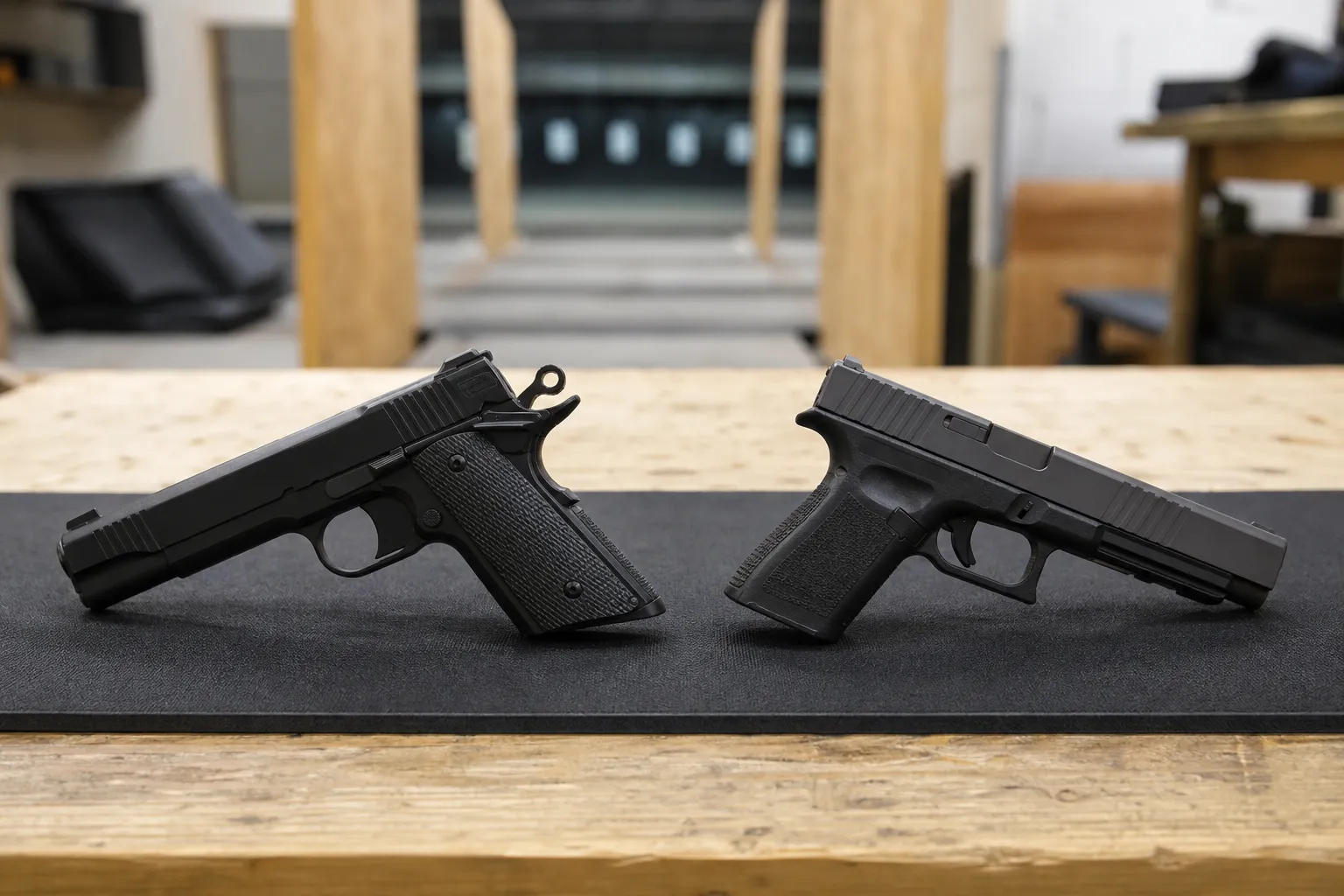
In a hammer-fired handgun, the hammer is the part that impacts the firing pin, according to SIG Sauer’s Classic Line manual. In a striker-fired handgun, the striker system fills the firing role.
Smith & Wesson’s M&P M2.0 manual describes that pistol as firing each shot in striker-fire action mode. It says that when the trigger is pulled fully to the rear, the striker assembly is released and strikes the cartridge primer.
Glock describes its Safe Action system as providing a consistent trigger pull from the first round to the last. Glock also says the system has three passive, independently operating mechanical safeties that disengage sequentially as the trigger is pulled and reengage when the trigger is released. Glock states that its trigger safety blocks rearward trigger movement unless the trigger safety and trigger are deliberately depressed at the same time.
The broad comparison is this: hammer-fired handguns use a hammer, and the action terms often describe whether the trigger cocks that hammer, releases it, or does both. Striker-fired handguns use a striker system, and the exact trigger system depends on the design described in the manufacturer’s manual.
Safe handling matters more than the action label
A trigger system changes how the handgun operates, but it does not replace safe handling. NSSF states that shooters should never touch the trigger until they actually intend to shoot and should keep fingers away from the trigger while loading or unloading.
NSSF also warns that a firearm’s safety is a mechanical device and should not substitute for safe gun handling. That warning applies whether the handgun is single action, double action, DA/SA, DAO, SAO, hammer-fired, or striker-fired.
NSSF specifically warns against altering the trigger, safety, or other mechanism of any firearm. New owners should learn the factory operation of the firearm they own, keep the owner’s manual available, and avoid treating action type as a shortcut for safety.
What to check before using a handgun
Before handling or firing any handgun, check the manufacturer’s manual for the exact model. Confirm how the manual describes the action type, how the hammer or striker is cocked and released, how any decocking lever or safety system works, and what the manual says about loading, unloading, and trigger contact.
For general safety rules, check current guidance from established firearm-safety organizations such as NSSF. For ownership, carry, transport, storage, and hunting use, check the official law or wildlife agency for your exact location and date.
Frequently asked questions
What is the difference between single action and double action?
In the examples discussed, single action releases an already cocked hammer. Double action can cock and release the hammer in one pull, as described for the Ruger GP100 and Beretta 90 Series.
What does DA/SA mean on a pistol?
Beretta’s 90 Series manual describes a decocked hammer giving a double-action first pull, then the slide cocking the hammer for single-action fire.
What is a DAO handgun?
SIG Sauer’s Classic Line manual says DAO hammers do not need to be manually cocked and return to a decocked position.
What is the difference between striker-fired and hammer-fired?
SIG Sauer’s Classic Line manual describes a hammer as impacting the firing pin. Smith & Wesson’s M&P M2.0 manual says the striker assembly is released and strikes the cartridge primer.
Does a safety system replace trigger discipline?
No. NSSF warns that a firearm’s safety is a mechanical device and should not substitute for safe gun handling. NSSF also states that shooters should never touch the trigger until they intend to shoot.
Should a new owner modify a trigger to change the pull?
NSSF specifically warns against altering the trigger, safety, or other mechanism of any firearm. New owners should learn the factory operation described in the manual for their exact handgun.
Sources
- Trigger Action, SIG SauerOfficial source. Accessed October 23, 2026.
- Single Action (SA), SIG SauerOfficial source. Accessed October 23, 2026.
- Double Action/Single Action (DA/SA), SIG SauerOfficial source. Accessed October 23, 2026.
- Double Action Only (DAO), SIG SauerOfficial source. Accessed October 23, 2026.
- Striker, SIG SauerOfficial source. Accessed October 23, 2026.
- Classic Line Pistols Operator’s Manual, SIG SauerOfficial source. Accessed October 23, 2026.
- Instruction Manual for Ruger New Model Single-Six, Single-Ten, Single-Nine and Hunter Single-Action Revolvers, Sturm, Ruger & Co.Official source. Accessed October 23, 2026.
- Instruction Manual for Ruger GP100 Double-Action Revolver, Sturm, Ruger & Co.Official source. Accessed October 23, 2026.
- 90 Series Operators Manual, Beretta U.S.A.Official source. Accessed October 23, 2026.
- M&P M2.0 Manual, Smith & WessonOfficial source. Accessed October 23, 2026.
- Safe Action System, GlockOfficial source. Accessed October 23, 2026.
- Firearm Safety, 10 Rules of Safe Gun Handling, NSSF. Accessed October 23, 2026.