The Beretta 92: History, Design and the M9
The Beretta 92 is a 9 mm semiautomatic pistol family best known in the United States for its military M9 service. Its defining features include Beretta’s open-slide layout, a short recoil falling-block locking system, and standard double action and single action operation on most 92 Series models.
By RaiS. Reviewed by RaiS. Published . 6 min read.
Research and drafting were assisted by AI. RaiS checked the facts against the sources below and approved this page.
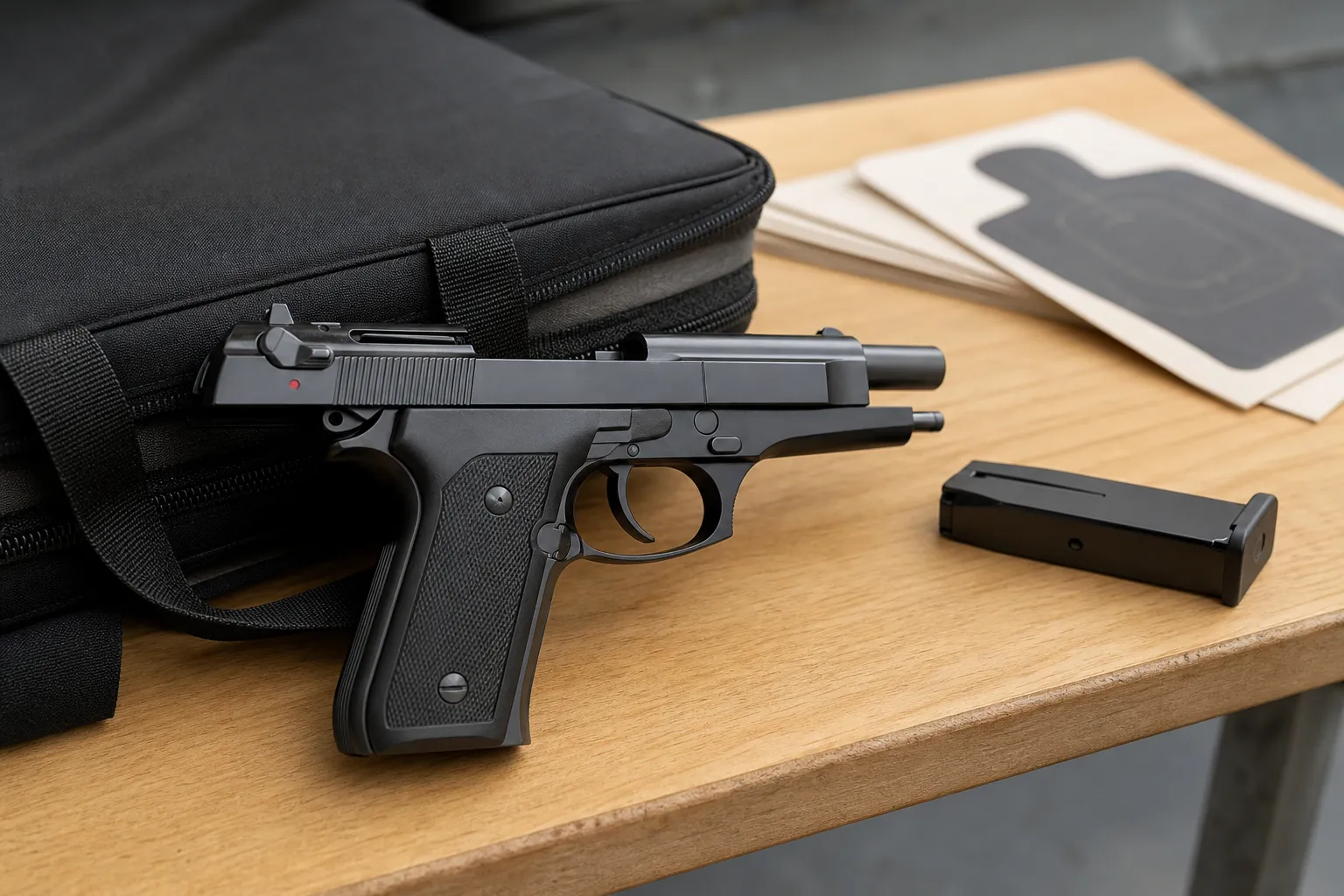
The Beretta 92 is a 9 mm Parabellum semiautomatic pistol family. It became famous beyond the commercial and police markets when a Beretta 92 variant was adopted by the U.S. military as the M9 in 1985. The design is known for its open slide, short-recoil operation, falling locking block, exposed hammer, and standard double-action and single-action trigger system.
For broader company background, see our Beretta history guide. For trigger terminology, see Single Action vs Double Action.
What the Beretta 92 is
Beretta’s manual lists the Model 92 caliber as 9 mm Parabellum and lists its operation as semiautomatic with short recoil of the barrel.
The 92 belongs to Beretta’s broader 90 Series.
The family includes several closely related versions. This guide focuses on the main historical and technical line from the original Model 92 through the 92S, 92SB, 92SB-F, 92FS, 92G, and 92X.
History in brief
American Rifleman identifies Beretta’s Model 1951 Brigadier in 9 mm Luger as its immediate predecessor.
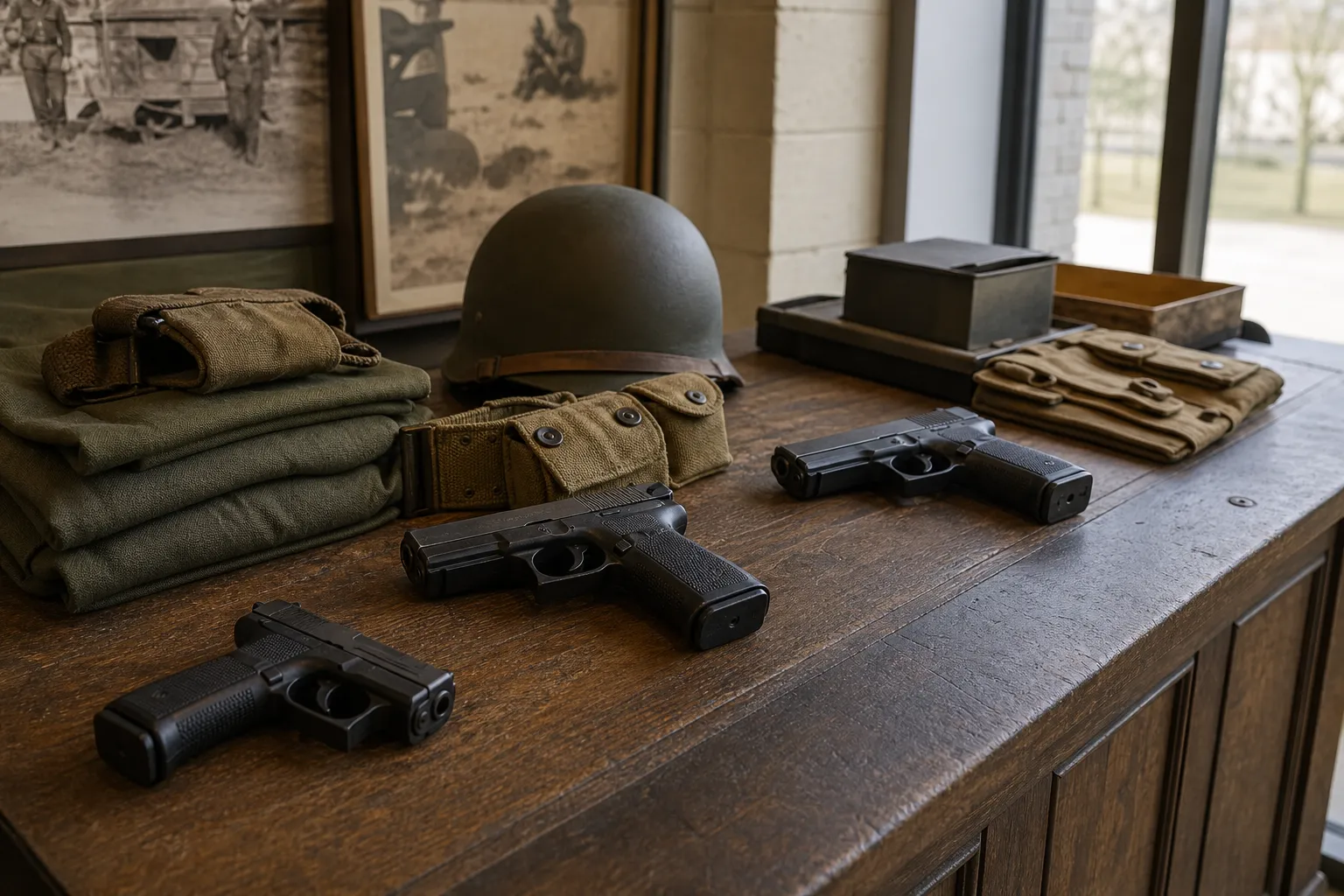
From there, the family developed through changes in controls, safety systems, and later frame and sight arrangements.
| Variant | What changed or why it matters |
|---|---|
| 92S | American Rifleman says the 92S moved the safety to the slide because the Italian state police preferred a decocking lever. |
| 92S-1 | American Rifleman says Beretta submitted a modified 92S-1 for U.S. Air Force testing at Eglin Air Force Base in 1979. |
| 92SB | American Rifleman says the 92SB added a firing-pin lock intended to prevent the firing pin from striking the primer unless the trigger is fully pulled and the hammer is rearward. |
| 92SB-F, 92F | American Rifleman says the 92SB-F was known in the civilian market as the Model 92F. It also says the 92SB-F was included in the Army’s 1984 XM9 tests. |
| 92FS | Beretta’s current manual describes the FS version as having a slide-mounted ambidextrous safety-decocking lever. |
| 92G | Beretta’s manual defines G models as returning automatically to the ready-to-fire position after the lever is released from lowering the hammer. Beretta’s current manual describes the G version as a spring-loaded ambidextrous decock-only lever. |
| 92X | Beretta’s current 90 Series operator manual says the 92X uses a Vertec-style reduced-circumference frame. |
This is not a complete catalog of every 92 Series model. It is the main path needed to understand the original pistol, the M9 connection, and later common naming differences.
Design and operation
Beretta’s 92 Series manual also lists the locking system as a falling block.
Open-slide layout
One of the most recognizable visual features of the 92 is its open slide.
In plain terms, the 92 does not have the same enclosed slide profile seen on many other semiautomatic pistols.
Short recoil and falling locking block
Beretta’s 92 Series manual says the pistols function on the short barrel recoil principle and use a falling block locking system. The same manual describes the locking block dropping to release the slide during cycling.
That description is enough to understand the broad mechanical idea without turning it into an operating or repair procedure. The barrel and slide are locked together at the start of the firing cycle, and the locking block is the part Beretta identifies as releasing the slide as the pistol cycles.
Trigger system, hammer, safety, and decocker
Beretta’s 92 Series manual lists the standard action as double and single action. The same manual notes that D and DS variants are double-action-only exceptions.
The manual also says all models have an automatic firing-pin safety. For models with the manual safety system described in that manual, Beretta says the manual safety separates the firing pin from the hammer, lowers the hammer when cocked, and interrupts the connection between the trigger and sear.
Beretta’s current 90 Series operator manual distinguishes two important control types:
- FS version: Beretta describes this as a slide-mounted ambidextrous safety-decocking lever.
- G version: Beretta describes this as a spring-loaded ambidextrous decock-only lever.
That difference is central to understanding many 92 Series labels. An FS-type system is described by Beretta as a safety-decocking lever. A G-type system is described by Beretta as decock-only, and Beretta’s earlier 92 Series manual says G models automatically return to the ready-to-fire position after the lever is released from lowering the hammer.
The M9 story
The Beretta 92 family’s best-known U.S. military chapter began in the 1980s. The U.S. Government Accountability Office says the M9 procurement was part of an Army plan to acquire a NATO-standard 9 mm pistol to replace earlier .45 and .38 caliber military pistols.
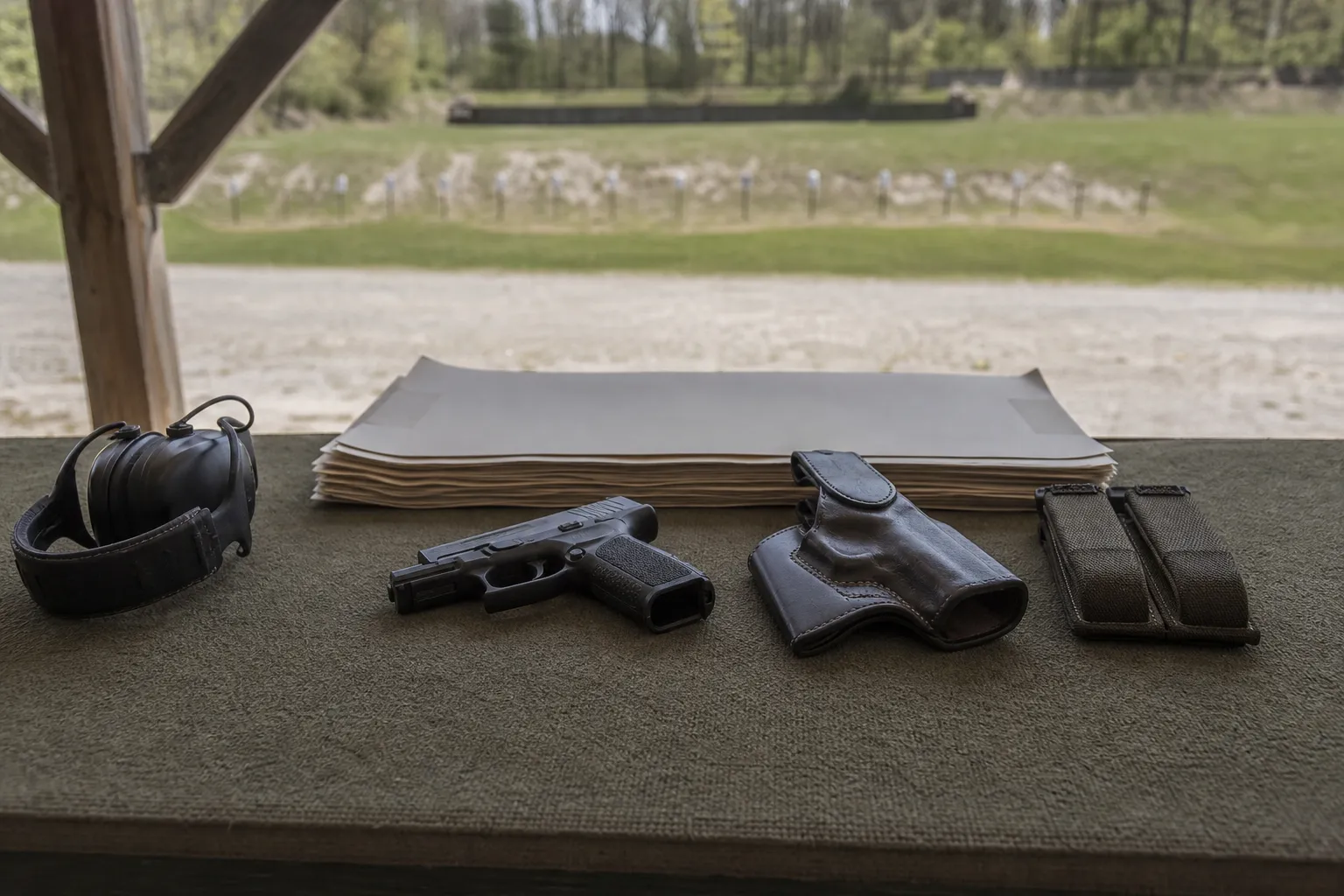
American Rifleman says the Army’s 1984 XM9 tests included Beretta’s 92SB-F along with several other candidate pistols. It also says the Beretta Model 92SB-F was formally recognized as the M9 on January 14, 1985.
The U.S. GAO says the Army awarded Beretta a five-year contract in 1985 to supply 315,930 9 mm pistols, later increased to 321,260, designated M9.
The M9 also had a formal military specification. DLA ASSIST identifies MIL-P-48655 as the detail specification for the “Pistol, Semiautomatic, 9 Millimeter: M9” and says that specification establishes design, performance, quality assurance, and packaging requirements for the M9.
92FS, 92G, and 92X in context
The 92FS, 92G, and 92X names are useful because they show how the family evolved without leaving the basic 92 pattern behind.
The 92FS is tied to the familiar slide-mounted safety-decocking arrangement. Beretta’s current 90 Series operator manual describes the FS version as having a slide-mounted ambidextrous safety-decocking lever.
The 92G keeps the decocking function but is described differently by Beretta. Beretta’s current manual calls the G version a spring-loaded ambidextrous decock-only lever. Beretta’s earlier 92 Series manual says G models return automatically to the ready-to-fire position after the lever is released from lowering the hammer.
The 92X reflects later ergonomic and compatibility changes. Beretta’s current operator manual says 92X and M9A4 models use a Vertec-style reduced-circumference frame. Beretta’s current manual also says 92X, M9A3/4, 92G Elite LTT, and 92 Vertec sights are compatible with one another.
Safe handling and lawful ownership basics
A guide to a notable pistol should also be clear about safe handling. Beretta’s 92 Series manual says the firearm should be visually and physically checked to confirm whether a round is present in the chamber.
Beretta’s manual also says to store firearms unloaded, locked, and with ammunition in a separate locked location to reduce accidents involving children. These are general safety points from the manufacturer’s manual, not a substitute for formal training or for reading the manual for the exact firearm in question.
For lawful ownership, Beretta’s 92 Series manual tells users they are responsible for knowing and obeying federal, state, and local laws governing the sale, transportation, and use of firearms. Laws and regulations vary by jurisdiction and change over time, so readers should confirm current rules with the relevant official agency before buying, transporting, carrying, storing, or using any firearm.
What to check with official sources
If you are researching a specific Beretta 92, check the exact model marking, the current Beretta manual for that model, and any official military or agency document if the pistol is being discussed in a service context.
For legal questions, check current federal, state, provincial, territorial, and local rules from the responsible government agencies. Do not rely on a model name alone, since legal treatment can depend on configuration, location, date, and use.
Frequently asked questions
What operating system does the Beretta 92 use?
Beretta’s 92 Series manual says the pistols function on the short barrel recoil principle and use a falling block locking system.
What is the difference between 92FS and 92G controls?
Beretta’s current 90 Series operator manual describes the FS version as having a slide-mounted ambidextrous safety-decocking lever. It describes the G version as a spring-loaded ambidextrous decock-only lever.
When did the U.S. military adopt the Beretta as the M9?
American Rifleman says the Beretta Model 92SB-F was formally recognized as the M9 on January 14, 1985. The U.S. GAO says the Army awarded Beretta a five-year contract in 1985 for 9 mm pistols designated M9.
What should owners check before handling or storing a Beretta 92?
Beretta’s 92 Series manual says to visually and physically check the chamber to see if a round is present. It also says to store firearms unloaded, locked, and with ammunition in a separate locked location.
Sources
- Beretta Since 1526, BerettaOfficial source. Accessed October 25, 2026.
- 90 Series, Tactical shooting pistols, BerettaOfficial source. Accessed October 25, 2026.
- Serie 92 Pistol User Manual, BerettaOfficial source. Accessed October 25, 2026.
- Beretta 90 Series Operator Manual, Beretta U.S.A. Corp.Official source. Accessed October 25, 2026.
- B-232681.2, B-232681.3, Feb. 9, 1989, U.S. Government Accountability OfficeOfficial source. Accessed October 25, 2026.
- ASSIST QuickSearch Document Details, MIL-P-48655, Defense Logistics AgencyOfficial source. Accessed October 25, 2026.
- 101st Airborne Division fields Army's new modular handgun system, U.S. ArmyOfficial source. Accessed October 25, 2026.
- The Beretta M9: 25 Years of Service, American Rifleman. Accessed October 25, 2026.
- U.S. Pistol, M9, Beretta Model 92FS, American Rifleman. Accessed October 25, 2026.