The Makarov PM Pistol: History and Design
The Makarov PM was Nikolay F. Makarov’s winning Soviet postwar service pistol, adopted in 1951 to replace the Tokarev TT. Its importance comes from a simple blowback, double action layout, the distinct 9x18mm Makarov cartridge, large Izhevsk production, and widespread use in many countries.
By RaiS. Reviewed by RaiS. Published . 5 min read.
Research and drafting were assisted by AI. RaiS checked the facts against the sources below and approved this page.
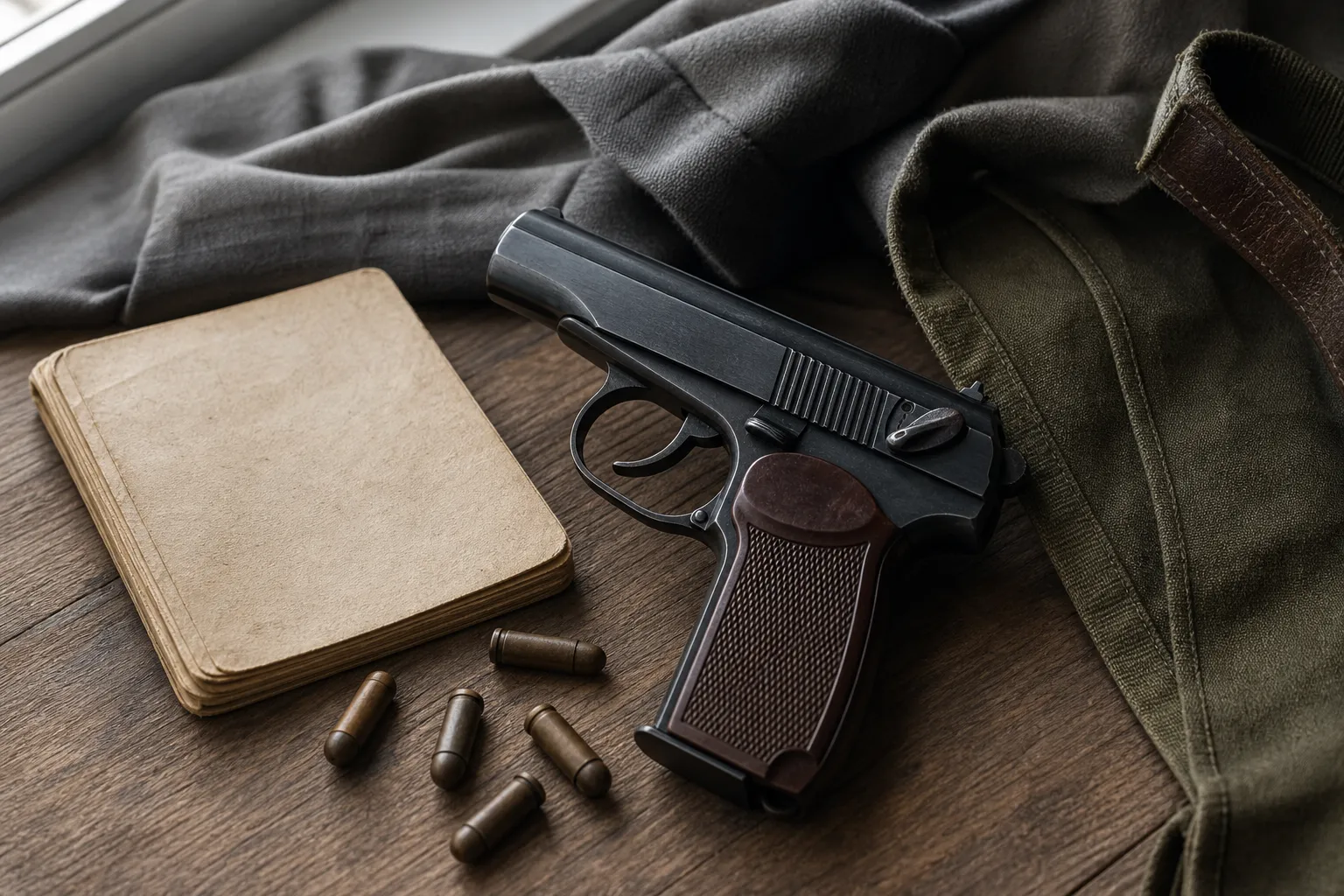
The Makarov PM is a Soviet service pistol designed by Nikolay F. Makarov after the Second World War and adopted in 1951 to replace the 7.62 mm Tokarev TT pistol. It is best understood as a compact, semiautomatic military pistol built around simplicity: blowback operation, a double action trigger mechanism, an eight round magazine, and the separate 9x18mm Makarov cartridge.
For collectors and history readers, “Makarov” can mean more than one national context. Soviet PM pistols and East German Pistole M pistols belong to the broader Makarov story, while museum records also place the PM in use in several other countries.
Postwar Soviet origins
The Tula State Museum of Weapons explains that Soviet review of wartime experience led to a 1945 tender for a new pistol to replace the 7.62 mm Tokarev TT. Nikolay F. Makarov, a designer from Tula, won that competition, and the pistol entered service in 1951.
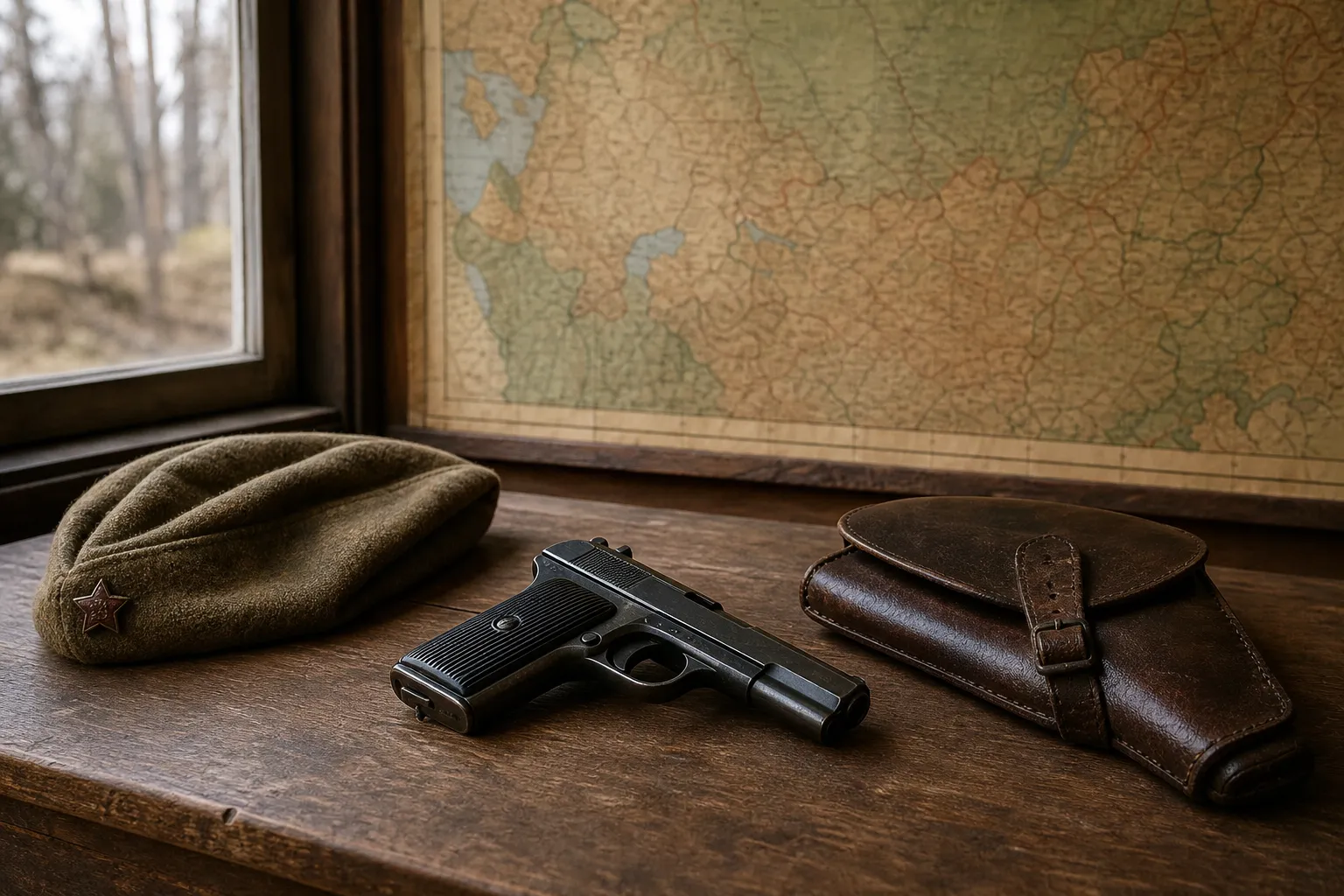
That date matters because the PM was not simply a late wartime pistol. It was a postwar standardization project. The Soviet requirement sought a new sidearm, and the design that emerged was tied closely to a new cartridge rather than being a direct continuation of the TT pistol and its 7.62 mm round.
The Tula State Museum of Weapons credits the associated cartridge to B.V. Semin and N.M. Elizarov at TsNIITOCHMASH in Klimovsk, Moscow region. The museum describes the 9x18 PM cartridge as less powerful than the TT cartridge, but with a larger caliber.
A Russian arms reference identifies the pistol as the 9 mm Makarov PM pistol Model 1951, states that it entered inventory in 1951, and says production at the Izhevsk Mechanical Plant began in 1953. The Tula State Museum of Weapons also states that production was established at Izhevsk Mechanical Plant and that more than five million PM pistols were produced there.
The basic PM layout
BICC’s Small Arms and Light Weapons Guide classifies the PM as a blowback operated, double action self loading pistol.
In a blowback pistol, the design is associated with mechanical simplicity compared with more complex locked breech pistol systems.
The Tula State Museum of Weapons lists a PM display pistol with these figures:
Caliber: 9.0 mm
Overall length: 16.0 cm
Barrel length: 9.3 cm
Loaded weight: 810 g
Muzzle velocity: 315 m/s
Magazine capacity: 8 cartridges
A Russian arms reference gives closely similar figures: 9x18 PM cartridge, 0.73 kg unloaded weight, 161 mm overall length, 93.5 mm barrel, 315 m/sec muzzle velocity, 50 m sighting range, and an eight round magazine.
The Tula State Museum of Weapons also notes that the pistol completely disassembles into 32 parts and uses a lever safety with fire and safe positions. Those points help explain why the PM is often discussed as a simple service design, though they should not be read as disassembly instructions.
The 9x18mm Makarov cartridge
The PM’s cartridge is central to its identity. BICC lists the PM cartridge as 9mm Makarov, also described as 9.2 x 18mm. C.I.P. identifies the standardized cartridge as 9 mm Makarov, with country of origin listed as SU.
“9 mm” does not mean every 9 mm pistol cartridge is the same.
SAAMI’s cartridge name document treats 380 Automatic, 9mm Luger, and 9x18 Makarov as separate entries. In that document.380 ACP appears under 380 Automatic, 9x19mm appears under 9mm Luger, and 9mm Makarov appears under 9x18 Makarov.
The practical safety point is simple: do not treat 9x18 Makarov as interchangeable with 9mm Luger or .380 ACP. SAAMI warns that firearms should be used only with the ammunition designated by the firearm manufacturer, and that firing ammunition that does not match the firearm markings can be dangerous. SAAMI also warns that a cartridge fitting into a chamber, barrel, or action does not necessarily mean it is safe to use in that firearm.
Soviet production and international use
The Tula State Museum of Weapons states that more than five million PM pistols were produced at the Izhevsk Mechanical Plant. The museum also states that the PM was used in more than 30 countries, including China, Indonesia, Iraq, the Czech Republic, Bulgaria, and Cuba.
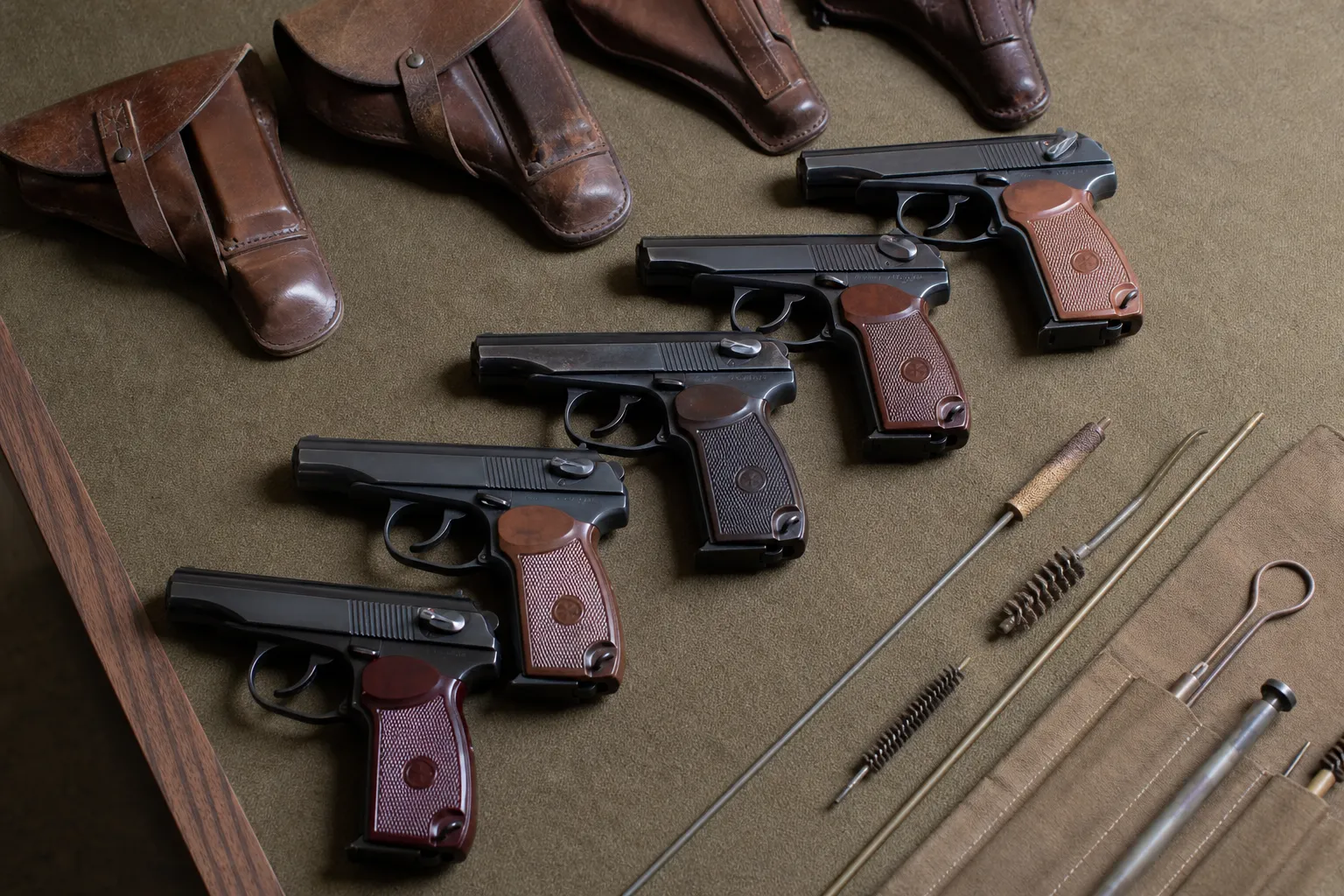
That broad distribution is a major reason the Makarov PM became a familiar Cold War sidearm. It was not only a Soviet pistol. It became a standard pattern across parts of the Soviet sphere and in other states that used Soviet aligned arms.
Collector context: Soviet, East German, Bulgarian, and Chinese examples
Collection context still matters when discussing Makarov pistols. The Tula State Museum of Weapons identifies the Soviet PM as an Izhevsk produced pistol that entered service in 1951.
A Berlin police history collection states that the Makarov was produced under license in East Germany at VEB Suhl from 1958. The same collection says the Makarov was standard armament in East Germany for military forces, police, intelligence services, and later factory combat groups.
Bulgarian and Chinese contexts also appear in the wider distribution history because the Tula State Museum of Weapons lists Bulgaria and China among the countries where the PM was used.
These records are collector context, not buying advice. They show why the word “Makarov” can refer to a Soviet PM or to related service histories in other states.
Why the PM remained historically important
The Makarov PM represents a specific postwar design choice: a service pistol that favored simplicity, compact dimensions, and a blowback operating system. Its adoption in 1951, large scale Izhevsk production, and use in more than 30 countries made it one of the best known Soviet pattern pistols of the Cold War era.
Its technical identity is also unusually tied to cartridge identity. A PM is not simply a “9 mm pistol” in the broad sense. It is a pistol built for 9x18mm Makarov, a cartridge that SAAMI treats as separate from 9mm Luger and 380 Automatic.
For readers studying a particular pistol, check the firearm’s markings, the cartridge designation, and current manufacturer or standards body safety guidance. For historical classification, compare markings and variant details with museum collections.
Frequently asked questions
Who designed the Makarov PM?
The Tula State Museum of Weapons identifies the winning design as the work of Tula designer Nikolay F. Makarov. The pistol entered service in 1951.
What pistol did the Makarov PM replace?
The Tula State Museum of Weapons states that the Soviet 1945 pistol tender sought a replacement for the 7.62 mm Tokarev TT pistol.
How does the Makarov PM operate?
BICC’s Small Arms and Light Weapons Guide classifies the PM as a blowback operated, double action self loading pistol.
Is 9x18mm Makarov the same as 9mm Luger or .380 ACP?
No. SAAMI treats 9x18 Makarov, 9mm Luger, and 380 Automatic as separate cartridge entries. SAAMI warns that firearms should be used only with the ammunition designated by the firearm manufacturer.
What are some Eastern Bloc Makarov variants?
The article discusses Soviet PM pistols and East German Pistole M pistols. It also notes wider PM use in Bulgaria and China.
Sources
- Makarov pistol, Virtual Museum of Tula State Museum of WeaponsOfficial source. Accessed October 23, 2026.
- PM Makarov pistol, Russian Guns / gunrf.ru. Accessed October 23, 2026.
- Makarov PM (Pistolet Makarova), Bonn International Centre for Conflict Studies, SALW Guide. Accessed October 23, 2026.
- Small Arms Identification and Operation, ST-HB-07-03-74, Defense Intelligence Agency, hosted by Bulletpicker. Accessed October 23, 2026.
- Makarow, Polizeihistorische Sammlung Berlin e.V.. Accessed October 23, 2026.
- Пистолет „Макаров“, кал. 9 мм, Национален Военноисторически Музей (National Museum of Military History, Bulgaria)Official source. Accessed October 23, 2026.
- C.I.P. TDCC, 9 mm Makarov, Commission Internationale Permanente pour l’Epreuve des Armes à Feu PortativesOfficial source. Accessed October 23, 2026.
- SAAMI Z299.3-2022, Centerfire Pistol & Revolver, Sporting Arms and Ammunition Manufacturers’ InstituteOfficial source. Accessed October 23, 2026.
- Generally Accepted Cartridge and Chamber Names, Sporting Arms and Ammunition Manufacturers’ InstituteOfficial source. Accessed October 23, 2026.
- MCWP 3-11.1, Infantry Company Operations, United States Marine Corps. Accessed October 23, 2026.