The Vz. 58 Rifle: Czechoslovak History and Design
The vz. 58 is a Czechoslovak 7.62 x 39 rifle that can resemble a Kalashnikov from a distance but uses a distinct domestic design. Its short stroke piston, tilting locking piece, alloy magazine, and Czech service history make it one of the more interesting Warsaw Pact infantry rifles.
By RaiS. Reviewed by RaiS. Published . 7 min read.
Research and drafting were assisted by AI. RaiS checked the facts against the sources below and approved this page.
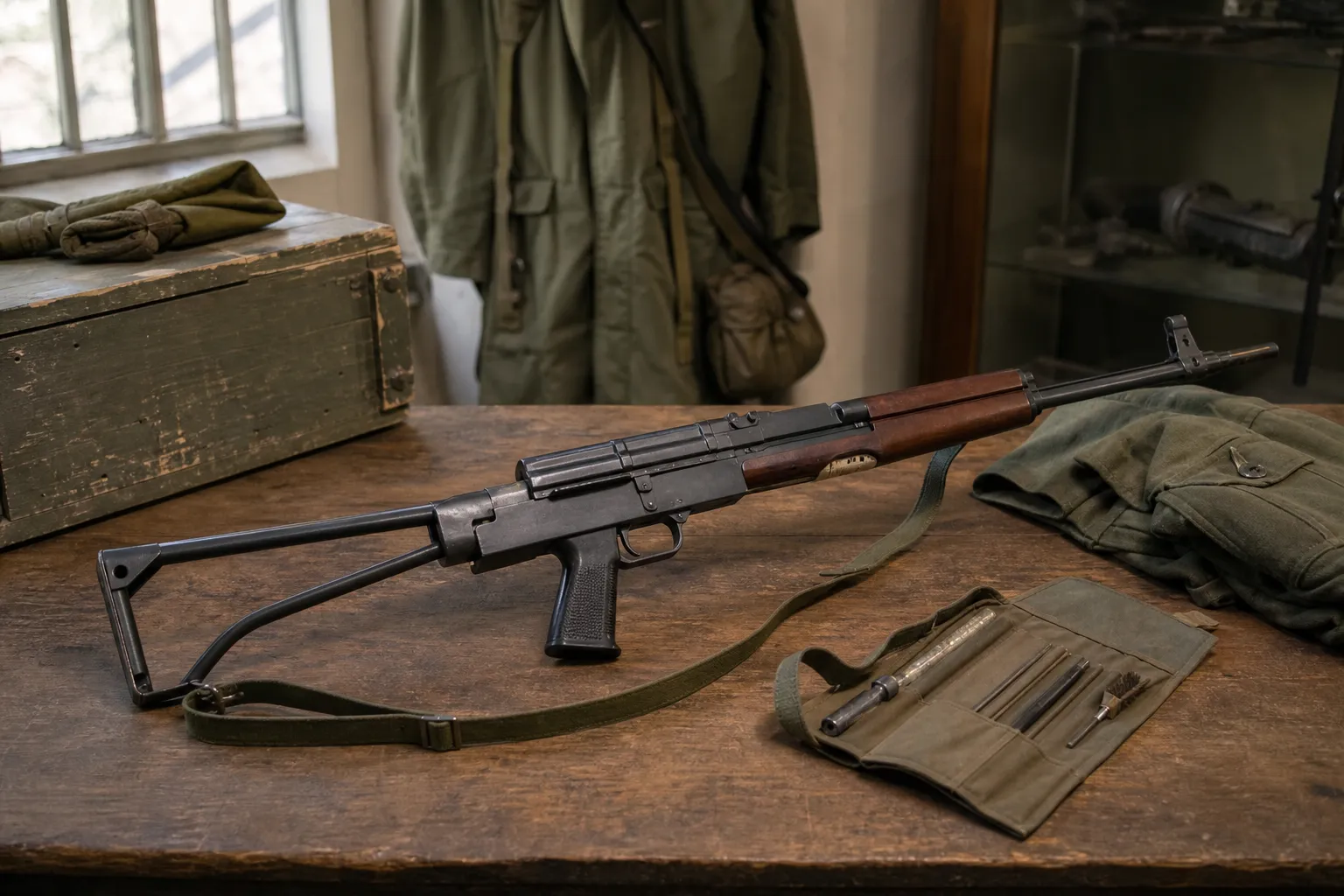
The vz. 58 is often mistaken for a Kalashnikov because of its silhouette and 7.62 x 39 chambering, but Czech and U.S. reference sources describe it as a separate Czechoslovak design. American Rifleman describes it as externally similar to an AK pattern rifle but internally quite different.
What “vz. 58” means in context
Czech sources identify the rifle by its service designation, “7.62mm samopal vz. 58.” The Military History Institute Prague says it was introduced into the Czechoslovak People’s Army by order of Minister of National Defence Bohumír Lomský on February 10, 1959.
The name can confuse English readers. Small Arms Review renders Samopal vzor 58 as “Submachine gun Model 1958.” For a reader comparing Cold War infantry rifles, the practical point is simple: the vz. 58 was Czechoslovakia’s 7.62 x 39 service rifle, not a local AK copy.
The cartridge was part of the story. The Military History Institute Prague says Czechoslovakia decided in 1955 to stop earlier development work in 7.62 x 45 and move to weapons in the Soviet 7.62 x 39 caliber, identified in Czech material as náboj vz. 43. For cartridge background, see our guide to the 7.62x39mm cartridge.
Development in 1950s Czechoslovakia
The vz. 58 came at the end of a postwar search for a universal infantry weapon. The Military History Institute Prague says adoption of the vz. 58 closed a postwar stage of looking for one individual weapon usable by all branches of service.
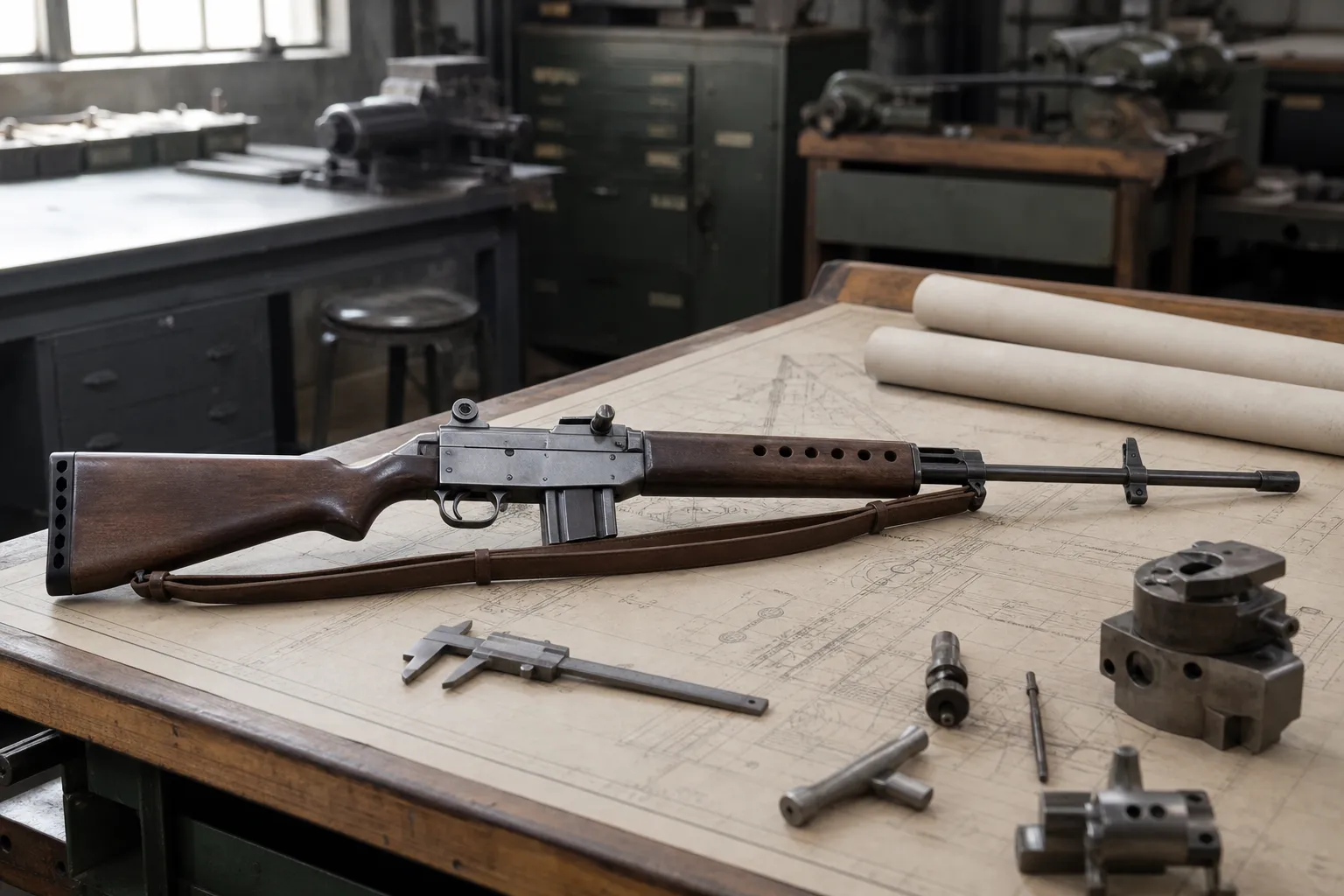
That search had already passed through earlier Czechoslovak work. According to the Military History Institute Prague, the 1955 decision to move away from 7.62 x 45 led to development of new weapons in 7.62 x 39. In 1956, development began at Konstrukta Brno on a new weapon labeled SAP, or samopal puška. The same museum source says this weapon was intended to replace the 24/26 submachine guns and vz. 52 and vz. 52/57 self loading rifles, and that the project used the cover name “Koště.”
The principal design figure was Jiří Čermák. The Czech Army publication names Jiří Čermák and engineer Bohuslav Novotný as the designers and says development began in 1956 in Brno. The Military History Institute Prague adds that Čermák had moved to Konstrukta Brno in 1954, and names Bohuslav Novotný, Jindřich Jakubec, and Karel Vystrčil as principal collaborators on the design.
Development was not just a drawing board exercise. The Military History Institute Prague says 15 prototypes and another 12 pre series guns were made before a 120 gun verification series. The same museum account says development testing settled on a 390 mm barrel length.
Weight was also a design constraint. The Military History Institute Prague says the specified empty magazine weapon weight was 3.05 kg, and that using aluminum alloys for the magazine helped meet the target by saving 150 g compared with a steel magazine.
Why Czechoslovakia did not simply adopt an AK
The simplest answer is that Czechoslovakia had a strong domestic small arms tradition and kept pursuing its own designs.
Small Arms Review gives a similar interpretation of the period. It says that when Warsaw Pact members were moving from the SKS semiautomatic rifle to the Soviet Kalashnikov AK 47, Czechoslovakia resisted conforming because of national pride and a long tradition of weapons design and manufacture.
That does not mean the vz. 58 ignored Warsaw Pact standardization entirely. Its chambering followed the 1955 move to Soviet 7.62 x 39. The distinction is that the cartridge was shared, while the rifle mechanism was Czechoslovak.
This is the key difference for anyone comparing it with the AK 47 and AKM. American Rifleman says the VZ 58 is mechanically distinct from Kalashnikov rifles and has no parts interchangeability. Small Arms Review is even more specific, saying no parts, including the 30 round magazines, interchange between the vz. 58 and AK rifles.
How the vz. 58 works, conceptually
At a high level, the vz. 58 is a gas operated rifle. Czech Army material describes its operation as taking part of the powder gases from the barrel through a gas channel to a piston above the barrel.
For readers new to the subject, this places the vz. 58 within the broad family of gas operated rifles, but its details differ from the Kalashnikov. American Rifleman describes the VZ 58 as using a short stroke piston system with a separate piston rod located above the barrel. That description is a useful contrast with the AK family, which American Rifleman contrasts as using a heavy bolt carrier and fixed gas piston rod.
The locking system is also different. The Military History Institute Prague describes the locking concept as an original system using a carried tilting locking piece with two locking lugs and a linear striker.
American Rifleman summarizes the contrast plainly: instead of a rotating bolt, the VZ 58 uses a tilting lock system. That is one of the main reasons the rifle is not an AK clone, even though the external profile can look familiar at a glance.
The magazine was another distinctive part of the design. CZ’s company article says the 30 round magazine was made from aluminum alloy, was light, sturdy, and rust resistant, and that the rifle locks open on an empty magazine.
Main variants
The Military History Institute Prague identifies three main service variants: the vz. 58 P, vz. 58 V, and vz. 58 Pi. CZ’s company article describes the same fixed stock, folding stock, and night vision versions.
- vz. 58 P: Fixed stock infantry version. The Military History Institute Prague says the infantry version with a fixed stock received the designation vz. 58 P.
- vz. 58 V: Folding shoulder stock version. The Military History Institute Prague says the version with a folding shoulder support carried the added letter V.
- vz. 58 Pi: Night sight version. The Military History Institute Prague says this version was for the NSP 2 night sight and had a detachable folding bipod and flash hider.
The letters mattered in Czechoslovak service descriptions, but they also help modern readers separate the basic rifle from its specialized versions. The P and V were the main stock configurations, while the Pi was adapted for night sight use.
Production and service life
CZ’s company article says production started at the CZ factory in Uherský Brod in 1959 and ended in 1984.
The rifle’s service life extended well beyond its original adoption period. Czech Army Review says the SA model 58 was the main weapon of Czech soldiers at the start of Czech deployment in Afghanistan, and that it had been in the army’s arsenal since the turn of the 1950s and 1960s.
Czech Army Review says replacement was driven by modernization needs, wider use of weapon accessories, and the move to a standardized NATO caliber. The same publication says NATO used 5.56 mm ammunition in Afghanistan while the assault rifle 58 had a 7.62 mm caliber. It says the BREN A1 from Česká zbrojovka was used from 2012, and toward the end of the Czech army’s operation in Afghanistan it was gradually replaced by the CZ BREN 2.
Export and wider appearance
Small Arms Review lists Cyprus, Angola, Ethiopia, Guinea, Libya, Mozambique, Somalia, Tanzania, Cuba, and Guatemala among countries that procured quantities of vz. 58 rifles. The same publication says the weapon also appeared during the Vietnam War and, at the time of that article, still saw service in many Czech Republic and Slovak military units.
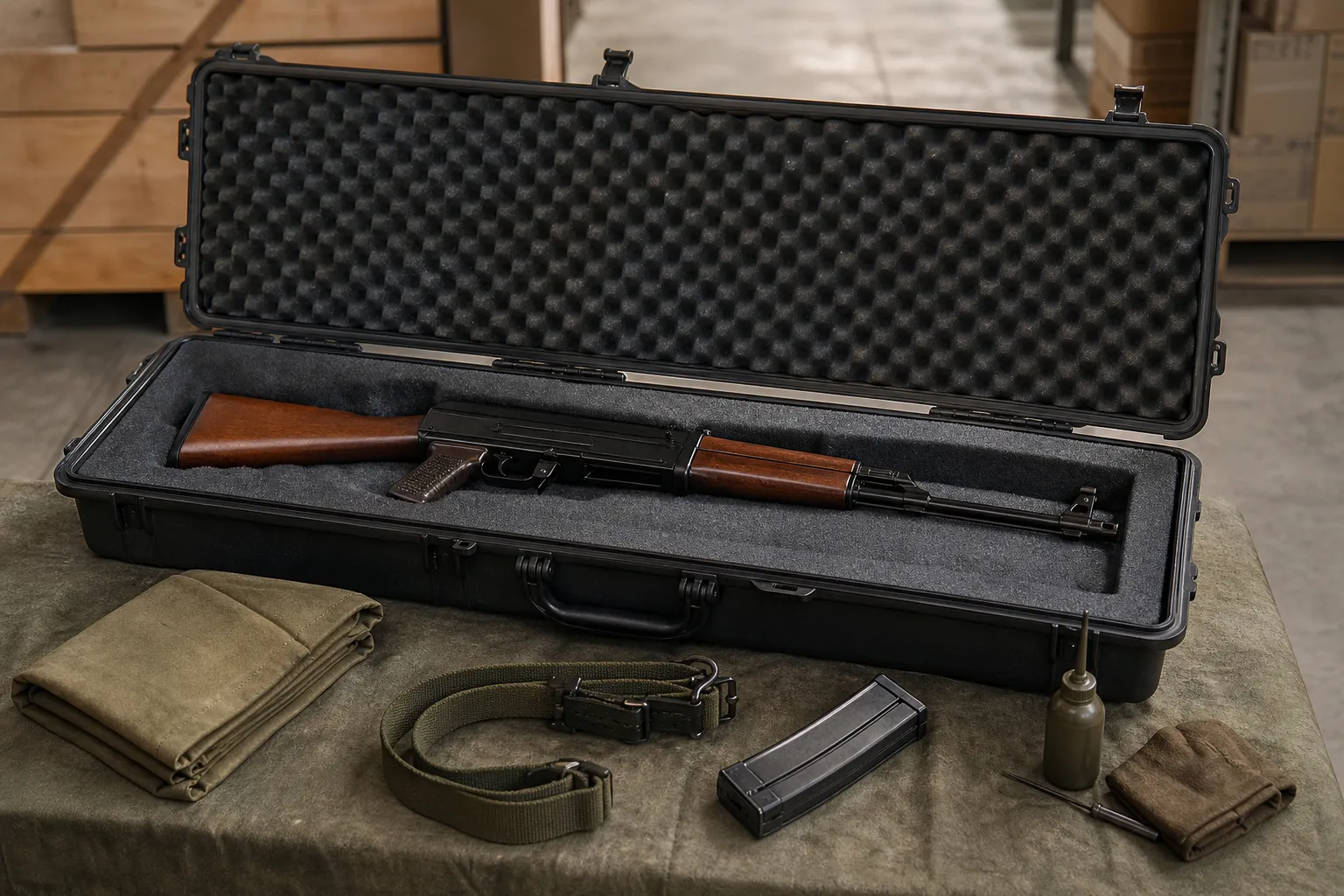
Those export notes fit the broader pattern described by Czech Army material: the rifle was a domestic Czechoslovak design in a Warsaw Pact cartridge. It was not mechanically part of the AK family, but it served in the same era, used the same 7.62 x 39 class of ammunition, and became visually associated with the same Cold War rifle category.
Why the vz. 58 still stands out
The vz. 58 stands out because it combined Warsaw Pact ammunition with an independent Czechoslovak mechanism. The Military History Institute Prague describes an original locking system, Czech Army material describes a gas piston above the barrel, and American Rifleman says the rifle is mechanically distinct from Kalashnikov rifles.
For a new reader, the safest shortcut is this: similar outline, same general cartridge family, different rifle. The vz. 58 was not a Czechoslovak AK. It was the result of a 1950s domestic development program that produced a lightweight 7.62 x 39 service rifle with fixed stock, folding stock, and night sight variants.
When researching any specific rifle, confirm the exact model, markings, configuration, and applicable law with official records or the relevant firearms authority. This article is historical and technical background only, not guidance on assembly, conversion, modification, or legal status.
Frequently asked questions
Is the vz. 58 an AK variant?
No. American Rifleman says the VZ 58 is mechanically distinct from Kalashnikov rifles and has no parts interchangeability. Small Arms Review says no parts, including the 30 round magazines, interchange between the vz. 58 and AK rifles.
What cartridge does the vz. 58 use?
Czech museum material says Czechoslovakia moved the program to Soviet 7.62 x 39, identified as náboj vz. 43.
Who designed the vz. 58?
Czech Army material names Jiří Čermák and engineer Bohuslav Novotný as the designers. The Military History Institute Prague also names Jindřich Jakubec and Karel Vystrčil as principal collaborators with Čermák.
What are the main vz. 58 variants?
The Military History Institute Prague identifies the vz. 58 P as the fixed stock infantry version, the vz. 58 V as the folding shoulder stock version, and the vz. 58 Pi as the version for the NSP 2 night sight.
Why did Czechoslovakia build its own rifle instead of using a licensed AK?
Small Arms Review attributes the independent approach to national pride and a long tradition of weapons design and manufacture.
Sources
- Výukový obraz čs. 7,62mm samopalu vz. 58, Vojenský historický ústav Praha, Military History Institute PragueOfficial source. Accessed November 8, 2026.
- Ruční zbraně AČR, Standardní zbraně AČR, 7,62mm samopal vzor 58 P, V, Pi, Armáda České republikyOfficial source. Accessed November 8, 2026.
- Sa vz. 58 Military Rifle Manual, CZ-USAOfficial source. Accessed November 8, 2026.
- Sa vz. 58, certainly not an AK clone, Česká zbrojovkaOfficial source. Accessed November 8, 2026.
- SAAMI Z299.4, Centerfire Rifle, 2025, 7.62 x 39 cartridge and chamber drawing, Sporting Arms and Ammunition Manufacturers’ Institute. Accessed November 8, 2026.
- CZ-USA VZ 58 Military Sporter, American Rifleman. Accessed November 8, 2026.
- Czech Samopal VZOR 1958, Small Arms Review. Accessed November 8, 2026.
- Czech Army Review 2/2021, Afghanistan, Small arms: from SA-58s to BREN-2s, Ministry of Defence of the Czech RepublicOfficial source. Accessed November 8, 2026.