The SIG SG 510 (Stgw 57) Rifle: History and Design
The SIG SG 510, adopted in Swiss service as the Sturmgewehr 57, was a heavy, robust 1950s rifle built around delayed blowback operation and the 7.5 x 55 Swiss cartridge. Its export and civilian branches included 7.62 x 51mm NATO SG 510 variants, the PE57, and the U.S. market SIG AMT.
By RaiS. Reviewed by RaiS. Published . 5 min read.
Research and drafting were assisted by AI. RaiS checked the facts against the sources below and approved this page.
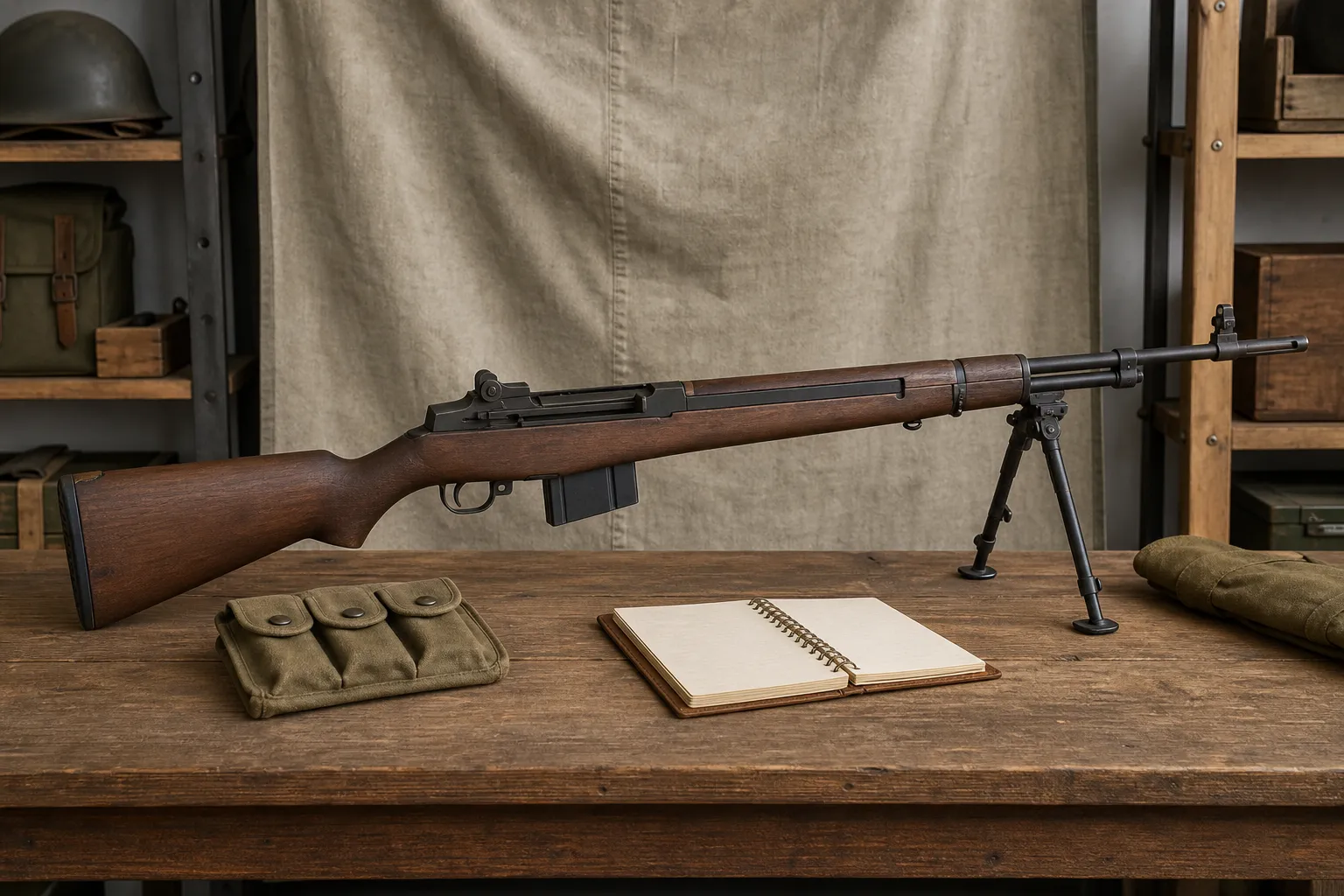
The SIG SG 510 is best known in Switzerland as the Sturmgewehr 57, or Stgw 57: a 7.5mm Swiss Army rifle developed by SIG in the 1950s and bought by the Swiss Army in very large numbers. It combined selective fire, a detachable magazine, a folding bipod and a delayed blowback mechanism in a rifle that Swiss and foreign references describe as robust, effective and heavy.
What the Stgw 57 was
The Stgw 57 was the Swiss military form of SIG’s SG 510 family. The U.S. Army’s foreign small arms identification guide described the 7.5mm StG 57 as the standard Swiss Army rifle and credited its development to the Swiss SIG Company.
The Swiss Army’s 1977 regulation described the 7.5mm Sturmgewehr 1957 as an automatic recoil operated rifle for semi-automatic and automatic fire.
SIG’s own factory brochure presented the SG 510 concept as a “unit weapon” intended to replace conventional rifles, self-loading rifles, sub-machine guns and light machine guns. That does not mean it was light. Later Swiss commentary described it as heavy.
SIG development and Swiss adoption
SIG’s company history traces the firm to 1853, when Schweizerische Industrie Gesellschaft was founded as Schweizerische Waggon-Fabrik bei Schaffhausen. The same company history says arms production began in 1860 at the request of the Swiss Army.
For the SG 510 period, SIG/SAN Swiss Arms presents the Sturmgewehr 57 project as a 1953 to 1957 success and says the Swiss Army bought more than 700,000 rifles. Small Arms Review gives the design period as 1954 to 1957 and states that the rifle ultimately became the Sturmgewehr 57.
Those dates place the Stgw 57 in the postwar generation of self-loading and selective-fire military rifles. It was not a small intermediate-cartridge rifle. In Swiss service it used the 7.5 x 55 Swiss cartridge family rather than the later small-caliber approach that led to the Stgw 90.
How the delayed blowback system worked, conceptually
The SG 510 did not use a conventional gas piston. SIG’s factory brochure stated that the barrel was firmly attached and did not move, and that the rifle was not gas operated in the conventional sense because no gas piston was present. Instead, the operating principle was delayed blowback.
In simple terms, the cartridge case begins pushing rearward after firing, but the bolt does not open freely at once. The system slows the opening of the action during the early part of firing.
This is a conceptual explanation only. The important idea is timing: the system slows the opening of the action without using the piston system found on many gas-operated rifles.
Cartridge, size and basic specifications
Swiss sources and C.I.P. data identify the Stgw 57 with Switzerland’s 7.5mm cartridge family. C.I.P. lists the cartridge as 7,5 x 55 Suisse, gives Switzerland as the country of origin and lists 7,5 x 55 Swiss as an alternative name. The U.S. Army guide gave the StG 57 cartridge as 7.5 x 55.5mm, while stating that the SIG 510 series in that guide fired 7.62 x 51mm cartridges.
The Swiss Army regulation gives a useful snapshot of the military Stgw 57:
| Feature | Swiss Army regulation data |
|---|---|
| Caliber | 7.5mm |
Later Swiss commentary helps explain why the Stgw 57 feels like a very different design from later compact service rifles. A Swiss federal library article described the Stgw 57 as robust and effective, but also heavy, less flexible and equipped with ammunition that was not internationally compatible.
Bipod, sights and accuracy reputation
The Stgw 57’s reputation is tied closely to its mass, its bipod and Swiss expectations for aimed rifle fire.
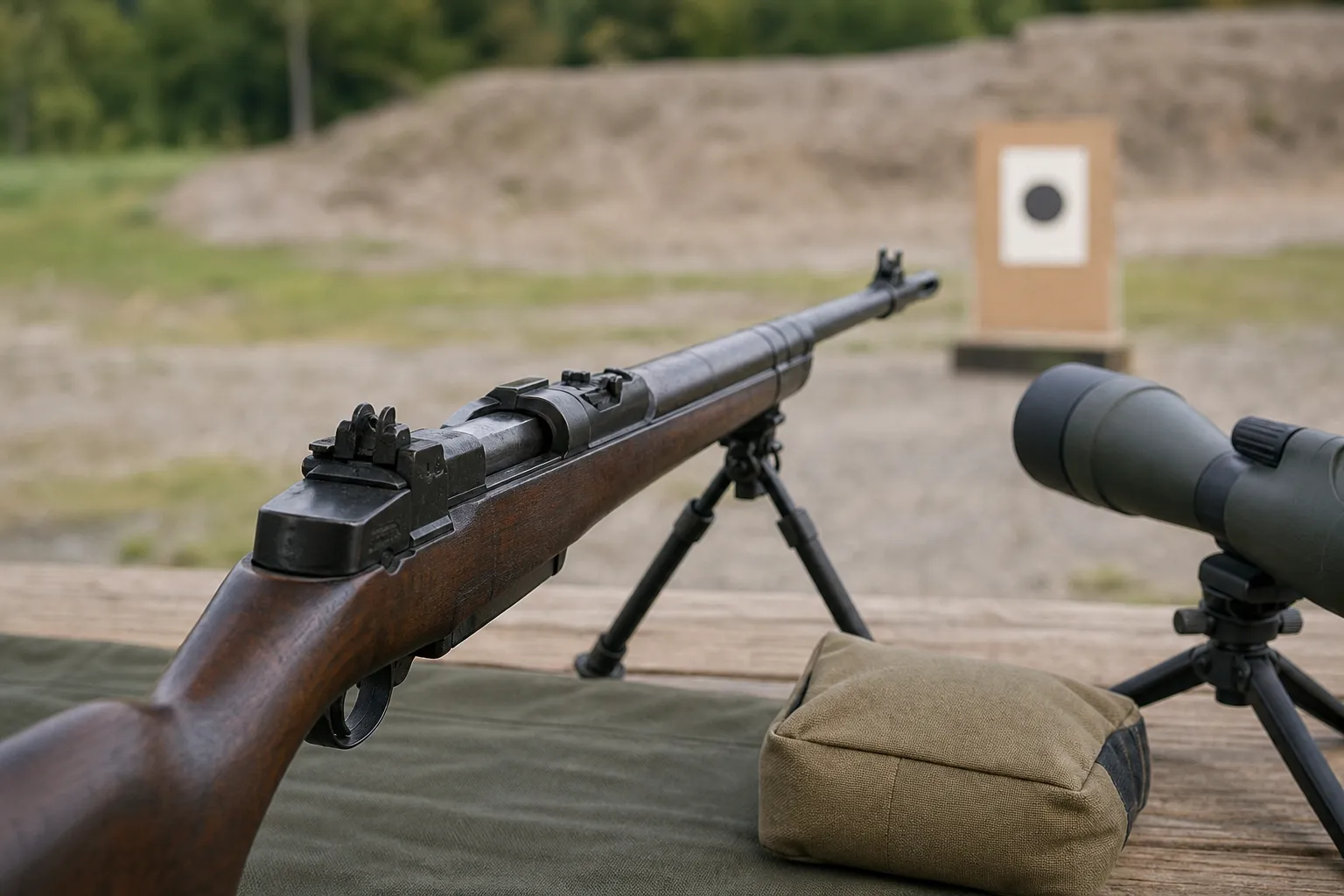
SIG’s factory brochure said that in aimed fire the automatic rifle’s accuracy was comparable to that of a good manually operated rifle.
That does not make the Stgw 57 a light or simple rifle. It helps explain the design tradeoff. The rifle accepted weight and mechanical complexity in exchange for stability, durability and controlled aimed fire from supported positions.
Export SG 510 versions
The SG 510 name is often used broadly, but the Swiss Stgw 57 and export SG 510 variants should not be treated as identical in every detail. The U.S. Army guide said the StG 57 was also known as the SIG 510 when chambered for 7.62mm NATO, and it distinguished the 7.5mm StG 57 from SIG 510 series rifles in 7.62 x 51mm.
SIG’s factory SG 510-4 data listed that model in 7.62mm NATO, with a 1,015mm overall length and a 20-round steel magazine. The same SIG brochure described the SG 510-4 as a further development of the SIG automatic rifle, with lighter weight, a simplified lowered aperture sight and provision for mounting a telescope sight. It also stated that the SG 510-4 used the same delayed blowback design principle as the rest of the SG 510 range.
Small Arms Review listed five 510-series versions: 510-1, 510-2, 510-3, 510-4 and 510-5, and identified the 510-4 as the 7.62mm NATO version. The BICC/SALW Guide lists the SIG SG510-4 as using 7.62 x 51mm NATO ammunition and being in service with Chilean and Bolivian armed forces.
Civilian PE57 and SIG AMT
The civilian branches of the SG 510 story are best handled separately from the Swiss military Stgw 57.
Small Arms Review states that SIG exported two versions of the 510 into the United States from 1969 to 1989. One was the 510-1, renamed for sales as the PE57, and it remained chambered in 7.5mm Swiss. The other was the later sporting version of the 510-4, which became the SIG AMT in the United States.
Small Arms Review estimates that about 3,000 AMT rifles were imported into the United States from 1969 to 1989, while noting that even SIG did not know the exact number.
Why the Stgw 57 was replaced
The later Swiss shift away from the Stgw 57 was about size, weight, flexibility and ammunition standardization. A Swiss federal library article summarized the Stgw 57 as robust and effective, but heavy, less flexible and equipped with ammunition that was not internationally compatible.
The same Swiss federal library article says that, beginning in the 1970s, a lighter rifle was developed with a smaller caliber that would also be more internationally compatible. It identifies the current Stgw 90 as the rifle in use since 1990.
That makes the Stgw 57 a transitional design in Swiss service rifle history. It carried forward powerful 7.5mm Swiss ammunition and a strong marksmanship tradition, while adopting a self-loading, selective-fire mechanism. Its successor moved toward a lighter and smaller-caliber concept.
What to remember
The SG 510 and Stgw 57 are important because they show one answer to a 1950s infantry rifle problem: how to combine aimed rifle fire, automatic fire capability and a powerful service cartridge in one weapon. SIG’s answer was not a lightweight rifle. It was a heavy, robust delayed-blowback design that Swiss sources still describe as effective.
For collectors, historians and technical readers, the key distinction is between the Swiss 7.5mm Stgw 57, the 7.62 x 51mm NATO SG 510 export versions, and the civilian PE57 and AMT rifles. For current ownership, import, transfer or shooting rules, readers should check the relevant national, state, provincial and local authorities, and should use official manufacturer or armorer literature for safety information.
Frequently asked questions
Is the SIG SG 510 the same rifle as the Swiss Stgw 57?
The Swiss Stgw 57 was the Swiss military form of the SIG SG 510 family. The U.S. Army guide described the 7.5mm StG 57 as the standard Swiss Army rifle and noted that the SIG 510 name was used when chambered for 7.62mm NATO.
What cartridge did the Stgw 57 use?
The Swiss Army regulation lists the Stgw 57 caliber as 7.5mm. C.I.P. lists the cartridge as 7,5 x 55 Suisse, with 7,5 x 55 Swiss as an alternative name.
How did the Stgw 57 action work?
The article describes the SG 510 as using delayed blowback rather than a conventional gas piston. In simple terms, the system slows the opening of the action during the early part of firing.
Why is the Stgw 57 often described as heavy?
A Swiss federal library article described the Stgw 57 as robust and effective, but heavy and less flexible.
What were the PE57 and SIG AMT?
Small Arms Review states that the PE57 was the U.S. sales name for the 510-1 in 7.5mm Swiss, while the later sporting version of the 510-4 became the SIG AMT in the United States.
What replaced the Stgw 57 in Swiss service?
A Swiss federal library article says a lighter, smaller-caliber successor was developed beginning in the 1970s and identifies the Stgw 90 as the current rifle in use since 1990.
Sources
- About us, SIG Sauer Swiss / SAN Swiss ArmsOfficial source. Accessed November 10, 2026.
- Behörden & Militär Produktkatalog 2019, SIG Sauer Swiss / SAN Swiss ArmsOfficial source. Accessed November 10, 2026.
- Handfeuerwaffen der Schweizer Armee feiern Jubiläum, Bibliothek am Guisanplatz, Swiss ConfederationOfficial source. Accessed November 10, 2026.
- Reglement des Direktors der Kriegsmaterialverwaltung über das 7,5mm Sturmgewehr 1957, 20 October 1977, Swiss Kriegsmaterialverwaltung, hosted by the-shooters.ch. Accessed November 10, 2026.
- Automatic Rifle SG 510, Swiss Industrial Company, Neuhausen Rhine Falls, Switzerland, hosted by Forgotten Weapons. Accessed November 10, 2026.
- DST-1110H-163-76, Small Arms Identification and Operations Guide, Free World, December 1976 with changes, U.S. Army, hosted by Bulletpicker. Accessed November 10, 2026.
- C.I.P. TDCC, 7,5 x 55 Suisse, Commission Internationale Permanente pour l'Epreuve des Armes à Feu PortativesOfficial source. Accessed November 10, 2026.
- SALW Guide, Chile country report, Bonn International Centre for Conflict Studies. Accessed November 10, 2026.
- The SIG AMT Rifle in America, Small Arms Review. Accessed November 10, 2026.
- Reglement 27.132 dfi. Accessed November 10, 2026.
- SIG SG-510 | Weaponsystems.net. Accessed November 10, 2026.