The Punt Gun: History of the Giant Waterfowl Gun
A punt gun was an oversized waterfowling shotgun, usually too heavy to carry and mounted on a small shallow boat called a punt. It became a symbol of 19th century commercial waterfowl market hunting, and surviving examples are now interpreted in museum and conservation collections.
By RaiS. Reviewed by RaiS. Published . 5 min read.
Research and drafting were assisted by AI. RaiS checked the facts against the sources below and approved this page.

A punt gun was an oversized shotgun used in commercial waterfowl hunting, usually mounted on the bow of a small, flat bottomed duck boat called a punt. In the United States, museum and conservation records connect these huge guns with the market hunting era, when hunters supplied ducks and other waterfowl for sale rather than hunting only for personal use.
What a punt gun was
The Illinois State Museum describes punt guns as large bore shotguns used by market hunters for commercial waterfowl hunting. Its collection example is cataloged as 82.12 and is made of iron and wood. The same museum says these cannon like guns were mounted on the bow of a flat bottomed duck boat called a punt.
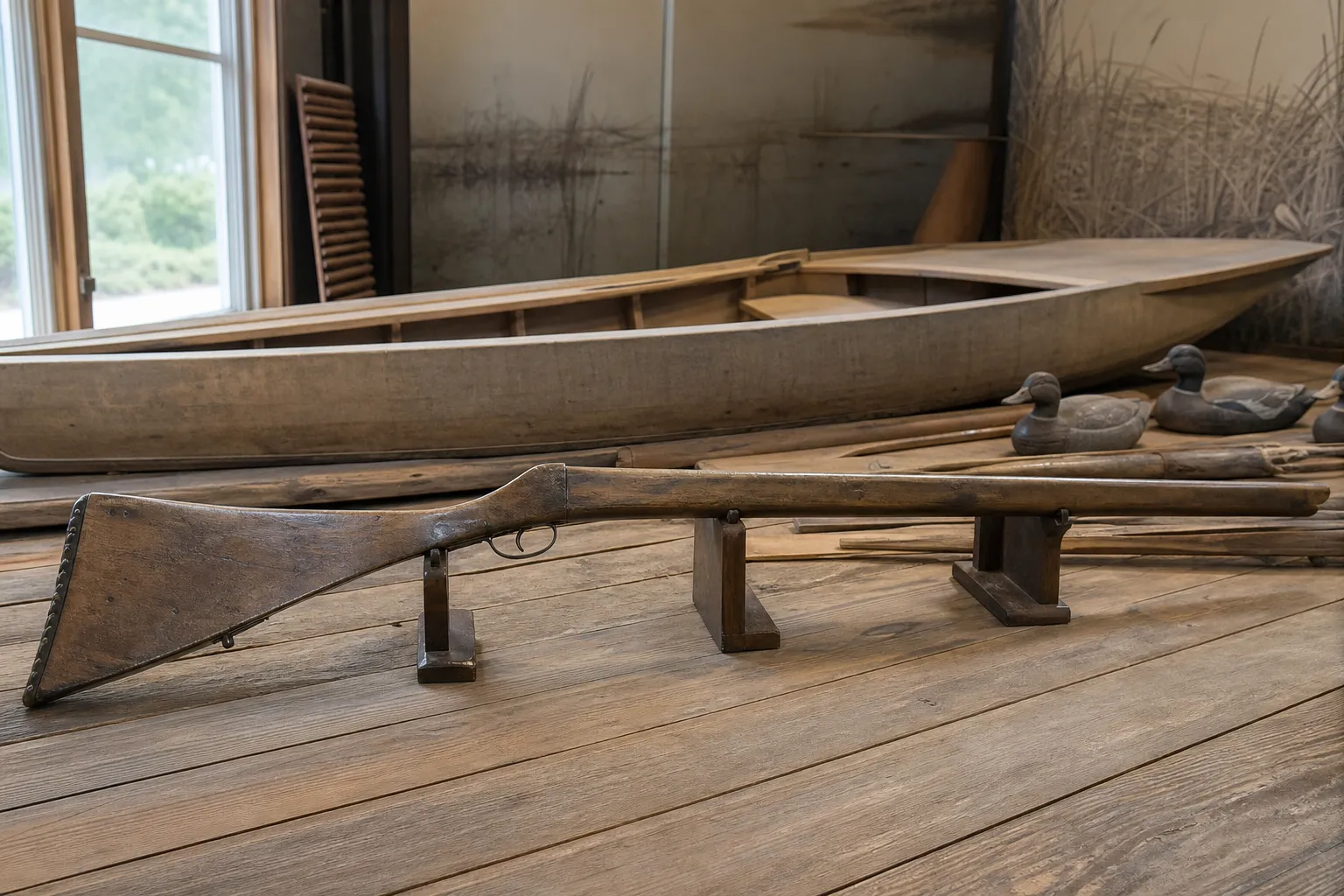
The basic idea was simple: the gun was too large for ordinary shoulder use, so the boat became part of the shooting platform. The Buffalo Bill Center of the West gives the same plain explanation for the Cody Firearms Museum examples: punt guns were too heavy to carry, so duck hunters mounted them on shallow boats.
The Illinois State Museum’s pictured punt gun was a muzzleloader with a rough wooden stock. The museum says it weighed almost 100 pounds, which is why it would have been mounted on a boat or braced. Ducks Unlimited also notes that the Waterfowling Heritage Center collection includes a punt gun with a 70 inch barrel.
These details help explain why punt guns look more like boat mounted equipment than ordinary sporting arms. They were shotguns in function, but their size placed them outside the normal world of hand carried hunting guns.
How market hunters used punt guns
The Illinois State Museum places punt gun use at the height of commercial waterfowl hunting in the 1880s. Its description focuses on market hunters using large bore domestic shotguns, mounted on punts, to approach resting ducks on the water.
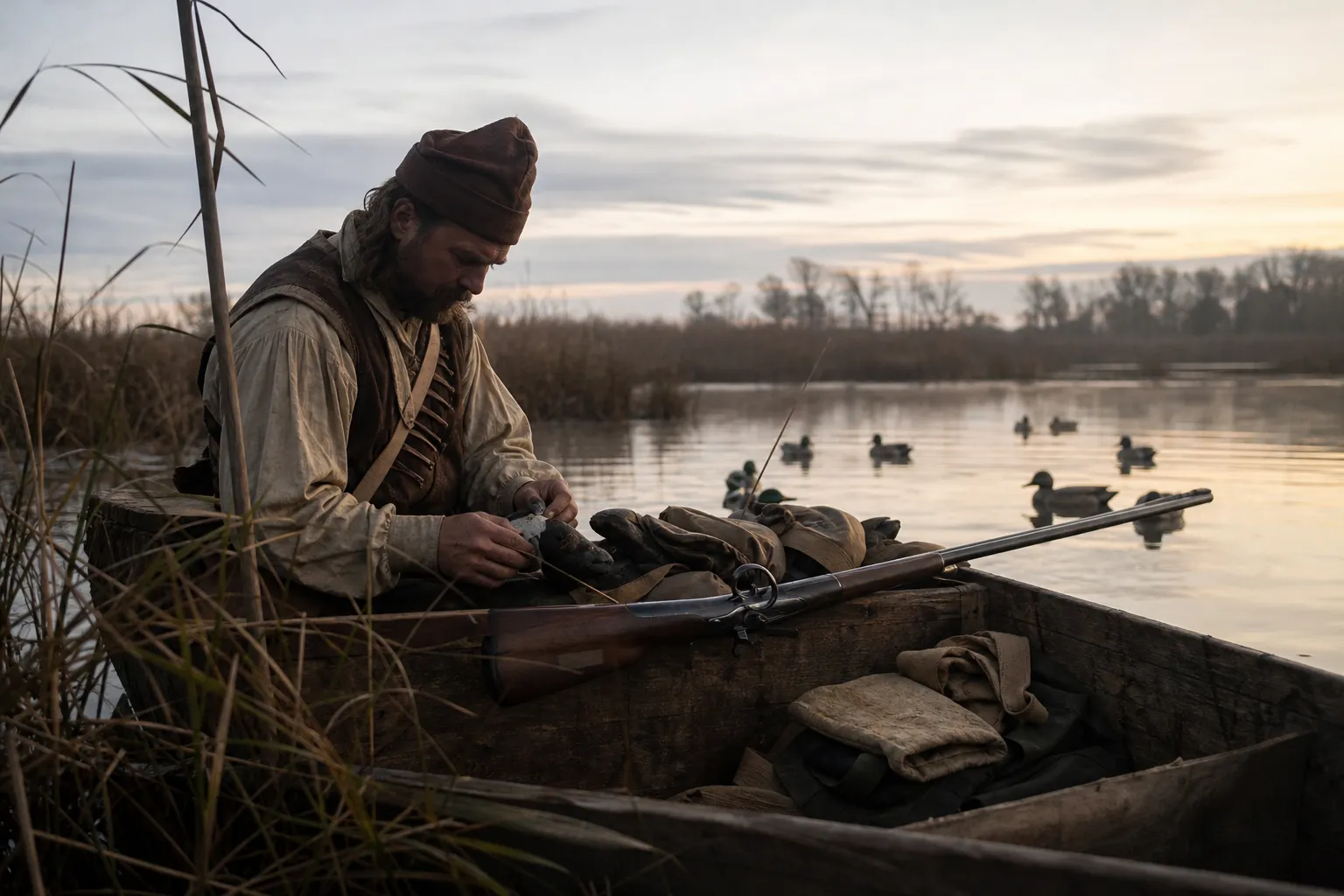
According to the Illinois State Museum, hunters poled the boat quietly at night close to a flock of ducks resting on the water. They then fired a large load of shot and powder into the flock. The museum says that used in tandem, a group of hunters with punt guns could bag 500 ducks per day.
Why the market hunting era ended
The end of the punt gun era is best understood as part of the larger conservation response to commercial exploitation of wildlife. The U.S. Fish and Wildlife Service says late 19th century market hunting and the feather trade for ladies’ fashion helped decimate many game and bird species.
In that context, federal wildlife law became more important. The U.S. Fish and Wildlife Service says President William McKinley signed the Lacey Act on May 25, 1900. The agency describes the law as prompted by concern over interstate profiteering in illegally taken game, and says the Lacey Act banned interstate commerce in illegally obtained wildlife in 1900.
The U.S. Fish and Wildlife Service also describes later federal action affecting migratory birds. The agency says the Weeks McLean Law prohibited spring hunting and marketing of migratory birds. It also says the Migratory Bird Treaty Act was passed by Congress and signed by President Woodrow Wilson on July 3, 1918, and that the 1918 act gave the Biological Survey expanded control over the management of migratory species.
For punt guns, the important historical point is not a single invention or one single law. The important point is that large scale commercial waterfowling was overtaken by a conservation movement aimed at declining bird populations, interstate trade in illegally taken game, and federal management of migratory birds.
A 1988 U.S. Fish and Wildlife Service release about a Smithsonian waterfowl conservation exhibit shows how agencies later presented this history to the public. The release said the exhibit included a 10 foot long punt gun, along with a battery gun, and described them as tools used by early illegal market hunters to shoot large numbers of waterfowl.
Surviving examples in museums and collections
Punt guns survive today mainly as museum and heritage objects. Their size makes them memorable, but their interpretation usually points beyond the gun itself to market hunting, waterfowl abundance, regulation, and conservation.
Smithsonian National Museum of American History
Illinois State Museum
The Illinois State Museum holds a punt gun in its collection, cataloged as 82.12. The museum identifies it as iron and wood, and describes the pictured example as a muzzleloader with a rough wooden stock.
The Illinois record is especially useful because it combines object description with historical use. It says market hunters mounted cannon like punt guns on the bow of a flat bottomed duck boat, called a punt, then poled quietly at night toward ducks resting on the water.
Chesapeake Bay Maritime Museum
Other identified collection examples
The Buffalo Bill Center of the West says the Cody Firearms Museum has punt guns in its collection. Its explanation emphasizes their weight and boat mounting, saying they were too heavy to carry and were mounted on shallow boats.
The Wisconsin Historical Society identifies a giant punt gun used to hunt waterfowl on Lake Mendota in Madison, Wisconsin, around 1866 to 1870. Ducks Unlimited says the Waterfowling Heritage Center collection includes a punt gun with a 70 inch barrel.
Together, these examples show that punt guns were not a single museum curiosity. Surviving records place them in state museum collections, regional historical collections, and conservation heritage displays.
How to read the punt gun today
For history readers, a punt gun is a striking piece of technology because it shows how far commercial hunting tools could diverge from ordinary sporting firearms. It was still a shotgun, but it was so large that the boat, the water, and the flock all became part of the method.
For waterfowlers, the punt gun is also a reminder of why modern waterfowl management developed. The U.S. Fish and Wildlife Service connects late 19th century market hunting and the feather trade with sharp declines in many game and bird species. It also identifies the Lacey Act of 1900 and the Migratory Bird Treaty Act of 1918 as major steps in federal wildlife and migratory bird history.
Readers interested in current waterfowl hunting rules should not rely on punt gun history for legal guidance. Check the U.S. Fish and Wildlife Service and the appropriate state, provincial, or territorial wildlife agency for current regulations, seasons, methods of take, licensing, and migratory bird requirements.
Frequently asked questions
What was a punt gun?
A punt gun was an oversized waterfowling shotgun. The Illinois State Museum describes punt guns as large bore shotguns mounted on the bow of a flat bottomed duck boat called a punt.
Why were punt guns mounted on boats?
They were too large and heavy for ordinary carry. The Illinois State Museum says its pictured punt gun weighed almost 100 pounds, and the Buffalo Bill Center of the West says punt guns were too heavy to carry, so hunters mounted them on shallow boats.
How were punt guns used by market hunters?
The Illinois State Museum says hunters poled a punt quietly at night toward ducks resting on the water, then fired a large load of shot and powder. The museum places this practice at the height of commercial waterfowl hunting in the 1880s.
What laws are part of the punt gun story?
As historical context, the U.S. Fish and Wildlife Service says the Lacey Act was signed on May 25, 1900, and banned interstate commerce in illegally obtained wildlife. The agency also says the Migratory Bird Treaty Act was signed on July 3, 1918, and expanded federal management of migratory species.
Where can punt guns be seen or documented today?
Museum and heritage records identify punt guns in several collections, including the Illinois State Museum, the Cody Firearms Museum, the Wisconsin Historical Society, and the Waterfowling Heritage Center collection.
Sources
- Punt Gun, Illinois State MuseumOfficial source. Accessed October 23, 2026.
- Punt Gun, National Museum of American History, Smithsonian InstitutionOfficial source. Accessed October 23, 2026.
- History of the U.S. Fish and Wildlife Service, U.S. Fish and Wildlife ServiceOfficial source. Accessed October 23, 2026.
- Nation Marks Lacey Act Centennial, U.S. Fish and Wildlife ServiceOfficial source. Accessed October 23, 2026.
- Migratory Birds: About Us, U.S. Fish and Wildlife ServiceOfficial source. Accessed October 23, 2026.
- Waterfowling, Chesapeake Bay Maritime MuseumOfficial source. Accessed October 23, 2026.
- The Legacy Endures: Smithsonian's Show Tells Story of Waterfowl Conservation; Duck Stamp, U.S. Fish and Wildlife ServiceOfficial source. Accessed October 23, 2026.
- The surprising origin of the phrase, ‘get your ducks in a row’, Buffalo Bill Center of the WestOfficial source. Accessed October 23, 2026.
- Giant Punt Gun, Wisconsin Historical SocietyOfficial source. Accessed October 23, 2026.
- Treasures of Waterfowling, Ducks Unlimited. Accessed October 23, 2026.
- The Canvasback, Fall 2021, Havre de Grace Decoy Museum archive. Accessed October 23, 2026.