The Thompson Submachine Gun: History of the Tommy Gun
The Thompson submachine gun is tied to John T. Thompson’s effort to give soldiers mobile firepower. Its public story moved from early Auto Ordnance production and 1920s notoriety to major World War II service.
By RaiS. Reviewed by RaiS. Published . 6 min read.
Research and drafting were assisted by AI. RaiS checked the facts against the sources below and approved this page.
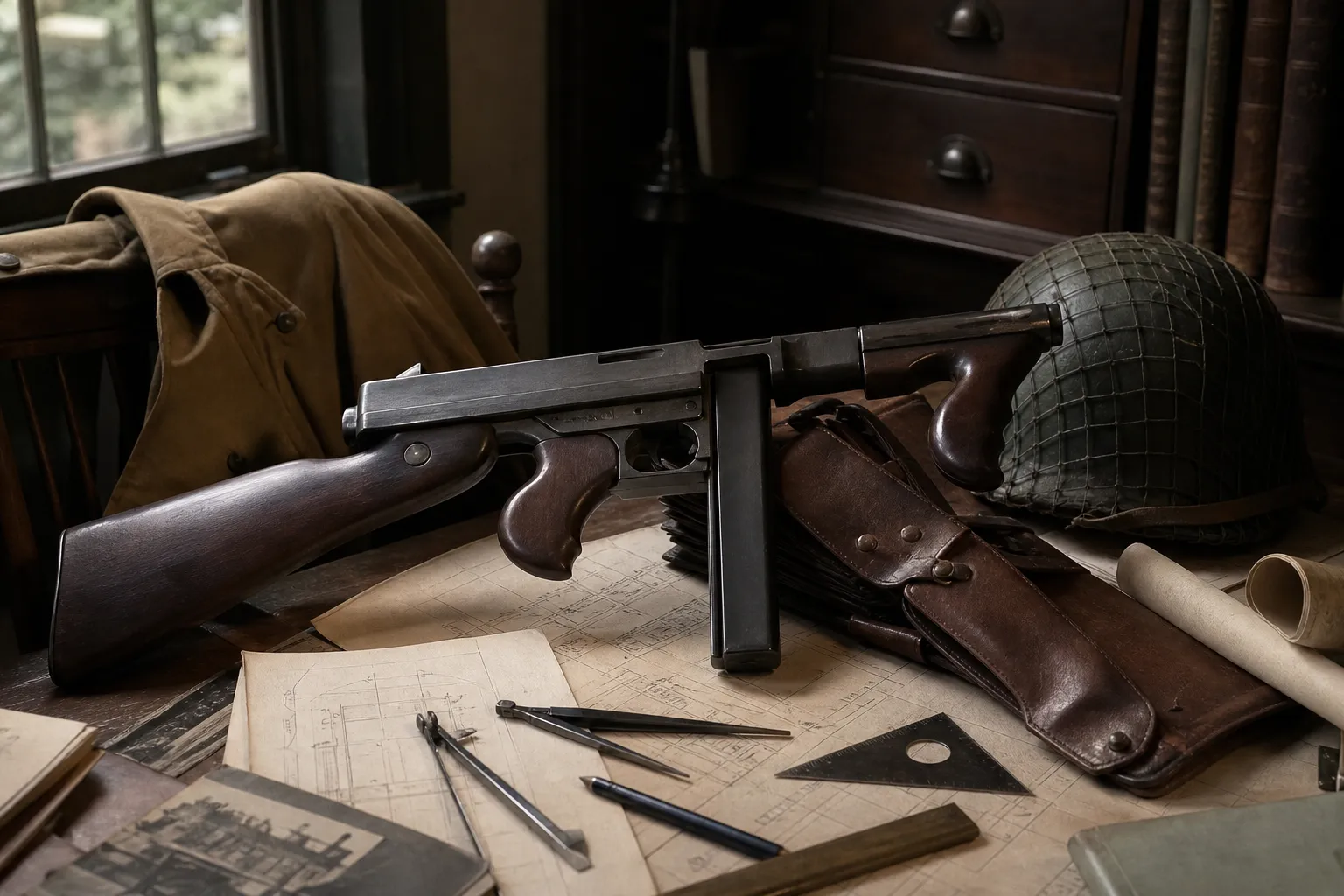
The Thompson submachine gun, better known as the Tommy Gun, was designed as a compact military arm for soldiers on the attack and became famous after World War I. John T. Thompson and Auto Ordnance developed it for mobile firepower, Colt built the first production lot in 1921, and later versions became closely tied to police, gangsters, military service, and early federal firearms regulation.
John T. Thompson and the idea behind the gun
John Taliaferro Thompson was a U.S. Army officer and ordnance specialist. The U.S. Army Ordnance Corps says Thompson was born in Newport, Kentucky, in 1860 and graduated from the United States Military Academy in 1882.
The same Army Ordnance Corps account connects Thompson’s military service to his interest in increasing the firepower of the individual soldier. It says his service in Cuba impressed him with that need, a theme that helps explain why his name became attached to one of the best known small arms of the early twentieth century.
The Library of Congress identifies John T. Thompson with the M1921 Thompson submachine gun, calling it the famous “tommy gun.” It also describes the weapon’s intended role in unusually direct terms: Thompson designed it as a mobile, light machine gun for soldiers on the attack as a “trench broom.”
That phrase points to the military setting behind the design. The gun’s concept centered on mobile firepower for soldiers on the attack, while its public fame came later.
Auto-Ordnance and the Model 1921
After World War I, Thompson’s project moved through Auto Ordnance. The U.S. Army Ordnance Corps says Thompson became president of Auto Ordnance Corporation in 1920 and was then in charge of engineering work connected to the gun.
The National Firearms Museum says that by 1920 a Thompson prototype was ready for military testing. The production version that followed was designated the “Thompson Submachine Gun, Model of 1921,” and the museum says those guns again took part in military trials.
Production was not originally done by Auto Ordnance itself. The U.S. Army Ordnance Corps says that in 1921, on the company’s order, Colt manufactured 15,000 basic Thompson submachine guns for Auto Ordnance.
The National Firearms Museum says Auto Ordnance sold approximately 6,000 submachine guns in the first seven years after the Thompson’s introduction. That figure helps explain the Thompson’s early contradiction: it was a famous design, but its first years did not make it a universally adopted military arm.
The 1928 model and the Tommy Gun’s public image
The National Firearms Museum describes the Thompson Model 1928 and M1928A1 as direct descendants of the famous “Tommy Gun,” which it also calls “the gun that made the 20s roar.” That museum language captures why the Thompson is remembered as both a military design and a cultural symbol.
The Navy was the first U.S. military service in this period to formally adopt the gun. The National Firearms Museum says that in 1928, the Navy formally adopted the Thompson after Auto Ordnance made several changes in its design.
The Army followed later. The National Firearms Museum says the Army adopted a Parkerized M1928A1 version for cavalry, tank, and scout car crews.
Outside military channels, the Thompson’s image developed in a different way. The National Firearms Museum says the gun achieved its greatest early notoriety through association with gangsters of the 1920s and 1930s, as well as the FBI and state and local law enforcement.
That public image is a large part of why the Thompson is still recognized today. Many firearms have seen military use, but fewer became shorthand for a whole period of American crime, policing, and news coverage. The Thompson’s reputation came from both sides of that public story: law enforcement use and criminal misuse.
World War II and the M1 and M1A1
World War II changed the Thompson’s production story. The National Firearms Museum says that when new war orders exhausted the original Colt made supply, Auto Ordnance arranged for Savage Arms to produce the M1928A1 under a license agreement. The museum also says Auto Ordnance began its own production in a renovated Bridgeport, Connecticut factory.
The Army then moved to wartime versions. The National Firearms Museum says the Army adopted the M1 Thompson in 1942 and identifies the M1A1 as the last production Thompson submachine gun.
This wartime shift was about production as much as reputation. The available museum accounts emphasize that wartime Thompson versions appeared during the pressure of World War II. The exact technical changes are beyond the scope of this historical overview, but the broad point is clear: the Thompson line was adapted for wartime manufacture.
The National Firearms Museum says Thompsons were favored by British commandos, U.S. Marine Corps Raiders, U.S. Army Ranger and Airborne units, and regular infantry troops. By the time military production ended, the museum says approximately one million Thompsons of various models had been produced.
That wartime scale changed the Thompson’s place in history. The early Model 1921 was an innovative but limited production gun. The Model 1928 and M1928A1 connected it to formal military adoption and the famous Tommy Gun image. The M1 and M1A1 made it a major World War II small arm.
A short Thompson timeline
1860: The U.S. Army Ordnance Corps says John T. Thompson was born in Newport, Kentucky.
1882: The U.S. Army Ordnance Corps says Thompson graduated from the United States Military Academy.
1920: The U.S. Army Ordnance Corps says Thompson became president of Auto Ordnance, and the National Firearms Museum says a prototype was ready for military testing.
1921: Colt manufactured 15,000 basic Thompson submachine guns for Auto Ordnance, according to the U.S. Army Ordnance Corps.
1928: The National Firearms Museum says the Navy formally adopted the Thompson after design changes by Auto Ordnance.
1942: The National Firearms Museum says the Army adopted the M1.
The Thompson and the National Firearms Act of 1934
The Thompson’s notoriety belongs to the historical background of the National Firearms Act of 1934, but the law was not written only about one named firearm. Its public image is part of a wider story about firearms, crime, policing, and regulation in the United States.
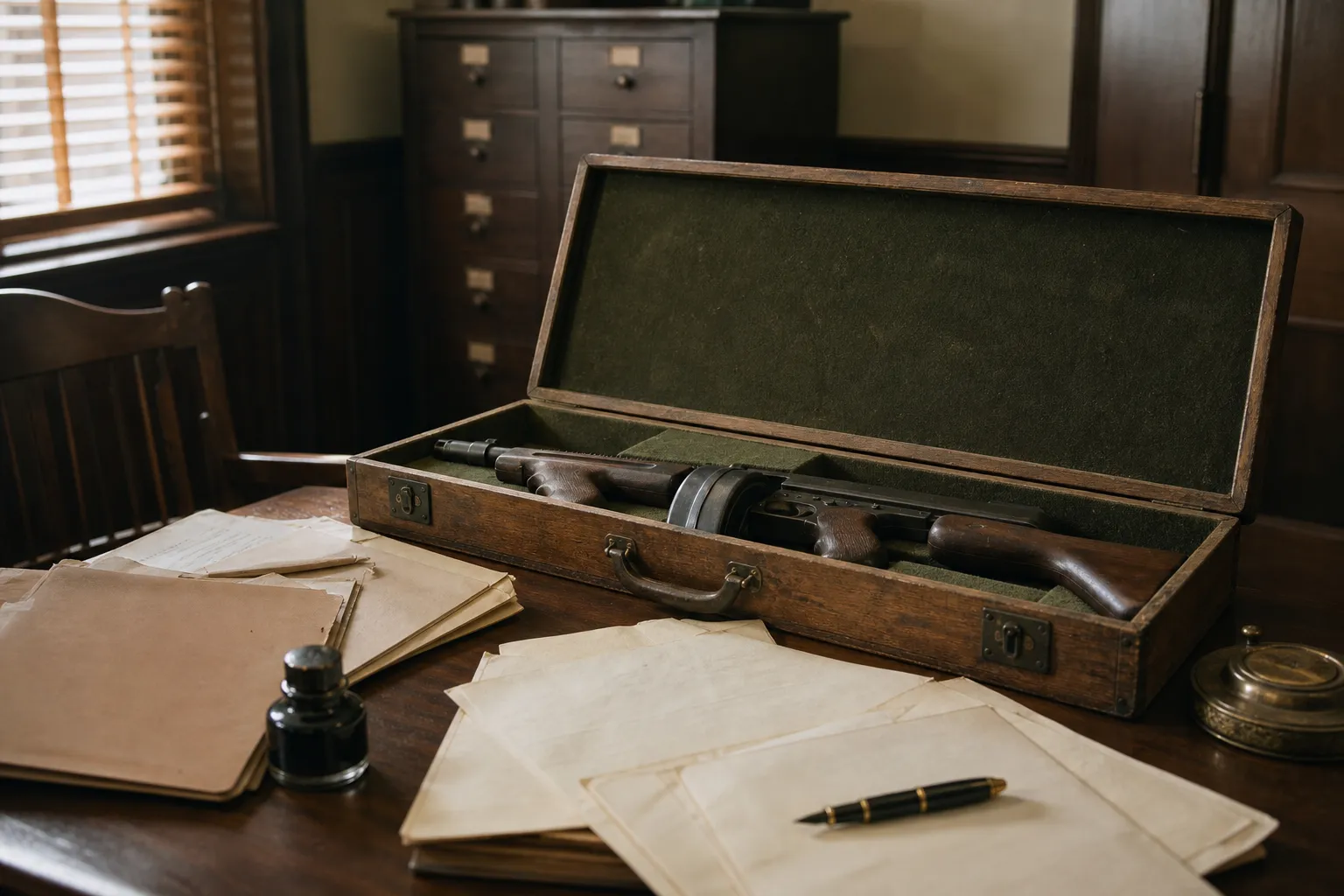
The Thompson’s public image matters because the gun became associated with both law enforcement and criminal misuse. That association made it a familiar symbol in public discussions about machine guns and crime during the period.
The National Firearms Museum connects the Tommy Gun to gangsters of the 1920s and 1930s, as well as the FBI and state and local law enforcement. The Thompson therefore belongs to the broader historical setting of firearms regulation, even though this overview does not treat it as the sole cause of any law.
Why the Tommy Gun still matters
The Thompson submachine gun sits at the intersection of invention, military need, public fear, and mass production. It began as Thompson’s answer to the need for mobile firepower by individual soldiers. It then entered public memory through Auto Ordnance, Colt production, early trials, and the Model 1921.
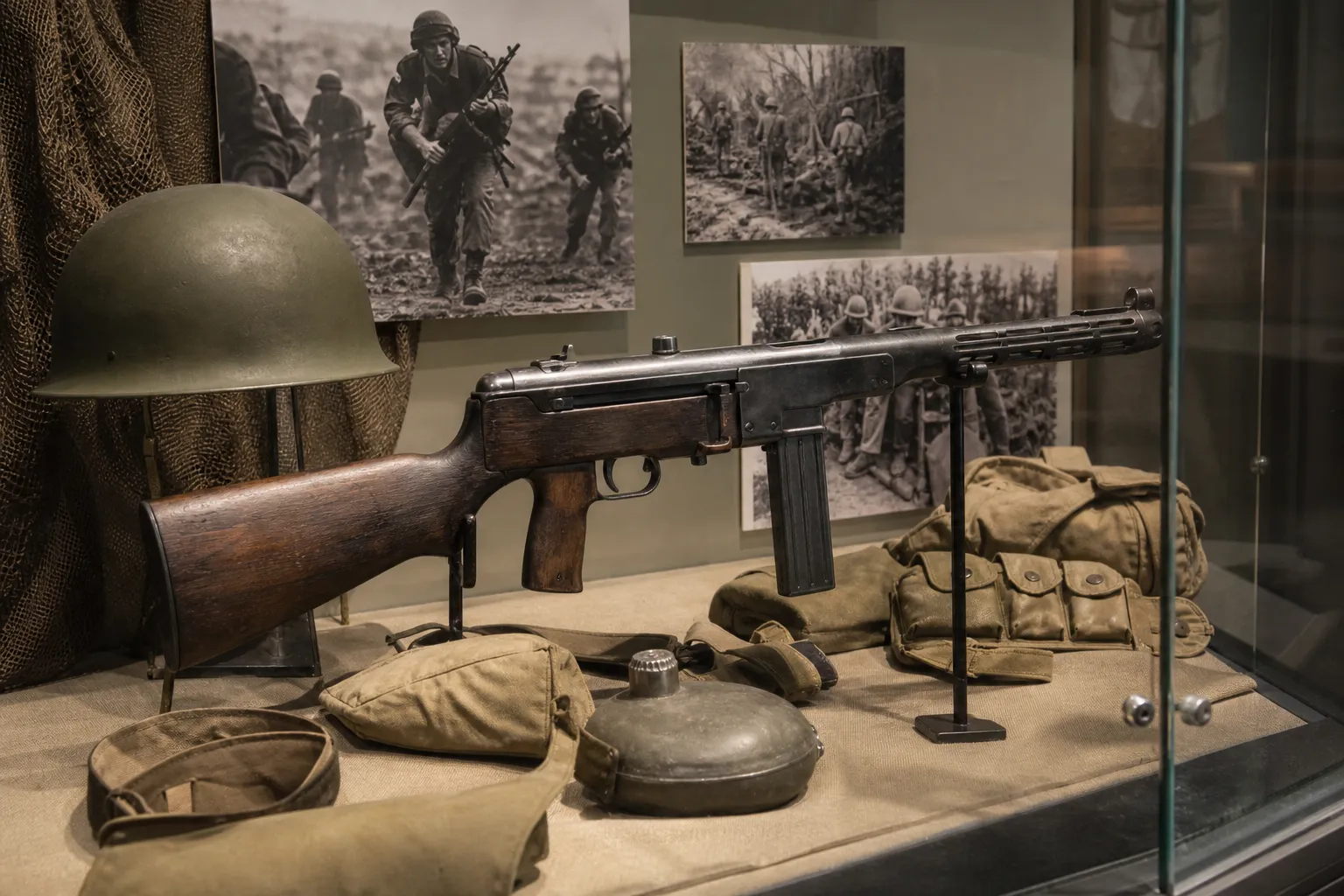
Its 1920s and 1930s notoriety made it more than a military design. The National Firearms Museum’s wording about “the gun that made the 20s roar” shows how strongly the Thompson became linked to the public image of the period.
World War II gave the Thompson a different legacy. The M1928A1, M1, and M1A1 moved the design into large scale military service. The National Firearms Museum’s estimate of about one million Thompsons of various models produced by the end of military production shows the scale of that transformation.
For legal history, readers should treat the Thompson as part of the background to the National Firearms Act, not as a shortcut to legal conclusions. Anyone researching current law should check ATF publications, the current text of federal law, and the appropriate state, provincial, or local authority, since this article covers history only.
Frequently asked questions
Who invented the Thompson submachine gun?
The Thompson is tied to John Taliaferro Thompson, a U.S. Army officer and ordnance specialist. The Library of Congress identifies him with the M1921 Thompson submachine gun, the famous Tommy Gun.
Who made the first production Thompsons?
The U.S. Army Ordnance Corps says Colt manufactured 15,000 basic Thompson submachine guns for Auto Ordnance in 1921.
What was the Model 1928 Thompson?
The National Firearms Museum describes the Model 1928 and M1928A1 as direct descendants of the famous Tommy Gun. It says the Navy formally adopted the Thompson in 1928 after Auto Ordnance made design changes.
What were the M1 and M1A1 Thompsons?
They were wartime Thompson variants. The National Firearms Museum says the Army adopted the M1 Thompson in 1942 and identifies the M1A1 as the last production Thompson submachine gun.
How does the Thompson relate to the National Firearms Act of 1934?
The Thompson is part of the historical setting often associated with public concern over machine guns and crime. This article treats it as background to firearms regulation rather than as a shortcut to legal conclusions.
Sources
- Brigadier General John T. Thompson, Ordnance Corps Hall of Fame Inductee 1992, U.S. Army Ordnance CorpsOfficial source. Accessed October 23, 2026.
- From the Submachine Gun to the Assault Rifle: Their History, Development and Use, Library of Congress Research GuidesOfficial source. Accessed October 23, 2026.
- Model 1921AC Thompson Submachine Gun, National Museum of American History, Smithsonian InstitutionOfficial source. Accessed October 23, 2026.
- Thompson Model 1928 Submachine Gun, National Museum of American History, Smithsonian InstitutionOfficial source. Accessed October 23, 2026.
- U.S./Auto Ordnance Model 1928 Thompson Submachine Gun, National Firearms MuseumOfficial source. Accessed October 23, 2026.
- Survey of U.S. Army Uniforms, Weapons and Accoutrements, U.S. Army Center of Military HistoryOfficial source. Accessed October 23, 2026.
- National Firearms Act, Bureau of Alcohol, Tobacco, Firearms and ExplosivesOfficial source. Accessed October 23, 2026.
- 48 Stat. 1236, National Firearms Act, June 26, 1934, GovInfo, U.S. Government Publishing Office. Accessed October 23, 2026.