What Does “AR” Stand For? The ArmaLite Story
The letters “AR” in AR-15 trace to “ArmaLite,” not “assault rifle.” The name traces back to ArmaLite, Eugene Stoner, the AR-10, the AR-15, Colt’s rights to the design, and the later M16 story.
By RaiS. Reviewed by RaiS. Published . 5 min read.
Research and drafting were assisted by AI. RaiS checked the facts against the sources below and approved this page.
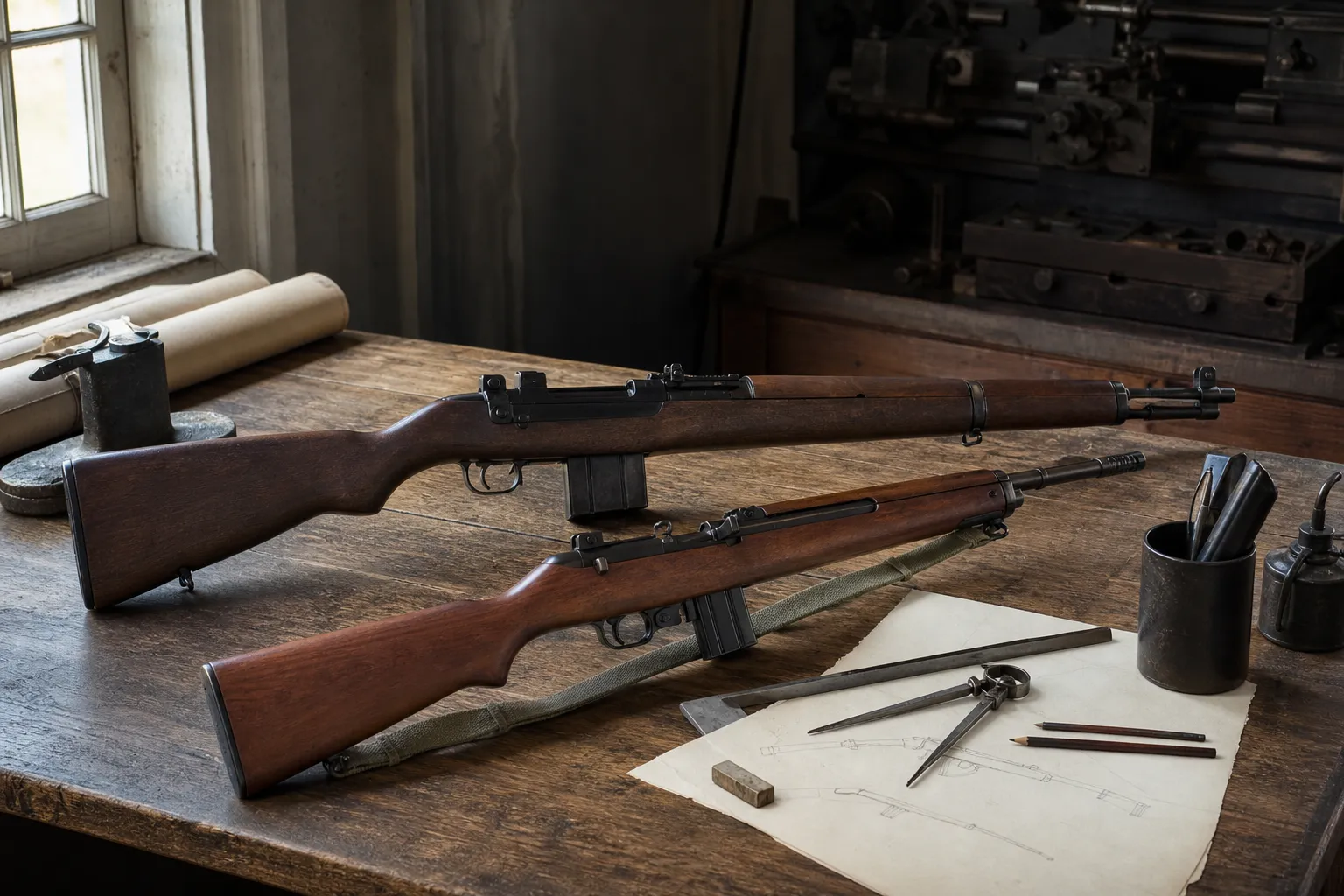
In the AR-15 name, “AR” traces to “ArmaLite,” not “assault rifle.” ArmaLite’s corporate history says the letters AR in Colt’s AR-15 designation stand for “ArmaLite.” The name comes from the company that developed the AR-10 and AR-15 in the 1950s, before Colt’s AR-15 became part of the M16 story.
This is a historical explanation of a name and a design lineage. It is not a discussion of legislation, politics, or firearm classification.
ArmaLite before the AR-15
ArmaLite began as an aircraft industry connected firearms design effort.
That background matters because ArmaLite’s early idea was not simply to copy older rifle construction. ArmaLite’s corporate history says the company believed there was a market for firearms of advanced design using lightweight modern alloys, plastics, and economical production procedures.
ArmaLite’s corporate history identifies George Sullivan, then Chief Patent Counsel for Lockheed Aircraft Corporation, as the person behind the idea of using technical advances in plastics and alloys. In other words, the early ArmaLite story is closely tied to mid-century thinking about lightweight materials and manufacturing methods.
ArmaLite’s modern company description says it has specialized in development, engineering, and production of small arms for more than 70 years. In the 1950s, that development work led to a series of rifles with AR model names, including the AR-10 and AR-15.
Eugene Stoner and the AR-10
Eugene Stoner is the central engineer in the AR-10 and AR-15 story. ArmaLite’s 2010 corporate history says Stoner became ArmaLite’s chief engineer in 1954.
ArmaLite’s corporate history says the AR-10 became the company’s main focus beginning in 1955. The AR-10 showed the materials approach that ArmaLite was pursuing. ArmaLite says the AR-10 used aircraft-grade aluminum receivers and weighed less than seven pounds. ArmaLite also says the AR-10 used plastic stock and other furniture, unlike the wood used on the T-44 and T-48 competitors.
Stoner’s gas system was also part of this development story. Eugene M. Stoner’s gas-operated bolt and carrier system patent was filed on August 14, 1956, assigned to Fairchild Engine and Airplane Corporation, and published on September 6, 1960. The patent describes the invention as a gas system for operating the bolt and bolt carrier of automatic rifle mechanisms.
The patent explains the operating concept as using the bolt carrier as a movable cylinder and the bolt as a stationary piston. It says that this arrangement eliminated the need for a conventional gas cylinder, piston, and actuating rod assembly.
ArmaLite’s corporate history says the major effect of the AR-10 was that it led to Army interest in a similar rifle of smaller caliber. That smaller rifle became the AR-15.
From AR-10 to AR-15
ArmaLite’s corporate history says Army officials asked ArmaLite to develop a smaller version of the AR-10 in 1956. The resulting rifle was called the AR-15.
The National Firearms Museum gives a similar historical link. It says Eugene Stoner and ArmaLite developed what was to eventually become the M16 selective-fire rifle in 1958, when it was known simply as the AR-15 rifle.
Colt and the AR-15 name
ArmaLite did not remain the only company associated with the AR-15. ArmaLite’s 2010 corporate history says ArmaLite licensed the designs and trademarks of the AR-10 and AR-15 to Colt in January 1959. The National Firearms Museum also says ArmaLite licensed manufacturing rights of the AR-15 to Colt in 1959.
Colt’s current company timeline uses different wording and a different year. Colt says it purchased exclusive manufacturing and marketing rights to the AR-15 from the ArmaLite Division of Fairchild Engine Corporation in 1961. Read together, the official company accounts agree on the basic direction of the story: ArmaLite developed the design, and Colt obtained rights connected to manufacturing and marketing it.
ArmaLite’s corporate history says early Colt AR-15s, magazines, and operator’s manuals were marked with ArmaLite’s name. It also says Colt retained the AR-15 designation on commercial rifles, and that the letters AR stand for “ArmaLite.”
The M16 connection
The AR-15 name became widely known because of the later M16 story. DARPA says the M16 is based on the Colt AR-15 design, and that Colt brought the weapon to DARPA in 1962.
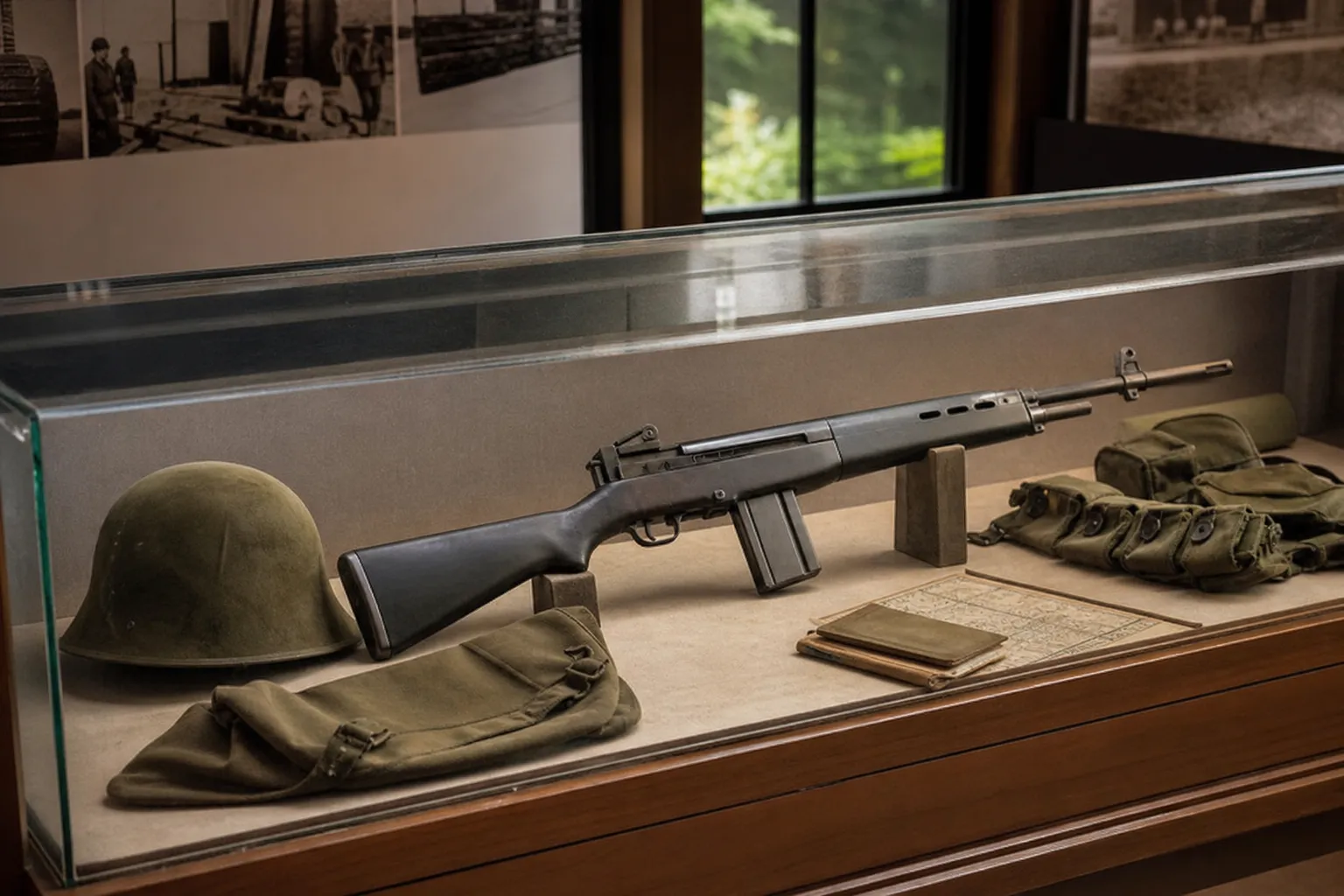
DARPA says Project AGILE purchased 1,000 AR-15s and issued them to combat troops in Southeast Asia for field trials. Colt’s current timeline says Colt won its first government contract for 104,000 M16 rifles in 1963.
DARPA also says that the first large-scale procurement in 1966 was for a modified AR-15 called the M16, for deployment in the Vietnam conflict. That is the historical path from the ArmaLite AR-15 name to the M16 designation.
It is important to keep the names straight. “AR-15” began as an ArmaLite model name. Colt later used the AR-15 designation, and the Colt AR-15 design became the basis for the M16 described by DARPA.
Why the meaning is often misunderstood
The confusion usually comes from the letters themselves. Because “AR” appears on a well-known rifle name, many people assume it means “assault rifle.” ArmaLite’s corporate history gives a different answer: the letters AR stand for “ArmaLite.”
That meaning also fits the model sequence in ArmaLite’s history. The AR-10 came first as ArmaLite’s main focus beginning in 1955. ArmaLite then developed the smaller AR-15 after Army officials asked for a smaller version of the AR-10 in 1956. The letters were part of ArmaLite’s own naming pattern before the Colt and M16 chapters of the story.
Short timeline
| Year | Event |
|---|---|
| 1954 | ArmaLite says Eugene Stoner became chief engineer. |
| 1955 | ArmaLite says the AR-10 became its main focus. |
| 1956 | ArmaLite says Army officials asked for a smaller AR-10, which became the AR-15. |
| 1959 | ArmaLite says it licensed the AR-10 and AR-15 designs and trademarks to Colt in January. |
| 1961 | Colt says it purchased exclusive manufacturing and marketing rights to the AR-15 from ArmaLite. |
| 1962 | DARPA says Colt brought the Colt AR-15 to DARPA. |
| 1963 | Colt says it won its first government contract for 104,000 M16 rifles. |
| 1966 | DARPA says the first large-scale procurement was for a modified AR-15 called the M16. |
Bottom line
The letters “AR” in AR-15 trace to “ArmaLite.” The name comes from ArmaLite and from the company’s rifle development work involving Eugene Stoner. The AR-10 led to the smaller AR-15, ArmaLite transferred rights connected to the design to Colt, and the Colt AR-15 became the basis for the M16 history described by DARPA.
For historical details, some company accounts use slightly different wording for dates and rights transfers.
Frequently asked questions
Does AR stand for assault rifle?
No. ArmaLite’s corporate history says the letters AR in the AR-15 designation stand for “ArmaLite.”
Who designed the AR-15?
The AR-15 grew out of ArmaLite’s engineering work in the 1950s. ArmaLite’s corporate history says Eugene Stoner became ArmaLite’s chief engineer in 1954, and Stoner is central to the AR-10 and AR-15 story.
How did the AR-10 lead to the AR-15?
ArmaLite’s corporate history says the AR-10 became the company’s main focus in 1955. It also says Army officials asked ArmaLite to develop a smaller version of the AR-10 in 1956, and that rifle was called the AR-15.
When did Colt get rights to the AR-15?
ArmaLite’s 2010 corporate history says ArmaLite licensed the AR-10 and AR-15 designs and trademarks to Colt in January 1959. Colt’s current timeline says Colt purchased exclusive manufacturing and marketing rights to the AR-15 from ArmaLite in 1961.
How is the AR-15 connected to the M16?
DARPA says the M16 is based on the Colt AR-15 design and that Colt brought the weapon to DARPA in 1962. Colt says it won its first government contract for 104,000 M16 rifles in 1963.
Sources
- About Us, ArmaLiteOfficial source. Accessed October 22, 2026.
- A Historical Review of ArmaLite, Edition of 4 January 2010, ArmaLite, Inc. (PDF mirror). Accessed October 22, 2026.
- SIA RU009532, Twentieth Century Small Arms Development Videohistory Collection, 1988-1990, Smithsonian Institution ArchivesOfficial source. Accessed October 22, 2026.
- Colt Armalite AR-15 Model 01, Smithsonian National Museum of American HistoryOfficial source. Accessed October 22, 2026.
- The M-16 Rifle: Decade of Evolution 1957-1967, Army Research, Development & Acquisition MagazineOfficial source. Accessed October 22, 2026.
- The Colt Story, Timeline, Colt’s Manufacturing Company LLCOfficial source. Accessed October 22, 2026.
- M16 Rifle, DARPAOfficial source. Accessed October 22, 2026.
- Colt AR-15 Automatic Rifle, NRA National Firearms Museum. Accessed October 22, 2026.
- US2951424A, Gas Operated Bolt and Carrier System, Google Patents, patent record for Eugene M. Stoner and Fairchild Engine and Airplane Corp.. Accessed October 22, 2026.