Crossbow vs Compound Bow
Crossbows and compound bows can both be effective archery hunting tools, but they work differently and are treated differently by hunting regulations. A crossbow locks the string at full draw in a trigger mechanism, while a compound bow is hand drawn and uses cams or pulleys to reduce holding weight at full draw.
By RaiS. Reviewed by RaiS. Published . 9 min read.
Research and drafting were assisted by AI. RaiS checked the facts against the sources below and approved this page.
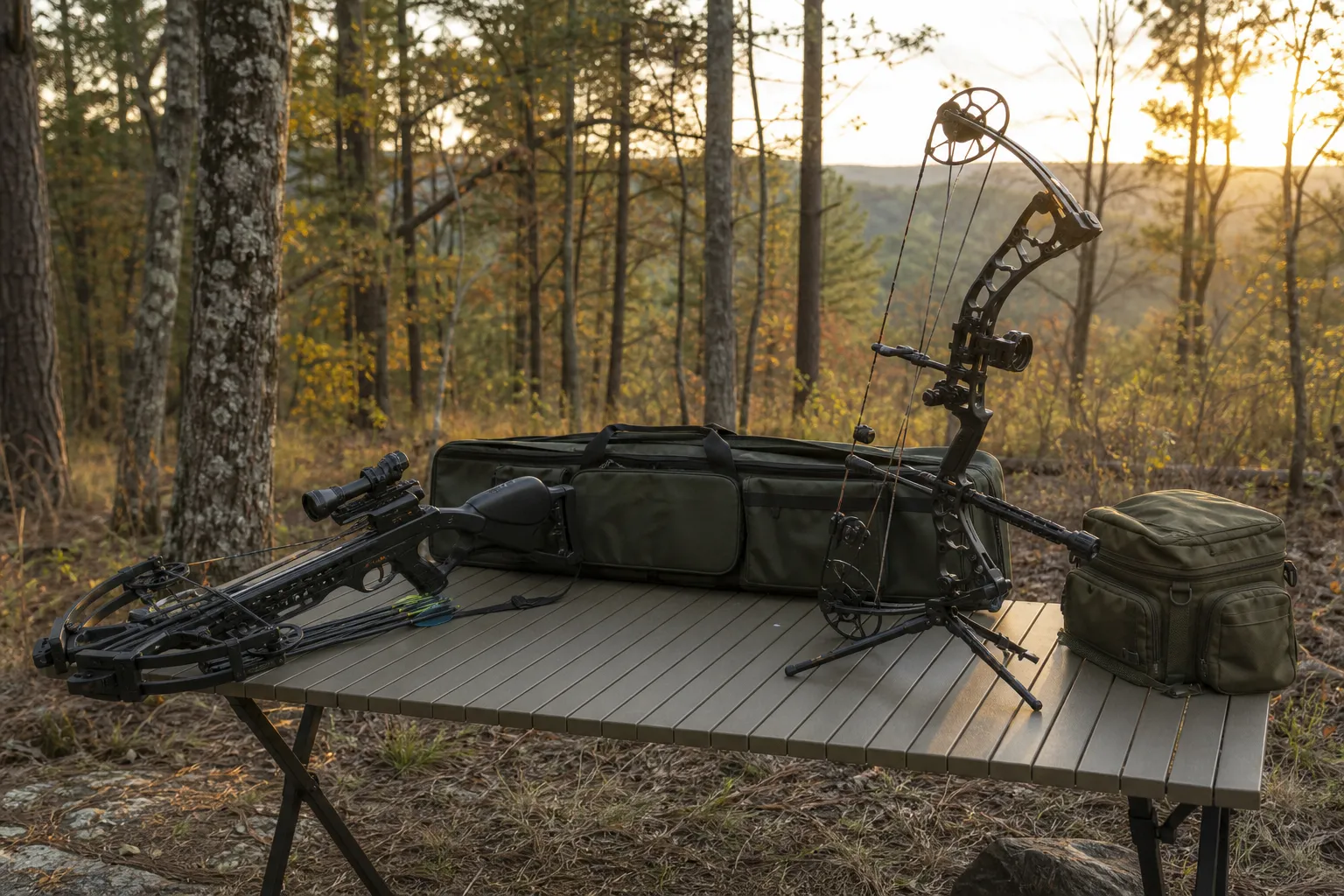
Crossbow vs compound bow comes down to how the bow is drawn and held, how it handles in the field, and what your hunting agency allows. The Archery Trade Association defines a crossbow as bow limbs and a string affixed to a stock, with the string locked at full draw by a trigger mechanism. World Archery defines a compound bow as a bow whose draw is mechanically varied by pulleys or cams. In plain terms, a crossbow stores the draw for you after cocking, while a compound bow still has to be drawn and shot by the archer at the moment of the shot.
Quick comparison
| Topic | Crossbow | Compound bow | |, -|, -|, -| | Basic design | Bow limbs and string mounted on a stock, with the string locked by a trigger mechanism, according to ATA | Draw is mechanically varied by pulleys or cams, according to World Archery rules | | Holding at full draw | ATA says the user does not have to keep exerting personal force after the string is locked | World Archery says draw force decreases as the bow is drawn, and let-off is the percentage of weight reduction at full draw | | Manufacturer speed examples | Check the exact manufacturer specifications for the model and arrow | Current Hoyt hunting examples in the ledger range from 328 to 347 FPS ATA, with the collected summary noting current examples around 310 to 355 FPS ATA | | Manufacturer weight examples | Check the exact manufacturer specifications for the model and package | Hoyt examples list about 4.1 to 4.65 pounds for models cited in the ledger | | Practice issue | Removes the need to hold full draw, but still requires range judgment, support, trigger control and realistic practice | Requires the archer to draw, anchor, aim and release consistently | | Regulations | Often has separate draw weight, season or equipment rules | Often listed with other bows, but rules still vary by jurisdiction |
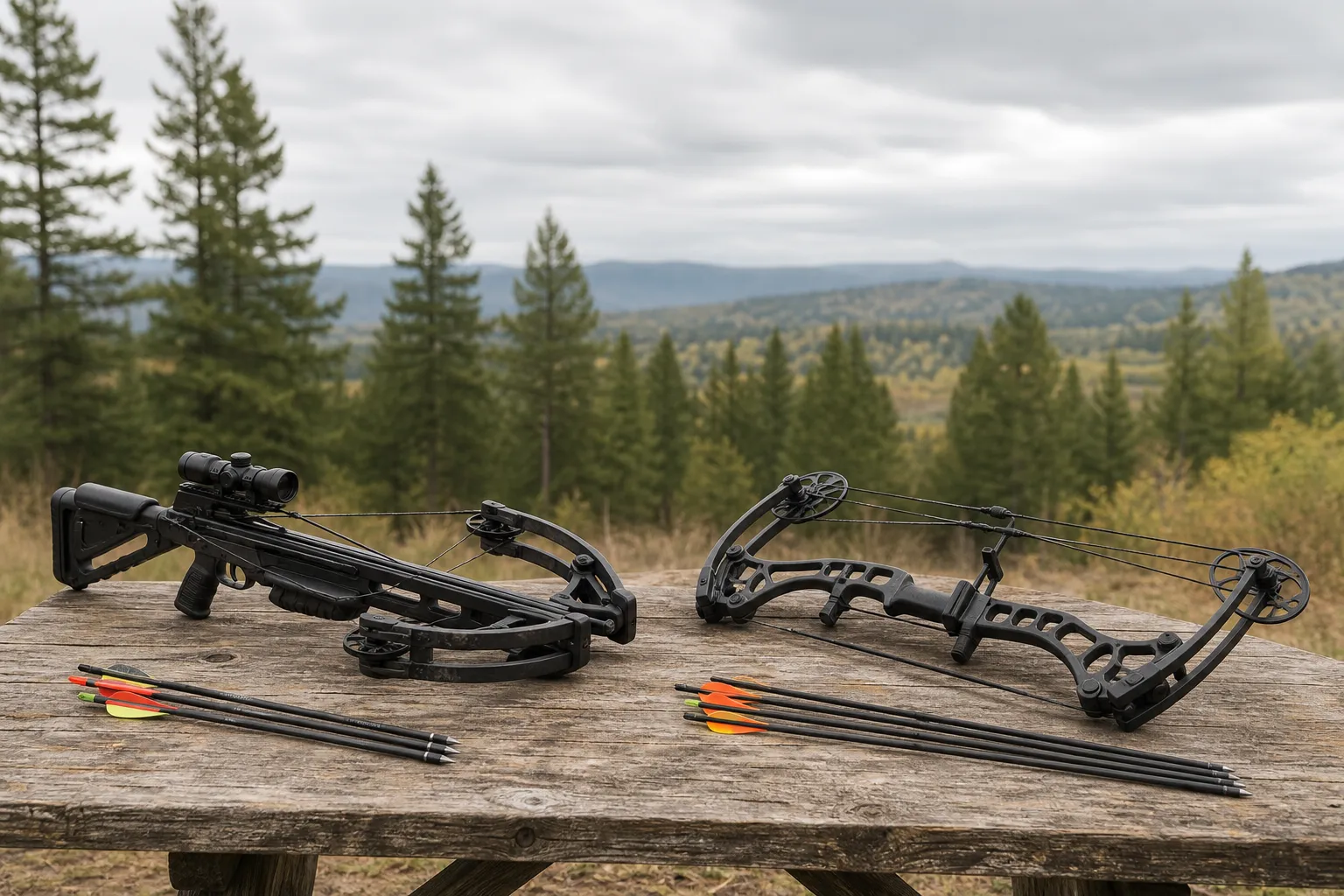
The best fit depends on your body, your practice habits and your hunting rules. Do not assume crossbow rules match compound bow rules. Pennsylvania, New York, California, Ontario and British Columbia all treat crossbows with their own wording in the official sources included below.
How each works
The ATA position statement defines a crossbow as archery equipment that uses the string, energy-storing limbs and geometry of a longbow, recurve or compound bow, affixed to a stock. ATA also says the string is drawn into a trigger mechanism and locked at full draw, and that the user does not have to keep exerting personal force to hold it there after it is locked.
A compound bow works differently. World Archery rules define a compound bow as one where the draw is mechanically varied by pulleys or cams. World Archery also explains that an archer shooting a compound pulls the string back to a mechanical stop, often using a release aid, and that the strength required to draw the bow decreases as the bow is drawn.
That reduction is called let-off. World Archery says cams have specific maximum draw weights, draw lengths and let-offs, with let-off meaning the percentage of weight reduced when the bow is fully drawn. World Archery gives a competition example where a compound bow can require up to 60 pounds to draw, while the holding weight at full draw can be as little as 13 pounds.
The practical difference is simple: the crossbow is cocked and held by its mechanism, while the compound bow is drawn and held by the archer with help from the cam system.
Draw weight, speed and energy examples
Published specifications are the safest way to compare. They are not universal numbers for every bow, but they show the overlap and the differences in current equipment.
For compound bows, the Hoyt hunting models in the source ledger include these examples:
| Manufacturer example | Published speed | Published draw weight | Published bow weight | MSRP in source | |, -|, -:|, -:|, -:|, -:| | Hoyt Carbon RX-10 | 342 FPS ATA | 40 to 80 pounds | 4.1 pounds | $2,149 | | Hoyt Enduro | 328 FPS ATA | 35 to 70 pounds | 4.65 pounds | $849 | | Hoyt Alpha AX-90 | 347 FPS ATA | 80 to 90 pounds | Not listed in ledger | Not listed in ledger |
The collected Hoyt summary in the ledger says current hunting compound examples run around 310 to 355 FPS ATA, weigh about 4.0 to 4.85 pounds, and use draw weights from 30 to 90 pounds depending on model.
For crossbows, check the exact manufacturer specifications for the model, arrow and package you are considering.
Accuracy and practice
Neither platform is automatically accurate for every person. The sources in the ledger support a more careful answer: both require practice, and the shooter’s realistic effective range matters.
The ATA 2025 Crossbow Hunter Report found that crossbow hunters reported a mean greatest comfortable game shooting distance of 46.1 yards and a median of 40 yards with a crossbow. The same report found that crossbow hunters who had hunted with a vertical bow in the past five years reported a mean greatest comfortable game shooting distance of 39.8 yards and a median of 40 yards for vertical bow hunting. That second number is not listed as compound-only, so it should not be read as a direct compound bow statistic.
Pennsylvania Game Commission guidance for the 2025 archery deer season is useful for either platform. The agency advised bowhunters to practice before the season from the ground or from an elevated stand, whichever mimics how they will hunt. The ledger also states that Pennsylvania advised hunters to keep shots within their personal maximum effective range.
A compound bow adds the physical task of drawing, anchoring, aiming and releasing consistently. A crossbow removes the need to hold draw weight at full draw, but it does not remove the need to estimate distance, hold steady, use support when appropriate, control the trigger and practice from realistic field positions.
Weight, handling and field use
Weight and package details should be checked on the exact model you are considering, before adding accessories.
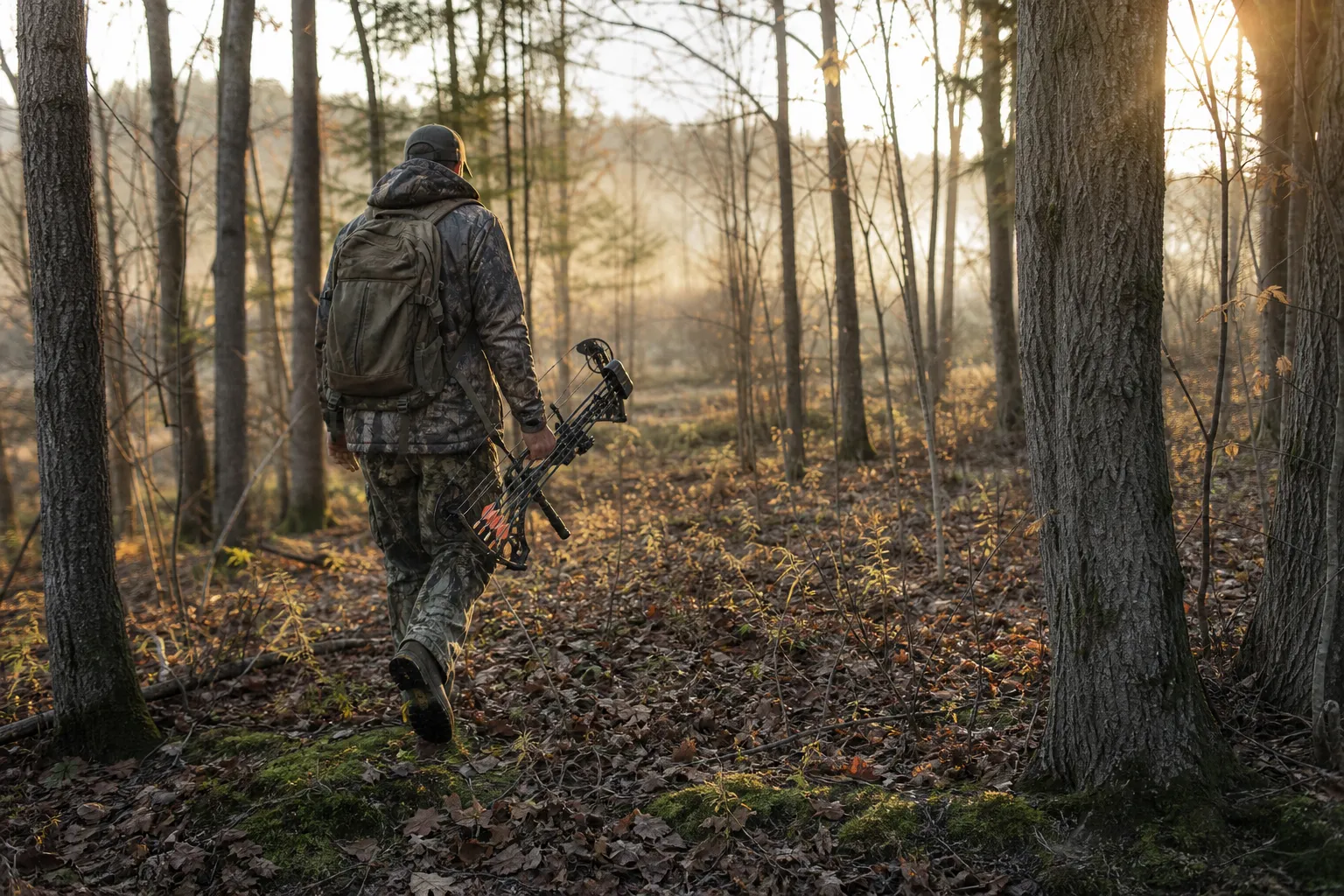
Hoyt’s cited hunting compound examples include the Carbon RX-10 at 4.1 pounds and the Enduro at 4.65 pounds. The collected summary says current Hoyt hunting examples are about 4.0 to 4.85 pounds.
Shape also differs. A compound bow is a vertical bow. A crossbow is a horizontal bow system mounted to a stock, based on ATA’s definition of a bow affixed to a stock. The ledger notes that crossbow width and length from manufacturer examples are handling factors in blinds and tree stands, but it does not include exact width and length figures, so those should be checked on the specific manufacturer page for the model you are considering.
Noise and vibration
The source ledger does not include an authoritative apples-to-apples noise test comparing crossbows and compound bows. For that reason, this page should not claim that all crossbows are louder than all compound bows, or the reverse.
If shot noise matters for your setup, look for manufacturer specifications, product manuals or controlled testing from a source you trust. Based on the sources collected here, noise remains an open comparison question rather than a settled fact.
Cost examples
Use MSRP or manufacturer-published prices for clean comparisons, not used prices or short-term retail discounts.
Hoyt’s current hunting compound examples in the ledger include the Enduro at $849 MSRP and the Carbon RX-10 at $2,149 MSRP. The collected summary also notes current Hoyt hunting compound examples up to $2,199 MSRP.
A full category comparison would require checking crossbow prices against the exact model and package.
These numbers show that the cited compound examples include lower and higher priced models. The ledger does not include a full accessory cost comparison, so items like scopes, arrows or bolts, broadheads, cases, rests, releases and cocking devices should be checked against the exact model and package.
Hunting regulations: examples, not a full legal guide
Crossbow rules vary sharply by state, province, species, season and equipment details. The examples below are included to show the kinds of differences hunters may encounter. Confirm the current rule with the state or provincial wildlife agency before hunting.
Pennsylvania
Pennsylvania Game Commission stated for the 2025 archery deer season that archery hunters may use longbows, recurve bows, compound bows or crossbows. The same 2025 agency source says bows must have at least 35 pounds draw weight, while crossbows must have at least 125 pounds draw weight.
New York
New York Department of Environmental Conservation’s Fall 2025 crossbow Q&A says hunters should check DEC’s website before going afield because crossbow hunting opportunities changed for the 2025 to 2026 hunting seasons. The same Q&A says legal crossbows must have a working trigger safety and at least 100 pounds peak draw weight, with no minimum limb width, no minimum length and no maximum draw weight.
The Fall 2025 New York DEC Q&A also says hunters age 14 and older with a valid hunting license and bowhunting privilege may hunt deer and bear with a crossbow during any season and in any location where a longbow is permitted, with special county rules for age 12 and 13 deer hunters.
California
California Department of Fish and Wildlife says a Disabled Archer Permit allows a qualifying hunter to use a crossbow or another device to draw and hold a bow in a firing position under the conditions of an archery tag or during archery season. CDFW describes the permit as being for hunters with permanent loss, significant limitation or a disorder that substantially impairs one or both upper extremities and prevents drawing and holding a bow in a firing position. The ledger did not include a publication date for this CDFW page, so confirm the current permit language with CDFW.
Ontario
Ontario’s hunting regulations summary says bows include longbows, crossbows, compound bows and recurve bows. It also says a crossbow is considered loaded if it is cocked and has a bolt in it, while another bow is considered loaded if the bow is strung and an arrow is nocked.
For deer and wild turkey, Ontario’s summary lists crossbow minimums of at least 300 millimetres draw length and 45 kilograms draw weight, with a 22 millimetre minimum broadhead width for bolts. Ontario also says its online hunting regulations summary is not a legal document or complete collection of current regulations. The ledger did not include a publication date for the Ontario summary, so confirm current rules with Ontario before hunting.
British Columbia
British Columbia’s Hunting Regulation sets a lower limit of 45 kilograms draw weight for compound crossbows and 18 kilograms draw weight for bows. The same regulation prohibits carrying a cocked crossbow in or on a vehicle. The ledger did not include a document date for the British Columbia regulation page, so check the current regulation and the current provincial synopsis before hunting.
Bottom line
Choose a compound bow if you want a hand-drawn vertical bow and are prepared to practice the draw, anchor, aim and release sequence. Choose a crossbow if you want a stock-mounted archery tool that locks the string at full draw, while recognizing that it still requires practice and may have different legal requirements.
Before buying or hunting, check the exact model specifications from the manufacturer and the current rules from your state or provincial wildlife agency. Pay special attention to season dates, species rules, minimum draw weight, broadhead or bolt rules, disabled hunter permits, youth rules, transport rules and whether the agency source is only a summary.
Frequently asked questions
Is a crossbow more powerful than a compound bow?
The sources collected do not support a universal rule for every bow. Hoyt examples include hunting compounds around 310 to 355 FPS ATA and 30 to 90 pounds draw weight depending on model. Crossbow specifications should be checked against the exact model, arrow and package.
Is a crossbow easier to hold at full draw?
Yes, based on ATA’s definition. ATA says a crossbow string is locked in its fully drawn state by the trigger mechanism, and the user does not have to continue exerting personal force to hold it there. A compound bow reduces holding weight through let-off, but it is still drawn and held by the archer.
Which is more accurate, a crossbow or a compound bow?
The sources collected do not prove that one is automatically more accurate for every shooter. The ATA 2025 report found crossbow hunters reported a mean greatest comfortable game shooting distance of 46.1 yards and a median of 40 yards. Pennsylvania Game Commission advises bowhunters to practice from realistic hunting positions and stay within their personal maximum effective range.
Are crossbows legal during archery season?
It depends on the jurisdiction, season and hunter. Pennsylvania’s 2025 archery deer source includes crossbows with archery hunters, New York changed crossbow opportunities for 2025 to 2026, and California’s CDFW page describes a Disabled Archer Permit for crossbow use under an archery tag or during archery season. Always confirm current rules with the wildlife agency before hunting.
Do crossbows cost more than compound bows?
The collected sources do not support a full category comparison. Hoyt hunting compound examples in the ledger include $849 to $2,149 MSRP, with the collected summary noting examples up to $2,199. Crossbow prices should be checked against the exact model and package.
Sources
- Position Statements, Archery Trade AssociationOfficial source. Accessed October 20, 2026.
- Understanding Crossbow Hunters' Participation, Characteristics, and Hunting Retention, Archery Trade Association and Responsive Management. Accessed October 20, 2026.
- Compound, World ArcheryOfficial source. Accessed October 20, 2026.
- World Archery Rulebook, Book 4: Field and 3D Archery, 2026-01-27 Version, World ArcheryOfficial source. Accessed October 20, 2026.
- Hunting Compound Bows, Hoyt ArcheryOfficial source. Accessed October 20, 2026.
- TenPoint 2024 Catalog, TenPoint Crossbow TechnologiesOfficial source. Accessed October 20, 2026.
- Crossbow Buyer's Guide, TenPoint Crossbow TechnologiesOfficial source. Accessed October 20, 2026.
- Archery Deer Season Draws Close, Pennsylvania Game CommissionOfficial source. Accessed October 20, 2026.
- Crossbow Hunting Changes: Questions and Answers, Fall 2025, New York State Department of Environmental ConservationOfficial source. Accessed October 20, 2026.
- Reduced-Fee Hunting License and Disabled Entitlements, California Department of Fish and WildlifeOfficial source. Accessed October 20, 2026.
- General Regulations, Ontario Hunting Regulations Summary, Government of OntarioOfficial source. Accessed October 20, 2026.
- How to Use This Summary, Ontario Hunting Regulations Summary, Government of OntarioOfficial source. Accessed October 20, 2026.
- Hunting Regulation, B.C. Reg. 190/84, Government of British ColumbiaOfficial source. Accessed October 20, 2026.