Bow Releases Explained: Index Finger, Thumb and Hinge
Mechanical release aids help compound bow shooters connect to the string consistently and execute the shot with less finger interference. This guide compares wrist-strap index-finger releases, handheld thumb-button releases, hinge releases and resistance-activated releases, with safety and practice notes for learning each style.
By RaiS. Reviewed by RaiS. Published . 8 min read.
Research and drafting were assisted by AI. RaiS checked the facts against the sources below and approved this page.
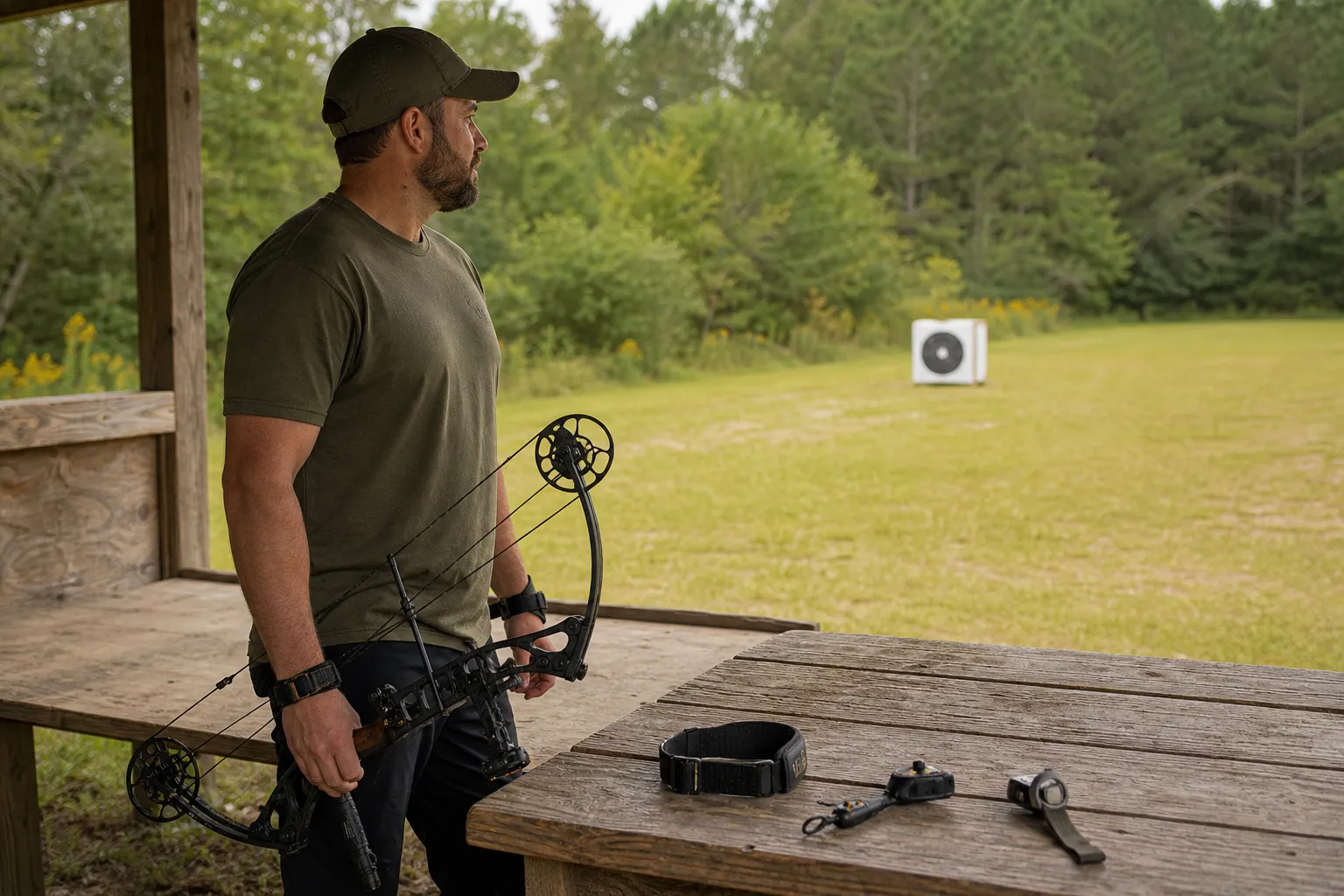
A bow release aid is a mechanical device used with compound bows to release the string more precisely than fingers. USA Archery defines a mechanical release aid as a device used with compound bows to fire arrows more precisely by using a trigger, and USA Archery also notes that some release aids use a rotating hinge. Most compound shooters connect the release to a D-loop on the string, draw to the bow’s mechanical stop, then activate the release through a controlled shot process.
What a bow release aid does
World Archery describes compound shooting as pulling the string back to a mechanical stop with a release aid, then activating the release aid so it detaches from the string. That fits the way modern compound bows are commonly shot: the archer draws into the bow’s system, settles at full draw, aims and executes the release.
For a refresher on cams, let-off, the back wall and why compounds are commonly shot with a release, see our guide: How a Compound Bow Works.
A release aid is not a shortcut around form. World Archery says a compound shot may be executed by consciously triggering the release aid or by pulling and activating it subconsciously.
The goal is repeatability. A clean release, a repeatable anchor and a calm shot process matter as much as the release style you choose.
The D-loop connection
World Archery defines the D-loop as a short arc of material used to connect the release aid while drawing the bow. On a compound bow, the arrow nocks against a nocking point and is usually inside the D-loop.
The D-loop gives the release aid a consistent place to connect. Rather than grabbing the bare string with fingers, the shooter clips or hooks the release to the loop, draws, anchors and executes the shot.
This guide does not cover tying or tuning a D-loop. That setup should be checked with a qualified coach, bow technician or the bow and release manufacturers’ instructions.
The four common release styles
Archery 360 lists four common release styles: hinge, tension-activated, handheld thumb trigger and wrist-strap index-finger trigger. USA Archery groups release aids into mechanical trigger styles and rotating hinge styles.
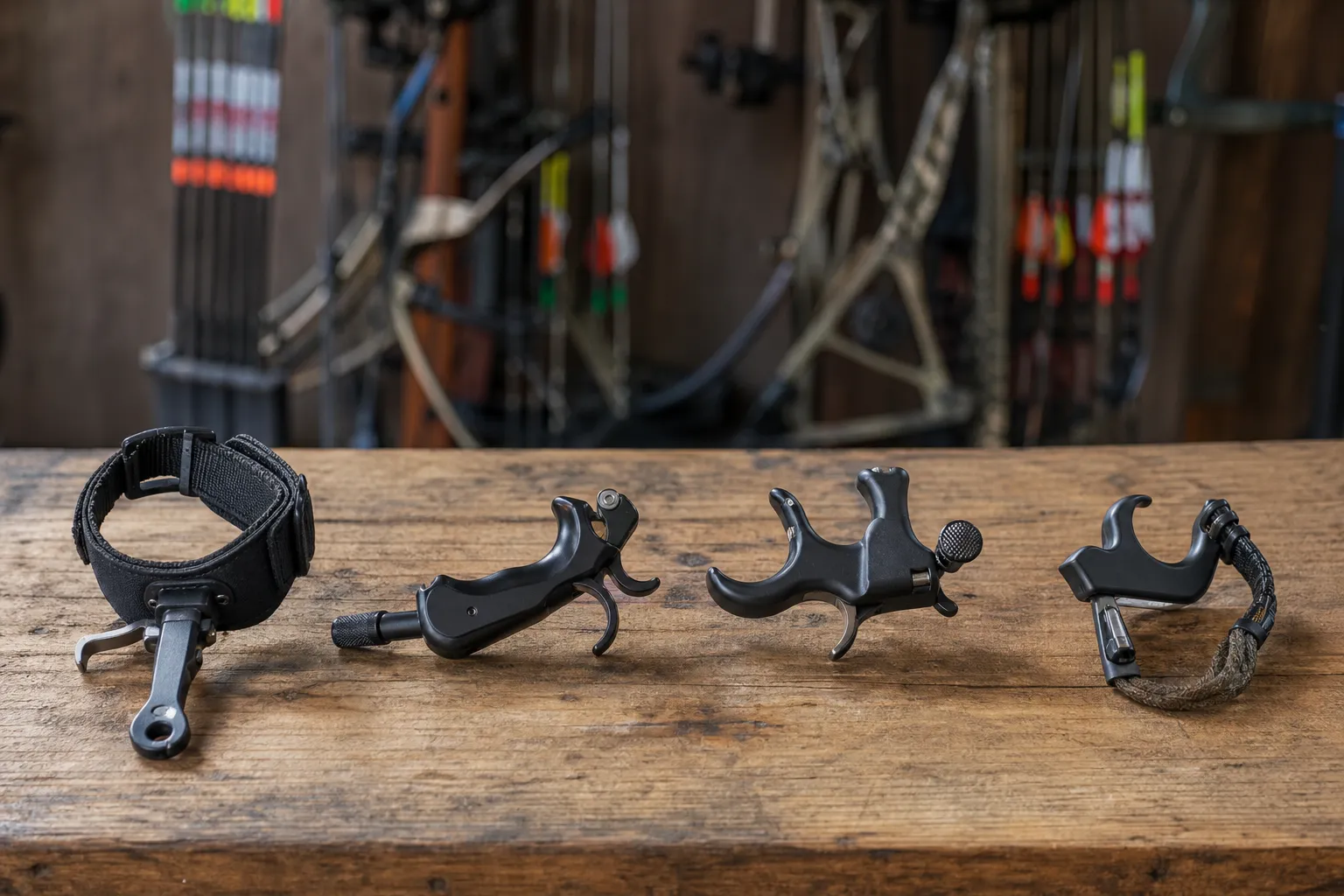
The main differences are how the release is held and what makes it fire:
| Release style | How it is held | How it fires | Key learning point |
|---|---|---|---|
| Wrist-strap index-finger | Strap around the wrist | Index-finger trigger | Easy for many beginners, but punching the trigger can disturb execution |
| Handheld thumb-button | Held in the hand with three or four fingers | Thumb pushes a trigger | Common among more competitive shooters, but still easy to command-fire |
| Hinge or back-tension | Handheld | Rotation of the release body | Learn with supervision because it can fire unexpectedly if mishandled |
| Resistance-activated | Handheld | Preset pull load is reached | Tied closely to holding weight and the back wall, follow the manual’s safety procedure |
Wrist-strap index-finger releases
Archery 360 describes index-finger releases as caliper-style devices attached to a padded wrist strap and fired by pulling a trigger.
This is the style many new compound shooters see first. USA Archery says caliper release aids with wrist straps are easy for introductory shooters and are commonly used by bowhunters. USA Archery also recommends starting a novice compound archer who needs a release aid with a caliper release aid on a strap or glove if needed, because they are simple to use for the novice archer.
The strap matters because it carries much of the load. Archery 360 says the wrist strap holds most of the draw weight, leaving the index finger to relax and squeeze the trigger.
The tradeoff is that the trigger is familiar and easy to slap. For that reason, an index-finger release should still be learned with a smooth squeeze and a steady shot process, not a sudden jab at the trigger.
Manufacturer instructions matter here. Carter’s Two Shot instructions, for one index-trigger release, tell users to lock the jaw around the rope or D-loop and avoid touching the index trigger while drawing. The same instructions warn that insufficient trigger travel can cause premature firing.
Handheld thumb-button releases
Archery 360 says handheld thumb-trigger releases are held with three or four fingers and activated by pushing the thumb.
USA Archery says thumb release aids are used by more competitive shooters, require more skill and have a trigger extension. That does not mean they are only for competition, but it does mean they deserve patient practice.
A thumb-button release changes the feel of the anchor because the release is held in the hand rather than strapped to the wrist. The shooter draws with the handheld body, anchors and then uses the thumb trigger as part of the shot process.
The main risk is the same mental trap as any command-fired trigger. Archery 360 says thumb-trigger releases can contribute to anticipation and target panic when archers learn exactly when the shot will break. World Archery says a compound shot can be made by consciously triggering the release aid or by pulling and activating it subconsciously.
For many shooters, the learning goal is not simply “press the thumb.” It is to aim, maintain steady form and let the shot break through a controlled process.
Hinge or back-tension releases
A hinge release fires by rotation rather than by pressing a trigger button. Archery 360 says a hinge release is activated by rotating the entire release aid instead of pushing a button, and USA Archery describes back-tension release aids as hinge-style aids.
USA Archery also says these hinge-style aids can be harder to use and are recommended for higher-level archers. That is an important warning for beginners. A hinge can teach a shooter not to punch a trigger, but it also requires careful handling because the release fires by movement of the release body.
A good learning emphasis is simple: aim, keep steady push-pull pressure and let the release fire through a controlled shot process.
Use extra care when learning.
Some hinge releases include a safety procedure. Carter’s Honey 2 hinge instructions say to anchor with the safety engaged, then disengage the safety and execute in a slow controlled motion. Always follow the instructions for the specific release in your hand.
Resistance-activated releases
A resistance-activated release fires when the pull load reaches a preset resistance, rather than from trigger travel or handle rotation. Carter’s Mini Evolution Plus product page describes that model as firing only by resistance and not by rotation or trigger travel.
This style is closely tied to the compound bow’s holding weight and back wall. Archery 360 says tension-activated releases rely on the holding weight increasing as the archer pulls into the back wall of the bow’s cams. World Archery says compound cams have defined maximum draw weights, draw lengths and let-offs.
Because the firing point is based on load, setup and safe handling are critical. Carter’s Mini Evolution Plus product page says that model uses a thumb safety while drawing or letting down. That is not a general substitute for the manual. It is an example of why the exact manufacturer instructions matter before drawing a bow with any resistance-activated release.
A new resistance release should be practiced first away from a live shot process. USA Archery advises practicing release-aid activation with a stretch band or string loop before attempting to use the release aid on an actual bow.
Consistency, punching and target panic
Release aids can improve consistency because they give the shooter a repeatable mechanical way to activate the string, instead of relying on finger release. USA Archery describes them as devices that help fire arrows more precisely by using a trigger rather than fingers.
But the release does not solve every problem by itself. World Archery says consciously triggering the release is often called punching.
In practical terms, target panic is a mental block that can interfere with aiming or shot execution, often linked with anticipating or forcing the release. Archery 360 says thumb-trigger shooters can start anticipating the shot and develop target panic when they learn exactly when the shot will break.
The safer training path is structured practice:
- Start with a stretch band, string loop or training aid before using the release on a bow, as USA Archery advises.
- Keep an early goal simple: draw with control and avoid a premature release.
- Build a shot process that emphasizes aim, steady pressure and controlled activation.
- Work with a coach when changing to an unfamiliar release style, especially hinge and resistance-activated releases.
Safety checks before you draw
Treat safe drawing as the starting rule for every release style.
Key safety points:
- Do not test a new release adjustment by drawing a live bow first. USA Archery advises practicing activation with a stretch band or string loop before attempting to use the release aid on an actual bow.
- Keep fingers or thumb away from the trigger while drawing unless the product manual instructs otherwise. Carter’s Two Shot instructions specifically tell users to avoid touching the index trigger while drawing.
- Follow the release’s safety procedure. Carter’s Honey 2 hinge instructions describe anchoring with the safety engaged, then disengaging it before executing the shot in a slow controlled motion. Carter’s Mini Evolution Plus product page describes a thumb safety used while drawing or letting down.
- Be careful with adjustments. Carter’s Two Shot instructions warn that insufficient trigger travel can cause premature firing.
- Do not draw a compound bow without an arrow loaded. USA Archery warns that drawing a compound bow without an arrow is not recommended because an accidental dry fire could damage the bow or injure the archer.
Which release should you choose?
For many beginners, the simplest starting point is a wrist-strap caliper release. USA Archery recommends that style for novice compound archers who need a release aid, and says caliper releases are easy for introductory shooters.
A handheld thumb-button release may appeal if you want a handheld anchor feel and are willing to spend time learning the trigger. USA Archery says thumb releases are used by more competitive shooters and require more skill.
A hinge release can be useful for learning a controlled shot process, but USA Archery says hinge-style back-tension aids can be harder to use and are recommended for higher-level archers. Learn one with a coach when possible.
A resistance-activated release is another training and shooting option, but its firing system depends on resistance rather than button travel or rotation. Follow the manufacturer’s directions closely, especially for the safety used while drawing and letting down.
If you shoot competition, check the current rules for your class and event. NFAA rules state that release aids are permitted in Freestyle if they are hand operated, support the bow’s draw weight and are not attached to the bow except at the bowstring. Confirm the current rulebook and event requirements before competing.
Before changing releases, check three official things: the release manufacturer’s instructions, your bow manufacturer’s safety guidance and the rules of the range, coach or organization where you shoot.
Frequently asked questions
What is a mechanical bow release aid?
USA Archery defines a mechanical release aid as a device used with compound bows to fire arrows more precisely by using a trigger rather than fingers. USA Archery also notes that some release aids use a rotating hinge.
Do compound shooters attach the release to the string or a D-loop?
World Archery defines the D-loop as a short arc of material used to connect the release aid while drawing the bow. On compound bows, the arrow usually nocks inside the D-loop against a nocking point.
Which release style is easiest for a beginner?
USA Archery recommends starting a novice compound archer who needs a release aid with a caliper release aid on a strap or glove if needed, because it is simple to use for the novice archer.
Can a release aid cause target panic?
Archery 360 says thumb-trigger shooters can start anticipating the shot and develop target panic when they learn exactly when the shot will break.
How should I practice with a new release?
USA Archery advises practicing release-aid activation with a stretch band or string loop before using it on a bow.
Is it safe to draw a compound bow without an arrow while testing a release?
No. USA Archery says drawing a compound bow without an arrow is not recommended because an accidental dry fire could damage the bow or injure the archer.
Sources
- Compound, World ArcheryOfficial source. Accessed October 25, 2026.
- Adaptive Archery Manual, USA ArcheryOfficial source. Accessed October 25, 2026.
- Developing Strength and Endurance with Specific Physical Training, USA ArcheryOfficial source. Accessed October 25, 2026.
- NFAA Shooting Styles and Equipment Rules, National Field Archery AssociationOfficial source. Accessed October 25, 2026.
- Release Aids, Archery 360. Accessed October 25, 2026.
- World Archery Coach’s Manual: Level 2, Page 68, World Archery via FlipHTML5Official source. Accessed October 25, 2026.
- World Archery Coach’s Manual: Level 2, Page 69, World Archery via FlipHTML5Official source. Accessed October 25, 2026.
- World Archery Coach’s Manual: Level 2, Page 70, World Archery via FlipHTML5Official source. Accessed October 25, 2026.
- Two Shot Instructions, Carter EnterprisesOfficial source. Accessed October 25, 2026.
- Honey 2 Instructions, Carter EnterprisesOfficial source. Accessed October 25, 2026.
- Mini Evolution Plus 4fg, Carter EnterprisesOfficial source. Accessed October 25, 2026.
- Frequently Asked Questions, Carter EnterprisesOfficial source. Accessed October 25, 2026.