The Recurve Bow: How It Works, Parts and Draw Weight
A recurve bow is the Olympic bowstyle with limb tips that curve away from the archer. This guide explains how the limbs and string work, what the main parts are, how 28 inch draw weight ratings are used, and how recurves compare with longbows, compounds, barebow setups, and crossbows.
By RaiS. Reviewed by RaiS. Published . 9 min read.
Research and drafting were assisted by AI. RaiS checked the facts against the sources below and approved this page.
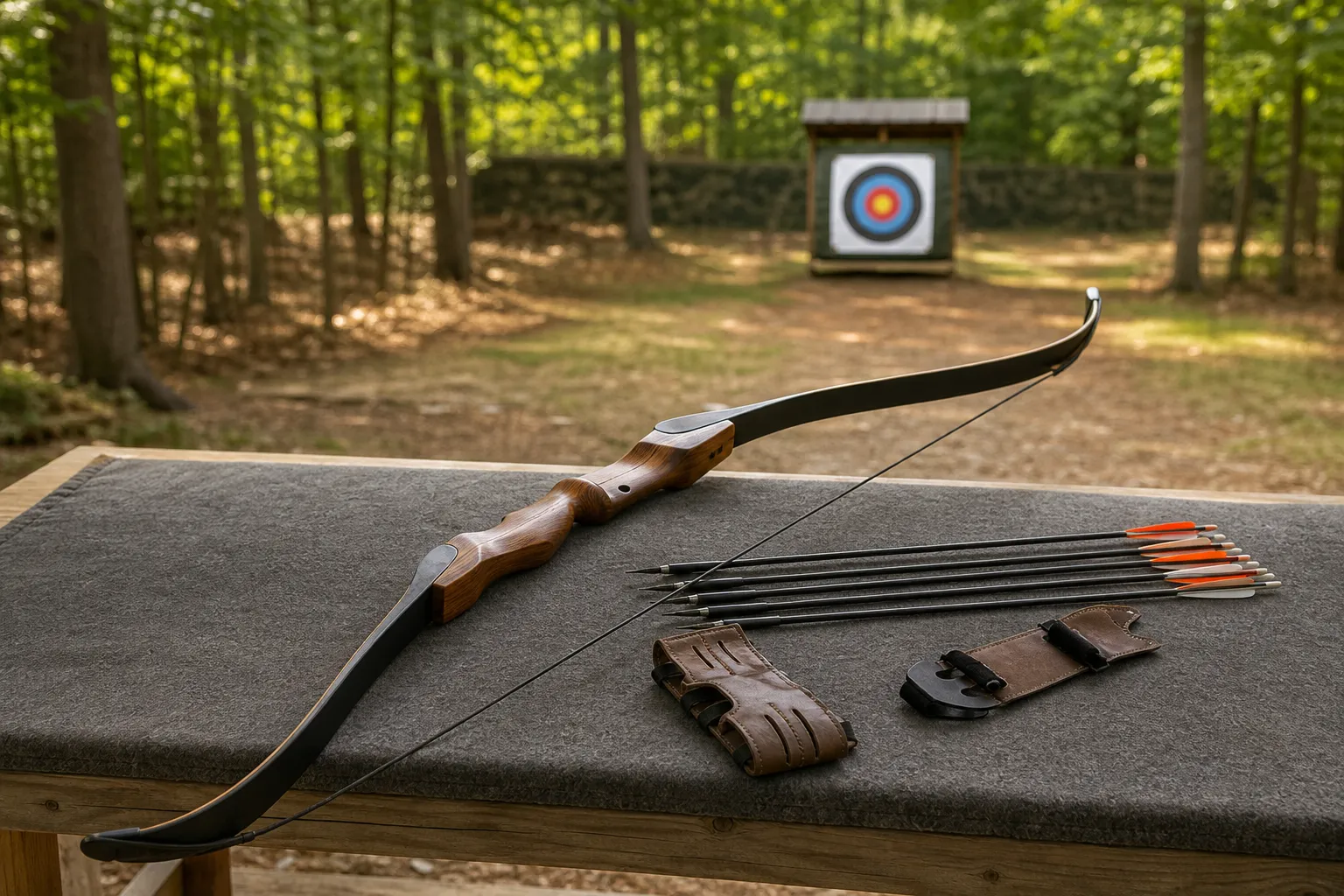
A recurve bow is a hand drawn bow whose limb tips curve away from the archer. World Archery identifies recurve as the bowstyle used at the Olympic Games, and describes the shot as drawing the string with the fingers, aiming through a sight, then opening the fingers to release. At a high level, the limbs bend during the draw, store energy, and transfer that energy through the string into the arrow when released.
What makes a recurve a recurve
The defining feature is the shape of the limb tips. World Archery explains the name by noting that the limbs at the top and bottom of the bow curve back away from the archer at each tip. Archery Canada describes recurve bows as Olympic style bows with a curved tip at either end of the limbs.
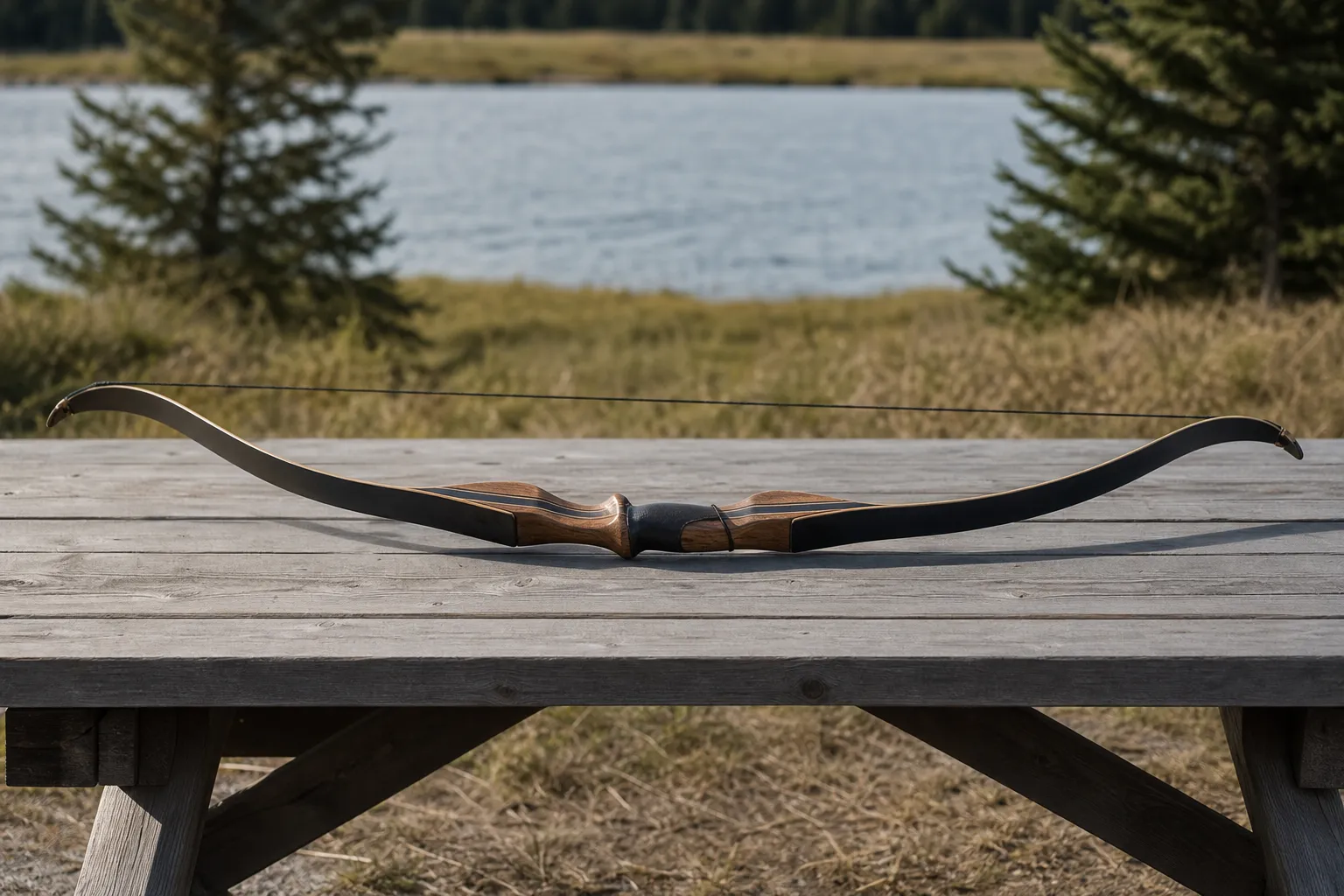
The string path is simple compared with a compound bow. Archery Canada says the string loops directly around the end of each recurve limb. World Archery also describes the bowstring as looping around each limb tip, with the limbs held under tension by that string.
On the shooting line, a target recurve is normally finger drawn and finger released. World Archery describes the archer pulling the string back to the face with the fingers, aiming through a sight at full draw, and opening the fingers to release the string.
How recurve limb geometry works
A recurve has an upper limb, a lower limb, a center riser, and a string running between the limb tip nocks. When the archer draws, the limbs bend. World Archery describes the shot by saying the energy stored in the bent limbs transfers through the string and into the arrow.
The recurved tips matter because they are part of the bow’s overall limb shape. They also make the bow visually different from a longbow, which Archery Canada describes as straight when unstrung and slightly C shaped when strung.
A recurve is not a compound bow. Archery Canada distinguishes compound bows by wheels at the limb ends and by the use of cables as well as a string. World Archery describes a compound as using a levering system of pulleys and cables. A recurve does not use those cams, pulleys, or cables.
The riser also affects how the bow behaves. World Archery says the riser’s shape and weight affect how the limbs bend, how the bow reacts when it is shot, and how well it aims. That is one reason Olympic style recurves use substantial risers and add accessories such as sights and stabilizers.
Main parts of a modern recurve bow
USA Archery’s equipment identification material lists many of the parts beginners will hear named at a club or range, including the riser, limbs, bowstring, stabilizer, sight, arrow rest, shelf, grip, nocking point, center serving, clicker, v-bars, and brace height.
| Part | What it is |
|---|---|
| Riser | The center handle section. World Archery defines it as the handle in the center and the base to which the limbs connect. |
| Grip | The place where the bow hand contacts the riser. |
| Upper and lower limbs | The bending parts above and below the riser. Their tips curve away from the archer on a recurve. |
| Bowstring | The string that loops around each limb tip and transfers stored limb energy into the arrow. |
| Center serving | The served section of string where the arrow is nocked and the fingers contact the string. |
| Nocking point | The place on the string where the arrow is positioned. World Archery identifies nocking points as common recurve accessories. |
| Arrow rest | The support on the bow where the arrow sits before the shot. |
| Pressure button | A common Olympic recurve accessory. World Archery notes that arrows usually sit against a pressure button. |
| Clicker | A draw length checking device. World Archery describes the clicker as a device that checks draw length. |
| Sight | The adjustable aiming device attached to the riser. World Archery says it holds a sight pin. |
| Stabilizers and v-bars | Accessories that help balance the bow and reduce vibration when the arrow is released, according to World Archery. |
| Brace height | Hoyt defines brace height, also called fistmele, as the perpendicular distance from the bowstring to the pivot point of the handle. |
World Archery’s beginner recurve guide summarizes an Olympic recurve setup as requiring a riser, limbs, string, rest, button, sight, stabilization, and other accessories.
Personal gear used with a recurve
World Archery lists finger tabs, arm guards, chest guards, and finger slings as common recurve archer gear. A finger tab protects the fingers from string pressure. An arm guard protects the forearm. A chest guard and finger sling are also common in Olympic style recurve shooting.
Olympic recurve, barebow, and traditional setups
“Recurve” describes the bow’s basic geometry, not just one competition style. A fully equipped Olympic recurve may have a sight, pressure button, clicker, stabilizers, and v-bars. World Archery identifies recurve as the Olympic bowstyle.
Barebow is different in setup, not in basic mechanics. World Archery says barebow is mechanically the same as a recurve but does not use accessories to aid in aiming or stabilization.
Traditional recurves may be simpler than Olympic setups. Recurve bows can range from accessory heavy Olympic style bows to simpler traditional bows, but the defining feature remains the limb tips curving away from the archer and the string looping directly around the limb ends.
Takedown vs one-piece recurve bows
Many modern recurves are takedown bows. World Archery defines the riser as the center handle and base to which the limbs connect, and notes that limbs often detach for transport or storage.
A takedown layout lets the riser and limbs be separated. In practice, that helps with transport and storage, and it allows a compatible riser and limb system to be assembled as a bow. World Archery says most recurve limbs on the market fit the ILF system, with exceptions including screw-in fittings and the Hoyt Formula fitting.
That is a compatibility point, not a product recommendation. Before mixing parts, beginners should follow the bow maker’s instructions and the advice of a qualified coach or pro shop, because limb and riser systems are not all the same.
One-piece and two-piece designs also exist in traditional archery. World Archery’s 2026 Field and 3D rules describe a longbow design where, when strung, the bowstring touches only the string nocks, and those rules allow a longbow to be a two-piece take-down design.
Draw weight and the 28 inch rating
Draw weight is the force needed to draw the bow to a specified draw length. World Archery’s beginner recurve guide describes limb poundage as the weight of the limb when you pull it back.
For many recurves and traditional bows, the marked weight is tied to a 28 inch reference draw length. Hoyt’s recurve manual says the weight marked on the lower limb is measured at a 28 inch standard AMO draw length. Bear Archery’s traditional bow manual says all bows in that manual are weighed at 28 inches.
Hoyt defines AMO draw length as 26.25 inches to the throat of the bow grip plus 1.75 inches. Bear gives the same style of measurement, describing it as the distance between the deepest cut in the handle grip area and the center of the bowstring while the bow is drawn under tension, plus 1.75 inches.
That means the number printed on the limb is not always the exact weight you hold on your fingers. Hoyt says to add or subtract approximately two pounds for each inch your draw length is over or under the 28 inch standard. Bear says traditional bow draw weight changes approximately 2.5 pounds for every inch the draw length is extended or shortened.
For measuring and fitting your own anchor and arrow setup, see our guide to draw length. World Archery also suggests that overall recurve bow height should be roughly your draw length plus 40 inches, with standard setups usually ranging from 66 to 72 inches.
World Archery gives a beginner oriented adult limb range of 18 to 32 pounds. That is a starting point from a beginner guide, not a rule for every archer. A coach can help match draw weight to form, strength, draw length, and the kind of shooting you plan to do.
Stringing a recurve safely
Use a bow stringer and follow the manufacturer’s manual for the specific bow. Hoyt’s recurve manual says, “Always use a bow stringer to string a recurve bow,” and says not to use the step-through method. Bear Archery also says to always use a bow stringer.
Bear Archery does not recommend push-pull or step-through methods because they could result in injury to the archer or damage to the bow. That warning matters for both beginners and experienced archers, because stringing is when the limbs are being loaded before the bow is ready to shoot.
Keep the advice simple: use the correct stringer, follow the maker’s instructions, and ask a qualified coach or shop to demonstrate the process before doing it alone. This guide does not replace the manual for your bow.
Recurve vs longbow vs compound vs crossbow
Archery Canada recognizes recurve, compound, and longbow as three bow types. They can all send an arrow, but their shape, equipment, and shooting feel are different.
Recurve vs longbow
A recurve has limb tips that curve away from the archer, and the string loops around the ends of the limbs. Archery Canada says longbows are completely straight when unstrung and have a slight C shape when strung.
World Archery’s 2026 Field and 3D rules also describe longbow shape by saying that, when strung, the bowstring will not touch any part of the bow except the string nocks. In the same 2026 rules, World Archery says no weights, stabilizers, or vibration dampeners are allowed in the Longbow division.
Recurve vs compound bow
A recurve stores energy in bending limbs and uses a string looped around the limb tips. A compound uses a different system. World Archery describes compound bows as using pulleys and cables, and Archery Canada describes compound bows as having wheels at the end of the limbs and using cables as well as a string.
The draw cycle is also different. World Archery defines compound let-off as the percentage of weight reduced when the bow is fully drawn. World Archery says a competitive compound may require up to 60 pounds to draw, but the holding weight at full draw can be as little as 13 pounds.
Recurve vs barebow
Barebow is closely related to recurve. World Archery says barebow is mechanically the same as a recurve, but does not use aiming or stabilization accessories. So a barebow archer may be shooting a recurve riser and limbs, but without the sight and stabilizer setup associated with Olympic recurve.
Recurve vs crossbow
A crossbow is a separate category from the recurve, compound, and longbow categories described by Archery Canada. World Archery says it does not recognize or regulate crossbows. For a broader comparison, see our crossbow vs compound bow guide.
What to check before you buy or set up a recurve
Start with fit, not accessories. World Archery suggests overall recurve bow height should roughly be draw length plus 40 inches, and says standard setups usually range from 66 to 72 inches. Check your draw length, then look at limb weight, bow height, and riser and limb compatibility.
Check the limb marking carefully. If the marked weight is based on a 28 inch AMO draw length, your actual draw weight can be higher or lower depending on your draw length. Hoyt and Bear both state that draw weight changes as draw length changes, although their listed per-inch estimates differ.
Finally, check the manufacturer’s manual before stringing, shooting, or changing parts. Use a bow stringer, confirm the correct string and limb setup, and ask a coach, club instructor, or qualified shop for help if anything is unclear.
Frequently asked questions
What is a recurve bow?
A recurve bow is a bow with limb tips that curve away from the archer. World Archery identifies recurve as the Olympic bowstyle and describes the bowstring as looping around each limb tip.
Why is recurve draw weight listed at 28 inches?
Hoyt’s recurve manual says the weight marked on the lower limb is measured at a 28 inch standard AMO draw length. Bear Archery’s traditional bow manual also says the bows in that manual are weighed at 28 inches.
Does my actual recurve draw weight change with draw length?
Yes. Hoyt says actual draw weight changes by about two pounds per inch over or under the 28 inch standard. Bear Archery gives an estimate of about 2.5 pounds per inch for the traditional bows in its manual.
Should I use a bow stringer on a recurve?
Yes. Hoyt says to always use a bow stringer and not the step-through method. Bear Archery also says to always use a bow stringer and does not recommend push-pull or step-through methods because of injury or bow damage risk.
Is barebow the same as recurve?
World Archery says barebow is mechanically the same as a recurve, but it does not use accessories to aid in aiming or stabilization.
How is a recurve different from a compound bow?
A recurve has a string that loops directly around the limb tips. Archery Canada says compound bows have wheels at the limb ends and use cables as well as a string, and World Archery describes compounds as using pulleys and cables with let-off at full draw.
Sources
- Recurve, World ArcheryOfficial source. Accessed October 22, 2026.
- Archery 101: How to buy your 1st recurve bow, World ArcheryOfficial source. Accessed October 22, 2026.
- Compound, World ArcheryOfficial source. Accessed October 22, 2026.
- Equipment, World ArcheryOfficial source. Accessed October 22, 2026.
- Book 4 Field and 3D Archery, Version 2026-01-27, World ArcheryOfficial source. Accessed October 22, 2026.
- Basic Archery Equipment, Archery CanadaOfficial source. Accessed October 22, 2026.
- Archery Equipment Challenge, USA ArcheryOfficial source. Accessed October 22, 2026.
- Recurve Bow Owner’s Manual, Hoyt. Accessed October 22, 2026.
- Recurve Manual, Hoyt. Accessed October 22, 2026.
- Bear Traditional Bow Manual 2024, Bear Archery. Accessed October 22, 2026.