How a Compound Bow Works
A compound bow uses cams, cables, limbs and a bowstring to store energy and reduce holding weight at full draw. The key specs to understand are draw length, draw weight, let-off, IBO speed, brace height and axle-to-axle length.
By RaiS. Reviewed by RaiS. Published . 7 min read.
Research and drafting were assisted by AI. RaiS checked the facts against the sources below and approved this page.
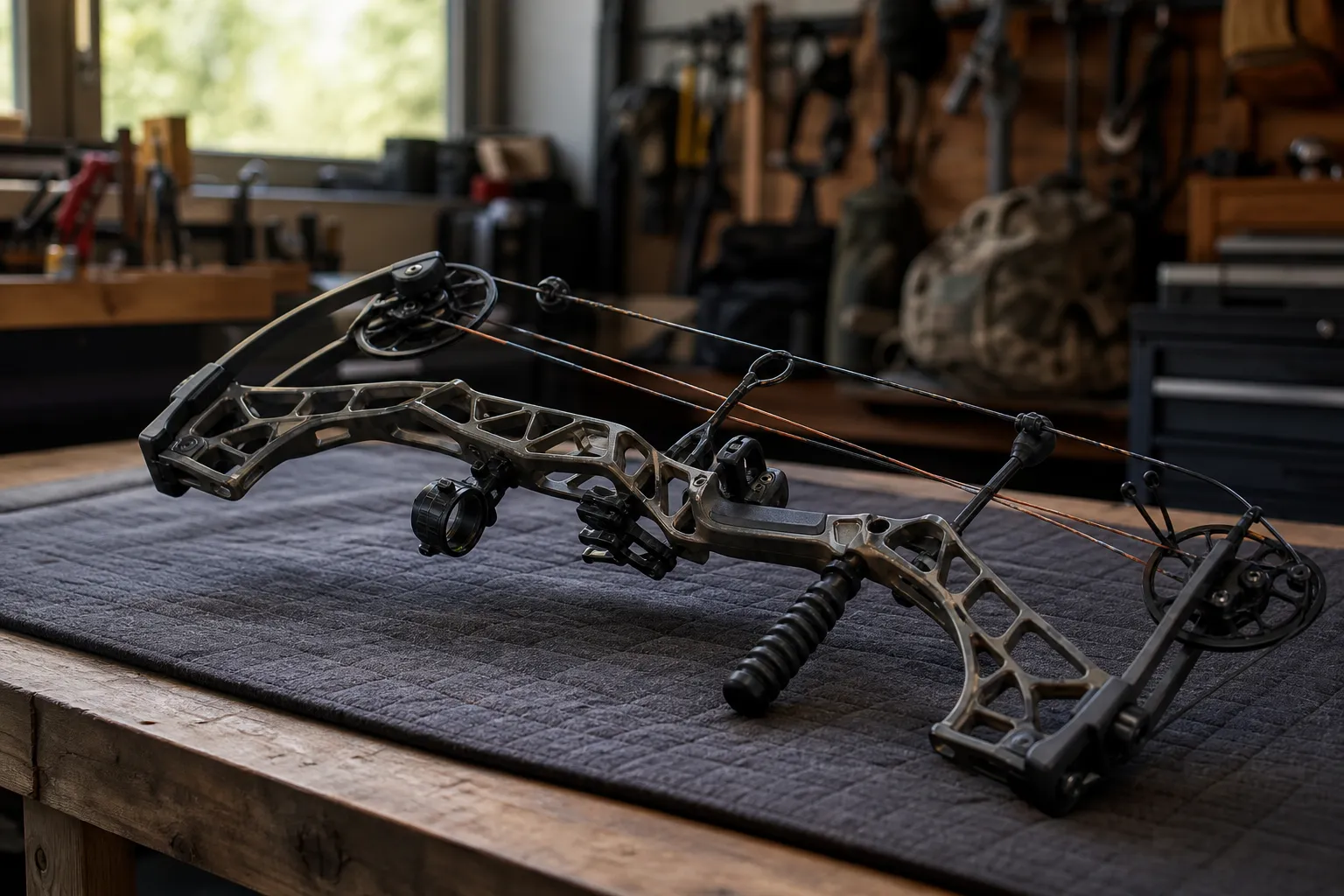
A compound bow works by using cams or pulleys, cables, limbs and a bowstring to change how the bow feels through the draw cycle. World Archery defines a compound bow as one where the draw is mechanically varied by a system of pulleys or cams. In plain English, it is a bow that is harder to pull at the start, then easier to hold near full draw because the cam system reduces the holding weight.
What is a compound bow, and what are its main parts?
World Archery describes the compound bow as a mechanically efficient design that uses a levering system of pulleys and cables. That cam and cable system is the big difference between a compound bow and a recurve bow. A compound uses cams or pulleys to mechanically vary the draw. A recurve does not use that cam or pulley system.
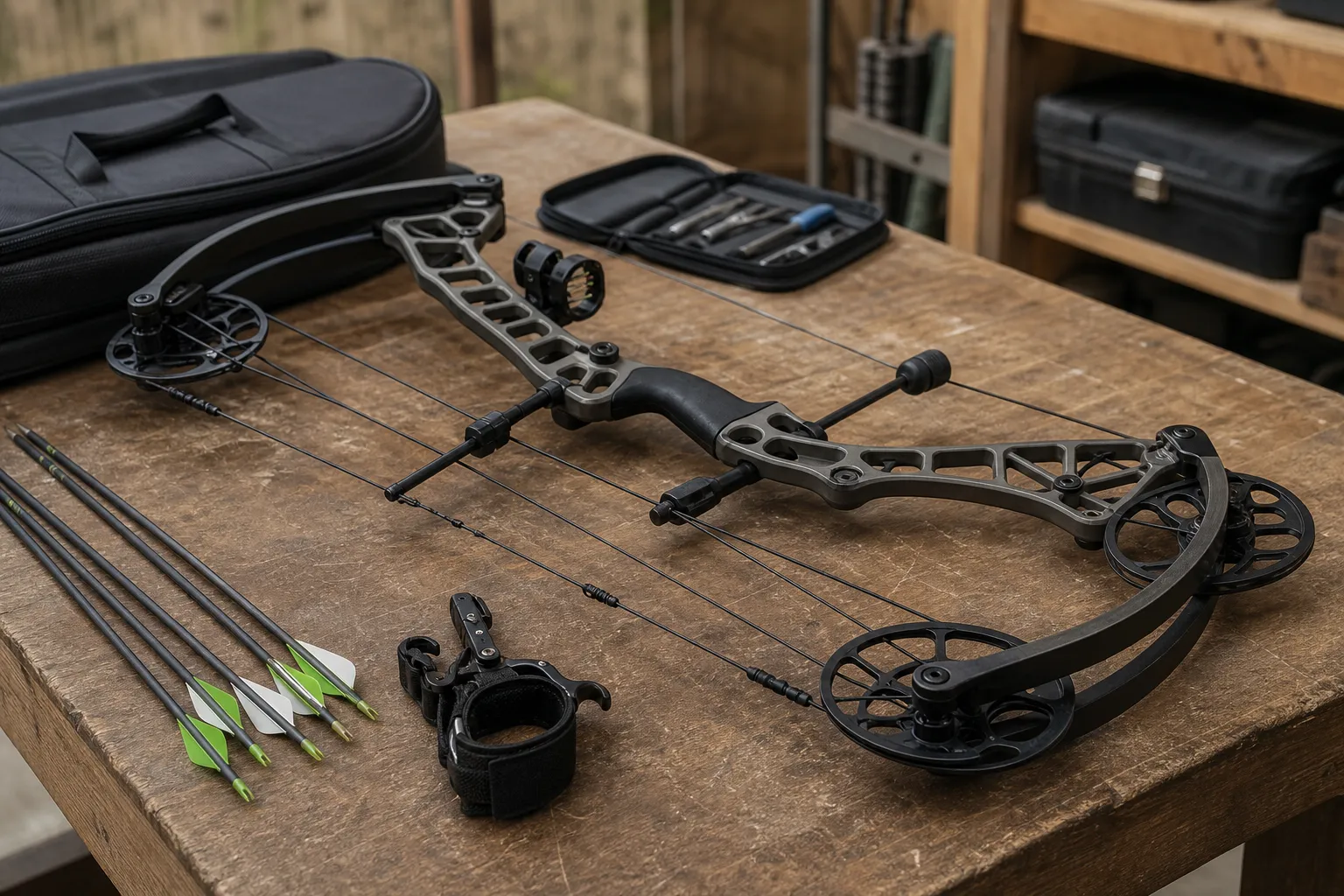
USA Archery uses the same basic idea in its Basic Compound category, describing it as a bow where the draw is mechanically varied by pulleys or cams.
A compound bow is also different from a crossbow in form and use. If you are comparing the two, read our guide to crossbows vs compound bows.
The riser, limbs and grip
World Archery says the riser is the handle in the center of a compound bow and the base to which the limbs connect. The grip is the part of the riser the archer holds.
Hoyt’s compound bow terminology diagram labels the riser, grip, limbs, limb pockets, axles, bowstring, buss cable, control cable, top cam, bottom cam, cable guard bar and cable guard glide. Those are the core parts a new archer will hear about when being fitted or when reading a bow spec sheet.
The limbs are the flexible parts connected to the riser. World Archery explains that energy is stored in the bent limbs and taut cables, then transferred into the arrow when the bow is shot.
Limb pockets are the areas where the limbs connect to the riser. Hoyt’s diagram labels limb pockets as separate parts, which is useful because many setup discussions refer to the limb and riser connection.
Cams, axles, strings and cables
World Archery identifies the cams as pulleys, usually eccentric, at the end of each limb. They are connected by cables and the bowstring.
Hoyt’s terminology diagram labels a top cam and bottom cam. It also labels axles, which are the pins that hold the cams or wheels at the ends of the limbs. Archery 360 defines axle-to-axle length as the distance between those axles.
Hoyt’s diagram also labels a buss cable and a control cable. These cables are part of the system that links the cams and limbs. Hoyt also describes a cable glide as a part used to keep cables from rubbing against each other.
How the draw cycle works
World Archery explains the compound draw cycle this way: more force is required at the start of the draw, then the draw weight decreases farther into the draw, until the bow comes to a mechanical stop.
That mechanical stop is why compound bows feel different from traditional bows at full draw. Archery 360 says compound bows have a defined draw length. Once the archer reaches that length, the string cannot be pulled farther. The end of that draw cycle is often called the back wall.
The cam shape is a major reason for this feeling. The Archery Trade Association says cams affect a compound bow’s speed, let-off, draw length, tuning, draw cycle and feel.
When the archer releases the string, the stored energy moves into the arrow. World Archery describes that energy as being stored in the bent limbs and taut cables, then transferred into the arrow and sent downrange.
Let-off: why a compound is easier to hold at full draw
Let-off is one of the main reasons many archers choose a compound bow. World Archery defines let-off as the percentage of weight reduced when the bow is fully drawn.
Archery 360 explains the same idea in beginner terms: cams reduce holding weight as the archer reaches full draw, and that reduction is called let-off.
World Archery gives a competition example. Drawing a competitive compound bow can require up to 60 pounds of force, while the holding weight at full draw can be as little as 13 pounds.
Manufacturers list let-off as a bow specification. Mathews, for example, lists one current LIFT X model with 80 or 85 percent let-off.
Draw weight and draw length
Draw weight is the force involved in pulling the bowstring. Archery 360 defines draw weight as the amount of force you can pull back with the bowstring, measured in pounds.
Draw length is the archer’s full-draw fit measurement. Archery 360 defines draw length as the distance from the face nocking point along the jawline to the deepest part of the grip, also called the pivot point, plus 1 3/4 inches.
Archery 360 also gives a simple estimate: measure wingspan from the tip of the middle finger on one hand to the tip of the middle finger on the other hand while holding the arms out in a T shape, then divide by 2.5.
Correct draw length matters because it affects the archer’s position at full draw. Archery 360 says a correct draw length helps the body stay in proper alignment. A draw length that is too long or too short can cause improper form.
For a deeper fitting explanation, see our guide to draw length.
Draw weight and draw length also affect arrow selection. Mission, a Mathews brand, says draw length and the weight being shot are used when selecting correct arrow spine from an arrow chart.
Brace height and axle-to-axle length
Brace height is a common bow specification. Archery 360 defines brace height as the distance from the deepest part of the grip to the bowstring.
Axle-to-axle length is another common specification. Archery 360 defines it as the distance between the axles that hold the cams or wheels at the ends of the limbs.
Manufacturers usually list these specs together. Mathews lists brace height, IBO rating, axle-to-axle length, draw weights, draw lengths, let-off, physical weight and cam in its product specifications. For one LIFT X 29.5 model, Mathews lists a 6 inch brace height and a 29.5 inch axle-to-axle length.
These numbers are not separate from the bow’s mechanics. Brace height relates to the bowstring’s position at rest, while axle-to-axle length describes the span between the cam axles. Both appear on spec sheets because they help identify the bow’s size and setup.
IBO speed and advertised speed ratings
IBO speed can be confusing because consumer explanations and manufacturer language do not always use the term the same way.
Archery 360 distinguishes IBO and ATA speed standards. It says IBO speed is measured by shooting a bow with an 80 pound draw weight, plus or minus 2 pounds, maximized draw length and a 400 grain arrow. It says ATA speed is measured with a 70 pound draw weight, plus or minus .2 pounds, a 30 inch draw length and a 350 grain arrow.
Some manufacturers describe advertised IBO ratings using the 70 pound, 30 inch and 350 grain setup. Mission says its advertised IBO speed rating is conducted at 30 inches of draw, 70 pounds and a 350 grain arrow. Bowtech’s owner manual also says speed ratings are based on a bow produced with a 70 pound draw weight and a 30 inch draw length using a five grain per pound arrow, or 350 grains.
The practical point for a new archer is simple: read the manufacturer’s rating language carefully. Mission says shorter draw length, lower limb weight, heavier arrows and string attachments reduce speed from advertised ratings.
The Archery Trade Association says its technical guidelines exist to keep industry testing, measurement, terminology and specifications consistent. Even so, when comparing bows, look at how each manufacturer states the rating conditions.
Fitting, setup and technician work
A compound bow is a fitted tool. Draw length affects alignment and form, draw weight affects what the archer pulls, and both draw weight and draw length are used when choosing arrow spine.
The Archery Trade Association’s bow technician certification includes string and cable work, cam timing, setting factory axle-to-axle and brace height, and adjusting draw length and weight based on form fundamentals. That list shows why a new archer should work with a qualified bow technician or archery pro shop rather than guessing through setup.
This is especially important because the cam, cable and limb system is under high force. World Archery says compound bows remain under significant tension even when not in use and must withstand remarkable forces when shot. Bowtech warns that the string, cables and limbs are under extreme tension.
Bowtech also warns never to draw a bow without an arrow nocked, stating that doing so could cause personal injury or damage the bow.
What to check before you buy or shoot
Before choosing or shooting a compound bow, check the manufacturer’s current manual and specification page for that exact model. Look for draw length range, draw weight range, let-off, brace height, axle-to-axle length, cam type and the stated conditions for any speed rating.
For fitting and setup, confirm your draw length and draw weight with a bow technician or archery pro shop. If you plan to hunt, also confirm current bowhunting equipment rules with the wildlife agency for the state, province or territory where you will hunt.
Frequently asked questions
What makes a compound bow different from a recurve bow?
World Archery defines a compound bow as one where the draw is mechanically varied by pulleys or cams. A recurve bow does not use that cam or pulley system.
What is let-off on a compound bow?
World Archery defines let-off as the percentage of weight reduced when the bow is fully drawn. Archery 360 explains that the cams reduce holding weight as the archer reaches full draw.
What is draw length?
Archery 360 defines draw length as the distance from the face nocking point along the jawline to the deepest part of the grip, plus 1 3/4 inches. It also gives a simple estimate of wingspan divided by 2.5.
What do brace height and axle-to-axle length mean?
Archery 360 defines brace height as the distance from the deepest part of the grip to the bowstring. It defines axle-to-axle length as the distance between the axles that hold the cams or wheels.
Why might my bow be slower than its advertised speed?
Mission says shorter draw length, lower limb weight, heavier arrows and string attachments reduce speed from advertised ratings.
Why should a beginner use a bow technician or pro shop?
The Archery Trade Association’s bow technician certification includes string and cable work, cam timing, setting factory axle-to-axle and brace height, and adjusting draw length and weight. Bowtech also warns that strings, cables and limbs are under extreme tension.
Sources
- Compound, World ArcheryOfficial source. Accessed October 23, 2026.
- Book 3, Target Archery, Compound Division, World ArcheryOfficial source. Accessed October 23, 2026.
- Event Rules, USA ArcheryOfficial source. Accessed October 23, 2026.
- ATA Technical Guidelines, Archery Trade AssociationOfficial source. Accessed October 23, 2026.
- Bow Technician Certification, Archery Trade AssociationOfficial source. Accessed October 23, 2026.
- Marketing Tips for Every Bow, Archery Trade AssociationOfficial source. Accessed October 23, 2026.
- Selecting the Right Bow for You, Archery 360. Accessed October 23, 2026.
- Compound and Recurve Bows Offer the Ultimate Archery Experience, Archery 360. Accessed October 23, 2026.
- How Hard Should You Pull Into the Wall, Archery 360. Accessed October 23, 2026.
- Making Sense of Bow Specs, Archery 360. Accessed October 23, 2026.
- How to Adjust Brace Height, Archery 360. Accessed October 23, 2026.
- Compound Bow Owner's Manual, Hoyt ArcheryOfficial source. Accessed October 23, 2026.
- Bowtech Owner Manual, Bowtech ArcheryOfficial source. Accessed October 23, 2026.
- LIFT X, Mathews ArcheryOfficial source. Accessed October 23, 2026.
- Mission Archery FAQ, Mathews ArcheryOfficial source. Accessed October 23, 2026.